
Reviewed · TEMPLE & SHRINE TOURS
Tokyo Asakusa & Senso-Ji Walking tour With A Guide
Old Tokyo still lives here. This two-hour private walk through Asakusa brings you to Senso-ji, Nakamise Shopping Street, Sumida Park, and views of Tokyo Skytree while leaving room for local advice. I especially like the private format and the chance to adjust the route to your interests.
I also like that the guide can help you plan the rest of your Tokyo stay, not just explain the sights in front of you. The main caution is value: at $53 per person, you will want a guide who offers plenty of detail, since some recent feedback found the explanations too light for the price.
In This Review
- Key points to know before booking
- Why Asakusa makes a strong first Tokyo walk
- Starting near Asakusa Station
- Tokyo Skytree in about 30 minutes
- Walking through Asakusa and Nakamise Shopping Street
- Kaminarimon Gate and the approach to Senso-ji
- Senso-ji, Tokyo’s oldest temple
- A quieter pause at Sumida Park
- What the private format is really worth
- Is $53 per person a fair price?
- Who should book this Asakusa walk?
- FAQ
- Where does the tour meet?
- How long does the walking tour last?
- Is this a private tour?
- Which sights are included?
- Which languages are available?
- Are food and drinks included?
- Should you book the Asakusa and Senso-ji tour?
Key points to know before booking
- Senso-ji is the center of the walk: You pass through Kaminarimon Gate, see its huge red lantern, and continue along Nakamise Shopping Street toward Tokyo’s oldest temple.
- The tour is private: Your group has the guide to itself, with no strangers added to the booking.
- The route includes four major stops: Tokyo Skytree, Asakusa, Sumida Park, and Senso-ji each receive about 30 minutes.
- Local advice is part of the value: A good guide can suggest other places to visit and help you understand daily life in the district.
- The pace is easy to adjust: Customization is included, which helps if you care more about temples, photography, food areas, architecture, or quiet side streets.
- Guide quality matters: Nicolas received especially warm praise for giving an informative tour, while other feedback called for more background and local detail.
Why Asakusa makes a strong first Tokyo walk
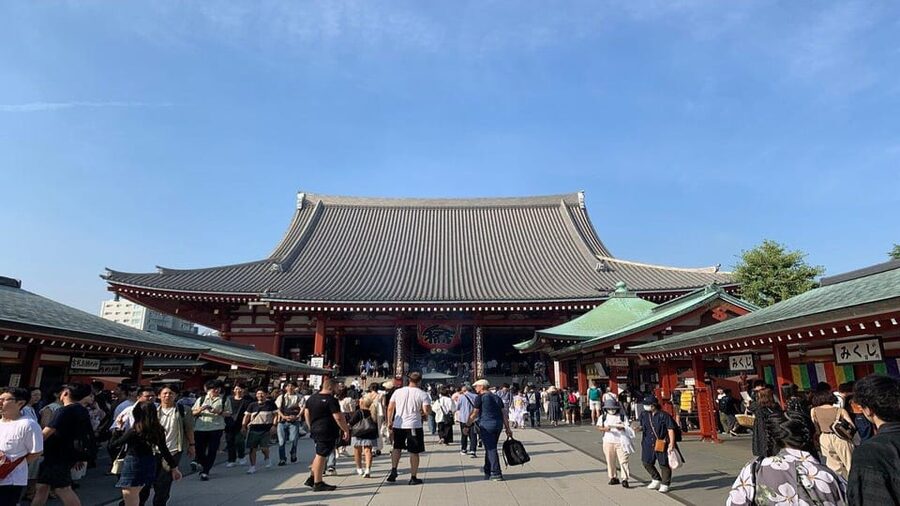
Asakusa gives you a clear introduction to old and new Tokyo in a compact area. You can see a famous Buddhist temple, shop for traditional snacks and crafts, walk beside the Sumida River, and look toward the modern Tokyo Skytree without needing a complicated day of transport.
That mix is the main reason I find this tour appealing. Tokyo can feel huge and hard to read at first. Asakusa gives you a useful starting point because its main sights are close together, yet the district also has backstreets where the mood becomes quieter and more local.
Your meeting point is near Asakusa Station, at 1 Chome-8-13 Nishiasakusa, Taito City. The description calls it the front of Asakusa, so I would confirm the exact meeting spot and look for your guide before the start time. Stations in Tokyo can have several exits, and a little confusion at the beginning can eat into a short two-hour tour.
More Temple & Shrine Tours in Tokyo
- Tokyo: Meiji Shrine, Asakusa, Skytree Bus Tour and Cruise
★ 4.7 · 1,986 reviews - Tokyo: Asakusa Walking Tour with Sensoji Temple Visit
★ 4.8 · 1,583 reviews - Nikko: Kegon Falls, Lake Chuzenji & Toshogu Temple
★ 4.6 · 1,577 reviews
Starting near Asakusa Station
The guide meets you at the front of Asakusa, a practical place to begin because the area is already close to the district’s major sights. From here, you can get your bearings before walking toward the temple zone and riverfront.
This first meeting also gives you a chance to explain what you want from the tour. The experience is private and customizable, so tell the guide if you prefer temples, local streets, photography, shopping, architecture, or general orientation. The more specific you are, the more useful the route is likely to become.
A private walk can be especially helpful for families, couples, or first-time visitors who do not want to follow a fixed group pace. You can ask questions as they come up, stop for photographs, and spend less time on subjects that do not interest you.
The trade-off is that a two-hour walk passes quickly. If your guide spends too much time on basic introductions or gives only brief explanations, you may feel that the tour ends just as it gets going. This is the main point to keep in mind when judging the $53 cost.
Tokyo Skytree in about 30 minutes
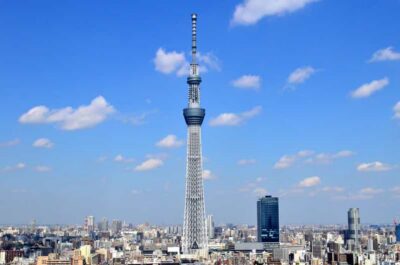
The Tokyo Skytree stop is listed first, with around 30 minutes for a photo stop, guided visit, sightseeing, and walking. The supplied details do not promise entry to the tower or an observation-deck ticket, so you should treat this as an exterior sightseeing stop unless your booking confirmation says otherwise.
Skytree gives the walk a modern counterpoint. Asakusa is strongly linked with temples, old shopping streets, and traditional customs, while Skytree represents Tokyo’s newer city image. That contrast helps you place the neighborhood within the larger capital.
I would use this part of the walk to ask your guide for orientation. Ask what you are looking toward, how the river relates to the district, and which parts of Asakusa are best for the rest of your visit. The guide’s advice about other things to do can be one of the better reasons to book a private tour.
Do not expect this stop alone to justify the price. Its value depends on the explanation and on how well it connects the modern tower to the older streets around it. If you want to go inside Skytree, plan that separately unless admission is clearly included, and it is not listed among the inclusions here.
Walking through Asakusa and Nakamise Shopping Street
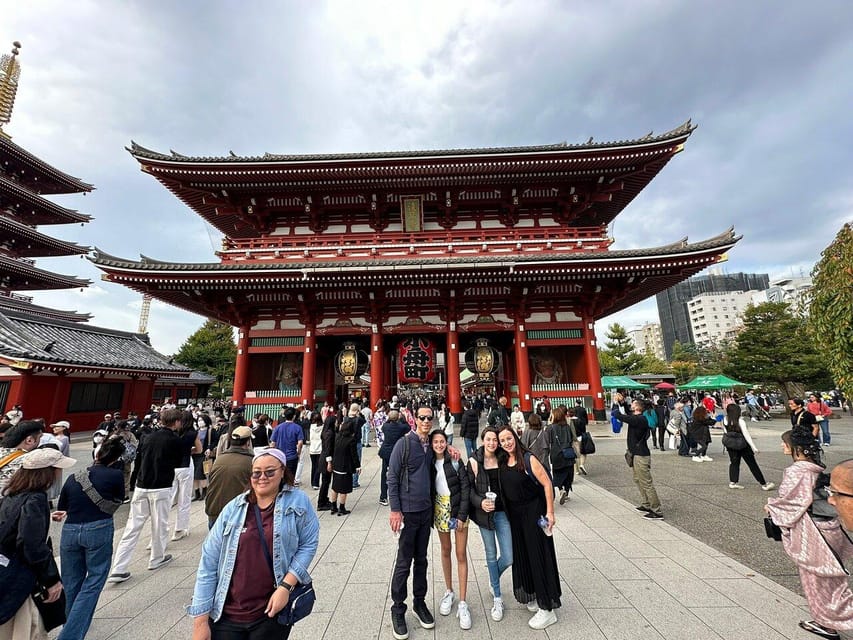
The Asakusa portion gives you the everyday setting around the temple. Nakamise Shopping Street leads toward Senso-ji and is lined with stalls selling Japanese souvenirs, snacks, and crafts. It is a good place to see how shopping, religious visits, and sightseeing all share the same narrow route.
A guide adds value here by explaining what you are seeing instead of leaving you to guess. You can ask about the purpose of the street, the kinds of items sold, and which snacks or crafts are worth your attention. Food and drinks are not included, so any purchases are your own expense.
This is also where the private format helps. Nakamise can be crowded, and a guide who knows the area can keep you moving while pointing out details you might miss. You still need to allow time for browsing if shopping matters to you. A fixed two-hour schedule cannot offer a long market visit and a detailed temple tour unless the group keeps a steady pace.
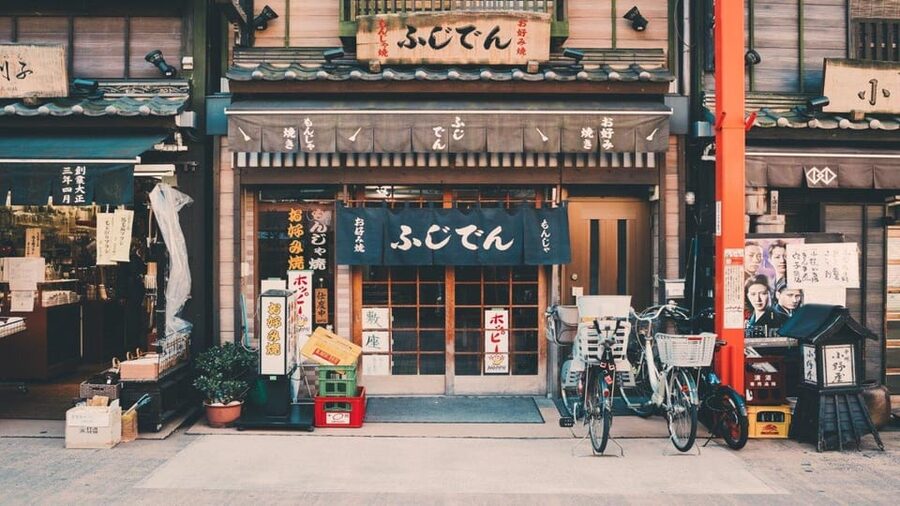
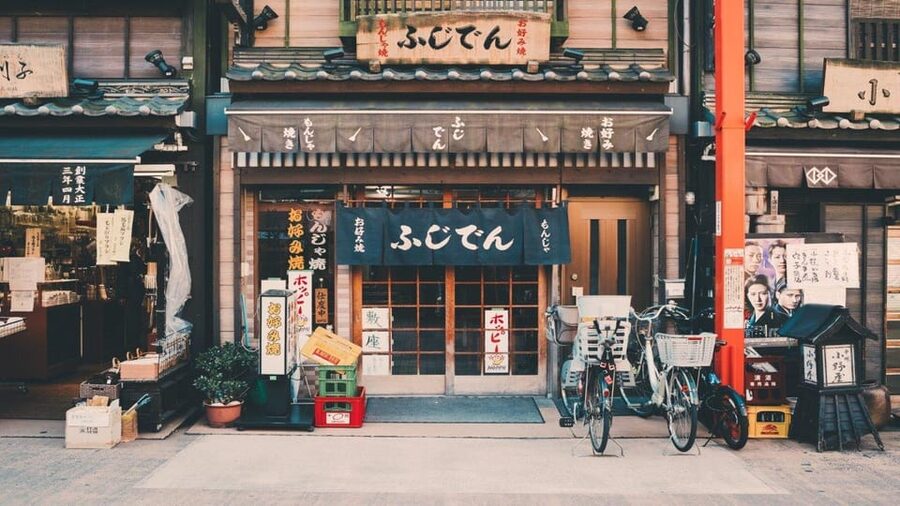
The surrounding streets are just as important as the main shopping lane. The experience promises time in Asakusa’s backstreets, where traditional buildings and ordinary daily activity offer a different view of the district. These side streets are a useful part of the walk because they keep the tour from becoming only a checklist of famous sights.
More Walking Tours in Tokyo
- Tokyo Tsukiji Fish Market Food and Culture Walking Tour
★ 5.0 · 3,184 reviews - Tokyo: Imperial Palace and Shogun Historical Walking Tour
★ 5.0 · 2,251 reviews - Tokyo: Shinjuku Local Bar and Izakaya Guided Walking Tour
★ 4.9 · 1,794 reviews - Tokyo: Tsukiji Fish Market Food and Walking tour
★ 5.0 · 1,724 reviews
Kaminarimon Gate and the approach to Senso-ji
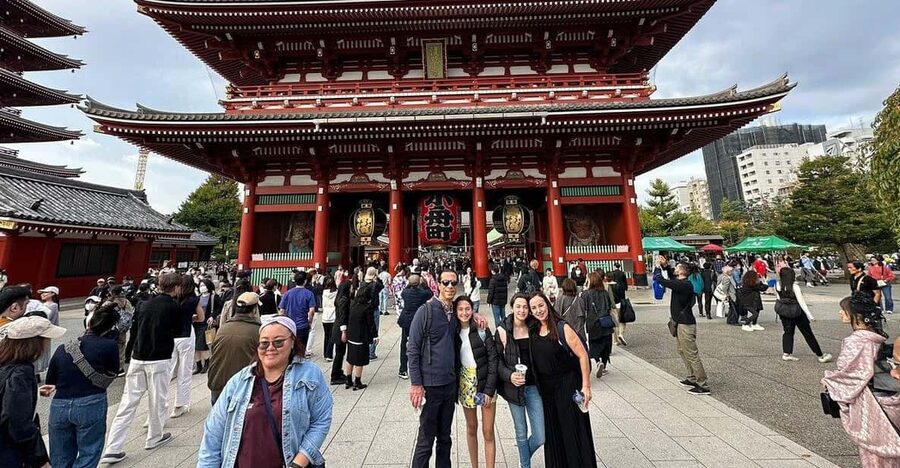
Kaminarimon Gate is one of Tokyo’s most recognizable entrances. Its large red lantern creates the classic first view of Senso-ji and makes an obvious photo stop, but the gate is more than a picture backdrop. It marks the change from ordinary city streets into the temple approach.
Your guide can give this moment context by explaining the gate, the temple route, and the customs connected with visiting a Japanese Buddhist temple. The exact level of detail will depend on the guide, and that matters here. One Italian booking holder rated the experience highly for flexibility but felt the tour did not provide enough information for the price. Another gave a low rating for the same general issue, describing the guide as pleasant but offering too little explanation of the neighborhood and its curiosities.
That feedback gives you a practical question to ask at the start: how much history and cultural explanation will be included? A strong answer should help you decide if this tour fits your expectations. If you mainly want company, orientation, and photographs, lighter commentary may be fine. If you want a detailed lesson in Japanese religion and Tokyo history, you should make that clear before setting off.
Senso-ji, Tokyo’s oldest temple
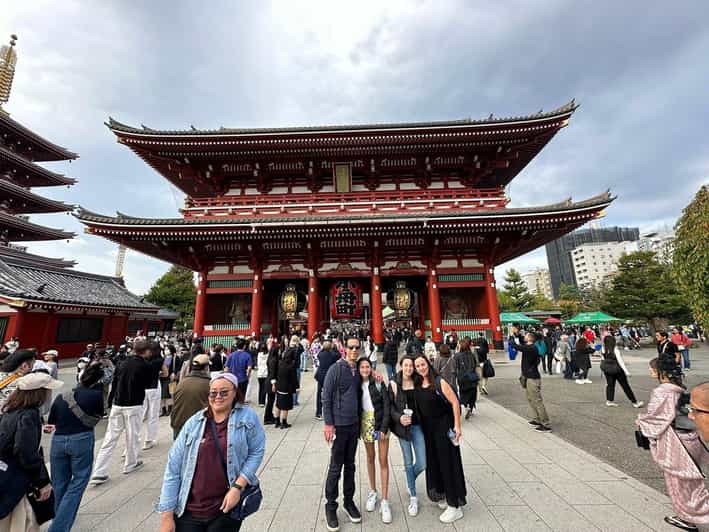
Senso-ji is the centerpiece of the experience. It is identified as Tokyo’s oldest temple, and the walk gives you time to approach it through Kaminarimon Gate and Nakamise rather than arriving at the temple courtyard without context.
The four-part schedule gives Senso-ji about 30 minutes. That is enough for a guided look at the main area, but it is not an open-ended temple visit. You may need to return later if you want a slower visit, more photographs, or extra time around the surrounding streets.
I like the way this tour places Senso-ji inside the neighborhood rather than treating it as an isolated monument. You see the gate, the market route, the temple, the river, and the backstreets as parts of one district. That makes the visit more useful for understanding Asakusa as a living part of Tokyo.
The guide’s cultural comments can also make a difference. The French-language feedback praised Nicolas for making the visit instructive and for teaching a great deal about Japanese culture and the country’s past. That is the level of guidance you should hope for. The tour is not only about pointing at the temple and naming it.
A quieter pause at Sumida Park
Sumida Park provides a change of pace after the temple streets. It runs along the Sumida River and offers a more open setting for photographs and a short walk. Depending on the season, cherry blossoms may add another layer of beauty.
The park is valuable because it shows a different side of Asakusa. You move from dense streets and shopfronts to river views and open air. A guide can also help connect the park to the district’s seasonal character and explain what makes the riverfront worth visiting beyond the standard temple route.
The listed schedule allows around 30 minutes here. That is a sensible amount of time for a guided stroll, but conditions can affect the experience. Cherry blossoms are seasonal, and the tour does not promise them on your date. Think of blossoms as a possible bonus, not a reason to book on their own.
If you enjoy photography, tell your guide. The private setup makes it easier to pause for views without holding up a larger group. If you prefer more history or backstreet exploration, you can ask whether the park time can be shortened.
What the private format is really worth

The strongest practical feature is the private and exclusive setup. No one else joins your group, and customization is included. That means you can shape the walk around your interests instead of accepting every stop at the same pace.
This flexibility proved useful for one Italian couple when an unexpected problem forced a schedule change. The guide adjusted the starting time without trouble. That kind of calm handling can matter more than a polished speech, especially on a packed Tokyo itinerary.
The guide languages are English, French, Spanish, and Italian. If you are more comfortable discussing cultural questions in one of those languages, that choice may improve the experience. The supplier is Guydeez Tours.
Still, private does not automatically mean detailed. The supplied feedback is mixed: some people found the experience very instructive, while others wanted more facts and local stories. I would book it for access, flexibility, and orientation, but I would not assume that every guide delivers the same depth.
Is $53 per person a fair price?

At $53 per person, the price is reasonable if you are booking for a small private group and want a tailored introduction to Asakusa. A private guide costs more than joining a large group, but you gain control over the route and the chance to ask questions without competing for attention.
The value is less clear if you are booking alone or if you only want to see the main sights. Senso-ji, Nakamise, and Sumida Park can be visited without a guide, and the tour does not include food, drinks, or stated admission to Tokyo Skytree. In that case, you are paying mainly for interpretation, local advice, and convenience.
I would consider it good value for a first morning in Tokyo, especially if you want help understanding customs and deciding what to do next. I would be more cautious if your priority is dense historical detail. Ask for a guide who will explain the district’s background and cultural practices, not simply escort you between photo stops.
Who should book this Asakusa walk?
This experience suits you if you want a short introduction rather than a full-day tour. It works well for first-time Tokyo visitors, families who need a flexible pace, couples who want a private outing, and people who enjoy mixing famous sights with ordinary streets.
It also suits you if you want advice for the rest of your stay. The guide can suggest other things to do, and that planning help may be especially useful early in a Tokyo visit.
You may want another option if you prefer a long temple lecture, a food-focused walk, or a tour with guaranteed entry to Tokyo Skytree. Those features are not included in the stated program. Also consider the mixed comments about explanation quality and ask about the planned level of detail before booking.
The tour is wheelchair accessible, which adds useful flexibility for people who need an accessible route. Exact route conditions can still vary, so discuss any mobility needs with the provider ahead of time.
Cancellation is free up to 24 hours before the start, and you can reserve now and pay later. Those terms make it easier to place the walk in an early Tokyo schedule while keeping plans flexible.
FAQ
Where does the tour meet?
The meeting point is at the front of Asakusa, located at 1 Chome-8-13 Nishiasakusa, Taito City, Tokyo 111-0035.
How long does the walking tour last?
The tour lasts two hours.
Is this a private tour?
Yes. The tour is private and exclusive, so no one else is added to your group.
Which sights are included?
The route includes Tokyo Skytree, Asakusa, Sumida Park, and Senso-ji Temple. Each listed stop is planned for about 30 minutes.
Which languages are available?
Live guides are available in English, French, Spanish, and Italian.
Are food and drinks included?
No. Food and drinks are not included in the price.
Should you book the Asakusa and Senso-ji tour?
I would book this tour if you want a private, flexible introduction to one of Tokyo’s most rewarding historic districts. The combination of Senso-ji, Nakamise, the Sumida River, backstreets, and Tokyo Skytree gives you a useful overview in only two hours.
Book it with realistic expectations. The $53 price makes sense when your guide is informative, responsive, and generous with local suggestions. The experience is less convincing if the walk becomes a simple escort between landmarks. Before starting, explain what you want to learn and ask for cultural and historical detail.
For the best fit, schedule it early in your Tokyo stay. You can use the guide’s advice to shape later days, then return to Senso-ji or the market when you have more time. The flexibility, private setting, and helpful schedule handling are the clearest strengths, while the uneven depth of commentary is the point to weigh most carefully.
Just added around Tokyo
- Tokyo 6hr Instagram Highlights Private Tour with Licensed Guide★ 5.0 · 38 reviews
- Tokyo Small Group Tour with Guide★ 4.5 · 38 reviews
- Tokyo Sumo Experience with Live Show & Audience Challenge★ 5.0 · 38 reviews
- Japanese Food Cooking Class in Asakusa, Tokyo★ 5.0 · 39 reviews
- Very popular in Harajuku♡Animal petting zoo★ 4.6 · 39 reviews
- Ramen Making from Scratch with Tokyo Mom(Vegan Option Available)★ 5.0 · 39 reviews
- Tokyo JDM Night: 600hp C63s AMG Edition 1 (Private)★ 4.9 · 39 reviews
- Tokyo: Kimono Rental inside Shinjuku Gyoen National Garden★ 4.9 · 39 reviews
Temple & Shrine Tours, compared.
Fushimi Inari, Kinkakuji, Bamboo Grove 1 Day Bus Tour
Read our review →
Tea Ceremony in a Traditional Tea House in Kiyomizu
Read our review →
Meiji Shrine, Asakusa, Skytree Bus Tour and Cruise
Read our review →
Fushimi Inari Hidden Hiking Tour (Private Option Available)
Read our review →
Osaka/Kyoto:Kinkakuji,Arashiyama,FushimiInariShrine,NaraPark
Read our review →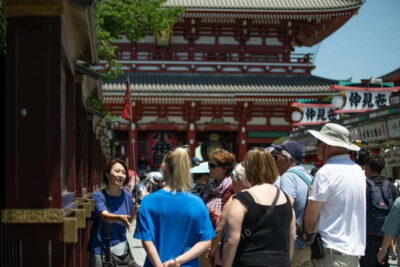
Asakusa Walking Tour with Sensoji Temple Visit
Read our review →
Nikko: Kegon Falls, Lake Chuzenji & Toshogu Temple
Read our review →Browse the lists this tour appears in