
Reviewed · JAPANESE CALLIGRAPHY CLASSES
Tokyo Japanese Calligraphy Experience with a Master Artist
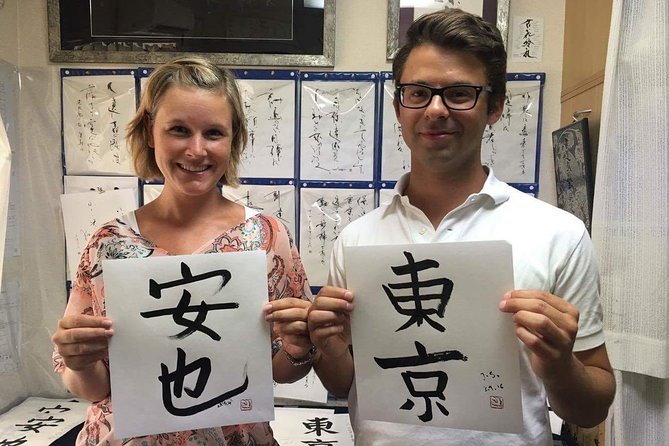
Brush, ink, and quiet focus. This Tokyo calligraphy class gives you a hands-on introduction to shodo, the Japanese art of writing, in a small studio near Umeyashiki Station. I like the close instruction from master calligrapher Eizuru Matsumura, and I like that you create work to keep rather than simply watch a demonstration. The main point to consider is timing: the experience is advertised at about 90 minutes, while the listed class stop is one hour, so you should allow some flexibility.
I also appreciate the English-speaking guide, who meets you at the station and leads you to the studio. Guides such as Yoko and Michiko have been praised for being prepared and helpful, while the master is known for patience, humor, and careful instruction. At $92.24 per person, this is not a bargain activity, but the small group size, equipment, interpreter, and personal teaching make it a fair choice for a meaningful cultural session.
In This Review
- Key Points Before You Book
- Why Shodo Makes a Good Tokyo Break
- Meeting Eizuru Matsumura Near Umeyashiki
- What Happens During the 60 to 90 Minutes
- The Value of a Quiet Studio and a Small Group
- How the English Support Shapes the Experience
- Price, Timing, and Practical Value
- Who Will Get the Most From This Class
- Family, Couple, and Solo Considerations
- Should You Book the Tokyo Calligraphy Experience?
- FAQ
- Where does the calligraphy experience begin?
- How far is the school from Umeyashiki Station?
- How long does the activity last?
- Who teaches the class?
- Is English guidance included?
- What equipment is provided?
- Can children take part?
- How many people can join the class?
- Is hotel pickup included?
Key Points Before You Book
- Five minutes from Umeyashiki Station: You meet at Umeyashiki Station on the Keikyu Line, then walk to the school with your guide.
- Instruction by Eizuru Matsumura: Matsumura is a working calligrapher, artist, lecturer, and workshop teacher with a long record of public work.
- Small groups of two to ten people: The limited size should give you more direct help than a large demonstration class.
- All brushes, ink, and paper are supplied: You do not need to bring specialist materials.
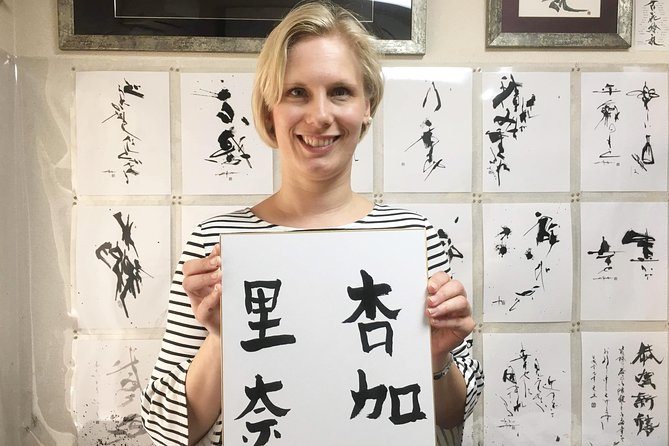
- Your work can become a souvenir: Participants have been able to keep their finished calligraphy.
- Best for children aged seven and up: Children must be accompanied by an adult, and the minimum booking size is two people.
Why Shodo Makes a Good Tokyo Break
Tokyo can fill your day with noise, screens, trains, and crowds. A calligraphy class offers a different pace. You sit down, handle traditional tools, and pay attention to each stroke. That change of rhythm is part of the appeal, even if your first character looks more like a nervous spider than a polished work of art.
Shodo is not simply Japanese handwriting. It is an artistic form shaped by brush pressure, ink flow, spacing, and the movement of the entire arm. The goal is not just to make a character readable. You are also learning how the stroke begins, how it changes direction, and how it ends.
The class is presented as a cultural activity, not a formal qualification course. You will receive guidance throughout, but you should not expect to leave after 90 minutes with the control of a career calligrapher. That is not a weakness. The value comes from trying a traditional art under the eye of someone who practices it seriously.
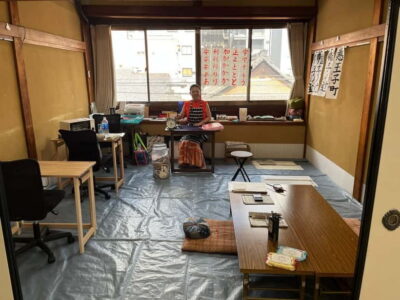
The setting also matters. The studio is described as a small, quiet space with gentle music. That atmosphere supports the focused nature of the activity. If you are looking for a loud, fast entertainment stop, this may feel too restrained. If you want a calm hour away from sightseeing, it can be a welcome change.
More Calligraphy Classes in Tokyo
- Tokyo: Calligraphy on Kanji Fan & Scroll with Drink
★ 5.0 · 210 reviews - Let’s experience calligraphy in YANAKA, Taito-ku, TOKYO !!
★ 5.0 · 127 reviews - Experience all of Japanese culture and Japanese food experience classes “origami, udon, Japanese food, green tea, calligraphy” in 4 hours
★ 5.0 · 105 reviews
Meeting Eizuru Matsumura Near Umeyashiki
The activity begins at Umeyashiki Station, at 2 Chome-28 Kamata in Ota City. The school, 球鶴書道教室, is about a five-minute walk from the station on the Keikyu Line. The English-speaking guide meets you at the station and walks with you to the studio, which removes much of the worry about finding a small local school in an unfamiliar neighborhood.
That station meeting is more important than it may sound. A private studio is not the same as a major Tokyo attraction with a large sign and a ticket gate outside. Having someone meet you, guide you through the walk, and return you to the station gives the outing a clear beginning and end.
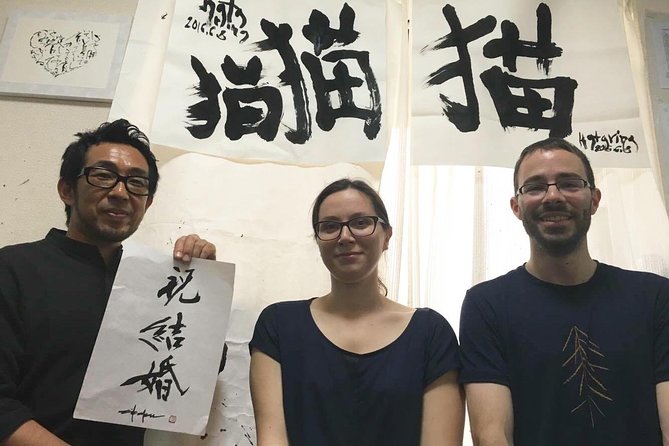
The class is taught by Eizuru Matsumura. He began practicing calligraphy at age 31 and now works as a calligrapher and artist. He also gives lectures and teaches at workshops, events, and television programs. His work has included the official logo for a Kyokushin Karate World Tournament pamphlet.
Those details help explain why the session is more than a casual brush-painting lesson. You are being taught by an active artist with experience presenting calligraphy to different audiences. The personal style of the lesson still depends on the day’s group and the available time, but his public teaching background should suit beginners.
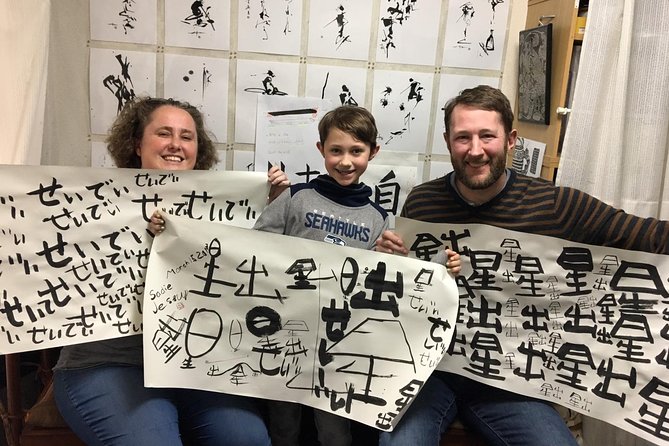
Past participants have described the master as patient, funny, and careful with instruction. One family worked on a child’s name and other characters, while another participant received a birthday greeting and a gift after the guide and teacher learned it was a special day. These are personal touches, not guaranteed parts of the booking, but they give you a sense of the warm tone associated with the class.
What Happens During the 60 to 90 Minutes
The supplied schedule lists one hour at the calligraphy school, while the overall experience lasts about 90 minutes. The extra time likely covers meeting the guide, walking from the station, and returning to the meeting point. One separate booking option was described as having a two-hour estimate, which caused confusion for at least one customer, so check the exact duration shown for your reservation.
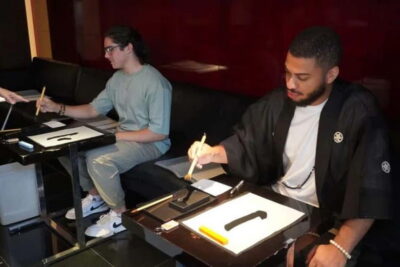
Once inside, you receive the tools needed for the class. The package includes brushes, ink, and paper, along with professional instruction and English-language assistance. You do not need to buy supplies before arriving.
Expect a lesson built around practice rather than a long lecture. You will learn how to hold and use the brush, then work through brush strokes and Japanese characters. The master’s job is to show you how small changes in angle, speed, and pressure affect the mark on the page.
The English guide or interpreter helps explain the teacher’s advice. Several guides have been praised by name, including Yoko and Michiko. Michiko contacted a participant before the activity and met them at Umeyashiki Station, while Yoko was described as helpful from the station to the studio and back. Your own guide may be different, but English support is included.
You may practice a name, a selected character, or other basic forms during the session. The exact sequence is not specified, so you should not assume you can choose any phrase or receive a formal translation of a personal motto. Ask your guide early if you have a particular character in mind.
The process rewards patience. You may start by making simple strokes, then repeat them until the shape feels more controlled. The brush can produce thick and thin lines depending on pressure, so even a basic character gives you plenty to think about.
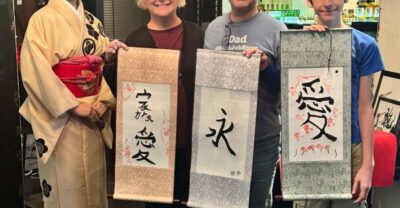
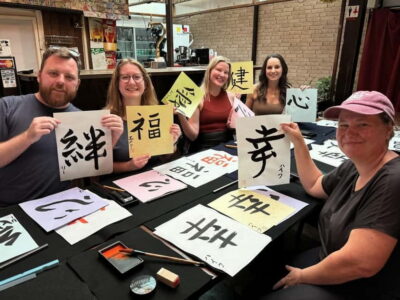
At the end, you can keep your calligraphy as a souvenir. That is one of the strongest parts of the activity. A shop-bought charm recalls Tokyo, but a sheet you made yourself carries a different memory. Do not expect museum-quality work, but do expect something personal.
The Value of a Quiet Studio and a Small Group
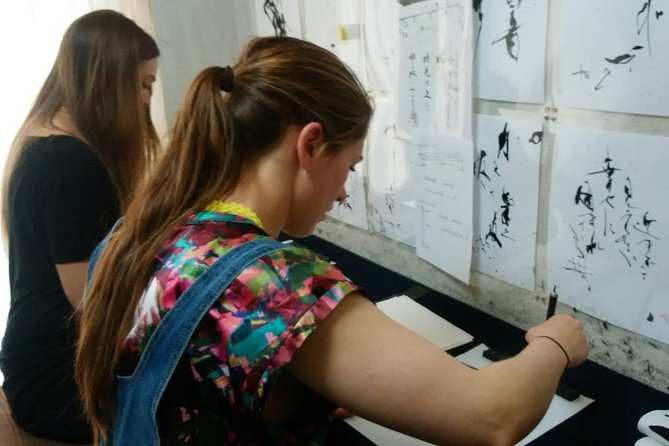
The maximum group size is ten people, and the minimum number for booking is two. That makes this a shared activity rather than a completely private lesson, yet it remains far smaller than the classes often found at major tourist venues.
A small group matters when you are learning brush control. You want the teacher to see how you are holding the brush and to correct you before a bad habit settles in. Ten is still enough people that you may need to wait briefly for help, especially if several participants are beginners at once.
The atmosphere appears to be one of the class’s biggest strengths. A small studio, gentle music, and a focused task can make the session feel almost meditative. One participant compared the practice to yoga and music, which makes sense: your attention moves to breathing, posture, rhythm, and the path of the brush.
I would not book this as a substitute for a full art course. The time is short, and the goal is an enjoyable introduction. You will learn enough to understand the discipline and make your own pieces, but the class cannot cover the full range of calligraphic styles or years of technique.
A completely different kind of day out in Tokyo:
- Mt Fuji and Hakone 1-Day Bus Tour Return by Bullet Train
★ 5.0 · 26,383 reviews - 1-Day Tokyo Bus Tour
★ 5.0 · 14,250 reviews - Tokyo: TOKYO SKYTREE® Admission ticket
★ 4.5 · 11,192 reviews - Tokyo: teamLab Planets TOKYO Digital Art Museum Entry Ticket
★ 4.6 · 9,779 reviews
How the English Support Shapes the Experience
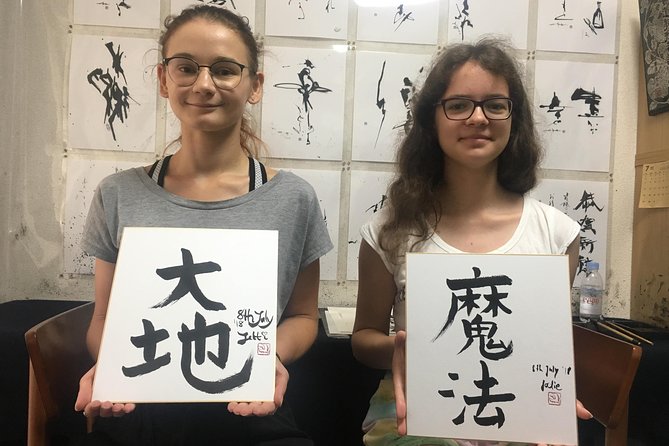
The English guide is not just there to translate isolated words. The guide meets you at the station, takes you to the school, helps interpret the teacher’s directions, and returns with you to the meeting point. That support is especially useful because calligraphy instruction often depends on subtle physical corrections.
If you have never used Japanese calligraphy tools, you may find a direct lesson without translation hard to follow. The English assistance lets you focus on the brush rather than trying to guess what the teacher means.
The guide also helps bridge cultural points. The class connects shodo with both traditional and contemporary Japanese culture, and the instructor’s work in public events gives the lesson a modern link. You are not only copying characters. You are seeing how an old art remains part of present-day Japanese creative life.
Guide quality can shape your enjoyment, so it is worth paying attention to the confirmation message after booking. The supplied information says confirmation arrives within 48 hours, subject to availability. If you have a special request, such as a birthday note or a particular word to practice, mention it before the class rather than waiting until you arrive.
Price, Timing, and Practical Value
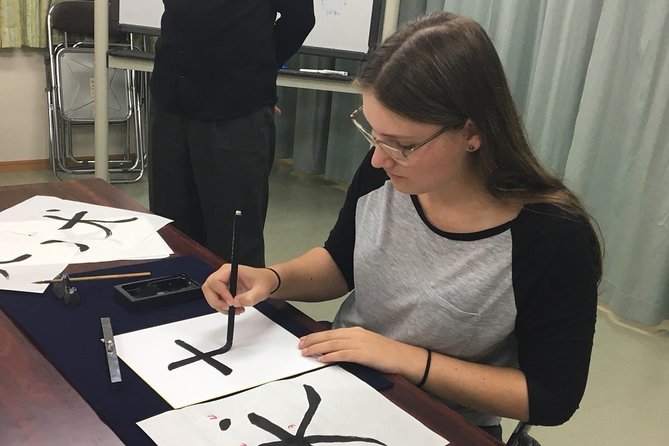
The listed price is $92.24 per person. That includes the professional guide, English guidance, all required equipment, and the class itself. Food, drinks, hotel transfers, and private transportation are not included.
For two people, the cost buys a personal cultural activity with a working artist, rather than a quick photo stop. You also avoid the expense and trouble of purchasing brushes, ink, or paper for a one-time attempt. If you value instruction and a handmade souvenir, the price can make sense.
It is less appealing if you want a cheap family activity or a long creative workshop. A group discount is available, but the exact saving is not provided, so check the price for your party before booking. Hotel pickup can be arranged for an additional 6,000 yen, but that extra charge changes the value calculation considerably.
The meeting point near public transportation keeps the basic price more reasonable. You make your own way to Umeyashiki Station, then return there after the activity. A taxi, private car, or bus is not included.
The experience is often booked 37 days in advance on average. That does not guarantee that you must reserve more than a month ahead, but it is a useful signal for planning. With a minimum of two participants and a maximum of ten, available spaces may be limited on your preferred date.
You can cancel for a full refund up to 24 hours before the local start time. Changes or cancellations made less than 24 hours before the experience are not accepted for a refund.
Who Will Get the Most From This Class
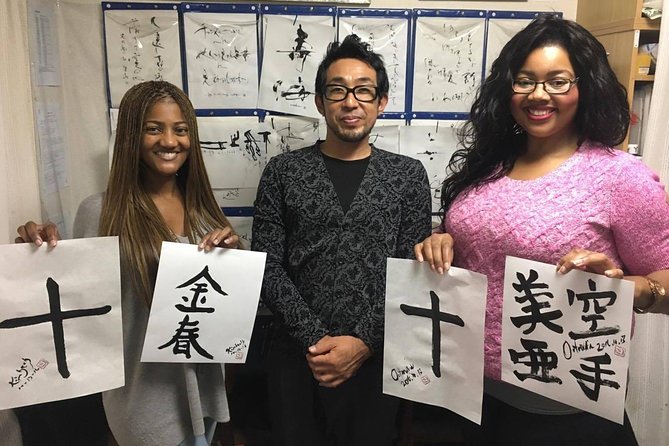
This is a good fit if you want an activity that connects you with Japanese culture through direct practice. It suits adults, couples, families with older children, and anyone who prefers making something to simply observing a performance.
Children must be at least seven years old and accompanied by an adult. A nine-year-old has successfully worked on a name and other characters, so the class can work well for families, provided the child can handle a quiet, focused session.
It is also a strong choice for a final-day activity. The calm pace gives you time to reflect on the trip, and the finished paper provides a lasting reminder. One participant specifically used it as the final activity of a two-week stay and valued the quiet focus.
You may want to skip it if your schedule is extremely tight, you dislike seated creative work, or you expect a polished piece after one lesson. The activity does not include hotel transport unless you pay extra, and the actual class portion may be closer to one hour than a full 90 minutes.
Artists should set their expectations carefully. One participant who worked professionally in Germany felt the session did not deliver the amount of time expected and wanted greater perfection. The instructor and guide were praised, but the class is designed for an introduction, not advanced portfolio work.
Family, Couple, and Solo Considerations
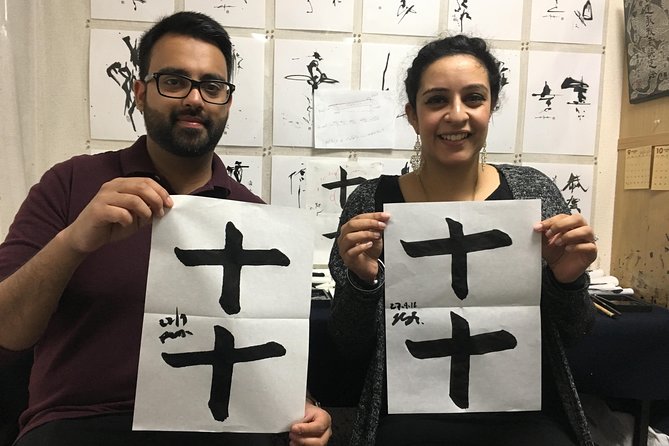
For a couple, the class offers a shared activity that is more personal than a standard sightseeing stop. You can compare your brush strokes, encourage each other, and leave with matching or contrasting pieces.
For families, the age minimum of seven is useful, but the adult should be ready to help the child stay patient. Calligraphy is slow by design. It rewards attention rather than speed, so a child expecting a free-form painting session may be disappointed.
Solo participation is less straightforward because the booking requires at least two participants. You may be able to join another booking, but the stated minimum means you should not assume a single-person reservation will be accepted.
The group cap of ten keeps the lesson manageable. It also means that the mood can vary from quiet and serious to friendly and social, depending on who arrives. The guide and teacher’s warmth should help, but this is still a shared class rather than a private appointment.
Should You Book the Tokyo Calligraphy Experience?
Book it if you want hands-on culture, a calm break from Tokyo’s busy streets, and a souvenir made with your own brush. The strongest reasons are the small studio setting, direct instruction from Eizuru Matsumura, English support from the guide, and the chance to keep your finished work.
Before paying, confirm the exact start time and duration. The main description says about 90 minutes, while the school portion is listed as one hour, and the extra hotel pickup costs 6,000 yen. Those details matter if you are fitting the class between train reservations or other timed plans.
At $92.24, this is best viewed as a personal lesson, not a low-cost attraction. I would recommend it to couples, families with children aged seven or older, and first-time visitors who want to try a traditional Japanese art in a focused setting. I would pass if you want advanced calligraphy training, a guaranteed two-hour class, or a fully private experience.
FAQ
Where does the calligraphy experience begin?
The meeting point is Umeyashiki Station on the Keikyu Line, at 2 Chome-28 Kamata, Ota City, Tokyo 144-0052, Japan.
How far is the school from Umeyashiki Station?
The calligraphy school is about a five-minute walk from Umeyashiki Station.
How long does the activity last?
The overall experience lasts approximately one hour and 30 minutes. The listed time at the calligraphy school is one hour.
Who teaches the class?
The class is taught by calligrapher and artist Eizuru Matsumura, who also lectures and teaches at workshops, events, and television programs.
Is English guidance included?
Yes. The package includes an English guide, along with professional instruction and all necessary equipment.
What equipment is provided?
Brushes, ink, paper, and other necessary class equipment are included.
Can children take part?
Yes. The minimum age is seven, and children must be accompanied by an adult.
How many people can join the class?
The minimum number for a booking is two participants, and the maximum group size is ten people.
Is hotel pickup included?
No. Hotel pickup and drop-off are not included. Hotel pickup can be arranged for an additional 6,000 yen, while private transportation is also excluded.
Just added around Tokyo
- Tokyo Shibuya Walking tour With A Guide★ 4.4 · 22 reviews
- Tokyo’s Authentic and Finest Taiko Drumming Workshop★ 5.0 · 22 reviews
- Private Tokyo Local Food and Drink Tour with a Bar Hopping Master★ 5.0 · 22 reviews
- Tokyo: Visit Sumo Morning Practice with English Guide★ 4.5 · 22 reviews
- Nikko Toshogu, Kegon waterfall, Lake Chuzenji One Day Pvt. Tour★ 5.0 · 22 reviews
- Private Departure Transfer : Central Tokyo City to Haneda Airport★ 4.5 · 22 reviews
- Mt. Fuji and Hakone Private Tour with English Speaking Driver★ 5.0 · 22 reviews
- Private Tour with a Local Guide – Learn about daily life in Japan★ 5.0 · 22 reviews
Japanese Calligraphy Classes, compared.
Calligraphy class at Buddhist temple in city center
Read our review →
Let’s experience calligraphy in YANAKA, Taito-ku, TOKYO !!
Read our review →
Calligraphy Workshop & Original T-Shirt Creation
Read our review →
Calligraphy Workshop & Original T-Shirt Creation
Read our review →Browse the lists this tour appears in