
Reviewed · TEMPLE & SHRINE TOURS
Tokyo: Meiji Jingu Shrine and Shinto Culture Walking Tour
Tokyo can feel like a wall of glass, steel, noise, and neon. Then the trees begin. This two-hour walk brings you into the quiet world of Meiji Jingu, where a local English-speaking guide explains Shinto customs, shrine etiquette, and the story of the Meiji period. I like the peaceful forest setting and the chance to learn what you are actually doing at a shrine, rather than simply taking a few photos and moving on. The main consideration is time: two hours gives you a useful introduction, but not an unhurried exploration of every corner.
I also like the small-group format, which makes it easier to ask questions and hear the guide clearly. Guides such as Maya, Minori, Nicholas, Hoshi, Yumi, Haydn, Ryota, Yota, and Andres have been praised for their friendly manner, clear English, local suggestions, and willingness to take photos. If you want cultural context on your first Tokyo morning, this is a strong-value outing, though it involves walking outdoors and can be affected by rain or heat.
In This Review
- Key points at a glance
- Why Meiji Jingu makes a good first Tokyo tour
- Meeting near Harajuku and entering the Imperial Garden
- The Big Torii and the shift from city to sanctuary
- Sake and wine barrels with a surprising story
- One hour inside Meiji Shrine
- How small groups change the experience
- Is $19 a fair price?
- Weather, walking, and accessibility
- The guides are a major part of the value
- Who should book this Meiji Jingu walk?
- Should you book it?
- FAQ
- How long does the Meiji Shrine walking tour last?
- What language is the tour conducted in?
- Where does the tour meet?
- Where does the tour finish?
- What places are included?
- Is admission included?
- Are photos included?
- How large is the group?
- Is the tour wheelchair accessible?
- Can I cancel for a full refund?
Key points at a glance
- A 100,000-tree approach: Walk through Meiji Jingu’s broad sacred forest before reaching the shrine buildings.
- Shinto made practical: Learn how to behave at a shrine, how to pray, and how Shinto differs from Buddhism.
- Four clear stops: The Imperial Garden, Big Torii, sake barrels, and wine barrels each add a different piece of the story.
- Small groups matter: Groups can be as large as 12, but many departures are smaller and may feel almost private.
- Good first-day value: At $19 per person, the tour adds a guide, photos, historical context, and admission to the shrine and Imperial Garden.
- Easy flexibility: You can cancel up to 24 hours ahead for a full refund, and reserve now while paying later.
Why Meiji Jingu makes a good first Tokyo tour
Meiji Jingu is one of Tokyo’s most famous Shinto shrines, but fame does not make the visit shallow. The setting does much of the work. After meeting near Harajuku, you leave the city streets and enter a forest of about 100,000 trees. That change in mood is the heart of the experience.
The guide helps you notice what you might otherwise pass without understanding. The focus is not only on architecture. You learn about Shinto ideas, shrine manners, the relationship between nature and spiritual life, and the way Meiji Jingu connects with Japan’s modern imperial past.
That context is especially useful if this is your first visit to Japan. Several guides have helped visitors understand basic customs, including how to pray at a shrine and how to behave respectfully on the grounds. Haydn was praised for offering a good introduction while also answering more detailed questions, so the tour can work for both newcomers and people who already know a little about Japanese culture.
The visit also helps clear up a common source of confusion. Tokyo has both Shinto shrines and Buddhist temples, and they are not interchangeable. Guides have explained the difference between Shinto and Buddhism in a practical way, without turning the walk into a classroom lecture.
More Temple & Shrine Tours in Tokyo
- Tokyo: Meiji Shrine, Asakusa, Skytree Bus Tour and Cruise
★ 4.7 · 1,986 reviews - Tokyo: Asakusa Walking Tour with Sensoji Temple Visit
★ 4.8 · 1,583 reviews - Nikko: Kegon Falls, Lake Chuzenji & Toshogu Temple
★ 4.6 · 1,577 reviews
Meeting near Harajuku and entering the Imperial Garden
The meeting point is in front of the Starbucks closest to Meiji Shrine, at 35.6705208, 139.7031067. Check the map carefully before setting out, since Harajuku has several Starbucks locations and only one is the intended meeting spot.
The first listed stop is Meiji Jingu Gyoen, also called the Imperial Garden. You spend about 30 minutes here with the guide, making it the longest stop before the main shrine visit. It gives you time to settle into the wooded setting and hear the background that makes the site more meaningful.
The garden is not treated as filler. It is part of the story of the shrine and its surroundings. You can expect a guided walk and photo opportunities, along with historical explanations about the district and the Meiji period. The inclusion of admission is useful because you do not have to sort out a separate ticket for this portion.
This is also where the tour’s pace becomes clear. You are walking, stopping, listening, and asking questions rather than rushing from one photo point to the next. If you prefer a fast sightseeing checklist, the pace may feel measured. If you want to understand the place, the extra explanation earns its time.
The Big Torii and the shift from city to sanctuary
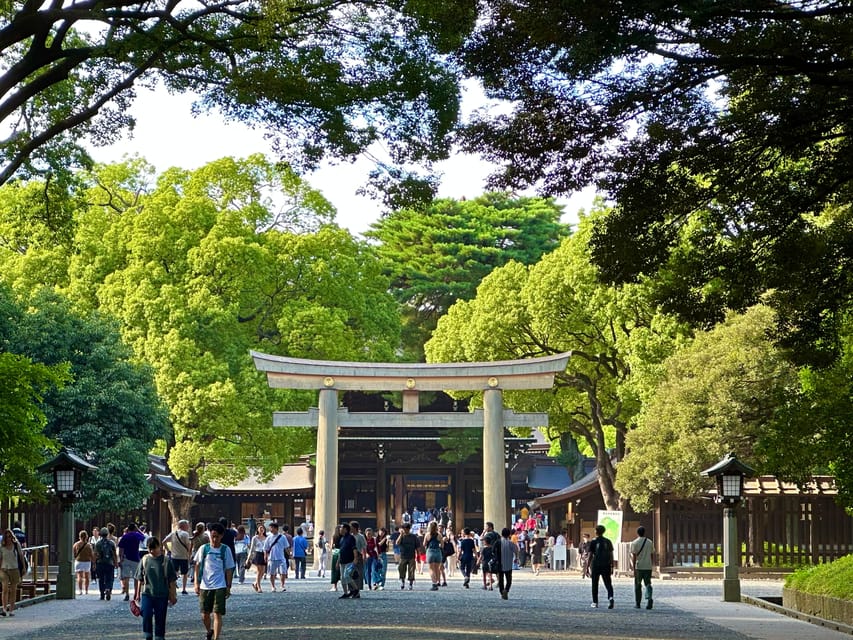
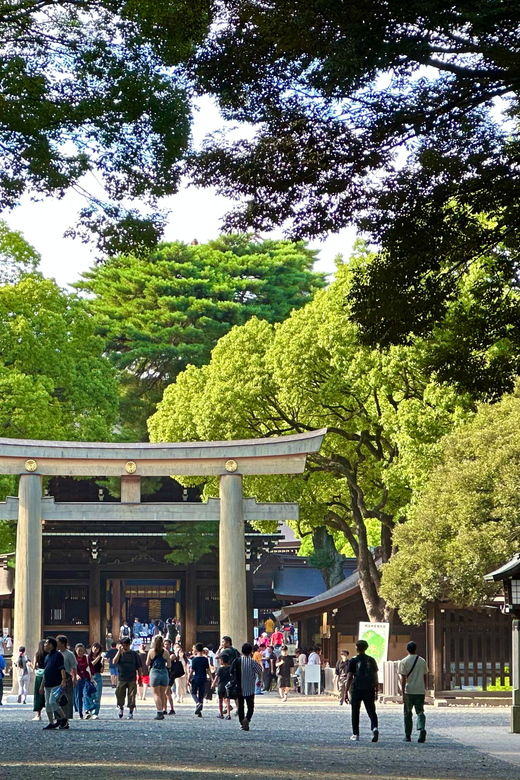
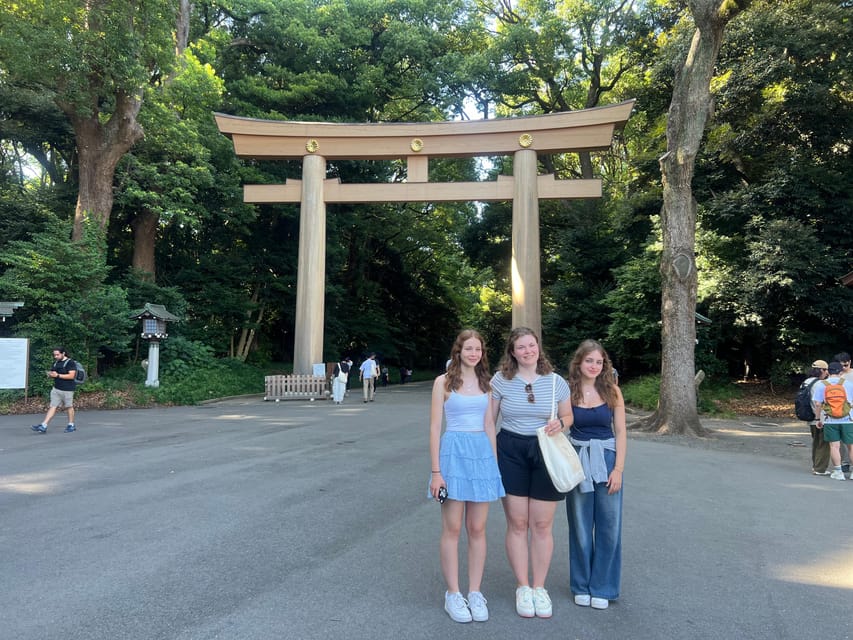
The Big Torii receives about 10 minutes of guided attention. It marks a clear change in atmosphere, and the guide explains why it matters rather than treating it as a quick backdrop for group photos.
This is a good place to ask questions about shrine etiquette. The tour’s guides have been praised for teaching visitors how to approach shrines respectfully and how to pray. Those lessons are practical, and they make later shrine visits around Japan less awkward.
The Big Torii is also one of the better photo stops on the walk. The included photo service can be handy if you are traveling alone or if everyone in your group wants to appear in the picture. Ryota and other guides have been especially praised for offering to take photos throughout the visit.
Do not expect a long stop here. Ten minutes is enough for an explanation and photographs, but the tour keeps moving toward the main grounds.
Sake and wine barrels with a surprising story
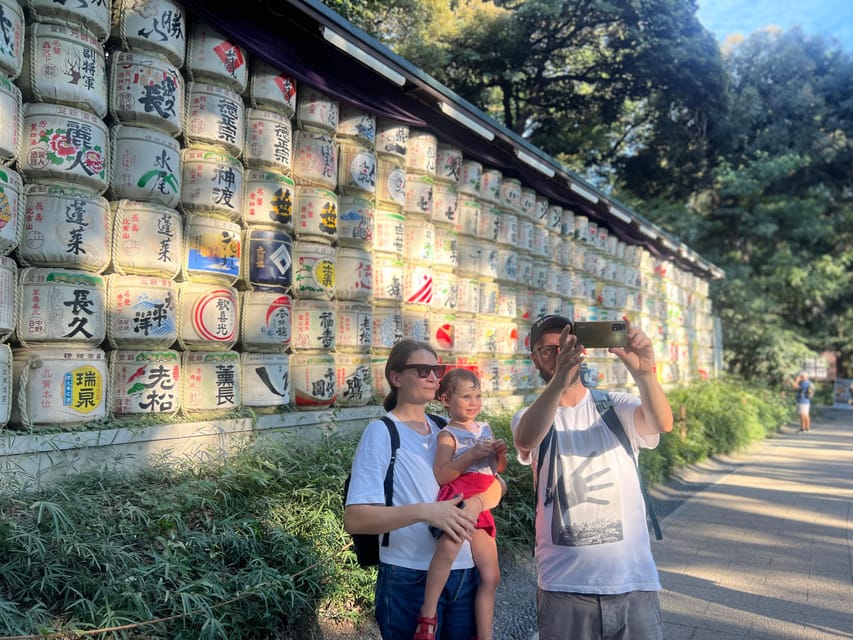
The next stops are the consecrated sake barrels and the Meiji Jingu consecrated wine barrels. Each receives around 10 minutes of explanation.
The sake barrels are among the most recognizable details at Meiji Jingu. Instead of simply photographing the colorful display, you learn about its connection to shrine offerings and Japanese culture. The wine barrels add an unusual contrast and show a connection between the shrine and international influence.
These two stops are short but useful because they reveal how ritual, custom, and modern history can sit side by side. You get a visual detail that is easy to remember, plus enough explanation to understand why it belongs on the shrine grounds.
The barrel area can be a popular photo point, so a guide helps you focus on the details without losing the group. At $19, having someone explain these stops is one reason the tour offers more value than visiting alone with only a quick photo guide.
More Walking Tours in Tokyo
- Tokyo Tsukiji Fish Market Food and Culture Walking Tour
★ 5.0 · 3,184 reviews - Tokyo: Imperial Palace and Shogun Historical Walking Tour
★ 5.0 · 2,251 reviews - Tokyo: Shinjuku Local Bar and Izakaya Guided Walking Tour
★ 4.9 · 1,794 reviews - Tokyo: Tsukiji Fish Market Food and Walking tour
★ 5.0 · 1,724 reviews
One hour inside Meiji Shrine
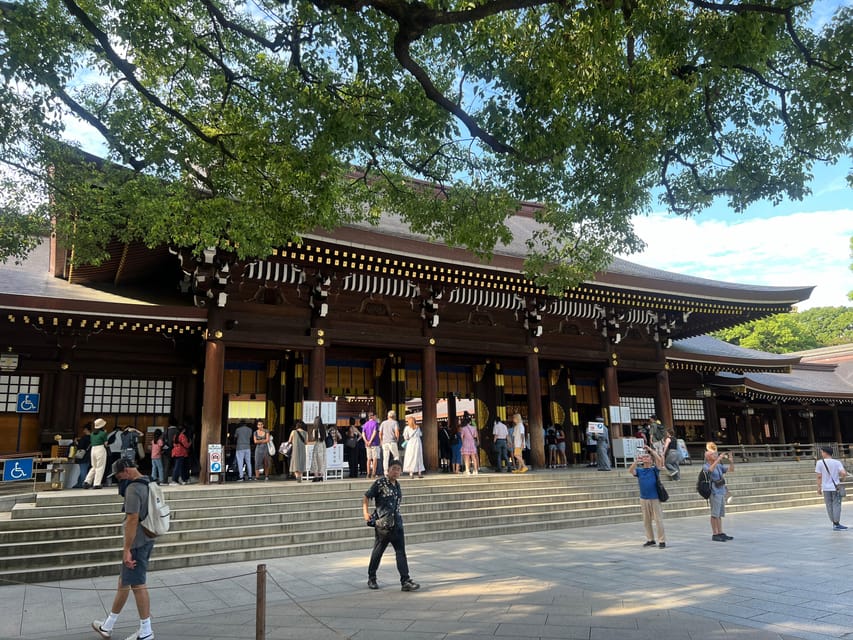
The main visit to Meiji Shrine lasts about an hour and combines guided sightseeing with cultural explanation. This is the part of the walk where the earlier lessons start to make sense.
Your guide explains the shrine’s background, the meaning of its customs, and the way people use the space. The focus stays on Shinto culture and the history of Meiji Jingu, including the Meiji period. You can ask questions as you go, which is important because Japanese religious customs can be easy to misunderstand from signs alone.
Previous guide pairings such as Minori and Nicholas have been praised for explaining both the shrine’s history and the differences between Shinto and Buddhist teachings. Other guides, including Hoshi, Naruto, and Maria, have received praise for answering questions and making the history accessible.
There may also be time to consider personal practices connected with the shrine. One family used the visit to write on an ema, a wooden wish plaque, and had its books stamped. Those activities are not specifically promised as part of the tour, so you should treat them as possible additions rather than guaranteed stops.
The hour is enough to make Meiji Jingu feel like more than a forest walk. Still, you should not expect a private, silent visit. This is an iconic Tokyo sight, and the grounds can be busy. The small group helps, but it cannot remove the crowds entirely.
How small groups change the experience
The advertised group can reach 12 people, though several departures have been much smaller. Some visitors have had groups of four, and at least two departures became private tours when other people did not attend.
That difference matters. In a group of four, you can ask more questions, hear the guide better, and move at a comfortable pace. A private departure may let you pause for photos or follow up on a subject that interests you. Yota, Ryota, Andres, Matt, and others have been praised for personal attention, humor, and patience.
The group size is not guaranteed, so you should book this tour for the guide and subject rather than assuming you will receive a private walk. Even with up to 12 people, the format remains more personal than a large bus tour.
The guides also add a local layer beyond the shrine. Several have offered restaurant ideas, food suggestions, and places to visit elsewhere in Tokyo. One guide helped a visitor choose ramen, while others suggested sushi, wagyu, fatty tuna, black sesame ice cream, and other local foods. These recommendations are an extra benefit, not a formal part of the itinerary, but they can make the tour useful as a first-day orientation.
Is $19 a fair price?
Yes, especially if you want cultural explanation rather than a self-guided visit. The $19 price includes an English-speaking guide, photos taken during the tour, historical insight into the surrounding districts, and admission to Meiji Shrine and the Imperial Garden.
You are paying for interpretation and ease. The shrine itself is the main attraction, but the guide helps you understand the rituals, historical setting, and visual details. If you already have strong knowledge of Shinto and Japanese history, you may find the basic sections familiar. Haydn’s ability to go deeper for people who already know the basics suggests that the question-and-answer time can improve the value.
The tour ends back at the same Starbucks near Harajuku, so you can continue exploring the area afterward. The two-hour length also fits neatly into a first morning or afternoon in Tokyo.
The strongest value comes when you take it early in your trip. Guides have helped people learn shrine etiquette, understand the metro, choose food, and plan later sightseeing. Those tips can save time and prevent small cultural mistakes during the rest of your visit.
Weather, walking, and accessibility
This is an outdoor walking experience, so wear comfortable shoes and prepare for the conditions. One group completed the tour in heavy rain and still found it personal and enjoyable, but wet weather will naturally make the forest paths and photo stops less comfortable.
The activity is listed as wheelchair accessible. You should still confirm current route details if you use a wheelchair, since the experience includes walking through shrine grounds and an extensive wooded area.
The meeting point is convenient once you identify the correct Starbucks, but the area can be busy. Arrive with enough time to check the coordinates and avoid beginning the tour stressed or late.
Free cancellation is available up to 24 hours before the start time, with a full refund. You can also reserve now and pay later, which helps if your Tokyo schedule is still changing.
The guides are a major part of the value
The shrine provides the setting, but the guide determines how much you take away. The strongest praise has gone to guides who combine clear English with patience, humor, and local suggestions.
Maya has been praised for being friendly and explaining the shrine well. Minori and Nicholas received strong praise for making Shinto, Buddhism, and the Meiji period easy to understand. Yumi, Hoshi, Naruto, Maria, and Sara have also been described as engaging and informative.
Andres appears repeatedly in positive feedback for his historical background, helpful attitude, food recommendations, and ability to explain Japanese customs. Yota and Ryota have been praised for making small groups feel personal, answering many questions, and taking photos. Doren was praised for both Japanese history and practical food planning, although one experience connected to him included other Tokyo sights beyond the two-hour Meiji Shrine route, so do not assume every departure follows the same expanded program.
Guide assignments can change, so you cannot select a particular person unless the booking system allows it. What you can choose is a format that encourages conversation and provides a useful cultural introduction.
Who should book this Meiji Jingu walk?
I would recommend it to first-time visitors who want a calm introduction to Tokyo after the intensity of arrival. It is also a good fit for families, since one guide kept children interested while explaining the shrine’s background.
Solo visitors gain from the photo help and the chance to ask questions without needing to organize a private guide. Couples and small groups will appreciate the relaxed pace and local food suggestions.
This is less suitable if you want a long religious ceremony, extensive free time, or a full-day historical tour. The itinerary is focused and efficient. You see the key areas, learn the basic customs, and return to Harajuku in two hours.
Should you book it?
Book this tour if you want Meiji Jingu to make sense, not just look beautiful. The $19 price is fair, the route covers the major points, and the English-speaking guides add useful context about Shinto, Buddhism, Japanese etiquette, and the Meiji period.
I would especially book it near the start of a Tokyo visit. The shrine gives you a peaceful first look at Japan, while the guide’s advice on prayer, food, neighborhoods, and later sightseeing can shape the rest of your trip. Skip it only if you prefer to explore quietly on your own or already have a strong understanding of Shinto culture.
FAQ
How long does the Meiji Shrine walking tour last?
The tour lasts two hours.
What language is the tour conducted in?
The live tour guide speaks English.
Where does the tour meet?
You meet in front of the Starbucks closest to Meiji Shrine. The listed coordinates are 35.6705208, 139.7031067.
Where does the tour finish?
The tour returns to the same Starbucks near Harajuku.
What places are included?
The route includes Meiji Jingu Gyoen, the Big Torii, the consecrated sake barrels, the consecrated wine barrels, and Meiji Shrine.
Is admission included?
Yes. Admission to Meiji Shrine and the Meiji Shrine Imperial Garden is included.
Are photos included?
Yes. Photos taken during the tour are included.
How large is the group?
Groups can include as many as 12 people. Some departures are smaller, and some have operated as private tours when other participants did not attend.
Is the tour wheelchair accessible?
Yes. The activity is listed as wheelchair accessible.
Can I cancel for a full refund?
Yes. You can cancel up to 24 hours in advance for a full refund. The tour also offers a reserve-now, pay-later option.
Just added around Tokyo
- Tokyo 6hr Instagram Highlights Private Tour with Licensed Guide★ 5.0 · 38 reviews
- Tokyo Small Group Tour with Guide★ 4.5 · 38 reviews
- Tokyo Sumo Experience with Live Show & Audience Challenge★ 5.0 · 38 reviews
- Japanese Food Cooking Class in Asakusa, Tokyo★ 5.0 · 39 reviews
- Very popular in Harajuku♡Animal petting zoo★ 4.6 · 39 reviews
- Ramen Making from Scratch with Tokyo Mom(Vegan Option Available)★ 5.0 · 39 reviews
- Tokyo JDM Night: 600hp C63s AMG Edition 1 (Private)★ 4.9 · 39 reviews
- Tokyo: Kimono Rental inside Shinjuku Gyoen National Garden★ 4.9 · 39 reviews
Temple & Shrine Tours, compared.
Fushimi Inari, Kinkakuji, Bamboo Grove 1 Day Bus Tour
Read our review →
Tea Ceremony in a Traditional Tea House in Kiyomizu
Read our review →
Meiji Shrine, Asakusa, Skytree Bus Tour and Cruise
Read our review →
Fushimi Inari Hidden Hiking Tour (Private Option Available)
Read our review →
Osaka/Kyoto:Kinkakuji,Arashiyama,FushimiInariShrine,NaraPark
Read our review →
Asakusa Walking Tour with Sensoji Temple Visit
Read our review →
Nikko: Kegon Falls, Lake Chuzenji & Toshogu Temple
Read our review →Browse the lists this tour appears in