
Reviewed · TEMPLE & SHRINE TOURS
Tokyo: Meiji Shrine Walking Tour — Shinto & Imperial System
The city disappears faster than you expect. This English-language walk leads you from Harajuku Station into a forest of about 100,000 trees, then explains Shinto customs, the Meiji era, and Japan’s 2,600-year-old imperial system in plain terms. I especially like the small group size, capped at 10 people, and the way the tour turns shrine etiquette into something you can actually use during the rest of your Japan trip.
I also like the mix of quiet nature and serious history. You see sake barrels, a huge wooden torii, imperial poetry, and the shrine itself, then have time for tea or snacks at Café Mori no Terrace. The main consideration is that this is English only, and the forest walk includes enough standing and walking that comfortable shoes make sense.
In This Review
- Key points at a glance
- Why Meiji Shrine makes a good first Tokyo tour
- Starting at Harajuku and entering the forest
- Sake barrels, wine barrels, and the symbols along the route
- The 12-meter torii made from ancient cypress
- Emperor Meiji, imperial poetry, and Japan’s change
- Meiji Shrine: how to take part respectfully
- A quiet break at Forest Terrace Meiji Jingu
- Is $23 a fair price?
- Who should book this Meiji Shrine walk?
- Final verdict: book it for meaning, not just photographs
- FAQ
- How long does the Meiji Shrine walking tour last?
- What language is the tour conducted in?
- How many people can join the tour?
- Where does the tour start and finish?
- Is the café food included in the tour price?
- Can I cancel the tour for a refund?
Key points at a glance
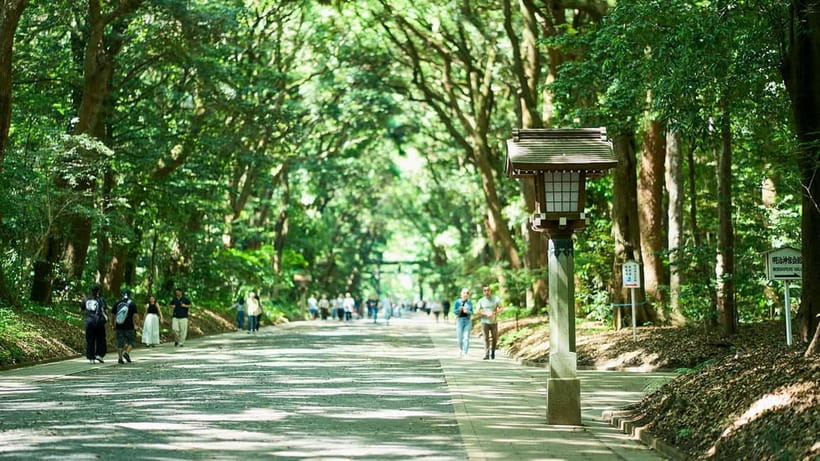
- A quiet forest in central Tokyo: The path through Meiji Shrine can feel far removed from the surrounding city, despite starting near busy Harajuku.
- The largest wooden torii: The 12-meter gate is made from a 1,500-year-old Taiwanese cypress and is one of the tour’s most memorable photo stops.
- Practical shrine etiquette: Your guide explains where to walk, how to approach the shrine, and how to take part respectfully.
- A useful history lesson: The tour connects Emperor Meiji, the imperial system, the samurai era, and Japan’s move toward modern life.
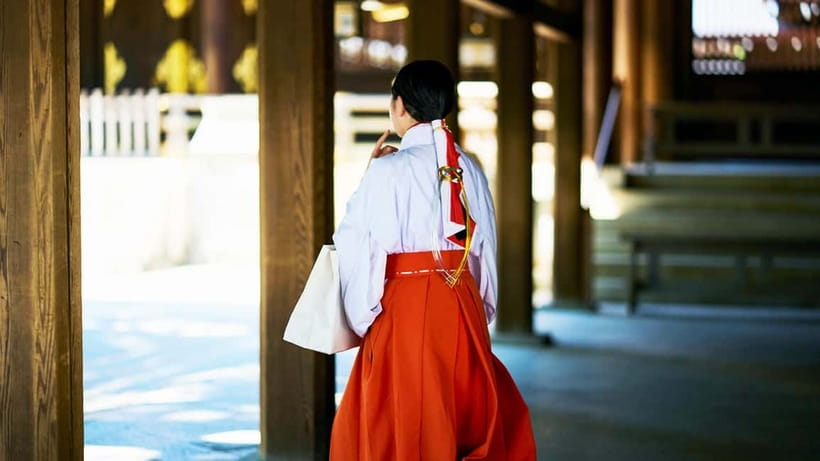
- Personal help at the shrine: Guides such as Yuuka, Keiko, Ayaka, Yuki, and Nonoka have been praised for answering questions, helping with fortunes, and taking photos.
- A gentle finish: Forest Terrace Meiji Jingu provides a natural place to pause with Japanese tea, light food, and souvenirs.
Why Meiji Shrine makes a good first Tokyo tour
Meiji Shrine is one of the easiest places in Tokyo to see how old customs still fit into modern daily life. Harajuku brings fashion shops, crowds, and neon energy. Walk a short distance toward the shrine, and the sound drops away under tall trees.
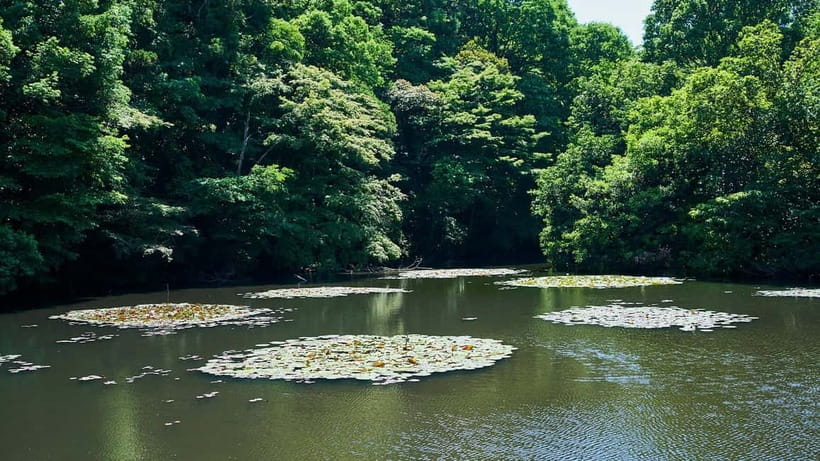
That change is the real opening act. You are not simply visiting a religious building. You are walking through a designed sacred setting where nature matters as much as architecture. Birds replace much of the city noise, and the shaded route gives you a welcome break from Tokyo’s hard edges.
The tour also gives you useful context before you reach the main shrine. Without an English guide, it is easy to admire the gates and barrels, snap a few photographs, and leave without understanding what you saw. With a guide, the route becomes a lesson in Shinto, Japanese customs, and the imperial family’s place in national history.
The small group limit matters here. Ten people is still enough for a social outing, but it is far easier to ask questions than on a large coach tour. Some departures may be smaller, and one guest described receiving what felt like a private tour when only one person attended. That sort of flexibility can make a real difference at a place filled with symbols and unfamiliar rituals.
More Temple & Shrine Tours in Tokyo
- Tokyo: Meiji Shrine, Asakusa, Skytree Bus Tour and Cruise
★ 4.7 · 1,986 reviews - Tokyo: Asakusa Walking Tour with Sensoji Temple Visit
★ 4.8 · 1,583 reviews - Nikko: Kegon Falls, Lake Chuzenji & Toshogu Temple
★ 4.6 · 1,577 reviews
Starting at Harajuku and entering the forest
The meeting point is associated with Harajuku Station, though the exact point can vary by booking option. Check your confirmation carefully, then allow enough time to find the guide before the walk begins.
The first listed stop is Meiji Jingu Ichino Torii, the first shrine gate. This is where your guide begins explaining how to enter the grounds and how the shrine differs from a Buddhist temple. The distinction is useful because Tokyo places both traditions close together, and the visual clues are not always obvious to first-time visitors.
One small rule makes an immediate impression. When you pass through a torii, keep to the side of the path rather than walking directly down the middle. The central route, called seichu, is reserved for the deities. Your guide can show you how to follow the custom without making the moment feel stiff or theatrical.
I like this kind of explanation because it gives you a simple action to remember. You are not asked to master a long list of rules. You learn enough to move through the shrine with care, then can use the same habit at other Shinto shrines in Japan.
The path itself takes about 10 minutes at the first stop, followed by further walking through the trees. The ground is not described as difficult, but this is a walking tour, not a vehicle-based sightseeing trip. Wear shoes that are comfortable for an hour or more on foot.
Sake barrels, wine barrels, and the symbols along the route
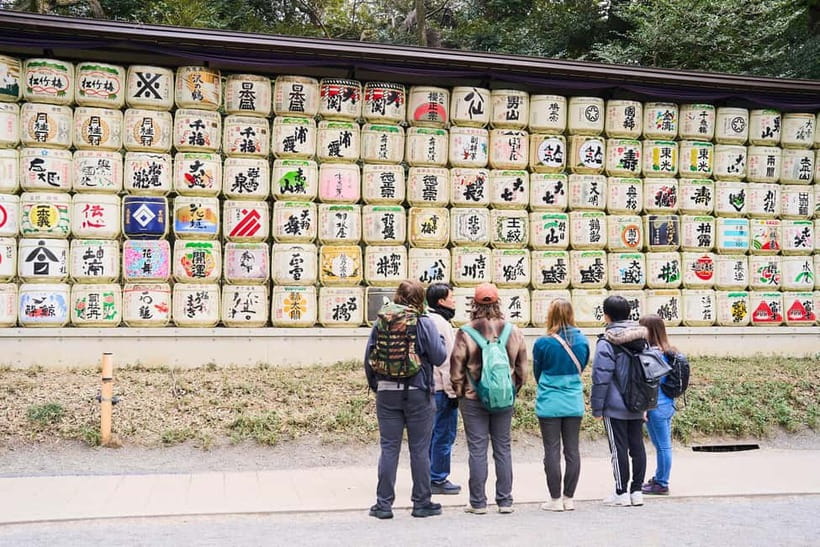
The route pauses at Meiji Shrine’s consecrated wine barrels and sake barrels. These displays are excellent examples of why a guide helps. To you, they may first look like colorful rows of containers. An English-speaking guide can explain their religious and cultural meaning, as well as why they have a place beside the approach to the shrine.
The wine barrels offer a reminder that Meiji Shrine is not sealed away from the outside world. The sake barrels connect the shrine to a familiar Japanese tradition of offering alcohol in a sacred setting. The tour separates these stops, giving you time to look, take photographs, and ask questions instead of rushing past them.
This section is brief, with about 10 minutes at the wine barrels and 5 minutes at the sake barrels. That is enough for a clear explanation, but not enough for a long lecture. If you enjoy asking about ceremony, offerings, or modern shrine life, this is a good point to use your guide’s attention.
Several guides are repeatedly praised for making these details easy to follow. Yuuka has used photographs showing the area before construction began, which can help you picture how the shrine grounds changed. Other guides, including Keiko, Yuki, and Nonoka, are praised for explaining unfamiliar customs in small, understandable pieces.
The 12-meter torii made from ancient cypress
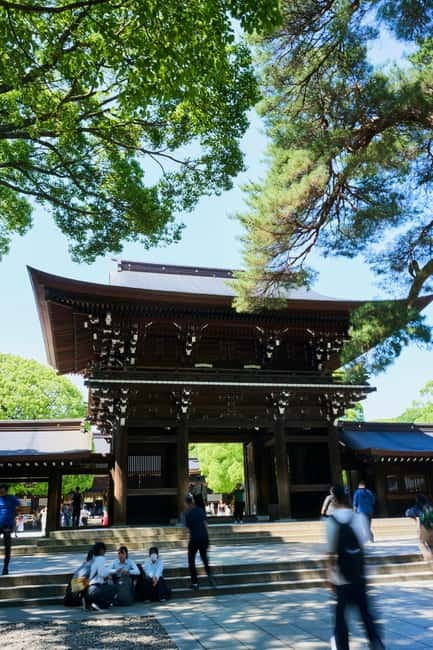
The big torii is the visual high point of the approach. It rises 12 meters above the path and was crafted from a 1,500-year-old Taiwanese cypress. That single fact gives the gate a weight that a photograph cannot quite capture.
Your guide stops here for photographs and explains the proper way to pass through. The gate’s scale also helps you understand the transition from ordinary Tokyo to sacred ground. It is not just a dramatic entrance for cameras. It marks a change in how the space is meant to be approached.
The stop lasts about 10 minutes, so you should have time to look up, take pictures, and listen. On busy days, you may need patience around other people using the same route. The tour does not turn the shrine into a private attraction, and the guide cannot control the number of other visitors on the grounds.
That is one reason the small group is useful. A guide can keep everyone together without creating a large moving crowd. The pace also leaves room for photographs rather than treating the torii as a quick tick on a list.
More Walking Tours in Tokyo
- Tokyo Tsukiji Fish Market Food and Culture Walking Tour
★ 5.0 · 3,184 reviews - Tokyo: Imperial Palace and Shogun Historical Walking Tour
★ 5.0 · 2,251 reviews - Tokyo: Shinjuku Local Bar and Izakaya Guided Walking Tour
★ 4.9 · 1,794 reviews - Tokyo: Tsukiji Fish Market Food and Walking tour
★ 5.0 · 1,724 reviews
Emperor Meiji, imperial poetry, and Japan’s change
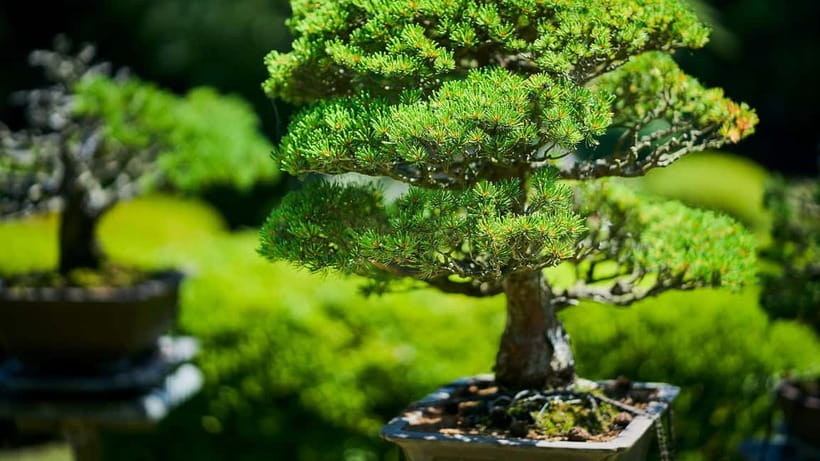
The tour’s history section focuses on Emperor Meiji, Empress Shoken, and the imperial system. You hear about Japan’s movement from the samurai era toward modern society, along with the long span of the country’s imperial tradition.
This is valuable because Meiji Shrine can otherwise seem like an isolated religious site. The shrine’s name, the imperial poetry, and the surrounding displays all make more sense when you understand the people it honors and the period that shaped modern Japan.
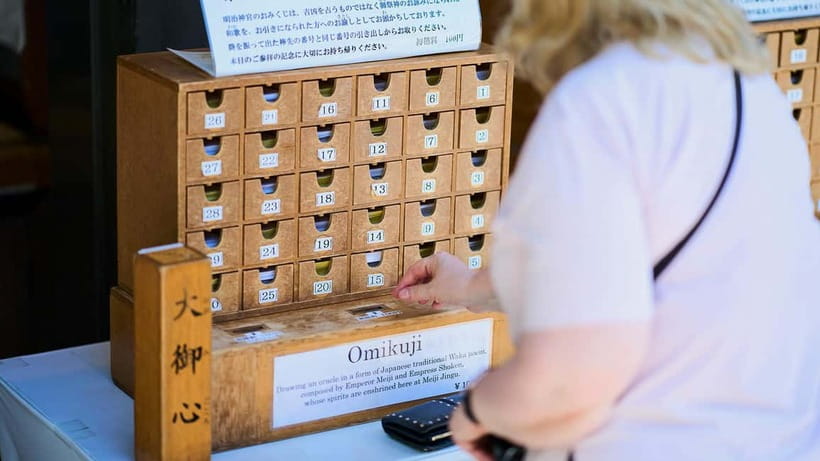
A stop devoted to imperial poetry gives you a more personal way into that subject. You can find Omigokoro, a type of omikuji featuring poems written by Emperor Meiji and Empress Shoken. English translations are available, so you can read the meaning rather than simply receiving a Japanese text with no context.
The guides are especially helpful here because the imperial system can be a complicated subject for first-time visitors. A good explanation should connect the broad national story to what you see in front of you, without turning the walk into a classroom session. Yuki, Yuuki, and Ayaka have been praised for making history clear and engaging, while Nonoka has been noted for explaining differences between haiku and waka.
I would treat this part as an introduction, not a full course in Japanese history. The tour gives you a framework for understanding Meiji Shrine and the Meiji period. You will not get every political detail in a 90 to 135-minute walk, and that is probably the right choice for a shrine visit.
Meiji Shrine: how to take part respectfully
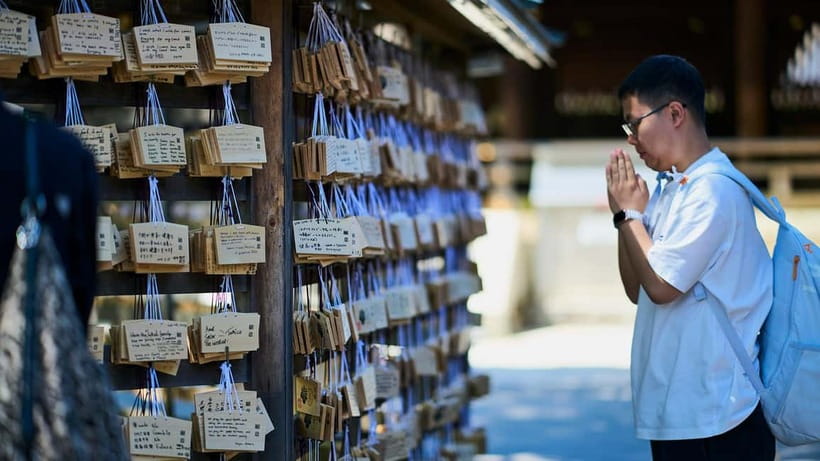
The main shrine visit takes about 45 minutes, making it the longest stop. You have time for sightseeing, free time, shopping, and participation in shrine customs.
Shinto is presented as an ancient Japanese religion rooted in respect for nature and harmony with the divine. The forest setting makes that idea easier to grasp than a definition in a guidebook. The trees, quiet path, gates, offerings, and gestures all work together.
Your guide shows you how to pay your respects and what to avoid. This practical help is one of the tour’s strongest features. You can follow the customs with confidence instead of guessing at the right moment or copying whoever happens to be nearby.
Guides have also helped people with written wishes, shrine fortunes, amulets, and photographs. One guide provided coins for an offering when a participant did not have any. That small gesture says a lot about the service level you can expect from the best guides on this walk.
At the shrine shop, you can purchase omamori, protective charms with different purposes. You may also find Omigokoro poetry fortunes, which are more distinctive than a standard fortune because they include verses connected to the imperial couple.
The gift items at Forest Terrace offer another option. Eco-blocks made from fragrant Japanese camphor and miniature barrels of sacred sake make more unusual souvenirs than generic Tokyo merchandise. They are small, easy to pack, and tied directly to the place you have just visited.
The shrine can be particularly busy, including on Sundays and during important seasonal periods. One guide helped a group navigate the customs during the New Year season, while another group saw a wedding. These moments cannot be promised, but they show how the grounds function as a living place of worship rather than a museum set.
A quiet break at Forest Terrace Meiji Jingu

The final stop is Café Mori no Terrace, located at Forest Terrace Meiji Jingu. The planned break lasts about 15 minutes and includes time for photographs, shopping, and a pause in the scenery.
You can enjoy Japanese tea and light snacks here, but the tour price does not state that food or drinks are included. Plan to pay separately if you want something from the café or gift shop.
This break is well placed. After the main shrine visit, you can sit down, review what you have learned, and decide if you want a souvenir. It also gives the tour a softer ending than simply depositing you back at the station.
The return point is Harajuku Station, with two drop-off options listed under the experience. Confirm your selected option when you book, since the meeting point may vary depending on the choice you make.
Is $23 a fair price?
At $23 per person, this is a reasonable price for a small-group guided walk lasting 90 to 135 minutes. Meiji Shrine itself offers the forest, gates, and shrine buildings, but the fee pays for the explanations and practical help that make those features easier to understand.
I would especially consider the price worthwhile if this is your first visit to Japan. Learning how to enter a shrine, where to walk, how to make an offering, and how to handle a fortune can remove much of the uncertainty you may feel during the rest of your trip.
The value is also strong for people interested in Japanese history. The walk brings together Shinto, imperial poetry, the Meiji period, and the shift from samurai society to modern Japan. You get several subjects in a compact format without committing half a day.
The tradeoff is that the tour is not designed for total independence. If you prefer wandering alone, reading signs at your own pace, and avoiding scheduled stops, you may find the guided structure restrictive. You also need to budget extra for café purchases, snacks, and souvenirs.
The cancellation terms are flexible: you can cancel up to 24 hours in advance for a full refund. You can also reserve now and pay later, which helps if your Tokyo schedule is still changing.
Who should book this Meiji Shrine walk?
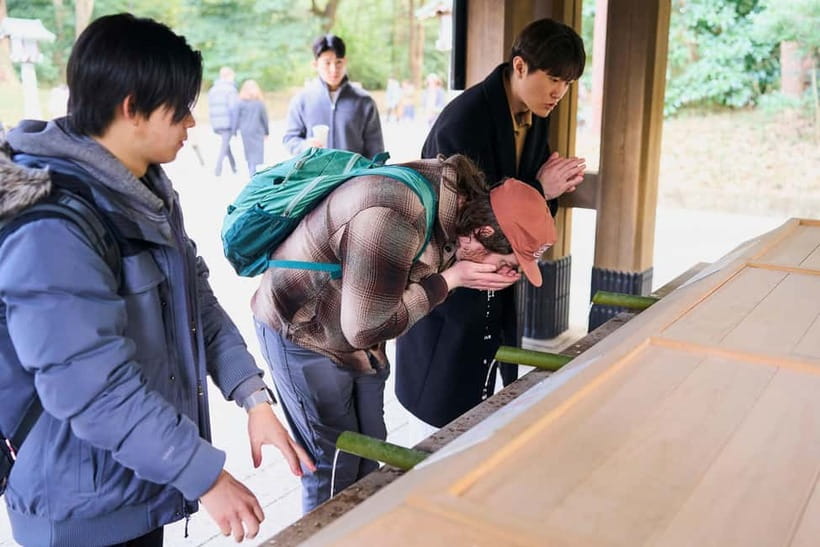
I would recommend it to first-time visitors who want cultural context without a long academic lecture. It is also a good fit if you are unsure how to behave at a Shinto shrine and want a guide to demonstrate the basics.
Families may appreciate the manageable group size and the chance to stop for photographs. Couples and solo visitors can also benefit, especially if they want help with fortunes, charms, or shrine etiquette.
History-minded visitors should choose a departure that leaves enough time for questions. The guides have been praised for adapting the experience to individual interests, and smaller groups can make that easier.
You should think twice if you want a silent nature walk. The forest itself is peaceful, but the guide talks throughout the route, and the purpose of the tour is interpretation. Also remember that support is available in English only. Japanese language assistance is not provided.
Final verdict: book it for meaning, not just photographs
Book this tour if you want Meiji Shrine to make sense. The forest and giant torii are worth seeing on their own, but the guide adds the customs, imperial connections, and historical background that turn a pretty walk into a useful introduction to Japan.
The strongest reason to book is the practical teaching. Guides such as Keiko, Yuuka, Ayaka, Yuki, and Nonoka have been praised for warmth, clear English, patience, and personal help with shrine activities. Those qualities matter more here than a memorized speech.
Skip it if you already understand Shinto etiquette and the Meiji period, or if you would rather explore at your own pace. For most first-time visitors, though, $23 is a fair exchange for a small group, a peaceful stretch of Tokyo, and a better understanding of what you are seeing.
FAQ
How long does the Meiji Shrine walking tour last?
The tour lasts between 90 and 135 minutes, depending on the selected departure and availability.
What language is the tour conducted in?
The tour is conducted in English only. Japanese language support is not available.
How many people can join the tour?
The group is limited to 10 participants.
Where does the tour start and finish?
The listed starting and drop-off location is Harajuku Station. The exact meeting point may vary depending on the option booked.
Is the café food included in the tour price?
The experience includes a break at Café Mori no Terrace, where you can enjoy Japanese tea and light snacks. The provided details do not state that food or drinks are included in the $23 price.
Can I cancel the tour for a refund?
Yes. You can cancel up to 24 hours in advance for a full refund. You can also reserve now and pay later.
Just added around Tokyo
- Tokyo 6hr Instagram Highlights Private Tour with Licensed Guide★ 5.0 · 38 reviews
- Tokyo Small Group Tour with Guide★ 4.5 · 38 reviews
- Tokyo Sumo Experience with Live Show & Audience Challenge★ 5.0 · 38 reviews
- Japanese Food Cooking Class in Asakusa, Tokyo★ 5.0 · 39 reviews
- Very popular in Harajuku♡Animal petting zoo★ 4.6 · 39 reviews
- Ramen Making from Scratch with Tokyo Mom(Vegan Option Available)★ 5.0 · 39 reviews
- Tokyo JDM Night: 600hp C63s AMG Edition 1 (Private)★ 4.9 · 39 reviews
- Tokyo: Kimono Rental inside Shinjuku Gyoen National Garden★ 4.9 · 39 reviews
Temple & Shrine Tours, compared.

Fushimi Inari, Kinkakuji, Bamboo Grove 1 Day Bus Tour
Read our review →
Tea Ceremony in a Traditional Tea House in Kiyomizu
Read our review →

Meiji Shrine, Asakusa, Skytree Bus Tour and Cruise
Read our review →
Fushimi Inari Hidden Hiking Tour (Private Option Available)
Read our review →
Osaka/Kyoto:Kinkakuji,Arashiyama,FushimiInariShrine,NaraPark
Read our review →
Asakusa Walking Tour with Sensoji Temple Visit
Read our review →
Nikko: Kegon Falls, Lake Chuzenji & Toshogu Temple
Read our review →Browse the lists this tour appears in