
Reviewed · TEMPLE & SHRINE TOURS
Tokyo: Meiji Shrine Walking Tour — Shintoism & Imperial System
Quiet woods, royal history, city edge. This Meiji Shrine walking tour gives you a calm break from Tokyo while explaining the rituals that can be easy to miss on your own. I like the small-group format, capped at 15 people, and the way the route combines the shrine, imperial garden, and forest approach. I also like that guides such as Yuuki, Nana, Keiko, and Nonoka have been praised for clear English and warm, personal help.
The one consideration is time. At about 90 minutes, this is a focused introduction rather than a slow, full exploration of every corner. The main shrine is free to enter, while the garden admission is included, so the $21.22 price makes good sense if you want context and an organized visit without spending half a day here.
In This Review
- Key points to know before you go
- Why Meiji Shrine feels so different from Harajuku
- Meeting at Harajuku Station
- Walking beneath the giant torii
- The forest path and its quiet rituals
- Meiji Jingu and the meaning of the visit
- The garden admission and what the price covers
- Café Mori no Terrace and the final stop
- What the guides add to the experience
- Who should book this Meiji Shrine walk?
- Booking, cancellation, and useful planning notes
- Should you book this tour?
- FAQ
- How long does the Meiji Shrine walking tour last?
- Where does the tour begin?
- Where does the tour end?
- Is admission to Meiji Shrine included?
- How many people can join the tour?
- Are there different tour times?
- Can I cancel for a full refund?
Key points to know before you go
- The walk begins at Harajuku Station: You meet at 1 Chome-18 Jingumae, a convenient starting point near public transportation.
- A giant cypress torii sets the tone: The wooden gate was made from ancient cypress brought from Taiwan and is one of the most memorable parts of the approach.
- You learn how Shinto works in practice: Purification, prayer, omikuji, ema plaques, and omamori charms all make more sense with a guide nearby.
- The forest path feels far from central Tokyo: Wide paths and thick foliage create a cool, quiet setting, especially useful during hot weather.
- The guide makes the difference: Yuuki, Nana, Keiko, Nonoka, and Nanami received praise for patience, English, enthusiasm, and personal knowledge.
- The visit ends near a café and shop: Mori no Terrace offers light food and drinks, while the shop sells charms and Meiji Jingu items.
Why Meiji Shrine feels so different from Harajuku
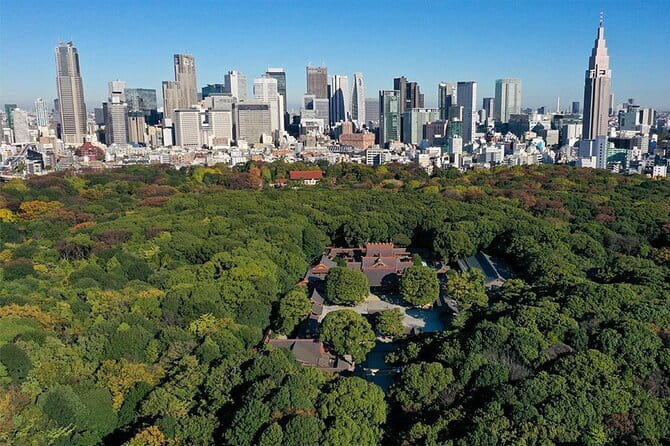
Harajuku is known for fashion, crowds, and quick-moving city energy. Then you pass through the shrine approach and the mood changes almost at once. The path becomes broad and shaded, with tall trees on both sides and the sound of the city fading behind you.
That contrast is the heart of the experience. You do not need to travel far from central Tokyo to find quiet. Meiji Shrine gives you a place where nature, religion, and modern Japanese history meet, and a guide helps connect those pieces.
The shrine was built for Emperor Meiji and Empress Shoken, so the visit is not only about Shinto worship. You also learn about the imperial system and the role of the shrine in modern Japan. That wider context matters. Without it, you might see a beautiful forest, a large gate, and a few unfamiliar rituals. With it, the route becomes easier to understand.
I especially like this tour for a first visit to Tokyo. It gives you a cultural starting point without asking you to master a long lecture or spend an entire morning indoors. The walk is active but gentle, and the setting provides a welcome pause from train stations, shopping streets, and traffic.
More Temple & Shrine Tours in Tokyo
- Tokyo: Meiji Shrine, Asakusa, Skytree Bus Tour and Cruise
★ 4.7 · 1,986 reviews - Tokyo: Asakusa Walking Tour with Sensoji Temple Visit
★ 4.8 · 1,583 reviews - Nikko: Kegon Falls, Lake Chuzenji & Toshogu Temple
★ 4.6 · 1,577 reviews
Meeting at Harajuku Station
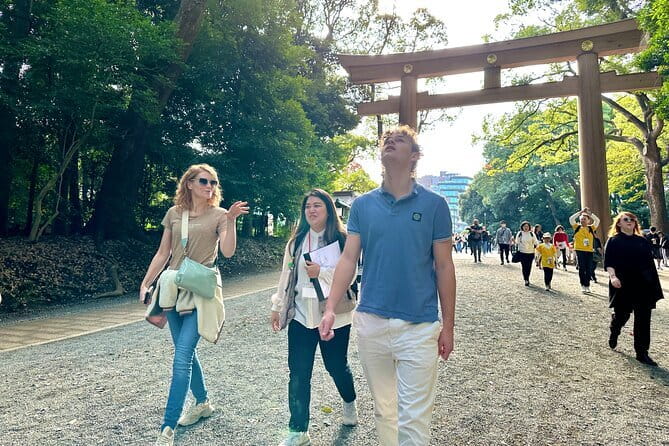
The tour starts at Harajuku Station, at 1 Chome-18 Jingumae, Shibuya, Tokyo 150-0001. That location makes practical sense because the Harajuku side is the natural gateway to Meiji Shrine.
You should allow enough time to find the meeting point. The tour itself is only about an hour and a half, so arriving flustered can take away from the opening explanation. Since the activity ends back at the meeting point, you can easily continue with Harajuku afterward or use public transportation for your next stop.
Two tour times are available, which helps if you are fitting Meiji Shrine between breakfast, shopping, or another Tokyo attraction. The exact times are selected during booking, so check your confirmation carefully.
The group can include up to 15 people. That is not a private tour, but it is small enough for the guide to answer questions and keep the walk together. If you are traveling alone, this format also gives you company without the cost of a private guide.
Walking beneath the giant torii
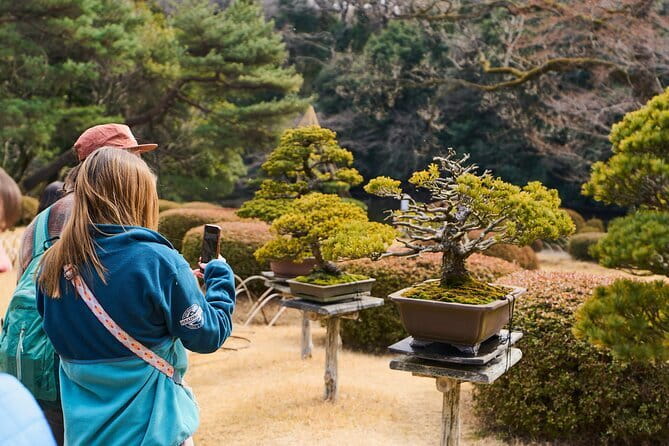
The first strong visual moment comes at the large wooden torii gate. It is made from ancient cypress brought from Taiwan, and its scale gives the entrance a formal, almost ceremonial feeling.
A torii marks the boundary between ordinary space and a Shinto shrine area. Your guide can explain this change in setting before you reach the main buildings, which is useful because the symbolism is easy to miss if you simply walk through taking photographs.
The gate also gives you a sense of the shrine’s scale. This is not a tiny neighborhood sanctuary tucked between buildings. The approach opens into a broad wooded route, and the large gate prepares you for the formal space ahead.
The stop at the torii is listed at about five minutes. That is enough for an explanation and a few photographs, but not a long pause. If you enjoy taking careful pictures, you may need to do so quickly while keeping up with the group.
The forest path and its quiet rituals
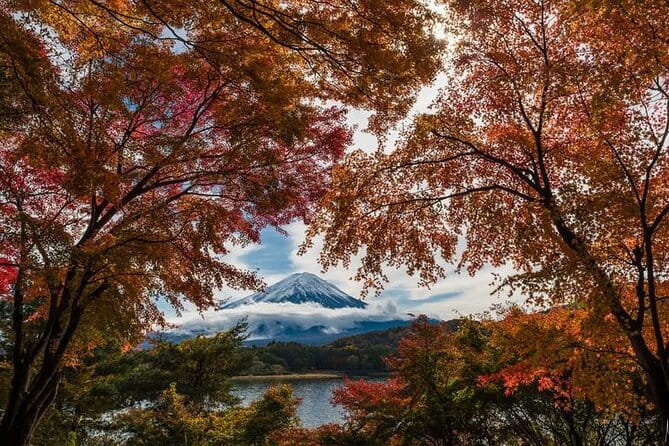
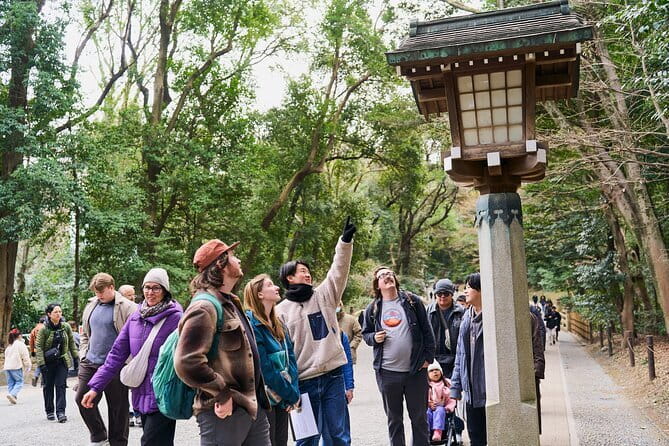
The route continues along a peaceful forest path toward the main shrine. The foliage is one of the tour’s biggest pleasures. A past visitor particularly appreciated how cool the grounds felt even in hot summer, and that is a useful point for planning: the trees provide shade during a walk that would otherwise feel exposed.
Along the way, you pass displays of sake barrels and purification facilities. These details are small but important. They show how the shrine connects ceremony, offerings, and everyday visitor participation.
Purification is one of the first customs you may encounter at a Shinto shrine. The guide can explain how to approach the water area and why cleansing comes before prayer. Having someone explain the purpose and order of the ritual keeps you from treating it like a random photo stop.
This is where the tour earns its fee. You are not simply walking through attractive grounds. You are being shown how to read the place. A sake barrel display becomes part of shrine practice. A purification fountain becomes a preparation for worship. A forest path becomes part of the experience rather than just a route between two buildings.
The path is wide, but the tour still involves walking for most of the 90-minute visit. Wear shoes you can comfortably use outdoors, and expect the pace to include several standing explanations. The supplied information does not promise a fully accessible route, so anyone with specific mobility needs should confirm details before booking.
More Walking Tours in Tokyo
- Tokyo Tsukiji Fish Market Food and Culture Walking Tour
★ 5.0 · 3,184 reviews - Tokyo: Imperial Palace and Shogun Historical Walking Tour
★ 5.0 · 2,251 reviews - Tokyo: Shinjuku Local Bar and Izakaya Guided Walking Tour
★ 4.9 · 1,794 reviews - Tokyo: Tsukiji Fish Market Food and Walking tour
★ 5.0 · 1,724 reviews
Meiji Jingu and the meaning of the visit
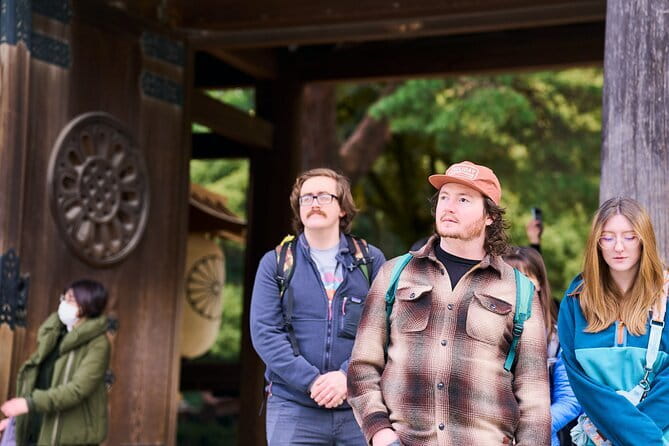
The main shrine is the center of the tour, with about 30 minutes allotted here. You have time to offer a prayer, look at the shrine buildings, and ask about Shinto beliefs and the imperial connection.
This is also the part of the visit where the guide’s style matters most. Yuuki was praised for patience and for explaining a great deal without rushing. Nana was singled out for placing Shinto rituals and history into context. Keiko was appreciated for her love of the shrine and the culture around it. Nonoka received warm comments for being friendly, enthusiastic, and well informed, while Nanami was praised for knowing details about the shrine’s creation and even the flowers that bloom there.
Those comments point to the tour’s main strength: the human explanation. The buildings themselves are impressive, but the visit becomes more useful when you understand what people are doing and why.
You can also explore several traditional items here. Omikuji are fortunes or written guidance, and Meiji Jingu has a distinctive type that your guide can explain. You may write a wish on an ema, a wooden plaque, and look at omamori, the protective charms sold at the shrine.
These activities give you a way to take part without needing to speak Japanese or know the correct customs in advance. You are still responsible for showing respect, of course, but the guide helps you approach the rituals with confidence.
The imperial material adds another layer. Meiji Shrine is tied to Emperor Meiji and Empress Shoken, so your guide discusses how the shrine relates to Japan’s imperial system. This makes the tour a good fit if you are interested in political history as well as religion.
Do not expect a full academic treatment of Japanese imperial history in half an hour. The tour is designed for a general audience, and its value comes from a clear introduction rather than exhaustive detail. You get enough background to understand what you are seeing and to continue learning later if the subject catches your interest.
The garden admission and what the price covers

The price is $21.22 per person. Meiji Shrine itself does not charge an admission fee, but admission to the Meiji Shrine Garden is included in the tour.
That distinction matters when judging value. You are paying mainly for a local guide, a planned route, and explanations of customs and history, with the garden fee already handled. You also avoid the uncertainty of arriving alone and wondering which parts of the grounds are worth your limited time.
At this price, I consider the tour good value for a first visit, especially if you are curious about Shinto and do not want to read background material while walking. It is less compelling if you only want a quick photograph at the shrine gate and a short look at the main building. In that case, you could visit the free shrine area independently.
The small group also improves the value. A maximum of 15 people keeps the price well below a private tour while giving you a chance to ask questions. The experience is not designed around luxury or special access. It is a practical cultural walk with a local person who can explain what you would otherwise pass without noticing.
Café Mori no Terrace and the final stop
The visit ends near Café Mori no Terrace and a gift shop, with about 15 minutes set aside. This is a sensible ending because you can pause after the walk rather than being sent straight back into the city.
The café offers light meals and drinks in a forest setting. The available information does not specify a menu, so think of it as a convenient refreshment stop rather than a planned dining experience. If you need a full meal, you may prefer to continue into the surrounding Harajuku area afterward.
The shop sells charms, traditional goods, and Meiji Jingu exclusive items. Omamori charms can be meaningful souvenirs because they connect directly to the shrine visit, while the ema and other traditional goods provide a more personal reminder than a standard Tokyo trinket.
The 15-minute stop is short. You can browse, buy a small item, and have a drink, but you may not have time for a relaxed café break if the group stays on schedule. I would treat this as an optional finishing touch rather than the main reason to book.
What the guides add to the experience
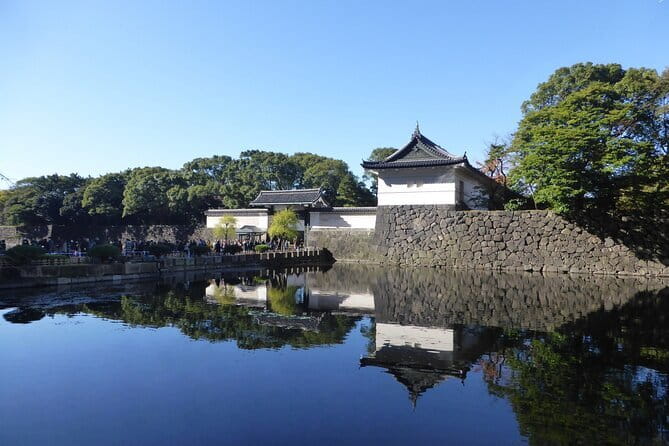
The strongest praise centers on the guides. Yuuki is described as patient and clear. Nana is credited with explaining Shinto rituals and history in a way that adds meaning to the walk. Keiko’s personal affection for the shrine came through in her explanations, and Nonoka was praised for a friendly, energetic approach.
English ability was also praised directly, including by someone who appreciated a Japanese guide’s ability to answer questions thoroughly. That is important at a religious site where small misunderstandings can affect how you behave.
Guide assignments can change, so you should not book on the assumption that one particular person will lead your group. Still, the repeated praise for several guides suggests that the provider has a strong local team.
I like the fact that the comments describe help for both groups and solo visitors. That fits the tour’s format. You can ask questions about a ritual, history, or object without feeling that you need to prepare in advance.
Who should book this Meiji Shrine walk?
I would recommend this experience if you fit one or more of these descriptions:
- You are visiting Tokyo for the first time and want an easy cultural introduction.
- You are interested in Shinto customs but would like help with etiquette.
- You want to understand the connection between Meiji Shrine and Japan’s imperial system.
- You prefer a small group to a large sightseeing crowd.
- You want a calm outdoor walk near Harajuku.
- You are traveling alone and would appreciate a guide and a little group company.
Families may also find the 90-minute length manageable, although the tour includes walking and standing. People who already know Meiji Shrine well may find the pace and introductory explanations too basic.
The tour is not the right pick if you want extensive free time for photography, a private guide, or a long visit to every part of the garden. The schedule is organized and fairly tight. That structure helps you see the main points, but it limits wandering.
The activity has a 5.0 rating from 209 reviews and a 100 percent recommendation rate. Those figures support the idea that the tour delivers what it promises, particularly through its guides and clear cultural explanations. They do not mean every person will want the same pace, so match the format to your interests.
Booking, cancellation, and useful planning notes
Confirmation arrives at booking, and the activity is near public transportation. Most people can participate, but the available information does not give detailed accessibility specifications. If you have mobility, sensory, or other access needs, ask the provider before reserving.
Free cancellation is available up to 24 hours before the start time for a full refund. Cancellations or changes made within 24 hours are not refunded or accepted, and the cut-off follows local Tokyo time.
I would schedule the tour when you have enough room afterward to enjoy Harajuku or continue to another nearby plan. Avoid stacking it against a timed attraction across the city. The meeting point is simple, but Tokyo transfers can still consume more time than expected.
Should you book this tour?
Yes, if you want more than a quick shrine photograph. For $21.22, you get a guided walk through a peaceful forest, the garden admission, an introduction to Shinto practice, and useful background on the imperial system. The strongest reason to book is the guide support, with Yuuki, Nana, Keiko, Nonoka, and Nanami all praised for warmth, patience, English, and clear explanations.
Skip it if you prefer to wander alone, already understand shrine customs, or want a longer garden visit. Otherwise, this is a well-priced way to turn an attractive stop near Harajuku into a meaningful part of your Tokyo visit.
FAQ
How long does the Meiji Shrine walking tour last?
The tour lasts approximately 1 hour and 30 minutes.
Where does the tour begin?
It begins at Harajuku Station, at 1 Chome-18 Jingumae, Shibuya, Tokyo 150-0001, Japan.
Where does the tour end?
The activity ends back at the meeting point.
Is admission to Meiji Shrine included?
Meiji Shrine has no admission fee. Admission to the Meiji Shrine Garden is included in the tour price.
How many people can join the tour?
The tour has a maximum group size of 15 people.
Are there different tour times?
Yes. You can choose from two tour times to fit your schedule.
Can I cancel for a full refund?
Yes, if you cancel at least 24 hours before the experience start time. Cancellations made less than 24 hours before the start time are not refunded, and changes within that period are not accepted.
Just added around Tokyo
- Tokyo 6hr Instagram Highlights Private Tour with Licensed Guide★ 5.0 · 38 reviews
- Tokyo Small Group Tour with Guide★ 4.5 · 38 reviews
- Tokyo Sumo Experience with Live Show & Audience Challenge★ 5.0 · 38 reviews
- Japanese Food Cooking Class in Asakusa, Tokyo★ 5.0 · 39 reviews
- Very popular in Harajuku♡Animal petting zoo★ 4.6 · 39 reviews
- Ramen Making from Scratch with Tokyo Mom(Vegan Option Available)★ 5.0 · 39 reviews
- Tokyo JDM Night: 600hp C63s AMG Edition 1 (Private)★ 4.9 · 39 reviews
- Tokyo: Kimono Rental inside Shinjuku Gyoen National Garden★ 4.9 · 39 reviews
Temple & Shrine Tours, compared.
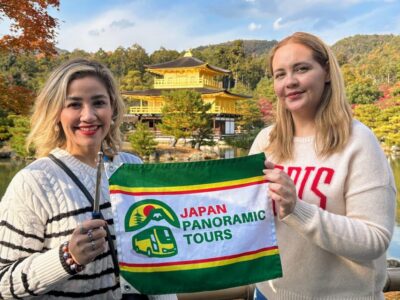
Fushimi Inari, Kinkakuji, Bamboo Grove 1 Day Bus Tour
Read our review →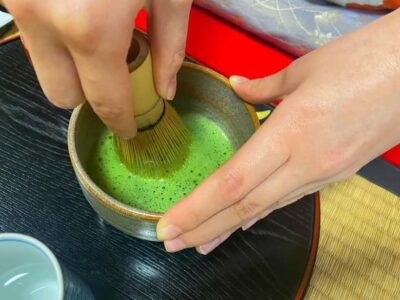
Tea Ceremony in a Traditional Tea House in Kiyomizu
Read our review →

Meiji Shrine, Asakusa, Skytree Bus Tour and Cruise
Read our review →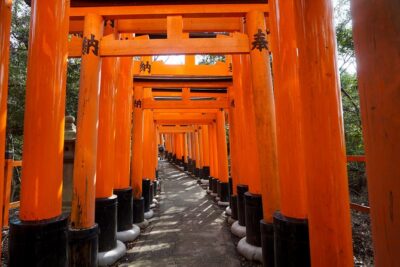
Fushimi Inari Hidden Hiking Tour (Private Option Available)
Read our review →
Osaka/Kyoto:Kinkakuji,Arashiyama,FushimiInariShrine,NaraPark
Read our review →
Asakusa Walking Tour with Sensoji Temple Visit
Read our review →
Nikko: Kegon Falls, Lake Chuzenji & Toshogu Temple
Read our review →Browse the lists this tour appears in