
Reviewed · CYCLING TOURS
KIYOTO’s Kyoto Private E-Cycling Tour: Highlights & Hidden Gems
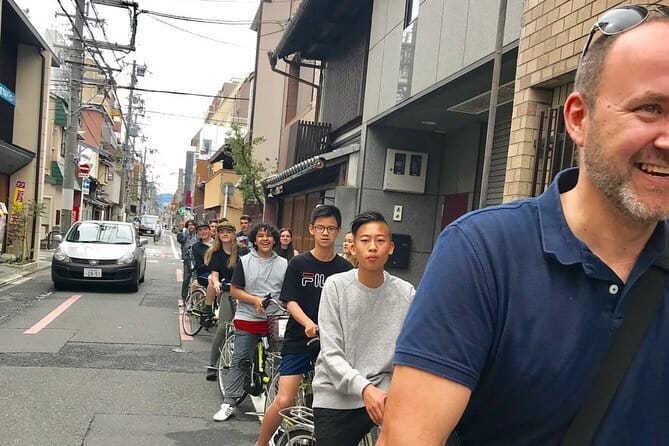
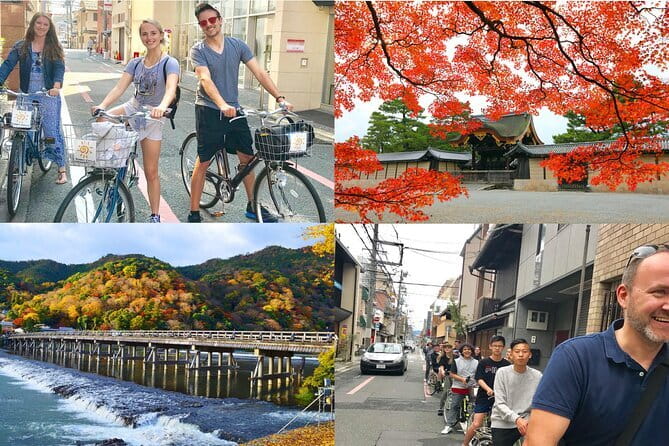
Kyoto rewards two wheels. KIYOTO’s private e-bike tour gives you a fast, flexible way to connect famous shrines, quiet temples, riverside paths, and everyday neighborhoods that are hard to link on foot. I especially like the private format, which lets your guide adjust the route, and the comfortable electric bikes, which make a long day around Kyoto much easier.
The tour also earns praise for its guides. Yonnie, Yuhey, Yuichi, Mana, Takuma, Polina, Kento, and others are described as friendly, helpful, safe, and good at explaining Japanese customs and local life. The main drawback is simple: this is still a physically active outing, and the advertised four-to-eight-hour range can be a long time in the saddle for anyone not used to city cycling.
In This Review
- Key things to know before you book
- Why an e-bike makes sense in Kyoto
- Starting at Sunny CycleJapan
- Fushimi Inari, Komyo-in, and Tofuku-ji
- Yasaka Pagoda and the Gion streets
- Heian Jingu and Nanzen-ji
- The Philosopher’s Walk and Honen-in
- Shimogamo Jinja and the Kamogawa Delta
- Kyoto Gyoen, central streets, and local Kyoto
- What the guides add to the ride
- Price, timing, and who gets the best value
- Practical fit and final call
- FAQ
- How long does KIYOTO’s Kyoto private e-cycling tour last?
- Is the electric bike included?
- Can children join the tour?
- Are temple and shrine admission fees included?
- Where does the tour start and finish?
- What happens if I need to cancel?
Key things to know before you book
- You can cover far more ground than on foot: The route links southern, eastern, northern, and central Kyoto in one outing.
- Fushimi Inari and quiet temple lanes share the same day: You get major sights, but also calmer places such as Komyo-in and Honen-in.
- The private guide changes the experience: Your pace and stops can be adjusted around your interests and the places you have already seen.
- Electric bikes are included: Regular bicycles are available too, and limited children’s bikes and child seats can be requested.
- Temple entry is not always included: Most listed stops are free to visit from the outside or in their grounds, but paid temple admissions are extra.
- The price reflects time and convenience: At $198.15 per person, it is not a budget bicycle rental, but it can be good value for a private day of sightseeing with equipment and guiding included.
Why an e-bike makes sense in Kyoto
Kyoto looks compact on a map, but its major sights spread across a broad area. Fushimi Inari lies in the south, Nanzen-ji and the Philosopher’s Walk sit farther east, Shimogamo Jinja is north of central Kyoto, and Teramachi-dori brings you back toward the shopping core.
Walking between all of those places would take much of your day. Public transport helps, but trains and buses do not always leave you near the entrance you want. An e-bike gives you more control, and it lets you pass through smaller streets rather than simply moving between stations.
I also like the way cycling changes your view of Kyoto. You are not sealed inside a bus or rushing through subway corridors. You see canals, neighborhood streets, old houses, riverbanks, shops, and small shrines between the headline sights. Several tour descriptions praise the easy pace through narrow backstreets, and that is one of the strongest reasons to choose this experience.
The electric assistance matters most as the day gets longer. You still pedal, but the bike reduces the strain of covering a large route. You must be able to ride a bicycle and have moderate physical fitness, so this is not a sightseeing bus with occasional photo stops.
More Bike Tours in Kyoto
- Hidden Kyoto E-Biking tour
★ 5.0 · 1,843 reviews - Bike Tour Exploring North Kyoto plus Lunch
★ 5.0 · 1,087 reviews - Arashiyama Bamboo Forest & Hidden Gems Bike Tour (Early Bird)
★ 5.0 · 613 reviews
Starting at Sunny CycleJapan
The meeting point is Sunny CycleJapan at 477 Ōhorichō, Shimogyo Ward, Kyoto 600-8419. The tour ends back at the same location, which makes the beginning and finish straightforward.
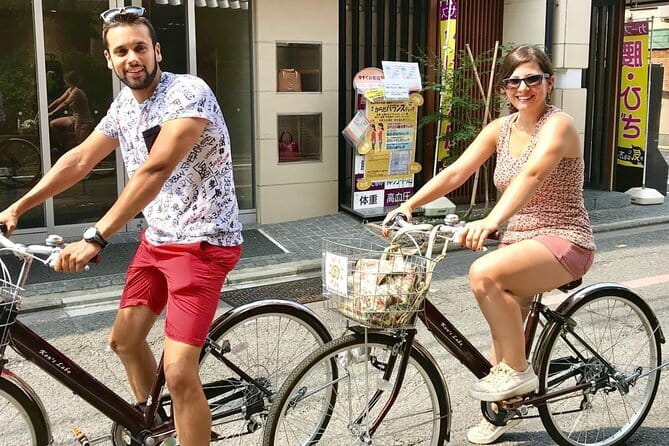
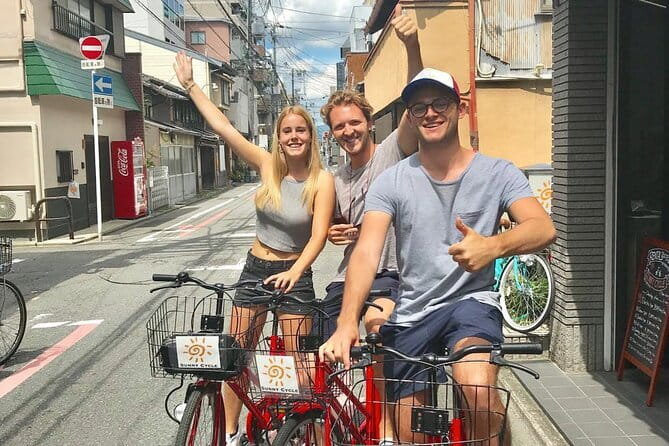
Your bike rental is included. You can request a normal bicycle instead of an electric bike, while children’s non-electric bicycles and child seats are available in limited numbers. Ask for those at booking rather than waiting until the day of the ride.
The guide is also part of the value. The company presents its guides as warm and attentive, with a focus on omotenashi, the Japanese idea of thoughtful hospitality. Practical help before the tour has also been singled out, including answers about Kyoto and even advice about Kobe from Mana.
Because this is a private activity, only your group participates. That is useful for families, couples, and small groups with different cycling speeds. It also gives you a better chance to ask questions about local customs, food, neighborhoods, or places you have already visited.
Fushimi Inari, Komyo-in, and Tofuku-ji
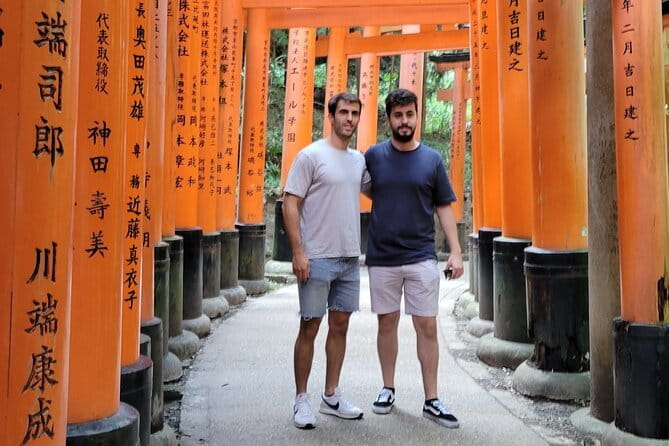
Fushimi Inari-taisha is the first major sight listed, with about 40 minutes here and no admission fee. It is famous for its thousands of vermilion torii gates, which climb the wooded mountain behind the shrine. The gates create the classic Kyoto scene, but the approach can be crowded.
Forty minutes is enough to see the lower shrine grounds and begin along the torii route. It is not enough to walk the full mountain circuit, so tell your guide if Fushimi Inari is a top priority. The bike gets you to this southern sight quickly, but you will leave the bicycle behind while exploring the shrine.
Next comes Komyo-in, a sub-temple of Tofuku-ji, for roughly 20 minutes. Its appeal is quiet rather than grand scale. The temple is known for a garden of moss and carefully arranged natural features, with especially fine color in autumn.
Admission to Komyo-in is not included, so budget for a separate ticket if it is open and your guide includes an interior visit. This is the kind of stop that helps balance Fushimi Inari’s crowds with a calmer pause.
Tofuku-ji follows, with about 10 minutes listed and no admission fee for the stop. The temple is especially known for Tsutenkyo Bridge and its maple colors in fall. Ten minutes suggests a quick look rather than a full tour of the temple complex, so you should discuss timing if autumn foliage is central to your plans.
Yasaka Pagoda and the Gion streets
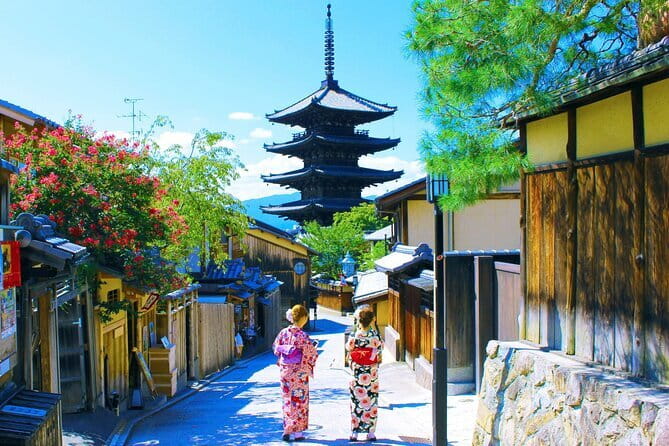
Hōkan-ji, better known for its Yasaka Pagoda, gives you one of Kyoto’s most recognizable street views. The pagoda rises above the Higashiyama district, where traditional buildings and narrow lanes create a strong sense of old Kyoto.
The planned stop is about 20 minutes and admission is listed as free. This is mainly a photo and atmosphere stop. The area can be busy, so cycling is useful for reaching it, but you will need to walk the final sections and take care around pedestrians.
Yasui-Konpiragu offers a different kind of cultural detail. People visit this shrine to break unwanted relationships or strengthen good ones. Its famous stone has a hole through it, and worshippers pass through as part of the ritual.
The stop is only about 10 minutes. That is enough to understand the custom and see the shrine, but not enough for a long visit if you want to study every detail. Hanamikoji Street follows with another short pause, around 10 minutes. Traditional tea houses and restaurants line this Gion street, and it gives you a glimpse of the district associated with geisha culture.
Please keep your camera respectful in Gion. The tour provides cultural context, but a guide cannot remove the need for good manners. The point is to observe the historic streets without treating local residents as a show.
Tatsumi Bridge, Shirakawa Canal, and the river terrace are among the most appealing short stops. Tatsumi Bridge is a small wooden crossing over the Shirakawa River, while Gion Shirakawa is lined with willow trees, traditional machiya houses, and water.
Together, these places offer a slower, more scenic side of Gion. The listed times range from 10 to 15 minutes at each stop. That may sound brief, but the route lets you see several connected views without spending half a day walking between them.
More Hidden Gem Tours in Kyoto
- Kyoto Geisha Walking Tour: Gion District & Hidden Gems
★ 4.7 · 3,273 reviews - Private Kyoto Tour with a Local, Highlights & Hidden Gems, Personalised
★ 5.0 · 1,543 reviews - Kyoto: Hidden Gems E-Bike Tour with Local Japanese Guide
★ 4.9 · 189 reviews - Kyoto: Gion Hidden Gems & Geisha Culture Tour
★ 4.9 · 126 reviews
Heian Jingu and Nanzen-ji
The Great Torii of Heian Jingu is a striking roadside landmark. At 24.2 meters tall, it was built in 1929 to mark Emperor Showa’s enthronement. The gate is made of reinforced concrete and gives you a sense of the scale of the Heian Shrine approach.
The stop lasts about 15 minutes and is free. It is a good example of how this tour works: you can see a major Kyoto symbol without committing to a long shrine visit.
Nanzen-ji comes next, with roughly 15 minutes listed. Founded in 1291 by Emperor Kameyama, it is one of Kyoto’s major Rinzai Zen temples. The grounds include temple buildings, gardens, and the well-known brick aqueduct.
The Nanzenji Suirokaku, or aqueduct, gets a separate 10-minute stop. Completed in 1888, it carried water from Lake Biwa and has an unusual European-style brick design. It is one of Kyoto’s most memorable contrasts, a modern engineering project from the Meiji period set within an old temple precinct.
The short timing is the main limitation here. Nanzen-ji deserves more than 15 minutes if you want to see gardens or enter paid areas. The private format helps, since you can ask to spend longer here and shorten another stop.
The Philosopher’s Walk and Honen-in
The Philosopher’s Walk runs for about two kilometers beside the Biwa Canal. The tour allows around 30 minutes, so you will likely see only part of the path rather than walk its full length.
This is still a welcome change of pace. Trees, water, and a quieter pedestrian route replace the traffic of central Kyoto. In cherry-blossom season, the path is especially popular, but the same popularity can make it crowded.
Honen-in is scheduled for about 15 minutes. This peaceful Zen temple sits among trees and has a quiet, understated feel. It is a good pairing with the Philosopher’s Walk because both stops focus on stillness rather than monumental architecture.
Cycling rules and pedestrian conditions can affect how much of the Philosopher’s Walk you actually ride. Follow your guide’s instructions and expect to walk the bike in busier sections. The tour is called e-cycling, but not every attractive path is a place to pedal quickly.
Shimogamo Jinja and the Kamogawa Delta
Shimogamo Jinja is one of Kyoto’s oldest Shinto shrines, with roots reaching back to around 90 BC. The forested approach and shrine grounds offer a different setting from the dense streets of Gion and Higashiyama.
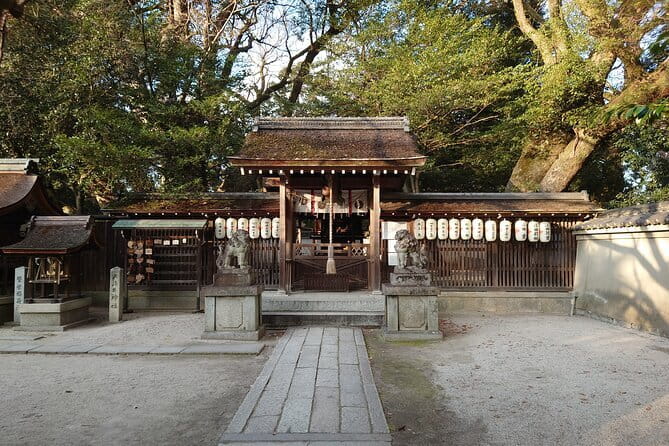
The visit is listed at about 30 minutes and free of charge. This gives you enough time to look around without turning the tour into a full shrine study. Your guide can add useful context about Shinto practices, local traditions, and the role of the shrine in Kyoto life.
The Kamogawa Delta comes next, where the Kamo and Takano Rivers meet. The area is popular with locals and known for stepping stones shaped like turtles and birds. It is an enjoyable photo stop and a good place to notice how Kyoto residents use their riverside parks.
The route also includes the river terrace along the Shirakawa River earlier in the day. Seeing both gives you two different water-side views: one in the historic Gion area and one at a more open meeting point of rivers.
Kyoto Gyoen, central streets, and local Kyoto
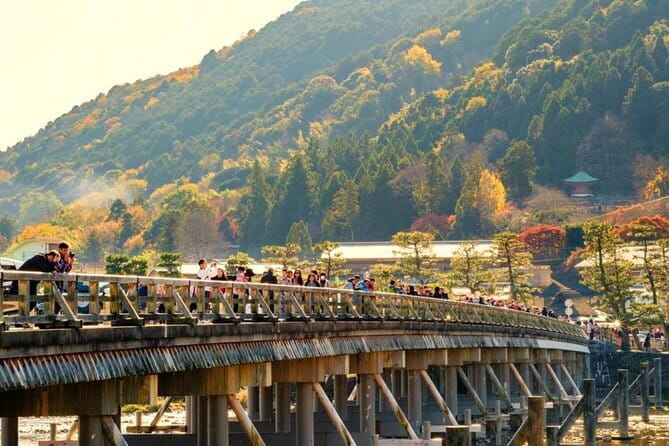
The route may also include Kyoto Gyoen, the broad park around the former Imperial Palace. It offers open space, trees, and historic buildings, giving you a break from narrow lanes and temple walls.
The central portion can include the stepping stones at Kojin, also called Ebisugawa Tobiishi. These stones cross the Ebisugawa, a tributary of the Kamo River, and are used by people hopping from stone to stone. They are simple, playful, and very different from a formal shrine visit.
Teramachi-dori adds a more urban side of Kyoto. This north-south shopping street has traditional goods, cafes, fashion shops, and everyday city life. Sanjo Street is another central route, lined with restaurants, cafes, and older buildings near Kawaramachi and the Kamo River.
These streets help the tour feel like more than a checklist of monuments. You see places where people shop, eat, meet friends, and move through the city. If you have already visited Kyoto’s biggest temples, ask your guide to spend more time in these neighborhood sections.
What the guides add to the ride
The most praised part of this experience is the guiding. The strongest descriptions point to guides who are fun, safe, flexible, and good at explaining Japanese culture and history in an approachable way.
Yuhey worked well with children and adjusted the day around a family’s schedule. Yuichi is described as entertaining and full of useful information. Yonnie is praised for explaining local customs while navigating crowded streets carefully. Polina is associated with an easy pace, narrow backstreets, and good anecdotes.
That range matters because the route covers a lot. Without a guide, you could visit the same places but miss the connections between them. A good guide also helps you decide when a quick photo stop is enough and when a temple deserves more time.
The tour includes photo help as well. That is a small but welcome benefit, especially for families or couples who do not want one person missing from every picture. Guide quality can vary by assignment, but the range of positive names and comments suggests that guiding is central to the company’s service.
Price, timing, and who gets the best value
The price is $198.15 per person. That is a significant cost compared with renting a bicycle independently, but the comparison is not quite fair. You are also paying for a private guide, route planning, cultural explanation, bike rental, and the ability to cover a large part of Kyoto in four to eight hours.
I see the best value for a first visit, a small private group, or anyone with only a short time in Kyoto. It can also work well for families who want a guide to manage the route and keep children engaged.
The value is weaker if you prefer long temple visits, slow photography, or unstructured wandering. The itinerary lists many stops, and some are only 10 or 15 minutes. You cannot fully explore every temple in one day.
Paid entrance fees are extra, as are food and drinks. Plan a meal or snack break with your guide, especially if you choose the longer version. Group discounts are available, which can improve the per-person cost for a larger private party.
Free cancellation is available when you cancel at least 24 hours before the start time. Changes or cancellations inside that window are not accepted for a refund.
Practical fit and final call
You should be comfortable riding in a city and ready for a moderate level of activity. Kyoto streets can be crowded, and some sightseeing areas require you to walk rather than ride. Wear practical clothing, follow your guide’s safety directions, and tell the company in advance about children’s bikes or seats.
I would book this tour if you want to see both headline sights and quieter corners without spending your whole day on buses. I would also book it if you value conversation, local stories, and an adjustable route more than a fixed sightseeing schedule.
I would skip it if cycling is uncomfortable, if you want deep visits inside several temples, or if $198.15 feels too high for a private day. For most active visitors, though, the combination of e-bikes, attentive guides, and a route reaching from Fushimi Inari to Shimogamo Jinja makes this a strong way to get your bearings in Kyoto.
FAQ
How long does KIYOTO’s Kyoto private e-cycling tour last?
The experience lasts approximately four to eight hours. Because it is private, the pace and route can be adjusted to your group’s requirements.
Is the electric bike included?
Yes. An electric bike is included, and a regular bicycle can be used instead. Children’s non-electric bicycles and child seats are available in limited numbers by request.
Can children join the tour?
Yes, children can join if suitable equipment is available. Kids’ bicycles and child seats are limited, so request what you need when booking.
Are temple and shrine admission fees included?
No. Food, drinks, and paid entrance fees for temples and shrines are not included. Several listed stops have no admission charge.
Where does the tour start and finish?
The tour starts at Sunny CycleJapan, 477 Ōhorichō, Shimogyo Ward, Kyoto 600-8419. It ends back at the same meeting point.
What happens if I need to cancel?
You can receive a full refund if you cancel at least 24 hours before the experience start time. Cancellations or changes made less than 24 hours in advance are not refunded or accepted.
Just added around Kyoto
- Kyoto: Private Customizable Day Trip by Car★ 5.0 · 38 reviews
- Kyoto: Gion Night Walking Tour with Geisha Insight★ 5.0 · 39 reviews
- Kyoto: Full Day Bike Tour★ 4.9 · 39 reviews
- Private Japanese Calligraphy in Kyoto – Learn Shodō with a Master★ 5.0 · 39 reviews
- Experience a tea ceremony in an authentic tearoom, in Kyoto!★ 4.5 · 41 reviews
- Kyoto: Gion Evening Walk with Hidden Gems, Geisha & Sake★ 5.0 · 41 reviews
- Kyoto Private Photo Shoot & Tour by SnapKyoto★ 5.0 · 41 reviews
- The Way of Tea: Kyoto Crafts, Hidden Temples & Wabi-Sabi Walk★ 5.0 · 41 reviews
Cycling Tours, compared.
3h Tokyo E-Bike Tour: Hidden Gems, and Local Life with guide
Read our review →
Arashiyama Bamboo Forest & Hidden Gems Bike Tour (Early Bird)
Read our review →
Hiroshima in a Nutshell: Morning Bike Adventure
Read our review →Browse the lists this tour appears in