Reviewed · PRIVATE
Mochi Making at a Private Studio in Tokyo
Sticky rice becomes a hands-on lesson. This two-hour class near Meguro Station lets you make several kinds of mochi with an English-speaking wagashi instructor, then eat your work with tea or coffee. I like the small-group format and the chance to try both sweet and savory mochi, especially grilled mochi with soy sauce and nori. I also like that you receive recipes, aprons, and containers for leftovers. The main consideration is the price: at $79.26 per person, it costs more than simply buying mochi in a shop, and the class may not suit anyone who dislikes sticky textures or sweet bean fillings.
This is a good break from temple visits and department-store shopping. The teacher explains how mochi connects to Japanese festivals and daily life, then guides you through strawberry daifuku, three-color dango, and warabi mochi. You also watch a demonstration of mochi ice cream, so the class gives you a broad taste of the subject without requiring advanced cooking skills.
In This Review
- Key points to know before booking
- Arriving at the Meguro studio
- A short lesson on mochi and Japanese festivals
- Making strawberry daifuku from scratch
- Three-color dango and the fun of shaping mochi
- Warabi mochi adds a different texture
- Savory grilled mochi with soy sauce and nori
- Watching the mochi ice cream demonstration
- Tasting with matcha, hojicha, or coffee
- Is $79.26 a fair price?
- Who should book this class?
- Should you book Mochi Making in Meguro?
- FAQ
- Where does the mochi-making class take place?
- How long does the experience last?
- How far is the studio from public transportation?
- What kinds of mochi will I make?
- Will I try savory mochi?
- Is mochi ice cream included?
- What drinks are included?
- Is the class taught in English?
- Can children attend?
- Is hotel pickup included?
- How many people can join the class?
- Can I cancel for a refund?
Key points to know before booking
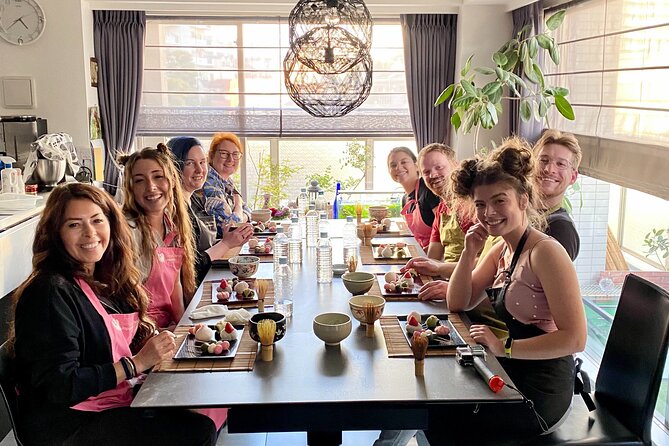
- Several styles in one class: Make strawberry daifuku, three-color dango, and warabi mochi, then sample savory grilled mochi.
- Near Meguro Station: The studio is a short walk from the JR Yamanote Line and nearby metro service.
- English instruction: The certified wagashi instructor teaches in English and can answer questions about Japanese food and local life.
- Good for families: Children age four and older may attend, and families with children have found the class easy to follow.
- Morning or afternoon choice: The two-hour format works well before sightseeing or as a cool indoor stop after a hot day.
- Private-class option: A private class can accommodate up to six people when booked correctly.
Arriving at the Meguro studio
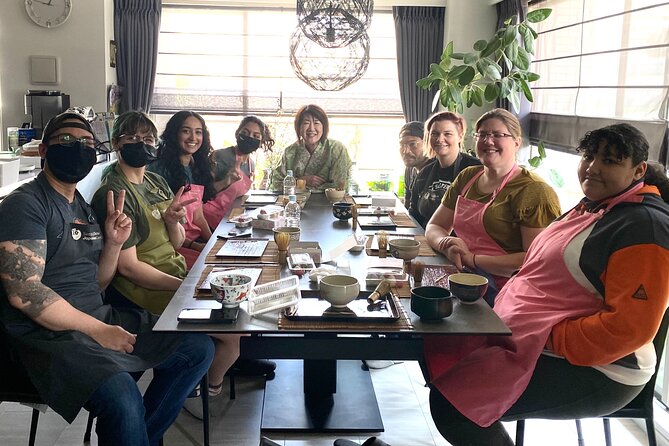
The class meets at a private studio in Meguro City, at President Meguro Heights, near Meguro Station. The address is listed as 1-chome 3-16 Meguro, Meguro City, Tokyo 153-0063. You will need to make your own way there, since hotel pickup and transportation are not included.
The location is one of the practical strengths here. Meguro sits on the JR Yamanote Line, which makes it easy to reach from major parts of Tokyo. The studio is also near metro service, so you can pair the class with time around Ebisu, Shibuya, or other central neighborhoods.
Allow a little extra time to find the building. A private studio inside an apartment-style address is different from walking up to a large cooking school with a bright street sign. Follow the meeting instructions closely, and keep the address available on your phone.
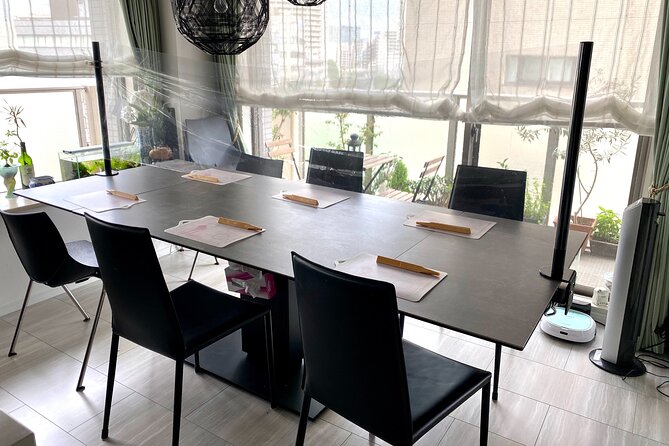
Once inside, you can expect an informal kitchen setting rather than a large commercial classroom. That private-room feel is part of the appeal. The setting is cozy, personal, and better suited to conversation than a demonstration kitchen filled with dozens of people.
The advertised class is designed as a small group, with a maximum of six people noted among the main features. Additional booking information gives a maximum of 12 participants overall, so group size can depend on the session or booking type. If a very small class matters to you, ask for confirmation before booking.
A few more Tokyo experiences worth weighing up
- Mt Fuji and Hakone 1-Day Bus Tour Return by Bullet Train
★ 5.0 · 26,383 reviews - 1-Day Tokyo Bus Tour
★ 5.0 · 14,250 reviews - Tokyo: TOKYO SKYTREE® Admission ticket
★ 4.5 · 11,192 reviews
A short lesson on mochi and Japanese festivals
The class begins with a presentation about mochi traditions, festivals, and its place in Japanese culture. This introduction keeps the cooking from becoming a simple snack-making exercise.
Mochi is not just a dessert. The same basic rice cake can be filled with sweet red bean paste, wrapped around fruit, served on skewers, or grilled with savory toppings. Color, shape, and ingredients can also relate to particular occasions and customs. The opening talk helps you understand why the food appears in so many forms.
I especially like this part for first-time visitors to Japan. You get context that is difficult to pick up from a package in a supermarket. The instructor can also answer questions about Japanese life, shopping, sightseeing, and food customs.
Instruction is provided in English by a certified wagashi instructor. The instructors identified in class feedback include Michiko-san, Ayumi, Owa, Waka, and Miho. The exact teacher may vary, but the repeated praise centers on patient explanations, clear demonstrations, and a friendly teaching manner.
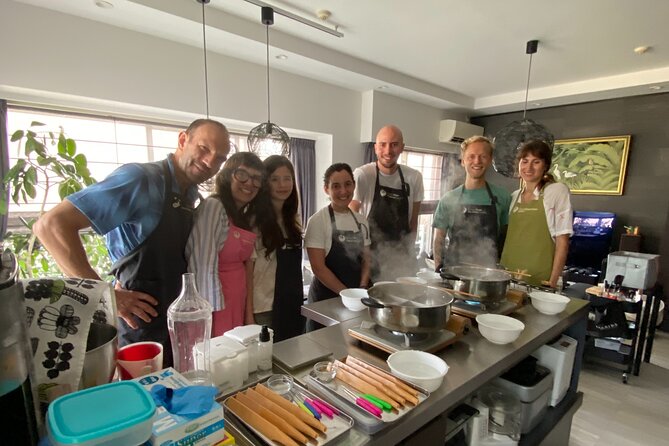
The class is not aimed at professional cooks. Several participants with limited cooking confidence found the steps easy to follow. You will still make a mess, especially when working with sticky rice dough, but that is part of the fun. Assistants help keep workstations tidy, which matters in a hands-on class with several recipes.
Making strawberry daifuku from scratch
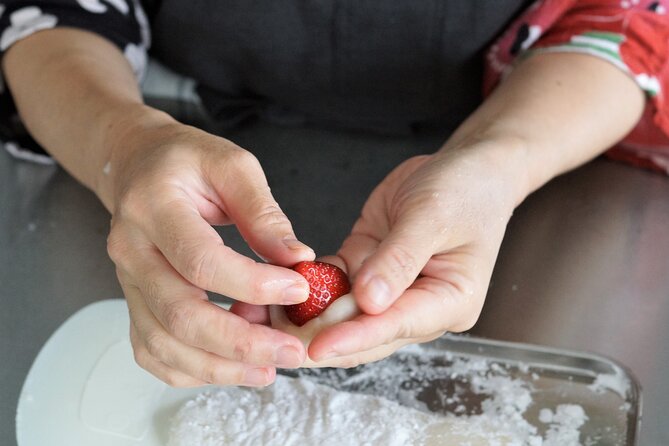
Strawberry daifuku is one of the class highlights. This familiar sweet combines soft mochi with red bean filling and a fresh strawberry inside.
The process teaches you how delicate mochi can be. The dough must be handled with care, and the filling needs to be enclosed without tearing the outer layer. The teacher demonstrates each stage, then gives you time to shape your own pieces.
This is also the most photogenic part of the class. The white or pale mochi, red bean filling, and bright strawberry make a good-looking final product, even if your first attempt is not perfectly round. Do not worry about producing confectionery-shop shapes. The point is to learn how the texture responds to your hands.
Fresh strawberries may be used when available, which gives the daifuku a pleasant contrast between soft dough, sweet filling, and juicy fruit. If you do not usually enjoy very sweet desserts, the fruit helps balance the bean paste.
The class gives you enough time to make and taste your food rather than rushing through a single recipe. You can ask questions while working, and the instructor can correct your technique before the dough becomes difficult to handle.
Three-color dango and the fun of shaping mochi
You also make three-color dango, the small mochi balls served on skewers. The different colors give the activity a playful side, especially for children and families.
Dango is less about filling and more about shaping, cooking, and presentation. You will work with small portions of dough, form them into balls, and arrange them on skewers. The result is simple, colorful, and easy to recognize as a classic Japanese sweet.
Families seem particularly well suited to this part of the class. Children age four and older can attend, and the activity gives younger participants something concrete to do with their hands. The minimum age is four, while children under four are not permitted because of safety concerns.
The class also makes a useful rainy-day or hot-weather plan. The whole activity takes place indoors, and a two-hour session is long enough to feel worthwhile without taking an entire day from your Tokyo schedule.
A completely different kind of day out in Tokyo:
- Tokyo: teamLab Planets TOKYO Digital Art Museum Entry Ticket
★ 4.6 · 9,779 reviews - Mt Fuji & Hakone Cruise, Drum Show Bullet Train 1 Day from Tokyo
★ 4.0 · 7,413 reviews - Tokyo: Sumo Show Experience with Chicken Hot Pot and a Photo
★ 4.8 · 6,678 reviews - Tokyo: Shinjuku Food Tour (13 Dishes at 4 Local Eateries)
★ 5.0 · 6,603 reviews
Warabi mochi adds a different texture
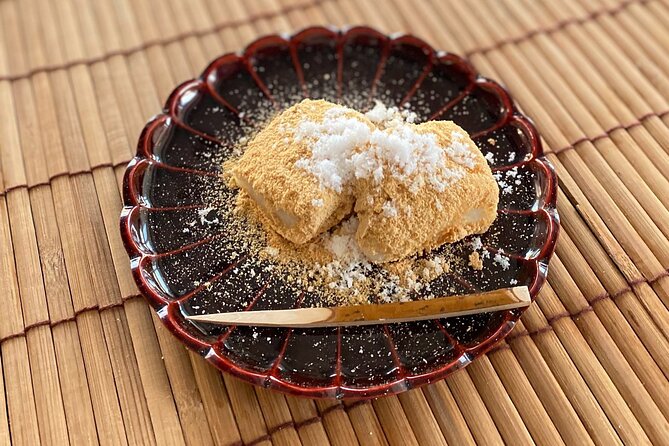
Warabi mochi gives you a chance to try a style that feels different from the more familiar daifuku. Its texture is softer and more yielding, and it is often enjoyed for that almost jelly-like quality.
This is a useful reminder that mochi does not mean one single taste or consistency. Some versions are chewy and firm, while others are soft and delicate. Making more than one type helps you compare them instead of assuming that all mochi will feel the same.
If you are new to Japanese sweets, this may be one of the most informative parts of the session. You can ask about ingredients, preparation, and the occasions when different sweets are served. The recipe sheet gives you a starting point for trying the techniques at home.
The class does not promise that every style will become your favorite. One useful expectation to set is that the flavors and textures vary widely. You might love the fruit-filled daifuku but prefer the savory mochi, or enjoy the dango more than the bean-filled sweets.
Savory grilled mochi with soy sauce and nori
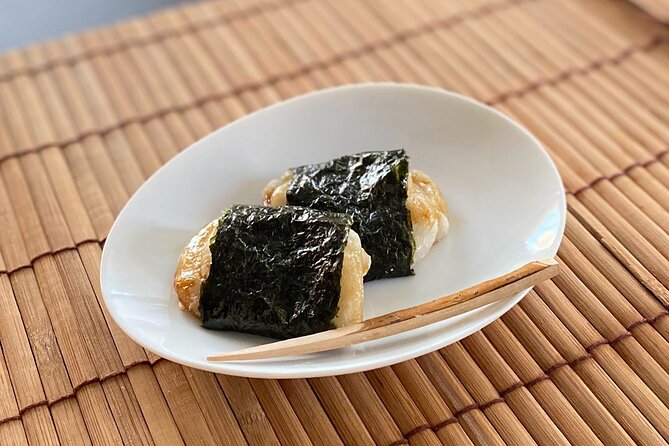
The class does not stop with desserts. The instructor serves savory grilled mochi with soy sauce and nori seaweed.
This is often the surprise of the session. Visitors who know mochi mainly as a sweet treat get to taste a completely different side of it. Grilling changes the texture and brings out a richer, more satisfying flavor, while soy sauce and seaweed add salt and umami.
I consider this tasting important because it rounds out the lesson. You learn that mochi can work as a snack or savory food, not only as a candy-like dessert. If you are uncertain about red bean paste or very sweet fillings, the grilled version may be the one that wins you over.
The class includes food tasting, but it is wise to arrive with a realistic appetite. You will make several items and may have leftovers to take back to your hotel. Containers are provided when you cannot finish everything during the session.
Watching the mochi ice cream demonstration
You do not make every item entirely from scratch. The instructor demonstrates how to make mochi ice cream, giving you another popular variation without adding too much time or complexity to the class.
That balance works well. You get hands-on practice with several recipes, then watch an expert handle a technique that can be tricky. The demonstration lets you see how ice cream is enclosed in mochi while avoiding a rushed final recipe.
Dairy-free ice cream can be prepared if you request it in advance. This is a helpful option for people who avoid dairy, but you should make the request before the class rather than assuming it will be available automatically.
Tasting with matcha, hojicha, or coffee
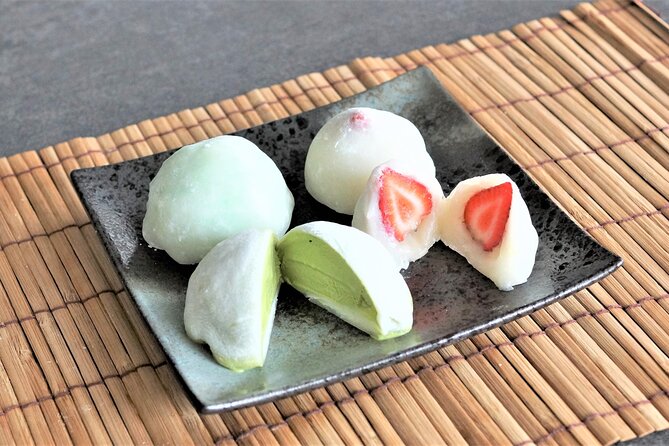
The final part is a tasting session with green tea, hojicha, or coffee. These drink choices give you some flexibility, especially if you do not usually drink matcha.
Tea makes sense with the sweets, since its slight bitterness balances sugar and bean paste. Hojicha offers a roasted flavor, while coffee is a familiar choice if you prefer it. The included drink turns the class into a sit-down food experience rather than a quick lesson followed by a hurried exit.
You can eat your creations, take photographs, and pack up anything remaining. An English recipe sheet is included, and class information also indicates that recipes may be provided digitally through a QR code. That makes the experience more useful after you leave Tokyo.
Do not expect to leave with a professional box of wagashi for several days. Mochi is best treated as a fresh food, and the main value is learning the process and enjoying the results soon afterward.
Is $79.26 a fair price?
At $79.26 per person, this class is not the cheapest way to try mochi. Tokyo shops sell many excellent sweets for a small fraction of that cost.
The value comes from the instruction, the range of items, the private setting, and the cultural explanation. In roughly two hours, you make multiple styles, taste savory and sweet versions, receive drinks and equipment, and leave with recipes. You are paying for participation and access to a local teacher, not just food.
I think the price makes sense for a special activity, a first visit to Japan, or a family looking for something different from another museum. It is less compelling if you only want to eat mochi or if your schedule is already packed with cooking classes and food tours.
Morning and afternoon departures help with planning. A morning class can leave the rest of your day open for sightseeing. An afternoon session can be a welcome indoor pause after walking around Tokyo, especially in hot weather.
Free cancellation is available if you cancel at least 24 hours before the start time. Changes or cancellations inside that window are not accepted for a refund, so keep the local cut-off time in mind.
Who should book this class?
I would recommend it to families with children age four and older, couples, friends, and solo visitors who enjoy food with a cultural explanation. It is also a good choice for anyone who wants an indoor activity near a major train line.
You do not need strong cooking skills. The teacher demonstrates the steps, and the class moves at a manageable pace. English instruction makes it accessible if you do not speak Japanese.
This may not be ideal for someone who dislikes sticky textures, sweet bean paste, or group participation. The class is hands-on, so you will be shaping food, working at a shared pace, and cleaning up as you go.
It is also worth checking the group arrangement if privacy is important. The experience is described as a small-group class, and private classes are available for up to six people, but the broader capacity information allows for up to 12 participants.
Should you book Mochi Making in Meguro?
Book it if you want to do more than buy a box of sweets. The strongest part of this experience is the combination of clear English teaching, cultural background, and plenty of tasting.
I would choose the afternoon session after a morning of sightseeing, or the morning class if you want a relaxed start before exploring central Tokyo. Families should find it especially appealing, while food-focused visitors will appreciate trying grilled mochi alongside the desserts.
Skip it if your only goal is a quick, inexpensive snack. For everyone else, the $79.26 fee buys a personal lesson, several kinds of mochi, a local conversation, and recipes you can try after returning home. That is a fair exchange for two hours in Tokyo.
FAQ
Where does the mochi-making class take place?
The class takes place at a private studio at President Meguro Heights, 1-chome 3-16 Meguro, Meguro City, Tokyo 153-0063.
How long does the experience last?
The class lasts approximately two hours.
How far is the studio from public transportation?
The studio is within a short walking distance of Meguro Station on the JR Yamanote Line and a nearby metro station.
What kinds of mochi will I make?
You will learn to make strawberry daifuku mochi, three-color dango on skewers, and warabi mochi.
Will I try savory mochi?
Yes. The instructor serves grilled mochi with soy sauce and nori seaweed.
Is mochi ice cream included?
There is a demonstration showing how to make mochi ice cream. Dairy-free ice cream can be prepared if requested.
What drinks are included?
The class includes green tea, hojicha, or coffee.
Is the class taught in English?
Yes. The certified wagashi instructor is fluent in English.
Can children attend?
Children age four and older may attend. Children under four are not allowed in the class for safety reasons.
Is hotel pickup included?
No. You must arrange your own transportation to and from the studio.
How many people can join the class?
The experience is described as a small-group class with a maximum of six people, while additional information gives a maximum of 12 participants overall. Private classes are available for up to six people when booked as instructed.
Can I cancel for a refund?
Yes. You can receive a full refund if you cancel at least 24 hours before the experience start time.
Just added around Tokyo
- Tokyo 6hr Instagram Highlights Private Tour with Licensed Guide★ 5.0 · 38 reviews
- Tokyo Small Group Tour with Guide★ 4.5 · 38 reviews
- Tokyo Sumo Experience with Live Show & Audience Challenge★ 5.0 · 38 reviews
- Japanese Food Cooking Class in Asakusa, Tokyo★ 5.0 · 39 reviews
- Very popular in Harajuku♡Animal petting zoo★ 4.6 · 39 reviews
- Ramen Making from Scratch with Tokyo Mom(Vegan Option Available)★ 5.0 · 39 reviews
- Tokyo JDM Night: 600hp C63s AMG Edition 1 (Private)★ 4.9 · 39 reviews
- Tokyo: Kimono Rental inside Shinjuku Gyoen National Garden★ 4.9 · 39 reviews
Private, compared.

Tokyo 6hr Private Tour with Government-Licensed Guide
Read our review →
Private Tour to Mt. Fuji and Hakone (Fully Licenced Operator)
Read our review →
Fushimi Inari Hidden Hiking Tour (Private Option Available)
Read our review →
Private Kyoto Tour with a Local, Highlights & Hidden Gems, Personalised
Read our review →
Tokyo Customized Private Tour (Must See Places in 1 Day)
Read our review →
Mount Fuji Full-Day Private Tour from Tokyo (Customizable)
Read our review →
Private City Highlights Tour with Local Guide
Read our review →