
Reviewed · FOOD & DRINK
Nagoya Street Food Walking Tour of Osu
Come hungry, leave curious. This private walk gives you a tasty way to understand Osu’s food, temples, and shopping arcades, with five snacks included and a guide focused on the places you might skip alone. I especially like the mix of savory and sweet bites, plus the chance to compare Shinto and Buddhist traditions at the start. The private format is another real advantage, since your group can ask questions and move at its own pace.
The main tradeoff is the price: $101.47 per person is a lot for a two-hour food walk, especially if you are traveling alone or as a couple. Food items can change, and the tour is not recommended if you have dietary restrictions unless you contact the provider first. Saturday visits may also feel crowded in Osu’s shopping streets.
In This Review
- Key points about the Osu food walk
- Why Osu is a good place for a food walk
- Starting at Osu Kannon and learning the basics
- Miso kushi katsu brings Nagoya flavor first
- Gohei mochi shows another side of miso
- Karaage and tenmusu keep the route satisfying
- Sweet stops add variety to the two-hour route
- Bansho-ji and the less obvious side of Osu
- What the private format changes
- Timing, pace, and practical planning
- Who should book this Nagoya food tour?
- My verdict on the Osu street food walk
- FAQ
- How long does the Nagoya Osu street food tour last?
- How many foods are included?
- Is this a private tour?
- Where does the tour start and end?
- Is transportation included?
- Can I cancel for a full refund?
Key points about the Osu food walk
- Five local snacks are included, with dishes such as miso kushi katsu, gohei mochi, karaage, and tenmusu.
- The tour begins at Osu Kannon, where you learn the difference between a Buddhist temple and a Shinto shrine.
- Your group has a private guide, rather than joining a large scheduled crowd.
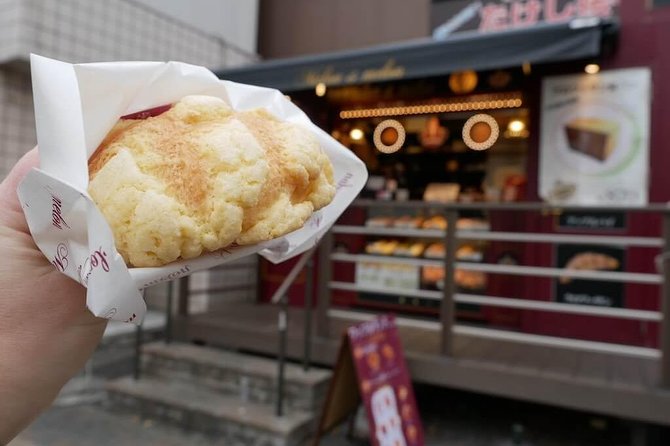
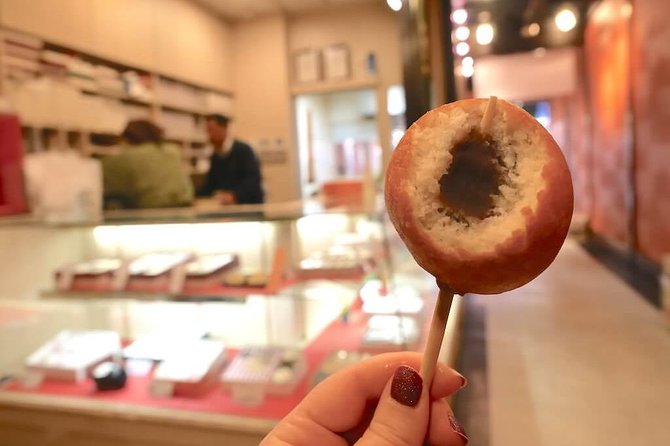
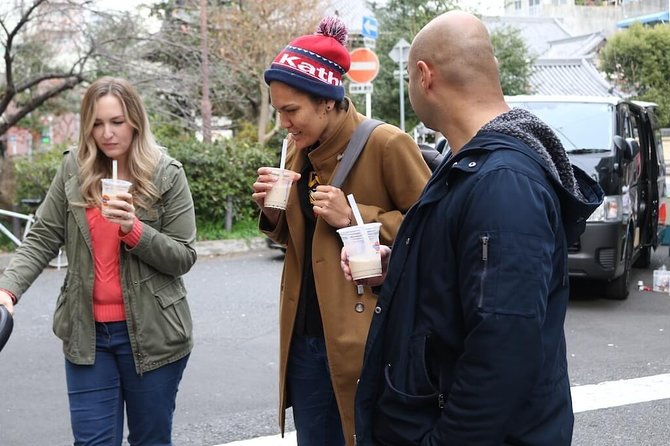
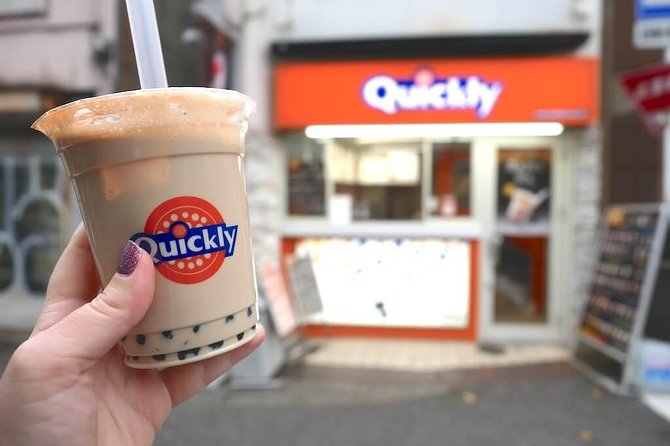
- Sweet and savory stops are mixed together, with possible treats including uiro, agemanbo, melon pan, bubble tea, or a curry-flavored snack.
- A fortune slip is included, adding a small but memorable Japanese tradition to the walk.
- The route returns to the starting point, making it easy to continue exploring Osu afterward.
Why Osu is a good place for a food walk
Osu is not just a row of food stalls. It is a large shopping district with temples, shrines, secondhand stores, casual restaurants, specialty shops, and snack counters packed into a walkable area of central Nagoya.
That mix is what makes the district useful for a guided tour. You are not simply eating one famous dish and going home. You are moving through a part of the city shaped by religion, shopping, local habits, and inexpensive street food.
I like this kind of introduction to Nagoya because it gives you an immediate sense of place. The food is practical and local, but the guide also explains why the district matters. Patricia, Erica, and Lena are among the guides praised for combining food with cultural background. Lena was also noted for speaking excellent English, which matters when the guide is explaining traditions rather than simply pointing at a menu.
The walk is private, so it is best suited to couples, families, or a small group of friends who want conversation instead of a large public tour. You can ask about ingredients, local customs, or the difference between dishes as you go.
More food tours:
- Tokyo: Shinjuku Food Tour (13 Dishes at 4 Local Eateries)
★ 5.0 · 6,603 reviews - Tokyo Tsukiji Fish Market Food and Culture Walking Tour
★ 5.0 · 3,184 reviews - Osaka: Shinsekai Food Tour with 13-15 Dishes at 5 Eateries
★ 4.8 · 2,204 reviews
Starting at Osu Kannon and learning the basics
The meeting point is listed at the 7-Eleven at 2-chōme-23-32 Ōsu, near the popular Osu Kannon area. From there, the tour begins with Hosho-in, better known as Osu Kannon.
The first lesson is a useful one: how to tell a Buddhist temple from a Shinto shrine. Japan’s religious sites can look confusing at first, especially when a short walk takes you past both types. A guide can explain the visual and cultural differences in a way that is easier to remember than a page in a guidebook.
That opening also gives the food stops some context. Osu is not simply a modern retail zone with snacks attached. Its religious sites helped shape the area’s identity, and the shopping district grew around a place people already had reasons to visit.
You also receive an omikuji, or fortune slip. It is a small inclusion, but a good one. It turns the temple visit into something you participate in rather than just photograph. If your fortune is less than ideal, the usual Japanese custom is to tie it at the temple and move on with a smile.
Miso kushi katsu brings Nagoya flavor first
One of the early bites is miso kushi katsu, skewered meat covered with a strong red miso sauce. This is a direct introduction to Nagoya’s taste.
The sauce is hearty and more assertive than the lighter dipping sauces you may find elsewhere in Japan. If you already enjoy miso, this is an easy favorite. If you prefer delicate flavors, it may be the most forceful bite of the walk.
The value of having this dish with a guide is simple: you can try it without needing to study a menu or guess which shop is worth choosing. The tour is designed to take you to favored local stops, including places that may not be obvious from the main arcade.
Portions are not described as full meals, but do not assume that five snacks means five tiny samples. One participant specifically warned that the food adds up, so arriving after a large lunch is a poor plan. Eat lightly beforehand and bring room for both savory and sweet items.
Gohei mochi shows another side of miso
Next comes gohei mochi, grilled rice on a stick with miso sauce. It is a very different texture from kushi katsu, even though the sauce keeps the Nagoya connection going.
The rice is shaped, grilled, and served on a stick, making it easy to eat while walking. This is the kind of snack you might not order on your own if you are unfamiliar with it. That is one of the strongest reasons to book a food walk in the first place: the guide removes the guesswork.
The tour description also points to local sweets such as uiro and agemanbo. They may appear depending on the day and shop availability. Uiro is a traditional steamed confection associated with the region, while agemanbo is a fried sweet snack. The exact lineup is not fixed, so you should treat the published menu as a guide rather than a guarantee.
A completely different kind of day out in Nagoya:
- From Nagoya: Gujo, Hida Takayama, and Shirakawa-go Day Tour
★ 4.4 · 398 reviews - Ghibli Park 1-Day Bus Tour from Nagoya
★ 4.5 · 277 reviews - From Nagoya: Hida Takayama & Shirakawa-go Tour w/Opt. Lunch
★ 4.5 · 256 reviews - Hiking the Historic Nakasendo Trail [1 Day Tour from Nagoya]
★ 5.0 · 104 reviews
Karaage and tenmusu keep the route satisfying
Karaage, Japanese fried chicken, is another planned stop at a popular Osu shop. It is familiar enough to please cautious eaters, but a good local shop can still make it memorable through seasoning, texture, and freshness.
This is a useful balance in the itinerary. You get distinctive Nagoya foods, but you are not asked to enjoy five unfamiliar dishes in a row. Karaage gives you a recognizable snack between stronger regional flavors.
Later, the guide takes you to a popular shop for tenmusu. Tenmusu combines a small rice ball with shrimp tempura. It is compact, filling, and easy to carry, but it feels more substantial than a quick sweet bite.
The food is not presented as a formal tasting menu. You are walking, stopping, eating, and learning as the district unfolds around you. That casual rhythm suits Osu. It also means the experience depends partly on timing, shop conditions, and the guide’s choices that day.
Sweet stops add variety to the two-hour route
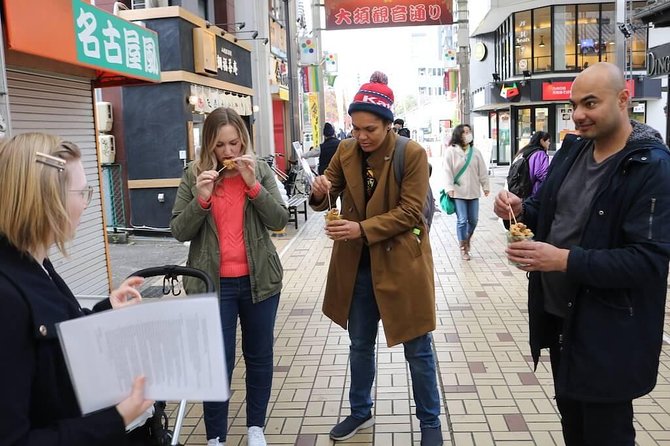
The tour includes both savory and sweet food, and past experiences have included bubble tea, melon pan, and a sweet curry paste on a stick. One participant singled out the melon pan as a favorite.
These examples show how wide the Osu snack scene can be. You may move from fried chicken to a soft bread snack, then from a miso-covered rice cake to a regional confection. The variety keeps the walk from becoming repetitive.
The exact food selection can change slightly. That is important if you are booking because of one particular item. You should book for the overall experience, not for a guaranteed serving of melon pan, uiro, or agemanbo.
Food restrictions need careful attention. The tour is not recommended for people with dietary restrictions unless they contact the provider before booking. Since the route includes several prepared foods from different shops, do not assume substitutions will be available.
Bansho-ji and the less obvious side of Osu
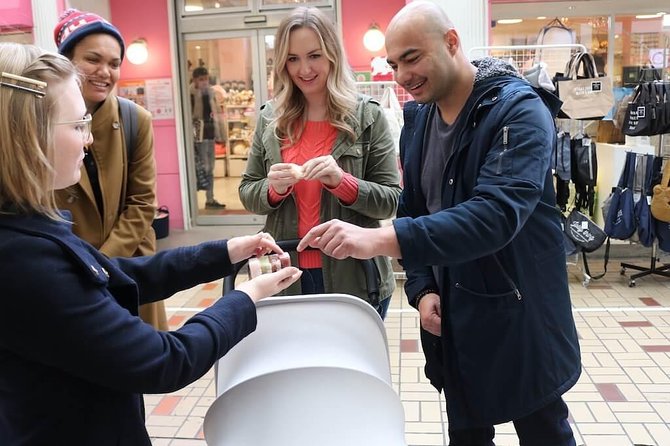
Bansho-ji Temple is another listed stop. It gives the walk a second religious site and helps you see that Osu’s appeal is not limited to shopping arcades.
Guides have also included an interesting mix of secondhand upscale shops, shrines, temples, and even a burial site. Those details matter because they show the less polished side of the district. Osu can feel commercial one moment and reflective the next.
I would not expect a long temple lecture or a full historical tour. The experience lasts about two hours, so the cultural explanations are woven between food stops. Still, guides such as Patricia and Erica have been praised for explaining Nagoya’s history and Japanese traditions clearly.
One useful comment described the guide as offering perspective on how foreigners are treated in Japan. That suggests the conversation can move beyond standard sightseeing facts, though the exact discussion will depend on your guide and your questions.
What the private format changes
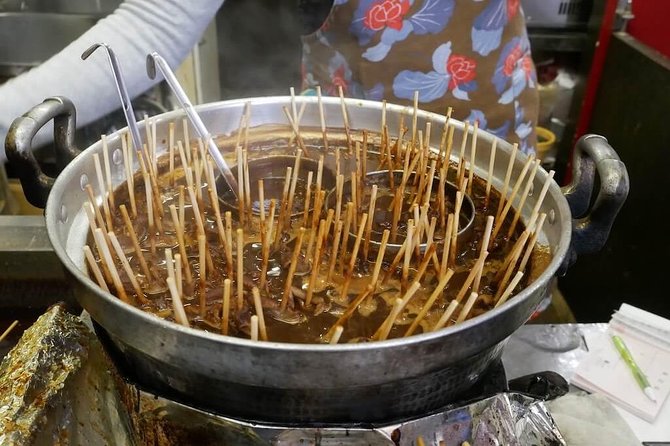
A private tour means only your party participates. That is a meaningful feature here, since eating while walking can be awkward with a large group. You can pause to ask what a dish contains, request more explanation about a temple, or let the guide know when you need a short break.
Private also does not mean completely flexible. The route has named stops and a roughly two-hour length, and the food choices may depend on what is open and available. But you avoid the social compromises of a large group.
The format works especially well for first-time visitors to Nagoya, families with older children, and anyone who wants a gentle introduction before exploring Osu alone. It is less compelling for confident food hunters who already know the district and can comfortably order from Japanese menus.
The tour is listed at $101.47 per person. That cost includes five street foods, the omikuji, taxes, and the guide. Transportation to and from the meeting point is not included.
For a larger private group, the price may feel reasonable because you are paying for personal guiding as well as food. For one or two people, it is harder to call it a bargain. I would compare it with the cost of a self-guided snack crawl, then decide how much you value explanation, translation help, and the convenience of being taken to specific shops.
Timing, pace, and practical planning
The stated duration is about two hours, though some descriptions of the experience refer to closer to three hours. Plan on two hours as the safe estimate, and leave extra time if you have a train to catch or another reservation.
The tour starts and ends at the same meeting point. That makes planning easy, and you can continue around Osu afterward without arranging a separate return transfer.
The listed operating information shows Monday from 11:00 a.m. to 4:00 p.m. for the published date range. Because the schedule information is narrow, confirm the available date and start time before making firm plans.
Osu can be busy on Saturdays, particularly in the shopping streets. Wear comfortable shoes, keep your hands free for food, and avoid arriving full. A mobile ticket is provided, and confirmation is issued within 48 hours, subject to availability.
Service animals are allowed, and the tour is near public transportation. Most people can participate, but the route is on foot and includes regular walking between stops.
Cancellation is free if you cancel at least 24 hours before the start time. Changes or cancellations made later are not refunded.
Who should book this Nagoya food tour?
I would choose this experience if you are visiting Nagoya for the first time and want food to guide your introduction to the city. You get recognizable favorites such as karaage alongside local specialties that you might otherwise miss.
It also suits you if temple customs and everyday culture interest you as much as eating. The stops at Osu Kannon and Bansho-ji give the food crawl a stronger sense of place.
Families and small private groups should appreciate the format. English-speaking guides including Patricia, Erica, and Lena have received strong praise for clear explanations, and the private setting gives you room to ask questions.
I would hesitate if you have strict dietary needs, dislike eating on the go, or want a bargain-priced meal. The food is included, but the price reflects private guiding more than the raw cost of five snacks.
My verdict on the Osu street food walk
This is a strong introduction to Osu, especially if you want more than a quick pass through the shopping streets. The best parts are the private guide, the mix of five snacks, and the way food is linked with temples and local customs.
The score of 4.8 out of 5 and 96 percent recommendation fit the experience described here. The main cautions are the high per-person cost, the changing food lineup, the limited schedule information, and the need to contact the provider about dietary restrictions.
Book it if you value context and want someone to lead you to foods you may not order alone. Skip it if you prefer to snack independently and spend the same money across several unstructured meals. For most first-time visitors with a healthy appetite, this is a tasty and practical way to get acquainted with Nagoya’s Osu district.
FAQ
How long does the Nagoya Osu street food tour last?
The tour is listed as approximately two hours. Some descriptions refer to closer to three hours, so allow extra time when planning the rest of your day.
How many foods are included?
Five street foods are included. Possible items include miso kushi katsu, gohei mochi, karaage, tenmusu, uiro, agemanbo, melon pan, bubble tea, and other local snacks, but the selection may vary.
Is this a private tour?
Yes. Only your group participates, rather than joining a larger public tour.
Where does the tour start and end?
It starts at the 7-Eleven at 2-chōme-23-32 Ōsu, Naka Ward, Nagoya, near Osu Kannon. The activity ends back at the meeting point.
Is transportation included?
No. Transportation to and from the tour is not included. The meeting point is near public transportation.
Can I cancel for a full refund?
Yes, if you cancel at least 24 hours before the experience start time. Cancellations or changes made less than 24 hours in advance are not refunded.
More Walking Tours
- Kyoto Geisha Walking Tour: Gion District & Hidden Gems
★ 4.7 · 3,273 reviews - Kyoto: Gion Magical Night Walking Tour with Geisha Trivia
★ 4.9 · 2,393 reviews - Tokyo: Imperial Palace and Shogun Historical Walking Tour
★ 5.0 · 2,251 reviews - Kyoto: Gion Geisha District Walking Tour – Stories of Geisha
★ 4.7 · 2,187 reviews
Just added around Nagoya
- Private Full-day Nagoya City Tour★ 5.0 · 22 reviews
- Nagoya Samurai & Toyota Tour guided by a friendly local★ 5.0 · 24 reviews
- Guided Tour of Nagoya by Car★ 5.0 · 27 reviews
- Day Trip for Shirakawago ,Takayama & gujo hachiman from Nagoya★ 4.0 · 28 reviews
- Full-Day Kisoji Nakasendo Trail Tour from Nagoya★ 5.0 · 31 reviews
- 1-Day Tour from Nagoya: Hiking the Historic Nakasendo Trail★ 4.9 · 34 reviews
- Shirakawago & Takayama Bus Tour from Nagoya w/Optional Lunch★ 4.5 · 37 reviews
- Nagoya Half-day Private Custom Tour with National Licensed Guide★ 5.0 · 40 reviews
Food & Drink, compared.
Shinjuku Food Tour (13 Dishes at 4 Local Eateries)
Read our review →
Tokyo Tsukiji Fish Market Food and Culture Walking Tour
Read our review →
Shinsekai Food Tour with 13-15 Dishes at 5 Eateries
Read our review →
Osaka Food Tour: 13 Dishes at 5 Local Eateries
Read our review →
Shinjuku Food Tour (15 Dishes and 4 Eateries)
Read our review →
Best of Shinjuku: Izakaya Food Tour (4 Stops, 14+ Tastings)
Read our review →
Kyoto Night Foodie Tour in Gion (9+ dishes + 6 Sake tastings)
Read our review →
Hungry Osaka Street Food Tour:15 Tastings & 3 Drinks with a Local
Read our review →Browse the lists this tour appears in