
Reviewed · GOVERNMENT-LICENSED GUIDE TOURS
Nagoya Half-day Private Custom Tour with National Licensed Guide
Nagoya rewards a flexible plan. This private four-hour tour lets you choose two or three sights with a licensed local guide, rather than trail behind a fixed group. I like the freedom to pair Nagoya Castle with Atsuta Jingu, or build a day around Toyota and Noritake. I also like the human touch: guides such as Todd Miura, Toshie, Tomoko Tabata, Elvis, Matt, and Yumi have helped visitors understand the city beyond its headline attractions. The main catch is time. Four hours passes quickly, and transport, entrance fees, lunch, and personal costs are extra.
This is best viewed as a smart introduction, not a full Nagoya sightseeing marathon. The guide can help with subway travel, explain shrine customs, adjust the pace, and shape the outing around your interests. But the advertised list is long, and you can only sensibly cover a few places.
In This Review
- Key points to know before booking
- How the private format works in four hours
- Nagoya Castle and the golden shachihoko
- Atsuta Jingu, a calm shrine in the city
- Tokugawa Garden and the Tokugawa Art Museum
- Industry, ceramics, and Nagoya’s working identity
- City views, science, art, and shopping
- Smaller stops with local character
- What the $108.99 price really buys
- Timing, walking, and practical limits
- Who should book this Nagoya tour?
- Should you book it?
- FAQ
- How long is the Nagoya private tour?
- Is the tour private?
- How many sites can I choose?
- Is a private vehicle included?
- Where do I meet the guide?
- Is the guide English-speaking?
- Are entrance fees included?
- Is Atsuta Jingu free to enter?
- Can most people participate?
- What is the cancellation policy?
Key points to know before booking
- Choose your own Nagoya: Select two or three stops from a broad list of castles, shrines, museums, gardens, shopping streets, and observation decks.
- Walking pickup matters: You meet your guide on foot within a designated Nagoya area. A private vehicle is not included.
- Four hours favors focused plans: Two major sights work better than trying to collect a dozen quick photographs.
- Atsuta Jingu is free: The large wooded shrine offers a cultural experience without an admission charge.
- The guides add real value: Todd Miura, Tomoko Tabata, Toshie, Elvis, Matt, Hiroshi, and Yumi are praised for preparation, warmth, and local knowledge.
- The price is reasonable for a private tour: At $108.99 per person, the cost makes more sense for couples, families, or small groups who want personal attention.
How the private format works in four hours
The strength of this experience is not a standard route. You choose what matters to you, then your guide helps turn that wish list into a workable half-day. The available choices range from major landmarks to quieter cultural stops, so you can aim for history, Japanese design, industry, shopping, or city views.
The tour is private, meaning only your party participates. That gives you room to ask questions, pause when needed, and request a change in emphasis. One guide helped a family with wheelchair users, while another adjusted a start time and pickup point for a party staying near an art museum. Those examples show why a private tour can be useful in a city where subway connections and large public sites can eat up time.
Still, private does not mean door-to-door. You meet the guide on foot within the designated Nagoya area, and transportation fees are not included. A guide can help you navigate trains and buy tickets, but the time spent doing so comes out of your four hours. If you want several distant sights, ask for a route that limits transfers.
More licensed guide tours in Japan:
- Tokyo 6hr Private Tour with Government-Licensed Guide
★ 5.0 · 3,902 reviews - Tokyo 4hr Private Tour with Government-Licensed Guide
★ 5.0 · 1,394 reviews - Kyoto 6hr Private Tour with Government-Licensed Guide
★ 5.0 · 1,369 reviews
Nagoya Castle and the golden shachihoko
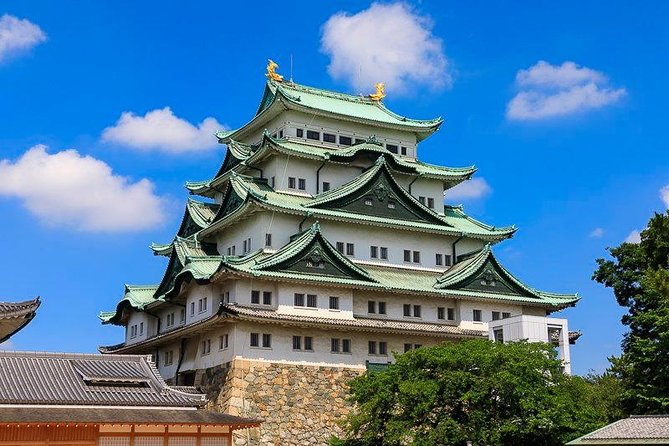
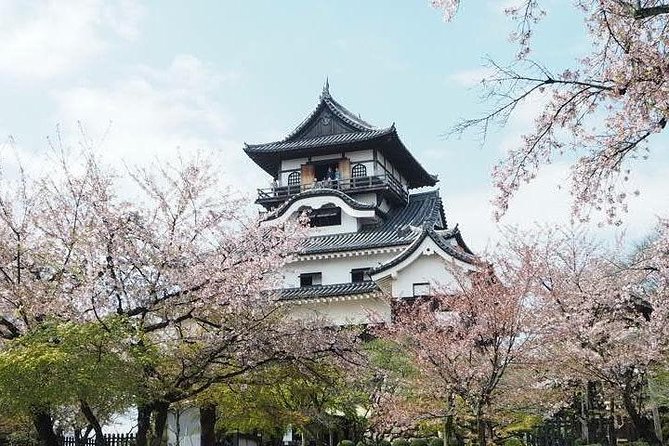
Nagoya Castle is the natural choice for a first visit. Its roofline is marked by golden shachihoko, mythical creatures with tiger heads and carp bodies. The castle is tied to Ieyasu Tokugawa, the first shogun, and gives your guide plenty of material for explaining how Nagoya grew as a major castle city.
You should plan this as your main historical stop, not a quick photo break. The suggested schedule allows only about 15 minutes, which is enough for an introduction but not enough for a leisurely visit. One party specifically wished for more time at the castle after combining it with Tokugawa Garden and Mirai Tower.
The castle grounds and interiors may require an admission fee, which is not included. Check how much time you want inside before adding a second major museum. I would pair the castle with Atsuta Jingu for a classic history-and-religion outing, or with Tokugawa Garden for a quieter contrast.
Several guides have made this stop especially effective. Tomoko Tabata prepared background material on an iPad, and one couple particularly valued her explanations while visiting during cherry-blossom season. Todd Miura also received praise for making the castle both informative and enjoyable rather than turning it into a dry lecture.
Atsuta Jingu, a calm shrine in the city
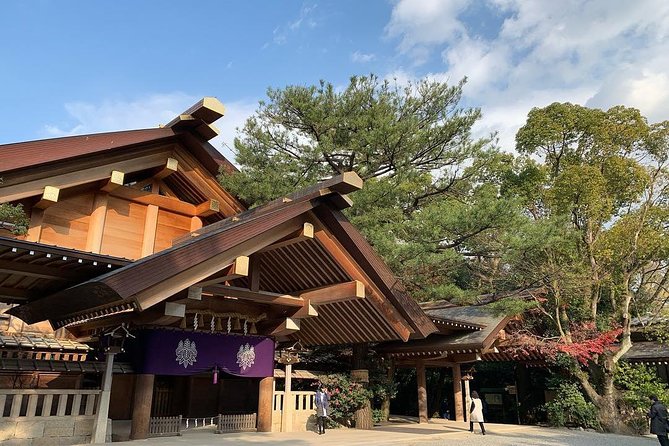
Atsuta Jingu gives you a very different view of Nagoya. Founded in the eighth century, it occupies a large wooded area surrounded by the modern city. The shrine is free to enter, making it one of the best value choices on the menu.
A guide can show you how to purify yourself, pray, and use shrine customs respectfully. Matt helped visitors understand these steps and added small cultural details, including omikuji and a fountain associated with beautiful skin. These simple rituals can make the visit more engaging than walking through the grounds alone.
The suggested stop is about 15 minutes, but the shrine deserves longer if you want to slow down. You may find that the quiet trees and open paths feel like a welcome break from Nagoya’s traffic and commercial districts. At the same time, it is still an active religious site, so your guide’s advice is useful.
Atsuta Jingu is particularly good for families, first-time visitors to Japan, and anyone who wants more than architecture. Pair it with the Toyota museum for a strong contrast between old religious tradition and modern industry.
Tokugawa Garden and the Tokugawa Art Museum
The Tokugawa choices work well for visitors who enjoy Japanese gardens, samurai-era objects, and careful displays. Tokugawa Garden follows the pond-centered style used in major daimyo gardens during the Edo period. The suggested visit is only 10 minutes, so treat it as a short garden walk unless you arrange more time.
The Tokugawa Art Museum is a stronger choice for anyone interested in the ruling family and high-quality Japanese art. Its collection contains more than 12,000 objects and is housed on the former Ōzone Shimoyashiki compound. Admission is extra, and the suggested time is 20 minutes.
A popular combination is the garden and museum together. It gives you setting and objects in one compact area, which can reduce travel time. One party changed its start time from 10 a.m. to noon and arranged pickup near the Aichi Art Museum, then visited Nagoya Castle, the Tokugawa Art Museum, and Tokugawa Garden.
This pairing is less suitable if you want a relaxed museum visit. Twenty minutes can provide orientation, but serious art fans will need to ask about the schedule before booking.
A few more Japan experiences worth weighing up
- Nara Half Day Trip Walking Tour (Private Option Available)
★ 5.0 · 937 reviews - Kyoto Arashiyama Bamboo forest & Garden Half-Day Walking Tour
★ 5.0 · 413 reviews - Kanazawa Half Day Tour (Private Guide)
★ 5.0 · 361 reviews - [Miyako Island/Half Day] Sea Turtle Snorkeling
★ 5.0 · 337 reviews
Industry, ceramics, and Nagoya’s working identity
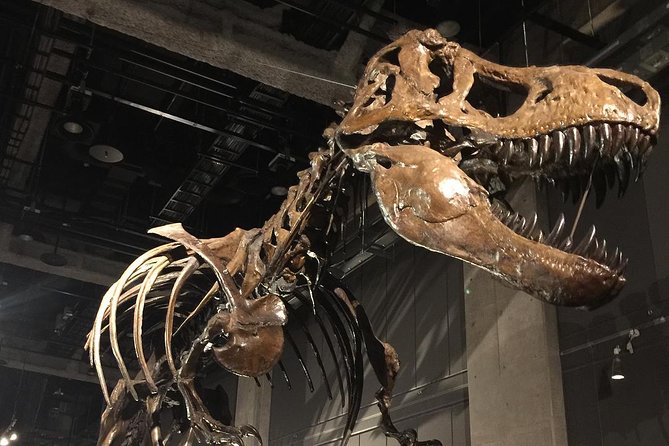
Nagoya is not only castles and shrines. The Toyota Commemorative Museum of Industry and Technology explains the industrial roots of one of Japan’s best-known companies. It was established in 1994, one hundred years after the birth of Toyota founder Toyoda Kiichiro.
The museum makes sense for families, engineers, car fans, and anyone curious about how manufacturing shaped the region. The suggested time is 20 minutes, though that is a brisk visit. Admission is not included.
One party visited Atsuta Jingu and the Toyota museum with Todd Miura and found the pairing smooth and informative. That combination is one of the strongest plans on the entire menu: one stop for worship and tradition, one for machines and modern business.
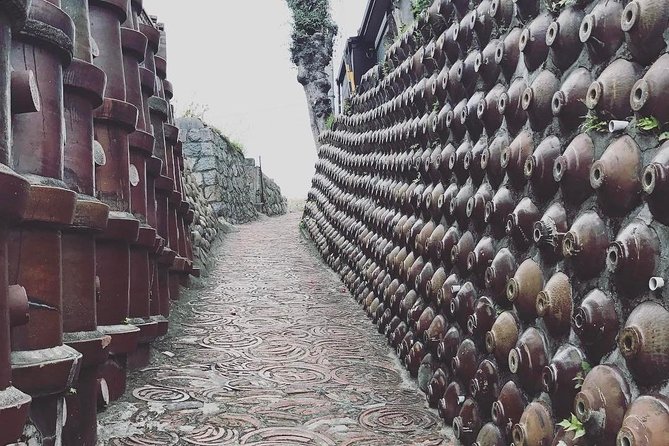
Noritake no Mori offers another angle on Nagoya’s industrial past. Noritake began in 1904 and became a major name in fine tableware, blending Japanese craftsmanship with international ceramics. The suggested stop is 10 minutes, but that leaves little room for a serious museum visit.
Yumi made this stop particularly useful by preparing pictures and diagrams before arrival and explaining the connection between Noritake and Nagoya. That preparation matters. A short visit can feel thin without context, while a guide who frames the site in advance can make the objects and buildings easier to understand.
City views, science, art, and shopping
For a quick look at modern Nagoya, choose Chubu Electric MIRAI TOWER or the Sky Promenade. MIRAI TOWER, still often called Nagoya TV Tower, is a central city landmark. The Sky Promenade rises within Midland Square, a 47-floor building reaching 247 meters.
Both observation options require an extra admission fee. The suggested time is about 15 minutes at MIRAI TOWER and 20 minutes at the Sky Promenade. These are good add-ons if you want a city view, but they may not be the best use of a short private tour if you are more interested in culture.
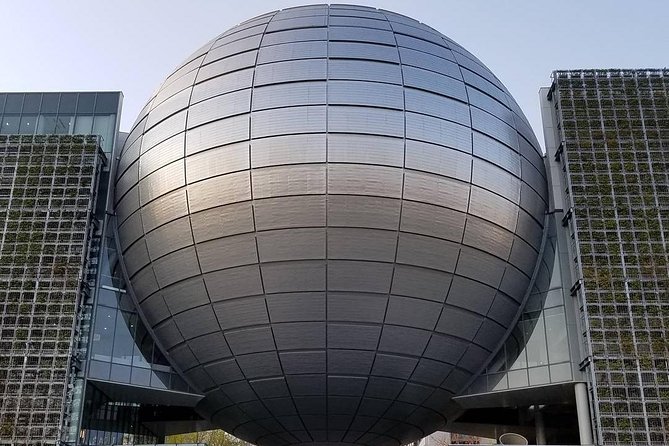
The Nagoya City Science Museum has the world’s largest planetarium, according to the supplied tour information. The idea of cruising through the real universe makes it attractive for children and adults, but 15 minutes is too short for much more than a quick orientation. Admission is extra.
The Nagoya City Art Museum opened in 1987 and has a permanent collection that includes international Surrealist artists and works by artists such as Sean Scully and Kansuke Yamamoto. The suggested visit is only 10 minutes, so choose it only if you have a clear art interest or plan to return independently.
Osu Shopping Street is more flexible. The area once served as Nagoya’s leading entertainment quarter and later developed into a mix of electrical shops, second-hand clothing, and shopping arcades. It is free to enter and can be paired with nearby shrines or a meal, though lunch is not included and will use part of your tour time.
Smaller stops with local character
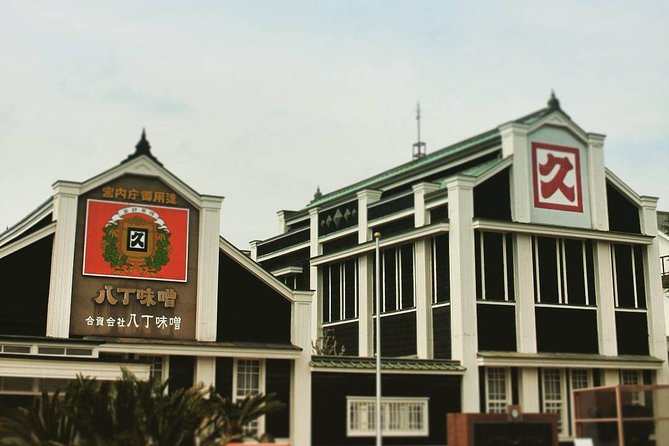
Shikemichi offers a look at merchant-town Nagoya. Built in 1610 after the town of Kiyosu moved to the castle city, it sits on the west bank of the Horikawa River. The stop is free and scheduled for about 20 minutes.
Wakamiya Hachimansha Shrine is another free option, with connections to Emperor Nintoku, Emperor Ojin, Takeuchinosukune, and the Tokugawa period. It suits visitors who want a smaller religious site rather than a major attraction.
Shirotori Garden covers about 3.7 hectares and presents a traditional Japanese garden with scenery that changes according to tidal flows. The suggested time is 20 minutes, and admission is extra. It may be a good pick for a slower pace, though you should confirm the route before adding it to distant sites.
The Nagoya Sword Museum in Sakae focuses on Japanese swords, with up to 200 examples, including National Treasures and Important Cultural Properties. The planned time is only 10 minutes and admission is extra. I would choose it for a focused interest in swords, not as a casual add-on.
What the $108.99 price really buys
At $108.99 per person, this is not the cheapest way to see Nagoya. You still pay for transportation, entrance fees, lunch, and personal expenses. The guide’s admission is covered only at sights included under the tour’s expected stops, so clarify the plan before you arrive.
The value comes from time and attention. A private English-speaking guide can explain unfamiliar customs, handle route questions, adjust the pace, and connect two very different sights. For a couple, family, or small group, that can be worth more than a cheaper shared tour with a fixed route.
Group discounts are offered, which improves the calculation for larger parties. You also avoid combining with another tour group. That means the guide’s attention belongs to your party, not to a crowd moving at one pace.
The rating is 4.9 from 40 reviews, with 98 percent recommending the experience. That strong record fits the most repeated praise: guides are friendly, prepared, flexible, and good at explaining history and culture in plain terms.
Timing, walking, and practical limits
Four hours sounds generous until you include train tickets, transfers, photographs, shrine rituals, and questions. One party found that buying train tickets took much of the available time and managed to see only two places. Lunch also reduced sightseeing time.
I would choose two main stops and treat a third as a bonus. Nagoya Castle plus Atsuta Jingu is a dependable first plan. Toyota plus Noritake works for industry and design. Tokugawa Garden plus the Tokugawa Art Museum suits visitors who want a concentrated cultural outing.
The experience is described as a walking tour, so wear comfortable shoes and consider the season. One person praised a guide for helping despite leg pain, and another family appreciated support for wheelchair users. Still, the tour includes walking and public transport, so tell the provider about mobility needs before the day.
The experience is near public transportation, service animals are allowed, and most people can participate. Pickup is offered in the sense of meeting the guide on foot within the designated area, not through a private car.
Who should book this Nagoya tour?
I would recommend it to first-time visitors who want quick orientation, families who need a flexible pace, couples who prefer private conversation, and cruise passengers with a limited stop in Nagoya. It is also a good choice if you have one strong interest, such as Toyota, Japanese gardens, swords, ceramics, or shrine customs.
It is less suitable for museum specialists who want hours inside one collection. It is also a poor fit if you expect a vehicle, hotel-door pickup, or a packed checklist of ten attractions. The guide can plan well, but four hours cannot defeat Nagoya’s distances.
Request your priorities clearly before the tour. If you want Nagoya Castle, say how much time you want there. If you have mobility concerns, mention them early. If you are arriving by cruise ship, confirm the meeting point and allow time for the walk from the terminal.
Should you book it?
Book this tour if personal guidance and route flexibility matter more to you than the lowest possible price. The strongest choices are two substantial sights with a short third stop only if they are close together.
For a well-rounded first taste, choose Nagoya Castle and Atsuta Jingu. For a more specialized day, choose Toyota, Noritake, Tokugawa, or the sword museum. The 24-hour cancellation window offers some protection, but changes or cancellations inside that period are not accepted and are not refunded.
FAQ
How long is the Nagoya private tour?
The tour lasts approximately four hours.
Is the tour private?
Yes. Only your group participates, and you cannot combine multiple tour groups.
How many sites can I choose?
The tour includes a customizable plan covering two or three sites from the listed options.
Is a private vehicle included?
No. A private vehicle is not included. This is a walking tour, and transportation fees are also excluded.
Where do I meet the guide?
You meet the licensed guide on foot within the designated area of Nagoya. Pickup is not provided by private vehicle.
Is the guide English-speaking?
Yes. The tour includes a licensed local English-speaking guide.
Are entrance fees included?
No. Entrance fees are generally not included. The guide’s entry fees are covered only for sights listed under the expected stops.
Is Atsuta Jingu free to enter?
Yes. The listed admission for Atsuta Jingu is free.
Can most people participate?
Most people can participate. The tour is near public transportation, and service animals are allowed. Since it is a walking tour, discuss mobility needs before booking.
What is the cancellation policy?
You can cancel at least 24 hours before the local start time for a full refund. Cancellations or changes made less than 24 hours before the start time are not accepted and are not refunded.
Just added around Japan
- Kanazawa private half day/Photoshoot by professional photographer★ 5.0 · 38 reviews
- Osaka Food Tour with 10 Classic Japanese Tastings & Drinks★ 5.0 · 38 reviews
- Osaka: Highlights & Hidden Gems Private Walking Tour★ 4.7 · 38 reviews
- Tokyo Small Group Tour with Guide★ 4.5 · 38 reviews
- Tokyo 6hr Instagram Highlights Private Tour with Licensed Guide★ 5.0 · 38 reviews
- From Tokyo: Kamakura Private Customize Tour by Luxury Van★ 4.6 · 38 reviews
- Tokyo Sumo Experience with Live Show & Audience Challenge★ 5.0 · 38 reviews
- Kyoto: Private Customizable Day Trip by Car★ 5.0 · 38 reviews
Government-Licensed Guide Tours, compared.
Tokyo 6hr Private Tour with Government-Licensed Guide
Read our review →
Tokyo 4hr Private Tour with Government-Licensed Guide
Read our review →
Kyoto 6hr Private Tour with Government-Licensed Guide
Read our review →
Hiroshima / Miyajima Full-day Private Tour with Government Licensed Guide
Read our review →
Kyoto 4hr Private Tour with Government-Licensed Guide
Read our review →
Hiroshima City 4hr Private Walking Tour with Licensed Guide
Read our review →
Private Kyoto Tour with Licensed Guide & Vehicle (Max 15 persons)
Read our review →Browse the lists this tour appears in