
Reviewed · CYCLING TOURS
Osaka E-Bike Tour With A Local Guide
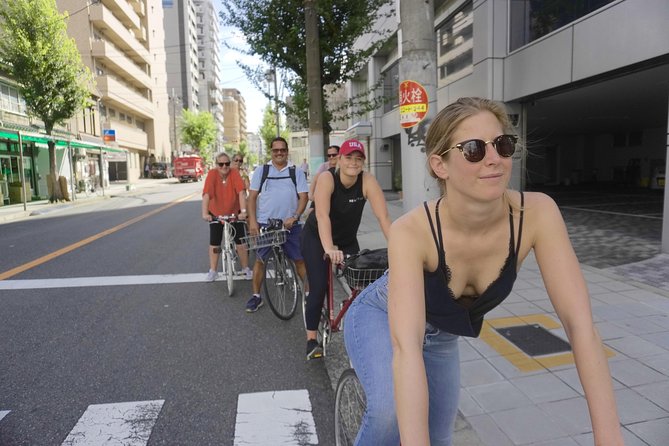
See Osaka at street level. This three-hour ride links temples, shrines, parks, shopping districts, and Osaka Castle in one tidy route, giving you a useful first look at a very spread-out city. I especially like the pedal-assist bikes, which make hills and longer stretches much easier, and the small group of up to seven, which allows the guide to keep an eye on everyone.
The main drawback is time. You cover a lot, but most stops are brief, so this is better for seeing Osaka’s broad character than for detailed visits inside each attraction. You also need to be comfortable riding in city streets and meet the fitness and age requirements.
In This Review
- Key points to know before you book
- Why an e-bike makes sense in Osaka
- Den Den Town: Osaka’s anime and game quarter
- Shitennoji Temple and Osaka’s Buddhist roots
- Osaka Castle Park: the scenic center of the ride
- Nakanoshima Park beside the rivers
- America Town and Osaka’s street fashion
- Namba Yasaka Shrine and the giant lion head
- The guides are a major part of the value
- How much does $57 represent?
- What to wear and how to prepare
- Who will enjoy this tour most?
- Practical booking points
- Should you book the Osaka e-bike tour?
- FAQ
- How long does the Osaka e-bike tour last?
- How much does the tour cost?
- What is included in the price?
- What language is the tour conducted in?
- How many people can join the group?
- Where is the meeting point?
- Who cannot take this tour?
Key points to know before you book
- You cover six very different Osaka districts and sights in only three hours, from Den Den Town to Namba Yasaka Shrine.
- The electric bike reduces the physical effort, especially on slopes and during longer city stretches.
- English-speaking guides such as Ko and Kosuke are praised for clear explanations, humor, local stories, and careful pacing.
- The route mixes major sights with everyday Osaka, including anime shops, fashion streets, riverside paths, temples, and shrines.
- The $57 price is fair for a small-group city orientation, especially if you want to save your feet and avoid piecing together several train journeys.
- You must be at least 14 and 140 centimeters tall, able to ride a bike, and fit enough for a three-hour outing.
Why an e-bike makes sense in Osaka
Osaka is easy to explore in sections, but its major sights are not all clustered together. A train can take you between districts, yet trains do not show you the streets in between. This tour fills that gap.
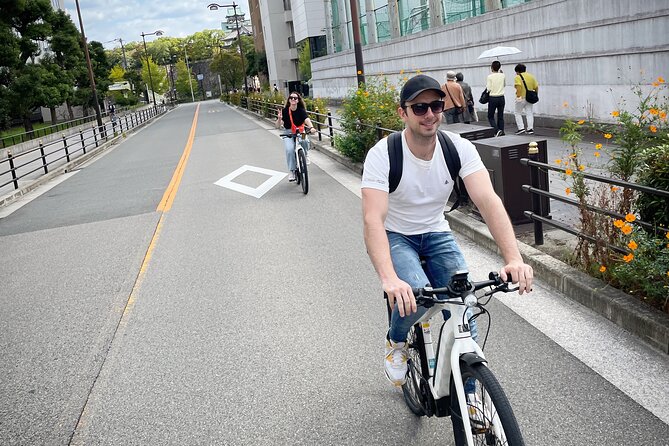
The electric bike gives you pedal assistance rather than replacing your effort completely. You still ride, but slopes and longer distances feel less demanding. Several people with limited cycling confidence found the pace manageable, and one group included a 75-year-old mother who was carefully watched by the guide.
That said, this is not a sightseeing bus with a bicycle theme. You need to steer, brake, watch other road users, and stay with the group. If you rarely ride a bike or feel uneasy in city traffic, the tour may feel like work rather than a holiday.
The pace is generally described as relaxed. Guides stop at key places, explain what you are seeing, and keep the group moving. You will not spend the full three hours pedaling without a break, but you should still expect a real ride.
More Bike Tours in Osaka
- 5-Hour Osaka Bike Tour to the Neighborhood of Osaka Castle
★ 5.0 · 319 reviews - One-Day Osaka Bike Adventure: 5–6 Hours
★ 5.0 · 246 reviews - Eat, Drink & Cycle: Osaka Foodie Bike Tour
★ 5.0 · 224 reviews
Den Den Town: Osaka’s anime and game quarter
The tour begins with Den Den Town, Osaka’s center for anime culture, electronics, games, and colorful pop-culture shops. This is a lively place to start because it quickly introduces you to a side of Osaka that has little to do with temples or old castles.
You can look at unusual memorabilia, browse themed stores, and see how strongly anime and gaming shape the city’s modern identity. Even if you are not a serious collector, the shopfronts and displays make this an entertaining introduction.
The stop is more about atmosphere and orientation than shopping time. Three hours must cover a large route, so you should not expect an extended buying session or a detailed store-by-store tour. If you already plan to return to Den Den Town, use this first look to note places you want to revisit later.
I like the contrast here. Osaka is not presented as only an old Japanese city. You begin with its playful, commercial, youth-focused side, then move toward religious sites and historic landmarks.
Shitennoji Temple and Osaka’s Buddhist roots

From Den Den Town, the route reaches Shitennoji Temple, one of Japan’s oldest temples. This is where the tour shifts from pop culture to religious history.
The guide explains Japanese Buddhism and its place in the local community. You can take in the temple architecture and quieter surroundings while learning how spiritual traditions have shaped Osaka. The value of a guide is clear here, since a temple can look beautiful while its meaning remains unclear to someone seeing it for the first time.
You should think of this as a focused visit, not a full temple study. The tour gives you context and time to look around, but the schedule does not allow for a long, unhurried exploration of every feature.
Still, this stop gives the route balance. Den Den Town shows contemporary Osaka, while Shitennoji offers a window into traditions that reach back much further. Seeing both in the same morning or afternoon makes the city feel less one-dimensional.
Osaka Castle Park: the scenic center of the ride
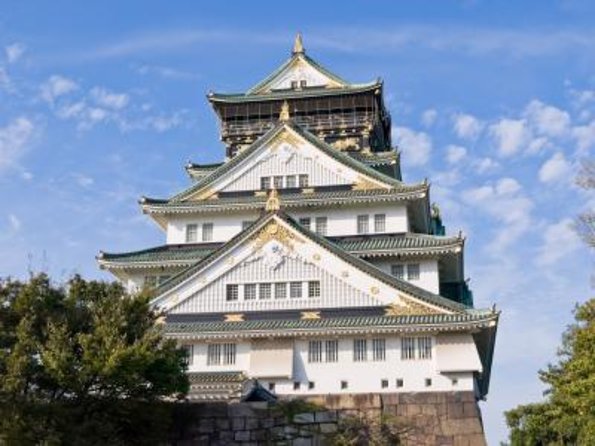
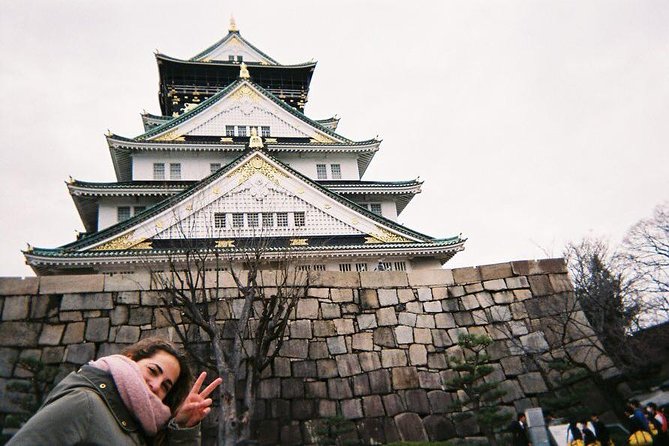
Osaka Castle Park is likely to be the visual highlight. The route passes through the park’s greenery and quieter paths before focusing on Osaka Castle and its stories.
The castle is one of Osaka’s best-known landmarks, and the guide adds local legends and historical background. You also have a chance to take photographs, including a particularly good photo location known to guides such as Sukuna and Ko. In spring, the ride beneath cherry trees can be especially pleasant, although seasonal conditions will shape what you see.
The park is also where the e-bike earns its keep. You can cover more ground than you would on foot and reach scenic corners without spending the day walking between distant areas. One person even encountered an air show near the castle, though that was a lucky event rather than part of the planned tour.
Do not confuse this stop with a full Osaka Castle admission visit. The tour focuses on the park, views, photographs, and stories. If you want to go inside the castle museum or spend hours studying its exhibits, set aside another visit.
For many people, this is the tour’s best photo stop. You get the castle, open park space, and a break from dense city streets.
A completely different kind of day out in Osaka:
- Osaka Go Karting Tour with Funny Costume
★ 5.0 · 2,658 reviews - Osaka Castle: Museum and Tower Entry Ticket
★ 4.5 · 2,380 reviews - Osaka: Shinsekai Food Tour with 13-15 Dishes at 5 Eateries
★ 4.8 · 2,204 reviews - Osaka Food Tour: 13 Dishes at 5 Local Eateries
★ 5.0 · 2,149 reviews
Nakanoshima Park beside the rivers
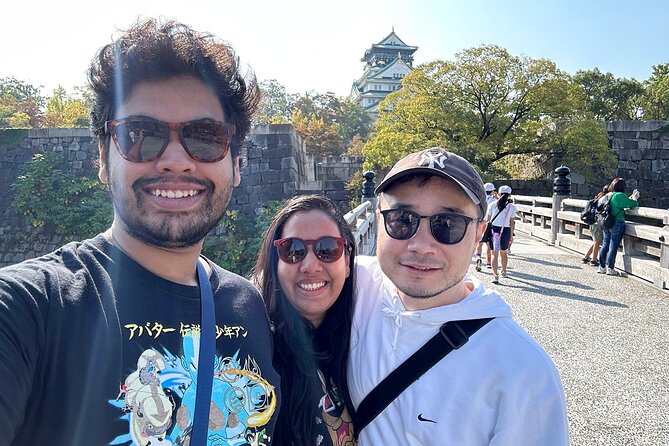
Nakanoshima Park brings a different mood. Located in Osaka’s business district, it is the city’s first public park and follows the rivers with gardens and walking paths.
After the energy of Den Den Town and the scale of Osaka Castle Park, this stop offers a calmer pause. You can stroll beside the water, enjoy the gardens, and see how Osaka’s office district makes room for public green space.
The park also helps you understand the city’s layout. Osaka is shaped by waterways and commercial neighborhoods, not just temples and shopping arcades. A short visit here gives the route a welcome change of pace.
You should expect a brief walk rather than a long garden visit. The tour is designed to keep moving, and the park is one piece of a larger city circuit. If you prefer slow photography or extended people-watching, you may wish the stop lasted longer.
America Town and Osaka’s street fashion
America Town, often called Amemura, shows Osaka’s trendier side. The district is known for local fashion, independent shops, and a more playful street style.
This is a useful stop if you want to see what Osaka wears, not just what Osaka built centuries ago. The funky stores and changing fashion scene offer a clear contrast with Shitennoji and the castle.
The guide can add local context and point out the character of the neighborhood. You may find this stop more interesting if you enjoy clothing, design, youth culture, or browsing unusual shops. If shopping is not your priority, it still gives you a quick look at a different Osaka district.
As with Den Den Town, do not count on enough free time for serious shopping. The benefit is seeing how the district fits into the wider city, then returning later if something catches your eye.
Namba Yasaka Shrine and the giant lion head
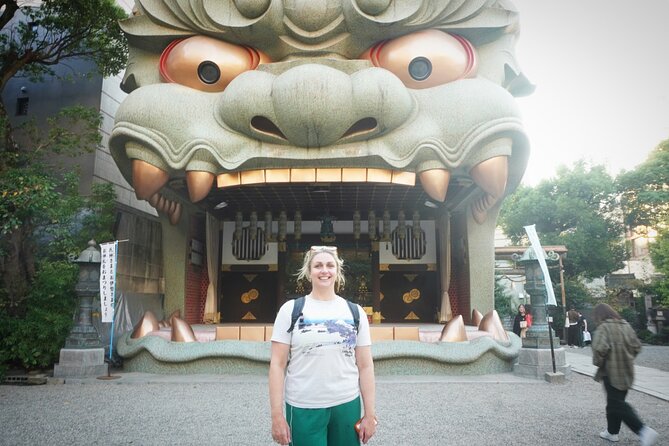
The final stop is Namba Yasaka Shrine, famous for its enormous lion-head stage. It is one of those Osaka sights that makes an immediate impression, even if you know little about Shinto beforehand.
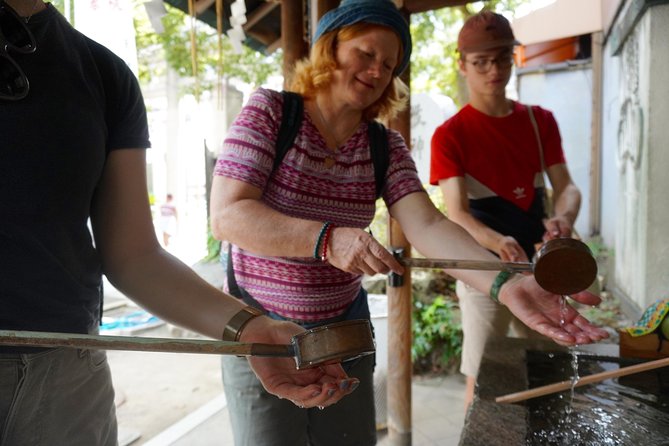
The guide explains Shinto’s role in Japanese culture and how it continues to influence social and spiritual life. That context matters because the shrine is more than a striking photo background. It is a functioning religious place with a distinct local identity.
Ending here works well. The giant lion head provides a memorable final image, while the shrine’s quieter setting brings the tour to a calmer close after several busy neighborhoods.
The stop is not a substitute for visiting every major shrine in Osaka. It is a compact introduction, with enough explanation to help you recognize the difference between Buddhist and Shinto sites encountered during the day.
The guides are a major part of the value
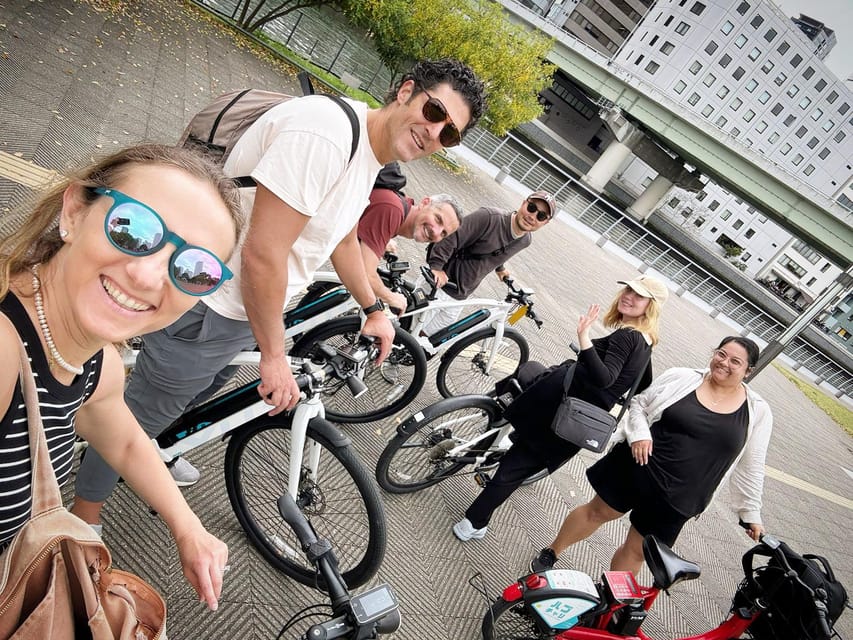
The strongest part of this tour is the guiding. Ko receives especially warm praise for combining clear English, local knowledge, humor, and personal stories. Several people describe him as attentive to the group, careful with safety, and good at setting a comfortable pace.
Kosuke is also praised for adding personal anecdotes and giving the tour a local feel. Another guide, Sukuna, is singled out for helpful explanations and finding a strong Osaka Castle photo spot. The guide on your departure may vary, but the consistent theme is a friendly English-speaking host who knows Osaka well.
Good guiding matters on a bicycle tour because the leader must do more than talk. The guide needs to choose a workable route, keep riders together, notice who needs help, and explain stops without holding everyone in one place for too long.
This seems to be handled well. People who were not confident cyclists found the ride manageable, while experienced riders still enjoyed the efficient route. The small group helps. With no more than seven participants, the guide has a realistic chance of noticing problems before they become serious.
One isolated comment described a guide as a little clueless, though even that person still enjoyed the outing. That is worth keeping in mind: individual guide quality can vary. The overall rating is 4.7 from 75 reviews, with repeated praise for the guides’ English, humor, care, and local perspective.
How much does $57 represent?
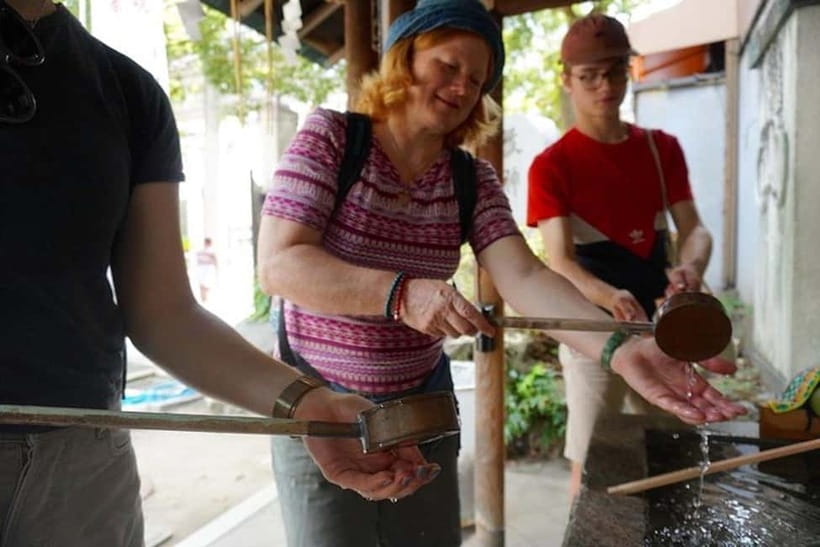
At $57 per person, this is not the cheapest way to see Osaka, but it offers good value if you want a quick city overview without exhausting your legs.
The price includes the guide, electric bike, and helmet. It does not include a tip. You are paying mainly for the route and the human explanation, not admission to a major attraction or a meal.
The comparison with independent sightseeing is simple. You could visit several areas by train, but you would spend time finding stations, changing lines, walking from platforms, and checking directions. The bike lets you see the streets between attractions and reach a broad collection of neighborhoods in one session.
The tour is particularly useful at the start of your Osaka stay. It can help you understand where Den Den Town, the old temples, the castle, Nakanoshima, America Town, and Namba fit together. Afterward, you can return to the places that deserve more time.
It is less valuable for you if you already know Osaka well, dislike organized activities, or want long visits at each sight. In that case, independent exploration may offer more freedom.
What to wear and how to prepare
Wear comfortable clothing that allows easy movement. You should also dress for the weather because the ride moves between open streets, parks, and riverside areas.
A January rider found the tour cold, so do not underestimate Osaka’s winter wind. On warmer days, sun protection and water may be useful, though the supplied information does not specify refreshment arrangements.
Arrive at the stated meeting point outside the Lawson convenience store. Since the meeting point is described by a store rather than a major landmark, check the exact location carefully before leaving your hotel.
The tour includes a helmet, but you should still bring whatever personal items you need for a three-hour outing. A small camera or phone is worthwhile, especially at Osaka Castle and Namba Yasaka Shrine.
Who will enjoy this tour most?
I would recommend it to first-time Osaka visitors who want a broad introduction in a short period. It is also a strong choice if you want to combine famous sights with districts you might not think to visit on your own.
You are a good match if you:
- Can ride a bicycle comfortably
- Want local stories rather than only photo stops
- Prefer a small group to a large bus tour
- Like seeing several neighborhoods in one outing
- Want pedal assistance on a longer city route
- Have limited time in Osaka
The tour is not suitable for children under 14, people under 140 centimeters, or people who cannot ride a bike. The supplied restrictions also exclude people with back, heart, or mobility problems, people with visual impairments, people with low fitness, and people over 70.
Those limits are important. The bike may reduce effort, but it does not remove the need for balance, awareness, and basic stamina. If you are unsure, choose a walking or vehicle-based tour instead.
Practical booking points
The activity lasts three hours, with starting times available according to the date you select. It has an English-speaking live guide and a maximum group size of seven.
You can cancel up to 24 hours before the activity for a full refund. The reserve-now, pay-later option gives you some flexibility when your Osaka schedule is still changing.
No attraction admissions are listed as included. Plan to see the castle, temple, parks, and shrine as stops along the route rather than assume the tour includes interior access.
The route is full enough that you should not expect a leisurely afternoon at one site. Think of it as a moving introduction to Osaka, with short visits and frequent changes of scenery.
Should you book the Osaka e-bike tour?
Book it if you want to see Osaka’s main character in one efficient ride. The combination of Den Den Town, Shitennoji Temple, Osaka Castle Park, Nakanoshima, America Town, and Namba Yasaka Shrine gives you culture, history, fashion, religion, green space, and city life without spending the day underground on trains.
I especially like the tour for a first day in Osaka. The guide’s local advice can help you decide where to return, and the e-bike lets you cover ground while still seeing the city at street level.
Skip it if you cannot ride confidently, want long visits inside attractions, or prefer to set your own speed. For everyone else, $57 is a reasonable price for a small-group orientation led by an English-speaking local guide. Ko’s friendly style, careful pacing, and strong knowledge seem to be the tour’s biggest assets, but the route itself is also well chosen.
FAQ
How long does the Osaka e-bike tour last?
The tour lasts three hours.
How much does the tour cost?
The listed price is $57 per person.
What is included in the price?
A local guide, an electric bike, and a helmet are included. Gratuity is not included.
What language is the tour conducted in?
The tour has a live English-speaking guide.
How many people can join the group?
The group is limited to seven participants.
Where is the meeting point?
The group meets outside the convenience store Lawson.
Who cannot take this tour?
The tour is not suitable for children under 14, people under 140 centimeters, people who cannot ride a bike, people with back, heart, or mobility problems, people with visual impairments, people with low fitness, or people over 70.
More E-Bike Tours
- Osaka E-Bike Tour with a Local Guide
★ 5.0 · 219 reviews - Hidden Kyoto E-Biking tour
★ 5.0 · 1,843 reviews - Tokyo Top Highlights 3h Guided E-bike Tour
★ 5.0 · 714 reviews - 3h Tokyo E-Bike Tour: Hidden Gems, and Local Life with guide
★ 5.0 · 670 reviews
Just added around Osaka
- Osaka Food Tour with 10 Classic Japanese Tastings & Drinks★ 5.0 · 38 reviews
- Osaka: Highlights & Hidden Gems Private Walking Tour★ 4.7 · 38 reviews
- Kyoto private tour (Shore excursion available from Osaka or Kobe port)★ 5.0 · 39 reviews
- Osaka Private Day Trip – Enjoy Your First-Time Visit to Osaka!★ 5.0 · 39 reviews
- Kyoto & Nara & Uji: Full Day Sightseeing Tour from Osaka or Kyoto★ 4.5 · 39 reviews
- Authentic SUSHI Course Cooking Class★ 5.0 · 39 reviews
- Osaka: Mind & Spirit Balance Temple Reiki Healing★ 5.0 · 41 reviews
- Osaka Afternoon Walking Tour with Osaka River Cruise★ 3.5 · 42 reviews
Cycling Tours, compared.
3h Tokyo E-Bike Tour: Hidden Gems, and Local Life with guide
Read our review →
Arashiyama Bamboo Forest & Hidden Gems Bike Tour (Early Bird)
Read our review →
Hiroshima in a Nutshell: Morning Bike Adventure
Read our review →Browse the lists this tour appears in