
Reviewed · GOVERNMENT-LICENSED GUIDE TOURS
Takayama Half-Day Private Tour with Government Licensed Guide
Takayama rewards a slower look. This private four-hour walk gives you your own guide and itinerary, with time to explore places such as Sanmachi Suji, the morning market, temples, and festival exhibits. I especially like the freedom to choose only two or three sights, and the way guides such as Yuko, Yoko, Mitsu, and Lily tailor the day to personal interests.
The tour also offers useful local introductions. Guides have helped visitors find Hida beef, sake tastings, engraved chopsticks, tea experiences, and hands-on crafts. The main caution is simple: transportation and entrance fees are extra, and the long list of possible stops is a menu, not a promise that you will see everything in four hours.
In This Review
- Key points about this Takayama tour
- Why a private introduction works well in Takayama
- Four hours, two or three main sights
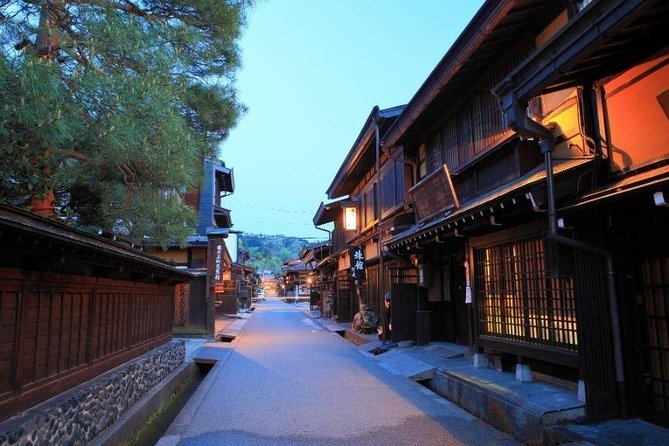
- Sanmachi Suji and the old merchant streets
- Hida-Takayama Miyagawa Morning Market
- Takayama Jinya and the power of the shogunate
- Hida Folk Village and traditional mountain homes
- Festival floats at two different museums
- Higashiyama Walking Course and Hida Kokubun-ji
- Historic houses and Showa-era curiosities
- What the guides add to the experience
- Price, walking, and what you pay separately
- Who should book this tour?
- Should you book the Takayama half-day tour?
- FAQ
- How long is the Takayama private tour?
- Is the tour private?
- How many sights can I choose?
- Is an English-speaking guide included?
- Does the tour include private transportation?
- Are entrance fees included?
- Is pickup available?
- Can I visit Hida Folk Village during the tour?
- What is the cancellation policy?
Key points about this Takayama tour

- Choose two or three sights: Build the morning around old streets, temples, markets, museums, or Hida Folk Village.
- Private means personal: Only your party joins, so you can ask questions, change pace, and adjust the plan.
- English-speaking licensed guides: Yuko, Yoko, Mitsu, Lily, Yoshi, Yuriko, Annie, and Tatsuya Ito are among the guides praised for clear explanations and thoughtful planning.
- A walking start: Meet your guide on foot within the designated Takayama area. Private vehicle service is not included.
- Food and craft advice adds value: Hida beef, sake, tea, engraved chopsticks, and local crafts can become part of the day.
- The price depends on your group: At $122.23 per person, the tour is easiest to justify when you want context, planning help, and a private pace.
Why a private introduction works well in Takayama
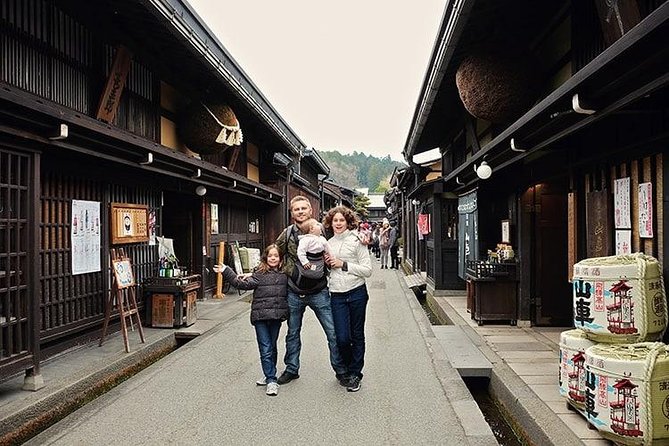
Takayama is compact enough to explore on foot, yet its appeal is spread across several different pockets. You have the Edo-period merchant streets, government buildings, shrines, temple paths, folk architecture, markets, and festival displays. Seeing these places is easy. Understanding how they fit together is harder.
That is where this tour earns its keep. You are not simply led from one photo stop to another. A guide can explain why Takayama developed as a regional center, how its timber shaped local life, and why the city’s festivals remain such a source of pride.
The private format matters most if you have a clear interest. You can ask for old architecture, religious sites, outdoor walking, local food, family activities, or festival culture. One family used the time to find engraved chopsticks and try sake. Another preferred an outdoor day built around Hida Folk Village, the market, and Shiroyama Park.
You also get a more natural pace. If a guide is explaining a float, a shrine custom, or a local craft and you have questions, you do not need to hold up a busload of people. If you have had enough of museums, you can spend more time outside.
More licensed guide tours:
- Magome & Tsumago Nakasendo Trail Day Hike with Government-Licensed Guide
★ 5.0 · 38 reviews - Tokyo 6hr Private Tour with Government-Licensed Guide
★ 5.0 · 3,902 reviews - Tokyo 4hr Private Tour with Government-Licensed Guide
★ 5.0 · 1,394 reviews
Four hours, two or three main sights
The supplied sightseeing list includes 13 possible stops, but the included tour description makes clear that you select two or three. This distinction is important. You cannot sensibly visit every location in four hours, especially on foot and with time for explanations.
Think of the tour as a private planning session with an experienced local guide. Before or at the start of the walk, discuss what matters most to you. Sanmachi Suji and the Miyagawa Morning Market make a strong choice for first-time visitors. Takayama Jinya and one festival museum suit anyone interested in politics and local tradition. Hida Folk Village and the Higashiyama route work better if you want open space and a greener setting.
Some attractions are farther apart than others. Hida Folk Village is not part of the central walking cluster, so transportation costs and arrangements are your responsibility. The tour itself does not include a private vehicle.
The 15-minute time estimates attached to several sights should also be treated as brief orientation visits, not full museum tours. If you want to properly study a building or exhibition, ask your guide to focus the itinerary rather than trying to collect every stop.
Sanmachi Suji and the old merchant streets
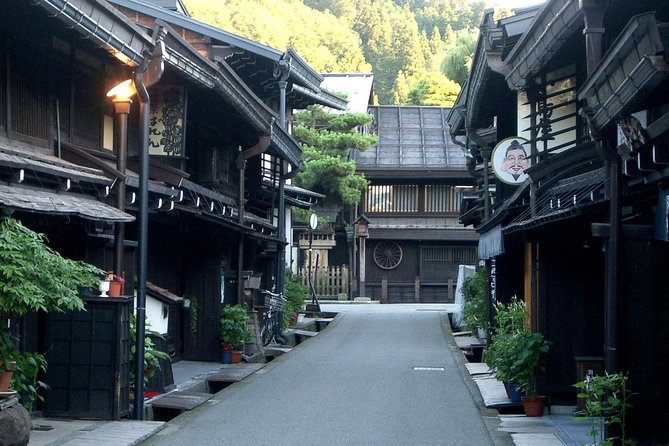
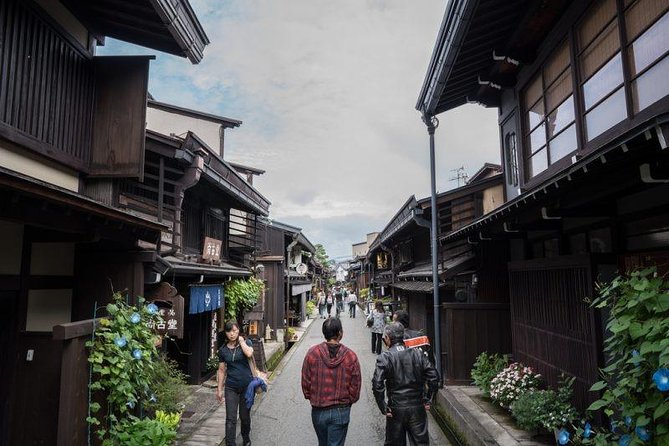
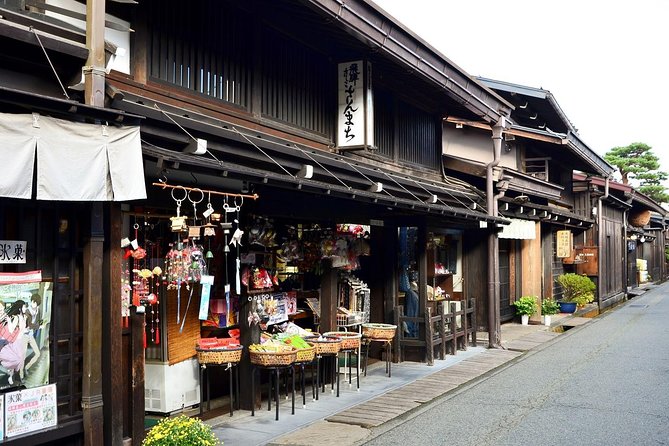
Sanmachi Suji is the classic starting point for Takayama. Its preserved wooden houses and shops reflect the Edo period, when the city prospered through trade and skilled craftsmanship.
A guide helps you look past the attractive facades. You can learn how merchant homes were arranged, what kinds of local goods are sold, and which corners deserve more than a quick photograph. The area is also a useful place to ask about food, sake, and regional products.
This stop is free to enter, but shops and tastings cost extra. The streets can become the most commercial part of your visit, so your guide’s local suggestions matter. Yoshi, for example, took one visitor to a Hida beef restaurant described as less tourist-focused. That kind of recommendation can be worth more than another museum admission.
Hida-Takayama Miyagawa Morning Market
The Miyagawa Market runs beside the river and is held daily from around 7:00 a.m. until noon, with an 8:00 a.m. start in winter. That schedule makes it a morning stop, not an afternoon fallback.
You will find local produce and regional specialties, with the guide adding context about what you are seeing and how the market fits into everyday Takayama. It is also a good place to ask what to eat later in the day.
The market is free, but purchases are not. If you are choosing between the market and a museum, I would give the market priority when it is open. It offers a more direct connection to local life than a display behind glass.
A few more Takayama experiences worth weighing up
- Shirakawa-go UNESCO Half-Day Tour from Takayama
★ 4.6 · 47 reviews - Nara Half Day Trip Walking Tour (Private Option Available)
★ 5.0 · 937 reviews - Kyoto Arashiyama Bamboo forest & Garden Half-Day Walking Tour
★ 5.0 · 413 reviews - Kanazawa Half Day Tour (Private Guide)
★ 5.0 · 361 reviews
Takayama Jinya and the power of the shogunate
Takayama Jinya was the local government office after the Hida region came under direct control of the Tokugawa shogunate in 1692. The reason was the value of the area’s timber, which made this mountain region strategically important.
This is one of the best stops for understanding why a relatively small city received such close attention from Japan’s rulers. The building is not free, and admission is not included in the tour price.
A 15-minute visit would be enough for a quick introduction, but not a detailed examination. If government, architecture, and regional politics interest you, make Jinya one of your main two or three choices.
Hida Folk Village and traditional mountain homes
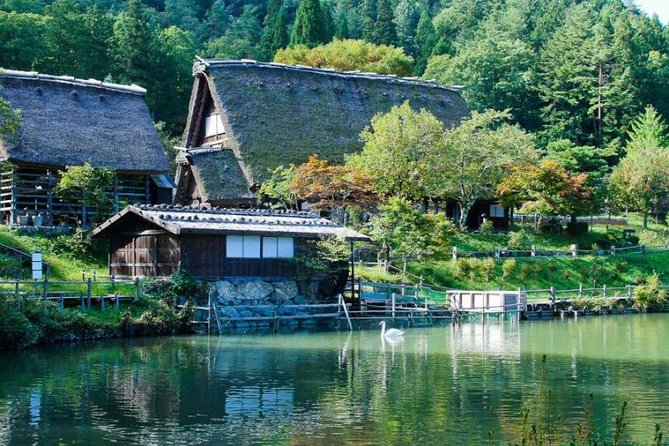
Hida no Sato, or Hida Folk Village, is an open-air museum with more than 30 traditional houses from the Hida region. The buildings were moved and preserved to show how people lived in this mountainous part of Gifu Prefecture.
This is a strong choice if you want space, traditional construction, and a break from the city streets. It also suits families and anyone who prefers seeing complete buildings rather than reading labels in a gallery.
The visit works best when you allow enough time. The listed 15-minute estimate suggests a quick look, not a full exploration. Entrance fees are not included, and you must also account for transportation because the tour is a walking experience without private transport.
One guide used Hida Folk Village as part of an outdoor-focused plan, along with the market and Shiroyama Park. That combination makes sense for a pleasant-weather day, though you should not try to squeeze it together with several central museums.
Festival floats at two different museums
Takayama’s festivals are held in spring on April 14 and 15, and in autumn on October 9 and 10. They are counted among Japan’s three most beautiful festivals, and the city’s elaborate floats explain why.
The Takayama Festival Floats Exhibition Hall displays actual floats connected with the festival. Sakurayama Hachimangu Shrine, the autumn festival venue, is next door. The shrine itself is free, while the exhibition hall charges admission.
Matsuri no Mori, also called the Hida Takayama Art and Festa Forest, offers full-sized replica floats and a presentation of festival culture. Its admission is also extra.
For a short tour, choose one float attraction, not both. The Exhibition Hall gives you the strongest link to the actual festival objects and shrine. Matsuri no Mori may appeal more if you want a broad display and replica structures.
Several visitors praised the guides’ explanations of the floats. That is a real advantage. The objects are impressive on their own, but a guide can explain how they are used, what they represent, and why the festival matters to the city.
Higashiyama Walking Course and Hida Kokubun-ji
The Higashiyama Walking Course passes through Takayama’s temple district, quieter outer areas, and Shiroyama Park. The route takes about 30 minutes in the suggested plan and offers a calmer counterpoint to the old-town streets.
Choose it if you like walking and want greenery mixed with religious buildings. It is free, but the route may not suit you if you want to minimize walking or if weather is poor.
Hida Kokubun-ji is about a five-minute walk from JR Takayama Station. Its three-storied pagoda was built in 1820, and the temple is one of the city’s familiar landmarks.
The temple is free to enter and easy to combine with a central Takayama itinerary. It is a practical choice at the beginning or end of your stay, especially if you are arriving by train.
Historic houses and Showa-era curiosities
The Kusakabe Folk Museum occupies a private residence built during the Meiji period in an Edo architectural style. It offers a look at the homes and design of a prosperous earlier era. Admission is extra, and a 10-minute visit would be brief.
Yoshijima Heritage House dates from 1908 and was historically connected with sake brewing. A large sakabayashi, a ball made from Japanese cedar leaves, hangs beneath the building’s sign. This detail gives the house a direct link to sake culture, not just domestic architecture.
The Takayama Showakan Museum recreates streets and daily life from the 1950s. Its displays include a barbershop and Midget Alley, among other period scenes. The Hida Takayama Retro Museum adds Showa-era films, posters, toys, games, magazines, and pachinko machines.
These museums suit you if you enjoy social history, nostalgia, and unusual small collections. They are less useful if your main goal is the traditional Takayama of temples, markets, and merchant houses. Since admissions are extra, ask your guide which one best matches your interests before spending time and money.
What the guides add to the experience
The strongest part of this tour is the guide’s ability to shape the day. Yuko has helped families combine cultural explanations with local shopping and sake tasting. Yoko has been praised for steady pacing, clear English, and adapting an itinerary toward outdoor sights.
Mitsu has arranged a tea tasting with a specialist and also introduced visitors to sake. Lily has guided families toward lunch and arts-and-crafts activities, including making sarubobo, Takayama’s local good-luck charm.
Annie has shared personal stories about life in the area, while Yuriko has been praised for answering questions and responding to family interests. Tatsuya Ito is a particularly good match if you enjoy detailed questions about Takayama and Japan.
No guide can guarantee a particular person, so book this experience for the private format and local perspective rather than a specific name. Still, the range of guide styles is encouraging. You may receive a history-focused introduction, a food-oriented walk, or an outdoor itinerary, depending on the guide assigned and the interests you share.
One caution comes from a less successful experience involving a bike ride. The guide was friendly, but could not answer basic questions about a Shinto rope, and the timing of lunch and cold drinks was awkward. That suggests you should explain your expectations clearly, especially if you want detailed religious, cultural, or food explanations.
Price, walking, and what you pay separately
At $122.23 per person, this is not the cheapest way to see Takayama. The value improves when you are traveling as a small private party and want a guide who can answer questions, adjust the pace, and point you toward useful local choices.
The price includes a licensed local English-speaking guide and a custom itinerary of two or three sites. It does not include transportation, entrance fees, lunch, or personal purchases. Private transportation is specifically excluded.
That cost structure is easy to manage if you choose free locations such as Sanmachi Suji, the Miyagawa Market, Higashiyama Walking Course, Hida Kokubun-ji, and Sakurayama Hachimangu Shrine. It rises when you add Takayama Jinya, a festival museum, Hida Folk Village, or one of the historic houses.
This is a walking tour, and the meeting or pickup is on foot within a designated Takayama area. Most people can participate, and service animals are allowed. Wear shoes you can walk in, and remember that the four-hour length includes movement between places and conversation, not just time inside attractions.
You receive confirmation at booking, and free cancellation is available up to 24 hours before the local start time. Changes or cancellations made later are not accepted for a refund.
Who should book this tour?
I would choose it for a first visit, especially if you have only half a day and do not want to spend your limited time sorting out priorities. It is also a good fit for families, couples, and small groups who want the day to reflect their own interests.
History fans should request Takayama Jinya, Sanmachi Suji, and either a festival display or historic house. Food-focused visitors should ask about Hida beef, sake, the morning market, and local products. If you prefer fresh air, choose Hida Folk Village, Higashiyama, Shiroyama Park, and the market, provided the timing and transport work.
I would skip it if you already know Takayama well, prefer to explore alone, or want every admission and transfer bundled into one price. You can visit many central sights independently, and a four-hour private guide is a premium.
Should you book the Takayama half-day tour?
Book it if you want a focused introduction with room to change plans. The best results come when you arrive with two or three priorities rather than asking to see the entire list.
Before the tour, tell the guide whether you care most about architecture, festivals, temples, food, crafts, or outdoor walking. Also confirm which attractions require transport and which entrance fees you will pay. With those details settled, the $122.23 price can buy more than sightseeing: it can save time, provide context, and lead you to a good bowl of local knowledge, perhaps with Hida beef on the side.
FAQ
How long is the Takayama private tour?
The tour lasts approximately four hours.
Is the tour private?
Yes. Only your own group participates, and you cannot combine multiple tour groups.
How many sights can I choose?
The included experience covers a customizable itinerary of two or three sites from the listed options.
Is an English-speaking guide included?
Yes. A licensed local English-speaking guide is included.
Does the tour include private transportation?
No. This is a walking tour, and private transportation is not included.
Are entrance fees included?
Entrance fees are not generally included. Guide entry fees are covered only for sights specifically listed under the tour expectations, and individual attraction admissions remain extra.
Is pickup available?
Meetup is provided on foot within the designated area of Takayama. The experience does not provide vehicle pickup.
Can I visit Hida Folk Village during the tour?
You can select Hida Folk Village as one of your chosen sites, but transportation fees are not included and the tour itself is conducted on foot.
What is the cancellation policy?
You can cancel up to 24 hours before the experience start time for a full refund. Cancellations or changes made less than 24 hours before the start time are not accepted for a refund.
Just added around Takayama
- Magome & Tsumago Nakasendo Trail Day Hike with Government-Licensed Guide★ 5.0 · 38 reviews
- Japanese Cooking Class with Local Family in Takayama Old Town★ 5.0 · 40 reviews
- From Takayama: Shinhotaka Ropeway and Kamikochi tour★ 4.8 · 42 reviews
- Shuriken Experience in Takayama★ 5.0 · 46 reviews
- Shirakawa-go UNESCO Half-Day Tour from Takayama★ 4.6 · 47 reviews
- Hida Takayama, Shirakawa-go+Observatory|Day Trip from Nagoya★ 4.3 · 47 reviews
- Takayama Old Town Walking Tour with Local Guide★ 4.5 · 50 reviews
- Private group Local Food Tour in Takayama★ 5.0 · 59 reviews
Government-Licensed Guide Tours, compared.
Tokyo 6hr Private Tour with Government-Licensed Guide
Read our review →
Tokyo 4hr Private Tour with Government-Licensed Guide
Read our review →
Kyoto 6hr Private Tour with Government-Licensed Guide
Read our review →
Hiroshima / Miyajima Full-day Private Tour with Government Licensed Guide
Read our review →
Kyoto 4hr Private Tour with Government-Licensed Guide
Read our review →
Hiroshima City 4hr Private Walking Tour with Licensed Guide
Read our review →
Private Kyoto Tour with Licensed Guide & Vehicle (Max 15 persons)
Read our review →Browse the lists this tour appears in