
Reviewed · SAKE TASTING
Tasting All Types of Sake with Sommelier
Sake makes more sense after the first sip. This Shinjuku tasting turns a puzzling Japanese drink into something you can order with confidence, with six to seven sake samples and clear guidance from sommelier Aki, also called Akira in some tour details. I like the wide range of styles, from sparkling and sweet to dry, hot, pasteurized, and unpasteurized. I also like the practical lesson on reading a sake label, since that skill stays useful long after the tasting ends.
The main consideration is the alcohol. Six or seven samples in about 90 minutes can catch up with you, especially if you arrive hungry or tired from a day of sightseeing. The tasting takes place at a small sake bar beside Louis Vuitton Shinjuku, so this is more of a focused seminar and tasting than a large guided tour with a full meal.
In This Review
- Key points to know before booking
- Why this Shinjuku sake tasting is useful
- Meeting near Shinjuku San-chome at 4:00 p.m.
- A small sake bar beside Louis Vuitton Shinjuku
- Six to seven styles, not just one standard pour
- Learning to decode a Japanese sake label
- Aki’s teaching style and personality
- Kabukicho, Golden Gai, and the evening setting
- Is $62.76 a fair price?
- Who will enjoy this experience most?
- Plan your afternoon carefully
- Should you book this Shinjuku sake experience?
- FAQ
- How long does the sake tasting last?
- What time does the experience begin?
- Where does the sake tasting meet?
- Where does the activity end?
- How many types of sake will I taste?
- What is the maximum group size?
- Can I cancel for a full refund?
Key points to know before booking
- Six to seven different sakes: Expect a guided sample of contrasting styles, including sparkling, sweet, dry, hot, pasteurized, and unpasteurized sake.
- Aki leads the session: The guide is praised for his friendly manner, clear English, humor, and ability to answer questions about sake, whiskey, wine, and Tokyo nightlife.
- Label-reading skills: You learn how rice, brewing methods, sweetness, acidity, and pasteurization affect what is in the glass.
- Shinjuku setting: The meeting point is near Shinjuku San-chome, with discussion of Kabukicho and Golden Gai along the way.
- Small-group format: The experience accepts no more than 12 people, though a very small booking may become a more personal session.
- Useful early-trip activity: A 4:00 p.m. start gives you time to use what you learn later at restaurants, izakayas, and bottle shops.
Why this Shinjuku sake tasting is useful
Sake can be hard to order in Japan. Labels often contain unfamiliar terms, and a bottle’s price does not tell you exactly how it will taste. One sake may be light and fragrant, another rounded and sweet, while a third has a sharper, drier finish. Without some guidance, you can end up choosing by appearance or price alone.
This experience gives you a working introduction rather than just a flight of drinks. Aki explains how sake is produced, how the types differ, and how to think about serving temperature and food pairings. The goal is not to turn you into a sake specialist in one afternoon. It is to help you recognize what you like.
That makes the session especially helpful if you are visiting Japan for the first time, or if you already enjoy sake but usually order whatever the restaurant recommends. I would also consider it a good choice for couples, families with adult children, and friends who want a shared activity that feels more local than a standard sightseeing stop.
A handout covers the basic brewing process and the main sake categories. It gives you something to refer back to after the tasting, although it apparently does not list every bottle sampled or provide technical notes for each one. If you want a record of your favorites, bring your phone or a small notebook and ask Aki to repeat the name of each sake.
More Food Tours in Tokyo
- Tokyo: Shinjuku Food Tour (13 Dishes at 4 Local Eateries)
★ 5.0 · 6,603 reviews - Tokyo Tsukiji Fish Market Food and Culture Walking Tour
★ 5.0 · 3,184 reviews - Tokyo: Shinjuku Food Tour (15 Dishes and 4 Eateries)
★ 4.9 · 2,033 reviews
Meeting near Shinjuku San-chome at 4:00 p.m.
The experience begins at Frente Shinjuku San-chome, listed at 3-chome-4-8 Shinjuku, Shinjuku City. The meeting point is close to public transportation, but Shinjuku is a maze of streets, signs, department stores, and station exits. Give yourself extra time and use the exact meeting information on your mobile ticket.
The opening conversation covers the Shinjuku area and then Shinjuku 3 Chome. These first stops are brief, about five minutes each, and do not require an admission ticket. Think of them as orientation rather than formal sightseeing. Aki helps place the tasting in its neighborhood and gives you a little context before you sit down.
The meeting instructions matter here because the group gathers in a busy part of Tokyo. Aki is described as making an effort to locate the group in the crowd, but you should still arrive early and keep your phone available. The tour ends back at the meeting point, which makes it easy to continue your evening in Shinjuku afterward.
A small sake bar beside Louis Vuitton Shinjuku
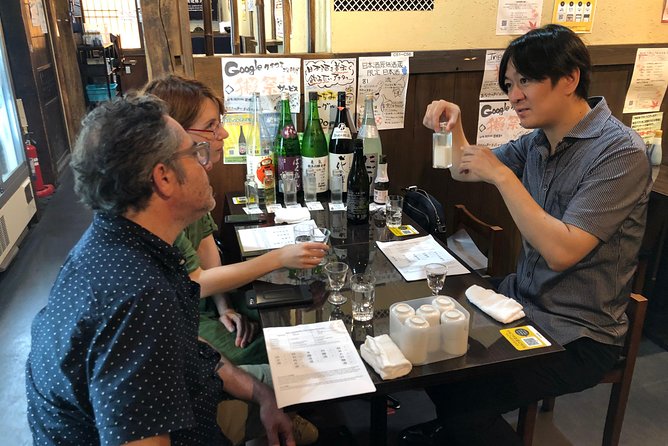
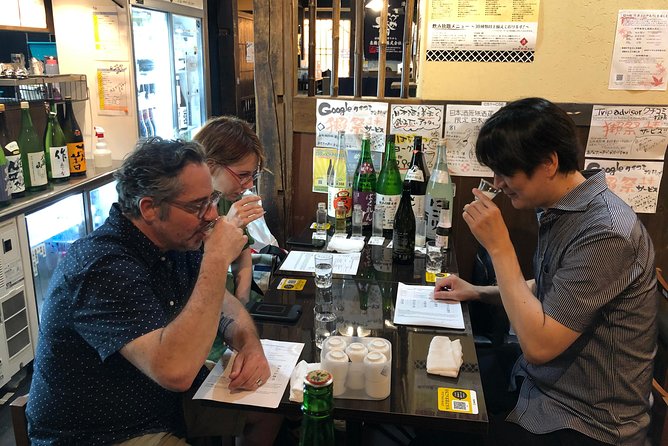
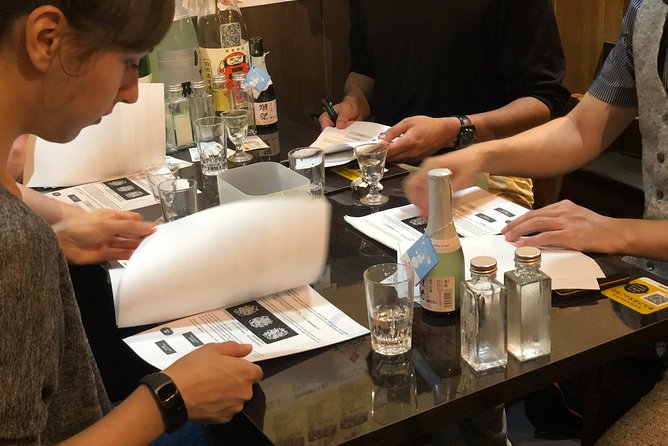
The central portion begins when the group reaches the sake bar next to Louis Vuitton Shinjuku. The setting is small and focused. That can be a plus if you want to hear the explanations and ask questions without the feel of a large commercial tasting room.
The listed time at the bar is about 1 hour and 20 minutes, though the overall experience is advertised at approximately 1 hour and 30 minutes. One account describes a total closer to two hours, so do not schedule a tight dinner reservation immediately afterward. The pace may depend on group size and the number of questions.
The bar location also shapes the experience. You are not visiting a brewery or touring a production facility. You are sampling sake in central Tokyo while learning how to make sense of it. If you want a behind-the-scenes look at rice polishing, fermentation tanks, or a rural brewery, this is not that kind of activity.
What you do get is a comfortable place to compare styles side by side. That comparison is the heart of the session. A sake that seems mild on its own can taste quite different after a crisp, dry sample. By moving through several categories, you begin to notice aroma, sweetness, acidity, body, and finish.
Six to seven styles, not just one standard pour
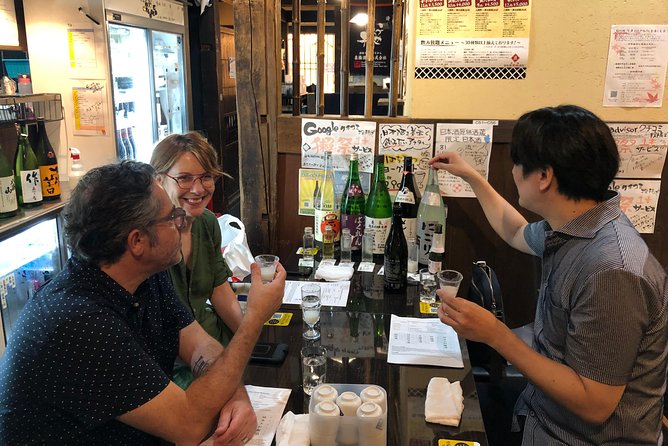
The tasting is designed to show range. Specific bottles can change, but the experience includes several different kinds of sake, with examples described as:
- Sparkling sake
- Sweet sake
- Dry sake
- Hot sake
- Pasteurized sake
- Unpasteurized sake
- Other contrasting styles selected by the sommelier
This variety is one of the strongest reasons to book. Many first-time drinkers assume sake is one uniform beverage, perhaps served hot in a small cup. The tasting corrects both ideas. Sake can be chilled, warm, fizzy, aromatic, smooth, sweet, dry, delicate, or powerful.
Unpasteurized sake is especially interesting for visitors from countries where shipping and storage make it difficult to find. Some of these bottles are available in Japan but are not commonly exported. If you already drink sake at home, this part may be more rewarding than the basic introduction.
The guide also explains the best way to drink each sample and which foods pair well with it. The practical value is easy to see. After the session, you may feel more comfortable choosing a dry sake with grilled food, a sweeter style with a particular dish, or a special bottle simply because its profile appeals to you.
Do not expect a formal meal to accompany the tasting. One useful piece of advice is to eat lunch or have something in your stomach before arriving. That is sensible here. The session includes enough samples to make an empty stomach a poor plan.
More Sake Tastings in Tokyo
- Ramen and Sushi Cooking Class with Sake Pairing Set in Tokyo
★ 5.0 · 291 reviews - Sake Tasting Masterclass in Shinjuku (8+ Varieties with a Pro)
★ 5.0 · 271 reviews - Sake Omakase in Tokyo: Guided Tasting by Certified Sommeliers
★ 5.0 · 239 reviews - Wagyu & Sake Pairing in Shinjuku – Steak, Shabu-Shabu & More
★ 5.0 · 112 reviews
Learning to decode a Japanese sake label
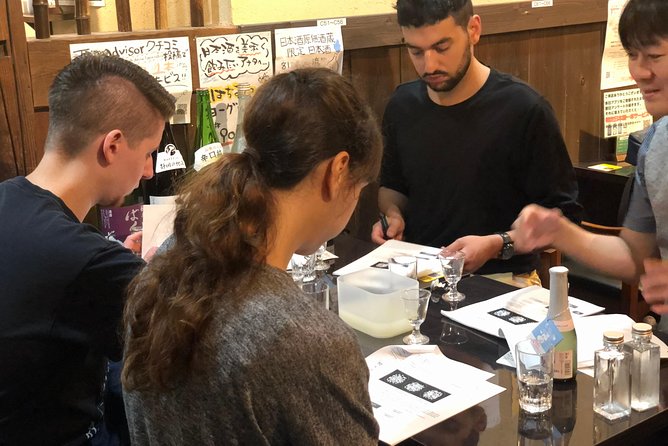
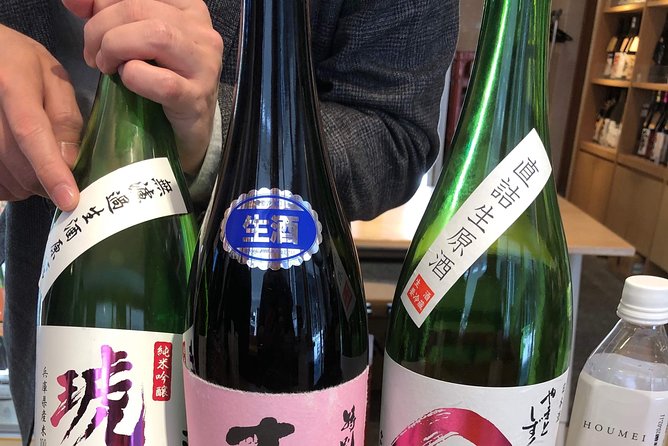
The label lesson may be the most useful part of the activity. Japanese sake bottles can display information about the rice, brewing style, polishing, sweetness, acidity, and pasteurization. Aki explains how to use those clues instead of treating the label as decoration.
You may not remember every Japanese term by the end of the afternoon, but you should leave with better questions to ask. Is the sake sweet or dry? Is it pasteurized? Is it sparkling? Is it meant to be served chilled or warm? What sort of flavor does the producer aim for?
This is practical knowledge for the rest of your trip. You can take it into an izakaya, a department-store food hall, or a bottle shop and make a more informed choice. It also helps you describe your preferences. Saying you prefer something dry and light is far more useful than simply asking for sake.
The handout adds value, explaining the production process and different types. One small limitation is that it may not include a full tasting chart for the exact bottles served. I would write down the names you enjoy, along with a quick note such as dry, floral, sweet, or best warm.
Aki’s teaching style and personality
The guide is repeatedly praised for being friendly, funny, patient, and easy to talk with. That matters in a tasting because sake has its own vocabulary, and a stiff lecture could make the subject feel like homework. Aki’s style appears to be conversational, with room for questions about sake and other parts of Japan.
He is also described as having broad experience with whiskey and wine, and as offering suggestions about Tokyo nightlife and places to visit. That can add useful local color, especially if this is one of your first days in the city. You can ask what to order later, which areas to explore, or what to avoid.
The teaching is detailed. One description compares it to an introductory college class about sake. That will suit you if you enjoy learning how things are made and why flavors differ. It may feel like too much information if you only want a quick drink and a few photographs.
The best approach is to treat the tasting as an informal class with alcohol included. Ask questions. Tell Aki what you usually drink. If one sample is too sweet, too sharp, or too strong for you, say so. The comparisons become more useful when they are connected to your own taste.
Kabukicho, Golden Gai, and the evening setting
The tour also talks about Kabukicho and Golden Gai, two famous parts of Shinjuku nightlife. These short discussions help explain the neighborhood around the bar, though the primary activity remains the sake tasting.
The timing is well chosen for an evening in Shinjuku. You start at 4:00 p.m., finish near the meeting point, and can then explore nearby streets, shop, or continue to dinner. One reason I like this arrangement is that the lesson can immediately guide your next drink. You may spot a bottle on a menu and understand it better than you did that morning.
Keep your expectations in check. The activity does not promise a full walking tour of Kabukicho or Golden Gai, and the itinerary gives only brief time to the initial Shinjuku stops. If you want a detailed nightlife walk, book a separate tour. Here, the neighborhood talk is a useful extra rather than the main event.
Is $62.76 a fair price?
At $62.76 per person, the cost is higher than simply ordering one glass of sake at a restaurant. That comparison is not quite fair, since the price includes six to seven tastings, instruction from a sommelier, a handout, and help choosing future sake.
The value is strongest if you are new to sake or want to sample bottles that may not be easy to find at home. It is also a good use of money if you plan to buy sake during your trip. A single good bottle chosen with confidence can make the lesson feel worthwhile, especially when you understand why you picked it.
The value is weaker if you already know the major sake categories and only want a large quantity of alcohol. This is a guided tasting, not a cheap drinking session. You are paying for explanation, comparison, access to special Japanese bottles, and the chance to ask an expert direct questions.
The maximum group size is 12. That is small enough for a personal feel, though a full group will naturally allow less one-on-one conversation than a booking with only two or three people. A very small booking may become nearly private, which can make the price especially appealing.
Who will enjoy this experience most?
I would recommend it to:
- First-time sake drinkers who want a friendly introduction
- Sake fans seeking Japanese bottles that may be unavailable abroad
- Couples and families with adult children
- Friends who enjoy food and drink education
- People starting a Tokyo visit who want ordering tips for the rest of the trip
- Anyone who likes asking questions in a relaxed small-group setting
It is less suitable if you dislike alcohol, need a substantial meal during an activity, or want to tour a brewery. It may also be too technical for someone who simply wants a quick taste without discussion.
Most people can participate, and the activity is near public transportation. The mobile ticket keeps the booking simple. Confirmation is provided at booking, and the group size is capped at 12, but the supplied details do not describe specific accessibility arrangements, so contact the provider if you have mobility or other access needs.
Plan your afternoon carefully
The start time is 4:00 p.m., and the experience lasts about 90 minutes, with some accounts running longer. Eat beforehand, especially if you have spent the day walking through Tokyo. You do not need to arrive expecting a meal.
Wear something comfortable and plan your route to Shinjuku San-chome before the start. The meeting point is central, but the surrounding streets can be confusing. Since the activity ends where it begins, it is easy to arrange a later dinner in Shinjuku.
Free cancellation is available if you cancel at least 24 hours before the local start time. Changes or cancellations inside that window are not accepted for a refund. That gives you some flexibility, but only if you make changes early.
Should you book this Shinjuku sake experience?
Book it if you want more than a random glass of sake. The combination of six to seven styles, label-reading advice, food-pairing guidance, and Aki’s warm teaching style gives you tools you can use throughout Japan. The chance to taste unpasteurized or Japan-only sake adds something special for experienced drinkers, while the clear explanations keep the session approachable for beginners.
Skip it if you are looking for a brewery visit, a full meal, or an all-night bar crawl. The format is a compact educational tasting in a small Shinjuku bar, with a little neighborhood context on the side.
For most adults curious about Japanese drinks, I think this is a smart early-trip booking. Eat first, arrive on time, ask about the bottles you like, and keep notes. You may leave with a better understanding of sake, a few new favorites, and the confidence to order your next one without pointing at the menu.
FAQ
How long does the sake tasting last?
The advertised duration is approximately 1 hour and 30 minutes. The main tasting portion is listed at about 1 hour and 20 minutes, though the total time can vary.
What time does the experience begin?
The experience starts at 4:00 p.m. local time.
Where does the sake tasting meet?
The meeting point is Frente Shinjuku San-chome, 3-chome-4-8 Shinjuku, Shinjuku City, Tokyo 160-0022, Japan.
Where does the activity end?
The experience ends back at the meeting point.
How many types of sake will I taste?
You will taste approximately six to seven types of sake, with examples including sparkling, sweet, dry, hot, pasteurized, and unpasteurized styles.
What is the maximum group size?
The activity has a maximum of 12 participants.
Can I cancel for a full refund?
Yes. You can cancel at least 24 hours before the scheduled start time for a full refund. Cancellations or changes made less than 24 hours before the start are not accepted for a refund.
More Drinking Tours
- Tokyo Bar Hopping Tour in Shinjuku (All-You-Can-Drink + Dinner)
★ 5.0 · 3,587 reviews - Best of Shinjuku: Izakaya Food Tour (4 Stops, 14+ Tastings)
★ 5.0 · 1,863 reviews - Tokyo: Shinjuku Local Bar and Izakaya Guided Walking Tour
★ 4.9 · 1,794 reviews - Shibuya Meltdown Nightlife Tour: All-You-Can-Drink Bar Hopping
★ 5.0 · 1,058 reviews
Just added around Tokyo
- Tokyo 6hr Instagram Highlights Private Tour with Licensed Guide★ 5.0 · 38 reviews
- Tokyo Small Group Tour with Guide★ 4.5 · 38 reviews
- Tokyo Sumo Experience with Live Show & Audience Challenge★ 5.0 · 38 reviews
- Japanese Food Cooking Class in Asakusa, Tokyo★ 5.0 · 39 reviews
- Very popular in Harajuku♡Animal petting zoo★ 4.6 · 39 reviews
- Ramen Making from Scratch with Tokyo Mom(Vegan Option Available)★ 5.0 · 39 reviews
- Tokyo JDM Night: 600hp C63s AMG Edition 1 (Private)★ 4.9 · 39 reviews
- Tokyo: Kimono Rental inside Shinjuku Gyoen National Garden★ 4.9 · 39 reviews
Sake Tasting, compared.
Kyoto Night Foodie Tour in Gion (9+ dishes + 6 Sake tastings)
Read our review →
1-Day Snow Monkeys, Zenko-ji Temple & Sake in Nagano
Read our review →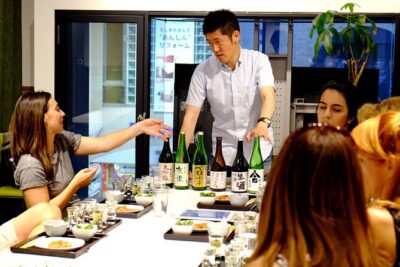
3-Hour Kyoto Insider Sake Brewery Tour with Tastings & Pairings
Read our review →
Arashiyama Bamboo, Temple, Monkeys, or Secret Sake Brewery
Read our review →

Insider Sake Brewery Tour with Sake and Food Pairing
Read our review →
1.5-Hour Kyoto Insider Sake Experience with 7 Tastings & Pairings
Read our review →Browse the lists this tour appears in