
Reviewed · CYCLING TOURS
Tokyo: 3-Hour Bike/E-Bike Tour of the City’s Hidden Gems
Tokyo opens up on two wheels. This three-hour ride covers about 18 kilometers, linking major sights with quieter streets and lesser-known corners that are easy to miss on foot. You move from Zojo-ji and Tokyo Tower to the Imperial Palace, Tokyo Station, Aoyama, and Shibuya.
I like the efficient route and the small group, which can have no more than seven people. I also like the choice of a regular bicycle or e-bike, especially in Tokyo’s heat and on the hills. The main catch is that you need a moderate level of fitness and must feel comfortable riding near traffic and pedestrians.
I would treat this as a fast, active introduction to central Tokyo rather than a slow sightseeing tour. Guides such as Show, Naoki, Kosei, Miguel, and Rinto have earned praise for their friendly manner, clear explanations, and care with group safety. The ride gives you a useful first look at the city, but you will not have long at each stop.
In This Review
- Key points at a glance
- Why a bicycle works so well in central Tokyo
- Starting beside Zojo-ji and Tokyo Tower
- The Imperial Palace and Otemon Gate
- Tokyo Station’s red-brick face
- A short look at Akasaka Palace
- From the Olympic stadium to Aoyama
- Cat Street and the final rush through Shibuya
- Regular bike or e-bike?
- How guides shape the experience
- Price, pace, and overall value
- Who should book this ride?
- Should you book the Tokyo bike tour?
- FAQ
- How long is the Tokyo bike tour?
- Where does the tour start?
- Where does the tour end?
- Is an e-bike available?
- Is a helmet included?
- What happens if bad weather cancels the tour?
Key points at a glance
- 18 kilometers in three hours: You cover far more ground than on foot, with stops at temples, palace gates, major shopping districts, and Olympic sites.
- Small groups of up to seven: The size makes it easier to ask questions and stay together on city streets.
- E-bikes help with heat and hills: Several riders found the electric assistance worthwhile, while one rider managed comfortably on a regular bike.
- A strong route from Tokyo Tower to Shibuya: The ride begins in Shibakoen and ends near Yoyogi Park and Shibuya Station.
- Guides add the human touch: Show, Naoki, Kosei, Miguel, Rinto, and others have been praised for their patience, local explanations, and positive energy.
- Budget for extras: Helmets cost ¥1,000, and a child seat costs ¥3,000 with advance arrangement.
Why a bicycle works so well in central Tokyo
Tokyo is huge, and its most interesting areas are spread out. The Imperial Palace, Tokyo Station, Aoyama, Harajuku, and Shibuya are not difficult to reach by train, but changing lines and walking between stations can eat up a good part of your day.
A bicycle gives you a different view. You see the spaces between the famous places: office streets, quiet temple approaches, fashionable avenues, and the changing feel of each neighborhood. You also avoid spending the whole morning underground.
The pace is brisk. This is not a gentle ride with long café breaks. You cycle between stops, hear an explanation, take photographs, and get moving again. That format works well if you have only a half-day available or want to get your bearings early in a Tokyo visit.
The group limit of seven is important. A large cycling group can feel awkward in a city this busy, while a small group gives the guide more control and makes questions practical. The experience includes bike insurance, a small pouch attached to the bike for your phone, wallet, or keys, and a raincoat on rainy days.
More Bike Tours in Tokyo
- Tokyo Guided Small-Group Biking Tour
★ 5.0 · 1,250 reviews - Tokyo Great Cycling Tour
★ 5.0 · 811 reviews - Tokyo Top Highlights 3h Guided E-bike Tour
★ 5.0 · 714 reviews
Starting beside Zojo-ji and Tokyo Tower
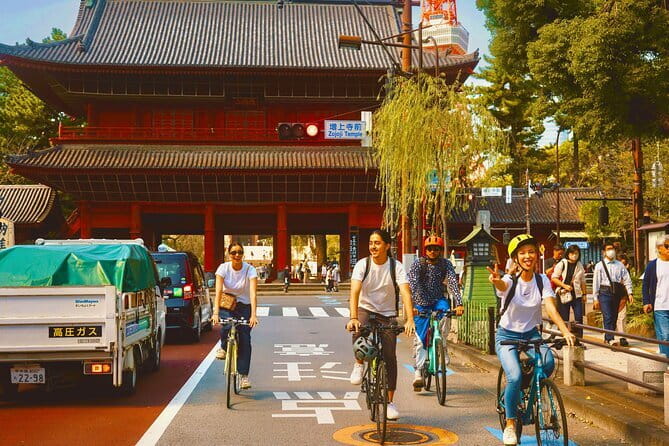
The meeting point is at Shiba Park Building in Minato City, near Zojo-ji. This is a useful starting area because the temple and Tokyo Tower give you two very different images of Tokyo at once: old religious architecture and a tall symbol of modern Japan.
At Zojo-ji, you have about 15 minutes. The main appeal is the chance to photograph the temple with Tokyo Tower behind it. If the temple is open in the way the guide expects that day, you might also go inside to see more of the structure.
Do not expect a long temple visit. The stop is designed for orientation and photographs, not a detailed religious tour. Still, it is a smart first stop because the setting quickly shows how Tokyo places centuries-old buildings beside modern city life.
The route begins in a part of the city where roads can be busy. Your guide directs the group and sets the pace, but you should arrive ready to ride in an urban environment. The experience is described as suitable for people with moderate physical fitness, not for someone who is uneasy on a bicycle.
The Imperial Palace and Otemon Gate
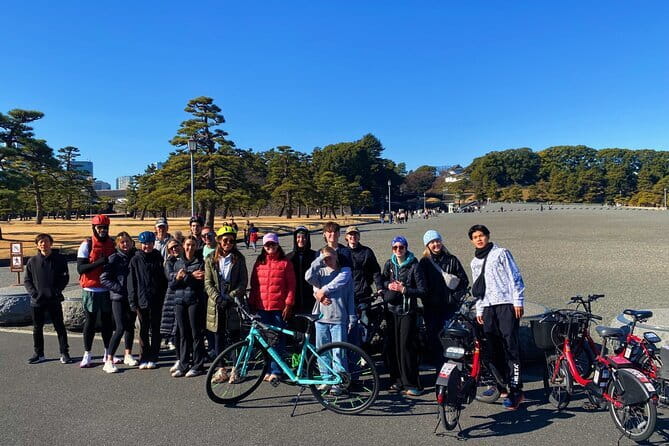
The Imperial Palace area provides two short stops. First, you see the palace entrance and the guards, with about 10 minutes for the visit. Later, you spend another 10 minutes at Kokyo Otemon Gate, the imposing historic entrance to the palace grounds.
The two stops work together. The first gives you a sense of the palace as the Emperor’s residence. The second gives you a stronger photo opportunity, with the traditional gate providing a clear architectural subject.
The limitation is time. You will see the entrance areas, not tour the palace interiors. The gate is not a little-known corner of Tokyo, but it is an important part of the city’s story and fits naturally into a route linking old and new Tokyo.
A guide can make this kind of brief stop more useful. Show and Naoki, in particular, were praised for explaining Japanese culture and history in a way that helped riders understand what they were seeing. The amount of detail can vary by guide and by the questions your group asks, so speak up if you want more context.
Tokyo Station’s red-brick face
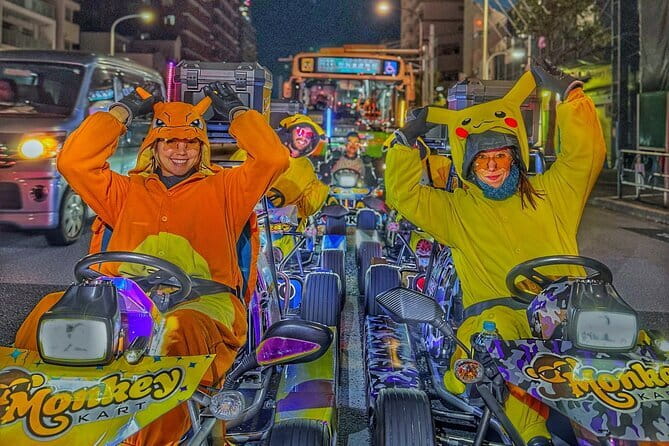
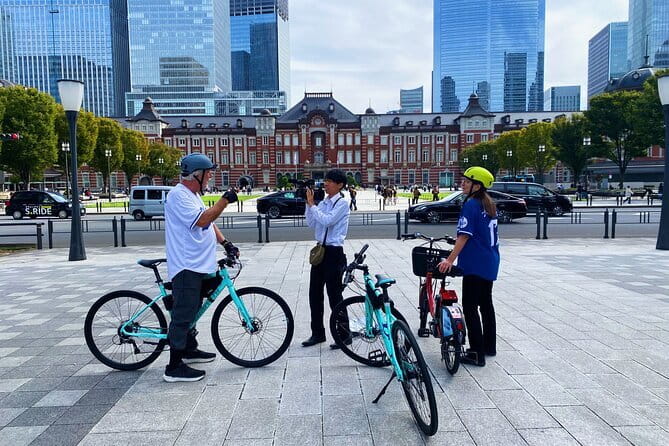
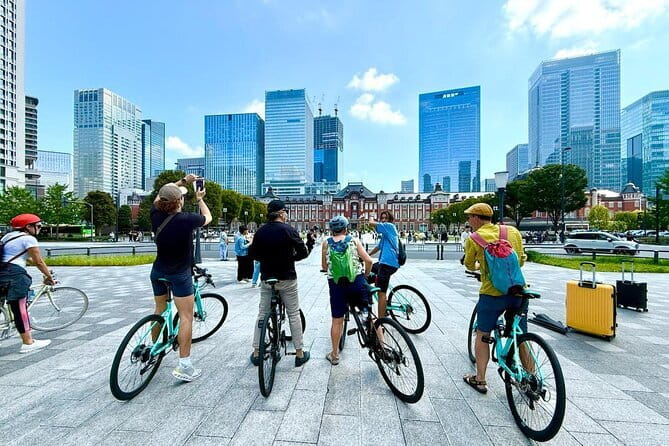
Tokyo Station Marunouchi Ekimae Hiroba gets about 10 minutes. The station opened in 1914, and its red-brick exterior is one of central Tokyo’s most recognizable pieces of architecture.
This stop provides a welcome change from the palace grounds. You move from imperial space to a major transport hub, where historic design meets the daily rush of a modern capital. The square in front of the station is a good place for photographs, though the short timing means you will not explore the station at length.
I like this inclusion because Tokyo Station is easy to use but easy to overlook as a sight. Many people pass through underground corridors without taking time to appreciate the old exterior. On a bicycle tour, you get the visual impression without needing to plan a separate visit.
More E-Bike Tours in Tokyo
- 3h Tokyo E-Bike Tour: Hidden Gems, and Local Life with guide
★ 5.0 · 670 reviews - Tokyo: 3-Hour Bike or E-Bike City Highlights Tour
★ 4.8 · 435 reviews - Tokyo: 3-hour Guided E-Bike Tour of the City’s Hidden Gems
★ 4.8 · 251 reviews - Tokyo: 3-Hour Bike/E-Bike Tour of the City’s Highlights
★ 5.0 · 209 reviews
A short look at Akasaka Palace

Akasaka Palace, also called the State Guesthouse, receives only about five minutes. It began as a royal villa and now serves as a state guesthouse.
This is more of a quick roadside glimpse than a full visit. Admission is not included, and the short stop does not leave room for an interior tour. If the palace is a major priority for you, plan a separate visit rather than relying on this ride.
Still, it adds variety to the route. You are not seeing only temples and famous crossings. You are also getting a look at a formal national building connected with Japan’s royal and governmental past.
From the Olympic stadium to Aoyama
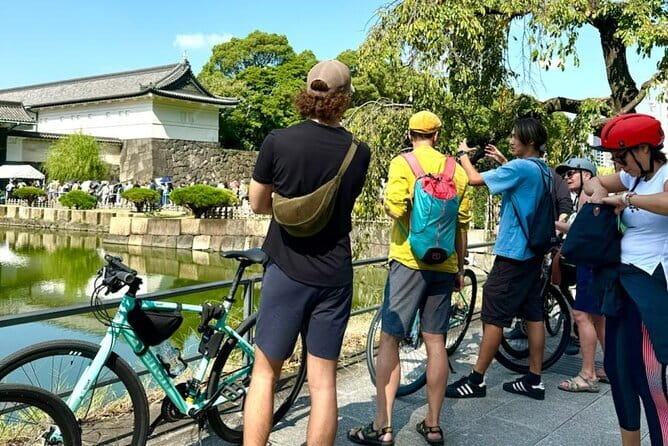
The Japan National Stadium gets 15 minutes. This is where the 2020 Tokyo Olympic and Paralympic Games took place, so the stop connects the city you see today with a major recent event.
You will not spend hours inside a sporting venue. The value is in seeing the building and hearing the guide explain its place in modern Tokyo. It is also a practical transition point before the ride enters Aoyama and then Shibuya.
Aoyama offers about five minutes to look at high-end fashion brands and unusual architecture. The stop is brief, but it shows another side of Tokyo: polished, design-focused, and very different from the temple district at the start.
The time at each place is a recurring tradeoff. The route is broad rather than deep. You get a sampler of several districts, but you should not expect extended shopping, museum visits, or long temple explorations.
Cat Street and the final rush through Shibuya
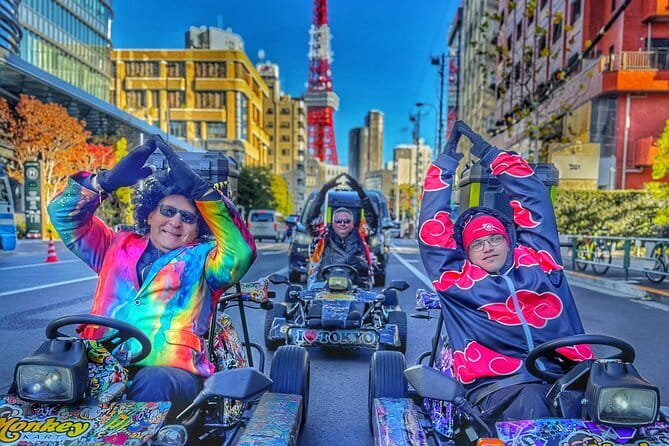
The ride continues to Shibuya Cat Street, an area known for current fashion labels and vintage shops. You have about five minutes here, enough to get a feel for the street and take a few pictures.
Then comes Shibuya Crossing. The tour includes cycling through the famous crossing area, with another five minutes set aside. This is the most energetic part of the route, and it gives the ride a memorable finish.
You should understand that a five-minute stop does not mean you will have unlimited time to wander around Shibuya. The point is to experience the district as part of the ride, not to replace a full evening there. I would return later if you want shopping, food, or time to watch the crossing from above.
The tour ends in Jinnan, near the Bell of Peace, between Yoyogi Park and Shibuya. It is about a five-minute walk to Yoyogi Park and roughly 10 minutes to Shibuya Station. This is a convenient ending because you can continue exploring instead of being returned to the starting point.
Regular bike or e-bike?
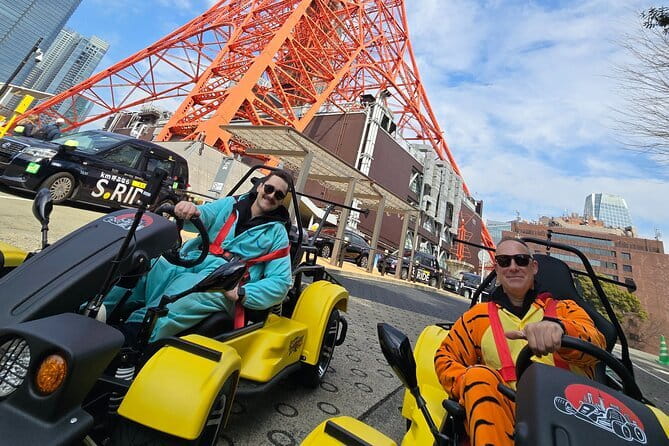
The e-bike is the sensible choice for many people. Tokyo can be hot and humid, and the route includes hills. Several riders found the electric assistance made the ride much easier, including a couple in their late 60s who rode with their adult son.
One rider used a regular bike and did not feel an e-bike was necessary. That is useful context: you do not need to be a serious cyclist to manage the standard bicycle, but your comfort will depend on your fitness, the weather, and how you feel about hills.
Another rider found an e-bike too small and felt it was not working well. Bike fit and equipment condition can vary, so check the available bike option carefully when you book. One comment also noted that the different bike choices may have different prices, so confirm the total cost rather than assuming every bicycle is covered by the advertised starting price.
A helmet is not included. You can rent one for ¥1,000, and you need cash on the day. I would consider that cost worthwhile if you are not used to city cycling. A child seat costs ¥3,000 and must be arranged at least two days ahead, also with cash required on the tour date.
How guides shape the experience
The route covers a lot, but the guide determines whether it feels like a meaningful introduction or simply a three-hour ride past famous places.
Show is praised for answering questions and explaining Japanese culture and history at the stops. Naoki receives similar praise for combining routes to show more of Tokyo and for giving clear directions. Kosei has been appreciated for keeping spirits up on very hot days, while Miguel is described as friendly and informative.
The tone appears relaxed and personal. One solo participant had the guide’s full attention, and other riders appreciated guides who waited when needed, answered extra questions, and allowed time for photographs. Rinto was also praised for making sure the group understood the route and for including breaks and water stops.
The information level may be fairly light during the ride, but that is not necessarily a flaw. You are moving through a lot of city in three hours. If you want more detail, ask questions at the stops. The guides are there in person and can adapt the conversation better than an audio recording.
One practical weakness is the lack of headsets. In traffic or around pedestrians, it may be difficult to hear every word while riding. Stay close to the guide and save detailed questions for the stops.
Price, pace, and overall value
At $59.45 per person, the tour offers reasonable value if you want to see several central districts in one morning or afternoon. Your fee covers the bicycle, guide, bike insurance, and the small bike pouch. You are paying mainly for the route, the local direction, and the chance to cover 18 kilometers without planning every turn yourself.
The value is strongest for first-time visitors, people with limited time, and anyone who finds Tokyo’s rail map intimidating. You can see the broad shape of central Tokyo and then decide which areas deserve a longer return visit.
It is less useful if you prefer slow sightseeing. Five or 10 minutes at a stop can feel rushed, especially at places you already know you want to explore. Food and drinks are not included, so bring what you need for the three-hour ride.
The ride received a 4.9 rating from 47 reviews, with 100 percent recommending it. That is a strong record, but the practical warnings matter more than the number. You need to pedal, follow directions, handle traffic, and accept a quick pace. The tour is fun because it is active, not because it removes all physical effort.
Who should book this ride?
I would recommend it to:
- First-time visitors who want a quick introduction to several districts
- People with a half-day free in Tokyo
- Solo participants who enjoy asking questions
- Couples and small groups looking for an active city experience
- Older riders who prefer the help of an e-bike
- Anyone who wants to connect Tokyo Tower, the palace area, Harajuku, and Shibuya in one outing
I would be more cautious if you are uncomfortable riding near cars and pedestrians. The route is not presented as a protected cycle path experience. You also might prefer a walking tour if photographs and long visits matter more to you than distance covered.
The tour requires good weather. If poor weather cancels it, you can choose another date or receive a full refund. You can cancel for a full refund up to 24 hours before the start time, but changes or cancellations inside that window are not accepted.
Should you book the Tokyo bike tour?
Book it if you want to get your bearings fast and do not mind trading long visits for broad coverage. The route is well chosen, the group stays small, and the guides bring warmth and useful local context to a demanding but rewarding ride.
Choose the e-bike if you are visiting during hot weather, dislike hills, or simply want to save energy for exploring Shibuya afterward. Add the helmet cost to your budget, confirm the bike type and price, and arrive ready for traffic.
This is not a substitute for spending a full day at the Imperial Palace, Tokyo Station, or Shibuya. It is a lively three-hour overview that lets you see how Tokyo’s districts fit together. For many first visits, that is exactly the point.
FAQ
How long is the Tokyo bike tour?
The tour lasts approximately three hours and covers about 18 kilometers.
Where does the tour start?
It starts at Shiba Park Building in Shibakoen, Minato City, Tokyo, near Zojo-ji.
Where does the tour end?
It ends in Jinnan near the Bell of Peace, between Yoyogi Park and Shibuya. Yoyogi Park is about a five-minute walk away, and Shibuya Station is about a 10-minute walk.
Is an e-bike available?
Yes. You can choose between a regular bicycle and an e-bike. The available bike options may have different prices, so confirm your selection when booking.
Is a helmet included?
No. Helmet rental costs ¥1,000, and you should bring cash if you want one.
What happens if bad weather cancels the tour?
The experience requires good weather. If poor weather causes cancellation, you will be offered another date or a full refund.
More 3-Hour Experiences
- 3-Hour Tokyo Pub Crawl Nightlife Welcome Guided Tour in Shibuya
★ 5.0 · 209 reviews - 3-Hour Small-Group Sushi Making Class in Tokyo
★ 5.0 · 166 reviews - 3-Hour Tokyo Private E-Bike Tour Starting from Your Hotel
★ 5.0 · 117 reviews - Tokyo Like a Local: Private & Personalised Experience (2-3 hours)
★ 4.5 · 81 reviews
More Hidden Gem Tours in Tokyo
- Tokyo: Custom Hidden Gems & Highlights Tour with Local Guide
★ 4.7 · 272 reviews - Private Mt Fuji Tour from Tokyo: Scenic BBQ and Hidden Gems
★ 5.0 · 146 reviews - Shibuya & Harajuku: Hidden Gems & Highlights Private Tour
★ 4.7 · 139 reviews - Unlimited Local Night《ALL-YOU-CAN-DRINK》Find Sinjuku Hidden Gems!
★ 5.0 · 119 reviews
Just added around Tokyo
- Tokyo 6hr Instagram Highlights Private Tour with Licensed Guide★ 5.0 · 38 reviews
- Tokyo Small Group Tour with Guide★ 4.5 · 38 reviews
- Tokyo Sumo Experience with Live Show & Audience Challenge★ 5.0 · 38 reviews
- Japanese Food Cooking Class in Asakusa, Tokyo★ 5.0 · 39 reviews
- Very popular in Harajuku♡Animal petting zoo★ 4.6 · 39 reviews
- Ramen Making from Scratch with Tokyo Mom(Vegan Option Available)★ 5.0 · 39 reviews
- Tokyo JDM Night: 600hp C63s AMG Edition 1 (Private)★ 4.9 · 39 reviews
- Tokyo: Kimono Rental inside Shinjuku Gyoen National Garden★ 4.9 · 39 reviews
Cycling Tours, compared.
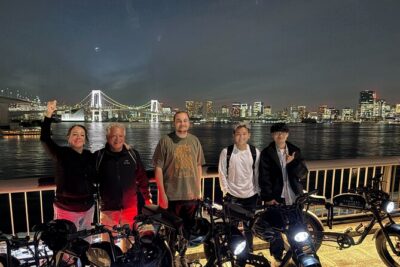
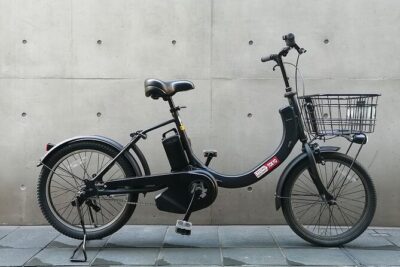
3h Tokyo E-Bike Tour: Hidden Gems, and Local Life with guide
Read our review →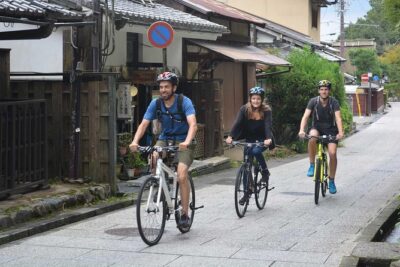
Arashiyama Bamboo Forest & Hidden Gems Bike Tour (Early Bird)
Read our review →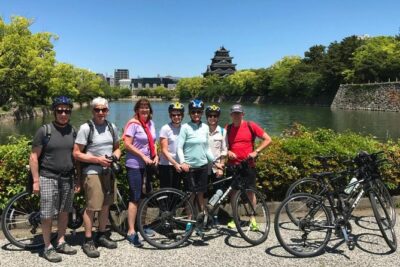
Hiroshima in a Nutshell: Morning Bike Adventure
Read our review →Browse the lists this tour appears in