
Reviewed · FOOD & DRINK
Tokyo: 3-Hour Food Tour of Shinbashi at Night
Shinbashi eats after office hours. This three-hour walk takes you through the station district’s narrow backstreets, where workers gather for ramen, grilled Wagyu, sake, and a sweet finish. I like the small group of no more than 10 and the chance to eat in places you could easily miss on your own. I also like that the guide explains pub manners and food culture, not just what is on your plate. The main catch is the $170 price, which does not include transport, extra food or drinks, or a tip.
You meet beside the old steam engine at Shinbashi Station’s Hibiya exit, then spend the evening on foot with an English-speaking guide. Guides such as Ray, Francois, Tommy, Yappy, Marc, Yoko, and Anne have earned praise for being warm, flexible, and generous with local suggestions. Come hungry, wear shoes made for walking, and remember that this is an adults-only outing for people aged 20 and over.
In This Review
- Key details before you book
- Why Shinbashi makes such a good food neighborhood
- Meeting the guide beside Shinbashi’s steam engine
- Following the backstreets after office hours
- Ramen first: warmth, umami, and a local rhythm
- Seared Wagyu with a smoky edge
- Sake tasting beyond the familiar word
- Dessert and the small customs that make the night memorable
- What the guides add to the food
- Price, group size, and what you actually receive
- Who should book this Shinbashi food walk?
- Should you book it?
- FAQ
- Where does the Tokyo food tour meet?
- How long does the tour last?
- What food and drinks are included?
- Is hotel pickup included?
- What is the minimum age?
- What happens if I arrive late?
Key details before you book
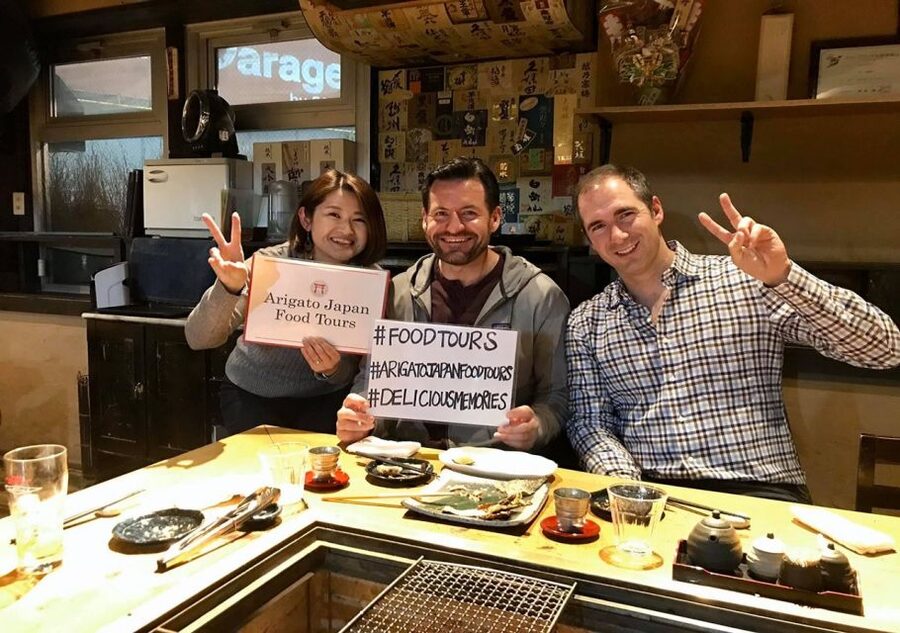
- Shinbashi after dark: See the retro office-worker district when local bars and small eateries are at their most active.
- Several food stops: Expect local dishes including ramen, seared Wagyu, a traditional dessert, and other tastes served along the way.
- Regional sake tasting: Compare distinctive sake flavors with guidance from your English-speaking host.
- Small-group setting: A maximum of 10 people keeps the walk personal and makes questions easier.
- Local customs included: Guides may show you how to bless a meal and thank restaurant staff when leaving.
- Strict meeting rule: Your guide waits only five extra minutes, then leaves the station area.
Why Shinbashi makes such a good food neighborhood
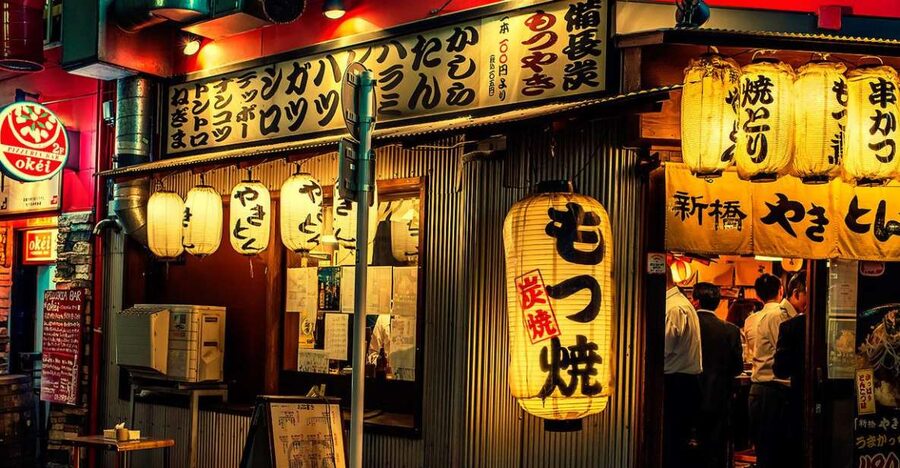
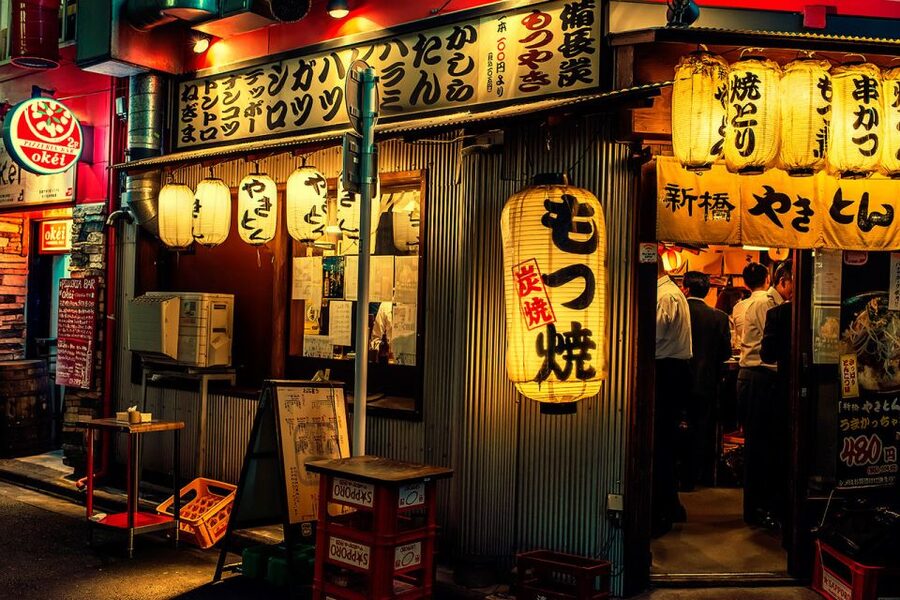
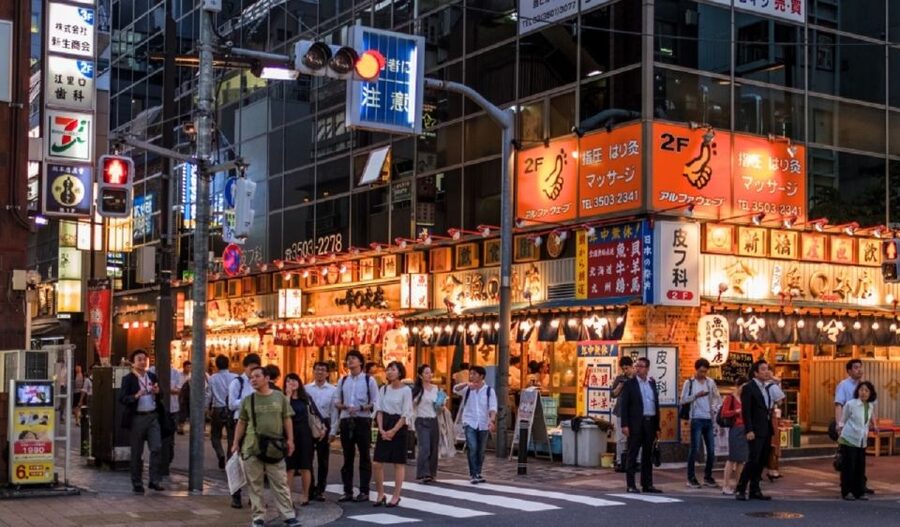
Shinbashi is not Tokyo’s postcard district. It is a practical station area, tied closely to office life and the nightly ritual of stopping for food and drinks after work. That gives the neighborhood a different feel from the polished shopping streets around Ginza or the neon-heavy entertainment zones elsewhere in the city.
The appeal is the contrast. You start at a famous, easy-to-find station landmark, then turn into streets where signs, entrances, and menus may not be obvious to a first-time visitor. The point is not simply to collect dishes. You get a look at how people use food to mark the end of the workday.
I like this setting because it gives your meal a social context. A bowl of ramen is not just a warm dish. It becomes part of an evening shaped by narrow streets, compact pubs, after-work conversation, and the relaxed pace of local dining. The tour is especially useful if you want to understand where Tokyo eats, rather than only see its major sights.
There is one atmosphere issue to keep in mind. Smoking is permitted in most areas of Shinbashi, so this may not be the best choice if you are sensitive to smoke. The neighborhood’s casual pub culture also means you should expect a distinctly adult setting.
More Food Tours in Tokyo
- Tokyo: Shinjuku Food Tour (13 Dishes at 4 Local Eateries)
★ 5.0 · 6,603 reviews - Tokyo Tsukiji Fish Market Food and Culture Walking Tour
★ 5.0 · 3,184 reviews - Tokyo: Shinjuku Food Tour (15 Dishes and 4 Eateries)
★ 4.9 · 2,033 reviews
Meeting the guide beside Shinbashi’s steam engine
The meeting point is in front of the decommissioned steam engine at the Hibiya exit of Shinbashi Station. This is a sensible landmark in a station with several exits, but you still need to allow time to find the correct side of the station.
The guide can wait only five minutes after the official start. Once the group leaves, the guide cannot provide directions by phone. That rule may sound strict, but it protects the restaurant bookings and keeps a small group from arriving in pieces. I would reach the station early, confirm that you are at the Hibiya exit, and treat the steam engine as your final checkpoint.
Hotel pickup is not included. It may be arranged for an extra charge, but the standard plan is to make your own way to Shinbashi. Transportation during the evening is also not included, though the tour is described as a walking food visit rather than a ride-based outing.
Following the backstreets after office hours
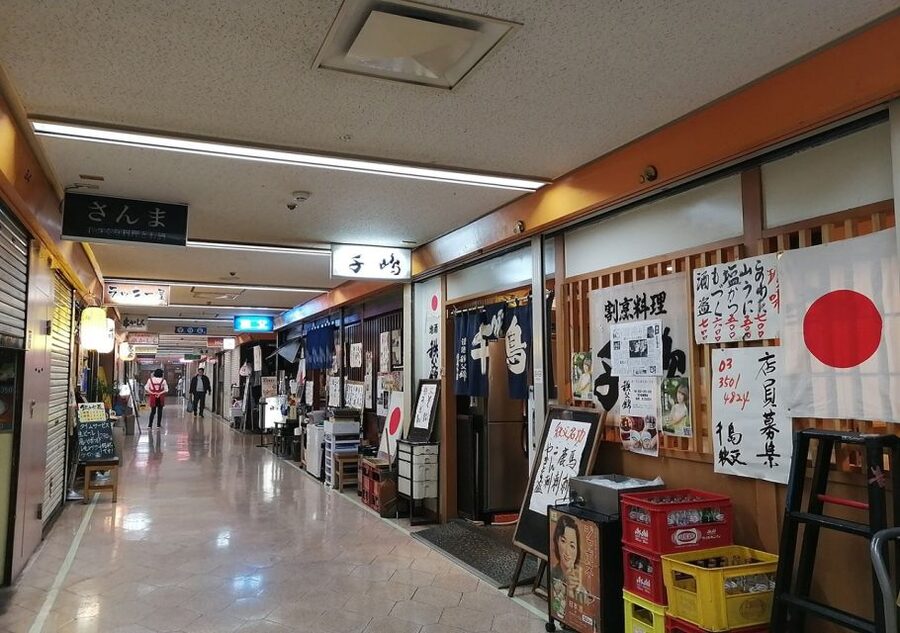
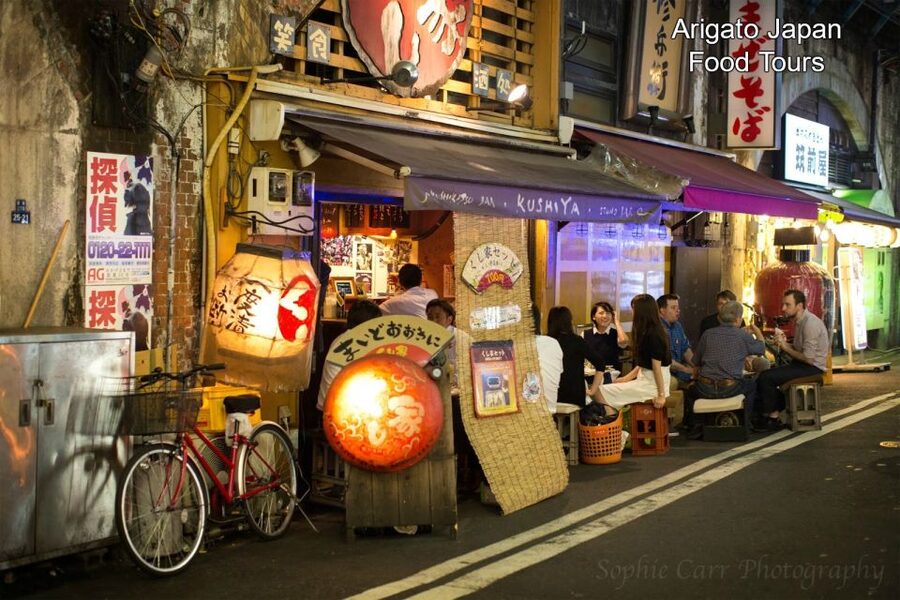
Once the group sets off, the guide leads you through Shinbashi’s less obvious lanes. This is where the tour earns much of its value. A guide can explain what kind of place you are entering, how the local pub scene works, and what to notice in a district that can otherwise feel like a maze of doorways.
The walk is not presented as a long-distance hike. One particularly useful account described the evening as feeling like a manageable amount of walking despite the number of food stops. Still, you should wear comfortable shoes because you will be moving between restaurants and spending three hours on your feet.
The group limit of 10 matters here. Small Japanese eateries can have limited space, and a large tour would feel clumsy in this setting. With fewer people, you have a better chance to hear the guide, ask about unfamiliar dishes, and settle into each stop without the sense of being processed through a large group.
Your guide also becomes a source of help for the rest of your time in Japan. Tommy was praised for offering useful suggestions beyond the tour itself, while other hosts were remembered for being attentive and easy company. That kind of practical advice can be worth more than a standard list of famous restaurants because it comes during a conversation about what you actually like.
Ramen first: warmth, umami, and a local rhythm
Ramen is one of the clearest food moments described for the evening. You can expect the comfort of a steaming bowl, with savory umami flavors and the quick, focused rhythm that makes a ramen stop feel different from a long restaurant meal.
The value here is partly sensory and partly practical. If you have never ordered ramen in a small Japanese shop, a guide can help you understand the setting and remove some of the uncertainty. You do not have to spend the evening worrying about unfamiliar ordering customs when someone beside you can explain what is happening.
The drawback is that ramen is filling. Since the tour includes several stops, you may want to pace yourself rather than treat the first bowl as a full dinner. The exact portions and dishes can vary, so it is wise to arrive hungry but not ravenous. You want room for the later food, sake, and dessert.
A completely different kind of day out in Tokyo:
- Mt Fuji and Hakone 1-Day Bus Tour Return by Bullet Train
★ 5.0 · 26,383 reviews - 1-Day Tokyo Bus Tour
★ 5.0 · 14,250 reviews - Tokyo: TOKYO SKYTREE® Admission ticket
★ 4.5 · 11,192 reviews - Tokyo: teamLab Planets TOKYO Digital Art Museum Entry Ticket
★ 4.6 · 9,779 reviews
Seared Wagyu with a smoky edge
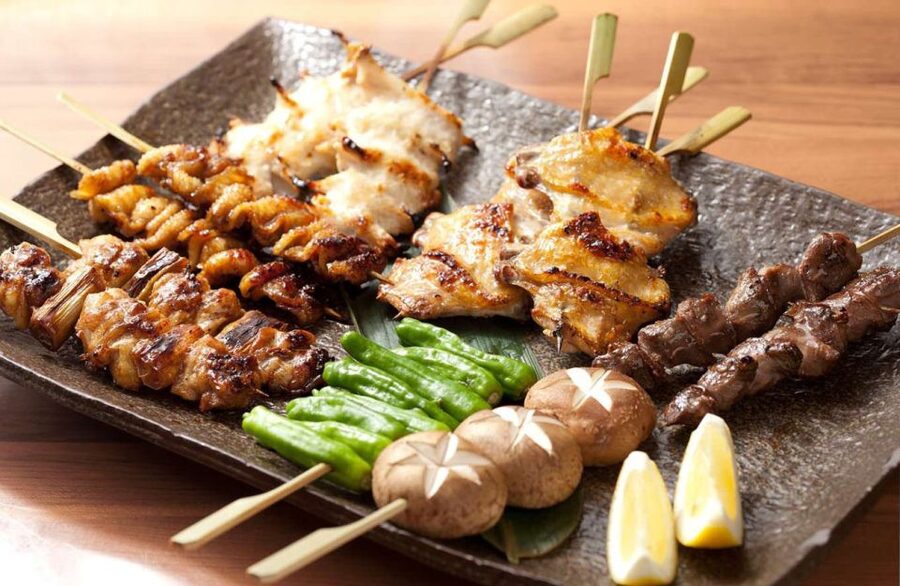
The Wagyu stop adds a different texture and mood. The description centers on buttery meat, cooked until tender and finished with a delicate smoky char. Compared with ramen, this course offers a richer, more concentrated taste, and it shows how a small serving of high-quality beef can carry an entire food stop.
This is also where the price begins to make more sense, assuming you value guided tastings and premium ingredients. You are not paying only for a walk through Shinbashi. Part of the cost covers access to several food settings, a sake tasting, and a guide who manages the evening across multiple stops.
Still, $170 per person is not a bargain meal. It is a premium food tour price, and your calculation should include the fact that extra drinks and food cost more. If you are mainly looking for the cheapest way to eat ramen and beef, you can spend less by ordering independently. If you want someone else to handle the choices and explain the culture around them, the fee is easier to justify.
Sake tasting beyond the familiar word
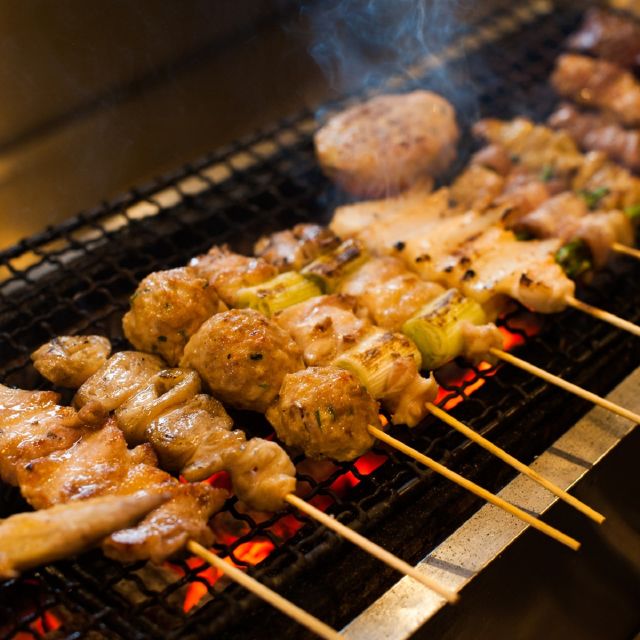
The sake tasting is one of the tour’s strongest features for anyone unsure about Japanese rice wine. The evening focuses on regional varieties, allowing you to notice differences in aroma, crispness, smoothness, and complexity instead of treating sake as one single drink.
That guided comparison matters. Many first-time drinkers assume they dislike sake when they have only tried one style, one temperature, or one producer. A tasting gives you a better chance to identify what suits you. One participant who expected not to care for sake came away discovering a real liking for nihonshu, the Japanese term often used for sake.
The tasting is also a cultural lesson. In Japan, drinks connect closely with group dining and workplace social life. Your guide can explain the role of the drink while helping you approach the tasting without needing to know every term in advance.
Extra drinks are not included, so keep an eye on your spending if you want to order beyond the tasting. The tour is limited to adults aged 20 and over, which matches Japan’s legal drinking age and the evening pub setting.
Dessert and the small customs that make the night memorable
The final food stop brings a traditional dessert and gives the evening a softer landing. The specific dessert is not fixed in the information provided, so you should expect a sweet Japanese finish without assuming a particular ingredient or preparation.
Small cultural details may be just as memorable as the food. Ray used visual aids to teach the proper way to bless a meal and thank restaurant staff when leaving. That is the sort of simple instruction you can reuse throughout your trip, especially when you want to show respect without worrying about getting every gesture perfect.
The guides also add personality to the evening. Yappy was praised for being fun and well-informed, while Francois went out of his way to arrange a birthday surprise for a guest’s son. After that tour, the group joined him for karaoke. Karaoke is not listed as part of the standard three-hour package, but an additional visit may be possible to arrange, with its own cost.
That distinction is important. The food walk itself has a clear structure and included tasting stops. Extra activities, additional drinks, and extra food should be treated as optional add-ons rather than part of the $170 fee.
What the guides add to the food
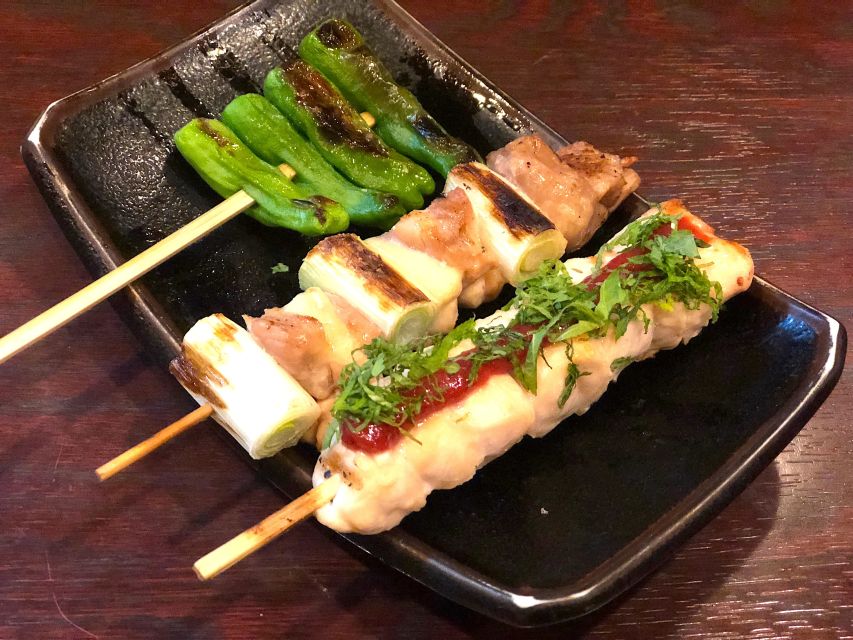
The strongest human element is the guide. Different hosts have led this experience over time, and the names connected with it include Ray, Francois, Tommy, Yappy, Marc, Yoko, Ryan, and Anne. Their styles differ, but the useful pattern is clear: the guide is expected to explain food, local pub habits, and the neighborhood while helping you feel comfortable.
Anne was remembered for keeping the evening relaxed and adjusting what was ordered for a daughter. That flexibility is worth noting if someone in your group has a strong preference or does not want every dish. You should still communicate dietary needs before booking because the supplied details do not promise a particular dietary program or substitution policy.
Ryan was praised for combining pleasant company with explanations about Japan and its food. Yoko brought history and cultural background to the meal. Marc was known for having good places in mind. These details suggest that the experience depends partly on the individual guide, but also that Arigato Travel KK has a strong record of selecting hosts who engage with the group.
You should ask questions. Find out what the neighborhood means to local office workers, how the restaurants differ, and what dishes are worth seeking out later. The more you treat the evening as a conversation rather than a conveyor belt of samples, the more value you will get.
Price, group size, and what you actually receive
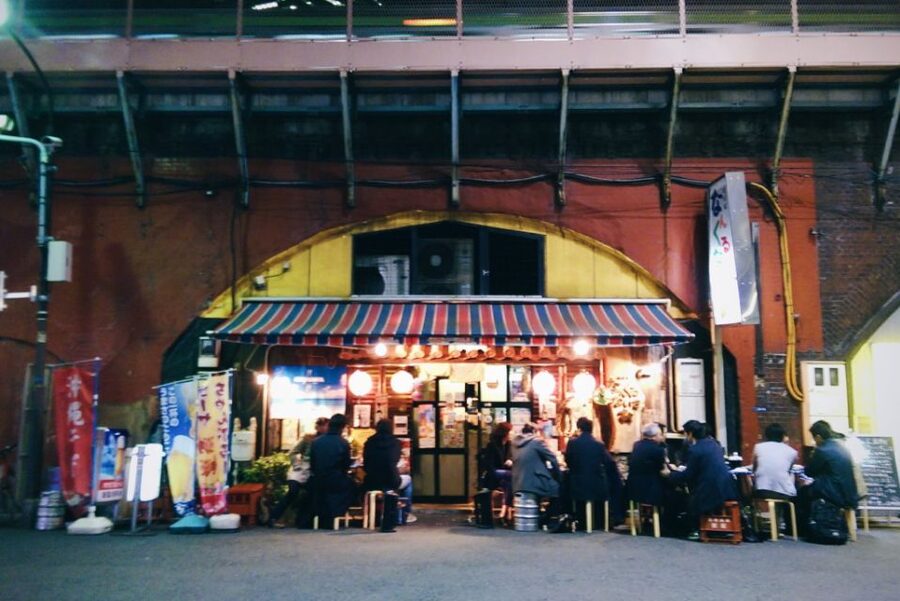
At $170 per person, this is a special-occasion food tour rather than an inexpensive dinner. The fee includes local dishes at several stops, the sake tasting, and an English-speaking guide. It does not include transportation, gratuity, hotel pickup, or additional purchases.
I see three reasons the price may work for you:
- You want help entering small local restaurants without guessing where to go.
- You value context about Japanese food and after-work pub culture.
- You would rather taste several things in one evening than commit to one restaurant.
The maximum group size of 10 keeps the format more personal than a large bus-style food outing. It also makes the guide’s suggestions more useful. If you are traveling alone, as a couple, or with a small group of friends, you can likely settle into the social side of the evening quickly.
The format is less suitable if you need a quiet dinner, avoid alcohol, dislike smoke, or want complete control over every dish. It may also feel expensive if your priority is simply eating a large meal. The tour is about access, explanation, and variety as much as calories.
Free cancellation is available up to 24 hours before the start, and you can reserve while delaying payment. Starting times vary, so check availability for your date. Bring a passport or ID card, particularly because the activity is restricted to people aged 20 and over.
Who should book this Shinbashi food walk?
I would choose this tour early in a Tokyo stay, especially if you want practical food advice for the nights that follow. The guide can point you toward styles of food and pub settings that match your interests, and the Shinbashi walk gives you a useful introduction to local evening life.
It suits you best if you:
- Enjoy trying several small tastes instead of one formal dinner.
- Want an English-speaking guide to explain customs and dishes.
- Like casual restaurants and after-work pub culture.
- Are comfortable walking and being around smokers.
- Are aged 20 or older and interested in sake.
- Prefer a small group with room for questions.
I would think twice if you are traveling with children, need a smoke-free environment, or have strict dietary requirements that have not been confirmed in advance. The tour also requires punctuality. Missing the five-minute meeting window means missing the group.
Should you book it?
Book this Shinbashi tour if you want food, local context, and a guided introduction to Tokyo’s after-work drinking culture in one compact evening. The ramen, smoky Wagyu, regional sake tasting, and dessert create a good range, while the backstreets give the meal a sense of place.
The price is high, but the small group, multiple stops, English guidance, and help with local customs make it fair for the right person. I would book it for a curious adult who wants to eat with confidence and leave with ideas for the rest of a Japan trip. I would skip it if you want a low-cost dinner, dislike smoky pub districts, or prefer to choose every restaurant yourself.
FAQ
Where does the Tokyo food tour meet?
Meet in front of the decommissioned steam engine at the Hibiya exit of Shinbashi Station.
How long does the tour last?
The tour lasts three hours. Starting times vary, so check availability for your chosen date.
What food and drinks are included?
The tour includes local dishes at several food stops, a regional sake-tasting experience, and a traditional dessert. Ramen and Wagyu are among the featured foods described for the evening.
Is hotel pickup included?
No. Hotel pickup is not included, though it can be arranged for an additional charge. Transportation costs are also not included.
What is the minimum age?
Only adults aged 20 and over may join the tour. You should bring a passport or ID card.
What happens if I arrive late?
The guide can wait only five additional minutes after the scheduled start. After that, the group leaves, and the guide cannot provide directions by phone once the tour has begun.
More 3-Hour Experiences
- Tokyo Top Highlights 3h Guided E-bike Tour
★ 5.0 · 714 reviews - 3h Tokyo E-Bike Tour: Hidden Gems, and Local Life with guide
★ 5.0 · 670 reviews - Tokyo: 3-Hour Bike or E-Bike City Highlights Tour
★ 4.8 · 435 reviews - Tokyo: 3-hour Guided E-Bike Tour of the City’s Hidden Gems
★ 4.8 · 251 reviews
Just added around Tokyo
- Tokyo 6hr Instagram Highlights Private Tour with Licensed Guide★ 5.0 · 38 reviews
- Tokyo Small Group Tour with Guide★ 4.5 · 38 reviews
- Tokyo Sumo Experience with Live Show & Audience Challenge★ 5.0 · 38 reviews
- Japanese Food Cooking Class in Asakusa, Tokyo★ 5.0 · 39 reviews
- Very popular in Harajuku♡Animal petting zoo★ 4.6 · 39 reviews
- Ramen Making from Scratch with Tokyo Mom(Vegan Option Available)★ 5.0 · 39 reviews
- Tokyo JDM Night: 600hp C63s AMG Edition 1 (Private)★ 4.9 · 39 reviews
- Tokyo: Kimono Rental inside Shinjuku Gyoen National Garden★ 4.9 · 39 reviews
Food & Drink, compared.
Shinjuku Food Tour (13 Dishes at 4 Local Eateries)
Read our review →
Tokyo Tsukiji Fish Market Food and Culture Walking Tour
Read our review →
Shinsekai Food Tour with 13-15 Dishes at 5 Eateries
Read our review →
Osaka Food Tour: 13 Dishes at 5 Local Eateries
Read our review →
Shinjuku Food Tour (15 Dishes and 4 Eateries)
Read our review →
Best of Shinjuku: Izakaya Food Tour (4 Stops, 14+ Tastings)
Read our review →
Kyoto Night Foodie Tour in Gion (9+ dishes + 6 Sake tastings)
Read our review →
Hungry Osaka Street Food Tour:15 Tastings & 3 Drinks with a Local
Read our review →Browse the lists this tour appears in