
Reviewed · JAPANESE CALLIGRAPHY CLASSES
Tokyo: Calligraphy Workshop Craft Your Own Art in Asakusa
Slow brushwork makes Tokyo feel quieter. This 90-minute Asakusa calligraphy workshop gives you a hands-on way to learn Japanese brush writing, not just admire it behind glass. Mei, the English-speaking instructor, guides you through brush control, stroke order, and the meaning behind the craft before you create a finished piece of your own.
I like the patient teaching style and the chance to use both traditional brushes and a modern fude pen. I also like that your final work can become a scroll, fan, or hard-backed square, giving you a personal souvenir rather than another shop-bought trinket. The main consideration is time: the session is advertised as 90 minutes, but some participants found it lasted closer to two hours, so do not schedule a tight appointment immediately afterward.
The class takes place at the Tokyo Tourist Lounge Asakusa, on the fifth floor of the building. With space for no more than 10 people, English instruction, wheelchair access, and no previous experience needed, it is a calm cultural break in one of Tokyo’s most visited districts.
In This Review
- Key Points at a Glance
- Why Calligraphy Works So Well in Asakusa
- Meeting Mei and Getting Comfortable With the Brush
- First Practice: Brush Control and Stroke Order
- Traditional Brushes and the Modern Fude Pen
- Choosing a Character and Designing Your Final Piece
- What Makes Mei Such a Good Instructor
- How Much Time to Allow
- Is the $38 Price Good Value?
- Who Should Book This Workshop
- Practical Details Before You Go
- Should You Book the Asakusa Calligraphy Class?
- FAQ
- Where does the calligraphy workshop take place?
- How long does the workshop last?
- Is the workshop suitable for beginners?
- Is the instruction available in English?
- Who teaches the calligraphy class?
- What will I practice during the workshop?
- Which tools are provided?
- Can I take my artwork home?
- How many people can join the class?
- Is the workshop wheelchair accessible?
Key Points at a Glance
- Mei earns exceptional praise: Her kind, patient teaching and clear English make the class easy for complete beginners.
- You practice before making art: Stroke drills and writing templates give you time to improve before attempting your final piece.
- Two writing tools add variety: Traditional brushes show you the classic technique, while a fude pen offers more control.
- Your souvenir is made by you: Finish a piece on a scroll, fan, or hard-backed square to take home.
- The small group matters: With a maximum of 10 participants, Mei can give individual help.
- The setting is easy to combine with Asakusa sightseeing: The workshop is indoors and can work well on a rainy day or during a busy Tokyo itinerary.
Why Calligraphy Works So Well in Asakusa
Asakusa is one of Tokyo’s best areas for cultural activities. You can spend the morning around Senso-ji and the traditional streets, then trade the crowds and photo stops for a quiet table, black ink, and a brush.
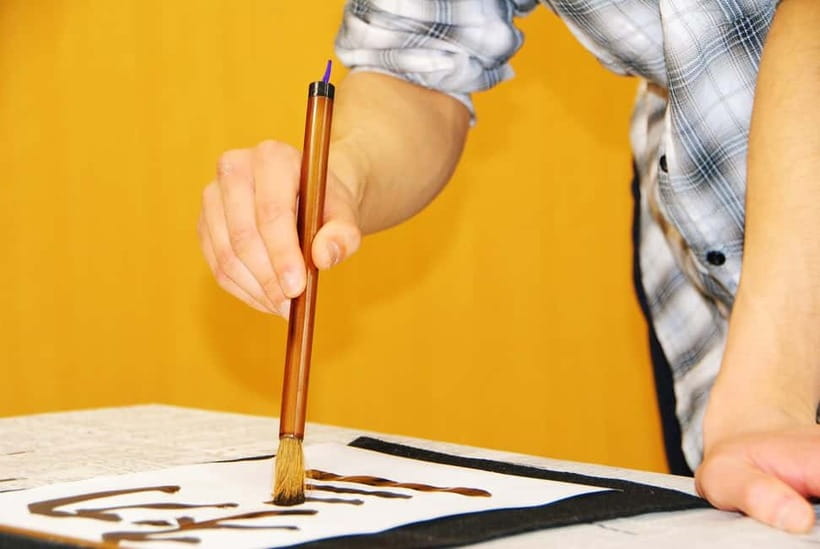
That change of pace is part of the appeal. Calligraphy asks you to slow down and pay attention to pressure, direction, and rhythm. You are not simply copying a character. You are learning how a few controlled movements can carry meaning and shape.
For me, this makes the activity more rewarding than a quick demonstration. You get a short introduction to Japanese writing and culture, then put the lesson into practice with your own hands. The final work will not look like a professional master’s piece, and it does not need to. Its value comes from remembering where you made it and what you learned.
The location also makes practical sense. The experience is held at the Tokyo Tourist Lounge Asakusa, on the fifth floor, so you have a fixed indoor meeting point rather than wandering around a temple complex searching for a teacher. Transportation is not included, so you need to make your own way there.
More Calligraphy Classes in Tokyo
- Tokyo: Calligraphy on Kanji Fan & Scroll with Drink
★ 5.0 · 210 reviews - Let’s experience calligraphy in YANAKA, Taito-ku, TOKYO !!
★ 5.0 · 127 reviews - Tokyo: Calligraphy Workshop & Original T-Shirt Creation
★ 4.9 · 105 reviews
Meeting Mei and Getting Comfortable With the Brush
The class is led by Mei, an English-speaking instructor whose teaching style is one of the strongest reasons to book. She is described as friendly, patient, professional, and passionate about calligraphy. That combination matters in an activity where the first few brush strokes can feel awkward.
You do not need Japanese language skills or prior art training. The lesson is suitable for beginners, and the instructor explains the basics in English. Several participants found that Mei gave enough guidance without making the class feel stiff or intimidating.
This is especially helpful if you are not confident with drawing. Calligraphy is not about producing a perfect picture. It is about learning how to hold and move the brush, then repeating the stroke with better control.
The group limit of 10 is another practical advantage. A larger class could turn brush practice into a wait-and-watch exercise. Here, you have a better chance of receiving direct corrections and personal encouragement. That is useful when you are trying to adjust the angle of a brush or manage how much ink reaches the paper.
First Practice: Brush Control and Stroke Order
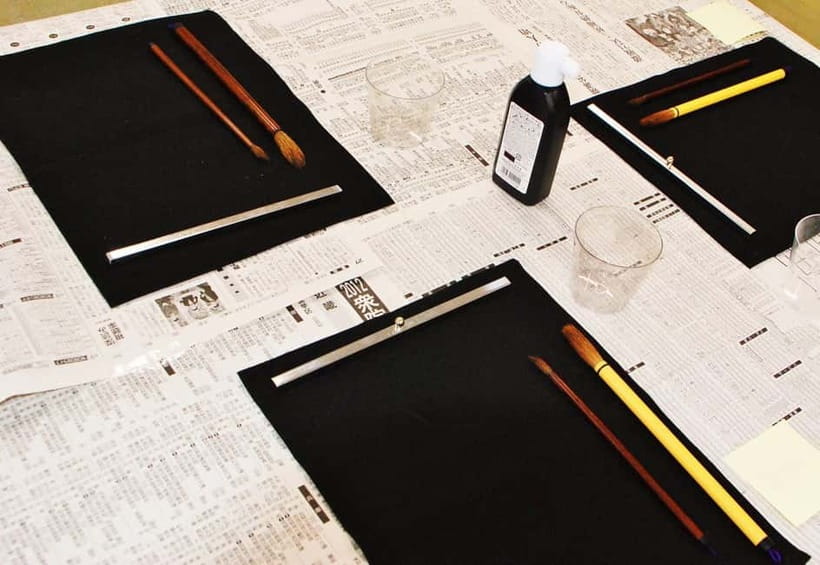
The workshop begins with the foundation of Japanese calligraphy: controlling the brush and following the correct order of strokes. You practice basic movements before choosing or writing the characters for your final artwork.
This stage is more important than it may sound. A character can look simple on the page, but its appearance depends on small decisions. How firmly you press the brush changes the width of the line. How quickly you move affects the ink. Stroke order helps the character keep its shape.
Mei uses writing templates to make this stage easier to follow. That gives you something concrete to work from instead of asking you to remember every instruction at once. You can repeat the movements, spot where your hand feels uncertain, and try again before committing to a finished design.
I would treat the practice sheets as part of the experience, not as a warm-up to rush through. The most satisfying part of the class is seeing your control improve from one attempt to the next. You may begin with uneven lines, then produce a stroke that feels deliberate.
The process also gives the class a quiet, almost meditative quality. One participant described leaving refreshed after learning about patience and oneness through the craft. That does not mean the workshop is formal meditation, but the concentration required can give you a welcome pause from Tokyo’s noise.
Traditional Brushes and the Modern Fude Pen
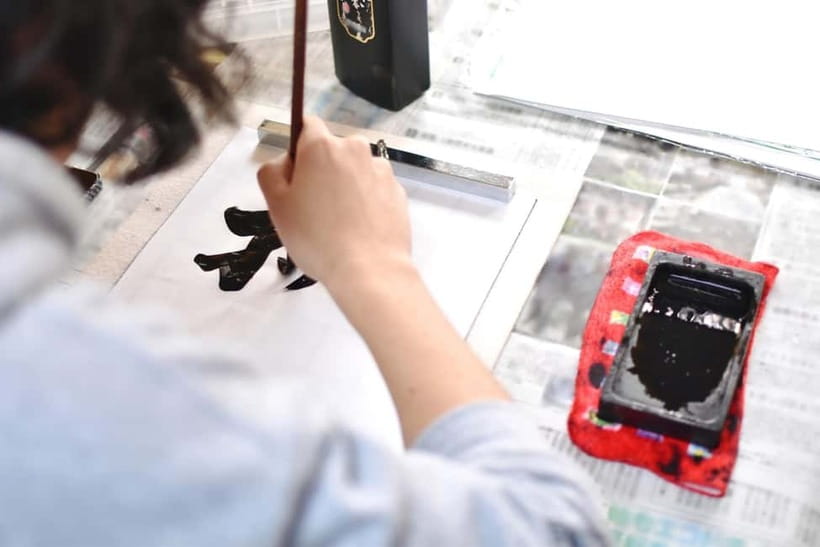
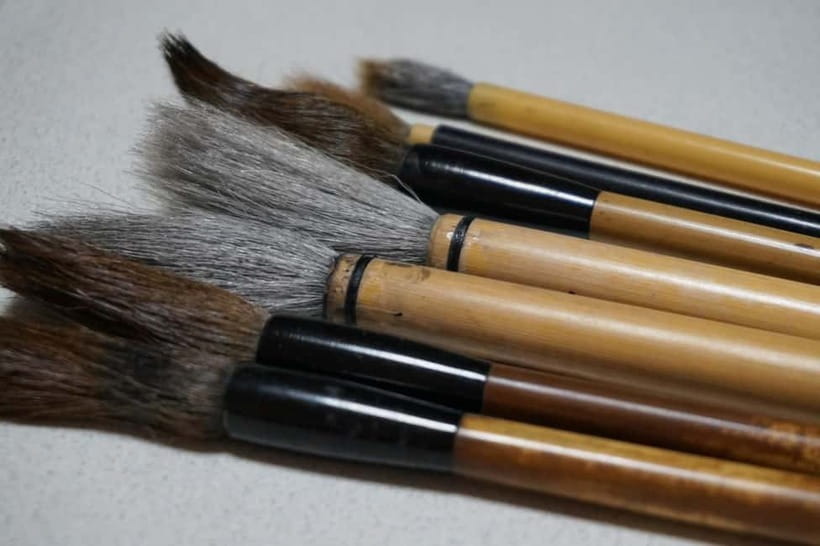
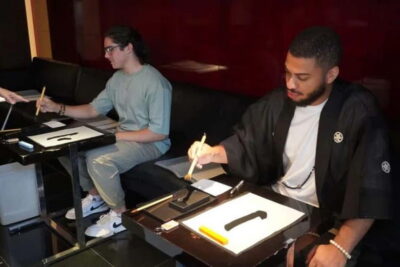
A particularly useful feature is the chance to work with two types of tools. You use traditional calligraphy brushes to experience the classic method, then try a modern fude pen, or brush pen, for added precision.
The traditional brush gives you the clearest feel for pressure and movement. It responds to your hand in a way that can seem unpredictable at first. That is part of the lesson. You learn why experienced calligraphers pay such close attention to posture, grip, speed, and the amount of ink on the brush.
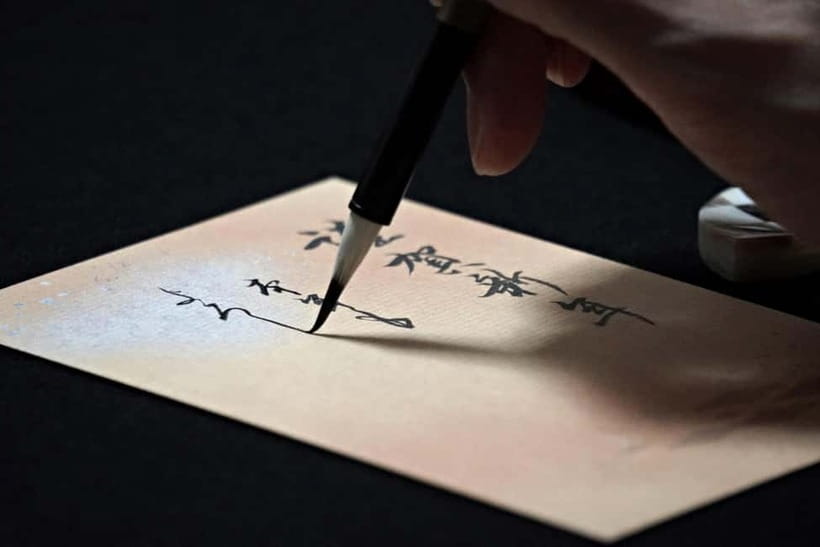
The fude pen is easier to control. Its pointed brush tip allows you to create varied lines with less mess and more precision. If the traditional brush feels difficult, the pen gives you another way to understand the shape of each character.
Using both tools also lets you compare old and new forms of brush writing. You are not forced to choose one style. Instead, you see how the same basic principles carry across different materials.
This mix makes the workshop a good choice for more than complete beginners. An artist may appreciate the details of pressure and line quality, while a casual visitor can enjoy a manageable introduction without needing to buy specialist supplies.
A completely different kind of day out in Tokyo:
- Mt Fuji and Hakone 1-Day Bus Tour Return by Bullet Train
★ 5.0 · 26,383 reviews - 1-Day Tokyo Bus Tour
★ 5.0 · 14,250 reviews - Tokyo: TOKYO SKYTREE® Admission ticket
★ 4.5 · 11,192 reviews - Tokyo: teamLab Planets TOKYO Digital Art Museum Entry Ticket
★ 4.6 · 9,779 reviews
Choosing a Character and Designing Your Final Piece
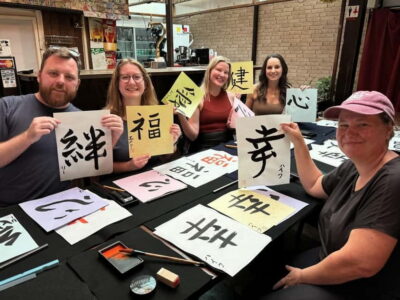
After practice, you move toward the creative part of the workshop. You write characters of your choice and prepare a final artwork to take home.
The exact creative decision is part of what makes the souvenir personal. You are not simply receiving a pre-made item with your name printed on it. You select what you want to express, then work toward a version that matches your skill level.
Mei’s guidance is useful here. One participant who considered themself a slow learner appreciated that Mei helped create a unique piece suited to their ability. That is the right expectation. You are not being judged against a professional standard, and the instructor helps you make something you can feel pleased to display.
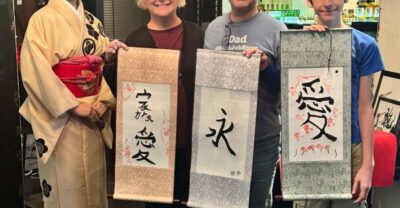
The finished work may be presented on a scroll, fan, or hard-backed square. These formats give the result more presence than a loose practice sheet. A scroll can become a wall decoration, while a fan offers a distinctly Japanese form. The square format may be easier to pack in a suitcase.
Ask yourself what you would actually like to keep before the class. If you prefer a wall piece, the scroll may suit you. If luggage space matters, a smaller format could be more practical. The available choice is an appealing part of the workshop, but the exact option may depend on the class arrangement.
What Makes Mei Such a Good Instructor
The praise for Mei is unusually consistent. Her patience comes up again and again, along with her clear English, warmth, and ability to explain both technique and cultural background.
That combination is important because calligraphy has two layers. The first is mechanical: how to hold the brush, where to begin, and how to complete each stroke. The second is cultural: why the writing is practiced in this way and what the art represents within Japanese life.
Mei appears to give attention to both. You learn about the development and importance of Japanese calligraphy while also receiving practical help at the table. The result is more meaningful than a craft session that only sends you home with a decorated object.
She also seems to create a relaxed atmosphere. Beginners are encouraged to try rather than worry about mistakes. That is exactly the right mood for a class in which almost everyone will produce a few crooked lines before finding a better rhythm.
If you are traveling with friends, you can compare your progress without turning the class into a competition. If you are alone, the small group and personal instruction should make it easier to participate.
How Much Time to Allow
The published duration is 90 minutes, with the workshop described elsewhere as lasting one to one and a half hours. That is enough time for an introduction, repeated stroke practice, and a final artwork.
You should still leave some flexibility in your schedule. One participant described spending two hours in the experience and wishing it could continue all day. That may reflect extra teaching time or a slower pace on that particular day, but it is a useful warning against booking a train, restaurant, or timed attraction immediately afterward.
The class itself is well suited to a half-day plan in Asakusa. You might schedule it between sightseeing stops, but leave enough room to arrive without rushing and finish your artwork properly.
A rainy day is an especially good time to book. One participant chose the workshop after waking to wet weather in Tokyo and found it a worthwhile alternative to outdoor sightseeing. Since the activity takes place indoors, it gives you a cultural option when the weather is poor.
Is the $38 Price Good Value?
At $38 per person, this is not the cheapest possible souvenir activity in Tokyo. The price becomes easier to justify when you consider what is included: an instructor, access to traditional brushes, use of a fude pen, guided practice, cultural explanation, and a finished piece to take home.
You are paying for instruction rather than just materials. That matters because calligraphy supplies alone cannot show you correct stroke order or explain why your lines look uneven. Mei’s individual help is a large part of the value.
The small group also improves the calculation. A class of up to 10 people is still social, but it is limited enough for the teacher to notice where you need help. The experience has earned a perfect 5 rating from 58 reviews, and the strongest praise centers on the teaching, not only the souvenir.
I would recommend it most to people who want to participate rather than watch. If you only want a quick photo or a ready-made Japanese decoration, shopping in Asakusa may be cheaper. If you want to understand a craft and create something yourself, $38 is a fair price for a 90-minute cultural activity.
Who Should Book This Workshop
This class suits first-time visitors who want a clear introduction to Japanese culture. You do not need to know Japanese, understand kanji, or have a background in art.
It is also a good fit for returning visitors. Once you have seen temples, markets, and city views, a focused workshop can show you another side of Tokyo. You leave with a better sense of how Japanese writing is practiced, not just how it looks on signs.
Adults and children can take part, according to the available experience details. The patient instruction should help younger participants, though the activity still requires some ability to concentrate and follow directions.
Artists may enjoy the close attention to line, pressure, and repetition. At the same time, the class is not reserved for art practitioners. A complete beginner can produce a finished piece with Mei’s help.
I would think twice if your itinerary is packed from morning until night. The class works best when you can slow down. It is also less suitable if you dislike making imperfect artwork or want a polished professional result without practice.
Practical Details Before You Go
The workshop is held at the Tokyo Tourist Lounge Asakusa on the fifth floor. Check the meeting instructions carefully and allow enough time to reach the building, since transport to and from the activity is not included.
The instructor speaks English, and the activity is wheelchair accessible. The group size is limited to 10 people, which is worth noting if you want a more personal lesson.
The session is designed for beginners, and no previous experience is required. You use the provided traditional brushes and fude pen, then take home your completed calligraphy artwork.
Booking can remain flexible because cancellation is free up to 24 hours before the activity for a full refund. You can also reserve now and pay later, which helps if your Tokyo plans are still changing.
Should You Book the Asakusa Calligraphy Class?
I would book this workshop if you want a quiet, hands-on cultural activity with a strong teacher and a useful souvenir. Mei’s patience, clear English, and personal help are the main reasons this experience offers more than a basic craft lesson.
The best time to schedule it is during a relaxed Asakusa day, especially in bad weather or after several busy sightseeing stops. Leave extra time beyond the stated 90 minutes if possible.
Skip it only if you want a fast activity, dislike practice, or have no room for an indoor class in your schedule. For most beginners, the combination of brush training, cultural background, small-group attention, and a handmade final piece makes this a thoughtful use of $38 in Tokyo.
FAQ
Where does the calligraphy workshop take place?
It takes place at the Tokyo Tourist Lounge Asakusa, located on the fifth floor of the building.
How long does the workshop last?
The listed duration is 90 minutes. The activity is also described as lasting from one to one and a half hours.
Is the workshop suitable for beginners?
Yes. No previous calligraphy experience is required, and the class is designed for beginners.
Is the instruction available in English?
Yes. The instructor teaches in English.
Who teaches the calligraphy class?
The class is taught by Mei, an experienced instructor who explains calligraphy techniques and Japanese cultural background.
What will I practice during the workshop?
You will practice brush control, stroke order, and basic calligraphy techniques before creating your final artwork.
Which tools are provided?
The workshop provides traditional calligraphy brushes and a modern fude pen, also called a brush pen.
Can I take my artwork home?
Yes. Your personal calligraphy artwork is included and can be taken home as a souvenir.
How many people can join the class?
The workshop is a small-group activity with a maximum of 10 participants.
Is the workshop wheelchair accessible?
Yes. The activity is listed as wheelchair accessible.
Just added around Tokyo
- Tokyo 6hr Instagram Highlights Private Tour with Licensed Guide★ 5.0 · 38 reviews
- Tokyo Small Group Tour with Guide★ 4.5 · 38 reviews
- Tokyo Sumo Experience with Live Show & Audience Challenge★ 5.0 · 38 reviews
- Japanese Food Cooking Class in Asakusa, Tokyo★ 5.0 · 39 reviews
- Very popular in Harajuku♡Animal petting zoo★ 4.6 · 39 reviews
- Ramen Making from Scratch with Tokyo Mom(Vegan Option Available)★ 5.0 · 39 reviews
- Tokyo JDM Night: 600hp C63s AMG Edition 1 (Private)★ 4.9 · 39 reviews
- Tokyo: Kimono Rental inside Shinjuku Gyoen National Garden★ 4.9 · 39 reviews
Japanese Calligraphy Classes, compared.
Calligraphy class at Buddhist temple in city center
Read our review →
Let’s experience calligraphy in YANAKA, Taito-ku, TOKYO !!
Read our review →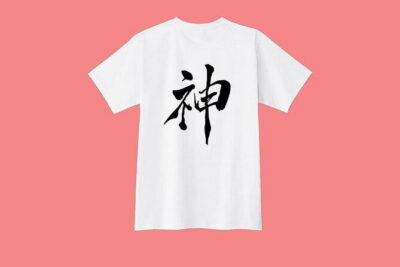
Calligraphy Workshop & Original T-Shirt Creation
Read our review →
Calligraphy Workshop & Original T-Shirt Creation
Read our review →Browse the lists this tour appears in