
Reviewed · JAPANESE CALLIGRAPHY CLASSES
Tokyo:Calligraphy &Make your original folding fan in Asakusa
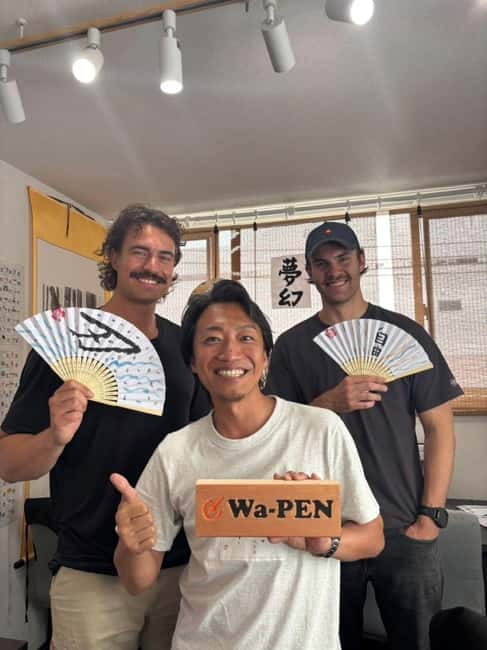
Slow down in Asakusa with ink and paper. This small workshop turns Japanese calligraphy into a calm, hands-on activity, not just a demonstration. I especially like the chance to make a personal folding fan and the patient instruction from Mana, whose clear English and friendly help earn repeated praise. The $16 price is also easy on a Tokyo budget. One thing to consider: ink can make a mess, and the session is not suitable for wheelchair users.
You will learn basic brush handling, posture, ink control, and several traditional techniques before creating your final design. I also like the postcard addressed to yourself, a simple touch that gives the activity a lasting purpose. The timing can range from 30 to 90 minutes, so check the option carefully if you want plenty of practice time.
In This Review
- Key points to know before you book
- Why this Asakusa activity is worth your time
- Starting with hiragana, kanji, and calligraphy basics
- Melting the solid ink with water
- Thirty minutes of practice before the final design
- Creating your one-of-a-kind folding fan
- Green tea and a postcard to your future self
- What the teaching is really like
- Timing, clothing, and practical limits
- Who should book this calligraphy class?
- Is the $16 price good value?
- Should you book the Asakusa fan workshop?
- FAQ
- How much does the Tokyo calligraphy and folding fan activity cost?
- How long does the calligraphy experience last?
- Is the instructor able to teach in English?
- What do I learn during the session?
- Is the folding fan included?
- Can I print my calligraphy on a T-shirt?
- What should I bring, and are there restrictions?
Key points to know before you book
- Mana’s patient teaching: She adjusts the pace, explains the brush strokes clearly, and speaks excellent English.
- Traditional ink preparation: You use water to soften a solid ink stick, giving the lesson a direct link to older calligraphy practice.
- Thirty minutes of guided practice: Thin paper and guide sheets let you repeat the basic strokes before working on your final piece.
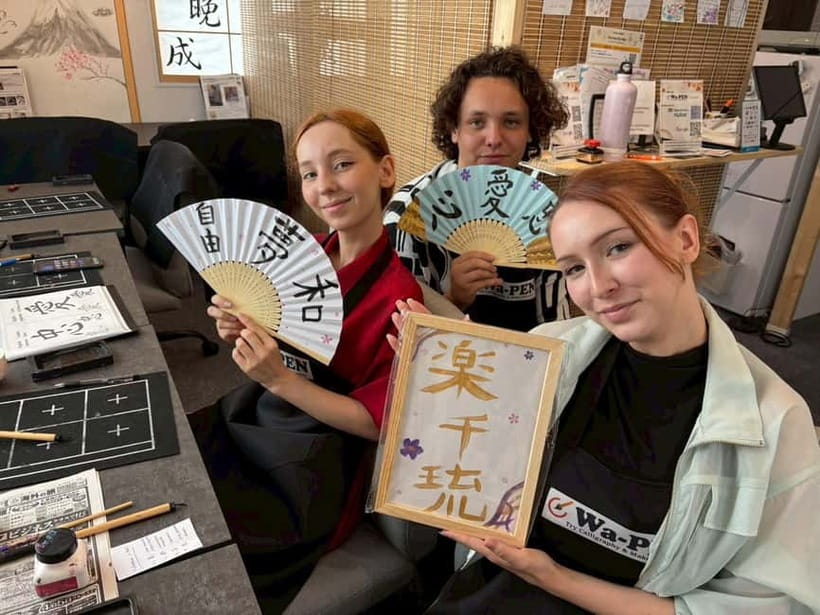
- A useful souvenir: Your chosen calligraphy becomes part of an original folding fan you can take home.
- A quiet break in Asakusa: The activity offers a calm change from sightseeing, heat, and crowded streets.
- Good value at $16: The price includes instruction, practice materials, the fan project, a postcard, and green tea at the end.
Why this Asakusa activity is worth your time
Asakusa is usually linked with temple visits, old-style shopping streets, and the bright red gate at Senso-ji. Those sights are worth your time, but the area can also feel busy and tiring, especially in warm weather. This calligraphy class gives you a reason to sit down and focus on something small.
I like activities that let you make a souvenir rather than simply buy one. Here, the final fan carries your own brushwork, including a kanji character, your name in kanji, or another design chosen with help from the instructor. Your writing will not look like a master’s work, and that is part of the charm. The object records your effort, not just your shopping skills.
The class is taught in English, which makes the process easy to follow even if you have never held a Japanese brush. Mana explains the purpose of the writing, demonstrates the strokes, and encourages you to keep practicing until you are happy with your design.
At $16 per person, the workshop offers strong value. You receive a guided cultural lesson, practice paper, traditional ink preparation, a final fan, a postcard activity, and green tea. Optional extras, such as printing your design on a T-shirt, cost more. You can buy a shirt at the shop if you choose that option, but the shirt and printing are not part of the basic price.
More Calligraphy Classes in Tokyo
- Tokyo: Calligraphy on Kanji Fan & Scroll with Drink
★ 5.0 · 210 reviews - Let’s experience calligraphy in YANAKA, Taito-ku, TOKYO !!
★ 5.0 · 127 reviews - Tokyo: Calligraphy Workshop & Original T-Shirt Creation
★ 4.9 · 105 reviews
Starting with hiragana, kanji, and calligraphy basics
The lesson begins with an introduction to Japanese calligraphy and the role of hiragana in Japanese life and writing. This opening matters because it gives you more than a set of brush movements. You get a little context for why the characters look and feel the way they do.
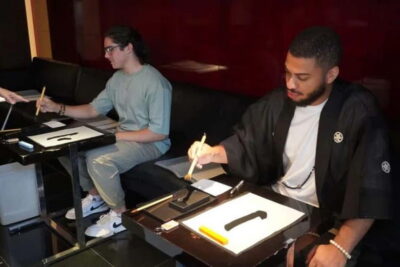
You also learn about the attitude expected in calligraphy. Posture is part of the practice, so the instructor shows you how to sit or position yourself, how to hold the brush, and how to approach the paper with control. That may sound formal, but it helps you settle down and pay attention.
The brush, called a fude, behaves differently from a normal pen. You control pressure, angle, and speed, while the amount of ink changes the look of each stroke. A little too much ink can make a character heavy. Too little can leave a pale, broken line.
This is where the class becomes more interesting than a quick souvenir craft. You start to see that Japanese calligraphy is not simply about copying symbols. It is about balance, rhythm, spacing, and the movement of the hand.
Melting the solid ink with water
One of the most distinctive parts of the workshop is preparing the ink. Instead of beginning with a ready-made bottle, you use water to soften traditional solid ink sticks for calligraphy.
The process connects you with the older tools of the art. It also makes the class feel more hands-on. You are not only handed a brush and told to copy a design. You take part in preparing the materials.
The instructor shows you how much ink to use and how to load the brush. This is useful for beginners because the brush can feel awkward at first. The practice helps you understand how the ink spreads across thin paper.
Wear clothes that can tolerate a spot or two of ink. Aprons are available, which reduces the risk, but an apron does not make your sleeves completely invincible. Food and drinks are not allowed during the working part of the session. Green tea comes later, after the calligraphy activity.
Thirty minutes of practice before the final design
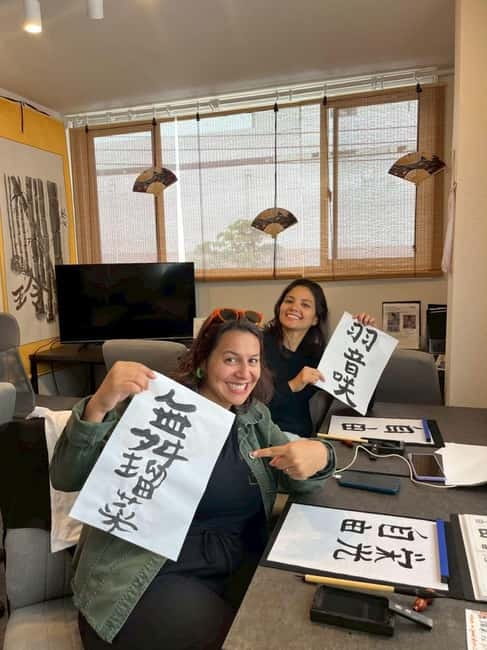
The practice section gives you time to work through about eight basic techniques. You use thin paper and guide paper, then repeat the strokes with help from the instructor.
This is the point where patience matters. You may produce a few crooked lines, uneven characters, or brush marks that look more like small accidents than Japanese writing. That is normal for a first attempt. Mana’s teaching style is encouraging rather than hurried, and you can continue practicing until you feel ready.
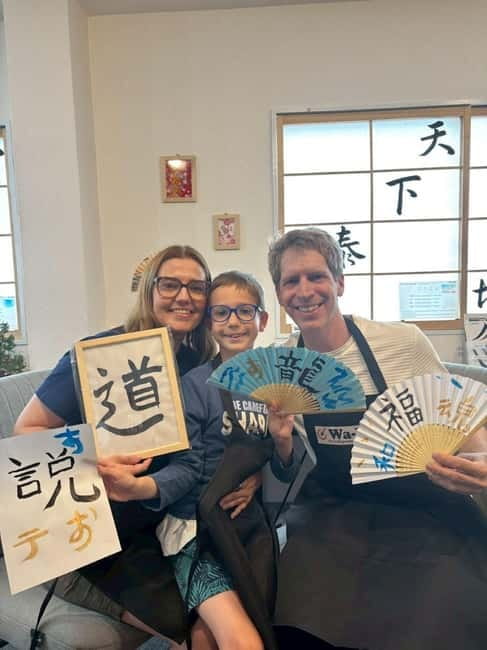
The included practice sheets are especially helpful for families and complete beginners. A six-year-old participant had an enjoyable class with patient guidance, and one person used the session to learn the meaning of their name in Japanese. The activity can work for children, but adults should expect some concentration and careful hand control.
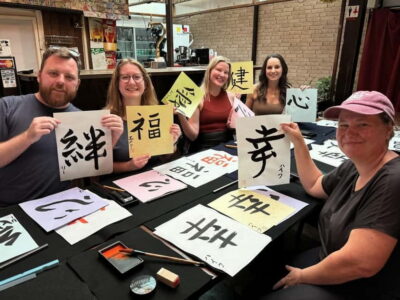
You can choose a design from a sample book or ask the instructor to help create something personal. Possible choices include a meaningful kanji character, your name in kanji, or another design that appeals to you. The exact design depends on your discussion with the instructor and your comfort with the brush.
Do not expect to become skilled in half an hour. Instead, think of the practice as a gentle introduction. You will leave with a better sense of how the brush works and a final piece that reflects your own attempt.
A completely different kind of day out in Tokyo:
- Mt Fuji and Hakone 1-Day Bus Tour Return by Bullet Train
★ 5.0 · 26,383 reviews - 1-Day Tokyo Bus Tour
★ 5.0 · 14,250 reviews - Tokyo: TOKYO SKYTREE® Admission ticket
★ 4.5 · 11,192 reviews - Tokyo: teamLab Planets TOKYO Digital Art Museum Entry Ticket
★ 4.6 · 9,779 reviews
Creating your one-of-a-kind folding fan
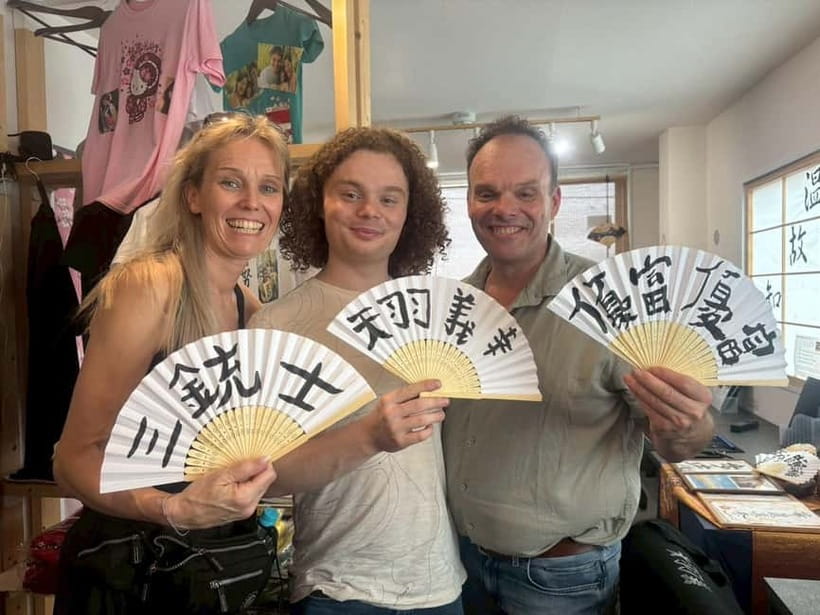
After practicing, you choose the calligraphy you want to use for the final fan. This is the most satisfying part for many people because the work now becomes a useful souvenir.
The fan gives your writing a clear purpose. You are not making a loose sheet that might get folded into a suitcase pocket. You are creating something that can be displayed, used, or given as a gift.
The instructor helps you decide which design will work best. That guidance is valuable because a character that looks good on a practice sheet may need different spacing on the fan. You also have a chance to produce a cleaner final version after trying several times on thin paper.
If your brushwork still looks imperfect, do not let that stop you. The fan is personal, and handmade marks are part of its appeal. The goal is not to pass a professional calligraphy exam. The goal is to understand the craft and make a keepsake with your own hand.
Some people also ask about adding the design to a T-shirt. That is an optional purchase, not part of the $16 booking. The shirt itself may be bought at the shop, and printing costs are separate.
Green tea and a postcard to your future self
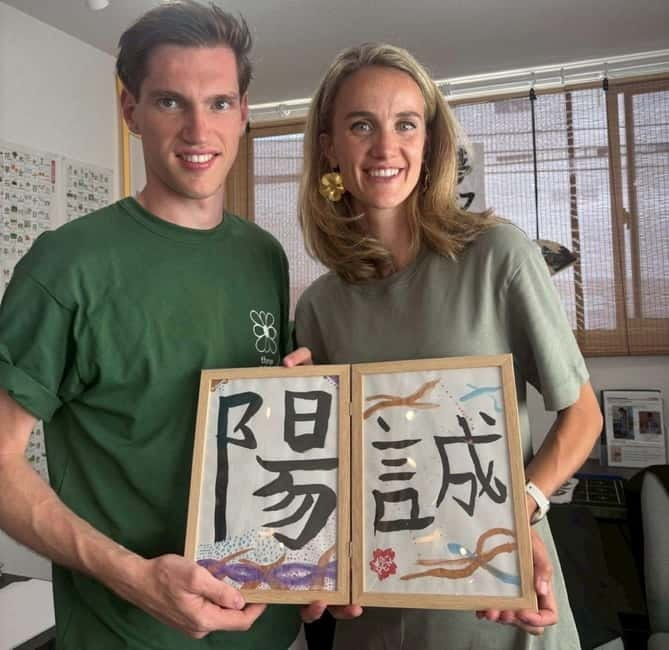
The session ends with a cup of green tea and a postcard activity. You write a message to yourself to read at home, describing your feelings after the calligraphy practice and remembering your time in Tokyo.
This small step gives the workshop a reflective ending. You have just spent time learning a quiet art, and the postcard helps you preserve the mood instead of rushing straight back into sightseeing.
The postcard also works well as a personal travel record. You might write about the character you chose, the difficulty of controlling the brush, or the calm you felt while practicing. The supplied information indicates that postcards are intended as a reminder of the experience, and some participants looked forward to receiving them later.
The green tea is served at the end, not during the brushwork. That arrangement keeps the paper and ink area clean and gives you a pleasant pause before leaving.
What the teaching is really like
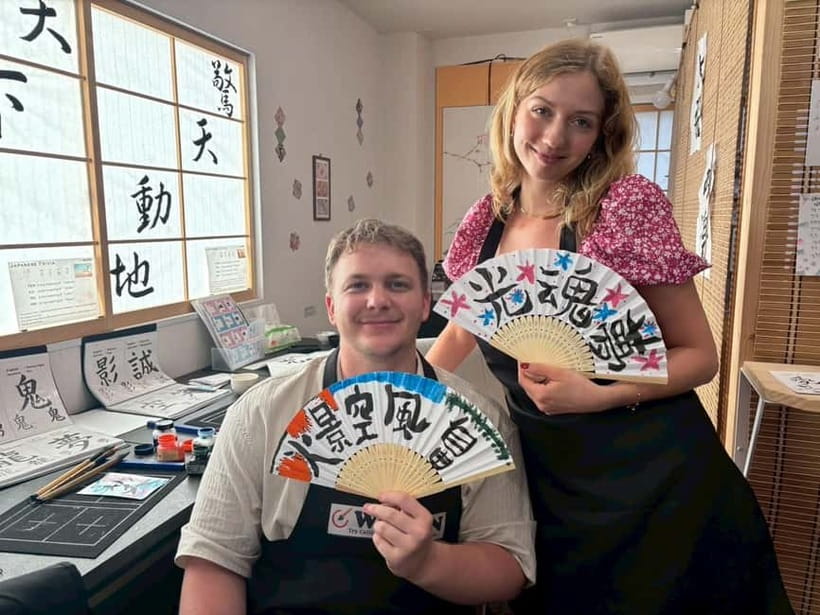
Mana receives especially warm praise for being kind, patient, and generous with her time. She has allowed people to keep practicing until they were satisfied, and she sometimes helped participants finish without forcing them to rush out.
Her English is described as excellent, so you can ask questions about the writing, the brush, or possible designs without struggling through a language barrier. She also offers practical Tokyo advice, including food suggestions and ideas for a final day in the city.
That personal attention is a major part of the value. At a larger craft class, you might simply copy instructions and move along with the group. Here, the pace appears more flexible. If you are the only student or part of a small booking, you may receive even more individual help, though the exact group size is not provided.
The class has also worked well across generations. A grandmother attending with a younger family member was impressed by the clear steps and happy with the included fan. A parent and six-year-old found the activity manageable and fun. Couples, solo participants, and families can all fit the format.
Timing, clothing, and practical limits
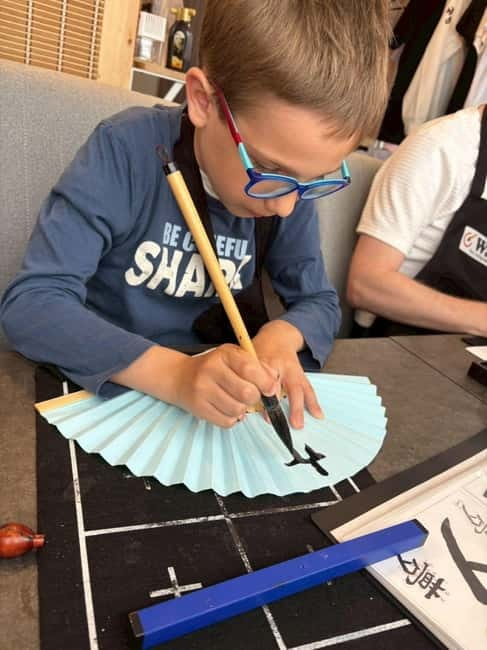
The advertised duration ranges from 30 to 90 minutes. That is a wide range, so check the available start time and selected option before booking. If you want only a short introduction, the basic session may be enough. If you want to practice repeatedly and refine your final design, allow closer to the longer end.
The meeting point can vary by booking option. The listed coordinates are 35.7162239, 139.7922354, in the Asakusa area. Read your confirmation carefully so you do not walk to the wrong entrance or shop.
Comfortable clothes are best. You receive an apron, but wear something that can handle a little ink. One participant suggested having a towel available for cleaning hands, so bringing a small hand towel may be sensible, even though it is not listed as required.
Pets are not allowed, except for assistance dogs. The activity is not suitable for wheelchair users, so check this point before reserving if access is important for you.
Free cancellation is available up to 24 hours before the start time, and you can reserve now and pay later. Those policies help if your Tokyo schedule is still changing, but they do not remove the need to confirm the exact option. The henna tattoo option is separate and does not include the calligraphy class. This is the most important booking detail to watch.
Who should book this calligraphy class?
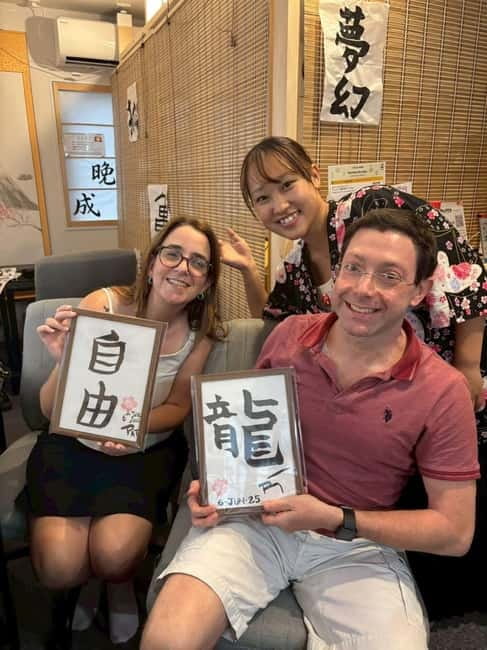
I would recommend it to anyone who wants a personal souvenir and a quieter activity between major Tokyo sights. It suits first-time visitors who want a simple introduction to Japanese writing without committing to a long formal lesson.
Families can enjoy it, especially if children are old enough to follow short demonstrations and handle a brush with care. The class also works for couples and solo visitors. You do not need artistic talent. In fact, the repeated practice makes the experience more approachable for people who usually say they are bad at drawing.
It is a good choice on a hot or tiring day because you can sit indoors and focus for a while. The lesson is also useful for anyone who enjoys meaningful travel objects more than mass-produced souvenirs.
I would hesitate only if you want a highly advanced calligraphy course, a fully accessible activity, or a fast in-and-out attraction. The workshop teaches the basics and offers personal guidance, but it is not a professional certification class. Ink may also be inconvenient if you are wearing special clothes or carrying delicate belongings.
Is the $16 price good value?
Yes, assuming you select the calligraphy option and want the included fan. The price covers much more than a short demonstration: you learn the background of the art, prepare traditional ink, practice several techniques, receive guide sheets, create a final design, write a postcard, and enjoy green tea.
The fan is the key value. A purchased souvenir may look polished, but it will not carry your own brushwork or the memory of learning how to make it. At $16, the class gives you both an activity and a physical reminder of your time in Asakusa.
Optional T-shirt printing changes the total cost. Treat it as an add-on rather than part of the basic deal, and ask about the shirt and printing fee before agreeing.
Should you book the Asakusa fan workshop?
Book it if you want a calm, affordable activity with a souvenir you help create. Mana’s patient English instruction, flexible practice time, and thoughtful postcard make this more personal than a standard craft stop.
Skip it if you need wheelchair access, dislike the possibility of ink on your clothes, or want advanced calligraphy instruction. For most visitors, though, this is a friendly way to pause in Asakusa, learn the basics of a respected Japanese art, and leave with a folding fan that no shop could make quite the same way.
FAQ
How much does the Tokyo calligraphy and folding fan activity cost?
The listed price is $16 per person for the calligraphy experience and included activities.
How long does the calligraphy experience last?
The duration is listed as 30 to 90 minutes. Available starting times depend on the option you choose.
Is the instructor able to teach in English?
Yes. The activity is offered in English, and Mana has been praised for her clear English communication.
What do I learn during the session?
You learn about Japanese calligraphy, hiragana, posture, attitude, brush use, ink control, traditional ink preparation, and about eight basic techniques. You also practice on thin paper with guide sheets.
Is the folding fan included?
Yes. The activity includes making an original folding fan with your calligraphy design.
Can I print my calligraphy on a T-shirt?
T-shirt printing is not included in the basic activity. You can buy a T-shirt at the shop if you want to use that optional service, and separate clothing and printing fees may apply.
What should I bring, and are there restrictions?
Wear comfortable clothing that can tolerate a little ink. Aprons are available. Food and drinks are not allowed during the session, pets are not allowed except for assistance dogs, and the activity is not suitable for wheelchair users.
Just added around Tokyo
- Tokyo 6hr Instagram Highlights Private Tour with Licensed Guide★ 5.0 · 38 reviews
- Tokyo Small Group Tour with Guide★ 4.5 · 38 reviews
- Tokyo Sumo Experience with Live Show & Audience Challenge★ 5.0 · 38 reviews
- Japanese Food Cooking Class in Asakusa, Tokyo★ 5.0 · 39 reviews
- Very popular in Harajuku♡Animal petting zoo★ 4.6 · 39 reviews
- Ramen Making from Scratch with Tokyo Mom(Vegan Option Available)★ 5.0 · 39 reviews
- Tokyo JDM Night: 600hp C63s AMG Edition 1 (Private)★ 4.9 · 39 reviews
- Tokyo: Kimono Rental inside Shinjuku Gyoen National Garden★ 4.9 · 39 reviews
Japanese Calligraphy Classes, compared.
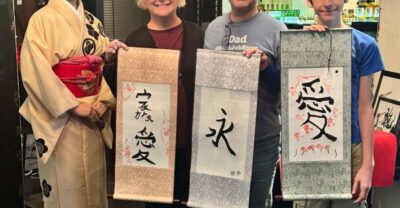
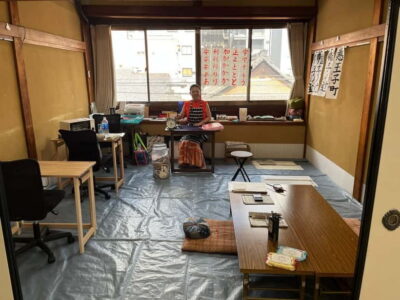
Calligraphy class at Buddhist temple in city center
Read our review →
Let’s experience calligraphy in YANAKA, Taito-ku, TOKYO !!
Read our review →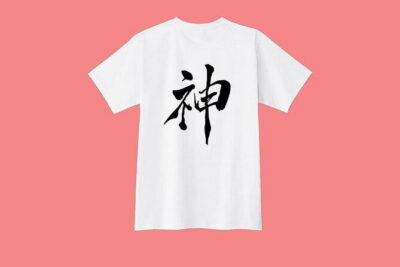
Calligraphy Workshop & Original T-Shirt Creation
Read our review →
Calligraphy Workshop & Original T-Shirt Creation
Read our review →Browse the lists this tour appears in