
Reviewed · 3-HOUR EXPERIENCES
All must-sees in 3 hours – Nara Park Classic Tour! From JR Nara!
Nara’s deer are only the beginning. This three-hour group walk links Kasuga Grand Shrine, Todai-ji Temple, Nara Park, and Kofuku-ji Temple, while a local guide explains the customs, religions, and stories behind what you see. I like the efficient route and the fact that admission to Todai-ji’s Great Buddha Hall, plus one bus ride from JR Nara Station, is included.
I also like the human touch. Guides such as Mayumi, Nobuko, Reiko, Setsuko, and Kazu have helped visitors with photos, lunch ideas, family needs, and quieter corners of the park. The main caution is simple: this is a real walking tour, often in heat, over gravel and steps, and the group leaves on time without waiting for late arrivals.
In This Review
- Key points to know before booking
- Why this three-hour Nara tour works
- Meeting at JR Nara Station at 10:00
- The bus ride into Nara Park
- Kasuga Grand Shrine and the first deer sightings
- Todai-ji and the Great Buddha Hall
- Nara Park, deer crackers, and practical animal sense
- Kofuku-ji and the finish near lunch
- The guides make the difference
- Walking, weather, and family comfort
- Who gets the best value from this tour
- Should you book this Nara walking tour?
- FAQ
- Where does the tour start?
- What time does the tour begin?
- How do I find the guide?
- Can I join from Kintetsu Nara Station?
- How long does the experience last?
- Is the tour private?
- Is admission to Todai-ji included?
- Is transportation included?
- Are meals and drinks included?
- Is the tour suitable for strollers?
- What happens if I arrive late?
- Can I cancel for a refund?
Key points to know before booking
- Starts at JR Nara Station at 10:00 am: Meet the guide outside the ticket gates, looking for a white NaraWalk flag.
- Includes the Great Buddha Hall: Your admission to Todai-ji’s main hall is covered, not just an outside view.
- One bus ride saves your legs early on: The group rides from JR Nara Station to the Nara Park area.
- Small group, up to 15 people: This keeps the walk more personal than a large coach tour.
- Ends around 1:00 pm near Kofuku-ji: You have the afternoon for lunch and independent exploring.
- Plan for steady walking: Gravel, steps, deer traffic, and possible heat make good shoes and water important.
Why this three-hour Nara tour works
Nara can look easy on a map. The park spreads between major temples, shrines, paths, and shopping streets, but the best order is not always obvious on a first visit. This experience gives you a clear route and a person who can explain why a Shinto shrine and a Buddhist temple sit so close together.
That cultural context is the main reason I would pay for the tour. You can certainly walk through Nara Park on your own and see deer. It is harder to understand the difference between Shinto and Buddhism, why deer have such a special place here, or what the Great Buddha represents without some help.
The price is $42.94 per person. For that fee, you receive about three hours with a guide, one bus ride, and admission to the Great Buddha Hall. I consider that fair value if you have only half a day in Nara, especially because the tour finishes early enough for lunch and more sightseeing.
You are not paying for a private guide. The maximum group size is 15, and the pace depends on the people in your group. Most groups appear to move comfortably, but one account described a slower walk that ran more than an hour beyond the expected finish. That seems to be the exception, yet it is worth remembering if you have a train reservation or a fixed afternoon plan.
A few more Nara experiences worth weighing up
- 3-Hour Kyoto Insider Sake Brewery Tour with Tastings & Pairings
★ 5.0 · 917 reviews - Tokyo Top Highlights 3h Guided E-bike Tour
★ 5.0 · 714 reviews - 3h Tokyo E-Bike Tour: Hidden Gems, and Local Life with guide
★ 5.0 · 670 reviews
Meeting at JR Nara Station at 10:00
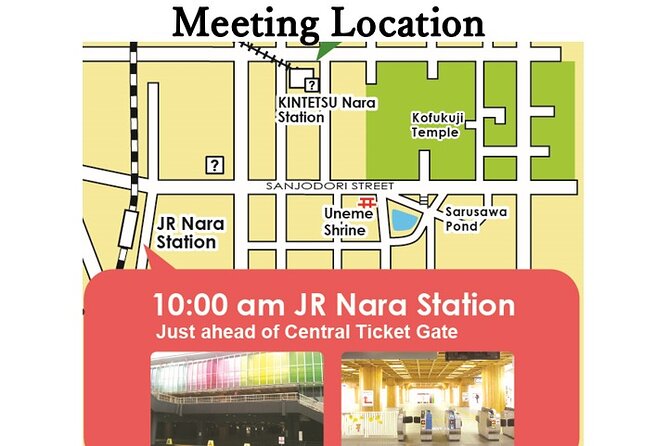
The meeting point is directly in front of the ticket gates at JR Nara Station. There is only one ticket-gate area at this station, and the guide carries a white NaraWalk flag, so finding the group should be straightforward.
The strict timing matters. The tour starts punctually, and the guide cannot wait for people who have not arrived. If you miss the meeting, you cannot simply join later at Kasuga Grand Shrine or Todai-ji.
Do not confuse JR Nara Station with Kintetsu Nara Station. If you arrive by train at Kintetsu, you still need to make your way to JR Nara Station because the group meets there and takes a bus from that location. The tour does not pick up at Kintetsu.
If you are coming from Osaka or Kyoto, build in extra time for the journey and station changes. One family arrived at JR Nara after a much longer trip than expected, so do not treat a 10:00 start as a loose suggestion. I would aim to be at the station early enough to locate the gates, buy water, and settle in before the flag appears.
The bus ride into Nara Park
One bus ride from JR Nara Station to the Nara Park area is included. This is a small but useful feature. It cuts out an initial stretch of city walking and gets you closer to the temples and shrine that make Nara special.
The ride also helps the three-hour schedule work. Instead of spending the first part of the tour finding your way through town, you begin near the main sights with a guide already setting the scene.
You should still expect plenty of walking after the bus. This is not a sightseeing ride with short stops. One family with young children estimated roughly five miles of walking over the full experience, though the exact distance will vary with the group and any added park stops.
Kasuga Grand Shrine and the first deer sightings
Kasuga Grand Shrine usually comes first. The guide walks with you through the shrine precinct, where deer may be wandering between the paths and wooded areas.
This is a good opening stop because it introduces both major themes of the day: Nara’s religious traditions and its famous animals. The guide explains why deer roam freely in Nara and how the shrine connects to Shinto practice. You also begin to see why the city feels different from a simple temple stop. Nature, worship, old paths, and animals are all part of the same visit.
The scheduled time here is about 30 minutes. That is enough for an explanation and photos, but not enough for every corner of the shrine grounds. If Kasuga Taisha is your main reason for coming to Nara, you may want to return after the tour for a slower visit.
The guides have received especially warm praise for making the religious background understandable. Seiko explained how religion shaped early Japan while pointing out activity along the route. Other guides used pictures and clear examples to help explain unfamiliar customs. That support can make the shrine feel like a living place rather than a collection of beautiful buildings.
A completely different kind of day out in Nara:
- World Heritage Kyoto & Nara Uji Authentic Matcha Experience
★ 5.0 · 1,573 reviews - Nara Half Day Trip Walking Tour (Private Option Available)
★ 5.0 · 937 reviews - Nara Early Morning Tour (Kyoto or Osaka Departure Available)
★ 5.0 · 676 reviews - Osaka: Nara and Uji Day Trip with Deer Park and Hot Spring
★ 4.4 · 302 reviews
Todai-ji and the Great Buddha Hall
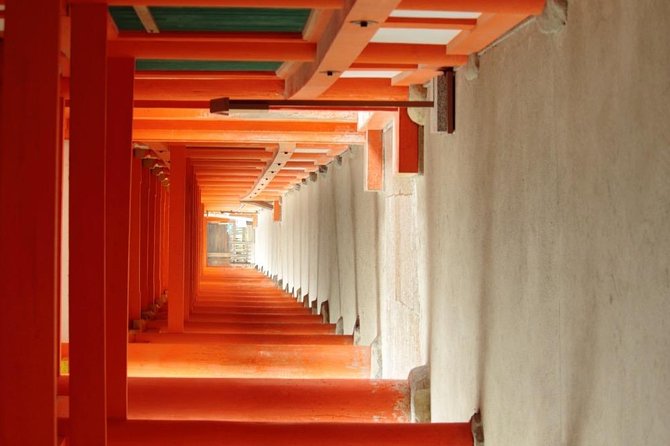
Todai-ji is the tour’s main architectural and spiritual stop. Here you enter the Great Buddha Hall to see the enormous bronze Buddha statue. Admission to the hall is included, which adds real value to the price.
The guide explains the stories behind the Buddha and the temple rather than leaving you to admire the scale without context. You get time for pictures, but the purpose is more than a photo stop. The hall gives you a chance to connect the religious ideas discussed at Kasuga with one of Japan’s most famous Buddhist sites.
The visit is scheduled for about 40 minutes. That is a sensible amount of time for the hall, the statue, the guide’s explanation, and photographs. It is not a full Todai-ji visit. If you want to explore every building or spend a long time studying the details, plan to come back after the group ends.
A popular detail inside the hall is the pillar hole, described as about 37 centimeters by 30 centimeters by 110 centimeters. It is associated with good health and protection from bad luck. The opening is very small, so not everyone will want to attempt it, but it gives families and children a playful moment during an otherwise serious visit.
Keep your group moving here. Todai-ji can be crowded, and the guide needs to keep everyone together. Reiko, Makiko, and other guides have been praised for steering groups through busy areas while still allowing time for photographs and questions.
Nara Park, deer crackers, and practical animal sense
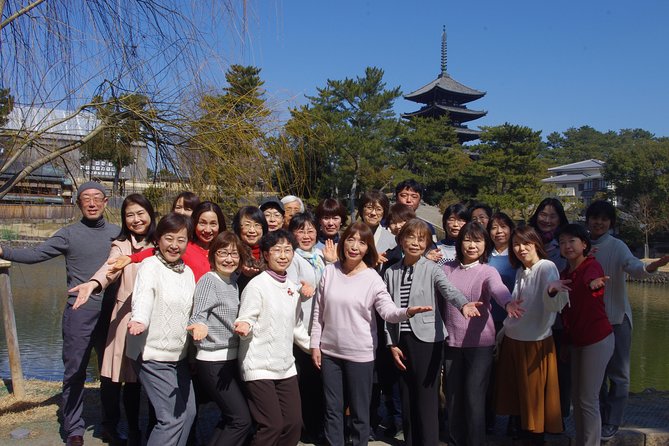
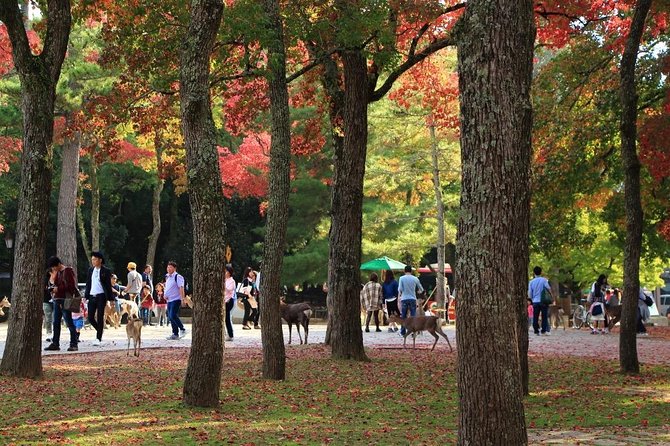
Nara Park is more than a single attraction. Kasuga Grand Shrine, Todai-ji, and Kofuku-ji all belong to the larger park area, and the walking route ties them together.
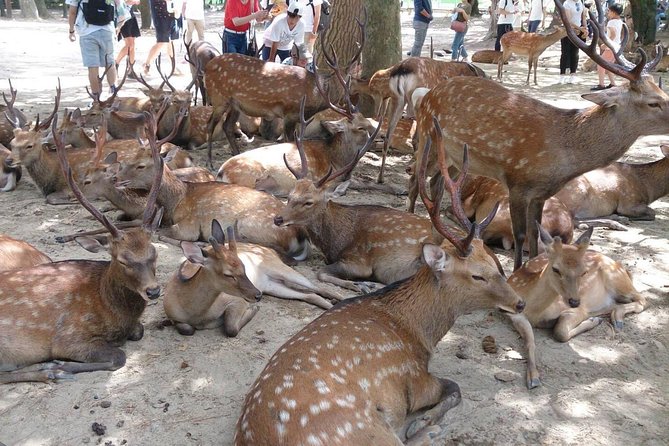
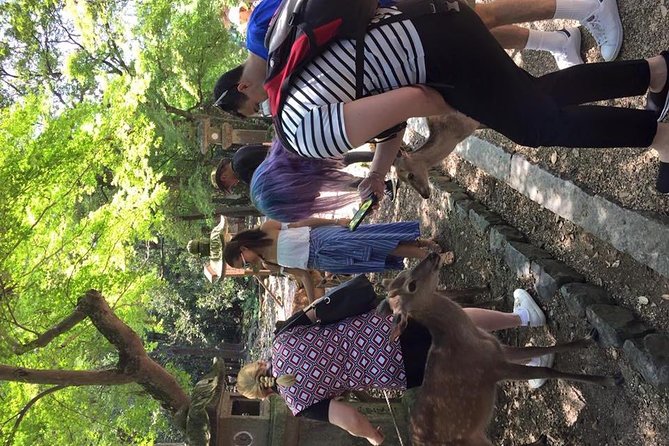
This is where the deer become the star for many people. You may feed them special crackers, and children often enjoy this part most. The guides explain how to feed the deer and help you read their behavior. One useful warning is not to assume that a quiet-looking deer is always harmless. Male deer with antlers can become pushy, and the animals may approach closely or even wander into shops.
Use common sense around them. Hold the crackers where the deer can see them, and keep your hands clear once the food is gone. Stay alert around antlered males, especially if you are with children.
The park portion is planned for about 30 minutes, though the guide may add other stops depending on the season and the group’s speed. This flexibility is welcome. A guide may take you toward a less crowded path or a quieter view if the main routes are packed.
Weather affects this section most. Several accounts describe intense heat or humidity, while another described rain. Reiko once brought an umbrella for a solo participant, and other guides have made a point of checking that everyone stayed comfortable and hydrated. Still, bring your own water, wear a hat in warm weather, and do not expect the guide to remove the physical demands of the walk.
Kofuku-ji and the finish near lunch
The tour usually ends at Kofuku-ji Temple after about 20 minutes there. Its five-storied pagoda makes an excellent final photo, and the guide explains the temple’s place in Nara’s story before giving directions for the rest of your day.
The ending location is different from the starting point. That is useful because you finish closer to Nara’s sightseeing and dining areas, but you should listen carefully to the guide’s directions if you need to return to JR Nara Station.
The early finish is one of the strongest features of this experience. Around 1:00 pm, you can stop for lunch, return to a favorite temple, shop, or continue through Nara Park without having lost the whole day. Guides have pointed people toward lunch streets, mochi-making demonstrations, train stations, and places connected to specific shopping interests.
Do not expect lunch or drinks to be included. You pay for those yourself. The guide can suggest options, but the meal is your own afternoon decision.
The guides make the difference
The tour provider uses several guides, so your experience will depend partly on who leads your group. The strongest pattern is friendly, patient instruction with a local touch.
Mayumi has been praised for her warmth and for answering questions across every stop. Nobuko has helped older family members, adjusted to different interests, and added special touches when possible. Setsuko has more than 10 years of guiding experience and has helped families find quieter areas and avoid some crowds.
Reiko has been singled out for thoughtful care. She helped a solo visitor with photographs during rainy weather and made a family tour enjoyable for a teenager interested in K-pop. Makiko and her assistant have been praised for humor, preparation, and making the park’s past easy to follow. Guides such as Kazu, Seiko, Yoshi, Satomi, Shigeru, Motoko, and Lay have also been praised for clear explanations and approachable conversation.
English ability may vary by guide. One person found a guide’s English difficult to follow, while others praised the explanations as detailed and easy to understand. Some guides use photos, folders, gestures, and visual examples to make points clearer. If you have a strong interest in religion or art, ask questions early and stay near the guide when the group is moving.
The advertised maximum is 15 people. That is small enough for questions and photos without the intimacy or flexibility of a private tour. Occasionally, a booking may have only one participant, but you should book on the assumption that you will be walking with others.
Walking, weather, and family comfort
The route includes steps and gravel. A baby stroller can be used only with effort, since you may need to carry it or push it over rougher ground. Service animals are allowed, and most people can participate, but the tour is not designed around motorized transport or long seated breaks.
Good walking shoes are essential. Sandals may be fine for some people, but a firm, comfortable pair will serve you better on gravel and temple approaches.
The tour can work for families. Children have enjoyed feeding the deer, the Great Buddha Hall, and small surprises such as origami deer souvenirs. Older adults can also enjoy it, as shown by one father and son pair aged 80 and 56, but the group pace and weather still matter.
If you are traveling with young children, explain the deer rules before the tour begins. If you are traveling with an older relative, consider the heat, the distance, and the steps before booking. The guide may be kind and patient, but no three-hour walking tour can make a hot day feel cool.
Who gets the best value from this tour
I would choose this experience if you have less than half a day in Nara, are visiting for the first time, or want cultural explanations instead of simply following the deer through the park.
It is also a smart choice for solo visitors. A guide can take your photos, help you stay oriented, and make the morning feel more social without requiring a private booking. Families benefit from the clear route and help with feeding the deer, while couples can use the early finish for lunch and a relaxed afternoon.
I would think twice if you dislike group schedules, want a slow visit inside Todai-ji, or have difficulty walking several miles. You may also prefer exploring independently if you already know Nara’s temples and want to linger at one shrine rather than cover several major sights.
The free-cancellation rule gives you some flexibility. You can cancel for a full refund up to 24 hours before the local start time. Changes made inside that window are not accepted, and poor weather may lead to another date or a full refund because the experience requires good conditions.
Should you book this Nara walking tour?
Book it if your Nara visit is short and you want the major sights arranged in a sensible order. The $42.94 cost is reasonable once you count the Great Buddha Hall admission, bus ride, local guidance, and the time saved finding your way between sites.
Arrive early at JR Nara Station, wear proper shoes, carry water, and leave your afternoon open. If you can accept a group pace and a little deer-related chaos, this is a practical, friendly introduction to Nara that gives you both the famous sights and enough time to explore on your own.
FAQ
Where does the tour start?
It starts in front of the ticket gates at JR Nara Station, at 1 Sanjohonmachi, Nara.
What time does the tour begin?
The start time is 10:00 am.
How do I find the guide?
Look for a guide carrying a white NaraWalk flag outside the JR Nara Station ticket gates.
Can I join from Kintetsu Nara Station?
No. You must go to JR Nara Station. The group takes a bus from JR Nara Station and does not meet or pick up at Kintetsu Nara Station.
How long does the experience last?
It lasts about three hours and usually ends around 1:00 pm.
Is the tour private?
No. It is a group walking tour with a maximum of 15 participants.
Is admission to Todai-ji included?
Yes. Admission to the Great Buddha Hall is included.
Is transportation included?
One bus ride from JR Nara Station to the Nara Park area is included.
Are meals and drinks included?
No. Meals and drinks are not included.
Is the tour suitable for strollers?
The route includes steps and gravel. You may need to carry a stroller or push it with extra effort.
What happens if I arrive late?
The tour starts punctually and does not wait for people who are late. If you miss the start, you cannot join the group.
Can I cancel for a refund?
You can cancel at least 24 hours before the start time for a full refund. Cancellations or changes made less than 24 hours before the start are not refunded or accepted.
Just added around Nara
- Private Nara Tour and Sake Tasting (Departing from Kyoto/Nara)★ 5.0 · 40 reviews
- Nara: Bike Tour in Ancient Capital UNESCO World Heritage★ 5.0 · 43 reviews
- Perfect Nara Park Half-Day Bus Tour with English Speaking Guide★ 5.0 · 49 reviews
- Discover Ancient Nara: Private Car Tour from Kyoto or Osaka★ 5.0 · 52 reviews
- Hammer a Pattern on Your Ring Workshop★ 5.0 · 57 reviews
- Nara: Great Buddha, Kasuga Shrine & Deer Park Tour★ 4.8 · 62 reviews
- Nara: Private Tour with Private Guide★ 4.8 · 66 reviews
- Nara Highlight Walking Tour with Furoshiki Experience with Lunch★ 5.0 · 73 reviews
3-Hour Experiences, compared.
3-Hour Kyoto Insider Sake Brewery Tour with Tastings & Pairings
Read our review →

3h Tokyo E-Bike Tour: Hidden Gems, and Local Life with guide
Read our review →
3-hour Guided E-Bike Tour of the City’s Hidden Gems
Read our review →
3-Hour Bike/E-Bike Tour of the City’s Highlights
Read our review →
3-Hour Tokyo Pub Crawl Nightlife Welcome Guided Tour in Shibuya
Read our review →Browse the lists this tour appears in