
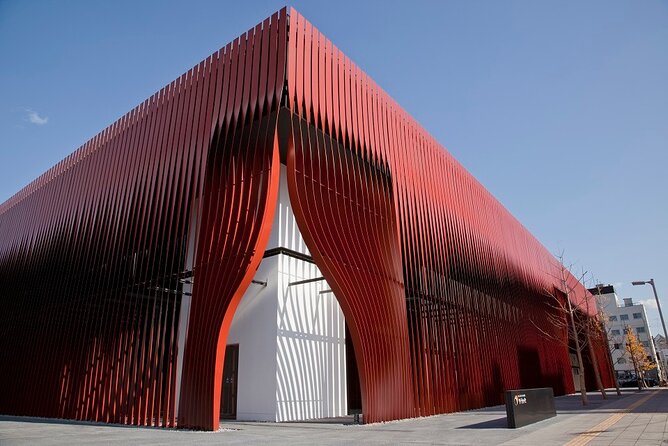
Reviewed · GOVERNMENT-LICENSED GUIDE TOURS
Aomori Full-Day Private Trip with Government-Licensed Guide
Aomori rewards curious visitors. This private six-hour tour gives you a personal introduction to northern Japan, with a choice of museums, art spaces, temples, food stops, and historic sites. I like the one-party format, which lets you shape the day around your interests, and I like the chance to explore places such as Sannai-Maruyama and Nebuta Museum Wa Rasse with a licensed English-speaking guide. The main catch is that transportation, meals, and entry fees are extra, and fitting three or four major sites into six hours requires sensible planning.
You meet your guide on foot within the designated area of Aomori city. That makes this a good match for visitors arriving by train or ship who want help making sense of the city without joining a large bus group. Guides named Fuji, Rocky, Kaz, Kazu, Kazumi, and Tomohiko have led this experience, so the personality and style may vary.
The tour has earned a 4.8 rating from 33 reviews, with 94 percent recommending it. Most praise goes to the guides’ warmth, local pride, and ability to adjust the day. Still, one serious complaint describes poor timing, missed stops, and incorrect information. A private tour can be wonderful, but you should agree on the plan and walking pace at the start.
In This Review
- Key points to know before booking
- Why Aomori deserves a guided day
- Starting with Aomori’s giant Nebuta floats
- Meeting Aomori’s early past at Kyodokan
- Seeing Tadao Ando’s Aomori Contemporary Art Center
- Discovering Munakata Shiko’s powerful woodblocks
- Understanding the Jomon world at Sannai-Maruyama
- Adding the Aomori Museum of Art
- What the private format really adds
- Walking, timing, and the cost of the day
- Who should book this Aomori experience
- How to get the best guide-led day
- Should you book it?
- FAQ
- How long does the Aomori private tour last?
- Is the tour private?
- What is included in the price?
- Are entrance fees and transportation included?
- Can the tour visit Hirosaki?
- Where do you meet the guide?
Key points to know before booking
- Choose three or four stops, not all six: The advertised places each merit about an hour, so trying to visit everything would make the day rushed.
- Nebuta Museum Wa Rasse is the best first stop: Five large floats from the previous festival help explain Aomori’s famous summer celebration.
- Sannai-Maruyama gives the day real depth: The reconstructed Jomon settlement offers a look at Japanese life thousands of years ago.
- The tour is on foot, with no private vehicle: Transportation fees, entrance tickets, lunch, and personal spending are not included.
- Guide quality matters: Fuji, Kaz, Kazu, Kazumi, Rocky, and Tomohiko are among the guides associated with the experience.
- Hirosaki is not part of this tour: Despite some past accounts of trips to Hirosaki, the stated tour conditions exclude it.
Why Aomori deserves a guided day
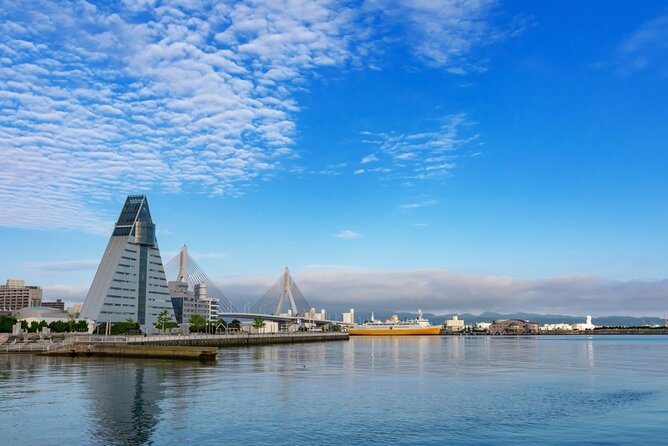
Aomori sits at the northern end of Honshu beside Mutsu Bay. The city keeps much of its Edo-period street grid, although heavy bombing during World War II destroyed much of the older town. Many of the attractions you see today are modern buildings, but they tell older stories through art, archaeology, and local festivals.
That mix is exactly why a guide helps. Aomori is not a city where every important sight announces itself with a famous facade. The meaning is often inside the building: in a Nebuta float’s painted figures, a Jomon tool, a woodblock print, or the way an architect frames a snowy setting.
I like the private format for this reason. You can ask why a festival matters, spend longer with an artist, or move on when a museum is not your thing. With a group of your own, you also avoid waiting for strangers to finish photographs or shop.
The tour lasts about six hours. That sounds generous, but the six listed stops are each planned for roughly one hour. Add walking, meals, public transport, and ticket lines, and you have a practical choice between three substantial stops or four quicker visits.
More licensed guide tours in Japan:
- Tokyo 6hr Private Tour with Government-Licensed Guide
★ 5.0 · 3,902 reviews - Tokyo 4hr Private Tour with Government-Licensed Guide
★ 5.0 · 1,394 reviews - Kyoto 6hr Private Tour with Government-Licensed Guide
★ 5.0 · 1,369 reviews
Starting with Aomori’s giant Nebuta floats
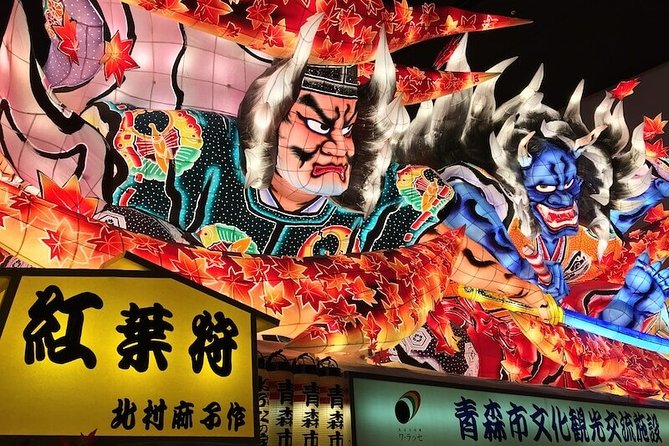
Nebuta Museum Wa Rasse is the clearest introduction to Aomori. The center is dedicated to the Nebuta Festival, held each year from August 2 through 7. Inside, you can see five floats from the previous festival, along with videos, sounds, and photographs that explain how these huge illuminated figures come alive in the streets.
This is more than a quick photo stop. A float is large enough to make scale part of the experience, and the displays help you understand the labor and drama behind the parade. If you are visiting outside festival season, Wa Rasse gives you the closest practical look at the event without needing to plan an August trip.
Give this stop a full hour. You will get more from it if you ask your guide about the figures, the parade, and the festival’s background. One guest particularly enjoyed the floats and their history, while another guide, Tomohiko Kudo, has pointed out that the festival runs from August 2 to 7 and that Nebuta floats have even been displayed in Honolulu.
Entry is not included, so budget separately for the museum. The fee is a small but important detail when comparing the tour price with a self-guided day.
Meeting Aomori’s early past at Kyodokan
Aomori Prefectural Kyodokan, also called the Aomori Prefectural Folk Museum, focuses on local life and the Jomon period. Its collection includes Jomon pottery, miniature reconstructions of huts, and tools from this early period of Japanese history.
This stop suits you if you prefer objects and explanation to polished modern design. The small models and tools can make the Jomon period easier to picture, especially when your guide connects them with Sannai-Maruyama later in the day.
The museum is scheduled for about an hour, and admission is extra. I would not automatically choose it alongside every other museum. If you have already selected Sannai-Maruyama, you may prefer to use this hour for the archaeological site itself or for one of Aomori’s art museums.
Seeing Tadao Ando’s Aomori Contemporary Art Center
The Aomori Contemporary Art Center sits on the grounds of Aomori Public College. Internationally known architect Tadao Ando designed it, and the building’s water feature works with its wooded setting.
Here, the architecture is part of the visit. You are not simply entering a white box to view art. The layout, concrete, water, and surrounding setting create a quiet contrast with the bold spectacle of Wa Rasse.
Choose this stop if you enjoy modern buildings and contemporary art. It is less essential if your main goal is Aomori’s older culture, and its location makes timing more important on a walking tour. Because private transportation is not included, ask your guide how the center fits with the rest of your route before committing to it.
The information provided for the tour does not promise a particular temporary exhibition, so treat the building and the current displays as the experience rather than booking around one named show.
A few more Japan experiences worth weighing up
- From Tokyo: Mount Fuji Full-Day Sightseeing Trip
★ 4.5 · 4,970 reviews - Mount Fuji Full-Day Private Tour from Tokyo (Customizable)
★ 4.9 · 1,470 reviews - Hiroshima / Miyajima Full-day Private Tour with Government Licensed Guide
★ 5.0 · 1,298 reviews - Tokyo Private Full-Day Tour by Car or Van
★ 5.0 · 684 reviews
Discovering Munakata Shiko’s powerful woodblocks
The Munakata Shiko Memorial Museum of Art presents works by Aomori-born artist Munakata Shiko, who lived from 1903 to 1975. His woodblock prints have earned him the nickname the Vincent van Gogh of Aomori, and the museum includes his major work Ten Great Disciples.
This is one of the most locally specific stops on the tour. You are not seeing a general survey of Japanese art. You are meeting an artist tied directly to Aomori, which helps explain how the region has shaped its own artistic identity.
I would choose this museum if you enjoy prints, religious subjects, or regional artists. The visit is planned for about an hour, and entry costs extra. If your time is limited, ask your guide to explain how it differs from the Aomori Museum of Art before selecting both.
Understanding the Jomon world at Sannai-Maruyama
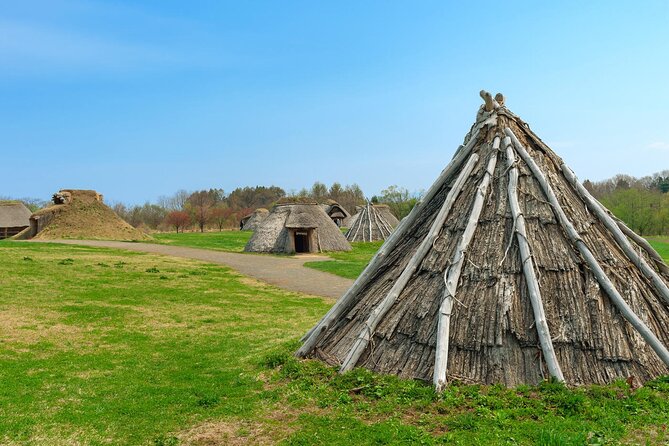
Sannai-Maruyama is likely the day’s most meaningful stop for anyone interested in archaeology. The site reveals the reconstructed foundations of a Jomon-era settlement. It was first discovered in 1992 and later declared a special national historic landmark.
The importance here is not just the age of the site. The reconstructions let you picture a settled community in a period that can otherwise feel remote and abstract. You see where people lived and worked, rather than only looking at small objects in a glass case.
Guide choice can make a real difference. Kazu has been singled out for his skill at explaining the excavation, history, and culture of Sannai-Maruyama. If this site interests you, tell the agency when booking and ask whether a guide with strong archaeological knowledge is available.
Plan for one hour at minimum, though you may want longer. The site is near the Aomori Museum of Art, making those two stops a sensible pairing. Both admission fees are separate, and you should confirm the day’s transport plan because the tour itself is described as a walking tour with no private vehicle.
Adding the Aomori Museum of Art
The Aomori Museum of Art is housed in a white cubic building designed by architect Jun Aoki. Its design was created to work with the nearby Sannai-Maruyama archaeological site, so the museum provides a modern partner to the ancient settlement.
This pairing is one of the smartest ways to use your six hours. First, you see the physical remains and reconstructed foundations of a Jomon settlement. Then you move into a modern art building shaped by the presence of that past.
The museum is scheduled for about an hour and admission is extra. It is a good pick for you if you want a mixture of art, architecture, and local identity. If your priority is Nebuta, traditional culture, or food, you may get more from Wa Rasse and another stop.
What the private format really adds
A private guide is most useful when you have clear interests. Tell your guide in advance if you care most about Nebuta, Jomon archaeology, modern architecture, local art, food, temples, or shopping. The experience is designed around three or four selected sites, so your preferences should shape the day.
Several guides have shown a willingness to adjust plans. Kaz has used WhatsApp before tours to discuss timing and interests. Another guide helped a visitor with a mobility issue find accessible front-row seats for the Nebuta Matsuri Festival, although festival arrangements are not a standard part of every booking.
Other personal touches have included tasting local apples during harvest, visiting a shop selling used kimonos, and stopping for local food. One particularly memorable account describes a samurai master and students practicing swordsmanship, along with temples and shrines that survived the war. These examples show what a good private guide can add, but they are not guaranteed stops.
The guide names and styles vary. Fuji received praise for personal warmth and knowledge. Kaz, Kazu, and Kazumi were praised for preparation, teaching, and local insight. Tomohiko Kudo was described as having long experience in the area and a city-government background in promoting Aomori. English ability may also vary, so if detailed historical explanation is important to you, mention that when booking.
Walking, timing, and the cost of the day
The price is $154.84 per person. For a private six-hour tour, that can be fair value, especially for a couple or small group that wants a flexible plan and a local English-speaking guide. The value drops if you expect a vehicle, tickets, lunch, or a packed list of attractions to be included.
You pay separately for:
- Transportation fees
- Entrance fees
- Lunch
- Personal expenses
There is no private transportation. Pickup means meeting the guide on foot within the designated Aomori city area, so you should wear comfortable shoes and allow time for walking between locations.
The biggest planning lesson is simple: do not ask for nine activities in six hours. One poor experience involved missed museums, a rushed lunch, and a shortened route after a late start. Even a private guide cannot make a full day out of an overfilled schedule.
Agree on the order of stops, expected walking speed, lunch plans, and admission costs before setting off. If you are arriving from a cruise ship, confirm the meeting point and allow for any delay. The guide and agency need enough information to build a realistic route.
Who should book this Aomori experience
I would recommend this tour to first-time visitors who want context, not just photographs. It is also a good fit for couples, families, and small groups with different interests, since a private guide can adjust the balance between art, archaeology, and festival culture.
It suits you especially well if you:
- Have about six hours in Aomori
- Prefer a personal guide to a large group
- Want to combine three or four major sights
- Need English explanations at museums and historic sites
- Enjoy local food, apples, art, or festival traditions
- Want to ask questions as you go
It is less suitable if you want to visit Hirosaki. The tour explicitly excludes Hirosaki, even though some past guiding experiences associated with the same guides included Hirosaki Castle, gardens, or cherry blossoms. Book a separate excursion for that destination.
It may also disappoint you if you want a private car or a fully prepackaged sightseeing day. This is a walking tour, and the extra costs can add up.
How to get the best guide-led day
Before the tour, send a short wish list with your top two priorities and one backup. For example, choose Wa Rasse and Sannai-Maruyama first, then use the remaining time for the Aomori Museum of Art or Munakata Shiko Memorial Museum.
Ask for a guide who is particularly strong in your chosen subject. Kazu has been praised for Sannai-Maruyama, while Tomohiko Kudo has received praise for local knowledge and Aomori background. Names alone do not guarantee a certain result, but sharing your interests gives the agency a better chance to match the day to you.
Keep lunch simple and flexible. A local fish-market meal has been a highlight for some visitors, with very fresh sashimi, but waits can disrupt a tight schedule. If the market is crowded, decide ahead of time whether eating quickly or preserving museum time matters more.
Finally, confirm the schedule at the meeting point. A private tour works best when you and the guide agree on what can realistically fit. That one conversation may prevent the rushed feeling described in the most negative account.
Should you book it?
Book this Aomori tour if you want a flexible, guide-led introduction to Nebuta culture, Jomon archaeology, and local art. Its strongest feature is not the number of stops. It is the chance to choose the right few stops and hear why they matter from someone who knows the area.
I would select Wa Rasse and Sannai-Maruyama for a first visit, then add the Aomori Museum of Art if modern design appeals to you. Choose Kyodokan or Munakata Shiko instead if you prefer traditional objects or regional art.
The $154.84 price is reasonable for a private six-hour guide, but only after you account for tickets, food, and transport. Go in with a focused plan, realistic walking expectations, and a clear understanding that Hirosaki is excluded. Do that, and this can turn a short Aomori stay into a much more personal and memorable day.
FAQ
How long does the Aomori private tour last?
The tour lasts approximately six hours.
Is the tour private?
Yes. Only your own group participates, and the experience is not combined with other tour groups.
What is included in the price?
The price includes a licensed local English-speaking guide and a customizable tour covering three or four selected sites from the stated choices.
Are entrance fees and transportation included?
No. Transportation fees, entrance fees, lunch, and personal expenses are not included. The tour does not provide private transportation.
Can the tour visit Hirosaki?
No. Hirosaki cannot be visited on this tour.
Where do you meet the guide?
You meet the guide on foot within the designated area of Aomori city. The tour is described as a walking tour, although public transportation may involve separate fees.
Just added around Japan
- Kanazawa private half day/Photoshoot by professional photographer★ 5.0 · 38 reviews
- Osaka Food Tour with 10 Classic Japanese Tastings & Drinks★ 5.0 · 38 reviews
- Osaka: Highlights & Hidden Gems Private Walking Tour★ 4.7 · 38 reviews
- Tokyo Small Group Tour with Guide★ 4.5 · 38 reviews
- Tokyo 6hr Instagram Highlights Private Tour with Licensed Guide★ 5.0 · 38 reviews
- From Tokyo: Kamakura Private Customize Tour by Luxury Van★ 4.6 · 38 reviews
- Tokyo Sumo Experience with Live Show & Audience Challenge★ 5.0 · 38 reviews
- Kyoto: Private Customizable Day Trip by Car★ 5.0 · 38 reviews
Government-Licensed Guide Tours, compared.

Tokyo 6hr Private Tour with Government-Licensed Guide
Read our review →
Tokyo 4hr Private Tour with Government-Licensed Guide
Read our review →
Kyoto 6hr Private Tour with Government-Licensed Guide
Read our review →
Hiroshima / Miyajima Full-day Private Tour with Government Licensed Guide
Read our review →
Kyoto 4hr Private Tour with Government-Licensed Guide
Read our review →
Hiroshima City 4hr Private Walking Tour with Licensed Guide
Read our review →
Private Kyoto Tour with Licensed Guide & Vehicle (Max 15 persons)
Read our review →Browse the lists this tour appears in