
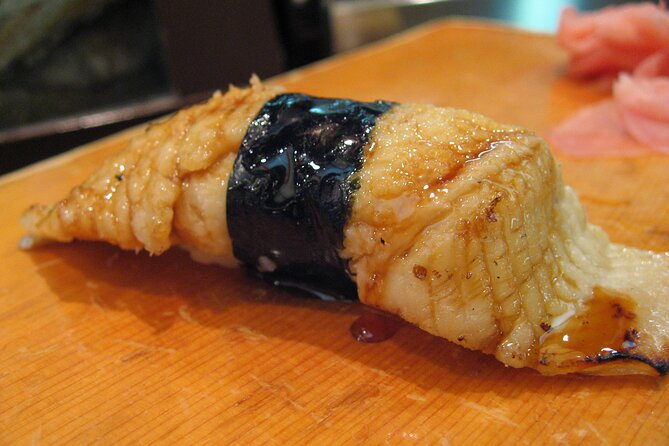
Reviewed · SUSHI-MAKING CLASSES
Exclusive Sushi Making Experience with a Master Chef – Osaka Area
Sushi tastes better when you make it. This private Ashiya class gives you three hours with a sushi master who has more than 40 years of experience, and I like the one-group-per-day format because you get real attention rather than a crowded cooking lesson. I also like the chance to learn four traditional nigiri techniques, then eat the sushi you shape yourself. The main drawback is the price: at $115 per person, this costs more than a standard group cooking class, though the meal, private setting, tools, and instruction help explain the difference.
The class takes place in a personal home in Hyogo Prefecture, between Osaka, Kobe, and Kyoto. That setting makes the activity feel less polished and commercial, but it also gives you a more personal look at Japanese hospitality. Reviews praise hosts Mika and Keitaro, very fresh fish, generous portions, and the warm welcome into their home. Plan ahead, since fresh ingredients require a reservation at least 24 hours before the start.
In This Review
- Key points at a glance
- Why Ashiya makes a good sushi stop
- Choosing your three-hour sushi session
- Starting with rice, tools, and four hand movements
- Learning from a chef with four decades of practice
- Fresh fish and a generous meal
- What the personal-home setting adds
- How much value do you get for $115?
- Photos, home skills, and what you take away
- Who should book this private sushi class?
- Should you book the Ashiya sushi experience?
- FAQ
- Where does the sushi-making experience take place?
- How long does the experience last?
- What times are available?
- Is the sushi class private?
- Are children allowed to join?
- What is included in the price?
Key points at a glance
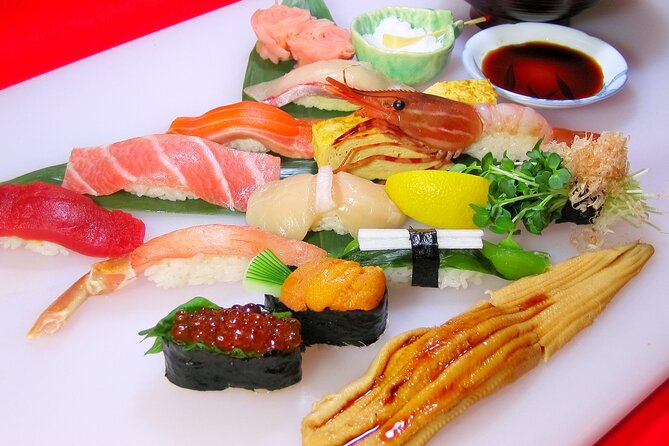
- Private access: Only your group takes part, with one private booking scheduled per day.
- Four nigiri methods: You practice Tate-Gaeshi, Kote-Gaeshi, Honte-Gaeshi, and Itte-Nigiri.
- A veteran sushi teacher: The chef brings more than 40 years of experience to the class.
- Lunch or dinner included: Choose a daytime session around 11:00 AM or an evening session around 5:00 PM.
- Family-friendly setup: Children from 0 to 9 years old join free, and stroller help is available.
- Easy regional reach: The Ashiya meeting point is less than an hour from Osaka, Kobe, and Kyoto.
Why Ashiya makes a good sushi stop
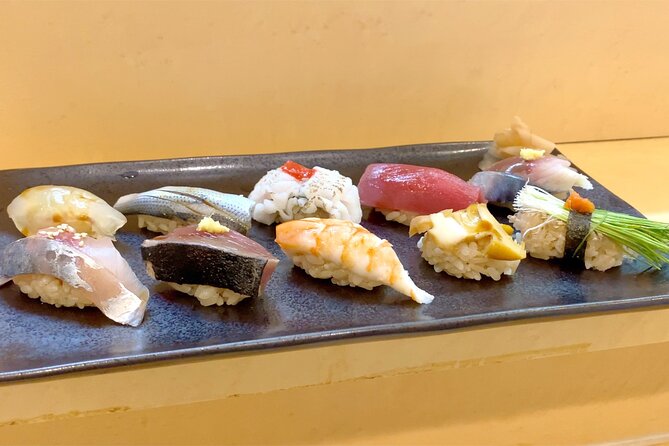
The class meets at 17-18 Iwazonochō, Ashiya, Hyogo 659-0013. Ashiya sits in a useful spot for visitors based in Osaka, Kobe, or Kyoto, and the activity is near public transportation. The exact travel time depends on where you start, but the location makes this a sensible half-day plan rather than a full-day commitment.
You return to the same meeting point at the end. That simple arrangement matters. You do not need to work out a second pickup location after eating, and you can leave with your phone, camera, and newly learned sushi skills in hand.
The setting is a home, not a restaurant kitchen or large culinary school. I see that as one of the strongest parts of the activity, especially if you want a more personal encounter with Japanese food culture. It may feel less formal than a professional cooking studio, but the home atmosphere is part of the charm.
The hosts, Mika and Keitaro, are specifically praised for making visitors feel welcome and preparing everything before arrival. You can expect a friendly introduction rather than a rushed check-in. There is also a couch or another comfortable place to sit, and the hosts can help carry a stroller upstairs if needed.
More sushi-making classes:
- Sushi Making Tokyo Roll and Authentic Japanese Sushi Class
★ 5.0 · 3,971 reviews - Tokyo: Roll and Authentic Sushi Making Class in Asakusa
★ 4.9 · 1,957 reviews - Make Sushi and Create Unforgettable Memories in Tokyo
★ 5.0 · 1,413 reviews
Choosing your three-hour sushi session
The published operating schedule lists Monday through Sunday sessions from 11:00 AM to 2:00 PM and 5:00 PM to 8:00 PM. The broader description says you can start between 10:00 AM and 6:00 PM, with 11:00 AM suggested for lunch and 5:00 PM suggested for dinner.
Because those times do not match perfectly, I would confirm your preferred start time when booking. The important practical point is that this is not a drop-in activity. Fresh, high-quality ingredients are prepared for your group, so a reservation at least 24 hours ahead is required.
The daytime session works well after a morning in Osaka or Kobe. You finish in time for an afternoon walk, shopping, or another meal later in the day. The evening session is better if you want to make sushi your main dinner plan.
The class lasts about three hours. That is long enough to learn, practice, eat, and ask questions without turning the activity into an all-day event. Still, you should avoid scheduling a tight connection or an important reservation immediately afterward. Private instruction tends to be more relaxed than a fixed group tour.
Starting with rice, tools, and four hand movements
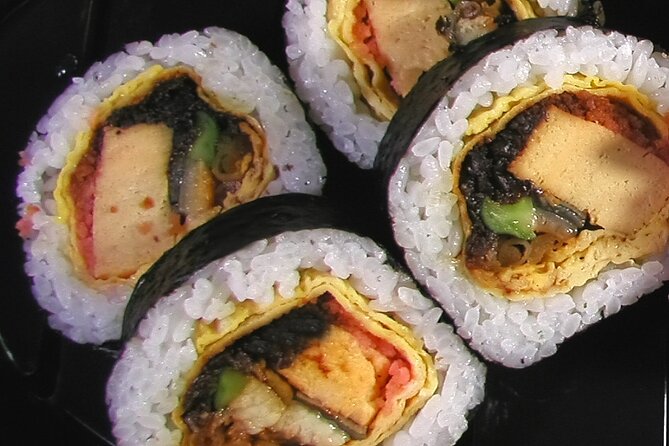
The heart of the class is nigiri sushi, the small hand-shaped rice portion topped with fish. You do not simply watch the chef form pieces while you take notes. You practice shaping the rice yourself and learn how small movements affect the final form.
Four techniques are taught:
- Tate-Gaeshi
- Kote-Gaeshi
- Honte-Gaeshi
- Itte-Nigiri
The names may sound technical, but that is exactly why direct coaching helps. Sushi rice can look simple until you try to shape it without crushing it or letting it fall apart. The class lets you test different hand positions and find the form that feels natural to you.
You use sanitary gloves while making the sushi. That is useful for first-timers who may worry about handling ingredients correctly. It also makes the lesson more approachable for families and anyone who wants to recreate the process at home.
I like that the focus is not just on producing attractive pieces for one meal. The stated aim is to help you make nigiri with simple, easy-to-find ingredients after you return home. You learn the basic method, then take away a skill you can use for future sushi nights.
Learning from a chef with four decades of practice
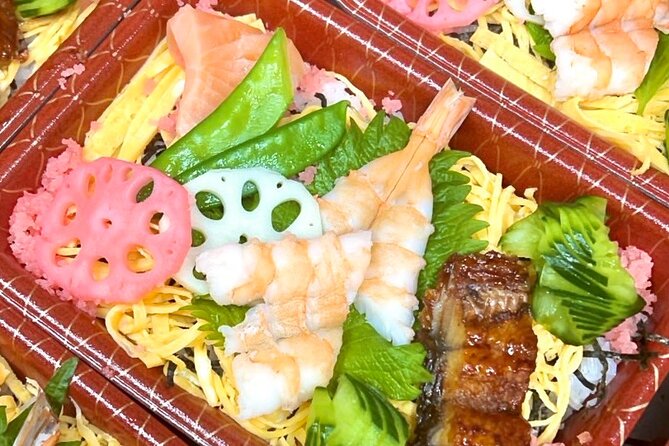
A chef with more than 40 years of experience brings a different kind of instruction than a short cooking demonstration. You are learning a craft shaped by repetition, not just following a recipe printed on a card.
The chef guides you step by step, from forming the rice to placing the topping and finishing the nigiri. Since only your group participates, you can work at your own speed. If your rice shape is loose, too firm, or uneven, you have a better chance of getting a correction before moving on.
The lesson also covers the history and traditions of sushi. This gives the food some context without turning the class into a lecture. You begin to see why rice shape, hand position, and presentation matter, rather than treating nigiri as rice with fish placed on top.
The private format is especially useful for beginners. In a busy class, you may hesitate to ask basic questions or struggle to see the instructor’s hands. Here, you can ask about each step and repeat it until the movement makes sense.
Experienced sushi fans can still get value from the session, particularly if they have eaten plenty of nigiri but never learned how to shape it. The four methods give the lesson a clear structure and provide something more substantial than a simple tasting.
A few more Kobe experiences worth weighing up
- KOBE Sake Tasting Tour at Breweries (tasting fee included)
★ 5.0 · 154 reviews - Kobe Highlights & Hidden Gems: Private & Custom Tour with a Guide
★ 4.5 · 70 reviews - Kobe 4hr Private Tour with Government-Licensed Guide
★ 5.0 · 59 reviews - Kobe: Guided Sake Breweries Tour with Tastings
★ 5.0 · 55 reviews
Fresh fish and a generous meal
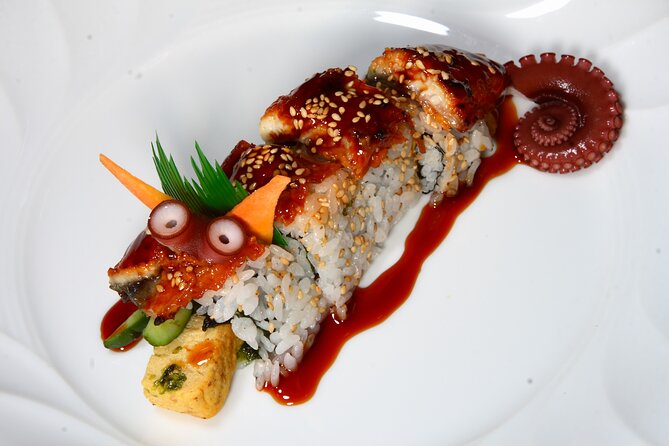
The ingredients are described as fresh and high quality, and the meal is included in the price. That combination is important when considering the $115 cost. You are paying for private instruction, but you are also receiving lunch or dinner and the chance to eat what you make.
The food portions may be generous. One especially positive account describes far more sushi than the group could reasonably eat, along with fish that tasted very fresh. That is good news if you arrive hungry, though it also means you should not plan another major meal right away.
The food is not just a sample plate prepared by somebody else. You photograph your own creations and eat the sushi you shape. That creates a satisfying rhythm: learn, practice, make, photograph, and enjoy.
Complimentary Japanese tea or water is provided. Coffee may also be available, as the inclusions list coffee and/or tea. If you have specific dietary needs or ingredient concerns, the supplied details do not explain how substitutions work, so ask before confirming.
What the personal-home setting adds
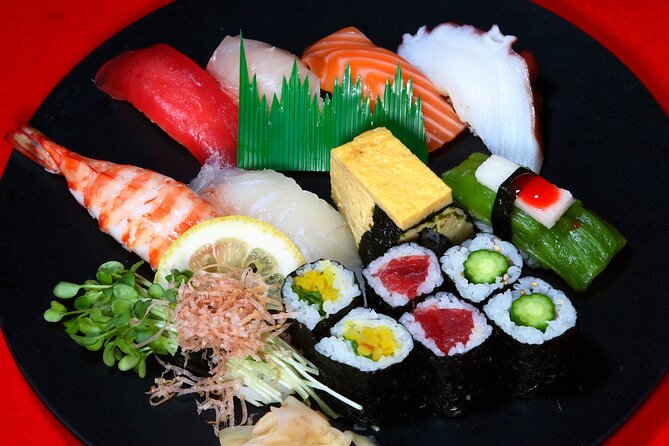
Being welcomed into a private home changes the feel of the activity. You get a more intimate encounter with the hosts, and the class can feel like an invitation rather than a performance for a room full of strangers.
That setting also comes with a few things to keep in mind. A home may have stairs, and the note about carrying strollers upstairs suggests that access is not entirely level. Stroller users can request help, but you should mention your needs ahead of time.
The space includes a couch or similar comfortable seating. That small detail matters for families with young children, older relatives, or anyone who needs to pause between stages of the lesson. Children aged 0 to 9 join free, making this a more appealing choice for families than the headline adult price might suggest.
You should also remember that children still need supervision around food and equipment. The activity is family-friendly according to the supplied details, but it is still a hands-on kitchen lesson rather than a dedicated play session.
How much value do you get for $115?
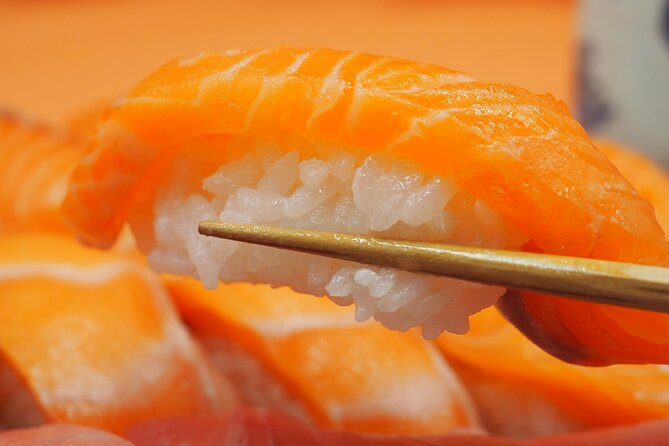
At $115 per person, this is not the cheapest way to eat sushi in the Osaka area. A restaurant meal would usually require less time and effort, and a group cooking class might cost less.
The value comes from the combination of elements. Your fee covers roughly three hours, a private booking, professional instruction, all tools and gear, lunch or dinner, drinks, and the ingredients for your own sushi. You also receive practical skills that you can use later.
The one-group-per-day policy is a major part of the price. You are not sharing the chef’s attention with a large class, and you do not have to match the pace of strangers. For a couple, family, or small private group that values personal instruction, the cost is easier to justify.
I would consider it especially worthwhile for people who want a food activity with a strong personal connection. If your main goal is simply to eat excellent sushi, spend the money at a respected restaurant instead. If you want to understand how nigiri is made and take part in the process, this class offers more lasting value.
Group discounts are available, though the exact reduction is not provided. Ask about the discount if you are booking for several people. Since children from 0 to 9 are free, a family may find the overall group price more attractive than the per-person rate first suggests.
Photos, home skills, and what you take away
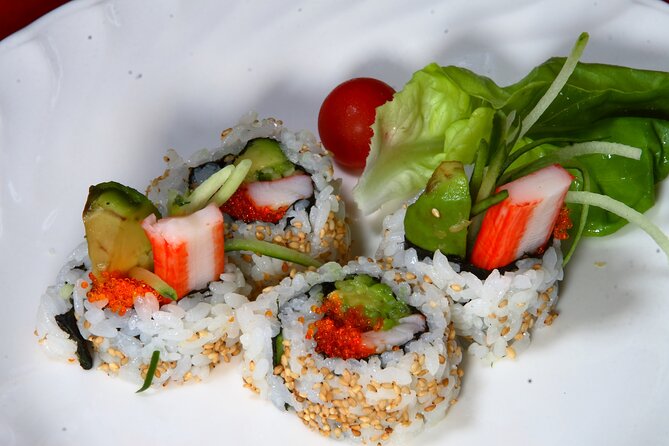
Bring your smartphone or camera. You are encouraged to photograph the sushi you make, and those pictures will mean more than a standard food shot because you shaped the pieces yourself.
The practical tips for making sushi at home may be the most useful part after the meal is finished. You learn with ingredients and methods that are intended to be manageable outside a professional kitchen. The goal is not to turn you into a sushi chef in three hours. It is to give you a reliable starting point.
The class also offers a better appreciation for the work behind a small piece of nigiri. Rice texture, hand pressure, shape, and timing all affect the result. Once you have struggled a little to form your own pieces, you may look at sushi served in Japan with a more careful eye.
The activity has earned a 5.0 rating from 25 reviews, with 100 percent recommending it. That is a small sample, but the praise is consistent around the most meaningful parts: the personal welcome, the fresh fish, the large amount of food, and the chance to learn inside the hosts’ home.
Who should book this private sushi class?
I would point this activity toward:
- First-time sushi makers who want patient, direct instruction
- Sushi fans who want to learn the hand skills behind nigiri
- Families, since children aged 0 to 9 participate free
- Couples or small groups seeking a private food activity
- Visitors staying in Osaka, Kobe, or Kyoto who want a three-hour regional outing
- People who value meeting local hosts in a personal setting
I would think twice if you dislike raw fish, need a fully step-free venue, or prefer a quick restaurant meal over a hands-on lesson. The details do not state which fish varieties are served, and they do not provide a full accessibility description beyond stroller assistance, so ask questions before booking if either point matters to you.
Private transportation is not included. You make your own way to the Ashiya address, and the activity ends there. The meeting point is near public transportation, but you should allow time to find the home and arrive ready for the scheduled start.
Free cancellation is available if you cancel at least 24 hours before the start time. Changes or cancellations made inside that window are not accepted for a refund, and bookings made within one day of travel receive confirmation as soon as possible, subject to availability.
Should you book the Ashiya sushi experience?
Book it if you want more than a meal. The private home setting, four nigiri techniques, fresh ingredients, and instruction from a chef with over 40 years of experience create a food activity with real substance.
At $115, the class asks you to pay for personal attention and a full meal, not just a short demonstration. I think it is a strong choice for families, couples, and small groups who want a warm, hands-on memory near Osaka, Kobe, or Kyoto.
Skip it if you want the lowest-cost sushi option, have strict ingredient requirements that have not been confirmed, or cannot manage the home’s possible stairs. For everyone else, book at least 24 hours ahead, choose the lunch or dinner time that fits your plans, arrive hungry, and leave room for a surprisingly generous plate of your own nigiri.
FAQ
Where does the sushi-making experience take place?
It starts and ends at 17-18 Iwazonochō, Ashiya, Hyogo 659-0013, Japan. The meeting point is near public transportation.
How long does the experience last?
The activity lasts approximately three hours.
What times are available?
The published hours list sessions from 11:00 AM to 2:00 PM and 5:00 PM to 8:00 PM, Monday through Sunday. The broader scheduling information allows starts between 10:00 AM and 6:00 PM, with 11:00 AM recommended for lunch and 5:00 PM for dinner. Confirm your preferred time when booking.
Is the sushi class private?
Yes. Only your group participates, and one group is scheduled per day.
Are children allowed to join?
Yes. Children aged 0 to 9 join free. Stroller assistance is available if you need help carrying one upstairs.
What is included in the price?
Lunch or dinner, all tools and equipment, and complimentary Japanese tea or water are included. Private transportation, tips, and insurance are not included.
Just added around Kobe
- Kobe: Private Walking Shore Excursion- Kyoto/Osaka/Nara/Kobe★ 4.8 · 23 reviews
- Kobe: 3-Hour Sake Breweries Tour with Special Tasting★ 4.4 · 25 reviews
- Kobe: Private Tour – Excursion to Osaka / Kyoto possible★ 4.7 · 27 reviews
- Uzushio Cruise★ 4.6 · 28 reviews
- 1-Day Kobe Highlights Tour including Sake Tasting★ 4.5 · 28 reviews
- Kobe: Kobe City Highlights Guided Tour – Shrine, Port, Tower★ 5.0 · 28 reviews
- Naruto & Boruto Shinobi-zato Light Ticket★ 4.5 · 29 reviews
- 4-Hour Multicultural Kobe Walking Tour with Genuine Kobe Beef★ 5.0 · 29 reviews
Sushi-Making Classes, compared.
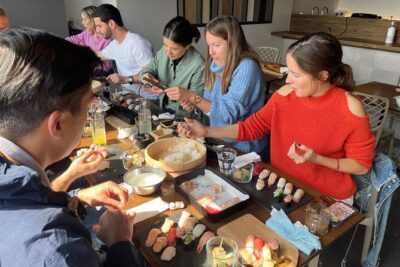
Sushi Making Tokyo Roll and Authentic Japanese Sushi Class
Read our review →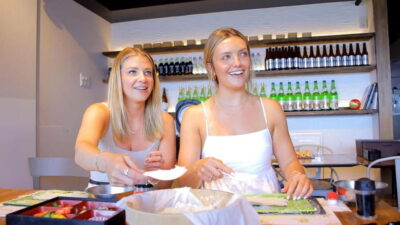
Roll and Authentic Sushi Making Class in Asakusa
Read our review →
Make Sushi and Create Unforgettable Memories in Tokyo
Read our review →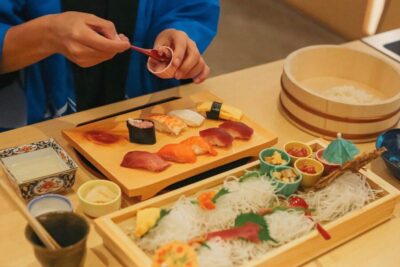
Sushi Making Class in a Happi Coat near a Famous Spot
Read our review →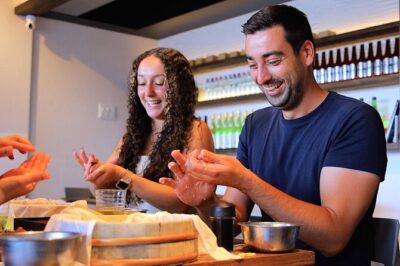
Sushi Making Osaka Roll and Authentic Japanese Sushi Class
Read our review →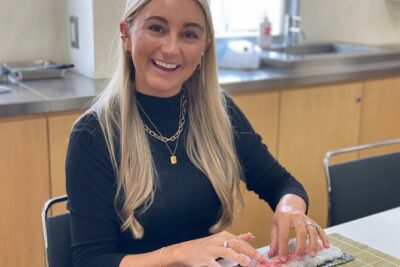
Tokyo Sushi Making Class in Tsukiji with Professional Chef
Read our review →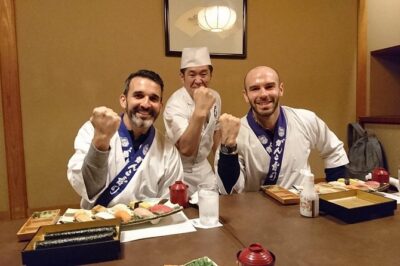
Tsukiji Fish Market Guided Tour and Sushi Making with Pro Chef
Read our review →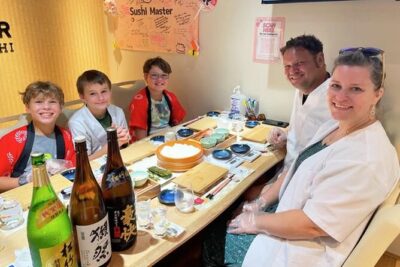
Sushi Making in Kyoto! Same-day bookings welcome!
Read our review →Browse the lists this tour appears in