
Reviewed · GOVERNMENT-LICENSED GUIDE TOURS
Kobe 4hr Private Tour with Government-Licensed Guide
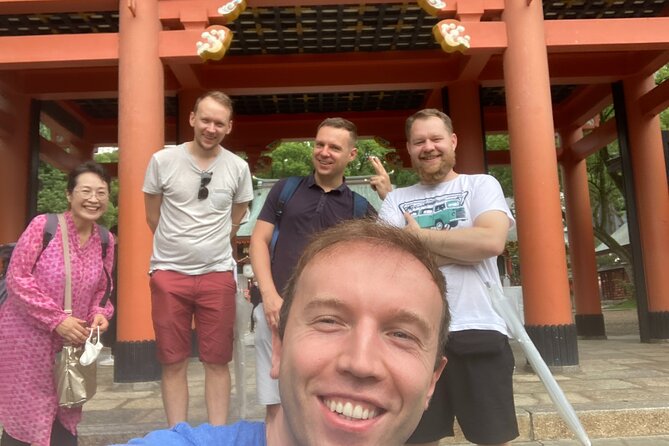
Kobe rewards a flexible plan. This four-hour private tour lets you shape the day around the city’s hills, harbor, sake district, shrines, and food. I like the custom itinerary, which limits the outing to two or three places instead of forcing you through every stop, and I like the chance to work with guides such as Yama, Norio, Mizuho, Hiro, Ayako, or Harumi. The main catch is that transportation and admission costs are extra, and four hours is not enough to cover Kobe’s far-flung sights.
The tour works best when you decide what matters before meeting your guide. You can focus on the Shin-Kobe area and Kitano, head to the waterfront, visit a sake museum, or spend much of the time moving around by train and taxi. Most praise centers on friendly guides, clear explanations, and help with local restaurants, though one guide was hard to understand in English and two bookings were canceled when no guide could be found.
In This Review
- Key points before you book
- What four private hours in Kobe can really cover
- Mt. Rokko and Shin-Kobe: Kobe from above
- Kitano Ijinkan and the foreign merchant quarter
- Harborland, Chinatown, and Kobe’s port story
- Nada’s sake museums: Kobe’s most distinctive specialty
- Akashi Kaikyo Bridge and the cost of crossing Kobe
- Shrines, temples, food, and the value of a local guide
- What the guide experience is really like
- Walking, transport, and practical expectations
- Should you book this Kobe tour?
- FAQ
- How long does the Kobe private tour last?
- How many sites can I visit?
- Is transportation included?
- Does pickup mean hotel or port pickup by car?
- Are entrance fees included?
- Can I choose a morning or afternoon start?
- Is the tour private?
Key points before you book
- Choose only two or three sites: The short schedule is designed for a focused visit, not a checklist of all 13 possible stops.
- Meet on foot in Kobe: Pickup means an on-foot meeting within a designated Kobe area, not a private car from your hotel or ship.
- Expect public transportation or taxis: Fares are not included, and the guide does not provide a private vehicle.
- Mt. Rokko and Nunobiki offer the best views: The ropeway or cable car to the herb garden can be a fine use of your time, especially in autumn.
- Nada is ideal for sake fans: Hakutsuru, Sawanotsuru, Sakuramasamune, Hamafukutsuru, Kiku-Masamune, and Kobe Shushinkan each present Kobe’s brewing tradition in different ways.
- Guide quality matters: Yama received especially warm praise for his English, humor, and local knowledge, while one review raised concerns about communication and navigation.
What four private hours in Kobe can really cover
At $108.99 per person, this is not the cheapest way to sightsee in Kobe. You are paying for a private guide, planning help, and the ability to set the pace, rather than for a bus, entry tickets, or a dedicated vehicle.
That price makes more sense for a couple, family, or small group that wants advice tailored to its interests. Group discounts may improve the value, since the experience is private and only your party takes part. For a solo visitor, the cost is harder to justify unless you place a high value on help with trains, translation, local history, and restaurant choices.
The tour is offered in the morning or afternoon. That flexibility helps if you have a short port call, a train connection, or only part of a day in Kobe. Still, you should be realistic. Mt. Rokko, the Akashi Kaikyo Bridge, and the Nada sake museums are spread across a wide area. Visiting all three in four hours would leave little time for enjoying any of them.
Before the day, send a short wish list. Put your top choice first, then add one or two backups. A clear plan lets your guide judge travel time and avoid an overpacked schedule.
More licensed guide tours in Japan:
- Tokyo 6hr Private Tour with Government-Licensed Guide
★ 5.0 · 3,902 reviews - Tokyo 4hr Private Tour with Government-Licensed Guide
★ 5.0 · 1,394 reviews - Kyoto 6hr Private Tour with Government-Licensed Guide
★ 5.0 · 1,369 reviews
Mt. Rokko and Shin-Kobe: Kobe from above
Mt. Rokko rises to 931 meters and forms the green backdrop behind Kobe. Its upper slopes give broad views across the heavily built-up Hanshin area, so this is the place to choose if you want perspective rather than a long list of city sights.
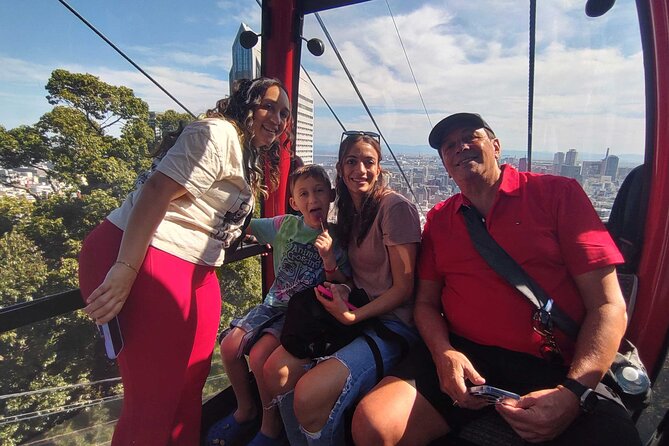
The Shin-Kobe Ropeway leaves near Shin-Kobe Station and climbs the southern slopes of the Rokko range. Reviews describe the ride as a smooth cable-car experience leading toward Kobe Nunobiki Herb Gardens. In autumn, the foliage can be beautiful. The garden also has a fragrance room where you can sample different scents, a small detail that makes this stop more than just a lookout.
This option suits you if you enjoy views, gardens, and a little time away from city streets. It is also a good choice for visitors arriving by bullet train, since Shin-Kobe Station is near the ropeway departure point.
The tradeoff is weather. One outing had heavy fog, which blocked the city view, although the flowers and Sorakuen Garden still made the visit worthwhile. Clouds can turn a scenic ride into an expensive gamble if transportation charges are added. Ask your guide about visibility before committing to the mountain.
The walk can also be brisk. One guide, Yama, was praised for efficiency but walked quickly, even waiting at the top of stairs for older members of the group. If you need a gentler pace, say so at the start. A private tour gives you a better chance of adjusting the rhythm, but only if you speak up.
Kitano Ijinkan and the foreign merchant quarter
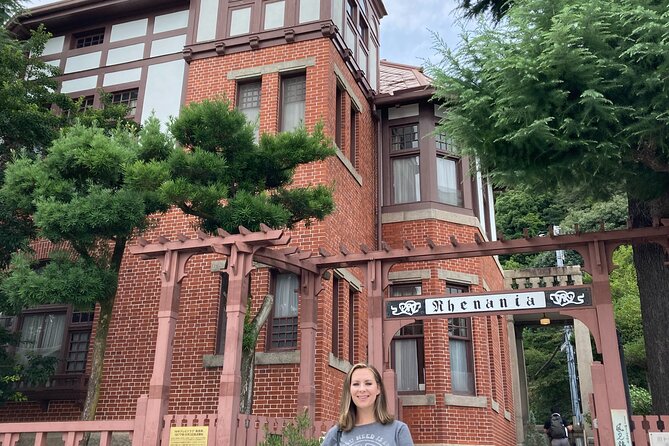
Kitano-cho sits at the foot of the Rokko range. After Kobe opened its port to foreign trade in the late 19th century, foreign merchants and diplomats settled here. The district is known for its old foreign residences, called ijinkan.
This is one of Kobe’s most distinctive areas because it connects the city’s modern port opening with its hillside neighborhoods. You can pair Kitano with Shin-Kobe and spend four hours in a compact part of town, rather than losing time crossing the city.
The streets are hilly, and the combination of slopes and stairs may be tiring. That matters for anyone managing knee trouble or traveling with a less mobile companion. The tour is described as a walking experience, so comfortable shoes are essential.
A guide adds value here by explaining what you are seeing instead of leaving you to read signs. Yama was praised for funny stories and strong English, while other guides were credited with explaining temples, shrines, homes, and local customs. If historic buildings are your main interest, ask to spend time in Kitano rather than treating it as a quick photo stop.
Harborland, Chinatown, and Kobe’s port story
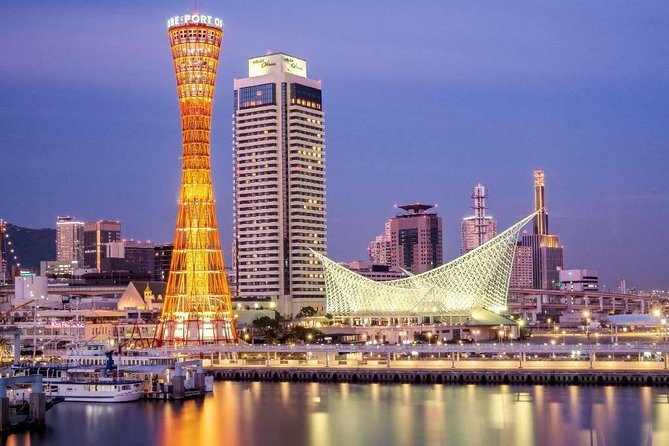
Kobe Harborland stretches between JR Kobe Station and the waterfront. It combines shops, restaurants, cafes, and harbor views. It is a practical choice if you want an easygoing finish with food or browsing, especially after a more serious museum visit.
Nankinmachi, Kobe’s compact Chinatown, is in the central port area. Chinese merchants settled near Kobe Port after the city opened to international trade, and the district remains a useful stop for snacks, street scenes, and a change from traditional Japanese sights.
The Port of Kobe Earthquake Memorial Park offers a very different kind of visit. The Great Hanshin Awaji Earthquake struck at 5:46 a.m. on January 17, 1995, killing more than 5,000 people and destroying tens of thousands of homes. The memorial preserves part of the port area and gives your guide a place to explain how the disaster affected Kobe.
I would not rush all three waterfront stops into one short block. Harborland is best for a relaxed walk, Nankinmachi for food and atmosphere, and the earthquake memorial for context and reflection. Pick one or two based on your interests.
A useful pairing is the earthquake memorial with Harborland. You get both the city’s painful recent past and its present-day waterfront. Chinatown pairs naturally with a meal, but remember that lunch is not included.
A few more Japan experiences worth weighing up
- KOBE Sake Tasting Tour at Breweries (tasting fee included)
★ 5.0 · 154 reviews - Kobe Highlights & Hidden Gems: Private & Custom Tour with a Guide
★ 4.5 · 70 reviews - Kobe: Guided Sake Breweries Tour with Tastings
★ 5.0 · 55 reviews - Nijigen No Mori:Naruto & Boruto Theme Park Entry Ticket
★ 4.5 · 53 reviews
Nada’s sake museums: Kobe’s most distinctive specialty
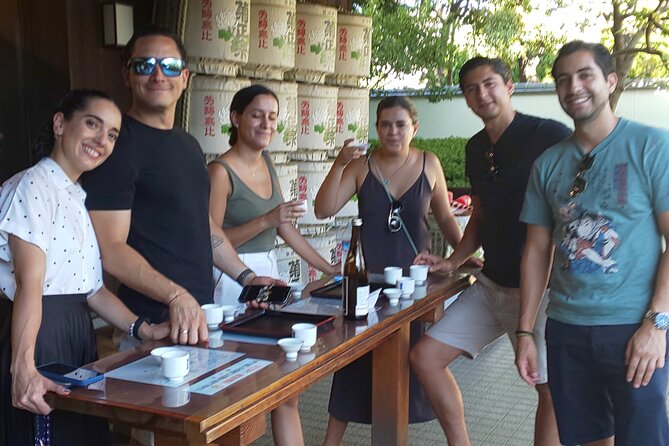
Kobe’s Nada district is Japan’s leading sake-producing area. Its reputation comes from good rice, suitable water, favorable weather, and a location close to the port. Several museums are included among the possible stops, but you should select one or two rather than trying to visit them all.
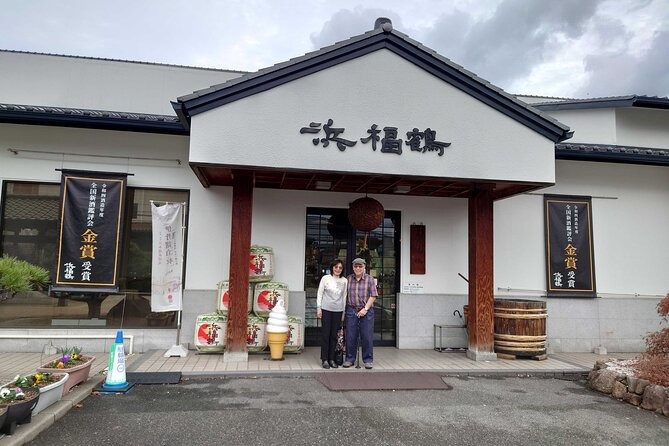
Hakutsuru Sake Brewery Museum explains how sake is made and offers the chance to taste premium sake. This was a favorite pairing with the Nunobiki Herb Garden, and it gives you both a cultural lesson and a chance to try the finished drink.
Sawanotsuru Museum opened in 1978 to honor Nada’s brewing tradition. It was destroyed in the 1995 earthquake and later rebuilt. That link to Kobe’s recovery gives the museum extra meaning beyond its displays.
Sakuramasamune Kinenkan Sakuraen has a small exhibition of old tools and simple machines used in brewing. A video presentation shows parts of the traditional process, making it a reasonable choice if you want a brief, straightforward introduction.
Hamafukutsuru Ginjo Brewery focuses on high-grade ginjo sake. Its second-floor exhibition uses diagrams and written explanations to show the brewing process. This may suit you if you prefer a more technical presentation.
Kiku-Masamune Shuzo Kinenkan is housed in a wooden-and-plaster building. Wooden tools, containers, and machinery are displayed with atmospheric lighting and traditional music, giving the visit a more old-fashioned feel.
Kobe Shushinkan has a large shop with sake and sake-related products, plus a restaurant serving Japanese food with sake. Free guided tours of the warehouse are held once each day, although the timing may not fit a four-hour custom outing.
The practical point is to tell your guide what you want from a brewery visit. Choose Hakutsuru for a broad introduction and tasting, Kiku-Masamune for traditional displays, Hamafukutsuru for brewing details, or Shushinkan if you want shopping and a meal. Brewery hours can change. One guide apologized after a guest found some breweries closed, so confirm the day’s open sites before finalizing your route.
Akashi Kaikyo Bridge and the cost of crossing Kobe
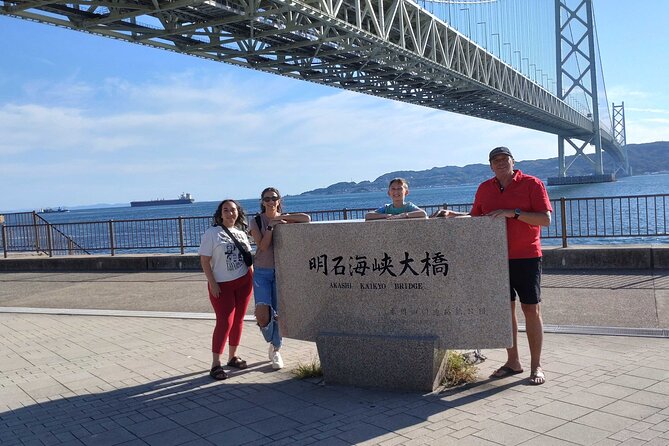
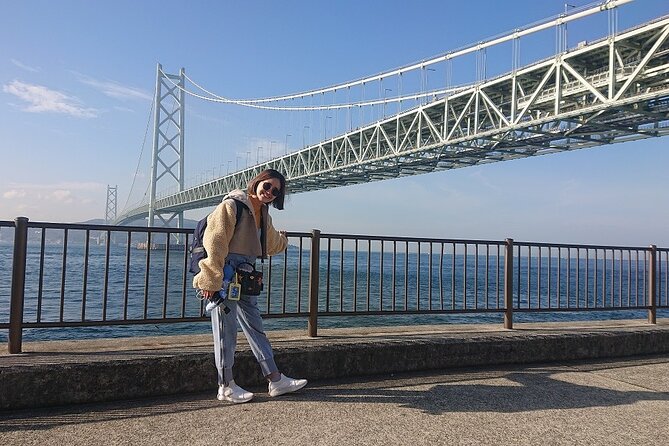
The Akashi Kaikyo Bridge links Kobe with Awaji Island across the Akashi Strait. At almost four kilometers long, it is described as the world’s longest suspension bridge. Its scale makes it an impressive choice for anyone interested in engineering, modern Japan, or wide coastal views.
It is also one of the least efficient choices for a four-hour city tour. The bridge lies away from central Kobe, and one guide noted that combining it with the sake museum and Nunobiki Herb Garden took longer because the stops were widely separated.
Choose the bridge if it is a personal priority, not because you hope to squeeze in one more famous sight. Ask your guide to build the rest of the tour around it. Pairing it with several Nada museums and a mountain garden could turn the day into a race between stations.
Shrines, temples, food, and the value of a local guide

The possible stops do not cover every kind of Kobe experience. Guides have also taken visitors to Ikuta Shrine, temples, and quieter garden areas based on personal interests. Mizuho combined Hakutsuru, Ikuta Shrine, and Nankinmachi, using trains and helping arrange a Kobe beef meal afterward.
That kind of help is one of the strongest reasons to choose a private guide. Yama helped guests find a Kobe beef restaurant, and several guides recommended places for ramen or Japanese meals. Hiro also helped a family finish with a Kobe steak meal after visiting the herb garden and a sake brewery.
Food is not included, and a restaurant recommendation is not a guarantee of a reservation unless your guide specifically arranges one. Still, asking for help can save you time and reduce the stress of choosing a restaurant in an unfamiliar city.
The guides also help with basic navigation. Mizuho met a group at the port terminal and used trains to reach the sake museum, Ikuta Shrine, and Chinatown. Hiro helped a family manage buses and trains, and Norio assisted visitors in finding the correct train back to Osaka.
That support can be especially useful if Kobe is one stop in a larger Japan trip. You are not only seeing sights. You are learning how the local transport system fits together.
What the guide experience is really like
The overall rating is 4.8 from 59 reviews, with 95 percent recommending the experience. The strongest praise goes to the guides’ friendliness, preparation, patience, and ability to adapt the route.
Yama receives repeated praise for strong English, humor, local knowledge, and efficient planning. Norio is described as punctual, polite, and good at fitting a lot into four hours. Mizuho contacted her group before the visit and built the route together. Harumi combined the Mt. Rokko cable car with a shrine visit and explanations of shrine gates and proper procedures.
Other positive experiences include Ayako’s city views from Kobe Port Tower, Akira’s use of trains to reach a cherry-blossom spot, and Hiro’s patient help with public transportation. These examples show why the guide can matter more than the exact list of stops.
There are limits. One visitor found Norio’s English difficult to understand and said he got lost at one point. Two poor ratings involved canceled tours when the provider could not secure a guide, including one cancellation close to the travel date. The available information does not show how common that problem is, but it is worth remembering if your Kobe visit has no backup day.
Walking, transport, and practical expectations
This is a walking tour with an on-foot meeting in a designated area of Kobe. Pickup does not mean a private car. No private vehicle is supplied, and you pay for trains, buses, taxis, ropeway rides, and other transportation yourself.
Because Kobe has steep neighborhoods and widely separated districts, ask for a route that matches your energy and budget. The most compact plans are likely to combine Shin-Kobe with Kitano, or the port area with Chinatown and the earthquake memorial. Mountain, bridge, and Nada brewery combinations require more planning.
Most people can take part, and service animals are allowed. The experience is near public transportation, but the walking and stairs in hillside districts still matter. Tell your guide if you prefer fewer climbs or more time at each stop.
Confirmation is provided at booking. You can cancel for a full refund up to 24 hours before the start time. Changes or cancellations made inside that 24-hour window are not accepted for a refund.
Should you book this Kobe tour?
Book it if you have only a few hours, want a private pace, and would value help choosing between Kobe’s very different districts. It is particularly useful for families, small groups, first-time visitors, and anyone arriving by train or ship who does not want to spend half the day working out routes.
I would book it with a focused plan: two or three priority stops, a stated walking pace, and a clear question about transport costs. My top choices would be Shin-Kobe and Kitano for views and old residences, Hakutsuru plus Chinatown for sake and food, or the earthquake memorial with Harborland for Kobe’s past and present.
I would hesitate if you want a cheap sightseeing loop, a private car, or guaranteed access to every attraction. The price is fair for personal planning and local help, but extra fares, meals, and admissions can add up. Also, if your schedule is rigid, confirm guide availability as early as possible.
FAQ
How long does the Kobe private tour last?
The tour lasts approximately four hours.
How many sites can I visit?
The experience includes a customizable plan covering two or three sites from the available choices.
Is transportation included?
No. Transportation fees are not included, and the tour does not provide a private vehicle. You may use public transportation or taxis during the outing.
Does pickup mean hotel or port pickup by car?
No. The meeting and pickup are on foot within a designated area of Kobe. The information does not promise a private vehicle.
Are entrance fees included?
Entrance fees are not included. Guide entry fees are covered only for sights listed among the expected stops.
Can I choose a morning or afternoon start?
Yes. Morning and afternoon start times are available.
Is the tour private?
Yes. Only your group takes part, and you cannot combine multiple tour groups.
Just added around Japan
- Kanazawa private half day/Photoshoot by professional photographer★ 5.0 · 38 reviews
- Osaka Food Tour with 10 Classic Japanese Tastings & Drinks★ 5.0 · 38 reviews
- Osaka: Highlights & Hidden Gems Private Walking Tour★ 4.7 · 38 reviews
- Tokyo Small Group Tour with Guide★ 4.5 · 38 reviews
- Tokyo 6hr Instagram Highlights Private Tour with Licensed Guide★ 5.0 · 38 reviews
- From Tokyo: Kamakura Private Customize Tour by Luxury Van★ 4.6 · 38 reviews
- Tokyo Sumo Experience with Live Show & Audience Challenge★ 5.0 · 38 reviews
- Kyoto: Private Customizable Day Trip by Car★ 5.0 · 38 reviews
Government-Licensed Guide Tours, compared.
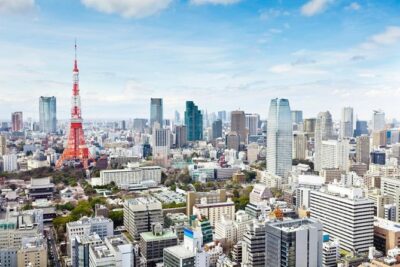
Tokyo 6hr Private Tour with Government-Licensed Guide
Read our review →
Tokyo 4hr Private Tour with Government-Licensed Guide
Read our review →
Kyoto 6hr Private Tour with Government-Licensed Guide
Read our review →
Hiroshima / Miyajima Full-day Private Tour with Government Licensed Guide
Read our review →
Kyoto 4hr Private Tour with Government-Licensed Guide
Read our review →
Hiroshima City 4hr Private Walking Tour with Licensed Guide
Read our review →
Private Kyoto Tour with Licensed Guide & Vehicle (Max 15 persons)
Read our review →Browse the lists this tour appears in