Reviewed · 1-DAY TOURS
From Kyoto / Osaka: Kyoto Must-see Spots & Nara Park One Day Tour
Three famous places, one long day. This Kyoto and Nara tour packs Japan’s biggest visual hits into about nine hours, linking Nara Park, Fushimi Inari Taisha, and Arashiyama by air-conditioned vehicle. I like the easy mix of free-roaming deer and sacred torii gates, and I like having a guide to manage the timing, meeting points, and transport. The $60 price is fair for a full day of sightseeing, though you should expect a quick pace and limited time at each stop.
I also like the choice of departure points in Kyoto or Osaka, with some departures offering a useful finish at Kyoto Station. Guides such as Amy, Fiona, Mia, Laura, Tina, and Theodore have been praised for clear instructions, local tips, and upbeat energy. The main caution is that this is a large-group outing, with up to 45 people, and it can feel more like organized sightseeing with guided introductions than a continuous walking tour.
In This Review
- Five things to know before you book
- Why this route works for a first visit
- Nara Park and the polite deer
- Fushimi Inari and the first gates
- Arashiyama’s bamboo and old shrine paths
- Tenryu-ji, Kimono Forest, and Rilakkuma
- Togetsukyo Bridge and the final view
- What the $60 price really covers
- The pace, vehicle, and group experience
- Who should book this Kyoto and Nara tour?
- Small details that make the day easier
- Should you book it?
- FAQ
- How long is the Kyoto and Nara tour?
- Where does the tour depart from?
- Is transportation included?
- Is a guide included?
- How many people can join the tour?
- Is lunch included?
- Does the tour include entry to Tenryu-ji Temple?
- Is the Big Buddha at Todai-ji included?
- Are the Kyoto and Nara attractions included in the ticket price?
- Can I cancel the tour for a full refund?
Five things to know before you book
- Nara Park comes first: You get about an hour with Nara’s famous deer, with time to feed them if you buy deer biscuits separately.
- Fushimi Inari gets 70 minutes: You can see the lower torii gates and shrine grounds, but a full mountain hike is not realistic.
- Arashiyama gets the most stops: The Bamboo Forest, Nonomiya Shrine, Tenryu-ji, Kimono Forest, Rilakkuma Tea House, and Togetsukyo Bridge are all included.
- Tenryu-ji costs extra: Entry is not included, and the listed temple ticket is 500 yen.
- The day moves quickly: Wear comfortable shoes, follow meeting instructions carefully, and do not expect a leisurely pace.
Why this route works for a first visit
Kyoto and Nara are easy to reach by train, but connecting several famous sights in one day takes planning. This outing handles the long jumps between Nara in the east and Arashiyama in western Kyoto, letting you see a broad slice of the region without changing trains or working out several separate routes.
I see the tour as a sightseeing sampler. It does not give you hours inside one temple complex or enough time for long walks through the hills. Instead, you get a useful first look at three very different places: Nara’s open park and deer, Fushimi Inari’s religious setting and red gates, and Arashiyama’s gardens, bamboo, bridge, and shopping streets.
That tradeoff matters. If you have only one free day and want to see the best-known sights, this route is efficient. If you have three or four days in Kyoto, I would prefer to visit these areas independently and give each one more time.
The strong guide performance is an important part of the value. Amy is praised for keeping people informed and on schedule, while Fiona is described as energetic and entertaining. Mia has helped guests coordinate the day and assisted a family member with walking difficulty. Tina has used group messages and maps to make meeting points easier to follow. These small touches matter when a big group is moving through crowded places.
A few more Kyoto experiences worth weighing up
- PERFECT KYOTO 1-Day Bus Tour
★ 5.0 · 13,518 reviews - Kyoto: Fushimi Inari, Kinkakuji, Bamboo Grove 1 Day Bus Tour
★ 4.8 · 4,316 reviews - 10 Must-see Spots in Kyoto One Day Private Tour (up to 7 people)
★ 5.0 · 1,108 reviews
Nara Park and the polite deer
The day begins at Nara Park, one of Nara City’s best-known public spaces. The park covers about 660 hectares, so an hour gives you a taste rather than a full exploration.
The deer are the main attraction. They roam freely around the park and are famous for bowing in hope of receiving food. Deer biscuits are available for purchase, and feeding them can be a highlight, especially for children. Keep in mind that the animals are not a staged show. They are accustomed to people and can be eager when food is visible, so listen to the guide’s instructions and finish the biscuits promptly.
The park is also home to major temples, including the large Buddha at Todai-ji. That temple is not part of this tour’s planned visit. This is an important detail because the park and the Big Buddha are often treated as one sightseeing stop in people’s minds. If seeing Todai-ji is a priority, you will need a separate visit.
The one-hour stop works well for meeting the deer, taking photographs, and getting a first feel for Nara. It will feel short if you want to visit temple buildings, wander farther through the park, and spend time at several shrines.
Fushimi Inari and the first gates
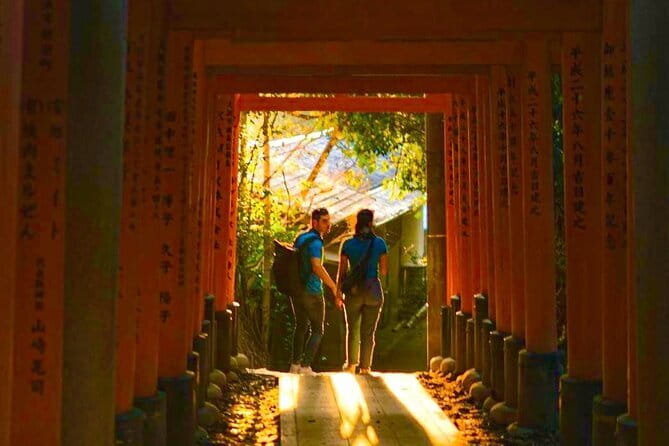
Fushimi Inari Taisha receives about 70 minutes, which is enough to explore the main shrine area and walk beneath a section of the famous Senbon Torii.
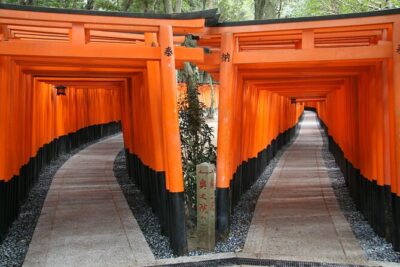
Fushimi Inari is the head shrine of the many Inari shrines found across Japan. Inari is associated with rice, and fox figures appear around the shrine because foxes are regarded as messengers of Inari. The thousands of vermilion gates create the classic Kyoto photograph, but the setting is more than a photo stop. The gates mark a climb through the wooded mountain, with smaller shrines and stone markers along the route.
Here, time management becomes important. You can walk through the lower tunnel of gates and still have time to return to the meeting point. You cannot reasonably complete the full climb in the allotted time. I would stay aware of your watch, especially because the crowds can slow your progress.
One person specifically wished for more time at Fushimi Inari and less at the Bamboo Forest. That is a fair preference. The shrine offers more room for personal exploration, while the lower part of the torii route can be seen fairly quickly. If the gates are your main reason for booking, tell your guide early that you want to use the stop efficiently.
Admission to Fushimi Inari is free, which keeps this part of the day simple. Modest clothing and respectful behavior are appropriate, as this remains an active Shinto shrine rather than just a scenic attraction.
Arashiyama’s bamboo and old shrine paths
Arashiyama is the longest part of the route, although the time is split among several nearby sights. The area has been a popular retreat since the Heian Period, and its appeal comes from the combination of river views, wooded paths, temples, small shrines, and shops.
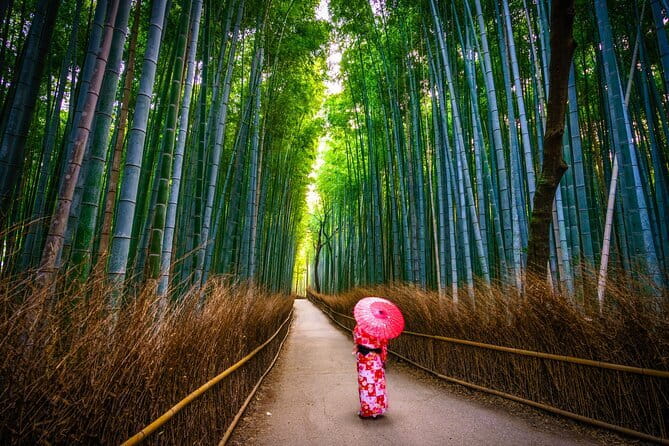
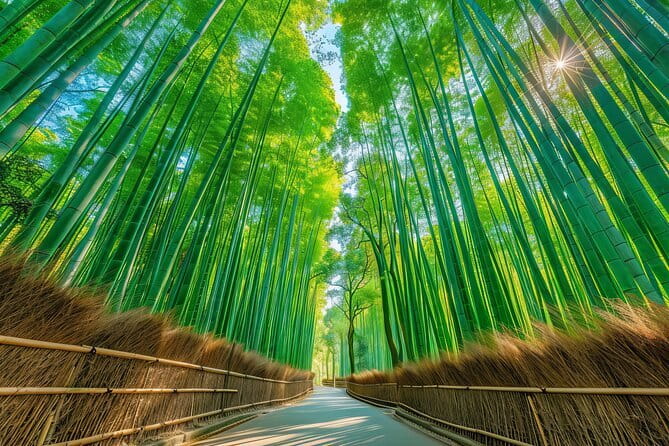
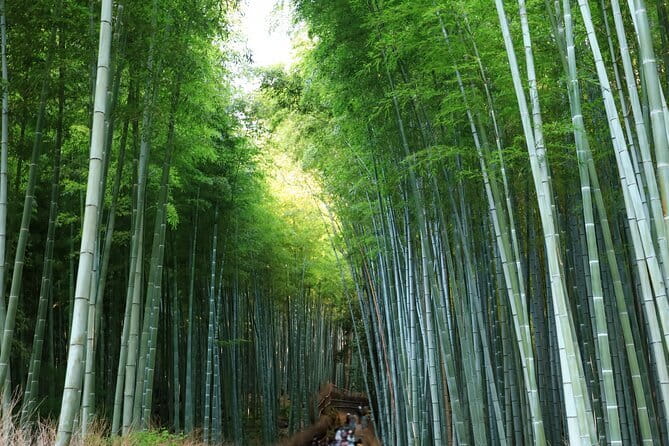
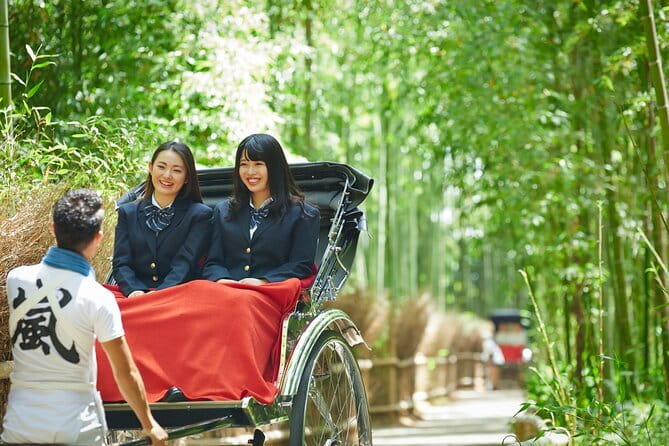
The Bamboo Forest receives about 50 minutes. Tall bamboo rises on both sides of the path, making this one of Kyoto’s most recognizable walks. The path is not a remote wilderness trail. It is a well-known sightseeing route, and you might find it crowded, particularly at popular times of day.
I like the Bamboo Forest as a short, atmospheric walk rather than a place to spend half a day. The vertical bamboo creates a strong sense of place, and the path is easy to recognize. Still, some people may find the stop too brief, while others may feel the famous photograph does not require much time. Your experience will depend partly on how much open space there is when you arrive.
Nonomiya Shrine follows with about 20 minutes. This small Shinto shrine has a distinctive black torii gate, unlike the vermilion gates seen at Fushimi Inari. Its connection with the Bamboo Forest makes it a sensible pairing, and the stop adds a quieter religious site to the Arashiyama portion of the day.
The tour also allows about 10 minutes for Arashiyama generally. Treat this as orientation time rather than a separate major attraction. It helps you understand where the area’s paths, shops, river, and temple grounds fit together.
A completely different kind of day out in Kyoto:
- Kyoto: Tea Ceremony in a Traditional Tea House in Kiyomizu
★ 4.9 · 3,519 reviews - Kyoto Geisha Walking Tour: Gion District & Hidden Gems
★ 4.7 · 3,273 reviews - Kyoto: Tea Ceremony Ju-An at Jotokuji Temple
★ 4.9 · 3,207 reviews - Kyoto: Gion Magical Night Walking Tour with Geisha Trivia
★ 4.9 · 2,393 reviews
Tenryu-ji, Kimono Forest, and Rilakkuma
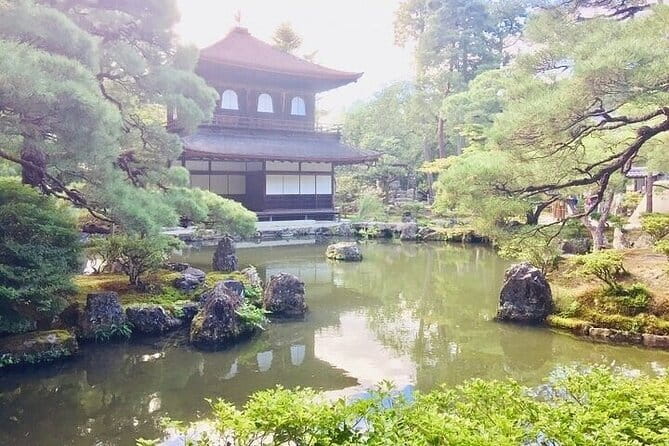
Tenryu-ji is a UNESCO World Heritage Site and one of Kyoto’s five great Zen temples. The listed visit lasts about 20 minutes, and admission costs an additional 500 yen.
That short visit creates the tour’s clearest choice. Tenryu-ji is a serious cultural stop, with temple architecture and a celebrated garden. Twenty minutes lets you see part of the grounds, but it does not leave much room for a slow garden visit or detailed temple exploration. If you want to appreciate the temple fully, you may prefer to return on your own.
The itinerary also includes the Arashiyama Kimono Forest for about 20 minutes. This installation uses 600 clear acrylic cylinders, each about two meters tall, displaying kimono fabric in different patterns. The cylinders are connected with Arashiyama Station, so this is a modern, decorative contrast to the nearby shrine and temple.
Some people will enjoy the color and the quick photo stop. Others may find it less meaningful than Tenryu-ji. One guest specifically preferred spending more time at the temple instead of the Kimono Forest, while another felt the installation was not especially interesting. I would treat it as a pleasant bonus, not a reason to book the tour.
The Arashiyama Rilakkuma Tea House and shop receives about 15 minutes. Rilakkuma means bear in a relaxed mood, and the cafe and shop use that character throughout their design. This is a light, playful stop after the temples and bamboo. The time is enough to look around, but not enough for a relaxed cafe meal.
Togetsukyo Bridge and the final view
Togetsukyo Bridge is Arashiyama’s best-known structure. It crosses the Katsura River and has roots in the Heian Period, although the current bridge was most recently reconstructed in the 1930s.
The stop lasts about 15 minutes. That is enough to take in the river and bridge, photograph the surrounding hills, and get your bearings in the heart of Arashiyama. It is not enough for a long riverside walk or a proper meal.
I like ending the Arashiyama section here because the bridge gives you a wider view after several enclosed paths. The day starts with open parkland in Nara, moves through the tight red gates at Fushimi Inari, and finishes with water, hills, and a broad city sight in Arashiyama.
The bridge area also gives you a practical choice. One person used the final stop as a chance to walk on to sushi and unagi restaurants. Since lunch is not included, this is where you may want to separate from the group if your return arrangements allow it. Confirm the plan with your guide before leaving.
What the $60 price really covers
At $60 per person, the tour is priced as a transport and time-saving service as much as a guided cultural visit. Your fee includes an air-conditioned vehicle and a guide, while admission to most listed stops is free. The only stated attraction charge is the 500-yen Tenryu-ji ticket, which is not included.
Lunch is also not included. Plan to buy food during the day or eat after the tour. Because the schedule is tight, I would not count on a long restaurant meal between the major stops.
The value is strongest if you are staying in Osaka and want to reach Kyoto and Nara without arranging several train journeys. It can also work as a sightseeing transfer between Kyoto and Osaka, though you should confirm your exact departure and end point before booking. Some people have used it to finish at Kyoto Station.
For independent visitors already comfortable with Japan’s rail system, the $60 fee buys convenience rather than exclusive access. You can reach Nara Park, Fushimi Inari, and Arashiyama by public transportation. The tour earns its keep by connecting them in one day and providing a guide who keeps the group moving.
The pace, vehicle, and group experience
This is a nine-hour day with several short stops. You will spend much of the experience getting off the vehicle, walking to a sight, taking it in, and returning at a set time. Comfortable shoes are essential.
The group can reach 45 people. That number explains why the guide cannot provide a long personal explanation at every location. It also explains the repeated reminders about meeting points and departure times.
The vehicle is air-conditioned, but one person found the bus seats narrow and uncomfortable for a larger Western build. That is worth considering if you are sensitive to cramped seating. The air conditioning is useful in warm weather, while an extra layer can help in cooler conditions. One guest also advised dressing warmly because some areas can feel colder.
The guides receive the most consistent praise. Their strengths are practical: clear coordination, lively explanations, help with directions, and local suggestions for food and shopping. Fiona has used games to help make the information memorable, while Theodore continued recommending restaurants and places to visit after the tour ended.
The style may vary by guide. One comment found the guide’s speaking pace too fast and the explanations too long. In a large group, it helps to stay near the guide during instructions and ask direct questions when you need clarification.
Who should book this Kyoto and Nara tour?
I would recommend it most strongly to first-time visitors with limited time. You get deer, shrine gates, bamboo, a UNESCO-listed temple, a bridge, and a few distinctly modern Kyoto touches in one day.
Families may also like it. Children often respond well to the deer, and the Rilakkuma stop adds a playful note. The tour can work for groups with different interests because the day includes nature, religion, architecture, photographs, and shopping.
It is less suitable if you want quiet visits, long temple stays, or a slow meal. It is also not the right choice if the Big Buddha at Todai-ji is essential, since that visit is not included.
Large groups, narrow bus seating, and a quick schedule are the main compromises. If you accept those limits, the route gives you a useful introduction and removes much of the day’s transport work.
Small details that make the day easier
Bring a phone that can display your mobile ticket and keep the guide’s contact details handy. The operator asks you to mention a stroller or large luggage when booking, and you should notify them at least a day ahead if friends or relatives booked separately. That helps the group stay in the same vehicle.
Pay close attention to the meeting point at every stop. The itinerary covers wide public areas, and the guide cannot hold up a group of up to 45 people for a late return.
Keep some money available for deer biscuits, the 500-yen Tenryu-ji entry, and food. Since lunch is not included, the day is easier when you decide in advance whether you will eat during the route or after reaching your final stop.
Free cancellation is available up to 24 hours before the start time for a full refund. Changes or cancellations made less than 24 hours ahead are not accepted for a refund.
Should you book it?
Book this tour if you want a well-organized first look at Kyoto and Nara and value an air-conditioned vehicle, a guide, and a fixed route more than independent freedom. The strong guide feedback, especially for Amy, Fiona, Mia, Laura, Tina, and Theodore, adds real value to a demanding day.
Skip it if you want to climb far into Fushimi Inari, spend a long time in Tenryu-ji, visit the Big Buddha, or linger over lunch. At $60, this is a good deal for a full day of highlights, but it is not a deep visit to every place. Think of it as a smart introduction, then return independently to the places that deserve more time.
FAQ
How long is the Kyoto and Nara tour?
The tour lasts approximately nine hours.
Where does the tour depart from?
You can depart from Kyoto or Osaka, depending on the selected option.
Is transportation included?
Yes. The tour includes an air-conditioned vehicle.
Is a guide included?
Yes. A guide is included.
How many people can join the tour?
The tour has a maximum capacity of 45 people.
Is lunch included?
No. Lunch is not included in the tour price.
Does the tour include entry to Tenryu-ji Temple?
No. The Tenryu-ji admission ticket is not included. The listed price is 500 yen.
Is the Big Buddha at Todai-ji included?
No. The planned Nara Park stop does not include a visit to the Big Buddha.
Are the Kyoto and Nara attractions included in the ticket price?
The listed stops have no admission charge except Tenryu-ji, which costs 500 yen. Personal purchases, such as food and deer biscuits, are not included.
Can I cancel the tour for a full refund?
Yes. You can cancel at least 24 hours before the experience start time for a full refund. Cancellations or changes made less than 24 hours before the start time are not accepted for a refund.
Just added around Kyoto
- Kyoto: Private Customizable Day Trip by Car★ 5.0 · 38 reviews
- Kyoto: Gion Night Walking Tour with Geisha Insight★ 5.0 · 39 reviews
- Kyoto: Full Day Bike Tour★ 4.9 · 39 reviews
- Private Japanese Calligraphy in Kyoto – Learn Shodō with a Master★ 5.0 · 39 reviews
- Experience a tea ceremony in an authentic tearoom, in Kyoto!★ 4.5 · 41 reviews
- Kyoto: Gion Evening Walk with Hidden Gems, Geisha & Sake★ 5.0 · 41 reviews
- Kyoto Private Photo Shoot & Tour by SnapKyoto★ 5.0 · 41 reviews
- The Way of Tea: Kyoto Crafts, Hidden Temples & Wabi-Sabi Walk★ 5.0 · 41 reviews
1-Day Tours, compared.
Mt Fuji and Hakone 1-Day Bus Tour Return by Bullet Train
Read our review →
Mt Fuji & Hakone Cruise, Drum Show Bullet Train 1 Day from Tokyo
Read our review →
Peaceful Hiroshima & Miyajima UNESCO 1 Day Bus Tour
Read our review →
Fushimi Inari, Kinkakuji, Bamboo Grove 1 Day Bus Tour
Read our review →