
Reviewed · TEA CEREMONY EXPERIENCES
Japanese Tea Ceremony at Private Home in Yokohama, suburban Tokyo
Tea begins at home. This private Yokohama tea ceremony gives you a calm, personal look at Japanese customs inside a traditional tatami room, far from a staged tourist show. I like the chance to prepare your own matcha and the care put into seasonal wagashi, including options suitable for vegan and gluten-free diets. The main consideration is location: you meet in Aoba Ward, outside central Tokyo, so you need to allow time for the trip.
The tea master has studied the ceremony for more than 40 years and taught it for over 15. I also like the family setting, which leaves room for questions and friendly conversation, although visitors expecting a quick photo stop may find the 90-minute format more deliberate than expected.
In This Review
- Key details before you book
- A private home instead of a formal tourist venue
- What happens during the 90-minute session
- Why the charcoal procedure matters
- Making two bowls of matcha yourself
- Seasonal wagashi gives the class its calendar
- The tea master and the family welcome
- Getting to Aoba Ward from Tokyo or Yokohama
- Is $52.71 a fair price?
- Who will enjoy this tea ceremony most?
- Booking, cancellation, and practical advice
- Should you book this Yokohama tea ceremony?
- FAQ
- Where does the tea ceremony take place?
- How long does the workshop last?
- Do I make matcha during the experience?
- What food is included?
- Are the sweets suitable for vegan and gluten-free diets?
- What should I bring?
Key details before you book
- Charcoal heating is part of the demonstration: You can watch the tea master add charcoal to boil the water, a rare sight even for many Japanese people.
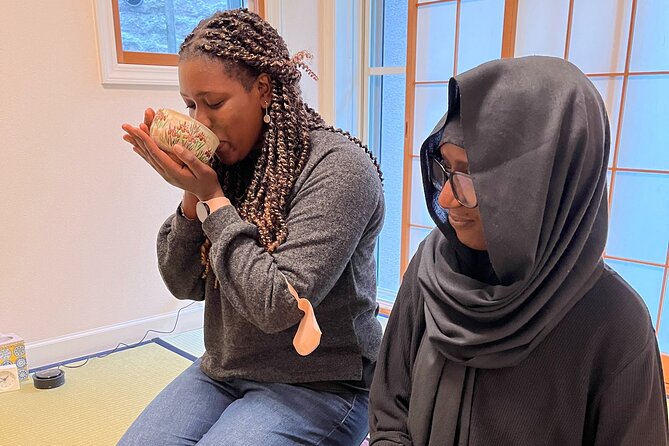
- You make your own matcha: The session includes a demonstration followed by your chance to whisk matcha and drink two cups.
- Seasonal wagashi comes with the tea: Sweets may include nerikiri, gyuhi mochi, or manjyu, along with dried Japanese sweets.
- The setting is a real private home: You participate in a tatami room rather than a large commercial venue.
- Your group has the session to itself: This private activity suits families, couples, and small groups who want time for questions.
- Socks are required: Bring a clean pair for entering the tatami room.
A private home instead of a formal tourist venue
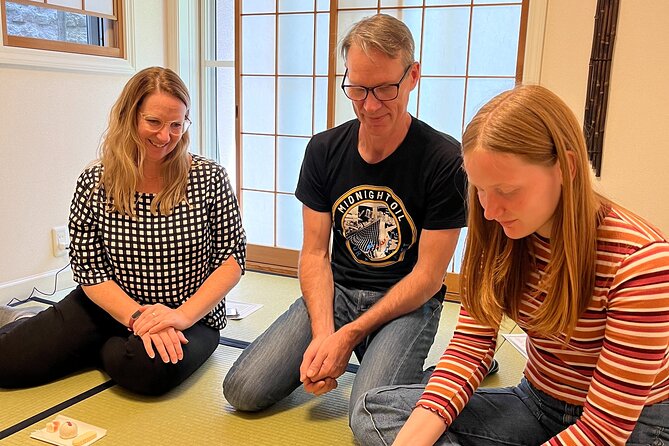
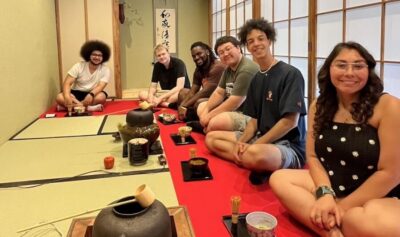
The first thing to understand is the setting. This is held at a private Japanese home in Ōbachō, Aoba Ward, Yokohama, at the Dresse Azamino Gardens meeting point. You are not entering a grand temple or a purpose-built cultural center. You are stepping into a domestic space arranged for tea.
That difference matters. In a formal attraction, you may see polished movements but have little chance to ask why each step happens. Here, the small setting gives the tea master room to explain the ceremony, its background, and the role of the guest. The experience feels closer to a home lesson than a performance.
The tea room has tatami flooring, so you should expect a traditional floor-level arrangement. Bring socks, even if you arrive wearing shoes that are easy to remove. Bare feet are not suitable for the room, and this small bit of preparation helps you enter respectfully.
The private format is one of the strongest features. Only your group participates, so the pace can suit your questions and comfort level. A family with a baby, for example, may appreciate the more personal atmosphere. A solo visitor or couple can ask more questions without feeling they are holding up a large group.
More tea ceremonies:
- Kyoto: Tea Ceremony in a Traditional Tea House in Kiyomizu
★ 4.9 · 3,519 reviews - Kyoto: Tea Ceremony Ju-An at Jotokuji Temple
★ 4.9 · 3,207 reviews - Kyoto: 45-Minute Tea Ceremony Lesson Experience
★ 4.3 · 2,378 reviews
What happens during the 90-minute session
The workshop lasts about one and a half hours. That is enough time to see the ceremony, taste the sweets, prepare matcha, and talk with the tea master without reducing everything to a rushed sample.
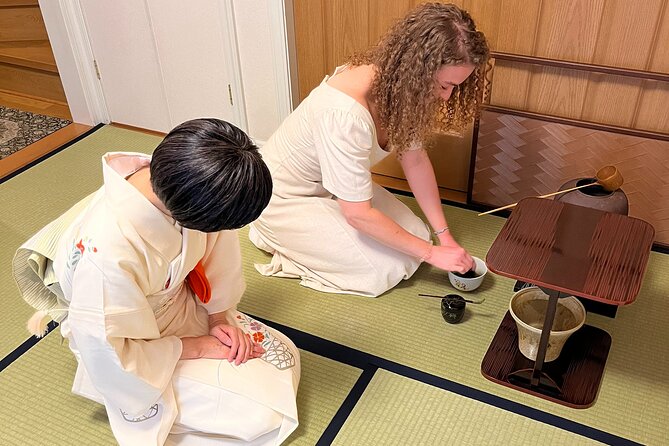
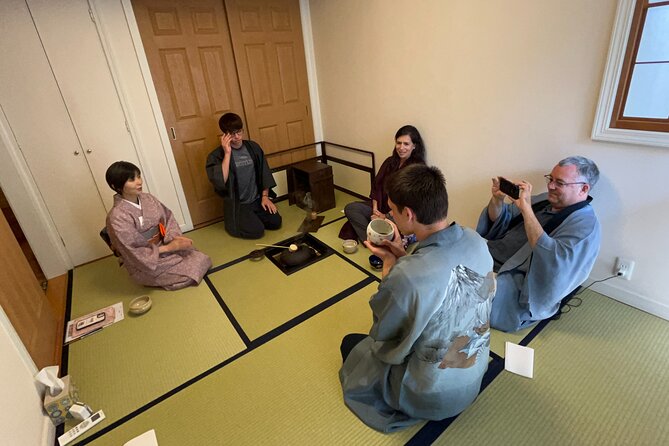
The session begins with a demonstration of how to be a guest at a Japanese tea ceremony. This is useful because the visitor’s role can seem mysterious at first. You learn where to sit, how to receive the tea, and how the sweets fit into the order of the ceremony.
You do not need prior experience. The point is not to test your manners. It is to show you the customs in a clear, practical way so you can take part with confidence.
During the demonstration, the tea master prepares matcha for you. You eat wagashi with the tea, following the traditional pairing of a sweet before the slightly bitter green tea. The sweet prepares your palate and makes the matcha taste less sharp.
The tea master chooses the wagashi according to the season. Possible types include nerikiri, a molded sweet often shaped with seasonal designs, gyuhi mochi, and manjyu. You also receive dried Japanese sweets. The exact selection changes, which is part of the point: Japanese tea culture pays close attention to the time of year.
The sweets are suitable for vegan and gluten-free diets, according to the experience details. If you have a serious allergy, you should still confirm the ingredients when booking or before the session, since suitability can depend on the specific seasonal sweets served.
Why the charcoal procedure matters
The charcoal procedure is a special part of this experience. Rather than simply switching on an electric kettle, the tea master adds charcoal to heat the water. The process shows that tea ceremony involves the preparation of the fire, not only the whisking of powdered tea.
This may sound like a small detail, but it changes the feel of the session. You see the source of the heat and the patient sequence that leads to the finished bowl. The procedure is also described as rare even for Japanese people, so it gives the workshop something more distinctive than a basic matcha-making class.
Do not expect a theatrical fire show. The value is in watching a quiet traditional method and hearing how it fits into the ceremony. If you enjoy craft, ritual, and the reasons behind ordinary-looking actions, this part may be the highlight.
The charcoal procedure also helps explain why the ceremony takes time. Tea is not treated as a drink to grab between sightseeing stops. The preparation creates a pause, and the pause is part of the experience.
Making two bowls of matcha yourself
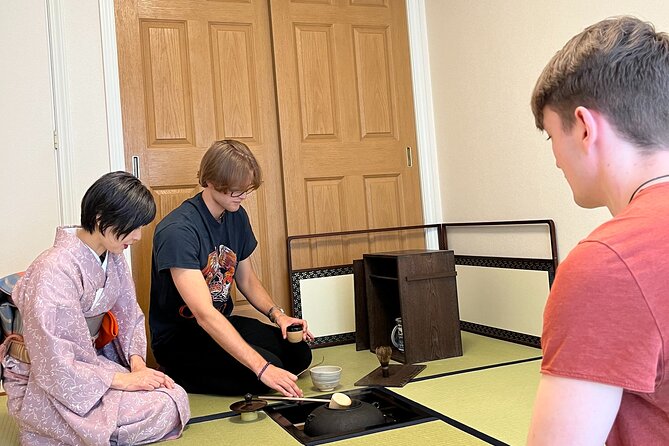
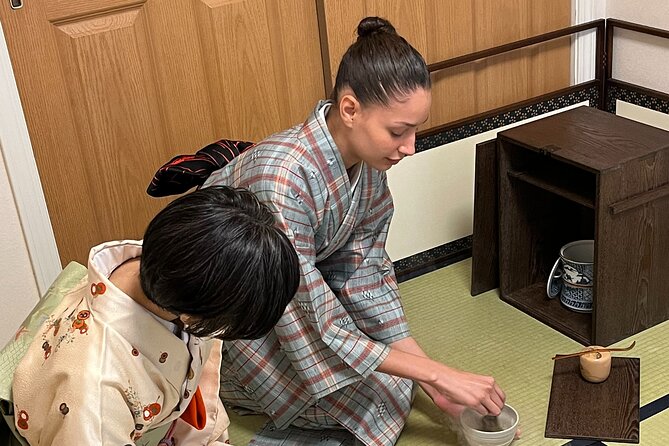
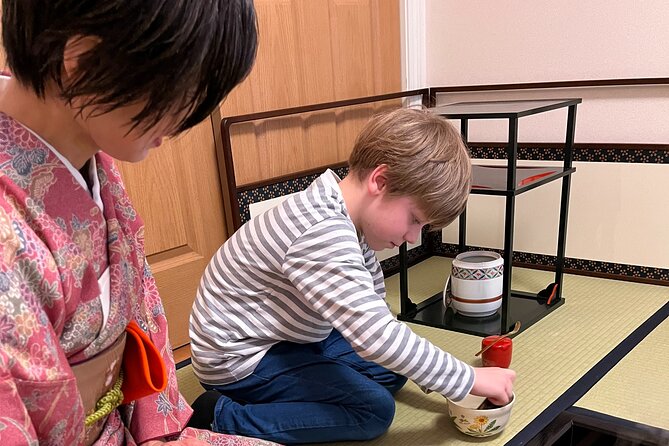
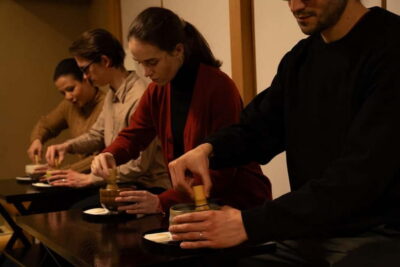
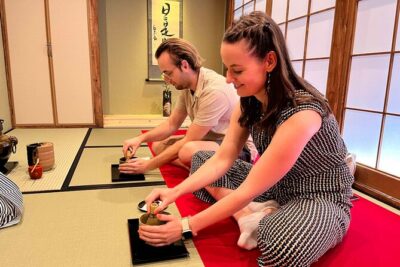
After watching the tea master, you get to prepare matcha on your own. You whisk the powdered green tea and drink the bowl you make. The activity includes two cups of matcha in total, one prepared for you and one you make yourself.
This hands-on portion gives the workshop a good balance. You are not only watching someone else perform a skill. You handle the tools, mix the tea, and see how the texture changes as you work.
Matcha can taste grassy, bitter, or intense if you are not used to it. The wagashi helps, and the tea master can answer questions about the drink and the ceremony. You should approach your bowl as a cultural lesson, not as a cafe-style sweet drink.
The self-preparation also makes the experience suitable for families and first-time visitors. Children who can sit quietly and follow instructions may enjoy the practical task. Very young children may find the tatami setting and measured pace harder, though the private format gives a family more flexibility than a large group class.
A few more Yokohama experiences worth weighing up
- Authentic Sumo Experience in Tokyo: Enter the Sanctuary
★ 5.0 · 603 reviews - EVO, WRX, Skyline – JDM Night Run to Daikoku Car Meet
★ 4.9 · 478 reviews - Tokyo: Best Price Daikoku Parking Area JDM Car Meet
★ 4.9 · 192 reviews - Daikoku & Tokyo Private JDM Tour by 700HP R34 GT-R
★ 4.9 · 101 reviews
Seasonal wagashi gives the class its calendar
The handmade sweets are more than a snack. In Japanese tea culture, wagashi often reflects the season through its color, shape, and ingredients. Since the tea master selects the sweets according to the time of year, the food helps connect the ceremony to the calendar.
Nerikiri is especially suited to this idea because it can be shaped into delicate seasonal forms. Gyuhi offers a soft mochi texture, while manjyu gives you another style of Japanese sweet. The dried sweets provide a different bite alongside the handmade pieces.
You should not expect a large meal. The included food is designed to accompany the matcha, not replace lunch. Plan to eat beforehand if you need a full meal, particularly since the session lasts 90 minutes and focuses on conversation and ceremony.
For dietary needs, the fact that the sweets are described as suitable for vegan and gluten-free diets adds real value. It means more people can share the same central part of the experience instead of watching others eat. Still, ask about the exact sweets if your dietary restriction is medical rather than preferential.
The tea master and the family welcome
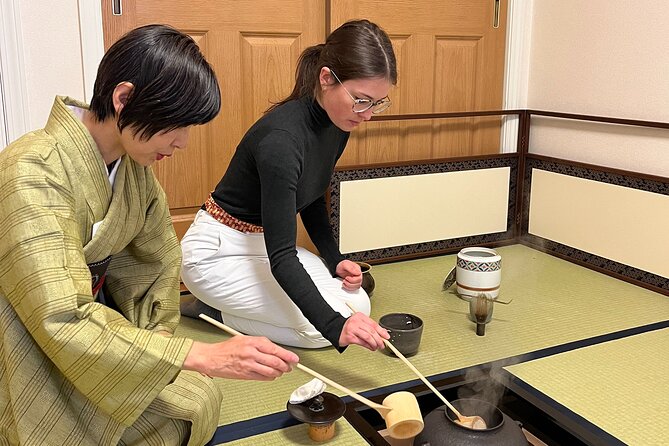
The tea master brings more than a single demonstration. With over 40 years of study and more than 15 years of teaching, the instructor has had time to understand both the formal tradition and the questions beginners tend to ask.
The session includes an explanation of the history of Japanese tea ceremony. You can also ask questions, which is where the private format pays off. You might want to ask about the tools, the order of the movements, the role of the guest, or the difference between formal and casual tea settings. The information provided does not promise a lecture of a fixed length, so the amount of discussion may depend on your group.
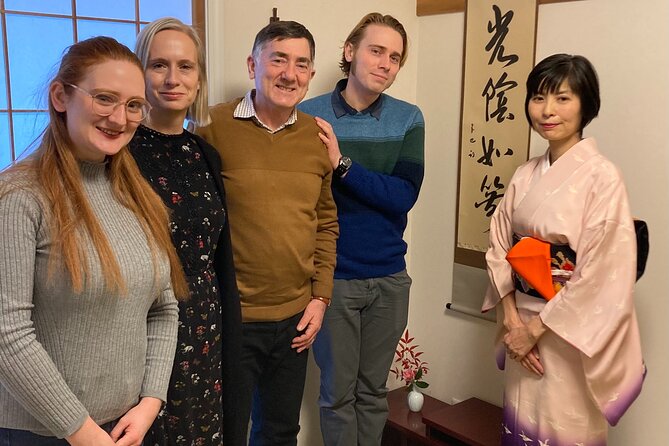
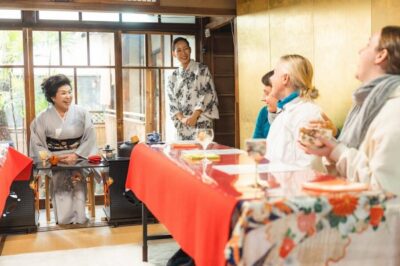
The family atmosphere is another important part of the appeal. The Kono family has been praised for sharing conversation as well as tea, and the warm reception seems to be a major reason this experience earns such strong approval. You are not simply passing through a room for a staged ritual. You are meeting people in their home.
That personal quality can also be a consideration. If you prefer a strictly scripted presentation with a large museum-style display, this may feel informal. If you want direct contact and the chance to ask questions, the informality is a benefit.
Getting to Aoba Ward from Tokyo or Yokohama
The meeting point is in Yokohama’s Aoba Ward, near public transportation. This is not central Tokyo, so check the route carefully and give yourself extra time. Pickup is offered, but you should confirm the exact arrangement and meeting instructions before setting out.
The location works well for visitors who want to pair the tea session with other sights around Yokohama. Azamino is the useful reference point in the area. From Azamino Station, Yokohama Subway takes about 15 minutes to the closest Shin-Yokohama Station.
A visit to the Shin-Yokohama Ramen Museum can make a sensible addition to your day. The tea ceremony and the ramen museum offer very different views of Japan: one is quiet and traditional, the other centers on a much-loved everyday food. Check the timing so you do not arrive late to the home session.
Because the tea ceremony returns you to the meeting point, you can plan the rest of your day from there. Still, do not treat the activity as a flexible drop-in. The tea master is preparing a private session for your group, and arriving on time is important.
Is $52.71 a fair price?
At $52.71 per person, this is not the cheapest way to drink matcha in Japan. You can find matcha and sweets at cafes for far less. The comparison misses the main value, though.
Your fee covers roughly 90 minutes of private instruction, a traditional tatami setting, handmade sweets, a demonstration by an experienced tea master, the charcoal procedure, conversation, and your own chance to prepare matcha. You also receive two cups of tea. For a group that values cultural context and personal attention, the price is reasonable.
The private format matters most for the value calculation. If you are traveling with family or friends, you are paying for an experience reserved for your group rather than joining a crowded class. If you are alone and mainly want to taste matcha, the price may feel high.
I would choose this workshop for the access and explanation, not for the quantity of food. The included wagashi is a thoughtful part of the ceremony, but this is not a cooking class or a meal. You are paying for time, tradition, and contact with the tea master.
Who will enjoy this tea ceremony most?
I would recommend it to you if you want to understand the guest’s role in tea ceremony rather than simply take a photograph in a kimono. It suits visitors who like small-group activities, traditional crafts, food with seasonal meaning, and conversations with local hosts.
It is also a good choice for repeat visitors to Japan. You may already have seen major temples and famous city sights, but a private home workshop gives you a different view of daily cultural practice.
Families can benefit from the private arrangement, especially because the group does not need to match the pace of strangers. The family welcome has been a real strength, and the setting may feel more relaxed for a small group with a baby or older relatives.
You may want to skip it if you dislike sitting on tatami, do not enjoy powdered green tea, or have only a short time in Tokyo and Yokohama. The suburban location requires planning, and the ceremony rewards patience rather than speed.
Booking, cancellation, and practical advice
Confirmation is sent within 48 hours, subject to availability. Since the experience is often reserved about 38 days ahead, book early if your schedule is fixed.
Free cancellation is available until 24 hours before the start time. Cancellations or changes made inside that window are not accepted for a refund, with cut-off times based on local time.
My practical checklist is simple:
- Bring clean socks for the tatami room.
- Allow extra time to reach Aoba Ward.
- Confirm pickup details if you intend to use that option.
- Tell the provider about dietary needs before the session.
- Avoid scheduling a tight connection immediately afterward.
- Keep questions ready, since the private format gives you time to ask them.
Should you book this Yokohama tea ceremony?
Book it if you want a personal introduction to Japanese tea ceremony, seasonal wagashi, and matcha preparation in a real home. The charcoal procedure, two-cup tasting, and private instruction give it more substance than a quick cultural demonstration.
I would be more cautious if your main goal is convenience near central Tokyo, a full meal, or a short activity between major sights. The trip to suburban Yokohama is part of the commitment.
For the right visitor, this is a thoughtful use of 90 minutes and $52.71. Bring socks, arrive ready to sit quietly, and treat the ceremony as a meeting with a family and a tradition, not just another item on a sightseeing checklist.
FAQ
Where does the tea ceremony take place?
The experience takes place at a private Japanese home in Ōbachō, Aoba Ward, Yokohama. The meeting point is at Dresse Azamino Gardens, Kanagawa 225-0023.
How long does the workshop last?
The workshop lasts approximately one hour and 30 minutes.
Do I make matcha during the experience?
Yes. The tea master first demonstrates the ceremony, then you can mix matcha yourself. You drink two cups in total.
What food is included?
The experience includes matcha, handmade wagashi, and dried Japanese sweets. Seasonal wagashi may include nerikiri, gyuhi mochi, or manjyu.
Are the sweets suitable for vegan and gluten-free diets?
The included wagashi and snacks are described as suitable for vegan and gluten-free diets. You should confirm the exact ingredients if you have a serious allergy.
What should I bring?
Bring socks to enter the tatami room. The activity is near public transportation, and pickup is offered.
Just added around Yokohama
- Yokohama Half Day Walking Tour with an Expert Local Guide★ 4.5 · 22 reviews
- Yokohama Full Day Tour with a Local Expert Guide★ 4.3 · 23 reviews
- 【R34 GTR Over 400 hp】Tokyo: Private Daikoku Tour in R34 GTR★ 5.0 · 25 reviews
- Yokohama and Kamakura 6hr Private Trip Government-Licensed Guide★ 5.0 · 25 reviews
- Tokyo Full Day Tour with Licensed Guide and Vehicle from Yokohama★ 5.0 · 26 reviews
- Daikoku & Tokyo JDM Night Tour in R34 or TopSecret R35 GT-R★ 4.8 · 27 reviews
- Yokohama: Guided Cup Noodles Museum Tour & Make Your Own Cup★ 4.9 · 27 reviews
- Yokohama 4hr Private Tour with Government-Licensed Guide★ 5.0 · 34 reviews
Tea Ceremony Experiences, compared.
Tea Ceremony in a Traditional Tea House in Kiyomizu
Read our review →
Browse the lists this tour appears in