
Reviewed · GOVERNMENT-LICENSED GUIDE TOURS
Yokohama and Kamakura 6hr Private Trip Government-Licensed Guide
Kamakura rewards a slower look. This six-hour private outing lets you shape the day around three or four chosen sites, with a licensed English-speaking guide handling the route and explaining the customs, people, and stories behind each place. I like the personal format and the freedom to focus on temples, shrines, gardens, food, or modern Yokohama. The main catch is that the price excludes transportation and admission fees, so the final cost can rise.
I also like the guide support at the awkward parts of Japanese travel. Mami has helped with taxis, IC cards, and trains, while Sami adjusted a Kamakura route to reduce stairs. That sort of practical help matters. Six hours is enough for a rewarding half-day, but not enough to cover both cities in depth, especially since Yokohama and Kamakura are about 30 minutes apart by train each way.
In This Review
- Key points to know before booking
- A private day with no fixed route
- Kamakura’s first stop, Tsurugaoka Hachimangu
- The Great Buddha and Hasedera
- Kamakura’s Zen temple circuit
- Smaller shrines and temple paths
- Enoshima, a coastal change of pace
- Yokohama’s gardens, harbor, and foreign quarter
- Chinatown, Minato Mirai, and the waterfront
- Two ramen museums for a lighter afternoon
- What the $154.84 price really buys
- Guides, pacing, and small practical strengths
- Who should book this private outing
- Should you book the Yokohama and Kamakura private tour?
- FAQ
- How long is the private tour?
- Is the itinerary fixed?
- Can I choose Yokohama or Kamakura?
- Is transportation included?
- How far apart are Yokohama and Kamakura?
- Is hotel pickup available?
- Are entrance fees included?
- Is lunch included?
- Is this a private activity?
- Can I cancel for a full refund?
Key points to know before booking
- Choose only three or four sites: The long attraction list is a menu, not a promise to visit every stop.
- Private means genuine flexibility: Your group alone joins the activity, so you can set the pace and shape the day around your interests.
- Kamakura is the stronger history day: Shrines, Zen temples, the Great Buddha, and Hasedera make a natural six-hour route.
- Yokohama offers more variety: Chinatown, the waterfront, historic foreign residences, gardens, and ramen museums create a less traditional day.
- You walk and pay as you go: Pickup is on foot, private transport is not included, and most entrance fees are extra.
- Guide quality is a major strength: Mami, Kahori, Yoshi, Suzuki, Sami, Shinji, and Yuichi have all received praise for kindness, pacing, local knowledge, and practical help.
A private day with no fixed route
The best feature here is not the number of possible stops. It is the chance to decide what kind of day you want.
You can build a classic Kamakura outing around Tsurugaoka Hachimangu, the Great Buddha, and Hasedera. You can choose a quieter Zen route through Engakuji, Kenchoji, Jochiji, and Tokeiji. Or you can spend the day in Yokohama, mixing Sankeien Garden with Chinatown and the waterfront.
The guide is licensed and English-speaking, and only your group participates. That makes it easier to ask questions, pause when needed, or change the balance between sightseeing and lunch. A guide can also help you handle trains and local transport, though you pay those fares yourself.
This is not a chauffeured excursion. The meeting and pickup are on foot within a designated area of Yokohama or Kamakura. You should expect walking, stations, public transport, and some temple paths or stairs. That keeps the cost below a fully private car tour, but it also means you need comfortable shoes and a realistic plan.
More licensed guide tours in Yokohama:
- Tokyo 8hr Private Tour with Licensed Guide from Yokohama
★ 5.0 · 94 reviews - Kamakura 6hr Private Walking Tour with Government-Licensed Guide
★ 5.0 · 42 reviews - Yokohama 4hr Private Tour with Government-Licensed Guide
★ 5.0 · 34 reviews
Kamakura’s first stop, Tsurugaoka Hachimangu
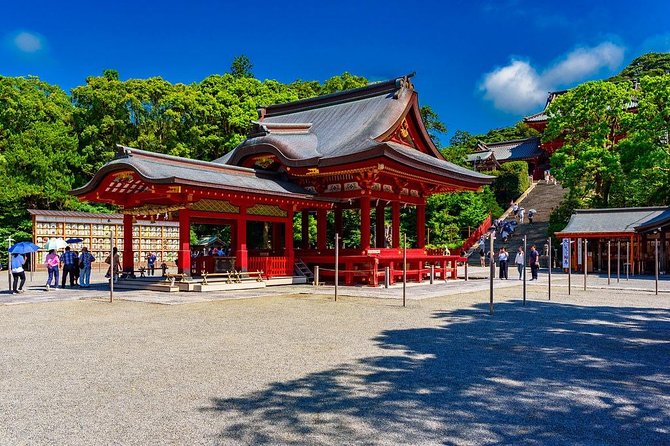
Tsurugaoka Hachimangu is the natural starting point for a first visit to Kamakura. The shrine honors Hachiman, linked with Emperor Ojin and the Minamoto family, and with the samurai tradition in general.
Your guide can help turn what might look like a grand approach, gates, stairs, courtyards, and shrine buildings into a readable lesson in Japanese religion and political power. This is one of the places where a guide adds real value, because Shinto practice and Japanese history are not always obvious from the architecture alone.
Admission is free. The site is a good choice for people who want a major landmark without paying an entrance fee, though it can feel more formal and open than the smaller temple compounds elsewhere in Kamakura.
The Great Buddha and Hasedera
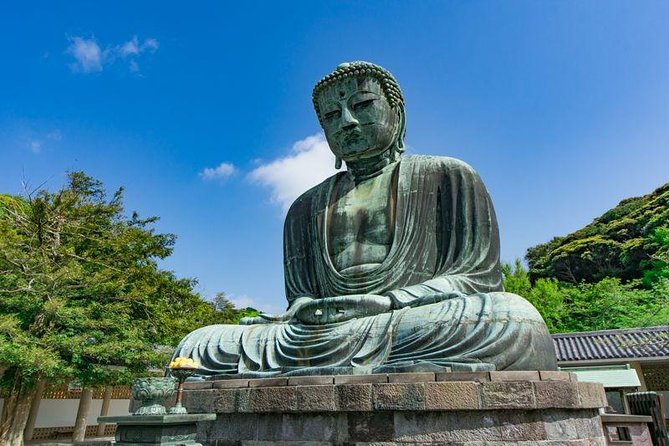
The bronze Great Buddha at Kotoku-in is Kamakura’s most famous sight. At 11.4 meters tall, the Amida Buddha is impressive even if you have already seen large religious statues elsewhere in Japan. Its scale gives the visit an immediate sense of place, and a guide can explain the role of Amida Buddhism and the statue’s position within Kamakura’s religious tradition.
Admission is not included. The listed stop time is short, which makes sense if you are using it as one part of a larger route. If the statue is a priority, tell your guide early so the day does not become too crowded with extra stops.
Nearby Hasedera is a different experience. The temple is known for its eleven-headed Kannon, a gilded wooden figure said to be 9.18 meters tall. The temple also gives you a chance to see a more layered religious setting than the open space around the Great Buddha.
Hasedera has steps and sloping paths, so pace matters. Sami has adjusted routes for people who needed fewer stairs, and Shinji helped an 83-year-old mother on wet, slippery steps during a rainy day. That kind of care is worth bringing up before the tour, not after the first steep path appears.
Kamakura’s Zen temple circuit
Kamakura has five great Zen temples, and this experience gives you access to several of them. Engakuji is ranked number two and was founded in 1282 by Hojo Tokimune. Kenchoji is ranked number one and was founded in 1253, making it the oldest Zen temple in Kamakura.
The pair works well together. Kenchoji gives you the grander historical setting, while Engakuji offers another look at the Rinzai Zen tradition and the temple world that grew around Kamakura’s military rulers. Each requires an admission fee, and the time needed depends on how much you want to see beyond the main approach.
Jochiji, Tokeiji, and Jufukuji offer smaller-scale alternatives. Jochiji is number four among the five great Zen temples and belongs to the Engakuji school. Tokeiji is a nearby branch temple, while Jufukuji is number three and belongs to the Kenchoji school.
These quieter choices can be better than trying to collect every famous name. Ask your guide to build a route around two or three temples that match your pace. The guide can explain how the temples relate to one another, which is more useful than rushing through a long checklist.
Eishoji adds a different note. It is the only surviving nunnery in Kamakura and was founded in the early Edo period by a woman connected to the Tokugawa family. It is a good pick if you want a less predictable stop near Tsurugaoka Hachimangu.
A few more Yokohama experiences worth weighing up
- Authentic Sumo Experience in Tokyo: Enter the Sanctuary
★ 5.0 · 603 reviews - EVO, WRX, Skyline – JDM Night Run to Daikoku Car Meet
★ 4.9 · 478 reviews - Tokyo: Best Price Daikoku Parking Area JDM Car Meet
★ 4.9 · 192 reviews - Daikoku & Tokyo Private JDM Tour by 700HP R34 GT-R
★ 4.9 · 101 reviews
Smaller shrines and temple paths
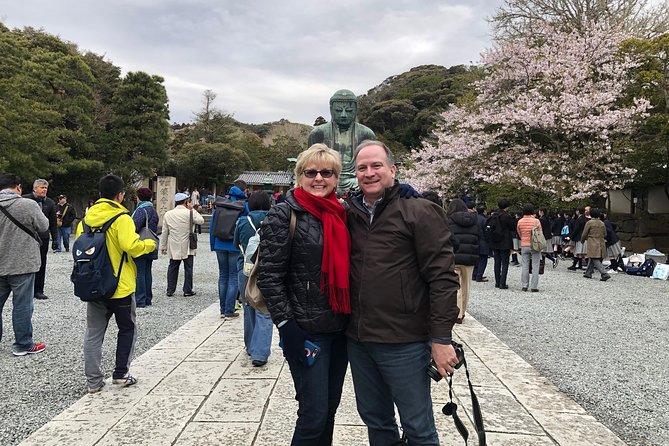
Zeniarai Benten is one of Kamakura’s most distinctive stops. People visit to wash money in the shrine’s spring, following the belief that washed money will bring good fortune. Admission is free, and the custom gives you something active to do rather than simply look at another building.
Meigetsuin is known as the Hydrangea Temple because hydrangeas bloom across its grounds. It belongs to the Rinzai Zen sect and was founded in 1160. The temple is especially appealing if flowers are part of your interest, though the strongest seasonal display depends on timing.
Ankokuronji and Myohonji are Nichiren temples in Kamakura’s southeastern hills. Ankokuronji is tied to Nichiren’s arrival in Kamakura around 1253, while Myohonji was founded in 1260 by Hiki Yoshimoto. Both are better choices for someone who wants religious history beyond the standard Great Buddha route.
Zuisenji sits in a narrow valley surrounded by wooded hills and is a branch temple of Engakuji. Its setting is one reason to choose it, but the distance and limited six-hour window mean you should combine it with nearby sights rather than attempt a grand cross-town sweep.
Enoshima, a coastal change of pace
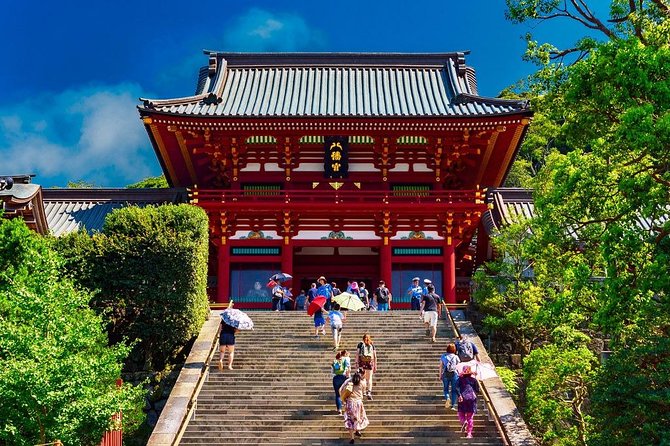
Enoshima is connected to the mainland by a bridge and reached by a short train ride west of Kamakura. The island combines a shrine, coastal scenery, and a more tourist-oriented atmosphere than the quieter temple grounds.
It can be a good choice if you want your day to include something besides Buddhist temples. It is also a practical option for people who enjoy a little seaside atmosphere and local food. The tradeoff is time. A trip to Enoshima uses part of your six-hour schedule, and it may leave less room for the interior temples of Kamakura.
One guide-led day included Enoshima, Kamakura, and the help needed with trains. That is a useful example of where a private guide earns the fee: not by making the train ride disappear, but by making the connections easier to understand.
Yokohama’s gardens, harbor, and foreign quarter
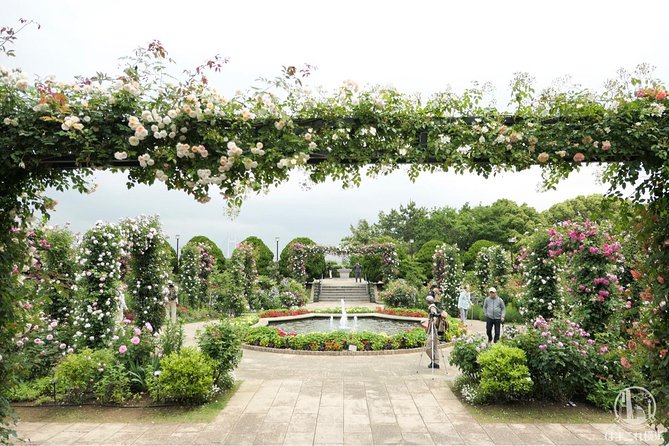
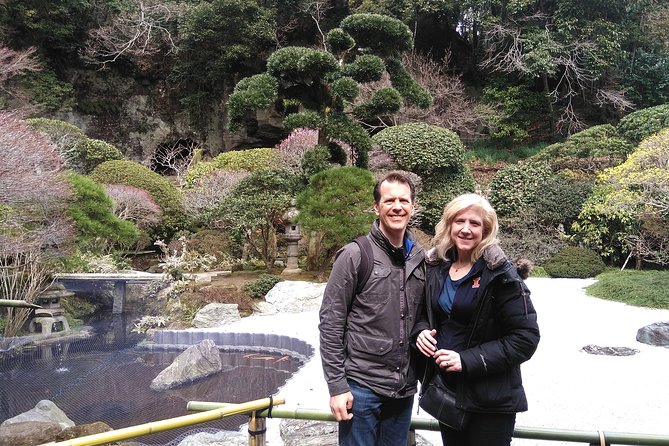
Yokohama is a better choice if you want more variety than a temple-focused day. Sankeien Garden is a large Japanese-style garden with historic buildings moved from other parts of Japan. Ponds, small streams, flowers, and walking paths give it a slower rhythm than central Yokohama.
The garden has an entrance fee, and it is not close to every central attraction. It works best as one of three or four carefully chosen stops, not as an add-on to a packed waterfront schedule.
The foreign quarter around Motomachi Park and the Yamate 234ban Residence shows Yokohama’s role after Japan began ending its long period of isolation in the 1850s. These areas help explain why Yokohama developed a different character from older inland cities.
Motomachi Park and the Yamate residence are especially useful for people interested in international history, architecture, and the changes that followed the opening of Japan’s ports. Both can take around 30 minutes, making them manageable parts of a half-day plan.
Chinatown, Minato Mirai, and the waterfront
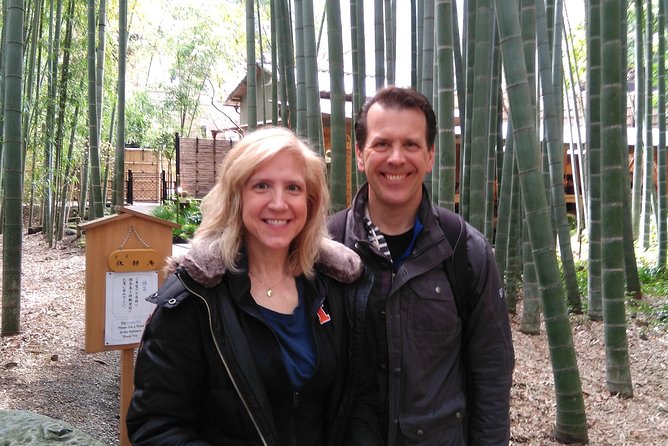
Yokohama Chinatown is Japan’s largest Chinatown, with Chinese restaurants and shops packed into narrow, colorful streets. It is a natural place to add lunch, though lunch is not included and the tour does not promise a specific restaurant.
One guide took a group to Chinatown after a morning in Kamakura. That combination works because the two places feel so different: Kamakura gives you temples and shrines, while Chinatown gives you food, commerce, and a modern port-city mood.
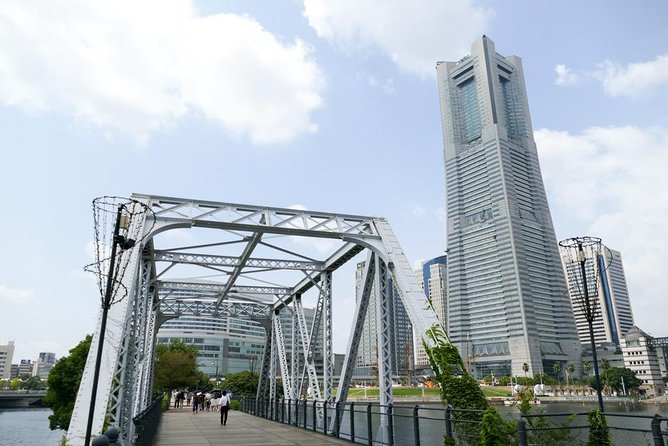
Minato Mirai 21 means harbor of the future. The district is known for its high-rises, including Landmark Tower, and gives you a clear view of Yokohama’s modern side. Yamashita Park runs about 750 meters along the waterfront and is free to enter. Osanbashi Pier sits between Minato Mirai and Yamashita Park and offers another way to see the harbor.
These sites are easy to understand as a group, but you should not expect a deep visit to all of them in one short afternoon. Tell your guide if you want photos and open-air views, or if you prefer historic buildings and indoor attractions.
Two ramen museums for a lighter afternoon
The Cup Noodles Museum in Minato Mirai explains the history of instant ramen and the work of inventor Momofuku Ando. It is interactive and modern, making it a useful contrast to temples and shrines. Admission is extra.
The Shinyokohama Ramen Museum focuses on ramen as a popular noodle dish introduced from China. It also requires an additional admission fee. These museums are a sensible choice for families or for anyone who wants food culture instead of another religious site.
Because both museums take time and involve entrance fees, ask your guide to place them in a route that does not require needless backtracking. The tour offers planning help, but it does not include private transport.
What the $154.84 price really buys
At $154.84 per person, this tour is not the cheapest way to see Kamakura or Yokohama. You still pay for trains, taxis if needed, entrance tickets, lunch, and personal expenses. A group discount may improve the per-person value, but the exact saving is not provided.
The price makes more sense when you think of it as a planning and guiding service. You are paying for a private licensed guide, a six-hour custom route, English commentary, and help with the practical details of moving around. For a first visit, that can save hours of research and reduce the risk of wasting half the day on a poor route.
It offers less value if you already know the trains, can plan temple groupings yourself, and only want to photograph one or two major sights. In that case, independent travel may cost less.
The strongest value appears for families, older adults, first-time visitors, and people with a clear interest in Japanese religion or local history. It is also useful if you want to combine Yokohama and Kamakura, though I would keep expectations modest because the 30-minute train trip between them takes time in both directions.
Guides, pacing, and small practical strengths
The guide quality matters more than the long attraction list. Mami has helped with hotel meetings, taxis, IC cards, and trains. Kahori was praised for punctuality and a friendly manner. Suzuki helped shape an itinerary in advance, while Yoshi received praise for history, food advice, and a welcoming style.
Yuichi adjusted his pace, answered questions, and found an authentic, reasonably priced ramen shop. Shinji handled a rainy day with patience and helped an older participant over slippery stairs. These details suggest a service that can be attentive when you explain your needs clearly.
There was also one reported cancellation because a guide could not be secured after a requested date change during a busy season. It was refunded, but this is a reminder to avoid last-minute changes during peak periods.
Free cancellation is available up to 24 hours before the start time. Changes or cancellations inside that window are not accepted for a refund.
Who should book this private outing
I would choose this tour if you want personal attention and do not want to spend your evening building a Kamakura route from train maps and temple locations. It is particularly useful when your group has mixed interests, different walking speeds, or a need for fewer stairs.
You should decide on your top three priorities before meeting the guide. For Kamakura, that might be Tsurugaoka Hachimangu, the Great Buddha, and Hasedera. For Yokohama, it might be Sankeien, Chinatown, and the waterfront.
Do not book it expecting a full sweep of all 26 listed attractions. Those places are options for building a route, not stops you can cover in six hours. The best day will feel focused, with enough time to look around and ask questions.
Should you book the Yokohama and Kamakura private tour?
Yes, if you value a flexible plan, personal commentary, and help with trains and local customs. The 4.8 rating from 25 reviews and 96 percent recommendation rate fit the strongest pattern here: guides are praised for kindness, pacing, practical help, and thoughtful explanations.
I would book it for a focused Kamakura day or a focused Yokohama day. I would combine both only if seeing each city briefly matters more to you than exploring either one properly.
Before booking, send your guide your must-see sites, walking limits, food interests, and preferred pace. With that preparation, the $154.84 price can be fair for the time saved and the calm, personal experience. Without a clear plan, the many choices may become a burden rather than an advantage.
FAQ
How long is the private tour?
The tour lasts approximately six hours.
Is the itinerary fixed?
No. You choose a customizable itinerary of three or four sites from the available attractions.
Can I choose Yokohama or Kamakura?
Yes. The experience can focus on Yokohama, Kamakura, or a combination of both, depending on your chosen route and available time.
Is transportation included?
No. Transportation fees are not included, and private transportation is not provided. The tour is a walking experience with public transportation or other transport arranged and paid for separately.
How far apart are Yokohama and Kamakura?
Travel between Yokohama and Kamakura takes about 30 minutes each way.
Is hotel pickup available?
Pickup is offered on foot within the designated area of Yokohama or Kamakura. This is not private vehicle pickup.
Are entrance fees included?
No. Most entrance fees are extra. Guide entry fees are covered only for sights listed under the available attractions.
Is lunch included?
No. Lunch and other personal expenses are not included.
Is this a private activity?
Yes. Only your group participates, and multiple tour groups cannot be combined.
Can I cancel for a full refund?
Yes, if you cancel at least 24 hours before the experience start time. Cancellations or changes made less than 24 hours in advance are not accepted for a refund.
Just added around Yokohama
- Yokohama Half Day Walking Tour with an Expert Local Guide★ 4.5 · 22 reviews
- Yokohama Full Day Tour with a Local Expert Guide★ 4.3 · 23 reviews
- 【R34 GTR Over 400 hp】Tokyo: Private Daikoku Tour in R34 GTR★ 5.0 · 25 reviews
- Tokyo Full Day Tour with Licensed Guide and Vehicle from Yokohama★ 5.0 · 26 reviews
- Daikoku & Tokyo JDM Night Tour in R34 or TopSecret R35 GT-R★ 4.8 · 27 reviews
- Yokohama: Guided Cup Noodles Museum Tour & Make Your Own Cup★ 4.9 · 27 reviews
- Japanese Tea Ceremony at Private Home in Yokohama, suburban Tokyo★ 5.0 · 32 reviews
- Yokohama 4hr Private Tour with Government-Licensed Guide★ 5.0 · 34 reviews
Government-Licensed Guide Tours, compared.
Tokyo 6hr Private Tour with Government-Licensed Guide
Read our review →
Tokyo 4hr Private Tour with Government-Licensed Guide
Read our review →
Kyoto 6hr Private Tour with Government-Licensed Guide
Read our review →
Hiroshima / Miyajima Full-day Private Tour with Government Licensed Guide
Read our review →
Kyoto 4hr Private Tour with Government-Licensed Guide
Read our review →
Hiroshima City 4hr Private Walking Tour with Licensed Guide
Read our review →
Private Kyoto Tour with Licensed Guide & Vehicle (Max 15 persons)
Read our review →Browse the lists this tour appears in