
Reviewed · WALKING TOURS
Kamakura 6hr Private Walking Tour with Government-Licensed Guide
Kamakura rewards curious walkers. This private six-hour tour pairs local history with flexible sightseeing, so you can focus on temples, shrines, gardens, the Great Buddha, or even Enoshima. I like the personal guide service and the chance to use ordinary trains and buses with help, rather than treating Kamakura as a sealed-off day trip. The main catch is simple: six hours goes quickly, and transportation, meals, and entrance fees are extra.
I also like that you choose only three or four places from a long list. Guides such as Shinji, Masa, Takako, Koba, Sam, Noripy, Taka, Kenzo, Hiro, and Hiro Chikata have helped guests adjust the day to their pace, mobility, and interests. Expect plenty of walking, though, especially if you select distant temples such as Zuisenji or combine several areas.
In This Review
- Key points to know before booking
- Why Kamakura works so well as a private day out
- Your six-hour route is a menu, not a checklist
- Tsurugaoka Hachimangu gives you the big historical picture
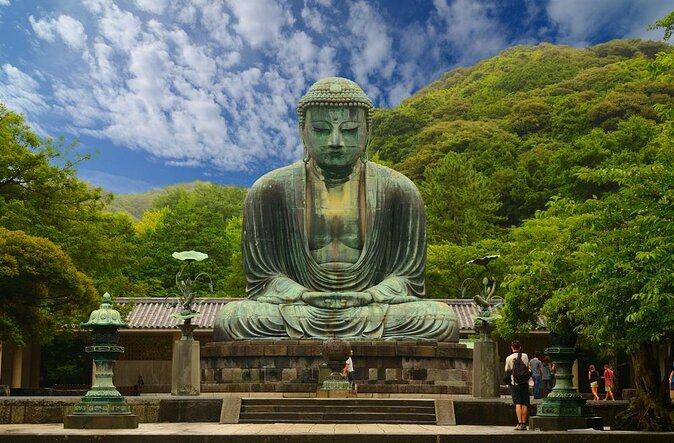
- The Great Buddha is Kamakura’s essential landmark
- Hasedera adds gardens, views, and a personal ritual
- Hokokuji is short, quiet, and easy to remember
- Enoshima changes the mood with sea and shopping
- The northern Zen temples suit a calmer route
- Zeniarai Benten adds a hands-on tradition
- Meigetsuin and the smaller eastern temples
- Nichiren temples and Eishoji offer a different side of Kamakura
- Public transportation is part of the lesson
- What the price includes, and what it does not
- Who should book this Kamakura tour?
- FAQ
- Where does the tour take place?
- How long does the experience last?
- Is the tour private?
- How many sights can I visit?
- Can I choose the places I visit?
- Is transportation included?
- Are entrance fees included?
- Is lunch included?
- Can the guide meet me at a Yokohama cruise terminal?
- Can service animals participate?
- Should you book it?
Key points to know before booking
- Choose three or four Kamakura sights: The long menu includes the Great Buddha, major Zen temples, gardens, shrines, and Enoshima.
- A guide helps with public transportation: Trains, buses, and subway connections can be part of the day, which is useful if you are coming from Yokohama or a cruise terminal.
- The tour is private: Only your group participates, so the guide can change the pace and spend longer at a favorite stop.
- The Great Buddha and Hasedera make a strong first-time route: These are among Kamakura’s most recognizable sights and offer different experiences.
- Walking is a real part of the experience: Transportation time counts within the six hours, and some temple routes involve hills or longer connections.
- The price can be good for a small group: At $155.22 per person, the value depends on group size, guide time, and how much help you want with trains and local context.
Why Kamakura works so well as a private day out
Kamakura sits just south of Tokyo and offers a striking change of pace. Its temples and shrines spread through wooded hills, old lanes, and coastal neighborhoods. You can move from a major shrine to a quiet Zen compound, then end near the ocean or a shopping street with a biscuit in hand.
That variety is the reason I think a private tour makes sense here. Kamakura is not one compact monument complex. The sights are scattered, and your six hours includes the time spent getting between them. A guide can help you avoid wasting part of the day figuring out which train, bus, or walking route comes next.
The guide meets you on foot within the designated Kamakura or Yokohama area. Pickup is not by private vehicle. This matters if you arrive at Yokohama’s Osanbashi cruise terminal or begin at a hotel, because the guide can help you handle the public transportation needed to reach Kamakura.
The service has received a five-out-of-five rating from 42 published ratings, with 100 percent recommendation. That is a strong record, but the best reason to book is the format: you are not locked into a fixed group schedule or forced to visit every place on a long sightseeing list.
More licensed guide tours in Japan:
- Tokyo 6hr Private Tour with Government-Licensed Guide
★ 5.0 · 3,902 reviews - Tokyo 4hr Private Tour with Government-Licensed Guide
★ 5.0 · 1,394 reviews - Kyoto 6hr Private Tour with Government-Licensed Guide
★ 5.0 · 1,369 reviews
Your six-hour route is a menu, not a checklist
The experience offers 17 possible stops, but the plan is for three or four sights. That distinction is important. The short time estimates shown for individual sites should not tempt you into trying to cover everything. Transportation, ticket lines, lunch, shopping, and pauses all take time.
After booking, your personal guide contacts you to tailor the day. Use that conversation well. Tell the guide if you want major landmarks, quieter temples, gardens, samurai-era history, coastal scenery, shopping, or a slower route for an older family member.
One especially useful feature is the guide’s ability to adjust an ambitious plan. Shinji changed a requested course for one couple because some of the original stops required long hikes. He suggested a more relaxed route with similar cultural sights. That is exactly the kind of practical judgment you want from a private guide.
Tsurugaoka Hachimangu gives you the big historical picture
Tsurugaoka Hachimangu is one of the strongest choices for a first visit. The shrine is dedicated to Hachiman, the patron deity of the Minamoto family and of samurai generally. The shrine’s religious role connects directly to Kamakura’s place as the home of Japan’s first samurai government.
The listed visit time is 15 minutes, but you should treat that as a brief stop rather than a full exploration. If you care about shrine design, ritual, or the Minamoto connection, ask your guide to make this a longer visit and trim another stop.
This is also a useful place to begin because your guide can explain how Kamakura’s religious sites connect to the city’s political past. You will get more from the shrine if you understand why this location mattered, rather than simply taking a few photos and moving on.
The Great Buddha is Kamakura’s essential landmark
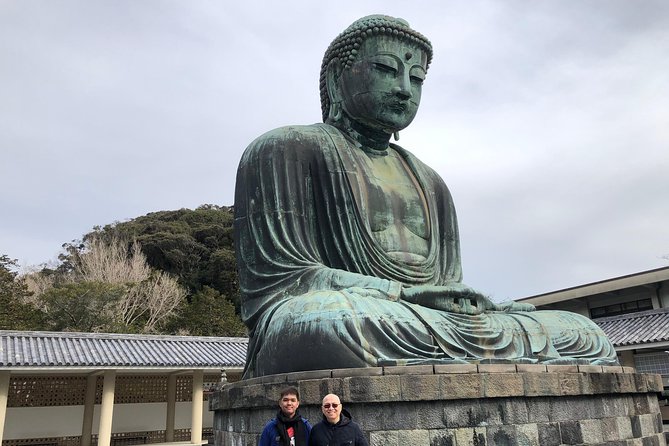
At Kotokuin Temple, the bronze Great Buddha rises 11.4 meters high. The Amida Buddha statue is the image most closely associated with Kamakura, and it gives the tour a clear centerpiece.
The listed stop is 15 minutes, and that can work if you mainly want to see the statue and take photographs. Entrance is not included, so keep admission money separate from the tour price. The guide’s entry fees are covered only for sights listed among the expected choices, while your own entrance fees remain extra.
The statue is impressive because it sits outdoors rather than inside a huge hall. That setting lets you see its scale from several angles. If this is your priority, tell the guide early. A short visit is enough for the main view, but not for a relaxed look at the temple grounds.
More walking tours in Japan:
- Kyoto Geisha Walking Tour: Gion District & Hidden Gems
★ 4.7 · 3,273 reviews - Tokyo Tsukiji Fish Market Food and Culture Walking Tour
★ 5.0 · 3,184 reviews - Kyoto: Gion Magical Night Walking Tour with Geisha Trivia
★ 4.9 · 2,393 reviews - Tokyo: Imperial Palace and Shogun Historical Walking Tour
★ 5.0 · 2,251 reviews
Hasedera adds gardens, views, and a personal ritual
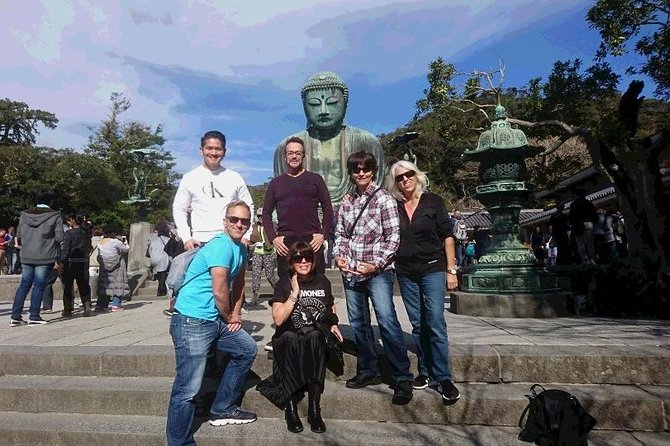
Hasedera is a good partner for the Great Buddha. The temple is associated with an eleven-headed Kannon, the Buddhist goddess of mercy. The gilded wooden statue is 9.18 meters tall, giving the temple a powerful religious focus beyond its scenic setting.
The temple is also known for gardens and a high point with views toward the ocean. The tour description includes a charming detail: you can write a wish on an oyster shell. That small ritual gives the visit a personal touch and helps keep the stop from feeling like a quick parade of photo points.
The suggested time is 30 minutes. You might want longer if you enjoy gardens, religious art, or the view. Ask about the walking involved, since the temple’s upper areas require some climbing. The combination of Hasedera and Kotokuin makes a very balanced half-day route: one stop for Kamakura’s famous statue and one for scenery, faith, and atmosphere.
Hokokuji is short, quiet, and easy to remember
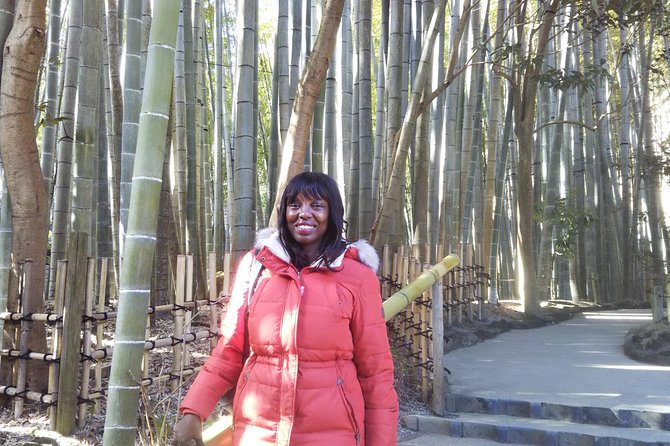
Hokokuji Temple is known for its small bamboo grove, with more than 2,000 dark green stalks lining narrow paths behind the main hall. The grove is not huge, which is part of its appeal. You can see it without spending half a day, and its enclosed paths create a sharp contrast with Kamakura’s larger temple grounds.
The suggested visit is only 15 minutes, and that may be enough for a quick walk through the bamboo. Choose it if you want a peaceful garden setting and a compact stop. If you are trying to fit Hokokuji with the Great Buddha, Hasedera, and Tsurugaoka Hachimangu, the day may feel rushed once transport is added.
Enoshima changes the mood with sea and shopping
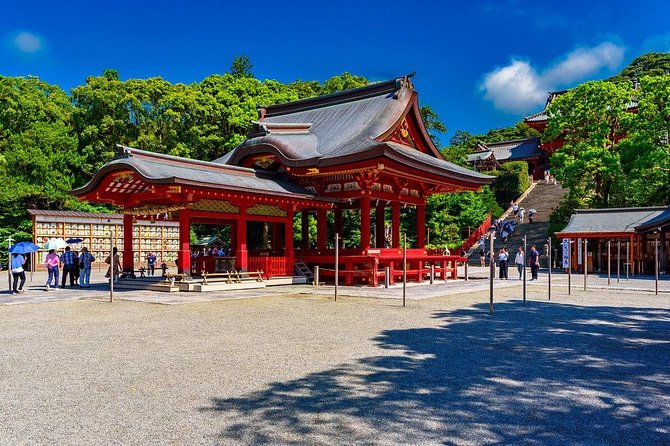
Enoshima is a short train ride west of Kamakura. The island connects to the mainland by bridge and offers shrines and other attractions in a coastal setting. It is more tourist-oriented than some of Kamakura’s quieter temples, but that can be welcome late in the day.
Choose Enoshima if you want a change from temple architecture. The stop can add ocean views, food, and a more casual feel. Fifteen minutes is not enough for a full island visit, so discuss your goal with the guide. If you want to explore several attractions, you may need to give up another stop or ask about extending the tour.
The northern Zen temples suit a calmer route
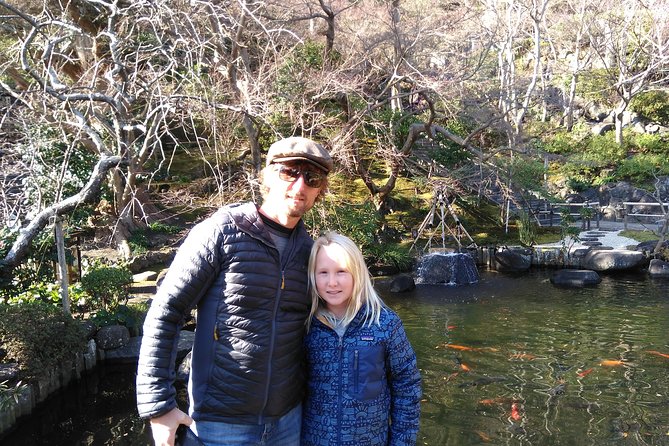
Engakuji and Kenchoji are among Kamakura’s five great Zen temples. Engakuji is ranked number two and was founded in 1282 by Hojo Tokimune. Kenchoji is ranked number one and was founded in 1253, making it the oldest Zen temple in Kamakura.
Both are listed with 30-minute visits, which gives you enough time to take in the main grounds and hear the basic story. You will want to linger if you care about Zen history, temple design, or garden spaces.
Engakuji can work well with Tokeiji, Jochiji, or another nearby northern temple. Kenchoji pairs naturally with Tsurugaoka Hachimangu if you want a day centered on Kamakura’s political and religious past. Do not assume you can comfortably add both major Zen temples plus the Great Buddha in six hours. The guide can help decide which combination makes sense.
Zeniarai Benten adds a hands-on tradition
Zeniarai Benten Shrine is famous for coin washing. The name zeniarai refers to washing money, and local belief holds that money washed in the spring will multiply.
This is one of the more unusual stops on the menu because you do more than look at buildings. You take part in a simple custom, which makes the shrine easy to remember. Admission is free, though you will still have personal expenses if you buy anything connected with the visit.
The shrine is in western Kamakura, so ask the guide to place it within a route that does not create needless backtracking. It is a strong pick for people who like local customs and small rituals more than grand architecture.
Meigetsuin and the smaller eastern temples
Meigetsuin is also called the Hydrangea Temple because hydrangeas fill its grounds when in bloom. It belongs to the Rinzai Zen tradition and dates to 1160. The garden appeal changes with the season, so ask your guide what is likely to be visible during your visit rather than assuming the same scene year-round.
Zuisenji sits farther east in a narrow valley surrounded by wooded hills. It is a branch temple of Engakuji and offers a quieter setting away from the main sightseeing flow. The suggested visit is 30 minutes, but the route may involve more walking and transport time.
That extra effort can pay off if you want peace and flowers rather than the city’s headline sights. Koba guided one group through Zuisenji, Tsurugaoka Hachimangu, Kenchoji, and Kotokuin. The day involved substantial walking, but the quiet setting and flowers made the remote temple worthwhile.
Jomyoji, ranked fifth among Kamakura’s five great Zen temples, sits in the eastern hills and was founded by the Ashikaga family. It has a suggested 15-minute stop, making it easier to pair with another eastern temple.
Jochiji, ranked fourth, and Tokeiji are both associated with the Engakuji school of Rinzai Zen Buddhism. Their suggested times are 15 minutes each. These are useful choices if you prefer a series of smaller, quieter temple visits over one long stop at a major landmark.
Nichiren temples and Eishoji offer a different side of Kamakura
Ankokuronji and Myohonji are Nichiren temples in the southeastern hills. Ankokuronji is linked to Nichiren’s arrival in Kamakura around 1253. Myohonji was founded in 1260 and includes a gate and temple grounds associated with the Nichiren tradition.
These stops suit you if Buddhist sects and Kamakura’s religious development interest you. They may be less satisfying if you want famous views or the city’s best-known icons, so be clear about your priorities before choosing them.
Jufukuji is the number three temple among Kamakura’s five great Zen temples. It was established at the order of Hojo Masako, the wife of Minamoto Yoritomo. Eishoji is the only surviving nunnery in Kamakura and was founded in the early Edo period by a woman connected to the Tokugawa family.
Both offer useful historical variety. Eishoji in particular can add a women-centered story to a day that otherwise leans heavily toward samurai leaders and male religious institutions.
Public transportation is part of the lesson
This is not a private-car tour. You and your guide walk, use trains and buses, and pay your own transportation costs. That may sound less comfortable than a vehicle, but it can make the day more useful. You learn how to move around Kamakura instead of seeing it only through a car window.
Several guides have helped people navigate from Yokohama, hotels, and the cruise terminal. Taka helped a couple through the train system, while Sam guided a guest whose mother was in her late 80s. Another guide helped a visitor whose husband had knee surgery adjust the walking plan.
That does not make the tour effortless. It means the guide can make better choices when you explain your needs. Tell the guide about mobility concerns, your preferred pace, and the sights you care about. If you want a taxi for part of the route, ask in advance, but the standard service does not include a private vehicle or transport fees.
What the price includes, and what it does not
The price is $155.22 per person. You receive a licensed local English-speaking guide, a private experience, and a customized plan for three or four sites. For a small group, that can be fair value because you are paying for personal routing, live explanations, and help with local transport.
The price is less attractive if you want a cheap sightseeing day or plan to visit only one or two sites independently. You must also budget for train and bus fares, entrance tickets, lunch, and personal purchases. The guide’s admission is covered only at listed sights, not necessarily everywhere you choose to go.
Group discounts are offered, and only your own group participates. Ask for the group rate if you are traveling with family or friends. A larger private group can spread the guide cost while keeping the benefit of a shared schedule.
The cancellation policy allows a full refund if you cancel at least 24 hours before the local start time. Changes or cancellations inside that window are not accepted for a refund.
Who should book this Kamakura tour?
I would choose this tour if you are arriving from Yokohama, feel unsure about Japanese public transportation, or want historical context at the sites themselves. It is also a good fit for families and mixed-age groups because the route can be adjusted rather than imposed.
It suits first-time visitors who want to combine the Great Buddha with one or two less obvious temples. It also works for repeat visitors who want a specialist route focused on Zen temples, gardens, Nichiren sites, or Enoshima.
I would hesitate if you dislike walking, want a private car, or expect to see most of the 17 listed sights. Six hours is enough for a thoughtful selection, not a complete Kamakura sweep. Entrance tickets, transport, and lunch add to the final cost, so plan accordingly.
FAQ
Where does the tour take place?
The tour takes place in Kamakura, with meet-up available on foot within a designated Kamakura or Yokohama area.
How long does the experience last?
The tour lasts approximately six hours, including transportation time.
Is the tour private?
Yes. Only your group participates in the private tour.
How many sights can I visit?
The customized plan covers three to four sights chosen from the available list.
Can I choose the places I visit?
Yes. After booking, your personal guide contacts you to tailor the route to your interests.
Is transportation included?
No. Transportation fees are not included. The tour uses walking and public transportation, and it does not include a private vehicle.
Are entrance fees included?
No. Your entrance fees are not included. Guide entry fees are covered only for sights listed under the expected stops.
Is lunch included?
No. Lunch and other personal expenses are extra.
Can the guide meet me at a Yokohama cruise terminal?
The experience includes an on-foot meeting within the designated Yokohama area. Several guides have met guests at Yokohama’s Osanbashi cruise terminal and then helped them reach Kamakura by public transportation.
Can service animals participate?
Yes. Service animals are allowed.
Should you book it?
Book this tour if you want a flexible Kamakura day with a real local guide, especially when trains and buses feel confusing or your group needs a custom pace. Ask for a route built around the Great Buddha, Hasedera, and Tsurugaoka Hachimangu for a first visit, or choose Kenchoji, Engakuji, Zuisenji, and smaller temples for a quieter day.
Skip it if you want a fixed, low-cost sightseeing loop or a private car. For everyone else, the strongest value is not the number of sights. It is having someone like Shinji, Masa, Takako, Koba, Sam, Noripy, Taka, Kenzo, or Hiro shape six hours into a day that fits your interests, energy, and comfort.
Just added around Japan
- Kanazawa private half day/Photoshoot by professional photographer★ 5.0 · 38 reviews
- Osaka Food Tour with 10 Classic Japanese Tastings & Drinks★ 5.0 · 38 reviews
- Osaka: Highlights & Hidden Gems Private Walking Tour★ 4.7 · 38 reviews
- Tokyo Small Group Tour with Guide★ 4.5 · 38 reviews
- Tokyo 6hr Instagram Highlights Private Tour with Licensed Guide★ 5.0 · 38 reviews
- From Tokyo: Kamakura Private Customize Tour by Luxury Van★ 4.6 · 38 reviews
- Tokyo Sumo Experience with Live Show & Audience Challenge★ 5.0 · 38 reviews
- Kyoto: Private Customizable Day Trip by Car★ 5.0 · 38 reviews
Walking Tours, compared.
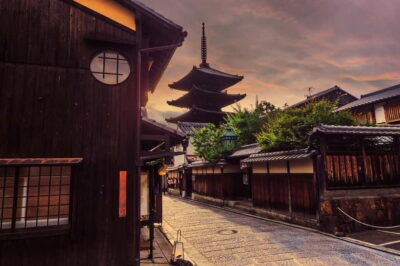
Kyoto Geisha Walking Tour: Gion District & Hidden Gems
Read our review →
Tokyo Tsukiji Fish Market Food and Culture Walking Tour
Read our review →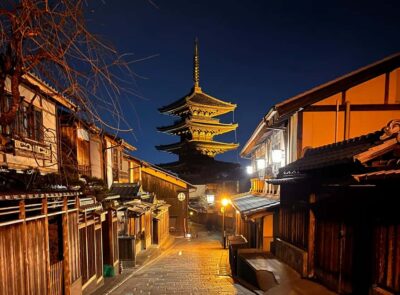
Gion Magical Night Walking Tour with Geisha Trivia
Read our review →
Imperial Palace and Shogun Historical Walking Tour
Read our review →
Gion Geisha District Walking Tour – Stories of Geisha
Read our review →
Shinjuku Local Bar and Izakaya Guided Walking Tour
Read our review →
Browse the lists this tour appears in