Reviewed · 1-DAY TOURS
Kyoto and Nara Day Trip from Kyoto
Two ancient cities, one very full day. This tour gives you a practical first look at Kyoto’s grand monuments and Nara’s Great Buddha without the fuss of arranging trains, buses, tickets, and directions yourself. I like the mix of Nijo Castle and Kinkaku-ji in Kyoto, then Todai-ji and the deer of Nara. I also like the strong English-speaking guides, including KC, Momo, Yuki, and Yoshito, who have been praised for humor, clear explanations, and keeping groups on time. The main drawback is pace: ten or eleven hours is a long day, and each stop offers less free time than you would have traveling independently.
I also like the comfort of air-conditioned transport between far-flung sights. That matters here, since Kyoto and Nara cover a lot of ground. Still, you should expect a group of up to 40 people, fixed departure times, and some walking. If you want quiet temple visits or long meals, this is not the right format.
In This Review
- Key points to know before booking
- Why this Kyoto and Nara combination works
- Nijo Castle shows the shogun’s Kyoto
- Kinkaku-ji delivers Kyoto’s famous photograph
- Kyoto Imperial Palace adds ceremony and scale
- The ride to Nara is useful recovery time
- Todai-ji is Nara’s great architectural moment
- Kasuga Grand Shrine brings you into the forest
- Nara Park and the deer are fun, but stay alert
- What the guides add to a busy schedule
- Is $194.85 a fair price?
- Who should choose this day trip?
- Final verdict: book it for coverage, not leisure
- FAQ
- How long does the Kyoto and Nara day trip last?
- Where does the tour start and end?
- Is lunch included?
- What happens if Kyoto Imperial Palace is closed?
- What happens if Nijo Castle is closed?
- Is the tour suitable for children?
Key points to know before booking
- Five major cultural stops in one day: Nijo Castle, Kinkaku-ji, Kyoto Imperial Palace, Kasuga Grand Shrine, and Todai-ji.
- The Great Buddha is the Nara highlight: Todai-ji’s huge wooden hall and bronze statue give this day real weight beyond the famous deer.
- Guides make the difference: KC, Momo, Yuki, Yoshito, Tammy, Miyuki, Etsuko, and others have been praised for clear English, humor, history, and thoughtful group care.
- Lunch is optional: You can choose no lunch, a Western-style set menu, or an Indian thali. Dietary requests are limited, so read the meal rules carefully.
- Expect a quick pace: The listed visits range from 40 minutes to 1 hour 10 minutes, with more time lost to moving through busy areas.
- Nara ends with walking and deer: Bring comfortable shoes, watch your belongings around the animals, and return to the bus on time.
Why this Kyoto and Nara combination works
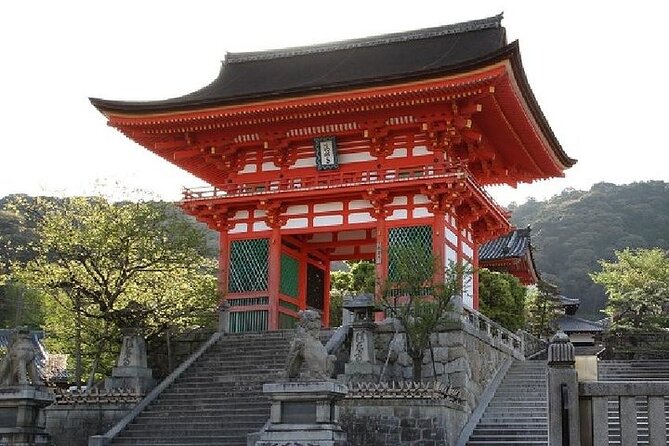
Kyoto and Nara are close enough to pair, but they feel different. Kyoto presents imperial power, shogun rule, refined gardens, and polished religious architecture. Nara feels more open and earthy, with shrine paths, old temple grounds, and deer moving freely through the park.
That contrast is the best reason to choose this day trip. You are not spending ten hours looking at similar temple roofs. The morning explains Kyoto’s political and artistic world, while the afternoon shifts to Nara’s Buddhist scale and older religious traditions.
The tour begins at the JTB Sunrise Tours Desk in the basement of Kyoto Avanti, near Kyoto Station, at 8:20 a.m. That location can be hard to find if you do not know Kyoto Station well, so allow extra time. The tour finishes around 6:30 p.m. at Kyoto Station, with no hotel drop-off.
The air-conditioned coach saves you from planning several separate journeys. That is valuable for a first visit, especially when you want a broad introduction rather than a slow study of one district. The trade-off is that you follow the group’s clock. A late return to the bus affects everyone, and seats may not be assigned.
A few more Kyoto experiences worth weighing up
- PERFECT KYOTO 1-Day Bus Tour
★ 5.0 · 13,518 reviews - Kyoto: Fushimi Inari, Kinkakuji, Bamboo Grove 1 Day Bus Tour
★ 4.8 · 4,316 reviews - 10 Must-see Spots in Kyoto One Day Private Tour (up to 7 people)
★ 5.0 · 1,108 reviews
Nijo Castle shows the shogun’s Kyoto
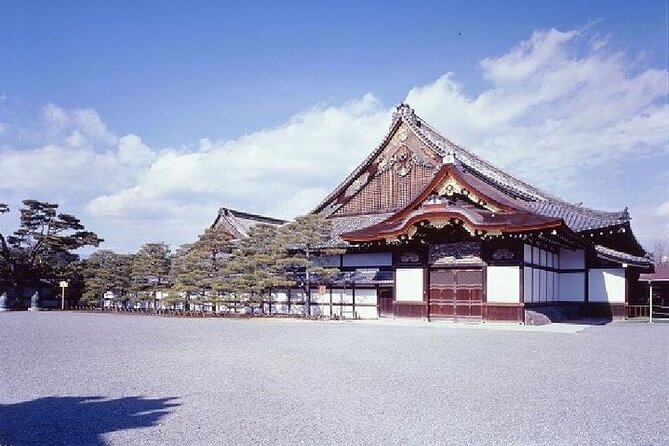
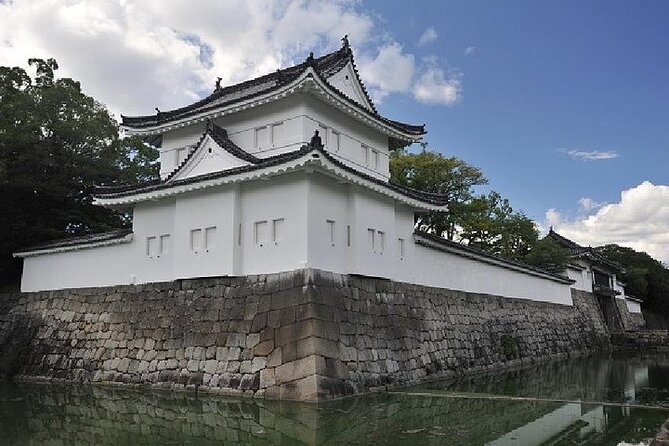
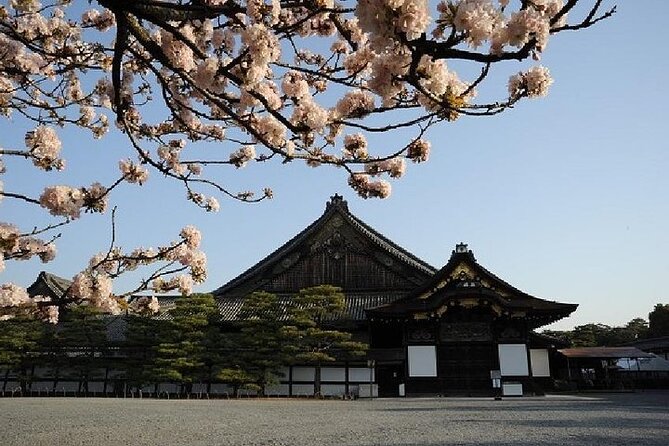
Your first major stop is Nijo Castle, built in 1603 and completed in its present form in 1626. It was made for the Tokugawa shogun, both as lodging in Kyoto and as a statement of power beside the Imperial Palace.
The castle is interesting because its exterior can look stern and defensive, while the interiors are detailed and refined. Elaborate carvings and decorative rooms reveal how authority was displayed in early modern Japan. This is not simply a fortress visit. It is a lesson in how the shogun used architecture, ceremony, and visual splendor to impress.
You have about 50 minutes here, and admission is included. One practical detail matters: you must remove your shoes at Nijo Castle. Wear socks you are happy to show, and choose footwear that slips off without a struggle.
Fifty minutes is enough to understand the site and see its main features, but not enough for a slow look at every room and garden path. I would pay close attention to the guide’s explanation here, since the historical setting adds much more than the carvings alone.
Nijo Castle closes on Tuesdays in January, July, August, and December, as well as from December 26 through January 3. If a closure affects your date, the replacement visit is Ryoan-ji Temple. No refund is offered for that change.
Kinkaku-ji delivers Kyoto’s famous photograph
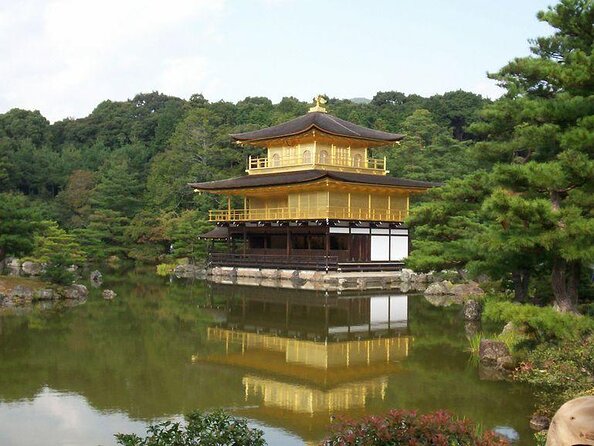
Kinkaku-ji, also called the Golden Pavilion, is the short, dazzling stop of the morning. The three-story wooden structure is covered in thin layers of gold leaf and sits beside a pond in a carefully arranged garden.
You have about 45 minutes, with admission included. The pavilion is one of Kyoto’s most photographed sights, and the view is easy to appreciate even on a rushed schedule. The gold, water, trees, and traditional design create the classic Kyoto scene many first-time visitors hope to see.
The catch is that Kinkaku-ji is extremely popular. Your route through the grounds is controlled by the crowd and the tour schedule, so this is mainly a viewing and photo stop rather than a quiet garden visit. I would take the first clear photographs you can, then listen to the guide instead of spending the entire stop trying to find a perfect angle.
This is one of the places where the tour format helps and limits you at the same time. You get direct access and a guide’s context, but you do not get the long, unhurried pause that the gardens deserve.
Kyoto Imperial Palace adds ceremony and scale
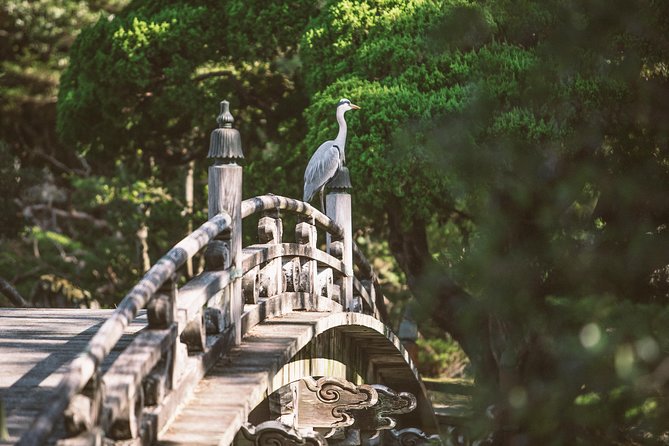
The Kyoto Imperial Palace was used as the Emperor’s residence until roughly 150 years ago. The tour allows about 40 minutes to see the grounds and the Shishin-den, a key building for important state ceremonies.
This stop balances the first two. Nijo Castle represents the shogun, and Kinkaku-ji shows elite religious and artistic taste. The Imperial Palace brings the imperial institution into the picture. Even a short walk through the grounds helps connect Kyoto’s political story.
Admission is listed as free, though access can change. The palace is closed on Mondays, on the following day when Monday is a public holiday, and on dates affected by an Imperial Household Agency event. In those cases, the tour visits Kitano Tenmangu Shrine instead. If the closure falls on the 25th, the replacement is Nishi Hongan-ji Temple.
That means you should check your date if the palace is a top priority. The alternative sites are not minor sights, but they offer a different experience. You will not receive a refund if the planned stop changes.
A completely different kind of day out in Kyoto:
- Kyoto: Tea Ceremony in a Traditional Tea House in Kiyomizu
★ 4.9 · 3,519 reviews - Kyoto Geisha Walking Tour: Gion District & Hidden Gems
★ 4.7 · 3,273 reviews - Kyoto: Tea Ceremony Ju-An at Jotokuji Temple
★ 4.9 · 3,207 reviews - Kyoto: Gion Magical Night Walking Tour with Geisha Trivia
★ 4.9 · 2,393 reviews
The ride to Nara is useful recovery time
After the Kyoto stops, the coach heads south toward Nara. This is a welcome break in a packed day. You can rest your feet, watch the scenery pass, and hear more about Japanese history and culture from the guide.
If you choose a lunch option, this is generally the point when the meal fits into the schedule. The Western-style lunch is a set menu. The Indian thali option includes three vegetable-based curries, vegetable pakora, plain yogurt, naan or roti, rice, salad, and one non-alcoholic drink.
Vegetarians should state that request when booking the Western meal. Same-day changes are not accepted. Halal, gluten-free, and other special meal requests are not available. The Western and Indian meals are served in separate dining areas, and you cannot switch between them on the day.
The no-lunch option may suit you if you prefer control over what and when you eat. The arrangement provides free time to eat in the Kyoto Station area, but you should understand that skipping lunch does not turn this into a relaxed meal-focused tour. The day still follows the same sightseeing plan.
One food-related caution comes from the fixed arrangement: if someone in your party brings their own meal because of an allergy, confirm exactly how the paid meal will be handled before departure. The meal rules are strict, and unused portions may not be transferable.
Todai-ji is Nara’s great architectural moment
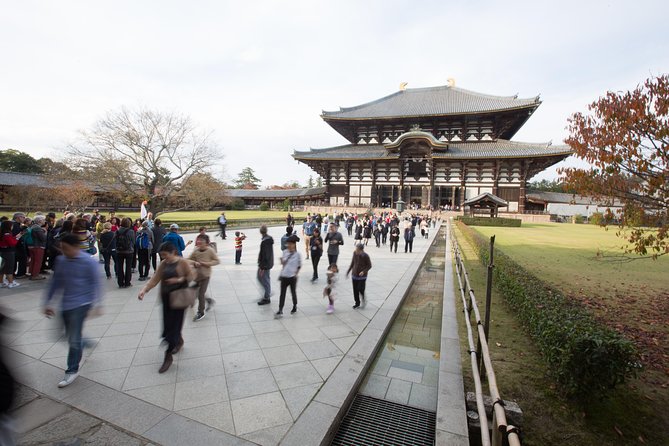
Todai-ji is the strongest stop in Nara. The temple complex is a World Heritage site and a central symbol of the Nara Period. Its Great Buddha Hall is one of the world’s largest wooden structures, and the bronze Great Buddha inside gives the visit a sense of scale that photographs do not fully capture.
You have about 1 hour and 10 minutes here, the longest scheduled temple visit. That extra time helps, since you need to walk through the complex, take in the hall, and allow a little room for the crowds.
I like that Todai-ji comes after the Kyoto monuments. By this point, you have seen elegant gold leaf, palace grounds, and shogun-era decoration. Todai-ji changes the mood completely. The building is immense, the Buddha is imposing, and the setting makes Buddhist devotion feel public and monumental.
The walk can be tiring late in the day, particularly after several earlier stops. Good shoes matter more here than stylish shoes. Keep your group meeting instructions in mind, since a large site and a fixed coach departure leave little room for wandering off.
Kasuga Grand Shrine brings you into the forest
Kasuga Grand Shrine offers a different kind of beauty. This Nara Period shrine is a World Heritage site, known for the more than 3,000 lanterns lining its grounds and for the belief that Nara’s deer serve as messengers of the shrine.
The scheduled visit lasts about one hour and includes admission. From January 2025, the special visit area at the Main Sanctuary is also intended to be part of the experience. Events or operating conditions can prevent entry, in which case the visit changes to the Kasuga Taisha Museum or the Todaiji Museum.
Kasuga is less about one famous object and more about the feeling of the shrine grounds, lanterns, sacred traditions, and deer connection. It gives the Nara portion a spiritual setting before the final time with the animals.
The paths can be uneven, and the combination of walking and a long day may test your legs. You should also keep your group’s pace in mind. The guide may need to move people along so the coach can leave on time.
Nara Park and the deer are fun, but stay alert
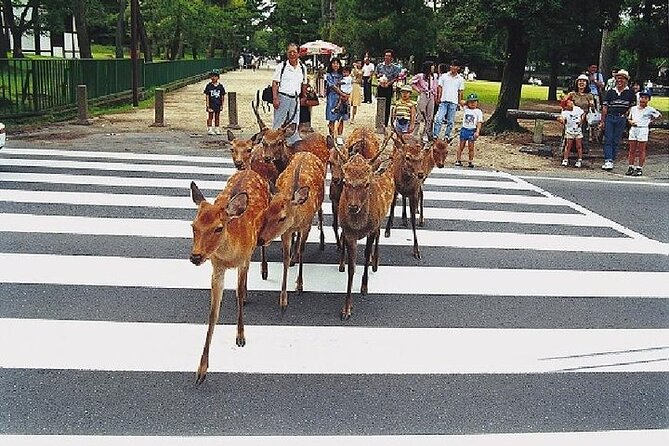
The final part of the day includes Nara Park’s free-roaming deer. This is the lighthearted finish after a full dose of temples and political history. The animals are a memorable part of Nara, and you will likely have good chances for photographs.
Do not treat the deer like tame pets, though. Guides have warned that some can be pushy or aggressive, especially when food is involved. Keep a respectful distance, follow instructions, and protect maps, bags, and anything the animals might mistake for a snack.
The park is not only a quick photo prop. Its open setting gives you a chance to breathe after the indoor temple halls and formal grounds. Still, the time available depends on road conditions, crowd levels, and the group’s return schedule.
The day can finish with a long walk to and from the bus station area. That detail matters for anyone who dislikes walking or has limited energy. Comfortable shoes, water, and a willingness to keep moving will make the final hour much easier.
What the guides add to a busy schedule
The guide is the most important variable on a tour like this. The strongest reports praise KC for polished English, humor, and the ability to explain difficult historical material without making the day feel like a lecture. Momo has also been praised for keeping the group on schedule in a friendly but firm way.
Yuki, Yoshito, Tammy, Miyuki, and Etsuko have each been singled out for clear explanations, warmth, helpfulness, and careful attention to the group. You may not have one of these guides on your departure, but the pattern is encouraging: the tour depends heavily on good storytelling and clear time instructions.
That time management is not a small matter. You need to be back at the coach when asked, even if you feel you have just found the best photograph of the day. Guides also help explain when to remove shoes, how to handle the deer, and what to expect at each religious site.
There was also an isolated complaint about communication when a participant had to leave early because of illness. That is a reminder to keep your own records and contact details handy if something goes wrong. Another serious complaint involved sick passengers on the bus and dissatisfaction with how concerns were handled. Most feedback is strongly positive, but this concern is worth noting for anyone especially cautious about shared transport.
Is $194.85 a fair price?
At $194.85 per person, this is not a budget sightseeing day. The price includes transportation, admission fees, and a licensed English guide. Lunch is included only if you select the appropriate upgrade.
The value depends on how you define a good day in Kyoto. If you want to visit these five major sites independently, you must arrange several transfers, work out admission, monitor opening days, and manage the Kyoto to Nara connection. The coach removes much of that friction and lets you cover both cities in one day.
You are paying for convenience and coverage, not solitude. Independent sightseeing may cost less in some cases and gives you more control, but it will be hard to match the same number of major stops without careful planning. I think the price is reasonable for a first-time visit when your schedule is short and you want the historical overview.
The value drops if you have already seen Kyoto’s main sights or dislike fixed schedules. In that case, spend the money on a slower day in one area, where you can linger and eat at your own pace.
Who should choose this day trip?
I would choose this tour if you are visiting Japan for the first time, have limited time in Kyoto, and want a reliable introduction to both cities. It also suits solo visitors, couples, and families who would rather follow a clear plan than decode local transport all day.
The tour can work for children, but the length and walking should be considered carefully. Children up to age five may join free, but they do not receive a bus seat or lunch unless booked at the child rate. Anyone under 18 needs written parental permission, and anyone under 15 or not yet in middle school must be accompanied by a parent or guardian.
Most people can participate, and service animals are allowed. Still, the long day, temple footwear rules, walking, and crowded sights make this a poor fit for anyone seeking a slow or physically easy outing.
You can cancel for a full refund up to 24 hours before the start time. Changes made inside that window are not accepted.
Final verdict: book it for coverage, not leisure
I recommend this Kyoto and Nara day trip when your priority is seeing the major sights efficiently. Nijo Castle, Kinkaku-ji, the Imperial Palace, Kasuga Shrine, Todai-ji, and Nara’s deer create a satisfying first chapter in Japan.
Book it if you value an informed guide, air-conditioned transport, included admissions, and a carefully managed route. Skip it if you want long temple visits, flexible meals, or time to explore Nara on your own. The tour is busy, but it covers an impressive amount of ground and gives you the context to return later for a slower look.
FAQ
How long does the Kyoto and Nara day trip last?
The experience lasts approximately 10 to 11 hours. It begins at 8:20 a.m. and ends at Kyoto Station around 6:30 p.m.
Where does the tour start and end?
The tour starts at the JTB Sunrise Tours Desk in the basement of Kyoto Avanti near Kyoto Station. It ends at Kyoto Station, and hotel drop-off is not provided.
Is lunch included?
Lunch is included only if you select a lunch option when booking. You can choose a Western-style set menu, an Indian thali option, or no lunch. The no-lunch option provides free time to eat on your own in the Kyoto Station area.
What happens if Kyoto Imperial Palace is closed?
The tour visits Kitano Tenmangu Shrine when the Imperial Palace is closed because of its scheduled closing days or an Imperial Household Agency event. If the closure falls on the 25th, the replacement is Nishi Hongan-ji Temple.
What happens if Nijo Castle is closed?
Ryoan-ji Temple is visited instead of Nijo Castle when the castle is closed. The closure period includes certain Tuesdays in January, July, August, and December, plus December 26 through January 3.
Is the tour suitable for children?
Children up to age five may join free, but they do not receive a bus seat or lunch unless booked at the child rate. Participants under 18 need written parental permission, and anyone under 15 or not yet enrolled in middle school must join with a parent or guardian.
Just added around Kyoto
- Kyoto: Gion Night Walking Tour with Geisha Insight★ 5.0 · 39 reviews
- Kyoto: Private Customizable Day Trip by Car★ 5.0 · 38 reviews
- Kyoto: Full Day Bike Tour★ 4.9 · 39 reviews
- Private Japanese Calligraphy in Kyoto – Learn Shodō with a Master★ 5.0 · 39 reviews
- Kyoto: Gion Evening Walk with Hidden Gems, Geisha & Sake★ 5.0 · 41 reviews
- Experience a tea ceremony in an authentic tearoom, in Kyoto!★ 4.5 · 41 reviews
- Kyoto Private Photo Shoot & Tour by SnapKyoto★ 5.0 · 41 reviews
- The Way of Tea: Kyoto Crafts, Hidden Temples & Wabi-Sabi Walk★ 5.0 · 41 reviews
1-Day Tours, compared.
Mt Fuji and Hakone 1-Day Bus Tour Return by Bullet Train
Read our review →
Mt Fuji & Hakone Cruise, Drum Show Bullet Train 1 Day from Tokyo
Read our review →
Peaceful Hiroshima & Miyajima UNESCO 1 Day Bus Tour
Read our review →
Fushimi Inari, Kinkakuji, Bamboo Grove 1 Day Bus Tour
Read our review →