Reviewed · 1-DAY TOURS
Kyoto Customized Private Tour: See Top Attractions in 1 Day
Kyoto rewards a plan made for you. This private tour lets you shape a half-day or full-day outing around your interests, and I like the chance to pair famous sights such as Kinkaku-ji and Fushimi Inari with places that fit your pace. I also like having a guide who can help with trains, taxis, restaurant suggestions, and local customs. The main catch is cost clarity: entrance fees, transportation for you and your guide, and lunch are extra, and a rushed four-hour visit could feel poor value.
The strongest part of this experience is the guide. Guests have praised Hiro, Naomi, Saeko, Kiyoto, Takuma, Toshi, Yuka, Mika, and others for clear English, friendly company, local knowledge, and flexible planning. The tour currently carries a 4.9 rating from 342 reviews, with 97 percent recommending it, but two serious complaints point to the need to confirm the plan, pace, and end-of-tour transport before you start.
In This Review
- Key points to know before booking
- A private Kyoto day built around your interests
- Kinkaku-ji, the Golden Pavilion
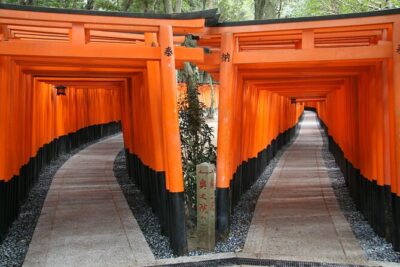
- Fushimi Inari and its thousand torii gates
- Ryoan-ji and the quiet of a Zen garden
- Arashiyama’s bamboo and Tenryu-ji
- Kiyomizu-dera, Sannenzaka, Ninenzaka, and Gion
- Nishiki Market and Pontocho after dark
- Nijo Castle and Kyoto’s imperial side
- The eastern temple route: Nanzen-ji, the Philosopher’s Path, and Ginkaku-ji
- What the guides add to the day
- Price, extra costs, and real value
- Who should book this Kyoto tour?
- Should you book it?
- FAQ
- How long does the Kyoto customized private tour last?
- How many places can I visit?
- Can I choose the attractions?
- Is hotel pickup offered?
- Are entrance fees included?
- Is transportation included?
- Is lunch included?
- How much walking is involved?
- Can I cancel for a full refund?
Key points to know before booking
- Choose two or three places for a half-day, or three or four for a full day. Kyoto is too spread out for a sensible visit to every stop on the long list.
- Hotel pickup and drop-off are offered. The stated meeting point is the Kyoto Tourist Information Center, Kyo-Navi, on the second floor of Kyoto Station Building.
- Your guide can adjust the day to your interests. Food, temples, gardens, architecture, shopping, history, and family needs can all shape the route.
- Transportation and admission costs are separate. Plan to pay for your own tickets, your guide’s tickets, and the travel between sights.
- Walking is moderate but real. Wear comfortable shoes, especially if you choose Fushimi Inari, Kiyomizu-dera, Arashiyama, or the historic Higashiyama streets.
- The best value comes from expert route planning. A good guide can help you avoid wasted crossings of the city and point you toward useful food and sightseeing choices afterward.
A private Kyoto day built around your interests
Kyoto is not one compact sightseeing zone. Kinkaku-ji lies in the northwest, Fushimi Inari in the south, Arashiyama in the west, and the Kiyomizu and Gion area in the east. Trying to cover all of them in four hours would produce more train platforms and taxi rides than meaningful sightseeing.
That is why the private format can work well. You begin by discussing what you want to see, then settle on a practical route. You might focus on temples and gardens, spend time in food markets, or use the day to get your bearings before exploring alone.
I would treat the long stop list as a menu, not a promise. For a half-day, two or three stops make sense. For a full day, three or four is the stated target. If you want the Golden Pavilion, Fushimi Inari, Kiyomizu-dera, Nishiki Market, and Arashiyama in one day, ask exactly how the transfers will work and how much time you will have at each place.
The private setup is especially useful for families and small groups. One guide can adjust the pace, answer questions as they arise, and help with practical tasks. Saeko received praise for shaping the day around a guest’s mobility issues, while Mika made the experience enjoyable for a 10-year-old. Those details show where a private guide earns the fee: not just by reciting facts, but by responding to the people in front of them.
A few more Kyoto experiences worth weighing up
- PERFECT KYOTO 1-Day Bus Tour
★ 5.0 · 13,518 reviews - Kyoto: Fushimi Inari, Kinkakuji, Bamboo Grove 1 Day Bus Tour
★ 4.8 · 4,316 reviews - 10 Must-see Spots in Kyoto One Day Private Tour (up to 7 people)
★ 5.0 · 1,108 reviews
Kinkaku-ji, the Golden Pavilion
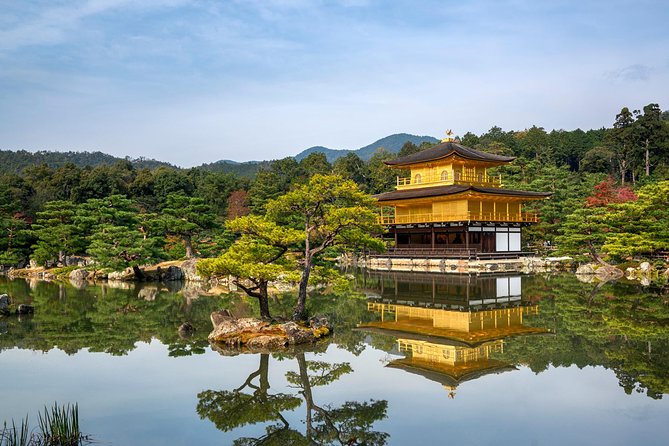
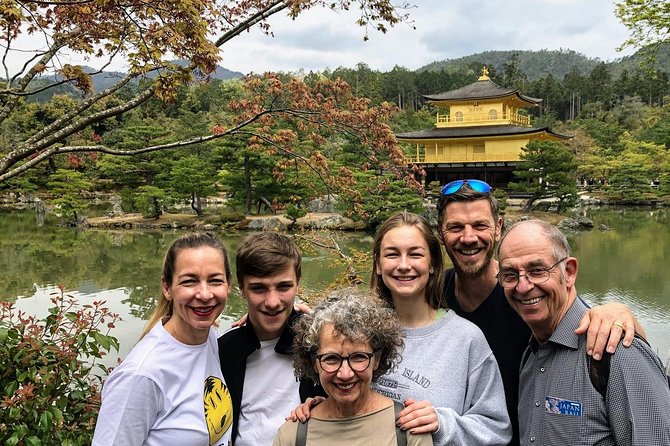
Kinkaku-ji is Kyoto’s famous Golden Pavilion, set beside a pond and surrounded by trees. It is a powerful first stop because the building is visually striking and easy to recognize, but the visit can also be quick. The suggested time is about 30 minutes, and the admission fee is not included.
Your guide can explain the temple’s place in Kyoto’s religious and cultural story, though the quality of that explanation depends heavily on the individual guide. One complaint described a guide offering only basic information at Kinkaku-ji, so I would ask for more than a photo stop. Ask what the site represents, how it has changed over time, and what details to notice beyond the gold exterior.
The route through the grounds is controlled, so this is not a place for an unhurried wander wherever you please. If you want quiet reflection, arrive with modest expectations during busy periods. If your priority is seeing a classic Kyoto image efficiently, Kinkaku-ji fits the tour well.
Fushimi Inari and its thousand torii gates
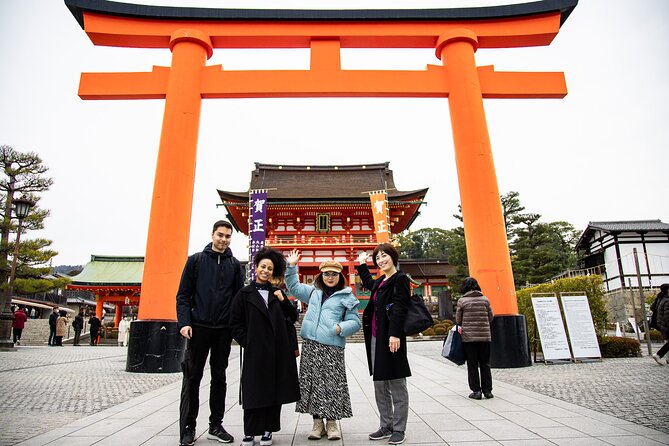
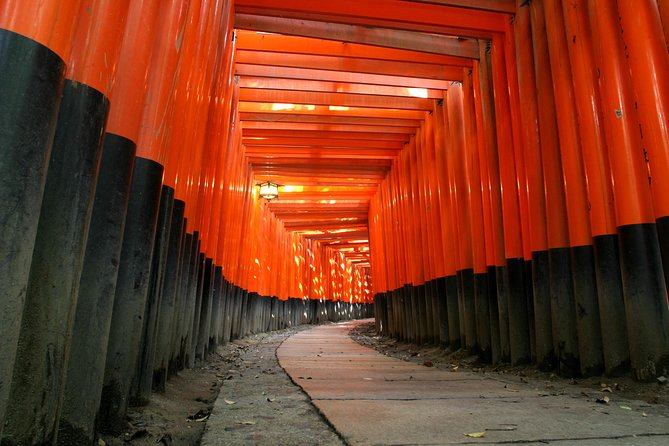
Fushimi Inari-taisha is one of Kyoto’s most memorable sights. Its orange torii gates climb the wooded slopes behind the main shrine, creating a long corridor of repeating color and shadow. Admission is free, and the suggested visit is about 45 minutes.
That time is enough for a taste, not a full climb. You can see the main shrine area and walk through part of the torii route, but you should not expect to reach every upper section in a short visit. The path includes steps and slopes, so comfortable shoes matter here more than at many city temples.
This is a good place to ask your guide about Shinto customs, shrine etiquette, and the meaning of the gates. The private format also helps you decide when to turn around. If you want a longer walk, say so at the start and reduce the number of other stops.
Ryoan-ji and the quiet of a Zen garden
Ryoan-ji offers a very different experience from Fushimi Inari. Its best-known feature is the dry rock garden, a spare arrangement designed for contemplation. The suggested time is 30 minutes, and admission is extra.
This stop rewards slowing down, even if only briefly. Sit, look, and let the garden work on you. A guide can add context, but the point is not to fill every quiet moment with talk. Ask for time to observe before moving on.
Ryoan-ji pairs naturally with Kinkaku-ji because both are in Kyoto’s northwest. That makes them a sensible combination for a half-day, especially if you want traditional architecture and gardens without crossing the entire city.
A completely different kind of day out in Kyoto:
- Kyoto: Tea Ceremony in a Traditional Tea House in Kiyomizu
★ 4.9 · 3,519 reviews - Kyoto Geisha Walking Tour: Gion District & Hidden Gems
★ 4.7 · 3,273 reviews - Kyoto: Tea Ceremony Ju-An at Jotokuji Temple
★ 4.9 · 3,207 reviews - Kyoto: Gion Magical Night Walking Tour with Geisha Trivia
★ 4.9 · 2,393 reviews
Arashiyama’s bamboo and Tenryu-ji
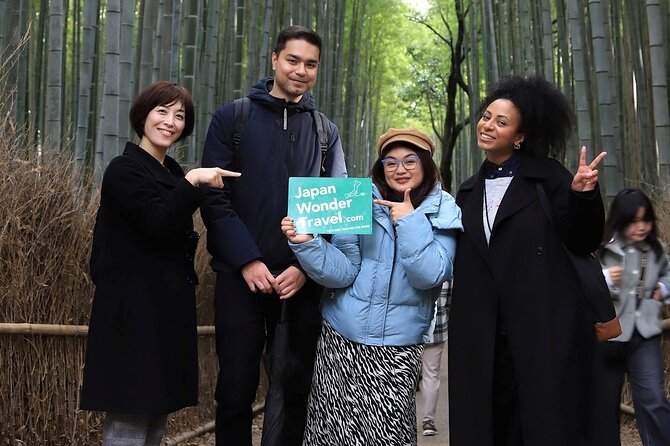
The Bamboo Forest Street in Arashiyama offers one of Kyoto’s most recognizable walks. Tall bamboo lines the path, and the setting feels removed from the city even though the route is a major attraction. Entry to the grove is free, with about 45 minutes suggested.
The grove is a short experience unless you combine it with nearby sights. It can also be crowded, so do not expect complete silence or solitude. Your guide may help you choose a sensible route and connect the bamboo walk with Tenryu-ji Temple.
Tenryu-ji is a major Zen temple in the same area, known for its temple buildings and gardens. The supplied schedule lists only one minute for this stop, which is plainly too little for a meaningful visit. Treat the timing as a planning error or placeholder, and confirm how long you will actually spend there. Admission is not included.
A guide named Naomi received particular praise for taking guests to Tenryu-ji, admiring its gardens, and then helping them choose another temple. That kind of adjustment is exactly what makes this tour more useful than a fixed bus route.
Kiyomizu-dera, Sannenzaka, Ninenzaka, and Gion
The eastern Kyoto group is one of the easiest areas to combine. Kiyomizu-dera sits above the historic streets of Higashiyama, while Sannenzaka and Ninenzaka lead downhill through traditional wooden buildings, shops, and tea houses. Gion lies nearby.
Kiyomizu-dera is a major Buddhist temple dedicated to Kannon, with broad views over Kyoto and a famous wooden stage. The suggested visit is 30 minutes, and admission costs extra. That is enough for the main platform and a quick look around, but you may want more time if you care about the temple’s buildings, views, and surrounding lanes.
Sannenzaka and Ninenzaka are free to explore, but the streets are steep and often crowded. They are pleasant for browsing, photography, and a gradual walk toward Gion. Give yourself room to stop at a shop or tea counter, or you may feel pushed along by the clock.
Gion is Kyoto’s historic entertainment district, known for machiya houses, tea houses, and geisha culture. The suggested visit is 30 minutes, which works for a first look but not a detailed exploration. A guide can explain local customs and help you behave respectfully around private homes and working professionals.
For a first visit, Kiyomizu-dera, the two historic slopes, and Gion make a strong half-day route. Do not add Fushimi Inari, Arashiyama, and Kinkaku-ji unless you are comfortable turning the day into a checklist.
Nishiki Market and Pontocho after dark
Nishiki Market is known as Kyoto’s Kitchen. The covered market is lined with food stalls and shops selling traditional Japanese ingredients and prepared foods. Entry is free, but you pay for anything you eat or buy.
This is a good choice if you care more about food than temple architecture. Ask your guide which foods are local specialties and how to eat them politely. The market is a place for small tastes, not necessarily a full lunch, and narrow lanes can make stopping with a large group awkward.
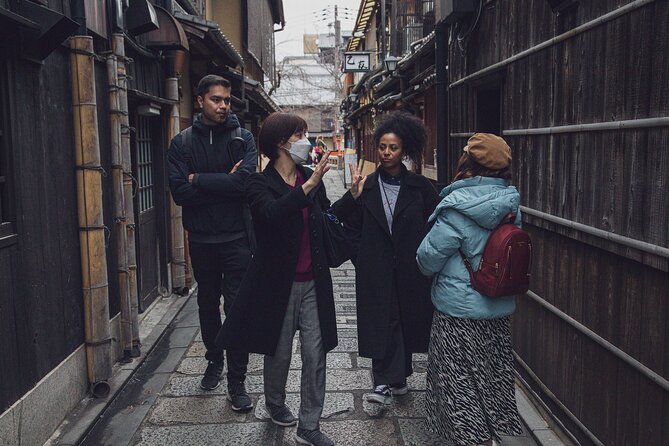
Pontocho, along the Kamo River, is another food-focused district. Its narrow alley is lined with traditional dining establishments and teahouses. The tour description does not assign a time or admission cost to Pontocho, so confirm how it fits into your route. It may work best as a walk or as a place to receive dinner suggestions after the formal tour ends.
Several guides offered restaurant advice, and one guide took guests to a restaurant in a traditional Japanese house. That kind of practical help can add real value, especially when you are unsure how to choose a restaurant or explain what you want.
Nijo Castle and Kyoto’s imperial side
Nijo Castle was built in 1603 as the official residence of Tokugawa Ieyasu. Its decorated interiors, gold leaf ceilings, and historic role make it one of the city’s best stops for anyone interested in samurai power and Japanese politics. Admission is extra, and about 45 minutes is suggested.
A good guide should help you notice more than the painted panels. Ask about the castle’s political purpose, the design of the rooms, and the famous nightingale floors. If the explanation is thin, much of the visit can turn into reading signs on your own, as one unhappy guest experienced.
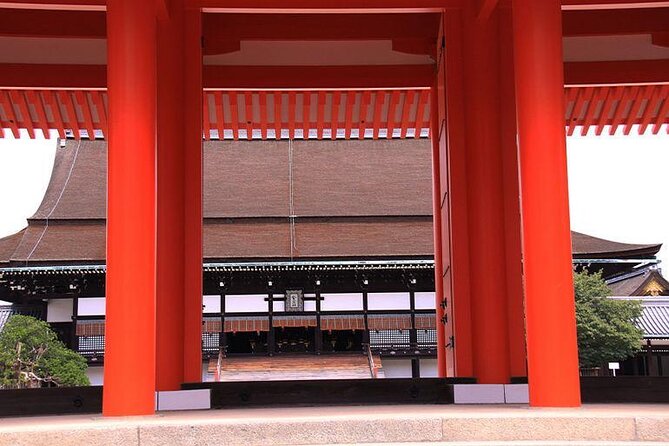
Kyoto Imperial Palace offers a different view of the city’s past. It served as the imperial family’s residence for more than a thousand years, from the Heian period onward. Admission is free, but the schedule lists only one minute, so you should confirm whether the plan is a proper visit or simply an exterior stop.
The eastern temple route: Nanzen-ji, the Philosopher’s Path, and Ginkaku-ji
The Philosopher’s Path follows a canal for about two kilometers near Ginkaku-ji. It is one of Kyoto’s calmer city walks, especially when you want a break from large temple grounds and commercial streets. The path makes sense as part of an eastern Kyoto day, but it is not a quick add-on if you want to walk its full length.
Nanzen-ji is a major Rinzai Zen temple with broad grounds and several areas that require separate admission. The tour description gives about one minute and excludes admission, so again, confirm the actual time before counting it as a major stop.
Ginkaku-ji, the Silver Pavilion, is known for its restrained beauty and Zen gardens. Despite its name, it is not covered in silver. One guide introduced it as a less obvious choice for guests who had already seen the city’s famous sites. The suggested one-minute visit is not enough to appreciate the gardens, so make your preference clear.
What the guides add to the day
The guide is the central variable. The highest praise goes to guides who combine good English with warmth, flexibility, historical context, and practical city help.
Kiyoto was praised repeatedly for adapting plans, finding photo spots, explaining Kyoto’s past, avoiding lines, helping with souvenirs, and even assisting with a salon visit by explaining a haircut request in Japanese. Takuma was valued for giving historical context without talking nonstop. Toshi was praised for efficient planning, crowd avoidance, family-friendly conversation, and dinner recommendations.
Yuka used different forms of transportation to make good use of limited time, while Mishima helped with train schedules. These examples matter because Kyoto sightseeing often depends on small decisions between stops. A guide who can read the day and adjust the route may save you more time than a guide who simply knows facts.
Still, service is not guaranteed to be identical with every guide. Two low-scoring accounts described weak explanations, extra transport costs that felt unexpected, a rushed schedule, and poor directions at the end. Ask at the start who pays each transportation fare, how the guide returns, and whether the guide will accompany you through lunch or leave you to eat independently.
Price, extra costs, and real value
The listed price is $132.65 per person. For a private tour, that can be fair if you are traveling with several people and use the guide well. You are paying for personal planning, local navigation, language help, and the ability to change the route.
The price is less attractive for a solo guest on a short four-hour outing, especially after adding temple admission, transportation for both you and the guide, and lunch. A full day with a small group may offer better value because the guide’s time is shared among more people.
Before booking, calculate the likely extras. Kinkaku-ji, Ryoan-ji, Kiyomizu-dera, Nijo Castle, Tenryu-ji, Nanzen-ji, and Ginkaku-ji list admission fees as excluded. Fushimi Inari, Gion, Nishiki Market, the bamboo grove, Sannenzaka, Ninenzaka, and the Philosopher’s Path are listed as free.
Who should book this Kyoto tour?
I would choose this experience if you have one day in Kyoto, want private attention, or feel uneasy managing several distant sights alone. It also suits families, small groups, and anyone who wants a guide to adjust walking speed or explain local customs.
It is a good fit for food-focused visitors who want Nishiki Market and restaurant help, history fans who prefer Nijo Castle and the Imperial Palace, and first-time visitors who need a clear introduction to the major temples.
I would not book it expecting to see every location on the list. Nor would I choose a four-hour version for a long wish list. Pick a tight cluster and make your priorities clear. If you want deep time at gardens or a long walk at Fushimi Inari, sacrifice other stops.
The tour operates rain or shine, so bring suitable clothing and wear walking shoes. Pickup and drop-off arrangements should be confirmed, since the stated meeting point is Kyo-Navi at Kyoto Station and the listed end point returns to the meeting point. Free cancellation is available until 24 hours before the start time, but changes or cancellations inside that window are not accepted.
Should you book it?
Book this private Kyoto tour if flexibility, local guidance, and efficient navigation matter more to you than a low-cost group excursion. The best guides can make Kyoto easier, more personal, and more rewarding, especially when they adjust the route and explain what you are seeing.
Book with a clear written plan. Choose three or four priority sights, confirm transportation and admission expenses, and ask how much time you will spend at each stop. If the operator pairs you with a guide as helpful as Kiyoto, Toshi, Takuma, Saeko, or Yuka, the $132.65 price can be worthwhile. If you want a slow, independent day with long temple visits, use the tour only as a short introduction or skip it altogether.
FAQ
How long does the Kyoto customized private tour last?
The tour lasts approximately four to eight hours. You can choose a half-day or full-day format.
How many places can I visit?
The suggested plan is two to three spots for a half-day tour and three to four spots for a full-day tour. The actual number depends on your choices and the travel time between locations.
Can I choose the attractions?
Yes. You discuss your interests with the guide and select from locations such as Kinkaku-ji, Fushimi Inari, Kiyomizu-dera, Gion, Nishiki Market, Nijo Castle, Arashiyama, and others.
Is hotel pickup offered?
Yes. Hotel pickup and drop-off are included as options. The stated meeting point is the Kyoto Tourist Information Center, Kyo-Navi, on the second floor of Kyoto Station Building.
Are entrance fees included?
No. Entrance fees are not included. Fees may apply at Kinkaku-ji, Ryoan-ji, Kiyomizu-dera, Nijo Castle, Tenryu-ji, Nanzen-ji, and Ginkaku-ji.
Is transportation included?
No. Transportation fees are not included for you or the guide. Confirm the expected transport costs before the tour begins.
Is lunch included?
No. Lunch for you and the guide is not included. You can discuss food interests and restaurant choices with the guide.
How much walking is involved?
A moderate amount of walking is included. Comfortable walking shoes are recommended, especially for Fushimi Inari, Arashiyama, Kiyomizu-dera, and the sloped streets of Sannenzaka and Ninenzaka.
Can I cancel for a full refund?
Yes. You can receive a full refund if you cancel at least 24 hours before the experience start time. Cancellations or changes made less than 24 hours before the start time are not accepted.
Just added around Kyoto
- Kyoto: Gion Night Walking Tour with Geisha Insight★ 5.0 · 39 reviews
- Kyoto: Private Customizable Day Trip by Car★ 5.0 · 38 reviews
- Kyoto: Full Day Bike Tour★ 4.9 · 39 reviews
- Private Japanese Calligraphy in Kyoto – Learn Shodō with a Master★ 5.0 · 39 reviews
- Kyoto: Gion Evening Walk with Hidden Gems, Geisha & Sake★ 5.0 · 41 reviews
- Experience a tea ceremony in an authentic tearoom, in Kyoto!★ 4.5 · 41 reviews
- Kyoto Private Photo Shoot & Tour by SnapKyoto★ 5.0 · 41 reviews
- The Way of Tea: Kyoto Crafts, Hidden Temples & Wabi-Sabi Walk★ 5.0 · 41 reviews
1-Day Tours, compared.
Mt Fuji and Hakone 1-Day Bus Tour Return by Bullet Train
Read our review →
Mt Fuji & Hakone Cruise, Drum Show Bullet Train 1 Day from Tokyo
Read our review →
Peaceful Hiroshima & Miyajima UNESCO 1 Day Bus Tour
Read our review →
Fushimi Inari, Kinkakuji, Bamboo Grove 1 Day Bus Tour
Read our review →