
Reviewed · TEMPLE & SHRINE TOURS
Kyoto: Fushimi Inari Shrine and Tofukuji Temple E-Bike Tour
Kyoto is easier on two wheels. This four-hour e-bike tour links the busy sights of Fushimi Inari Shrine and Tofukuji Temple with quiet lanes, riverside paths, Gion streets, and residential corners you could easily miss on foot. I like the mix of famous places and everyday Kyoto, and I especially like how guide Maki brings Japanese customs, religion, and local life into the ride with humor and personal stories.
The small group of up to eight keeps the outing friendly and manageable, while the electric bikes make the route less demanding than a standard cycling tour. The main consideration is time: four hours gives you a useful introduction, but you may want longer at Fushimi Inari, especially if you hope to walk far up the mountain.
In This Review
- Key points at a glance
- Why an e-bike works so well in Kyoto
- Starting near Higashiyama-Sanjyo
- Gion, geisha culture, and ordinary Kyoto streets
- Fushimi Inari Shrine and the meaning of the torii
- Tofukuji Temple and a pause in the Zen garden
- The riverside ride back to the city
- Maki makes the difference
- Who should book this four-hour Kyoto tour?
- Is $83 a fair price?
- Should you book the Fushimi Inari e-bike tour?
- FAQ
- How long does the Kyoto e-bike tour last?
- Where does the tour meet?
- Which languages are available?
- What is included in the price?
- Does the tour include lunch?
- Is hotel pickup provided?
- Is the tour suitable for children?
- What should I bring?
Key points at a glance
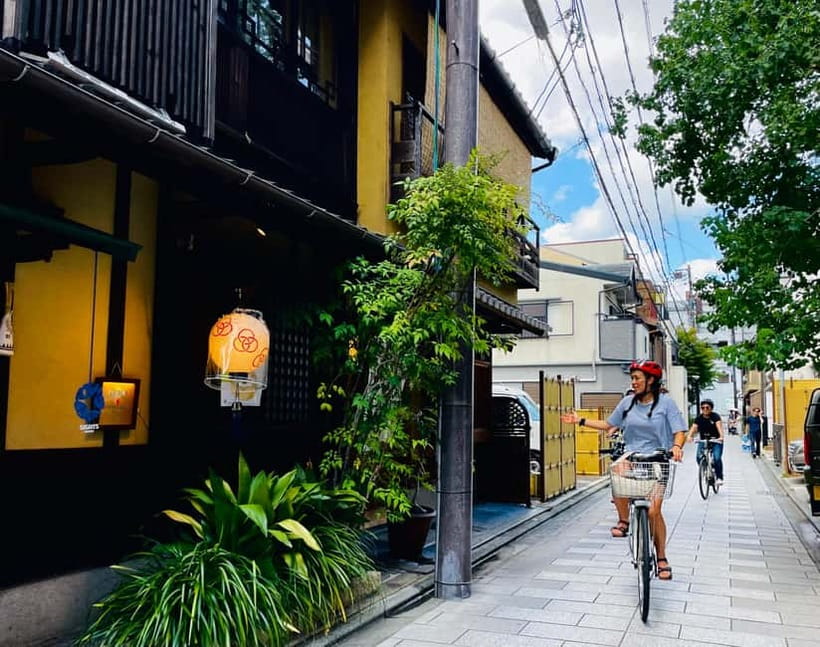
- Gion by bicycle: Learn about geisha culture and Kyoto customs while riding through one of the city’s best-known districts.
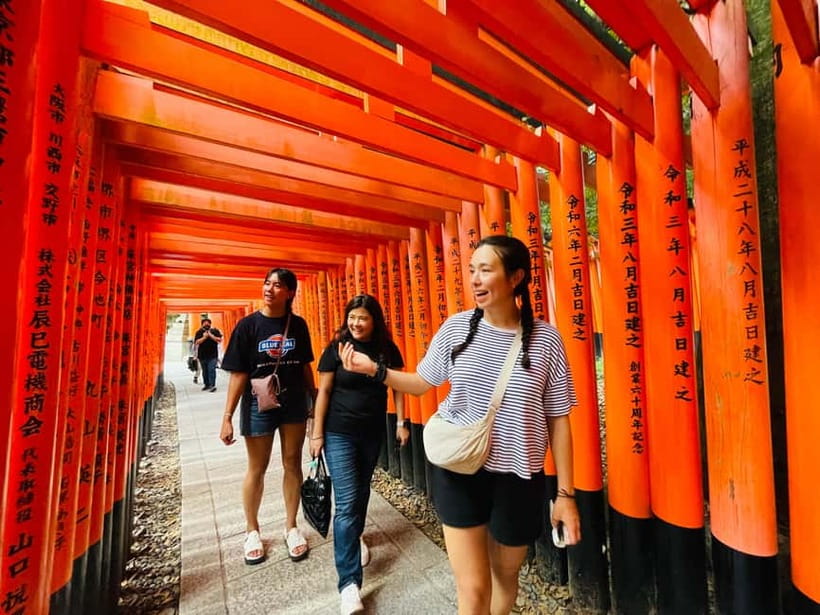
- Fushimi Inari with context: See the famous orange torii gates and get an explanation of the shrine’s Shinto beliefs and history.
- Tofukuji’s Zen garden: Slow down at a Buddhist temple and enjoy a quieter, more reflective stop.
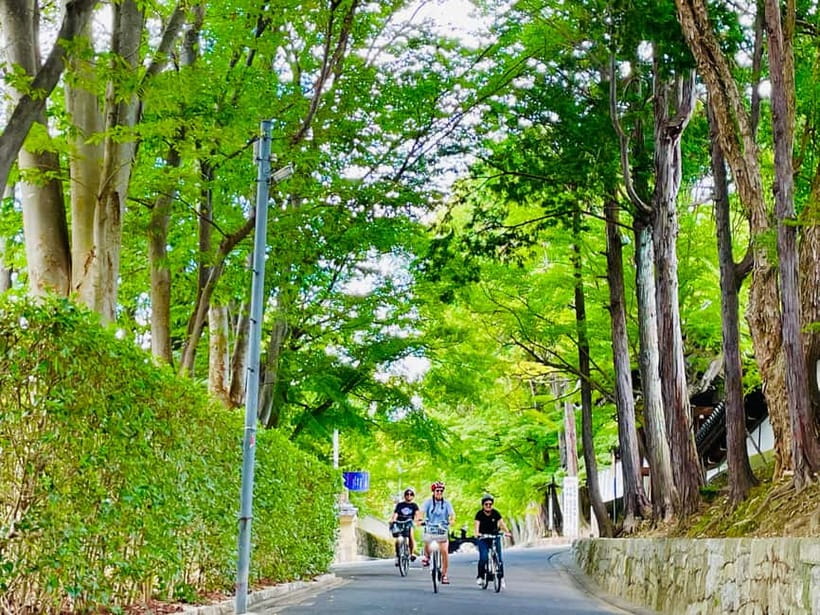
- Quiet Kyoto routes: Ride through residential streets, along rivers and creeks, and past less crowded shrines and temples.
- Maki’s guiding style: Expect clear English, good humor, local stories, history, and help with family photographs.
- Practical four-hour format: A good fit if you want culture and sightseeing without spending a full day walking between temples.
Why an e-bike works so well in Kyoto
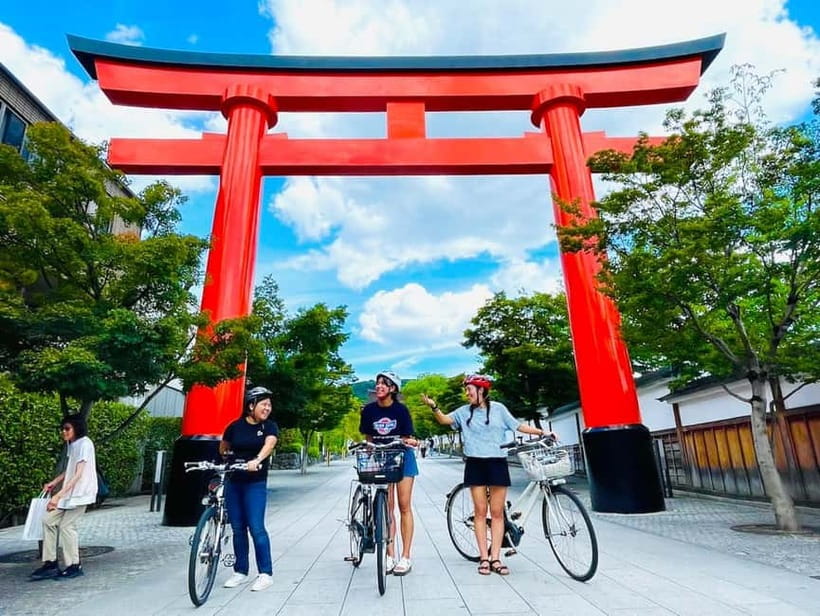
Kyoto’s main sights can look close together on a map, but walking between them takes time. Buses can be crowded, and taxis remove you from the street life that makes the city interesting. An e-bike gives you a middle ground: you cover more ground than on foot while still moving slowly enough to notice a narrow lane, a small shrine, or a quiet stretch beside the river.
The electric assistance matters most when you are tired or riding an uphill section. You still pedal, but the bike reduces the effort. That makes this tour suitable for people who enjoy cycling but do not want a demanding workout. Several families and groups of middle-aged riders found the bikes easy to handle, and the route is described as comfortable rather than strenuous.
You will receive a short orientation on how the bike works and how to ride in Japan. That is important. The route includes calm back streets but also some busier areas, so you need to follow Maki’s directions and remain alert. One useful detail from the experience is that the group often rides in a line and stops before the guide explains the next site. You are not expected to listen while moving through traffic.
The bikes were repeatedly praised for being clean, sturdy, and well maintained. Helmets, insurance, a snack, and a water bottle are included. You should still wear comfortable clothing and shoes, bring sunscreen, and carry water if you tend to drink often.
More Bike Tours in Kyoto
- Hidden Kyoto E-Biking tour
★ 5.0 · 1,843 reviews - Bike Tour Exploring North Kyoto plus Lunch
★ 5.0 · 1,087 reviews - Arashiyama Bamboo Forest & Hidden Gems Bike Tour (Early Bird)
★ 5.0 · 613 reviews
Starting near Higashiyama-Sanjyo
The tour begins at Pedal Adventure Kyoto, at a temple near Higashiyama-Sanjyo. You meet the guide there, get set up with your bicycle and helmet, and learn the basic riding rules before setting off.
This opening is more useful than it sounds. If you have just arrived in Japan, traffic patterns and road etiquette may feel unfamiliar. A careful briefing helps you get comfortable before the ride becomes more active. The small group also means the guide can pay attention to different cycling speeds and answer questions as you go.
Maki has received especially strong praise for her warm, lively manner and clear English. Her style is not a dry lecture. She uses stories, jokes, personal experiences, and sometimes a binder with pictures to make historical points easier to follow. That works well for teenagers and adults who want more than a list of dates.
The pace includes frequent stops, which helps keep the ride social and gives you time to look around. The tradeoff is that every stop takes time from the major attractions. If your main goal is an extended visit to Fushimi Inari, this format may feel brief.
Gion, geisha culture, and ordinary Kyoto streets
The ride through Gion gives you an early lesson in how Kyoto presents its traditions. This is the district most associated with geisha culture, old customs, and refined architecture, but the tour does not treat it as a stage set. Maki explains geisha traditions and local manners while helping you understand how the district fits into present-day Kyoto.
Cycling through Gion is useful because you see the area in motion. Instead of simply arriving at a photo stop, you move through connected streets and get a sense of how the traditional quarter meets the modern city. You should be respectful around people, homes, and businesses, and follow the guide’s instructions about where to stop.
The route then heads toward suburban and residential parts of Kyoto. This is one of the strongest reasons to choose the tour. You might pass quiet alleys, waterways, small shrines, and streets where daily life continues without the crowds found at the headline sights. Several riders particularly appreciated seeing places they would not have found on their own.
The route includes both common attractions and less familiar temples. That balance keeps the morning or afternoon varied. You get the satisfaction of seeing a major Kyoto landmark, but you also gain a better sense of the city beyond its sightseeing postcard.
Fushimi Inari Shrine and the meaning of the torii
Fushimi Inari is the tour’s major attraction. Its long lines of orange torii gates make it one of Japan’s most recognizable religious sites, and it can be crowded. Arriving by bicycle lets you approach the shrine as part of a wider route rather than treating it as your only destination.
At the shrine, Maki explains its history, Shinto beliefs, and the meaning behind the customs you see. That guidance changes the experience. Without context, it is easy to photograph the torii gates and move on. With an explanation of Shinto practice, you have a better idea of how to behave and what the buildings, offerings, and rituals represent.
Expect a mix of walking and cycling here. You will leave the bicycle and explore on foot, so comfortable shoes are essential. The tour includes the entrance fees for two places, which covers the planned paid stops.
You should set your expectations carefully. Four hours includes the ride, several stops, explanations, and Tofukuji, so this is not an in-depth mountain hike at Fushimi Inari. One rider wanted more time at the shrine, and that is a fair point. If you want to walk deep into the torii-covered trails, take your time with photographs, or explore every level, plan a separate visit.
For a first look, though, the stop works well. You see the iconic setting, learn how Shinto differs from Buddhism, and leave with a clearer understanding of what you might return to later.
More E-Bike Tours in Kyoto
- 5 Top Highlights of Kyoto Full Day Bike Tour (E-bike option)
★ 5.0 · 511 reviews - E-Bike Tours of the highlights of Kyoto!!!
★ 5.0 · 291 reviews - Kyoto: City Secrets eBike Tour
★ 4.9 · 196 reviews - Pedal Adventure Kyoto’s iconic landmarks on an e-bike tour
★ 5.0 · 189 reviews
Tofukuji Temple and a pause in the Zen garden
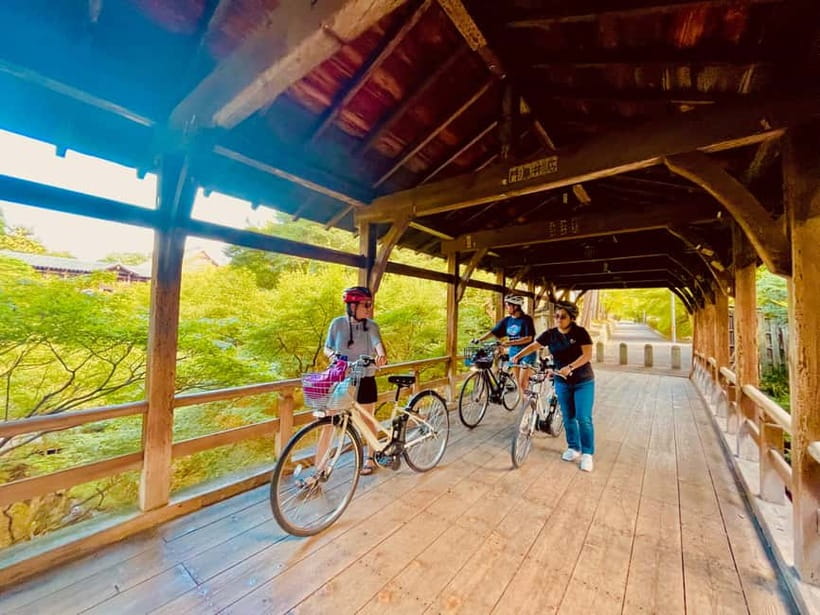
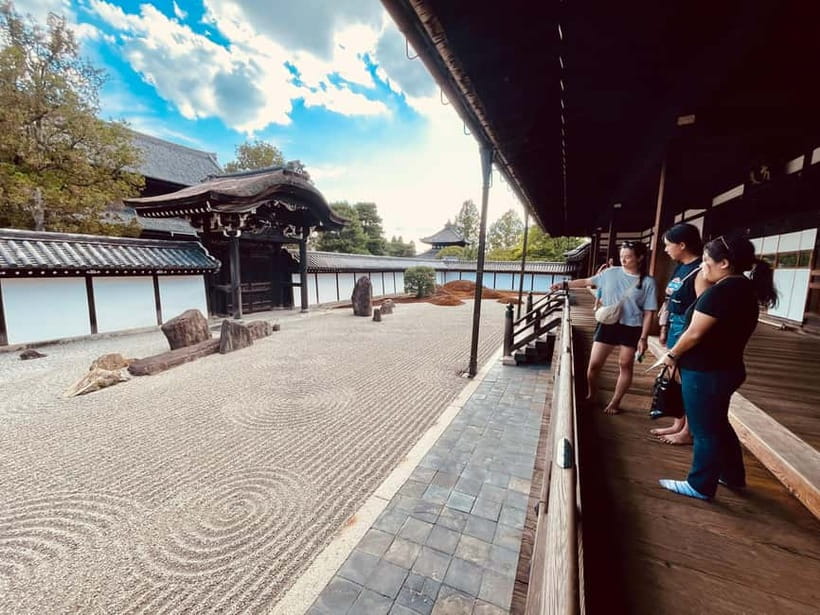
After Fushimi Inari, the tour visits Tofukuji Temple. The stop adds a different mood and helps balance the shrine experience. Fushimi Inari is visually striking and often active, while Tofukuji gives you space to slow down and pay attention.
The Zen garden is the key moment. Maki allows time for quiet reflection rather than filling every minute with commentary. That pause is valuable on a sightseeing tour, since a long sequence of facts and photographs can become tiring. Sit, look, and let the setting settle before getting back on the bike.
Maki also explains the difference between Shinto and Buddhism in Japan. This is one of the most useful parts of the tour because the two traditions can seem confusing when you first visit Japanese shrines and temples. Learning the basic distinctions helps you understand later stops during your trip.
The temple visit is not a full architectural study, and you should not expect a long guided tour of every building. Its strength is the contrast with Fushimi Inari and the chance to enjoy a calm place within a busy sightseeing day.
The riverside ride back to the city
The return route is part of the experience, not simply transportation back to the shop. The ride follows a river or riverside path for part of the way, offering a pleasant change after the temple stops. Several riders enjoyed this final stretch because it felt scenic, relaxed, and easy.
This is also where the e-bike earns its keep. After several hours of cycling and walking, the electric assistance helps you finish without feeling worn out. The guide keeps the group together and chooses routes that combine efficiency with attractive surroundings.
You may ride on main roads at points, so this is not a traffic-free park excursion. Still, the route uses side streets where possible, and Maki’s directions are a major part of feeling secure. If you are nervous about city cycling, say so at the start and pay close attention during the orientation.
The tour ends back at Pedal Adventure Kyoto. From there, you can continue exploring Kyoto on your own, now with a better sense of how the city’s districts and religious sites connect.
Maki makes the difference
The route is good, but the guide is the reason this experience earns such strong praise. Maki combines history, religion, infrastructure, customs, samurai stories, geisha culture, and daily life without making the tour feel like a classroom.
Her humor matters. A guide who can explain a serious subject clearly, then make the group laugh, keeps the pace lively. Families with teenagers found that she included younger riders rather than speaking only to the adults. She also took family photographs, a small service that can make a half-day outing more memorable.
Maki’s personal stories add another layer. You hear about Japan not only as a set of historic sites, but as a place where people follow customs, share public spaces, and maintain local traditions. She also gave some riders suggestions for the rest of their Japan trip, which is useful if this tour comes early in your Kyoto stay.
One practical point came up: because the guide explains things after the group stops, people gather around her to listen. A microphone or earpiece could make it easier for everyone to hear. That is not a reason to avoid the tour, but if you have hearing difficulties, stand close to the guide during explanations.
Who should book this four-hour Kyoto tour?
I would choose this for a first or second day in Kyoto, when you want an overview of the city and ideas for later independent sightseeing. The route gives you a useful mix of major attractions, local streets, religious traditions, and practical orientation.
It suits:
- Couples who want an active way to see Kyoto
- Families with children aged 12 and older
- Teenagers who may lose interest during a full day of temples
- Adults who enjoy cycling but prefer electric assistance
- First-time visitors who want local explanations
- Anyone who wants to see residential Kyoto as well as major sights
It is less suitable if you dislike bicycles, want a slow and highly detailed temple tour, or have limited mobility. The tour is not suitable for children under 12, pregnant women, or people with mobility impairments. You need to manage a mix of cycling and walking, and comfortable shoes are more important than stylish ones.
Smoking and alcoholic drinks are not allowed in the vehicle. Hotel pickup and drop-off are not included, and lunch is also separate, so allow time to reach the meeting point and plan a meal around the four-hour schedule.
Is $83 a fair price?
At $83 per person, this is not the cheapest way to visit Fushimi Inari. You can reach the shrine independently for much less. The price makes more sense when you count the bicycle, electric assistance, helmet, insurance, water, snack, two entrance fees, route planning, and four hours of live guiding.
The bigger value is access to interpretation and places you might otherwise skip. You are paying to connect Gion, everyday neighborhoods, Fushimi Inari, Tofukuji, and riverside routes in one outing. You also avoid spending time working out a cycling route, finding the right roads, and figuring out how Japanese religious customs work on your own.
For a family or couple who would otherwise book several separate activities, the combination is useful. For an independent cyclist who already knows Kyoto and only wants bike rental, the price may feel high.
Free cancellation up to 24 hours before the start and the option to reserve now and pay later make it easier to fit into a changing itinerary. Check the available start times before booking, since the activity lasts four hours and does not include lunch.
Should you book the Fushimi Inari e-bike tour?
Book it if you want a friendly, active introduction to Kyoto that mixes famous sights with quieter streets. Maki’s humor, English, cultural explanations, and care with safety are the strongest reasons to go. The e-bikes keep the ride approachable, and the four-hour length gives you a full experience without taking over your day.
Do not book it expecting a long climb through every torii gate or an exhaustive visit inside each temple. You will see several places, but the strength is variety and connection rather than maximum time at one site.
For most first-time visitors who enjoy cycling, I think the $83 price is reasonable. It gives you a practical orientation to Kyoto, a better understanding of Shinto and Buddhism, and a route through parts of the city you might not reach alone.
FAQ
How long does the Kyoto e-bike tour last?
The tour lasts four hours.
Where does the tour meet?
The meeting point is Pedal Adventure Kyoto, at a temple near Higashiyama-Sanjyo.
Which languages are available?
The tour is conducted in English with a live local guide.
What is included in the price?
The price includes a local guide, electric bicycle rental, helmet, insurance, a snack, a water bottle, and entrance fees for two places.
Does the tour include lunch?
No. Lunch is not included.
Is hotel pickup provided?
No. Hotel pickup and drop-off are not included.
Is the tour suitable for children?
Children under 12 cannot join. The experience can suit older children and teenagers who are comfortable cycling.
What should I bring?
Bring comfortable shoes, comfortable cycling clothes, sunscreen, a water bottle, and a camera if you want photographs of the route and sights.
More Temple & Shrine Tours in Kyoto
- Kyoto: Fushimi Inari, Kinkakuji, Bamboo Grove 1 Day Bus Tour
★ 4.8 · 4,316 reviews - Kyoto: Tea Ceremony in a Traditional Tea House in Kiyomizu
★ 4.9 · 3,519 reviews - Kyoto: Tea Ceremony Ju-An at Jotokuji Temple
★ 4.9 · 3,207 reviews - Fushimi Inari Hidden Hiking Tour (Private Option Available)
★ 5.0 · 1,750 reviews
Just added around Kyoto
- Kyoto: Private Customizable Day Trip by Car★ 5.0 · 38 reviews
- Kyoto: Gion Night Walking Tour with Geisha Insight★ 5.0 · 39 reviews
- Kyoto: Full Day Bike Tour★ 4.9 · 39 reviews
- Private Japanese Calligraphy in Kyoto – Learn Shodō with a Master★ 5.0 · 39 reviews
- Experience a tea ceremony in an authentic tearoom, in Kyoto!★ 4.5 · 41 reviews
- Kyoto: Gion Evening Walk with Hidden Gems, Geisha & Sake★ 5.0 · 41 reviews
- Kyoto Private Photo Shoot & Tour by SnapKyoto★ 5.0 · 41 reviews
- The Way of Tea: Kyoto Crafts, Hidden Temples & Wabi-Sabi Walk★ 5.0 · 41 reviews
Temple & Shrine Tours, compared.
Fushimi Inari, Kinkakuji, Bamboo Grove 1 Day Bus Tour
Read our review →
Tea Ceremony in a Traditional Tea House in Kiyomizu
Read our review →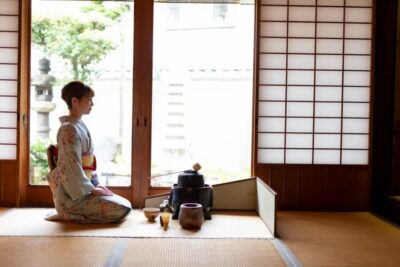
Meiji Shrine, Asakusa, Skytree Bus Tour and Cruise
Read our review →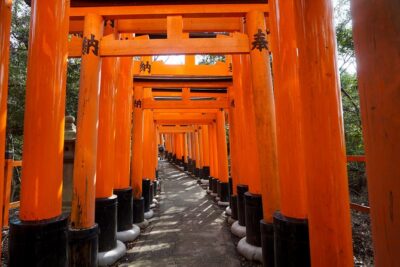
Fushimi Inari Hidden Hiking Tour (Private Option Available)
Read our review →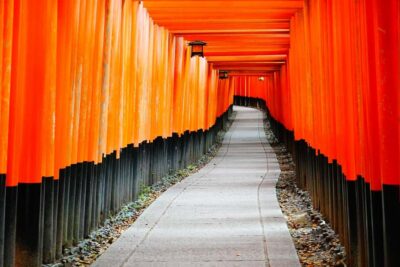
Osaka/Kyoto:Kinkakuji,Arashiyama,FushimiInariShrine,NaraPark
Read our review →
Asakusa Walking Tour with Sensoji Temple Visit
Read our review →
Nikko: Kegon Falls, Lake Chuzenji & Toshogu Temple
Read our review →Browse the lists this tour appears in