
Reviewed · GOVERNMENT-LICENSED GUIDE TOURS
Mt. Koya Sacred Full-Day Private Tour (Osaka departure) with Licensed Guide
Mount Koya rewards the effort. This private day tour takes you from Osaka into a quieter world of temple halls, cedar paths, old graves, and Shingon Buddhist tradition. I like the one-to-one guidance and the freedom to shape the day around your interests. I also like that your guide handles the complicated train, cable car, and local transport connections.
The catch is the distance. You can spend about two and a half hours each way getting between Osaka and Koyasan, leaving less time on the mountain than you might expect. You will also pay transportation, lunch, and some entrance fees separately, so the $224.02 price is not the full cost of the day.
In This Review
- Key points at a glance
- Why Mount Koya makes a memorable day from Osaka
- The long journey from Osaka to Koyasan
- Kongobu-ji Temple and the headquarters of Shingon Buddhism
- Okunoin, the sacred walk through the cemetery
- Danjo Garan, where Koyasan began
- Reihokan Museum and the art of the mountain
- Daishi Kyokai and the living side of Shingon Buddhism
- Tokugawa Mausoleum and Japan’s ruling family
- Lunch, walking, and the pace of the day
- Is $224.02 a fair price?
- Who should book this Mount Koya day trip?
- Should you book it?
- FAQ
- Where does the tour begin?
- How long does the experience last?
- How long does it take to reach Mount Koya?
- Is transportation included in the price?
- Is a private vehicle provided?
- How many sights can I visit?
- Is lunch included?
- Is the tour suitable for people who do not walk easily?
- Can I cancel for a full refund?
Key points at a glance
- The journey takes about 2.5 hours each way: The trip includes trains and the cable car, with a guide helping you manage the connections.
- You choose three or four sights: This is not necessarily a visit to every place listed in the schedule, so discuss your priorities before setting out.
- Okunoin is the emotional center: The cemetery and Kobo Daishi’s mausoleum offer the most atmospheric walk of the day.
- Private guiding is the main value: Guides such as Yuki, Naka, Yuka, Hiro, and Emi are praised for clear English, patience, local knowledge, and careful navigation.
- Expect hills, steps, and plenty of walking: This is not a bus tour, and the mountain day can be tiring.
- Costs add up: Train, cable car, local transport, lunch, and some admissions are not included.
Why Mount Koya makes a memorable day from Osaka
Mount Koya, or Koyasan, is the center of Shingon Buddhism, a major Japanese Buddhist tradition founded by Kobo Daishi, also known as Kukai. The mountain settlement is not just a collection of temples for sightseeing. It remains a working religious center, with temple buildings, administrative offices, sacred grounds, and a cemetery tied closely to Buddhist practice.
That gives the day a different feel from visiting a single famous temple in Kyoto. You are moving through an entire sacred community. The quiet woodland setting and long transport ride help create a useful break from Osaka’s city streets.
The tour is private and limited to your own party. That matters here because Mount Koya can be approached in several ways. You may care most about Buddhist art, Japanese history, temple architecture, cemetery symbolism, or simply a peaceful walk. A private guide can spend more time on your interests instead of giving the same speech to a large group.
The most praised part of the experience is the guides. Yuki is repeatedly described as warm, patient, and excellent at navigation. Naka is praised for his fluent English and detailed explanations. Yuka, Hiro, and Emi are also singled out for their care and command of the route. One guide even used the train ride to explain Japanese culture and history, turning a long transfer into part of the experience.
More licensed guide tours in Japan:
- Tokyo 6hr Private Tour with Government-Licensed Guide
★ 5.0 · 3,902 reviews - Tokyo 4hr Private Tour with Government-Licensed Guide
★ 5.0 · 1,394 reviews - Kyoto 6hr Private Tour with Government-Licensed Guide
★ 5.0 · 1,369 reviews
The long journey from Osaka to Koyasan
The day begins with a meeting at your Osaka-area hotel, but pickup is on foot within the designated area. There is no private vehicle included. You and your guide walk to public transportation and travel by train, eventually reaching Koyasan by cable car and local connections.
The scheduled journey is about one hour and thirty minutes each way, although one participant advises allowing closer to two and a half hours each way from Osaka. The difference likely depends on your hotel, station connections, waiting time, and the exact route used. Either way, this is a serious day trip, not a quick side excursion.
This is where the guide earns much of the fee. First-time visitors can find Osaka’s rail system, Koyasan train connections, cable car, and mountain buses confusing. Guides such as Emi and Yuki are praised for getting their parties through the stations and onto the right transport without fuss.
Bring patience and use the ride well. You may get mountain views from the train, and several guides use the journey to introduce the story of Kukai, Japanese Buddhism, and the places ahead. If you dislike long transfers, this may feel like too much travel for one day. If you enjoy watching Japan change from city to countryside, the journey becomes part of the reward.
Transportation costs are not included, and you must also cover your guide’s transportation. Confirm the expected fare before departure so the final price does not surprise you.
Kongobu-ji Temple and the headquarters of Shingon Buddhism
Kongobu-ji is the main headquarters of the Shingon Buddhist sect, which has thousands of temples in Japan and millions of followers worldwide. The visit usually takes about an hour.
Inside, you can see religious objects and painted fusuma sliding doors. The building gives you a strong introduction to the organization and visual language of Shingon Buddhism before you reach the more secluded areas of the mountain.
A guide makes a real difference here. Temple interiors can be easy to read as a series of beautiful rooms unless someone explains what you are seeing. Your guide can connect the painted doors, religious objects, and temple layout to the larger role of Kongobu-ji.
The time is short, though. Since the private tour normally includes only three or four selected sites, ask to include Kongobu-ji if architecture and Buddhist art matter to you. Admission arrangements vary within the tour information, and entrance fees are generally listed as separate expenses, so check what your guide entry covers before arrival.
Okunoin, the sacred walk through the cemetery
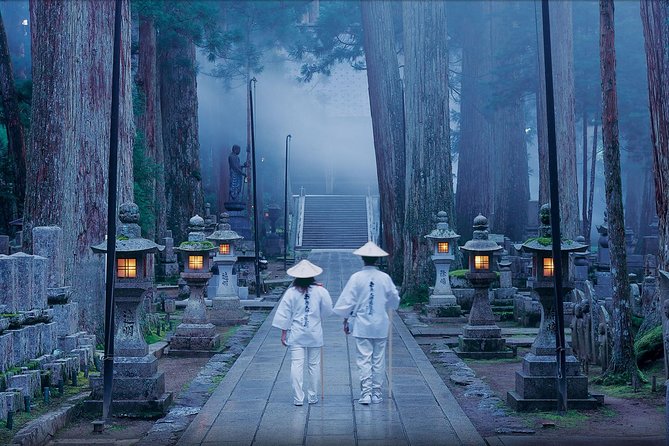
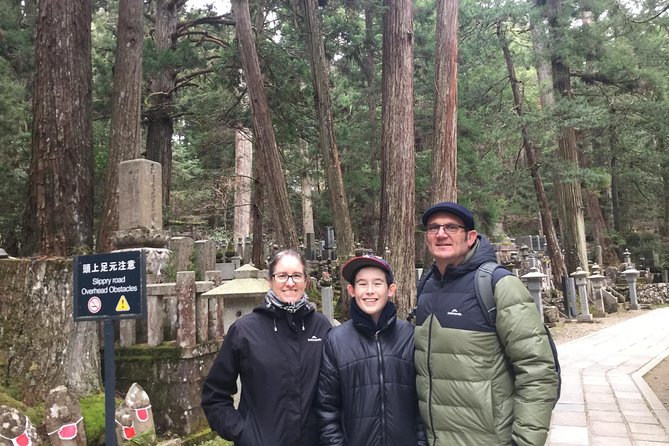
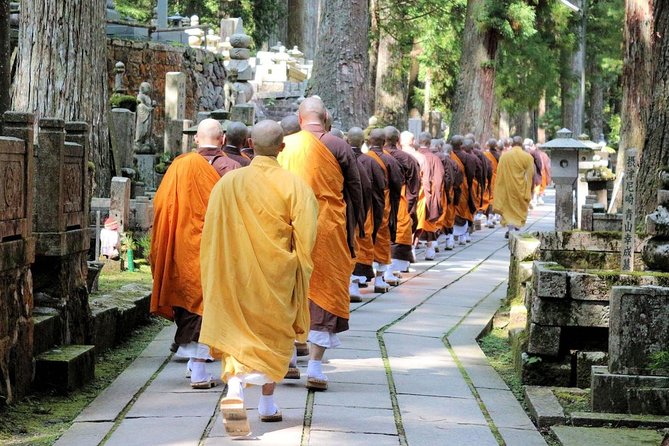
Okunoin is the heart of Mount Koya and, for many people, the most powerful part of the day. Kobo Daishi is believed to rest here, and the route passes through a large cemetery containing the graves of prominent figures.
This is not a quick photo stop. The scheduled visit lasts about an hour and a half, and you should expect a substantial walk. The cemetery is part of the sacred setting, not merely an old burial ground. Your guide can explain the people, memorials, and religious meaning connected with the route.
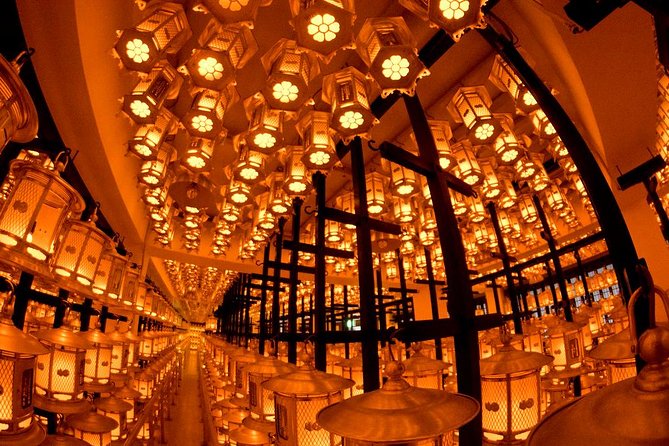
Several guides describe walking deep into the inner sanctuary, and one party found the hall of lanterns a highlight of the entire Japan trip. That detail tells you what makes Okunoin special: the effect comes from the slow approach, the wooded setting, and the changing sense of place. It is less about checking off a monument and more about paying attention as you walk.
Wear shoes that can handle hills and uneven paths. One participant specifically advises being fit enough for stairs and slopes. Rain, cold, or snow can make the route more demanding, but they may also add to its quiet mood. Guides have led this tour in snowy, rainy, and autumn conditions, so weather can shape the day in a major way.
The admission fee for Okunoin is not included. Ask your guide which parts of the visit require payment and carry funds for those costs.
A few more Japan experiences worth weighing up
- From Tokyo: Mount Fuji Full-Day Sightseeing Trip
★ 4.5 · 4,970 reviews - Mount Fuji Full-Day Private Tour from Tokyo (Customizable)
★ 4.9 · 1,470 reviews - Hiroshima / Miyajima Full-day Private Tour with Government Licensed Guide
★ 5.0 · 1,298 reviews - Tokyo Private Full-Day Tour by Car or Van
★ 5.0 · 684 reviews
Danjo Garan, where Koyasan began
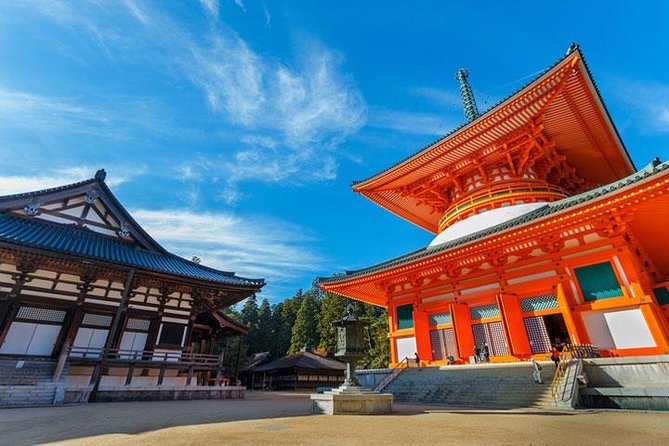
Danjo Garan is one of Mount Koya’s two central sacred sites. It marks the ground where Kobo Daishi founded Koyasan in the ninth century and began building the religious center.
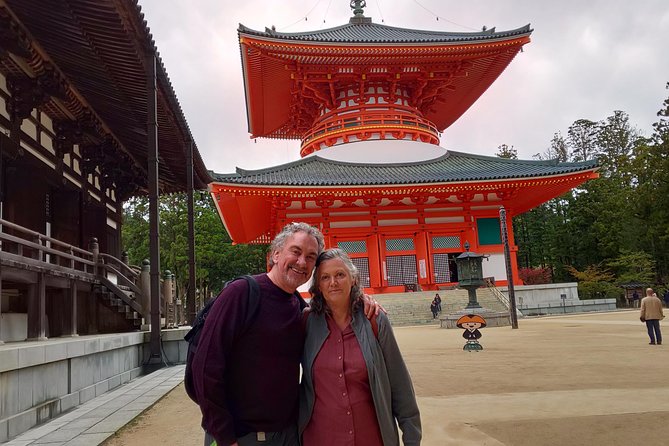
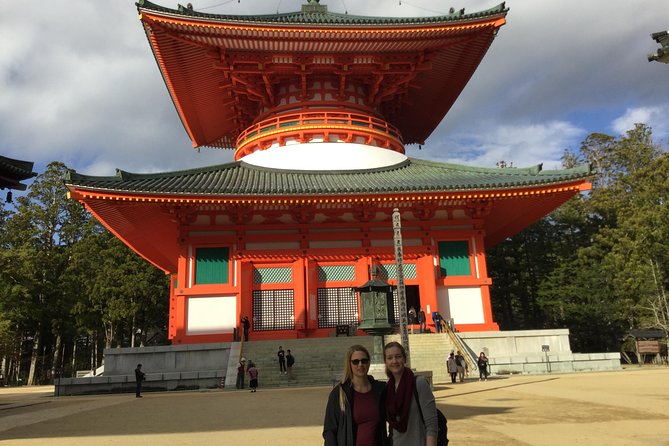
The site helps you understand the mountain as a planned center of worship rather than a random group of old temples. The main structures include the Konpon Daito Pagoda and Kondo Hall, both highlighted by visitors as memorable stops.
Allow about an hour here. This is a good place to ask your guide how Shingon Buddhism developed in Japan and how the different buildings relate to one another. The site also works well for visitors who care about architecture, religious history, and the connection between physical space and ritual.
Danjo Garan is listed among the places where guide admission is covered, but personal entrance fees can still apply elsewhere. Since the tour includes only three or four places by design, mention Danjo Garan when you customize the itinerary.
Reihokan Museum and the art of the mountain
The Reihokan Museum preserves Mount Koya’s religious and cultural treasures. Its entrance hall was designed in the style of Byodoin Temple in Uji, and the museum contains several exhibition areas.
The scheduled visit is only thirty minutes, so this is a compact museum stop rather than a long art-study session. It can be a smart choice if you want context for the objects you see in the temples. It also gives you a break from the outdoor walking route.
I would choose Reihokan if you have a strong interest in Buddhist sculpture, paintings, and ceremonial objects. If your priority is atmosphere and outdoor scenery, you may prefer to spend that time at Okunoin or Danjo Garan instead.
The tour information lists this stop with no admission ticket noted, but the general terms say entrance fees are not included. Confirm the current arrangement with the guide or operator before you go.
Daishi Kyokai and the living side of Shingon Buddhism
Daishi Kyokai is the administrative center responsible for spreading Kobo Daishi’s teachings. The complex has two buildings and offers a look at the ongoing organization behind Shingon Buddhism.
This stop lasts about an hour and gives the day a useful counterpoint to ancient temples and graves. Mount Koya is not frozen in the past. Religious institutions continue to teach, organize, and serve worshippers.
The value of this visit depends on your interests. Someone focused on history may find it less immediately dramatic than Kongobu-ji or Okunoin. Someone curious about how a major Buddhist school operates today may find it especially worthwhile. Tell your guide what level of religious detail you want, since a private tour allows for that adjustment.
Tokugawa Mausoleum and Japan’s ruling family
The Tokugawa Mausoleum was built in 1643 by the third Tokugawa shogun, Iemitsu, so the Tokugawa family could have a memorial close to Kobo Daishi’s mausoleum.
The stop takes about an hour and links Mount Koya’s religious importance with Japan’s political history. Several guides have explained the graves of warlords and major historical figures, which can make this part of the day especially engaging if you already enjoy Japanese history.
The mausoleum requires a separate admission fee. With limited daylight and a three or four site schedule, I would pick it over the museum only if the Tokugawa period and shogun-era history are high on your list.
Lunch, walking, and the pace of the day
Lunch is not included, and one guide helped a couple enjoy a vegetarian meal. Temple-area food may suit the setting, but the tour information does not promise a particular restaurant or meal, so treat that as an example rather than a guarantee.
The day is built around walking and public transportation. You may climb hills and stairs, move between bus stops and temples, and spend a long time on your feet. Most people can participate, and service animals are allowed, but this is not an easy sightseeing circuit for someone who wants to avoid walking.
The nine-hour duration is approximate. Long transport connections, weather, meal timing, and the number of sites you choose can affect the pace. Some people find the day wonderfully peaceful. Others feel that too much time is spent reaching the mountain and not enough time remains there.
Is $224.02 a fair price?
At $224.02 per person, the main purchase is not transportation or admission. It is the guide’s time, language ability, route knowledge, and flexibility.
For a private party, that can be good value. Your guide meets you at your hotel, helps with the complicated rail journey, explains the religious sites, and adjusts the day to your interests. That support is particularly useful if you are visiting Japan for the first time or if you want more than a surface-level look at Mount Koya.
Still, calculate the final cost honestly. Transportation, entrance fees, lunch, and personal expenses are extra. A private vehicle is not included. You must also pay the guide’s transportation, and only guide entry fees for listed sights are covered.
The tour is often booked well ahead, with an average booking time of about sixty-eight days. That suggests planning early, especially if you need a particular date or guide. Free cancellation is available until twenty-four hours before the start time. Changes or cancellations inside that window are not accepted for a refund.
Who should book this Mount Koya day trip?
I would recommend it most strongly to you if you want to understand Shingon Buddhism, prefer private guiding, or feel uneasy managing several train and cable car connections alone. It is also a good choice for families and small parties that want to move at their own pace.
The tour suits people who enjoy quiet places, old cemeteries, temple architecture, Japanese history, and long walks. The guides have also helped visitors interested in copying sutras, receiving Buddhist precepts, and learning about religious practice.
I would think twice if you want a relaxed luxury excursion with a private car. This is a walking and public transport tour. I would also hesitate if you have only a short day available or dislike spending several hours getting to and from a destination.
Should you book it?
Book this tour if Mount Koya is a serious priority and you want a guide who can turn a complicated day into an understandable one. The strongest reasons are the private format, excellent guide feedback, and access to places that are difficult to appreciate without context.
Before booking, ask for a proposed three or four site plan, the expected transport cost, and which entrance fees you will pay. If you have one day only, make Okunoin and either Kongobu-ji or Danjo Garan your first choices. Add the museum, Daishi Kyokai, or Tokugawa Mausoleum according to your interests.
If you can stay overnight at a temple, that may offer a slower experience. But if your schedule keeps you in Osaka, this day trip gives you a meaningful look at one of Japan’s most sacred mountain centers, provided you are ready for the long ride and plenty of walking.
FAQ
Where does the tour begin?
Your licensed English-speaking guide meets you on foot at your Osaka-area hotel, within the designated pickup area.
How long does the experience last?
The tour lasts approximately nine hours, including the journey between Osaka and Koyasan.
How long does it take to reach Mount Koya?
The scheduled train journey from Osaka to Koyasan takes about one hour and thirty minutes each way. Depending on your hotel, transfers, and waiting time, you should be prepared for a longer total journey.
Is transportation included in the price?
No. Train, cable car, and other transportation fees are not included. You must also pay your guide’s transportation costs.
Is a private vehicle provided?
No. The experience uses public transportation and walking. A private vehicle is not included.
How many sights can I visit?
The tour includes a customizable selection of three or four sites from the listed attractions. Discuss your priorities with the guide before or at the start of the day.
Is lunch included?
No. Lunch and other personal expenses are not included. A vegetarian lunch has been enjoyed during some tours, but a specific restaurant or meal is not guaranteed in the tour details.
Is the tour suitable for people who do not walk easily?
This is a walking tour involving hills and stairs. Most people can participate, but you should be prepared to spend much of the day on your feet.
Can I cancel for a full refund?
Yes, if you cancel at least twenty-four hours before the experience start time. Cancellations or changes made less than twenty-four hours in advance are not accepted for a refund.
Just added around Japan
- From Tokyo: Tokyo Private Customize Tour With English Driver★ 5.0 · 37 reviews
- Tokyo Time Machine: Exploring Old School Monzen-Nakacho★ 5.0 · 37 reviews
- Kyoto Gion Walking Tour for First Time Visitors★ 5.0 · 37 reviews
- Tokyo Tsukiji Fish Market Food & Culture Walking Tour★ 5.0 · 37 reviews
- Fukuoka: Mt. Aso Volcano & Kurokawa Onsen Scenic Day Tour★ 3.8 · 37 reviews
- Private Tokyo with Exceptional Guide Tailored to Your Needs★ 5.0 · 37 reviews
- Tokyo Photoshoot Tour with a Local Photographer★ 5.0 · 37 reviews
- [Departure from Sapporo] Noboribetsu Jigokudani, Lake Toya, Cape Chikyu by private car★ 5.0 · 37 reviews
Government-Licensed Guide Tours, compared.
Tokyo 6hr Private Tour with Government-Licensed Guide
Read our review →
Tokyo 4hr Private Tour with Government-Licensed Guide
Read our review →
Kyoto 6hr Private Tour with Government-Licensed Guide
Read our review →
Hiroshima / Miyajima Full-day Private Tour with Government Licensed Guide
Read our review →
Kyoto 4hr Private Tour with Government-Licensed Guide
Read our review →
Hiroshima City 4hr Private Walking Tour with Licensed Guide
Read our review →
Private Kyoto Tour with Licensed Guide & Vehicle (Max 15 persons)
Read our review →Browse the lists this tour appears in