
Reviewed · GEISHA & GION DISTRICT TOURS
Kyoto Gion Walking Tour for First Time Visitors
Gion reveals itself one quiet lane at a time. This two-hour walk gives you a small group capped at 15 people and a guide who adds meaning to the wooden townhouses, shrines, teahouses, and stone streets you pass. I like that the route covers several of Kyoto’s best-known sights while also pointing out places you could easily miss with only a phone map.
I also like the low $20 price, especially since the listed stops have no admission charge and taxes are included. Guide Jay receives special praise for clear English, useful pictures, strong local context, and an unusual enthusiasm for maps. The main consideration is pace: six stops in about two hours means you get an excellent orientation, but only a short visit at each place.
In This Review
- Key points at a glance
- Why Gion works so well for a first walk
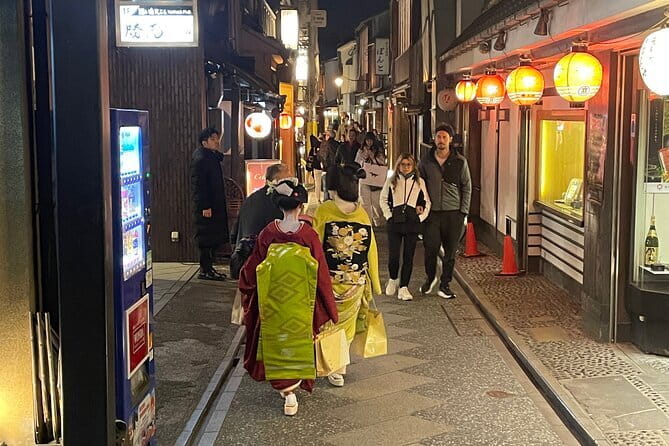
- Gion’s wooden streets and teahouse lanes
- Kennin-ji, Zen Buddhism, and tea culture
- Yasui-Konpiragu and the meaning of its stone
- Hōkan-ji and the famous Yasaka Pagoda
- Ninenzaka’s slope and traditional streets
- Yasaka Shrine, the final stop
- What $20 buys you
- Timing, weather, and practical comfort
- Who will get the most from this walk
- Should you book the Kyoto Gion walk?
- FAQ
- How long is the Kyoto Gion Walking Tour?
- How much does the tour cost?
- What is included in the price?
- Are snacks included?
- Where does the tour begin?
- Where does the tour end?
- How large is the group?
- Which places are visited?
- Is the tour suitable for most people?
- What happens if the weather is poor?
Key points at a glance
- A useful first-day orientation: The route introduces Gion, Higashiyama, and several major shrines and temples without asking you to plan the route yourself.
- Jay is a guide to watch for: His clear English, pictures, map skills, and willingness to answer questions are repeatedly praised in the supplied feedback.
- Six stops, about 80 minutes of listed stop time: The rest of the two-hour outing allows for walking between sites and explanations along the way.
- Small by city-tour standards: The group can reach 15 people, so this is not a private walk, but it avoids the feel of a large crowd.
- A strong value at $20: You pay mainly for navigation and interpretation, not entrance tickets or snacks.
- An outdoor experience: Good weather is required, and cancellation is possible if conditions are poor.
Why Gion works so well for a first walk
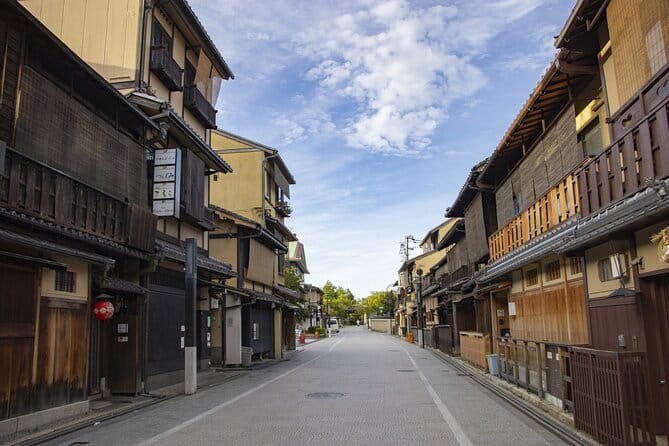
Gion is Kyoto’s best-known geisha district, but that label only tells you part of the story. The area is also a compact meeting point of wooden machiya townhouses, traditional teahouse streets, shrines, temples, and lanes that still reward slow walking.
I like this tour because it treats Gion as more than a photo stop. A guide can explain why a street looks the way it does, point out the role of nearby religious sites, and help you understand how Gion connects with Higashiyama. Without that context, you may walk past an important building and see only another attractive wooden facade.
The route is also sensible for a first visit. It begins in Gion and moves through Kennin-ji, Yasui-Konpiragu, Hōkan-ji, Ninenzaka, and Yasaka Shrine. You finish at one of Kyoto’s major landmarks rather than returning to the starting point, which can be handy if you want to continue exploring around the shrine afterward.
The tour begins at Kyoto Tourist Lounge Gion, at Pare Gion, 557-4 Komatsu Cho. It ends at Yasaka Shrine, 625 Gionmachi Kitagawa. The meeting point is near public transportation, and confirmation arrives at booking, so you have a clear place to begin.
More Walking Tours in Kyoto
- Kyoto Geisha Walking Tour: Gion District & Hidden Gems
★ 4.7 · 3,273 reviews - Kyoto: Gion Magical Night Walking Tour with Geisha Trivia
★ 4.9 · 2,393 reviews - Kyoto: Gion Geisha District Walking Tour – Stories of Geisha
★ 4.7 · 2,187 reviews
Gion’s wooden streets and teahouse lanes
The opening stop is Gion, with about 20 minutes listed for the area. That is enough time to set the scene, learn how the district developed, and get oriented among the traditional streets.
The appeal here is not one single monument. It is the combination of preserved wooden machiya houses, teahouse-lined lanes, cobbled surfaces, and quiet details that are easy to overlook. A guide’s local stories give you a better sense of what you are seeing and help separate an important street from a merely attractive one.
This is also where the tour’s conduct matters. Gion is a living neighborhood, not a theme park built for sightseeing. A small-group format makes it easier to listen without blocking the street, though a maximum of 15 people can still feel sizable on narrow lanes. You should expect a shared walking experience, not a private stroll.
The supplied feedback gives Jay particular credit for using pictures during his explanations. That can be useful in Gion, where the significance of a building or custom is not always obvious from the outside. His fondness for maps may sound like a small detail, but good maps matter in Kyoto. The lanes can turn quickly, and a clear sense of direction helps you return later without wandering in circles.
Kennin-ji, Zen Buddhism, and tea culture
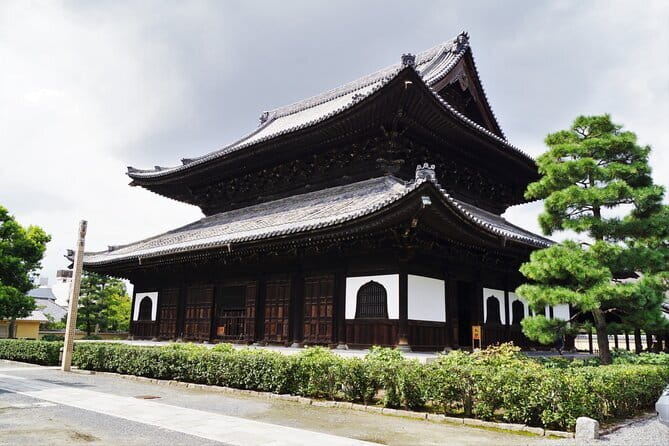
Kennin-ji receives about 15 minutes. Founded in 1202 by the monk Eisai, it is one of Kyoto’s oldest Zen Buddhist temples and is linked with both Zen Buddhism and tea culture in Japan.
That background gives this stop more weight than a quick temple photo. You are not simply ticking off another religious building. The guide can connect the temple with the larger story of Zen practice and the tea tradition, giving you a useful cultural frame for other sites you may visit in Kyoto.
The short timing is both a benefit and a limit. Fifteen minutes keeps the whole route moving, which helps a first-time visitor see several parts of Gion and Higashiyama. It also means you should not expect a long, quiet temple visit or extensive time to examine every feature.
The supplied details identify the stop as free of admission charge. Still, the tour includes an in-person guide rather than a private temple visit, so the value comes from explanation and route planning. If you already know Kennin-ji well and want a slow look at the temple, you may prefer to return on your own later.
Yasui-Konpiragu and the meaning of its stone
Yasui-Konpiragu is a smaller Shinto shrine near Gion, with about 15 minutes scheduled. Its main feature is the enkiri and enmusubi stone, associated with cutting unwanted connections and forming desired ones.
This is one of the route’s most interesting choices. Many visitors focus on the largest shrines and most famous streets, while a smaller site like Yasui-Konpiragu can be easy to miss. Its inclusion gives the walk a little more character and shows how religious places are woven into everyday Kyoto neighborhoods.
A guide is especially useful here because the stone’s meaning may not be clear if you are seeing it without explanation. The stop offers a chance to understand the symbolism rather than simply photograph an unusual object.
Again, the schedule is brief. You get a focused introduction, not a long period for private reflection. If the shrine is busy when you arrive, the group size and short stop may limit how long you can linger. Still, this is exactly the kind of place a first-time route planner might leave out, and that makes it a good fit for this tour.
More geisha district walks in Kyoto:
- Best of Kyoto: Gion, Geisha, Pagodas & Cobblestones
★ 4.9 · 2,058 reviews - Night Walk in Gion: Kyoto’s Geisha District
★ 4.5 · 2,003 reviews - Kyoto Night Foodie Tour in Gion (9+ dishes + 6 Sake tastings)
★ 5.0 · 1,762 reviews - Kyoto Gion Geisha District Walking Tour – The Stories of Geisha
★ 5.0 · 1,441 reviews
Hōkan-ji and the famous Yasaka Pagoda
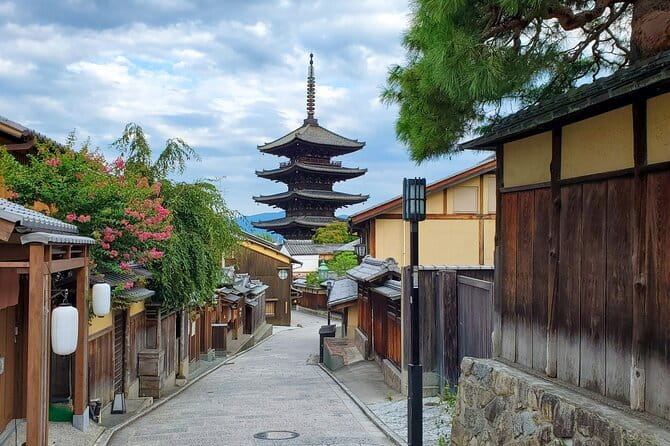
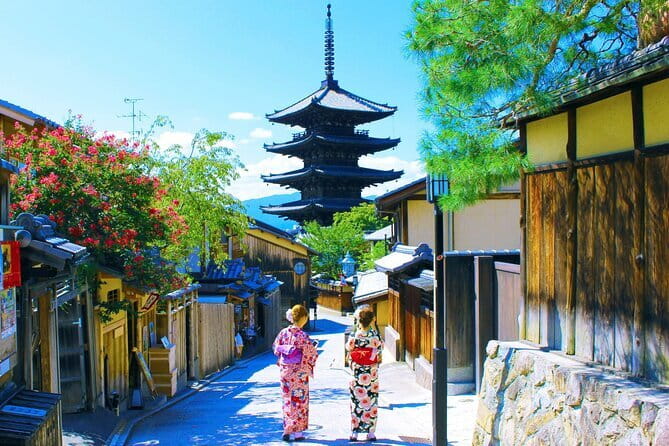
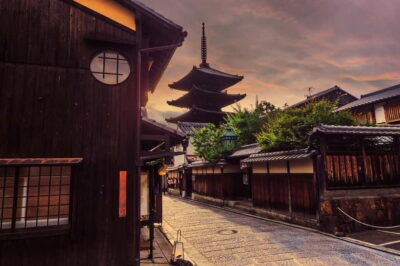
The walk then reaches Hōkan-ji Temple, better known as Yasaka Pagoda. About 10 minutes are listed here.
The five-story pagoda is one of Kyoto’s most recognizable sights, rising above the traditional streets of Higashiyama. It gives you a strong visual link between the district’s old architecture and the religious landmarks that shape it.
Ten minutes is enough for an introduction and photographs, but not much more. You should not book this tour expecting a long visit inside every temple or extensive time at each landmark. The guide’s role is to place the pagoda in the route and explain what you are seeing, then keep the group moving toward Ninenzaka.
That tradeoff is central to the experience. The walk favors range over depth. You see more of the area in one organized outing, then you can choose which places deserve a return visit.
Ninenzaka’s slope and traditional streets

Ninenzaka receives another 10 minutes. This historic stone-paved slope in Higashiyama is known for traditional architecture and connects with the wider area around Kiyomizu-dera.
The street itself is part of the attraction. Its gentle slope, old-style buildings, and strong visual character make it one of the most recognizable walks in Kyoto. With a guide, you can understand how Ninenzaka fits into the route instead of treating it as an isolated shopping street.
The drawback is similar to the Yasaka Pagoda stop. Ten minutes passes quickly, especially if you want photographs or want to look at shops along the way. The tour is best viewed as an introduction. You can mark the places you want to revisit and return when you have more time.
I appreciate that the route links Ninenzaka with Gion rather than keeping you in only one small pocket. For a first day, that connection can save time and make the city feel less confusing.
Yasaka Shrine, the final stop
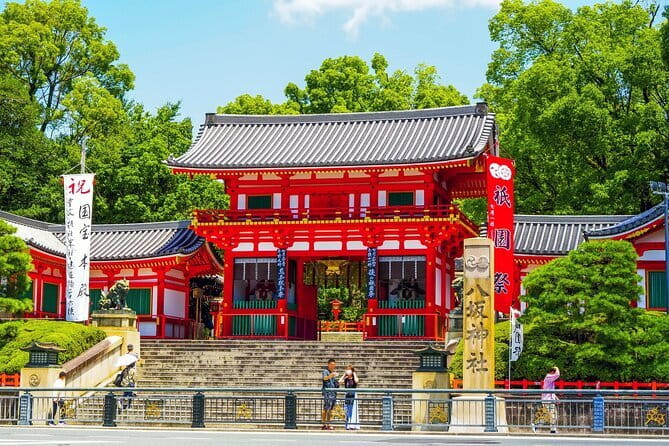
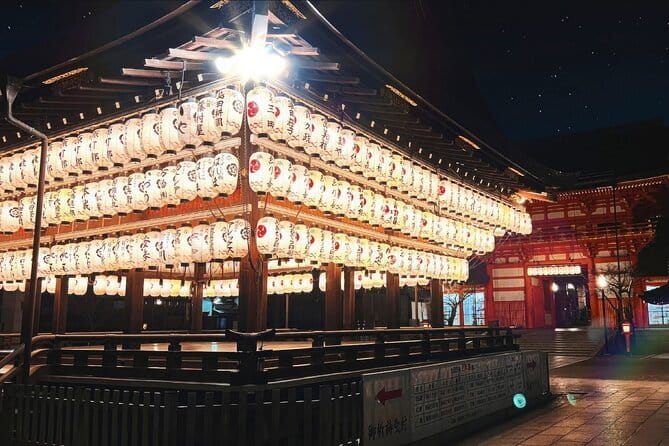
The tour finishes at Yasaka Shrine, with about 10 minutes listed. Also called Gion Shrine, it is one of Kyoto’s major Shinto shrines and is known for vermilion gates and lanterns.
Ending here makes practical sense. Yasaka Shrine is a major reference point in the area, and finishing at a well-known place gives you a clear base for continuing your day. You can use the surrounding streets to keep exploring after the guide departs.
The short stop gives you the essentials, but it does not turn the shrine into a full visit. If you want time to study the grounds, return later. The tour’s purpose is to provide a map in your head, not to replace a full day of independent sightseeing.
This final stop also reinforces the tour’s range. In two hours, you move from teahouse streets to Zen Buddhism, a small shrine with a distinctive ritual focus, a major pagoda, a historic slope, and one of Kyoto’s best-known Shinto shrines.
What $20 buys you
At $20 per person, this is an inexpensive guided introduction to one of Kyoto’s most visited districts. All fees and taxes are included, and the listed stops do not charge admission. Snacks are not included, but that is easy to understand for a short walking tour.
The real purchase is orientation plus interpretation. You are paying someone to handle the route, explain the places you pass, and answer questions. That matters most during your first days in Kyoto, when a two-hour walk can help you decide where to spend the rest of your trip.
The value is strongest if you would otherwise spend time checking maps, missing smaller sites, or passing religious landmarks without knowing why they matter. It is less compelling if you already know Gion well or want long, unhurried visits at one or two temples.
The maximum group size is 15. That is not the intimacy of a private guide, but it is still controlled enough to keep the outing manageable. The guide can respond to questions, and Jay’s feedback specifically highlights that he made time for questions during the walk.
Timing, weather, and practical comfort
The experience lasts about two hours. The listed stop times add up to roughly 80 minutes, leaving about 40 minutes for walking and explanations between locations. That schedule confirms the tour’s purpose: a brisk overview rather than a slow architectural study.
You should wear comfortable shoes and be ready to walk outdoors for the full period. The route includes stone-paved streets and slopes, particularly around Ninenzaka, so practical footwear matters more than dressing for a formal temple visit.
The tour requires good weather. If poor conditions cause cancellation, you are offered another date or a full refund. You can cancel for a full refund up to 24 hours before the start time. Changes or cancellations inside that 24-hour window are not accepted, and the cut-off uses Kyoto local time.
Confirmation is provided when you book, and the ticket is mobile. Most people can participate, and service animals are allowed. The activity is near public transportation, making it relatively simple to reach the starting point.
Who will get the most from this walk
I would recommend this tour most strongly to first-time Kyoto visitors who want an easy introduction to Gion without spending much. It is also a good choice for anyone who likes cultural context but does not want a long lecture or a formal indoor tour.
You will likely appreciate it if you:
- Want a clear route through Gion and Higashiyama
- Prefer a guide to explain shrines, temples, and local streets
- Have only a short amount of time in the area
- Like small-group tours rather than large coach excursions
- Want ideas for places to revisit independently
- Value a low-cost introduction on your first day
You may want another format if you prefer to spend 30 minutes or more at each temple, need a fully private experience, or already have a detailed understanding of Gion. The six-stop schedule is efficient, but it cannot provide depth at every location.
The guide’s style also matters. Jay is praised for clear English, historical and cultural explanations, pictures, and maps. If he leads your departure, expect a guide who enjoys answering questions and giving a strong sense of direction.
Should you book the Kyoto Gion walk?
Book it if you want to get your bearings fast and understand what you are seeing. For $20, the combination of a controlled group size, an in-person guide, free listed sights, and a route through several major Kyoto landmarks is strong value.
Go in with the right expectations. This is not a private temple tour, a food walk, or a long visit inside each religious site. It is a brisk outdoor introduction that helps you see more, miss less, and choose where to return.
For a first day in Kyoto, I think that is a smart use of two hours. The high 4.9 rating from 37 ratings and 97 percent recommendation support that view, with the strongest praise directed at Jay’s explanations, pictures, maps, and care with questions. Just leave room in your day for your own second look at the places that catch your interest.
FAQ
How long is the Kyoto Gion Walking Tour?
The tour lasts approximately two hours.
How much does the tour cost?
The listed price is $20 per person.
What is included in the price?
All fees and taxes and an in-person guide are included.
Are snacks included?
No. Snacks are not included.
Where does the tour begin?
It begins at Kyoto Tourist Lounge Gion, at 557-4 Komatsu Cho, Pare Gion 101, Higashiyama Ward, Kyoto.
Where does the tour end?
The tour ends at Yasaka Shrine, 625 Gionmachi Kitagawa, Higashiyama Ward, Kyoto.
How large is the group?
The maximum group size is 15 people.
Which places are visited?
The route includes Gion, Kennin-ji Temple, Yasui-Konpiragu, Hōkan-ji Temple, also called Yasaka Pagoda, Ninenzaka, and Yasaka Shrine.
Is the tour suitable for most people?
Yes. Most people can participate, and service animals are allowed.
What happens if the weather is poor?
The experience requires good weather. If it is canceled because of poor weather, you can choose another date or receive a full refund.
Just added around Kyoto
- Kyoto: Gion Geisha District & Sake-in-Hand Walking Tour★ 5.0 · 37 reviews
- Bamboo LED Lantern Making Experience in Kyoto Arashiyama★ 5.0 · 38 reviews
- Tea Ceremony Experience in Traditional Kyoto Townhouse★ 5.0 · 38 reviews
- Kyoto: Private Customizable Day Trip by Car★ 5.0 · 38 reviews
- Kyoto: Gion Night Walking Tour with Geisha Insight★ 5.0 · 39 reviews
- Kyoto: Full Day Bike Tour★ 4.9 · 39 reviews
- Private Japanese Calligraphy in Kyoto – Learn Shodō with a Master★ 5.0 · 39 reviews
- Experience a tea ceremony in an authentic tearoom, in Kyoto!★ 4.5 · 41 reviews
Geisha & Gion District Tours, compared.
Kyoto Geisha Walking Tour: Gion District & Hidden Gems
Read our review →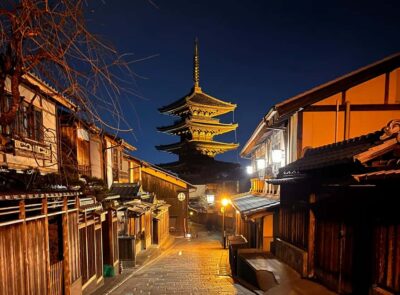
Gion Magical Night Walking Tour with Geisha Trivia
Read our review →
Gion Geisha District Walking Tour – Stories of Geisha
Read our review →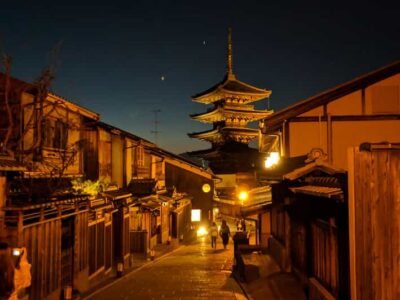
Best of Kyoto: Gion, Geisha, Pagodas & Cobblestones
Read our review →
Kyoto Night Foodie Tour in Gion (9+ dishes + 6 Sake tastings)
Read our review →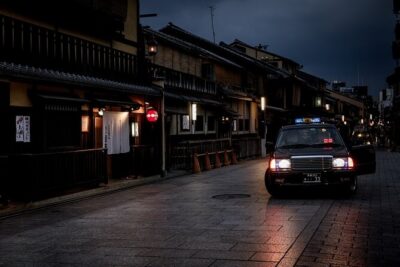
Kyoto Gion Geisha District Walking Tour – The Stories of Geisha
Read our review →
Kyoto Gion: 2-Hour Geisha Culture & History Walking Tour
Read our review →Browse the lists this tour appears in