
Reviewed · GEISHA & GION DISTRICT TOURS
Kyoto: Gion Geisha District & Sake-in-Hand Walking Tour
Kyoto after dark has a different rhythm. This small-group walk takes you through Gion’s narrow lanes, historic shrines, and Higashiyama streets while a guide explains geisha culture and local customs. I like the intimate group size, capped at 10 people, and the included sake tasting gives the evening a distinctly Japanese touch. The main tradeoff is simple: you will walk a lot, and one or two hours is not enough for a deep look at every stop.
I also like that the route goes beyond the best-known Gion streets. You move from the Kamo River and Hanamikoji Street to Yasui-Konpiragu, Yasaka Pagoda, Ninenzaka, Sannenzaka, Nene-no-Michi, and Yasaka Shrine. Still, the experience depends heavily on the guide’s energy and conversation style. Most feedback praises guides such as Shumpei and Mune, but one less satisfied participant found the commentary too limited for the price.
In This Review
- Key points to know before booking
- Starting beside the Kamo River
- Gion, where the geisha story begins
- Hanamikoji Street and the value of a guide
- Yasui-Konpiragu and a shrine with a memorable purpose
- Hokan-ji Temple and the Yasaka Pagoda view
- Ninenzaka and Sannenzaka on stone-paved streets
- Nene-no-Michi and a quieter turn
- Yasaka Shrine, the final stop
- What the sake adds to the evening
- Pace, group size, and guide style
- Is $27.84 a fair price?
- Practical advice before you go
- Who should book this Gion walk?
- Should you book this tour?
- FAQ
- Where does the Kyoto Gion sake walking tour start?
- Where does the tour finish?
- How long does the experience last?
- What is included in the tour?
- Is the sake tasting included in the price?
- How many people can join the tour?
- What age must participants be?
- Does the tour require much walking?
- Is the tour available in bad weather?
- What is the cancellation policy?
Key points to know before booking

- A night walk through Gion and Higashiyama: Lantern-lit lanes and quiet temple approaches are the heart of the experience.
- Sake is included: You taste local sake during the walk, with some feedback also noting snacks and bottles from different regions of Japan.
- Small groups matter: The maximum is 10 people, though the group may be much smaller on a rainy evening or a quieter date.
- The route ends at Yasaka Shrine: This is useful if you want to continue exploring Gion after the tour.
- Expect steady walking: Comfortable shoes are essential, and the route includes sloped and stone-paved streets.
- Adults only: Every participant must be at least 20 years old, and alcohol should be enjoyed responsibly.
Starting beside the Kamo River
The tour begins near Kikunoi Roan in the Saitocho area, close to the Kamo River. This is a practical starting point because the river runs through central Kyoto and puts you near the southern edge of Gion.
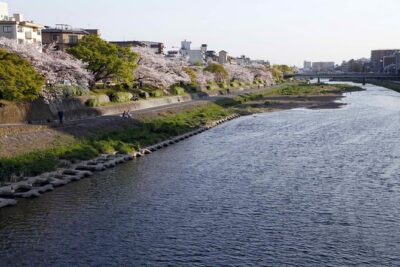
The Kamo River is one of Kyoto’s most pleasant places to get your bearings. Its banks offer open views before the route turns into the tighter streets of the old districts. Depending on the time of year, you may see cherry trees along the river, although the tour’s real focus begins once you leave the water behind.
This opening section also helps set the tone. You are not being rushed into a museum or loaded onto a bus. You begin on foot, with the city around you, then gradually move into streets where traditional buildings and low lighting create a more intimate feel.
The exact meeting instructions matter here. Check the address carefully before setting out, since Kyoto has several restaurants and attractions with similar names. A mobile ticket is provided, and confirmation arrives when you book.
More Food Tours in Kyoto
- Kyoto Night Foodie Tour in Gion (9+ dishes + 6 Sake tastings)
★ 5.0 · 1,762 reviews - 3-Hour Kyoto Insider Sake Brewery Tour with Tastings & Pairings
★ 5.0 · 917 reviews - Arashiyama Bamboo, Temple, Monkeys, or Secret Sake Brewery
★ 4.8 · 886 reviews
Gion, where the geisha story begins
Gion is Kyoto’s best-known geisha district, with wooden machiya houses, teahouses, and narrow lanes that feel far removed from the wide avenues nearby. The guide’s role is important because the streets themselves do not explain much. Without context, you may simply see attractive buildings and closed doors.
This is where the tour focuses on geisha culture and the etiquette of the district. You hear about the difference between the public image of geisha and the actual work, training, and traditions connected with the profession. The guide can also explain where you might spot a geiko or maiko, though seeing one is never promised.
That distinction is important. Gion is not a stage set, and people who live and work here deserve privacy. The tour specifically asks you to keep your voice down because the route passes through residential areas at night. Do not block doorways, chase anyone with a camera, or treat a passing performer as a photo opportunity.
The atmosphere is strongest after sunset. Lanterns soften the wooden facades, and the smaller lanes can feel surprisingly quiet. Several strong experiences came from seeing Gion in the rain, when the wet paving stones and reflected lights added to the mood.
Hanamikoji Street and the value of a guide
Hanamikoji Street is one of Gion’s signature lanes. Traditional wooden buildings line the route, and the preserved architecture gives you a clear sense of how Kyoto’s older entertainment districts looked.
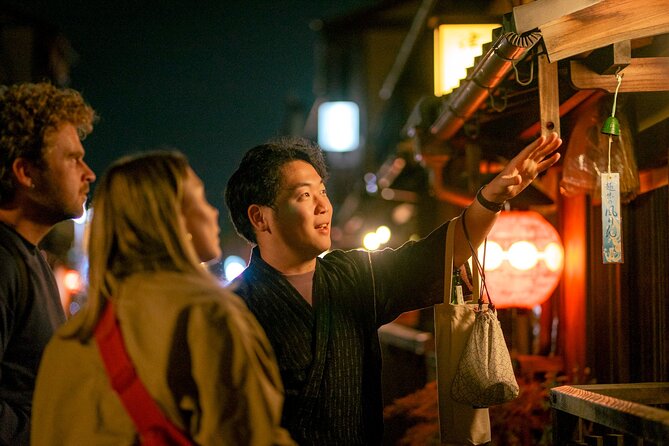
This is a good place to slow down and listen. A guide can point out details you might otherwise miss, explain how the teahouse district functions, and connect the street to broader stories about Kyoto, samurai culture, and Zen meditation.
The setting is beautiful, but it can also be busy at popular times. You may need to share the lane with other sightseeing groups, so do not expect a private stroll through an empty old town. The tour’s small size helps your guide keep the group together and answer questions without shouting.
The strongest feedback about the guides centers on conversation. Shumpei is praised for answering questions about everyday life in Japan, while Mune is described as friendly and informative. If you enjoy asking questions, this tour should suit you well. If you prefer a constant stream of formal narration, the relaxed style may feel too light.
Yasui-Konpiragu and a shrine with a memorable purpose
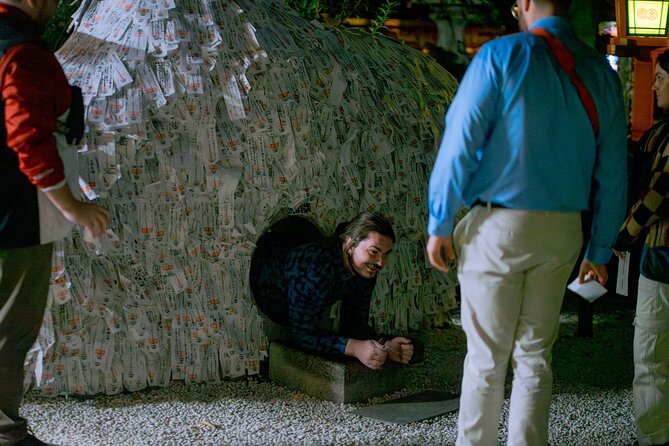
Yasui-Konpiragu is a small but distinctive Shinto shrine in Higashiyama. It is known for helping people cut ties with unwanted relationships and form better ones.
The shrine’s large enmusubi and en-kiri stone is covered with paper petitions. Visitors traditionally write a wish, pass through the opening in the stone, and then pass back again. The symbolism is easy to understand, even if you are not familiar with Shinto practice.
The tour allows about 15 minutes here. That is enough to hear the story and take in the site, but not enough for a long independent visit. If this shrine is especially important to you, you may want to return on your own during daylight.
This stop adds variety to the walk. Gion can seem focused on architecture and entertainment culture, while Yasui-Konpiragu gives you a glimpse of personal religious practice in Kyoto.
More Sake Tastings in Kyoto
- Kyoto: Insider Sake Brewery Tour with Sake and Food Pairing
★ 5.0 · 704 reviews - Kyoto Sake Brewery & Tasting Walking Tour
★ 5.0 · 623 reviews - 1.5-Hour Kyoto Insider Sake Experience with 7 Tastings & Pairings
★ 5.0 · 297 reviews - Kyoto: Insider Sake Experience with 7 Tastings and Snacks
★ 5.0 · 266 reviews
Hokan-ji Temple and the Yasaka Pagoda view

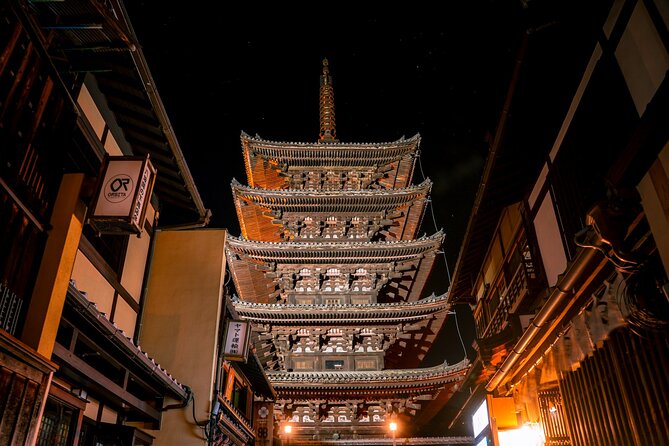
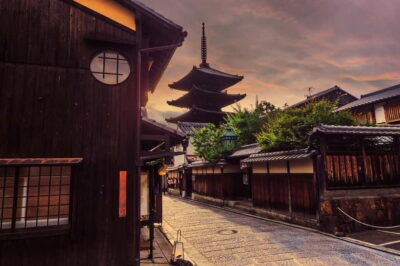
The five-story pagoda of Hokan-ji Temple, usually called Yasaka Pagoda, is one of Higashiyama’s most recognizable sights. It rises above the surrounding wooden streets and is especially striking when viewed at night.
The temple dates back to the sixth century, making it one of the oldest landmarks on the route. The tour includes about 15 minutes here, which is enough for an explanation and photographs from the surrounding streets.
Do not confuse this visit with a full temple tour. The description centers on the exterior setting and the landmark itself, and admission is listed as free. The route is designed as a walking introduction rather than a long stop inside each religious site.
This is one of the better photo points on the evening. You will want to keep your camera ready, but remember that the streets around the pagoda are narrow and often used by local residents. Step aside when needed and keep the group moving.
Ninenzaka and Sannenzaka on stone-paved streets
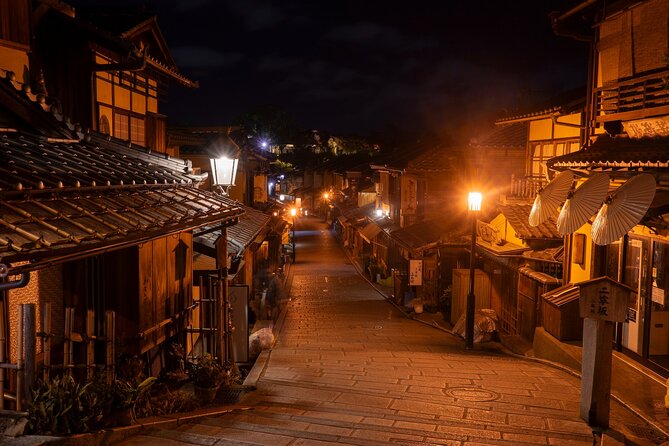
Ninenzaka and Sannenzaka are two of Higashiyama’s most attractive pedestrian streets. Their traditional wooden buildings, small shops, and stone paving make them feel distinctly old Kyoto.
The route gives roughly five minutes to each street. That may sound brief, but it makes sense within a walking tour that covers several locations. You get the main view, hear the local story, and continue rather than spending the whole evening at one spot.
The drawback is the paving and slope. These streets are not difficult for most people with moderate fitness, but they are less forgiving in thin-soled shoes or slippery footwear. Rain can make the stones slick, so a weatherproof jacket and shoes with good grip are sensible.
You might also find these lanes busier than the quieter backstreets of Gion. Their popularity is part of their appeal, but the most peaceful moments often come between the major sights, not directly on the famous slopes.
Nene-no-Michi and a quieter turn

Nene-no-Michi is a stone-paved path named for Nene, the wife of Toyotomi Hideyoshi. It links the area around Kodaiji Temple with Maruyama Park and offers a calmer change of pace after Ninenzaka and Sannenzaka.
The tour allows about 10 minutes here. This is a short stop, but the path works well as part of the overall sequence. You leave the shop-lined streets and enter a more subdued setting, with traditional walls and temple-area scenery.
This section is also a good reminder that Kyoto’s charm is not limited to grand buildings. The quiet transitions between major landmarks are often what make the walk memorable.
Yasaka Shrine, the final stop
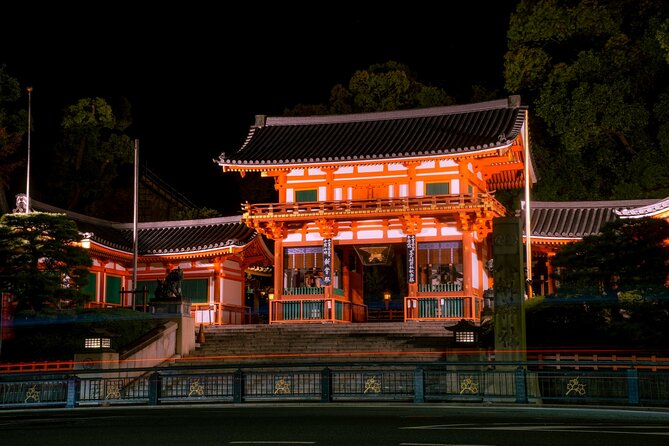
The evening ends at Yasaka Shrine, also known as Gion Shrine. It is one of Kyoto’s major Shinto sites and is traditionally dated to 656 AD.
The shrine serves as a natural finish because it sits at the eastern edge of the Gion area and connects directly with Maruyama Park and other Higashiyama sights. The tour allows around 20 minutes here, the longest listed stop.
At night, the shrine’s gates and lanterns create a strong final impression. You can listen to the closing explanation, take photographs, and then decide whether to continue exploring or head back.
The guide can help arrange a taxi if needed. This is worth noting because many buses may have stopped running by the time the walk ends. Yasaka Shrine is also a useful place to continue independently, although the tour itself concludes there.
What the sake adds to the evening
The sake tasting is the feature that gives this walk its name and helps separate it from a standard Gion orientation. Rather than stopping for a full restaurant meal, you taste local sake as part of the route.
The format is casual. This is not a formal brewery visit or a lesson in sake production. You are there to sample and enjoy while walking through Kyoto at night. Some feedback specifically praises trying several sakes from different regions of Japan, and another note mentions sake and snacks.
That can be a pleasant way to compare flavors, especially if you have little experience with sake. It also creates an easy opening for conversation with the guide and other people in the group.
Still, the alcohol component will not suit everyone. The tour is limited to people aged 20 and over, and you should drink responsibly. Since you are walking on slopes and stone streets, too much sake is a poor match for the route. If you do not drink, this may not be the right experience for you, even though the cultural walk itself remains the main event.
Pace, group size, and guide style
The stated duration is about one hour to one hour and 30 minutes. The route covers many sights, so expect an overview rather than extended time at each location.
The small maximum of 10 people is a real advantage. You are less likely to lose the guide in a narrow lane, and questions are easier to handle. One especially positive experience had only two participants and the guide because of rain, creating a quieter and more personal walk.
The relaxed pace is another strength. You are not being pushed from one landmark to the next at a rigid speed. That said, this style can vary from guide to guide. Most of the supplied feedback praises the guides for being friendly, engaging, and well informed about Kyoto and Japanese life. One participant found the tour involved too much walking and not enough interaction, while another felt the walk ended after about 70 minutes rather than the full 90.
I would book this if you like informal conversation and are willing to ask questions. I would be more cautious if you want a tightly scripted lecture, guaranteed geisha sightings, or a full two-hour program.
Is $27.84 a fair price?
At $27.84 per person, the price is reasonable for a small-group evening walk that includes a sake tasting. The major value comes from the route and the guide, not from paid admissions. Every listed stop is free, so you are paying for interpretation, local orientation, group management, and the sake.
The value improves if your first evening in Gion feels confusing. The lanes are easy to wander into without understanding what you are seeing, and a local guide can add useful context quickly. It can also be a good first-night activity because Yasaka Shrine leaves you in a central area for further exploration.
The price is less appealing if you already know Gion well or want long visits inside temples and shrines. You could walk through many of these streets independently for free. The question is whether the guide’s stories and the sake tasting are worth paying for. For most first-time visitors who enjoy a social evening, the answer is likely yes.
Practical advice before you go
Wear comfortable shoes with good grip. The route includes substantial walking, sloped streets, and stone paving, and the tour specifically calls for a moderate level of fitness.
Arrive prepared for changing weather. The experience requires good weather, and poor conditions can lead to a new date or a full refund. Rain does create lovely reflections and a quieter mood, but only if the tour operates safely.
Keep your voice low in residential areas. Gion is a living neighborhood, not only a sightseeing zone. Respectful behavior will make the evening better for everyone.
The tour starts near Kikunoi Roan and finishes at Yasaka Shrine. Plan your return before you set out, especially if you expect to rely on buses. Taxi assistance may be available at the end, but most buses may have stopped running.
Free cancellation is available up to 24 hours before the start time. Inside that window, the payment is not refunded, and changes are not accepted.
Who should book this Gion walk?
I would recommend it to a first-time Kyoto visitor who wants a short introduction to Gion, enjoys walking after dark, and likes having a drink while learning about local culture.
It is also a good fit for couples, friends, and solo visitors who prefer a small group instead of a large guided procession. The route offers attractive night photography, shrine visits, traditional streets, and enough historical context to make the scenery more meaningful.
I would skip it if you cannot walk comfortably, are under 20, do not drink alcohol, or want a long, highly structured cultural lecture. I would also avoid booking it solely to see a geisha. You might spot a geiko or maiko, but that is a possibility, not a promise.
Should you book this tour?
Book it if you want an atmospheric first look at Gion, a friendly guide, and sake tasting folded into a compact evening walk. The combination of lantern-lit streets, Yasaka Pagoda, traditional lanes, and Yasaka Shrine gives you a lot in a short time.
Go in with realistic expectations. This is not a full geisha lesson, a temple admission tour, or a guaranteed 90-minute program. Its success depends on the guide and on your willingness to walk, ask questions, and respect the neighborhood. At $27.84, it offers good value for that kind of relaxed introduction, especially with a small group and a guide such as Shumpei or Mune.
FAQ
Where does the Kyoto Gion sake walking tour start?
The tour starts at Kikunoi Roan, at 118 Saitocho, Shijo-sagaru, Shimogyo Ward, Kyoto.
Where does the tour finish?
The tour ends at Yasaka Shrine, at 625 Gionmachi Kitagawa in Kyoto’s Higashiyama Ward.
How long does the experience last?
The stated duration is approximately one hour to one hour and 30 minutes.
What is included in the tour?
The experience includes a guided walk through Gion and Higashiyama, commentary about geisha culture and Kyoto, and a local sake tasting.
Is the sake tasting included in the price?
Yes. A local sake tasting is included. Some descriptions of the experience also refer to snacks.
How many people can join the tour?
The activity has a maximum of 10 participants.
What age must participants be?
All participants must be at least 20 years old because alcohol is provided.
Does the tour require much walking?
Yes. The route involves a lot of walking through narrow lanes, sloped streets, and stone-paved areas. Comfortable clothing and shoes are recommended.
Is the tour available in bad weather?
The experience requires good weather. If it is canceled because of poor weather, you will be offered another date or a full refund.
What is the cancellation policy?
You can cancel at least 24 hours before the start time for a full refund. Cancellations or changes made within 24 hours are not accepted and are not refunded.
More Geisha & Gion District Tours
- Best of Kyoto: Gion, Geisha, Pagodas & Cobblestones
★ 4.9 · 2,058 reviews - Kyoto Gion Geisha District Walking Tour – The Stories of Geisha
★ 5.0 · 1,441 reviews - Kyoto Gion: 2-Hour Geisha Culture & History Walking Tour
★ 5.0 · 1,186 reviews - Kyoto : Chopsticks Making Workshop in Gion with Engraving Option
★ 5.0 · 958 reviews
More Walking Tours in Kyoto
- Kyoto Geisha Walking Tour: Gion District & Hidden Gems
★ 4.7 · 3,273 reviews - Kyoto: Gion Magical Night Walking Tour with Geisha Trivia
★ 4.9 · 2,393 reviews - Kyoto: Gion Geisha District Walking Tour – Stories of Geisha
★ 4.7 · 2,187 reviews - Night Walk in Gion: Kyoto’s Geisha District
★ 4.5 · 2,003 reviews
Just added around Kyoto
- Kyoto Gion Walking Tour for First Time Visitors★ 5.0 · 37 reviews
- Bamboo LED Lantern Making Experience in Kyoto Arashiyama★ 5.0 · 38 reviews
- Tea Ceremony Experience in Traditional Kyoto Townhouse★ 5.0 · 38 reviews
- Kyoto: Gion Night Walking Tour with Geisha Insight★ 5.0 · 39 reviews
- Kyoto: Private Customizable Day Trip by Car★ 5.0 · 38 reviews
- Kyoto: Full Day Bike Tour★ 4.9 · 39 reviews
- Private Japanese Calligraphy in Kyoto – Learn Shodō with a Master★ 5.0 · 39 reviews
- Experience a tea ceremony in an authentic tearoom, in Kyoto!★ 4.5 · 41 reviews
Geisha & Gion District Tours, compared.
Kyoto Geisha Walking Tour: Gion District & Hidden Gems
Read our review →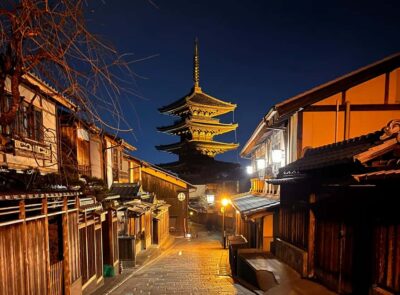
Gion Magical Night Walking Tour with Geisha Trivia
Read our review →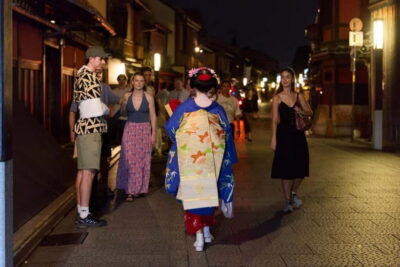
Gion Geisha District Walking Tour – Stories of Geisha
Read our review →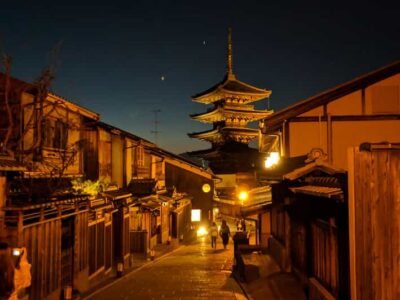
Best of Kyoto: Gion, Geisha, Pagodas & Cobblestones
Read our review →
Kyoto Night Foodie Tour in Gion (9+ dishes + 6 Sake tastings)
Read our review →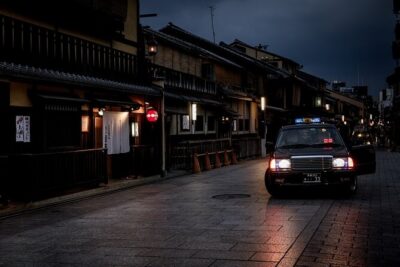
Kyoto Gion Geisha District Walking Tour – The Stories of Geisha
Read our review →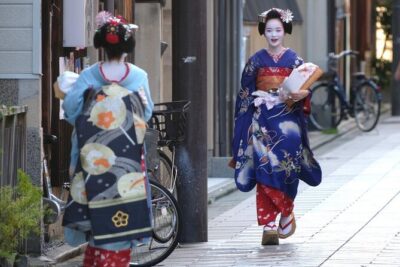
Kyoto Gion: 2-Hour Geisha Culture & History Walking Tour
Read our review →Browse the lists this tour appears in