
Reviewed · TEA CEREMONY EXPERIENCES
Tea Ceremony Experience in Traditional Kyoto Townhouse
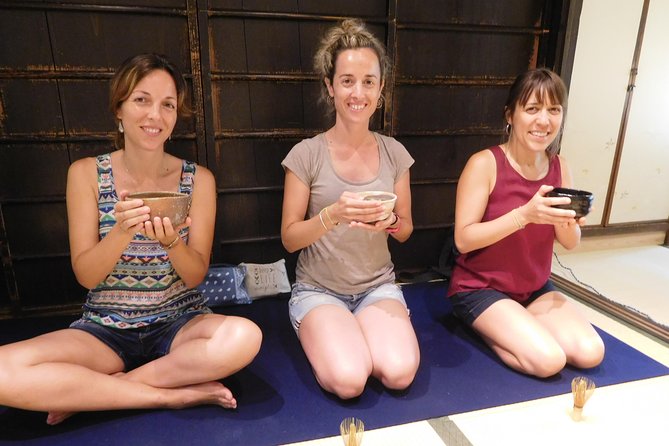
Slow down for one hour in Kyoto. This tea ceremony experience brings you into a traditional wooden machiya townhouse, where hosts explain the meaning behind each movement before you prepare your own matcha. I like the intimate group size, limited to six people, and the use of matcha from Uji, Kyoto’s famous tea-growing area. The main drawback is the meeting address, which can be hard to spot in a quiet residential street.
I also like the balance between watching and doing. You do not simply sit through a formal performance. You see a full demonstration, learn the basic etiquette, then whisk and drink your own bowl of tea with a Japanese sweet. The one-hour format keeps the lesson focused, though it leaves little room for a long cultural discussion.
In This Review
- Key details at a glance
- Entering a traditional Kyoto machiya
- What the tea ceremony lesson actually covers
- Preparing your own bowl of matcha
- The Japanese sweets are part of the lesson
- Why the six-person limit matters
- One hour is the right length for most Kyoto days
- The value of about $27.74 per person
- Who will enjoy this Kyoto tea ceremony
- Practical arrival and booking advice
- Should you book the Ami Kyoto tea ceremony?
- FAQ
- Where does the tea ceremony take place?
- How long does the experience last?
- How many people can join?
- What is included in the price?
- Is hotel pickup included?
- Can I choose the start time?
- Is the experience suitable for most people?
- What is the cancellation policy?
Key details at a glance
- An 80-year-old Kyoto machiya: The ceremony takes place inside a traditional wooden townhouse rather than a modern studio.
- A maximum of six people: The small group allows the hosts to give clear instructions and answer questions.
- Uji matcha and Kyoto sweets: Your tea comes from an Uji tea farm, with a traditional confection from a well-known Kyoto maker.
- You take part in the ceremony: After the demonstration, you prepare your own matcha and learn how to drink it properly.
- One hour and several start times: The compact schedule fits well between temples, markets, and other Kyoto plans.
- About $27.74 per person: For a hands-on cultural lesson in a real townhouse, I consider the price fair.
Entering a traditional Kyoto machiya
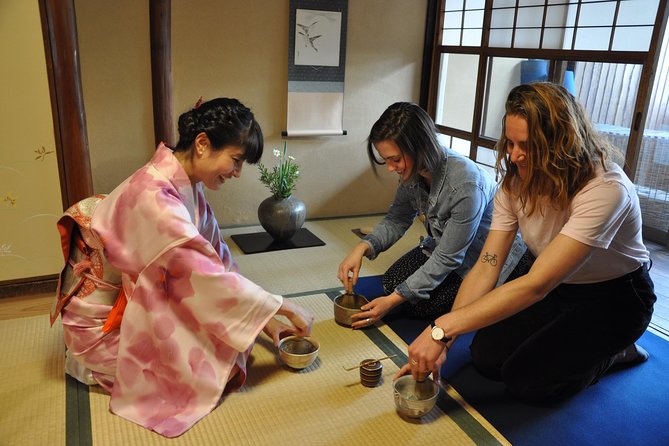
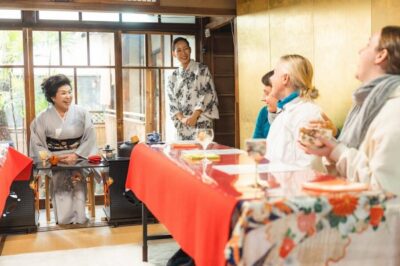
The setting does much of the work here. Kyoto’s machiya are narrow wooden townhouses that once lined many of the city’s streets. This one is about 80 years old and offers a far more personal setting than a large cultural show or hotel demonstration.
I like that the ceremony takes place in an actual townhouse. The room is described as comfortable and quaint, with the quiet, simple character you hope for from a traditional Japanese home. The space is small, so you are close to the demonstration and can follow each hand movement.
That small scale also explains the six-person limit. You can see what the host is doing without craning around a crowd. If you have a question about the bowl, whisk, sweets, or etiquette, you have a better chance of getting a direct answer.
The address is 605 Nishidacho, Shimogyo Ward, Kyoto, postal code 600-8397. You may find the building difficult to locate at first because the surrounding streets do not always show English street names or numbers clearly. I would allow extra time and follow the supplied map link carefully rather than arriving at the last minute.
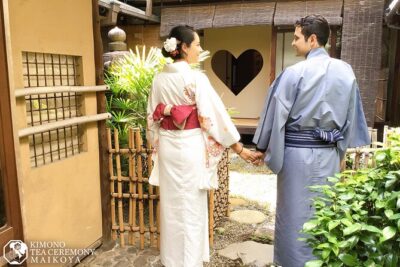
The venue has a sign outside, but it blends into the surrounding homes. This is part of the charm, yet it is also the practical weakness of the experience. Kyoto’s older residential streets are not always arranged for quick navigation, especially if you are using a phone map while walking.
More Tea Ceremonies in Kyoto
- Kyoto: Tea Ceremony in a Traditional Tea House in Kiyomizu
★ 4.9 · 3,519 reviews - Kyoto: Tea Ceremony Ju-An at Jotokuji Temple
★ 4.9 · 3,207 reviews - Kyoto: 45-Minute Tea Ceremony Lesson Experience
★ 4.3 · 2,378 reviews
What the tea ceremony lesson actually covers
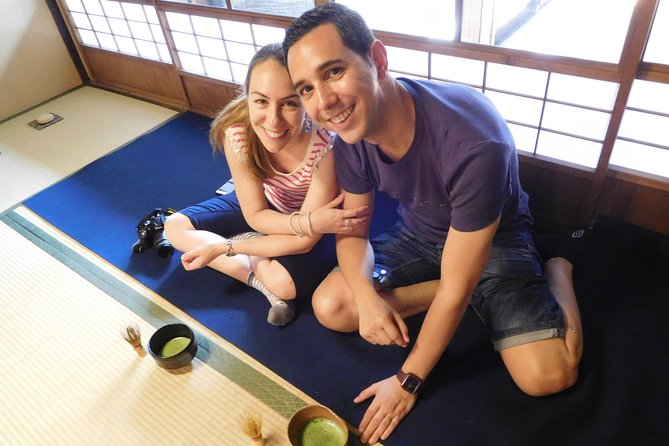
The session begins with an explanation of the basic ideas behind the way of tea. This matters because a tea ceremony is not just a method for making a hot drink. The gestures, order, posture, and handling of the utensils all carry meaning.
The hosts explain the etiquette before showing you how the ceremony works. You learn how to approach the tea room, how to enter, and how to behave around the tea and sweets. One particularly praised part of the lesson is the explanation of why movements are both practical and symbolic.
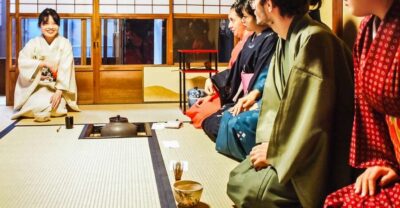
You then watch the hosts perform the ceremony. The pace is deliberate, and each motion is made with care. That can feel peaceful even if you know little about Japanese customs. The demonstration gives you a chance to watch the complete process before trying it yourself.
I would pay close attention to the small actions rather than focusing only on the finished bowl. The way the host handles the tools, turns the bowl, and presents the tea is the heart of the lesson. You begin to see why the ceremony is often described as a form of discipline and meditation.
The tone is not stiff or intimidating. The hosts, including Kimi, are praised for being warm, clear, and patient. Their friendly manner helps first-time visitors relax, especially if you worry about making an etiquette mistake.
Preparing your own bowl of matcha
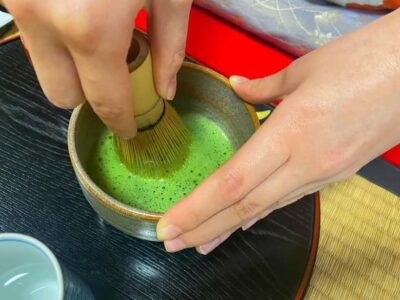
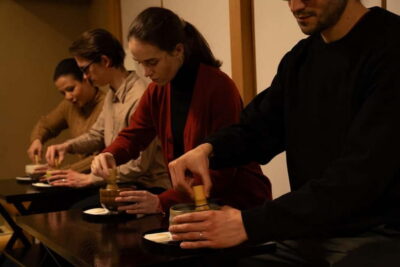
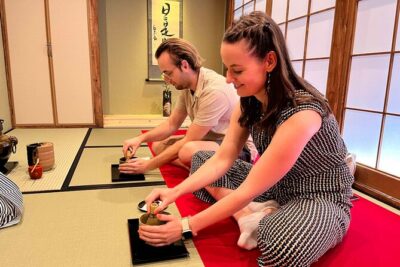
The hands-on portion is the best reason to choose this experience instead of simply watching a performance. Once the demonstration is complete, you make your own matcha with guidance from the host.
You receive a bowl of green tea and learn how to prepare it. The instructions are designed for beginners, so you do not need prior experience with a bamboo whisk or Japanese tea customs. The hosts guide you through the process and explain how to drink the tea correctly.
That participation gives the ceremony a practical edge. You leave with more than a few photographs and a general impression of Japanese culture. You have actually handled the utensils, prepared the tea, and followed the sequence yourself.
Matcha can be an acquired taste. It is strong, grassy, and slightly bitter compared with sweetened tea. The quality of the tea helps. This experience uses matcha from a farm in Uji City, an area known for high-grade Japanese tea. If you already enjoy matcha, the tea itself may be a highlight. If you do not, the lesson still gives you a useful introduction to how and why it is served.
Some participants have bought selected matcha from the hosts afterward to make at home. That option is not listed as part of the included package, so treat it as an optional purchase, not a promised souvenir. The useful part is that you understand how to prepare and drink it before deciding if you want more.
The Japanese sweets are part of the lesson
The tea comes with a traditional Japanese sweet from a famous Kyoto confectioner. The sweet is not just a snack placed beside the bowl. In the tea ceremony, it helps balance the bitterness of matcha and prepares your palate for the tea.
One sweet identified after a session was suhama, a traditional confection made from soybean flour and sugar. The exact sweet served may depend on the session, so I would not assume you will receive that particular item every time. Still, the use of a Kyoto confection adds a local detail that a basic matcha-making class might skip.
The sweets received especially warm praise, and they make the hour feel more complete. You get a simple lesson in how Japanese hospitality links food, presentation, season, and tea. For visitors who are unsure about the bitterness of matcha, the sweet is a welcome companion.
A completely different kind of day out in Kyoto:
- PERFECT KYOTO 1-Day Bus Tour
★ 5.0 · 13,518 reviews - Kyoto: Fushimi Inari, Kinkakuji, Bamboo Grove 1 Day Bus Tour
★ 4.8 · 4,316 reviews - Kyoto Geisha Walking Tour: Gion District & Hidden Gems
★ 4.7 · 3,273 reviews - Kyoto: Gion Magical Night Walking Tour with Geisha Trivia
★ 4.9 · 2,393 reviews
Why the six-person limit matters
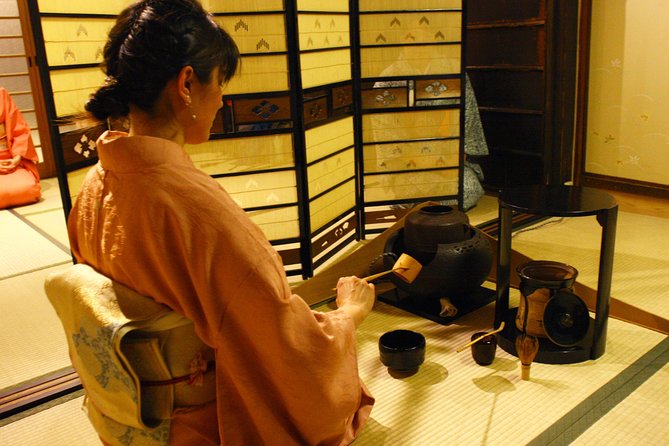
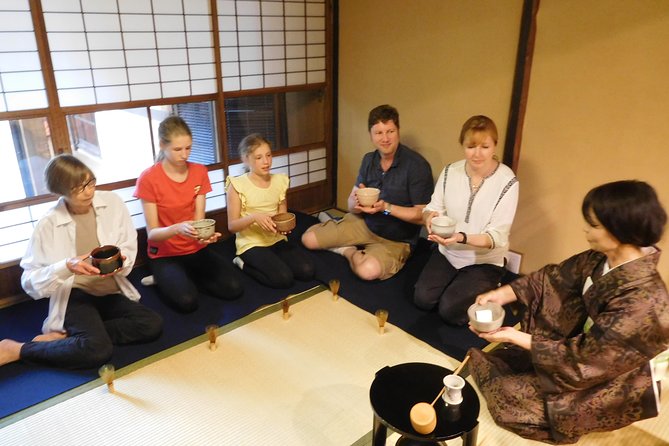
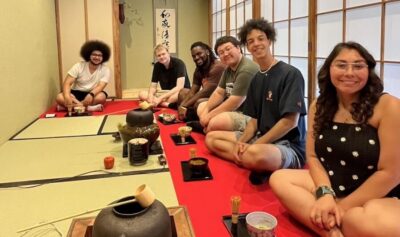
A maximum of six people is a strong feature for this kind of activity. Tea ceremony etiquette involves details that are difficult to see in a large group. In a small room, you can watch the host’s hands and hear the explanation without competing with a crowd.
The size also makes the practice portion more useful. The host can correct your movements or repeat an instruction if needed. That personal attention is one reason the experience receives such strong praise for warmth and clarity.
There is one point to keep in mind. A small townhouse is not the place for a grand, theatrical production. If you want a formal ceremony with a large room, elaborate costumes, or an extended performance, this may feel modest. I see that as a fair trade for a closer lesson and a more relaxed atmosphere.
The compact setting also means that comfort depends on your expectations. The room is described as comfortable, but this is still a traditional home rather than a spacious visitor center. You should choose it for the teaching and atmosphere, not for elaborate staging.
One hour is the right length for most Kyoto days
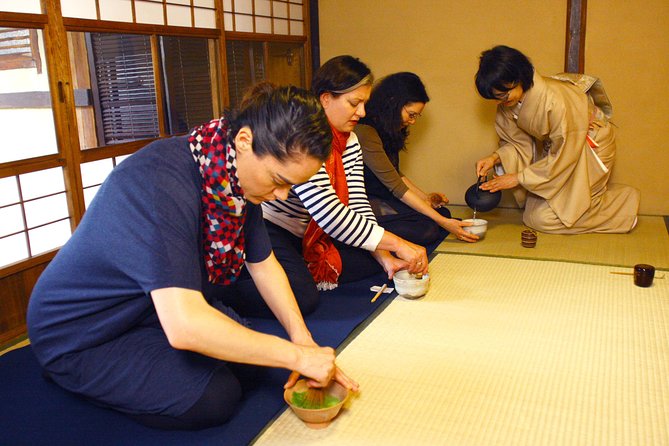
The activity lasts about one hour. I think that timing works well for a city with as much to see as Kyoto. You can fit the ceremony into a morning or afternoon without sacrificing half a day of sightseeing.
The hosts use the hour efficiently. You receive an explanation, watch a demonstration, learn the etiquette, prepare your own tea, and eat a traditional sweet. Several participants felt the session was long enough to learn the essentials without becoming tiring.
The short format does have a limit. You will not become an expert in tea ceremony after one visit, and there may not be time for an extended history lesson or a long conversation about every utensil. Think of this as a thoughtful introduction, not professional training.
Several start times are available, which makes it easier to place the activity around temple visits and meals. I would schedule it when you can arrive calm and unhurried. Rushing through unfamiliar streets would undercut the quiet mood of the ceremony.
The value of about $27.74 per person
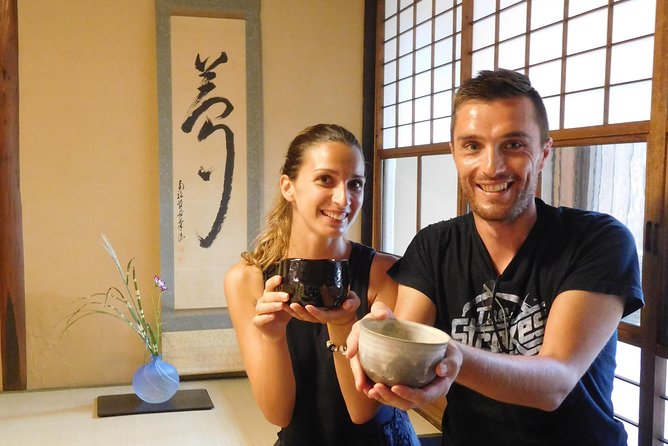
At approximately $27.74 per person, this is reasonably priced for Kyoto. The fee includes the matcha and Japanese sweets, as well as the instruction and use of the townhouse. You are paying for a cultural encounter in a private-feeling setting, not just for a cup of tea.
I see good value in the hands-on format. A short demonstration alone would be less useful, but making your own bowl gives the hour a clear purpose. The small group also adds value because the hosts can respond to individual questions.
The price may feel less attractive if you only want to taste matcha. Kyoto has many cafés and tea shops where you can order the drink for less. This activity earns its cost through context, etiquette, explanation, and participation.
It is also a good choice if you want a gentle cultural activity between more demanding sightseeing stops. There is no hotel pickup or drop-off, so you must reach the townhouse yourself. Since the venue is near public transportation, getting to the area should be manageable, but the final walk deserves a few extra minutes.
Who will enjoy this Kyoto tea ceremony
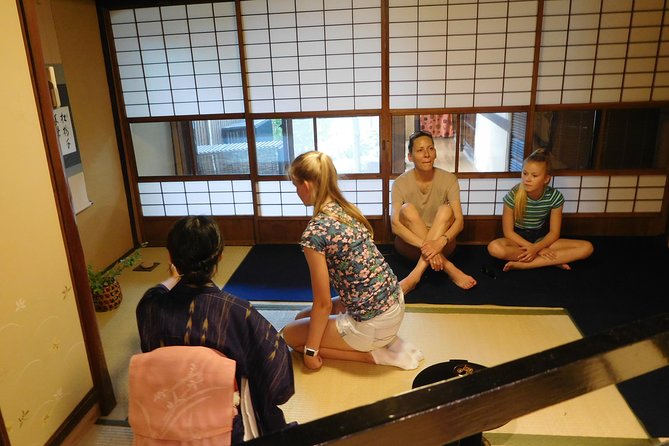
I would recommend this experience to first-time visitors who want a clear introduction to Japanese customs. You do not need to know anything about tea ceremony before arriving, and the hosts explain the process in an approachable way.
It also suits anyone who enjoys matcha, traditional architecture, or quiet cultural activities. Families can take part, and an Australian family of four found the demonstrations and practice easy to follow. The one-hour length is useful if children or older relatives may not want a long formal program.
The experience can also work for visitors interested in the spiritual side of tea. The ceremony presents tea as a careful way of sharing time, not simply as a beverage. The deliberate movements and respectful atmosphere may appeal to you if you enjoy ritual, meditation, or Japanese aesthetics.
Accessibility deserves a direct note. One family reported that the hosts were accommodating to a member using a wheelchair. The supplied information also says most people can participate, but it does not provide detailed information about doorway widths, steps, or restroom access. If you use a wheelchair or have limited mobility, contact Ami Kyoto before booking so you can confirm the current setup.
I would be less likely to recommend it if you want a lavish show, extensive historical detail, or a long tea-school lesson. This is a friendly, compact introduction in a small home. Its strength is closeness, not spectacle.
Practical arrival and booking advice
You receive a mobile ticket, and confirmation is sent within 48 hours, subject to availability. The experience starts and ends at the same meeting point, so plan your next activity from the townhouse rather than expecting transport elsewhere.
The meeting point is 605 Nishidacho, Shimogyo Ward, Kyoto, 600-8397, Japan. Use the exact address and map information provided after booking. Because English signs and street numbers can be limited in older neighborhoods, I would not rely on finding the place by wandering.
The activity is generally suitable for most people and has a maximum of six participants. You can choose from multiple start times, which makes it easier to fit into a day of sightseeing.
Free cancellation is available if you cancel at least 24 hours before the start time. Cancellations or changes made less than 24 hours ahead are not refunded or accepted, and the cutoff uses Kyoto local time.
Should you book the Ami Kyoto tea ceremony?
I would book this if you want a small, practical introduction to Japanese tea ceremony rather than a large staged presentation. The traditional townhouse, Uji matcha, Kyoto sweet, and hands-on preparation give the hour real substance.
The main caution is finding the address and accepting the limits of a one-hour session. Arrive early, follow the map, and expect a compact lesson rather than an exhaustive study of tea culture.
For the price, this is a thoughtful choice for couples, families, solo visitors, and anyone who wants a quieter Kyoto memory. If learning proper etiquette and making your own matcha sounds better than simply ordering tea at a café, this experience is worth booking.
FAQ
Where does the tea ceremony take place?
It takes place at Ami Kyoto, 605 Nishidacho, Shimogyo Ward, Kyoto, 600-8397, Japan, inside a traditional Japanese machiya townhouse.
How long does the experience last?
The tea ceremony lasts approximately one hour.
How many people can join?
The activity has a maximum of six participants.
What is included in the price?
The price includes a bowl of matcha green tea and Japanese sweets.
Is hotel pickup included?
No. Hotel pickup and drop-off are not included. You must travel to and from the meeting point yourself.
Can I choose the start time?
Yes. Multiple start times are available.
Is the experience suitable for most people?
The supplied information says most people can participate. One family also reported that the hosts accommodated a participant using a wheelchair. For detailed access needs, contact Ami Kyoto before booking.
What is the cancellation policy?
You can cancel for a full refund up to 24 hours before the experience start time. Cancellations or changes made less than 24 hours before the start are not accepted, and the payment is not refunded.
Just added around Kyoto
- Kyoto Gion Walking Tour for First Time Visitors★ 5.0 · 37 reviews
- Kyoto: Gion Geisha District & Sake-in-Hand Walking Tour★ 5.0 · 37 reviews
- Bamboo LED Lantern Making Experience in Kyoto Arashiyama★ 5.0 · 38 reviews
- Kyoto: Gion Night Walking Tour with Geisha Insight★ 5.0 · 39 reviews
- Kyoto: Private Customizable Day Trip by Car★ 5.0 · 38 reviews
- Kyoto: Full Day Bike Tour★ 4.9 · 39 reviews
- Private Japanese Calligraphy in Kyoto – Learn Shodō with a Master★ 5.0 · 39 reviews
- Kyoto: Gion Evening Walk with Hidden Gems, Geisha & Sake★ 5.0 · 41 reviews
Tea Ceremony Experiences, compared.
Tea Ceremony in a Traditional Tea House in Kiyomizu
Read our review →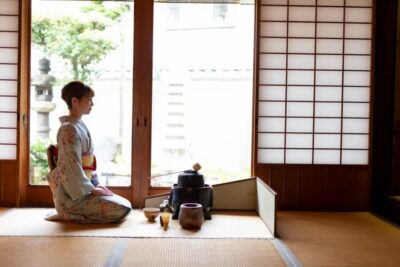
Browse the lists this tour appears in