
Reviewed · WALKING TOURS
Private Ginza Architecture Walking Tour
Ginza rewards anyone who looks up. This private walk pairs world-class modern buildings with temples, shrines, theaters, and older structures that are easy to miss when you are focused on shopping. I like the guide-led format because an expert can explain why each facade matters, and I like the private setup because the pace and subject matter can be adjusted to your group. The main consideration is price: at $132.10 per person, it makes the most sense for people who care about design, urban history, or a more personal Tokyo experience.
The route begins near Tsukiji and finishes at Ginza’s Mitsukoshi department store, so you get a useful introduction to two connected central Tokyo districts. Guides such as Yoko, Yuki, Taka Yamamura, Yoshi, Haruka, Mari, Makoto, and Eriko have received especially warm praise for clear explanations and friendly company. Still, the tour depends on the guide’s English and your own interests. One less enthusiastic account found the early section less focused on modern architecture and wanted more detail at the most striking buildings.
In This Review
- Key points at a glance
- Why Ginza works so well for an architecture walk
- Starting near Tsukiji and entering Ginza
- Tsukiji Hongwanji Temple: a strong cultural opening
- Kabukiza Theater and the meaning of spectacle
- Nicolas G. Hayek Center: commercial architecture with a purpose
- Toyoiwa Inari Shrine: a tiny pause in a major district
- Maison Hermès and the art of the luxury facade
- Mikimoto, Uniqlo, and Ginza’s changing retail identity
- Wako Ginza and the classic Ginza image
- Okuno Building: an older note in the final stretch
- What the private guide adds
- Is $132.10 per person a fair price?
- Who will enjoy this walk most?
- Should you book the Ginza Architecture Walking Tour?
- FAQ
- Where does the tour begin?
- Where does the tour finish?
- How long does the tour last?
- How many people can join?
- Is the tour conducted in English?
- What is the minimum age?
- Are admission tickets included?
- Are drinks included?
- Is hotel pickup provided?
- Can I cancel for a full refund?
Key points at a glance
- Private groups of up to five: You can ask questions freely and request more architecture, history, shopping, or local culture.
- Tsukiji to Ginza route: The walk links a temple, theater, tiny shrine, luxury boutiques, department stores, and older buildings.
- Three hours and 30 minutes: About 40 minutes is spent walking between locations, with time at each stop.
- Architecture beyond the obvious: The route includes the Nicolas G. Hayek Center, Maison Hermès, Mikimoto buildings, Wako, and Okuno Building.
- A guide who can shape the day: Past experiences with Yoko, Yoshi, Mari, Makoto, and others show how much the tour can change with the guide and your questions.
- A built-in pause: Drinks are included during a comfortable break along the way.
Why Ginza works so well for an architecture walk
Ginza is often introduced as Tokyo’s luxury shopping district. That description is accurate, but incomplete. Its streets also form an open-air lesson in how commercial buildings use shape, glass, stone, light, branding, and small details to attract attention.
You do not need an architecture degree to enjoy this route. A good guide can point out what your eye might skip: the way a tower meets the sidewalk, how a boutique turns a logo into part of the building, or how a narrow shrine survives among large commercial structures. Several guides are described as urban planning or architecture specialists, while others bring strong knowledge of Japanese history and culture.
The private format matters here. A large group would make it harder to stop, look upward, or discuss a building for an extra few minutes. With a maximum of five people, you can ask why a building looks the way it does, compare two facades, or shift the focus if your group becomes more interested in kabuki, Buddhism, shopping, or urban change.
The route is not a museum tour with long indoor visits. It is a street-level experience, with many short stops and time spent moving between them. I would expect the best results when you tell the guide what you want before starting. If your main interest is contemporary architecture, say so clearly. If you prefer cultural history and unusual local places, say that instead.
More Walking Tours in Tokyo
- Tokyo Tsukiji Fish Market Food and Culture Walking Tour
★ 5.0 · 3,184 reviews - Tokyo: Imperial Palace and Shogun Historical Walking Tour
★ 5.0 · 2,251 reviews - Tokyo: Shinjuku Local Bar and Izakaya Guided Walking Tour
★ 4.9 · 1,794 reviews
Starting near Tsukiji and entering Ginza
The meeting point is near Exit 1 of Tsukiji Station, at Tsukiji 3-chome 15-1 in Chuo City. This is a practical starting point because the tour moves from Tsukiji toward Ginza, ending at the Ginza 4-chome intersection in front of Mitsukoshi department store.
The first Ginza section accounts for about 40 minutes of walking between sites. That walking time is not wasted. It gives you a chance to see how the district changes block by block, from older religious and neighborhood spaces to polished retail buildings.
You should wear comfortable shoes and bring water, even though drinks are included during the pause. The tour lasts about three hours and 30 minutes, and the physical demand is described as moderate. There are no hotel transfers, so you will need to reach Tsukiji Station independently and arrange your own transport after finishing.
Tsukiji Hongwanji Temple: a strong cultural opening
The first named stop is Tsukiji Hongwanji Temple, where you go inside for about 10 minutes. This gives the tour a useful cultural beginning before the focus turns fully toward Ginza’s commercial architecture.
The short visit means you should not expect a long temple program. Instead, the guide can explain what you are seeing and place the temple within the surrounding district. This is one of the route’s strengths: Ginza is not treated as a collection of luxury storefronts. Religious buildings and older traditions remain part of the city’s daily fabric.
If your group is mainly interested in modern design, this opening may feel slightly off-topic. One account specifically found the first section less connected to modern architecture. I see the temple as a worthwhile counterpoint, but I would tell the guide early if you want to keep the emphasis on contemporary buildings.
Kabukiza Theater and the meaning of spectacle
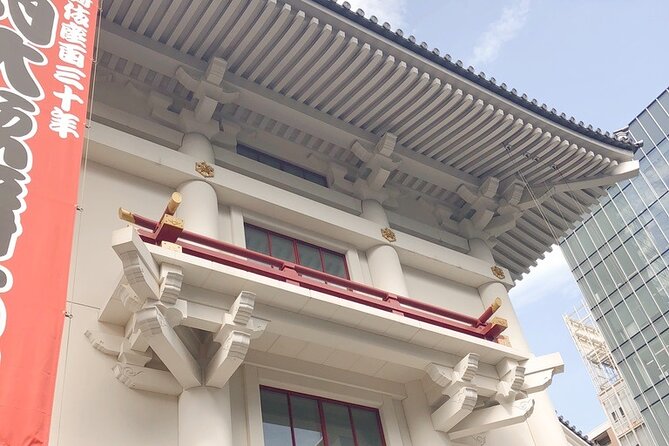
The tour then visits Kabukiza Theater for about 20 minutes. You go inside to see its features, making this one of the longer indoor stops.
Kabukiza adds a different kind of design to the day. A luxury boutique is built to sell an image, while a theater must create a public identity tied to performance and tradition. Your guide can connect the building’s appearance with kabuki culture and explain why this landmark matters to Ginza beyond its exterior.
The stop also breaks up the commercial focus. Even if you know little about kabuki, the theater gives you a way to think about architecture as part of cultural life, not just as decoration. Ask questions here if you want the tour to include more Japanese history.
A completely different kind of day out in Tokyo:
- Mt Fuji and Hakone 1-Day Bus Tour Return by Bullet Train
★ 5.0 · 26,383 reviews - 1-Day Tokyo Bus Tour
★ 5.0 · 14,250 reviews - Tokyo: TOKYO SKYTREE® Admission ticket
★ 4.5 · 11,192 reviews - Tokyo: teamLab Planets TOKYO Digital Art Museum Entry Ticket
★ 4.6 · 9,779 reviews
Nicolas G. Hayek Center: commercial architecture with a purpose
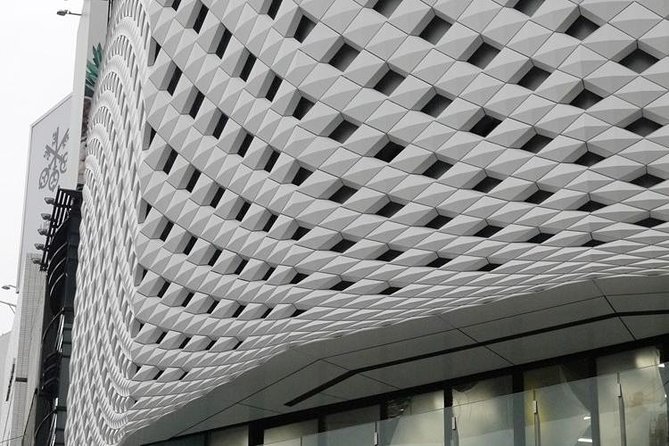
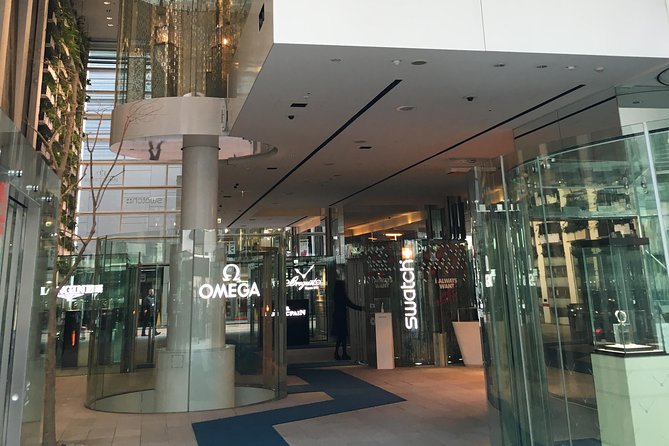
The Nicolas G. Hayek Center receives about 15 minutes, and you go inside to see its features. This is one of the route’s clearest examples of a commercial building designed to make an impression.
The building is associated with watch retail, but the value of the stop is not limited to shopping. Your guide can show how a brand uses architecture to create a public face. This is exactly the sort of place that can look impressive from the street yet become more interesting when someone explains the design choices.
I would pay close attention to the relationship between the inside and outside here. On a self-guided walk, you might take a photograph and move on. With a private guide, you can ask how the building fits the character of Ginza and how it differs from nearby boutiques.
Toyoiwa Inari Shrine: a tiny pause in a major district
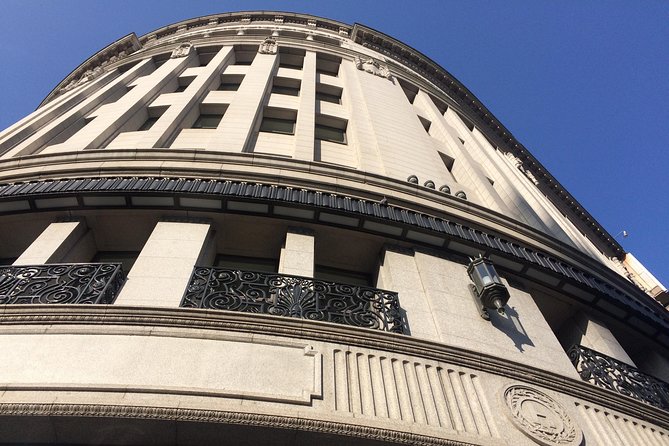
Toyoiwa Inari Shrine is allotted about five minutes. It is a very short stop, but that is part of its appeal.
Small religious sites tucked among large urban buildings can change how you read Ginza. A shrine does not need a grand entrance or a wide plaza to matter. Its presence shows that the district has layers, and that commercial Tokyo has room for intimate sacred spaces.
Do not expect a long explanation or a major attraction on the scale of Tsukiji Hongwanji. The value is in the contrast. This is also a place where the guide’s local familiarity helps. A private guide can point out a small site you might pass without noticing.
Maison Hermès and the art of the luxury facade
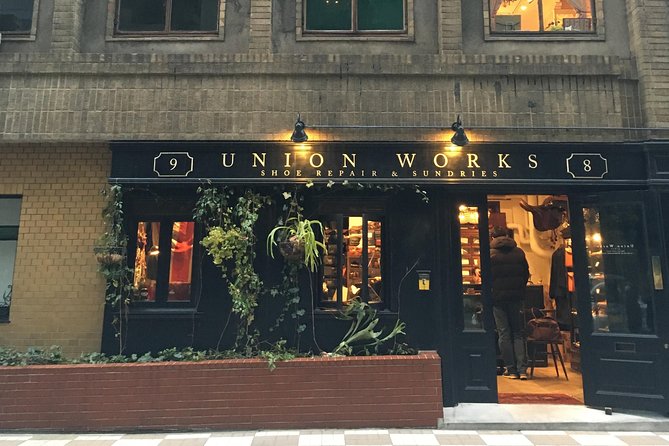
Ginza Maison Hermès Le Forum receives about 15 minutes, with an indoor visit included. This is likely to be one of the most rewarding stops for anyone interested in materials, light, and the way luxury brands shape a building.
The route treats shopping buildings as architecture rather than simply retail destinations. That distinction matters. You are not being asked to buy anything. You are looking at how a brand turns a storefront into a piece of the city.
Past tours have been praised for explaining the stories behind facades and art installations. This is where those explanations can make a real difference. You may find that the building’s visual qualities become clearer once the guide directs your attention to them.
Mikimoto, Uniqlo, and Ginza’s changing retail identity
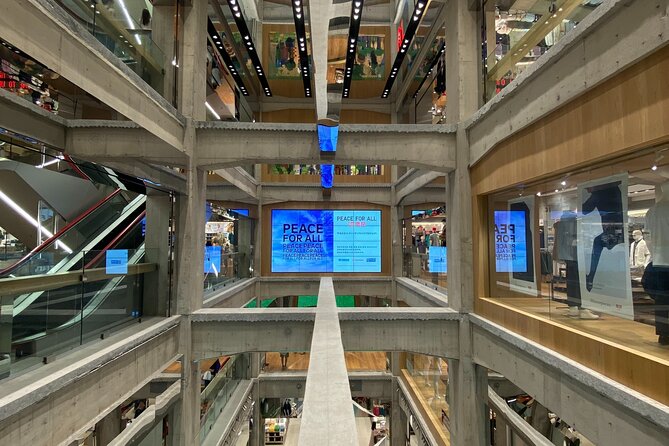
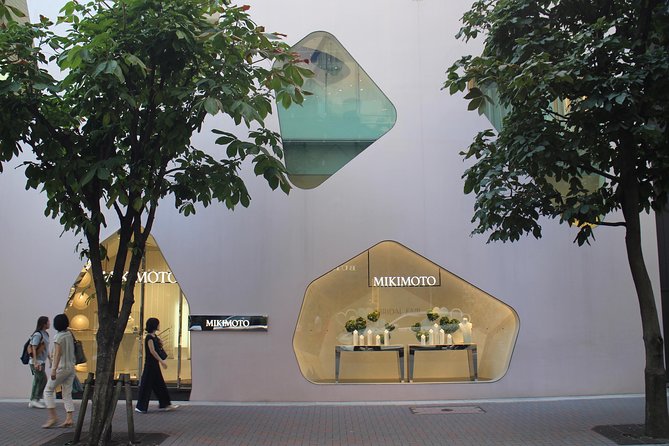
The itinerary includes two Mikimoto locations and UNIQLO Tokyo, giving you a useful comparison between different types of retail architecture.
At Mikimoto Boutique Ginza 2chome, you may go inside if time allows, with about five minutes set aside. Mikimoto Ginza 4chome Honten is viewed from outside for about five minutes. The two stops are brief, so do not expect detailed interior tours. Their value comes from comparing how one brand presents itself in different settings.
UNIQLO Tokyo is viewed from outside for about 10 minutes. This gives the guide a chance to discuss a major Japanese retail presence in a district often associated with European luxury labels. The contrast can make Ginza feel less one-note. It is not simply a parade of foreign fashion houses. Japanese companies also use the district to express scale, identity, and design.
Time is a real factor in this portion. The Mikimoto 2chome visit is conditional, and the tour includes many stops. If one building captures your attention, you may need to accept a shorter look elsewhere. That is the tradeoff of a broad route.
Wako Ginza and the classic Ginza image
Wako Ginza is viewed from outside for about 10 minutes. Its location makes it a natural part of the tour, since the building is closely tied to the public image of Ginza.
This is a good place to step back and consider the district as a whole. After seeing smaller shrines, a temple, a theater, and several brand buildings, you can compare different ideas of prominence. Some buildings announce themselves through height or unusual materials. Wako’s importance comes from recognition and position.
The stop should also appeal to photographers. The tour’s description places value on ending with good photographs, and Wako gives you one of the clearest exterior subjects on the route. Your guide can help you look beyond the standard front-on picture and notice how the building relates to the surrounding intersection.
Okuno Building: an older note in the final stretch
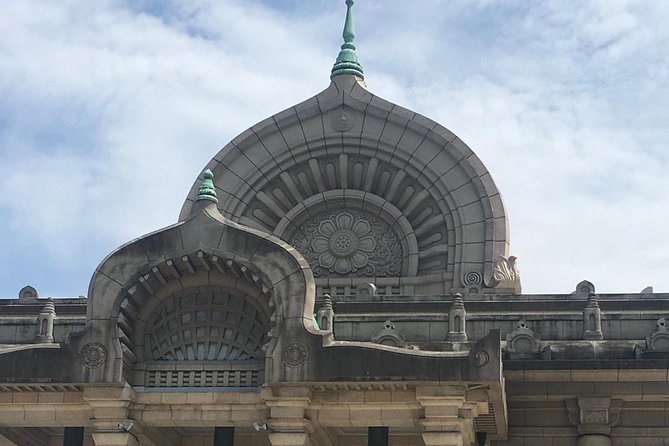
Okuno Building receives about 10 minutes, and you go inside to explore its features. This is a useful change of pace after the newer retail buildings.
The presence of an older structure near Ginza’s polished commercial streets helps explain why this district is more interesting than its luxury image suggests. You can compare its character with the sleek facades seen earlier and ask how Ginza has changed over time.
The short indoor visit means the guide’s explanation matters. One of the strongest features of this experience is the chance to ask questions in real time rather than read a plaque and continue. If you enjoy older urban buildings, tell the guide you want extra context here.
What the private guide adds
The guide is the main reason to choose this experience over a self-guided walk. The buildings are accessible on your own, but the connections between them are less obvious.
Yoko has been praised for being accommodating, friendly, and clear about both Japanese history and architecture. Yuki has been described as enthusiastic and well informed about Ginza’s luxury buildings. Taka Yamamura is an urban planner who brings a strong understanding of the district. Yoshi has been patient with people who knew little about architecture, which is reassuring if you are a beginner.
Haruka has been praised for linking historical context with present-day culture. Mari was noted for excellent English and for asking about interests ahead of time so the walk could be adjusted. Makoto adapted quickly to a visitor’s interests and helped with translation questions, even leading to an unexpected tea tasting at a local seaweed and tea distributor. Eriko was praised for showing local shopping spots and staying beyond the planned time.
These examples suggest that the experience is not identical for every group. Your guide may focus on architectural ideas, cultural history, shopping, or small local details. That flexibility is a real benefit, but it also means you should communicate clearly. The one less positive account noted that English was just adequate and that some major buildings deserved more explanation. If detailed architectural analysis is essential to you, ask about your guide’s specialty when booking if that information is available.
Is $132.10 per person a fair price?
At $132.10 per person, this is not a bargain walking tour. You are paying for privacy, a licensed local guide, English explanations, customization, and a long route with indoor stops. A group of up to five can make the cost easier to justify, especially if everyone shares an interest in design or Tokyo’s urban story.
The price is harder to defend if you simply want to see Ginza’s famous buildings and take a few photographs. You can walk through the district without a guide. The added value comes from interpretation, access to selected interiors, questions answered in the moment, and a route that includes places you might otherwise skip.
Group discounts are available, though no specific discount amount is provided. The experience is booked an average of 44 days ahead, which suggests you should not leave it until the last moment if your dates are fixed. Two departure times make scheduling easier, especially if you are combining the walk with other Tokyo plans.
Free cancellation is available until 24 hours before the start time. Changes or cancellations made within that final 24-hour period are not accepted for a refund.
Who will enjoy this walk most?
I would recommend it most strongly to:
- People who enjoy architecture but want explanations in plain English.
- Repeat Tokyo visitors seeking a new view of a familiar district.
- Families with children aged 10 and older who can manage a moderate walking route.
- Small groups who value privacy and the chance to set the pace.
- Shoppers who want to understand the buildings behind the brands.
- Visitors interested in the mix of temples, shrines, theater, and commerce.
It is less suitable if you want a fast, tightly focused survey of only modern architecture. It may also disappoint visitors looking for long interior visits at every stop. Several locations are seen from outside, and some indoor visits last only five to 20 minutes.
Should you book the Ginza Architecture Walking Tour?
Book it if you want Ginza to make more sense, not just look expensive. The best part is the combination of major buildings and small cultural places, with a private guide who can adjust the conversation to your level.
I would book it for a first-time architecture enthusiast, a repeat visitor tired of standard Tokyo sightseeing, or a small family that likes asking questions. Before you go, tell the company whether you prefer modern design, historic buildings, Japanese culture, shopping, or photography. That one step could shape the experience in your favor.
Skip it if $132.10 feels high for a walking tour or if you prefer exploring independently. Ginza is easy to reach and rewarding on its own. But if you want to understand why the buildings look as they do, and you value a guide who can point out the small details between the famous addresses, this private route is a strong choice.
FAQ
Where does the tour begin?
It begins near Exit 1 of Tsukiji Station at Tsukiji 3-chome 15-1, Chuo City, Tokyo 104-0045.
Where does the tour finish?
It finishes at the Ginza 4-chome intersection, in front of Mitsukoshi department store, at 4-chome-6-11 Ginza, Chuo City, Tokyo 104-0061.
How long does the tour last?
The experience lasts approximately three hours and 30 minutes. About 40 minutes of that time is spent walking between locations.
How many people can join?
This is a private activity with a maximum of five people per booking. Only your group participates.
Is the tour conducted in English?
Yes. The tour includes English-language information about architecture, culture, and history.
What is the minimum age?
The minimum age is 10 years old, and adult pricing applies to all participants.
Are admission tickets included?
The listed stops have no admission ticket charge. The tour includes visits inside selected locations, while some buildings are viewed from outside.
Are drinks included?
Yes. A comfortable pause with drinks is included along the route.
Is hotel pickup provided?
No. Hotel pickup and drop-off are not included. You must make your own way to the Tsukiji meeting point and arrange transport after the tour.
Can I cancel for a full refund?
Yes. You can cancel up to 24 hours before the experience start time for a full refund. Cancellations or changes made less than 24 hours before the start time are not refunded or accepted.
Just added around Tokyo
- Tokyo 6hr Instagram Highlights Private Tour with Licensed Guide★ 5.0 · 38 reviews
- Tokyo Small Group Tour with Guide★ 4.5 · 38 reviews
- Tokyo Sumo Experience with Live Show & Audience Challenge★ 5.0 · 38 reviews
- Japanese Food Cooking Class in Asakusa, Tokyo★ 5.0 · 39 reviews
- Very popular in Harajuku♡Animal petting zoo★ 4.6 · 39 reviews
- Ramen Making from Scratch with Tokyo Mom(Vegan Option Available)★ 5.0 · 39 reviews
- Tokyo JDM Night: 600hp C63s AMG Edition 1 (Private)★ 4.9 · 39 reviews
- Tokyo: Kimono Rental inside Shinjuku Gyoen National Garden★ 4.9 · 39 reviews
Walking Tours, compared.
Kyoto Geisha Walking Tour: Gion District & Hidden Gems
Read our review →
Tokyo Tsukiji Fish Market Food and Culture Walking Tour
Read our review →
Gion Magical Night Walking Tour with Geisha Trivia
Read our review →
Imperial Palace and Shogun Historical Walking Tour
Read our review →
Gion Geisha District Walking Tour – Stories of Geisha
Read our review →
Shinjuku Local Bar and Izakaya Guided Walking Tour
Read our review →
Browse the lists this tour appears in