
Reviewed · WALKING TOURS
Private Harajuku Omotesando Architecture Walking Tour
Tokyo’s best architecture walk is hiding in plain sight. This private tour links Meiji Jingu, Yoyogi Stadium, Omotesando’s designer buildings, and quiet Harajuku backstreets in about three and a half hours. I like the personal format, which lets your guide adjust the route to your interests, and I like the way the tour connects bold modern buildings with Tokyo’s changing fashion and design culture.
I also like the guide preparation. Several guides, including Yoshi, Yoko, Aki, Mari, Taka, and Junko, have been praised for bringing photos, floor plans, architect portraits, and background notes. The main consideration is physical effort: you will walk for several hours, and one otherwise positive account found it difficult to understand a guide’s English. Ask questions early and confirm the language fit when booking.
In This Review
- Key points to know before you go
- Why Harajuku and Omotesando work so well for architecture
- Starting at Meiji Jingu beside Harajuku Station
- Yoyogi Stadium and the Olympic connection
- Omotesando’s designer buildings, one facade at a time
- The buildings that reward a closer look
- Harajuku’s backstreets show another Tokyo
- A short drink break keeps the pace comfortable
- What the private format is really worth
- Guides and the quality of the explanation
- Who should take this walk
- Practical details from Harajuku to Aoyama
- Should you book the Harajuku architecture tour?
- FAQ
- How long is the Private Harajuku Omotesando Architecture Walking Tour?
- Where does the tour begin?
- Where does the tour end?
- Is this a private tour?
- What is included in the price?
- Is hotel pickup included?
- How much does the tour cost?
- Do I need to be physically fit?
- Does the tour include Olympic history?
- Can I cancel for a full refund?
Key points to know before you go
- See five Pritzker Prize-winning architects in one compact area: The route can include work by Kenzo Tange, Tadao Ando, Jacques Herzog, Pierre de Meuron, and others.
- Start at Meiji Jingu and finish near Omotesando Station: The tour begins by Harajuku Station and ends at the Omotesando and Aoyama-dori intersection.
- Expect a private, adjustable route: Your group is the only group taking part, so you can focus more on architecture, fashion, local culture, or Tokyo’s development.
- Look beyond the famous shopping street: Side roads reveal small houses, local businesses, unusual buildings, and a less polished side of the district.
- Build in a cafe pause: A short break with drinks is included, giving your feet a rest and your guide a chance to continue the conversation.
- Plan for about 3 hours and 30 minutes: The listed price is $132.14 per person, with group discounts available.
Why Harajuku and Omotesando work so well for architecture
Harajuku and Omotesando make an unusually good walking classroom. Within a fairly short route, you move from the wooded grounds of Meiji Jingu to the clean lines of Omotesando’s luxury stores, then into side streets where the scale changes completely.
That contrast is the point. You are not simply walking from one famous facade to another. You are watching Tokyo shift from shrine grounds and postwar planning to international fashion, experimental retail, and small neighborhood streets.
The tour also gives you a useful introduction to the architects behind the buildings. A guide may show you photos of other projects, explain how a structure was built, or point out the best place to view a facade. That extra material turns a shop window into a lesson in form, glass, concrete, structure, and branding.
I would not book this as a general sightseeing tour with a little architecture added. Its appeal is much stronger if you care about design, urban change, fashion, photography, or the way Tokyo combines old settings with very new buildings.
More Walking Tours in Tokyo
- Tokyo Tsukiji Fish Market Food and Culture Walking Tour
★ 5.0 · 3,184 reviews - Tokyo: Imperial Palace and Shogun Historical Walking Tour
★ 5.0 · 2,251 reviews - Tokyo: Shinjuku Local Bar and Izakaya Guided Walking Tour
★ 4.9 · 1,794 reviews
Starting at Meiji Jingu beside Harajuku Station
The meeting point is in front of Meiji Jingu, at 1 Yoyogikamizonocho. This is a sensible starting place because it gives your guide a chance to frame the district before the modern architecture begins.
Meiji Jingu provides a calm opening. The shrine’s setting feels far removed from the commercial streets nearby, and that change of mood helps explain why Harajuku is more than a fashion label. You begin with one of Tokyo’s major landmarks, then move toward buildings that belong to a very different era and purpose.
The tour does not list an admission charge for the shrine portion. Your guide will direct the walk, and the route stays near public transportation. Still, arrive with comfortable shoes and enough time to find the meeting point. Harajuku Station and the shrine area can be confusing if you are rushing.
Yoyogi Stadium and the Olympic connection
One of the first architectural highlights is Kenzo Tange’s Yoyogi Gymnasium, admired from a distance. The building is closely linked with Tokyo’s Olympic story, and it gives the tour a strong historical anchor before you reach the newer retail buildings.
The distant view is worth understanding in advance. This is not presented as an indoor stadium visit, so do not expect a tour of the interior. Instead, your guide can explain the building’s place in Tokyo’s postwar growth and show you why its silhouette matters.
The Olympic theme adds useful context. Omotesando’s polished stores can seem like a string of expensive shopping stops, but Yoyogi Stadium reminds you that the city’s design story also includes major public projects and national ambition.
Omotesando’s designer buildings, one facade at a time
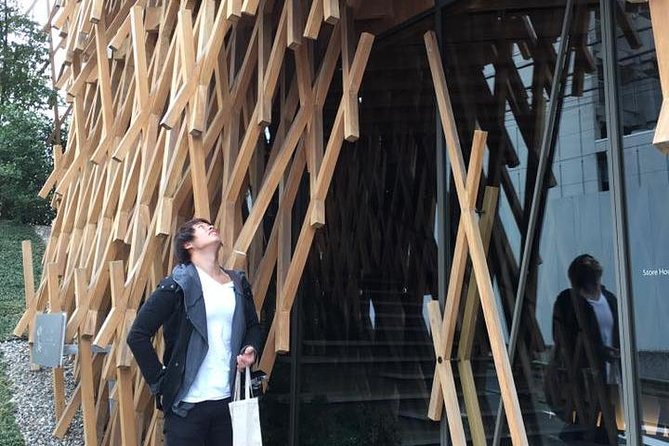
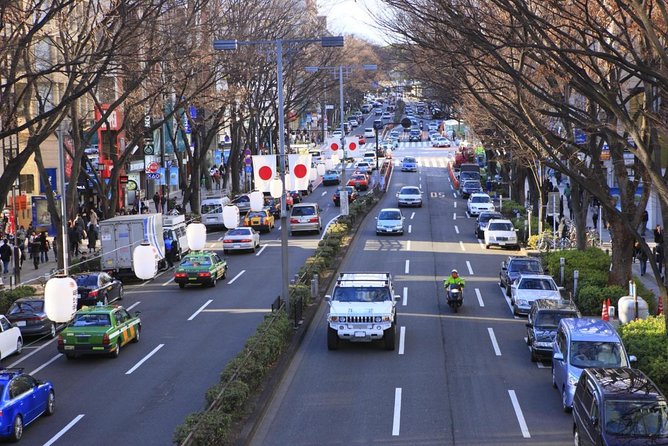
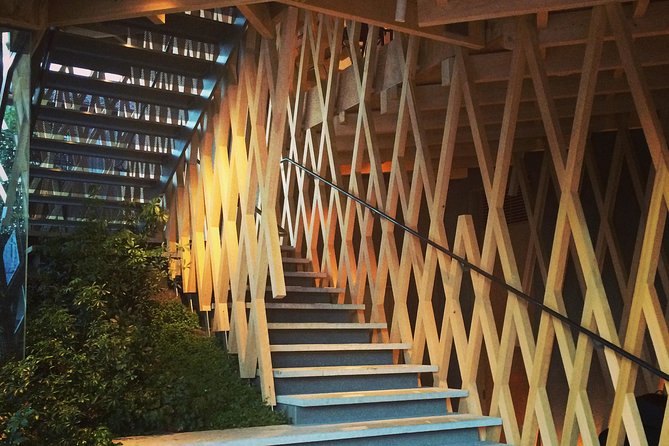
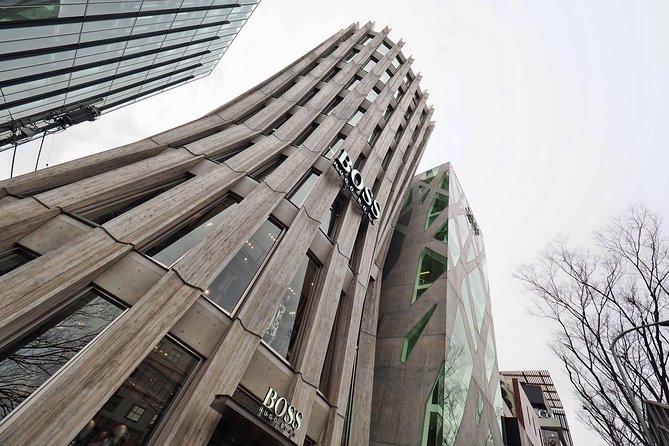
The central stretch brings a parade of contemporary retail architecture. You may see The Iceberg, Dior, Louis Vuitton, Tod’s, Sunny Hills, and Prada, each using a different approach to attract attention.
This is where a private guide earns the fee. Without explanation, you might simply notice expensive shops with unusual exteriors. With a guide, you can look at glass patterns, angled surfaces, recessed entrances, structural tricks, and the way each building presents a brand to the street.
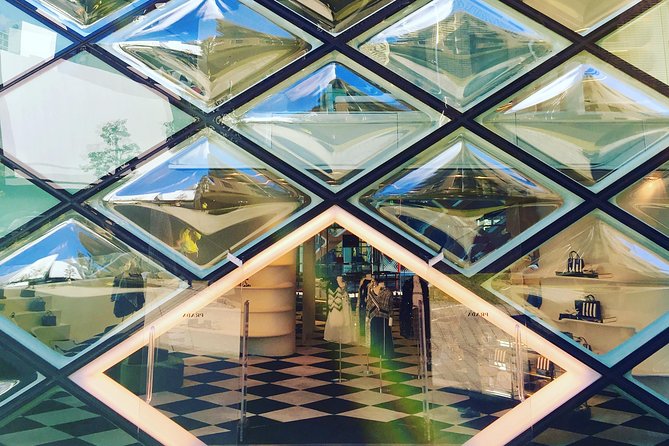
The Prada store is a particularly strong stop. Its convex and concave glass creates a changing surface, so the building looks different as you walk past it. It is not just a decorated shop. The architecture itself becomes part of the experience of entering the brand.
The Iceberg, Dior, Louis Vuitton, Tod’s, and Sunny Hills add variety. The point is not to decide which store is prettiest. It is to compare how architects handle transparency, scale, texture, and movement along one busy avenue.
A guide such as Taka may use a tablet or notebook to show the architects, other projects, floor plans, and suggested photo positions. That is a real advantage if you want more than a quick exterior snapshot.
A completely different kind of day out in Tokyo:
- Mt Fuji and Hakone 1-Day Bus Tour Return by Bullet Train
★ 5.0 · 26,383 reviews - 1-Day Tokyo Bus Tour
★ 5.0 · 14,250 reviews - Tokyo: TOKYO SKYTREE® Admission ticket
★ 4.5 · 11,192 reviews - Tokyo: teamLab Planets TOKYO Digital Art Museum Entry Ticket
★ 4.6 · 9,779 reviews
The buildings that reward a closer look
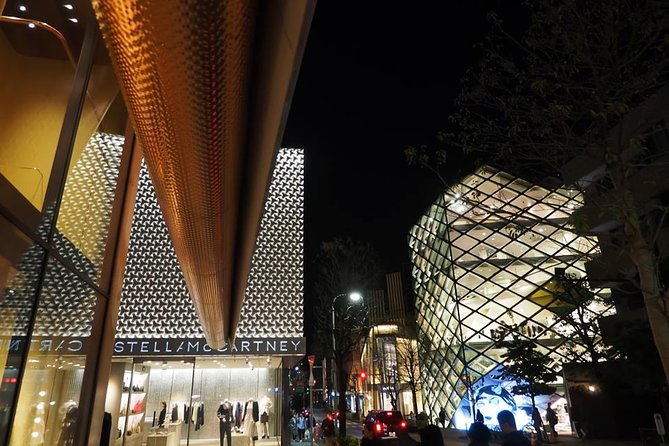
The route can include newer and less expected examples, including Tokyo Plaza Harakado, with its planted rooftop vertical garden, and Tadao Ando’s Collezione, where part of the building sits underground.
These stops help prevent the walk from becoming a luxury-store checklist. They show how architects use roofs, underground space, courtyards, planted areas, and unusual circulation to work within a dense city.
Several people who took the tour enjoyed entering some buildings as well as viewing them from the street. Access can depend on the route, timing, and what is open that day, so I would not treat every interior as guaranteed. But the private format gives your guide more room to include indoor spaces when practical.
If you are an architect or design professional, the technical material may be especially useful. One particularly detailed version of the walk included background information, plans, architect images, and advice on where to stand for photographs. If you are simply curious, the guide can adjust the explanation rather than assuming a professional level of training.
Harajuku’s backstreets show another Tokyo
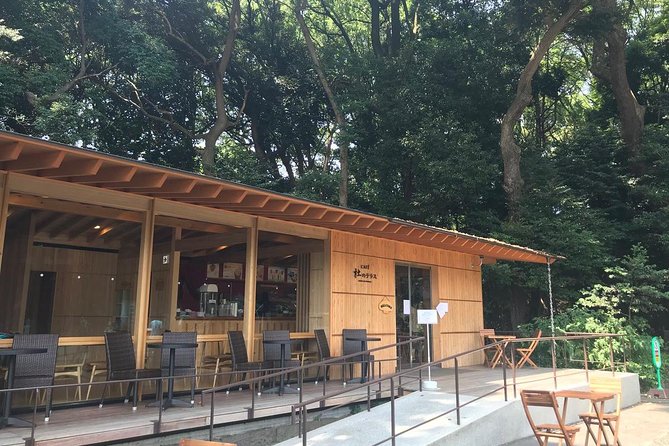
The side trip away from Omotesando is one of the tour’s most valuable features. You leave the polished main avenue and see a more mixed neighborhood of houses, shops, local businesses, and unusual small buildings.
This change gives the tour a human scale. The grand stores are easy to find on your own. The backstreets are harder to interpret without someone who knows what deserves attention.
I like this part because it keeps the experience from feeling like an outdoor catalog of famous architects. You can compare large commercial projects with ordinary buildings and see how different parts of Harajuku sit beside one another.
The route is described as customizable, so tell your guide what you want before you start. If you care about local culture, ask for more time in the side streets. If you are visiting Tokyo as an architect, ask to prioritize the major buildings and technical details. If you want help getting oriented, say so early.
The walk also offers useful connections to the rest of your trip. Junko, for example, was praised for tailoring explanations to the group’s interest and helping with the subway afterward. That kind of practical guidance can make this a good first activity in Tokyo.
A short drink break keeps the pace comfortable
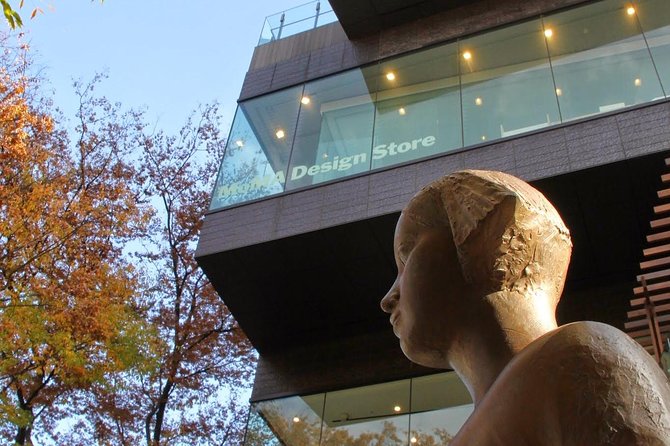
The tour includes a cozy pause with drinks. It is described as a short break in a cafe along an atmospheric backstreet, giving you somewhere to sit and continue talking with the guide.
This matters more than it may sound. Three and a half hours on city pavement can become tiring, especially in warm weather. One guide adjusted the route to include more indoor time because the heat was intense. Since the tour is private, you have a better chance of discussing a sensible pace and break.
The pause is not a full meal stop, and the supplied details do not specify a cafe name or a separate food allowance. Think of it as a chance to rest, have a drink, and ask follow-up questions.
What the private format is really worth
The price is $132.14 per person, with group discounts available. That is not a bargain-priced orientation walk, but the value changes depending on your group size and interests.
For one person or a couple, the cost may feel high compared with a standard group tour. You are paying for a licensed local guide, a private route, and the ability to ask questions without waiting for a large crowd to catch up.
For a family or small group, the calculation improves, especially if a group discount applies. A private tour can also be more efficient because the guide can skip buildings that do not interest you and spend time on the ones you want to understand.
The preparation described by several guides adds value. Photos, plans, architect portraits, and information about other projects are not automatic features of every walking tour. They can help you see details that would otherwise pass by unnoticed.
I would book this if architecture is one of your main interests in Tokyo. If you mainly want Harajuku shopping, a free self-guided walk may be enough. The stores and streets are open to everyone, while the price here pays for interpretation and flexibility.
The activity is often reserved about 53 days ahead, so advance planning is sensible if your dates are fixed. Free cancellation is available up to 24 hours before the start time. Hotel pickup and drop-off are not included.
Guides and the quality of the explanation
The strongest part of the experience is the guide’s role. Yoshi has been praised for careful preparation, detailed images, and a strong grasp of construction and design. Yoko has been singled out for explaining how the area changed from the 1960s to the present. Aki has received praise for patience, humor, and adapting the walk to specific interests.
Other named guides include Taka, Mari, Eriko, Yuki, and Junko. Several have backgrounds or strong interests in architecture and design, while others add cultural and practical context.
The experience is not perfectly uniform. One otherwise positive account reported difficulty understanding a guide’s English and felt that some information was missed. I would treat that as a useful caution rather than a reason to dismiss the tour. Confirm your preferred language and ask questions during booking if clear architectural terminology is important to you.
A good private guide should welcome questions. You can ask why a facade uses a certain pattern, how a building fits its site, or what other Tokyo project to visit later. The best versions of this tour sound less like a speech and more like a conversation with a well-prepared local specialist.
Who should take this walk
This tour suits you best if you fall into one of these groups:
- You study or practice architecture, design, urban planning, or photography.
- You want to understand Tokyo through buildings rather than only temples and shopping.
- You prefer private tours where the route can follow your interests.
- You want an early Tokyo activity that helps you get your bearings.
- You enjoy walking and can manage several hours at a moderate physical level.
- You want to see both major landmarks and less obvious neighborhood streets.
It may not suit you if you dislike walking, want extensive shrine interiors, or expect a shopping tour with time to browse every store. The tour passes many high-end boutiques, but its subject is the architecture and city setting, not buying luxury goods.
Bring comfortable shoes. You should also consider the weather, since much of the experience takes place outdoors. The included drink break helps, and the private setup may allow some adjustment, but this remains a walking tour.
Practical details from Harajuku to Aoyama
The walk begins at Meiji Jingu near Harajuku Station and ends at the Omotesando and Aoyama-dori intersection, in front of Mizuho Bank, at 5-chome-1-27 Minamiaoyama.
That ending point is useful because it leaves you in a well-connected part of the city. The tour does not return you to your hotel, so plan your next stop from the finish rather than assuming you will be escorted back.
The total duration is about 3 hours and 30 minutes, though the listed itinerary also describes roughly three hours of walking. Allow extra time around the edges for meeting the guide, the cafe pause, and any route adjustments.
Confirmation is provided when you book. The tour is near public transportation, but hotel transportation is not part of the price. Only your group participates, which is the key practical difference from a standard shared walk.
Should you book the Harajuku architecture tour?
Book it if you want to understand why Harajuku and Omotesando are so important to modern Tokyo design. The combination of Meiji Jingu, Yoyogi Stadium, Prada, Collezione, Tokyo Plaza Harakado, designer boutiques, and side streets gives you a remarkably varied three-and-a-half-hour route.
I would especially recommend it for architecture enthusiasts, design students, photographers, and anyone who likes seeing how a city changes from one block to the next. Ask for a guide who can explain technical details in your preferred language, and tell the guide before starting whether you want major buildings, hidden side streets, interiors, or local culture.
Skip it if you want a cheap general introduction or do not enjoy extended walking. At $132.14 per person, the tour makes sense when you will use the private attention and architectural expertise. For the right audience, it turns an attractive shopping district into a far more interesting lesson in Tokyo.
FAQ
How long is the Private Harajuku Omotesando Architecture Walking Tour?
The experience lasts approximately 3 hours and 30 minutes.
Where does the tour begin?
It begins in front of Meiji Jingu near Harajuku Station, at 1 Yoyogikamizonocho, Shibuya, Tokyo.
Where does the tour end?
It concludes at the Omotesando and Aoyama-dori intersection, in front of Mizuho Bank, at 5-chome-1-27 Minamiaoyama, Minato City.
Is this a private tour?
Yes. Only your group participates in the activity.
What is included in the price?
A local licensed tour guide and a cozy pause with drinks are included.
Is hotel pickup included?
No. Hotel pickup and drop-off are not included.
How much does the tour cost?
The listed price is $132.14 per person. Group discounts are available.
Do I need to be physically fit?
You should have a moderate level of physical fitness because the experience involves several hours of walking.
Does the tour include Olympic history?
Yes. The route includes Olympic-related context and a view of Kenzo Tange’s Yoyogi Gymnasium.
Can I cancel for a full refund?
Yes, if you cancel at least 24 hours before the experience begins. Cancellations made less than 24 hours before the start time are not refunded.
Just added around Tokyo
- Tokyo 6hr Instagram Highlights Private Tour with Licensed Guide★ 5.0 · 38 reviews
- Tokyo Small Group Tour with Guide★ 4.5 · 38 reviews
- Tokyo Sumo Experience with Live Show & Audience Challenge★ 5.0 · 38 reviews
- Japanese Food Cooking Class in Asakusa, Tokyo★ 5.0 · 39 reviews
- Very popular in Harajuku♡Animal petting zoo★ 4.6 · 39 reviews
- Ramen Making from Scratch with Tokyo Mom(Vegan Option Available)★ 5.0 · 39 reviews
- Tokyo JDM Night: 600hp C63s AMG Edition 1 (Private)★ 4.9 · 39 reviews
- Tokyo: Kimono Rental inside Shinjuku Gyoen National Garden★ 4.9 · 39 reviews
Walking Tours, compared.
Kyoto Geisha Walking Tour: Gion District & Hidden Gems
Read our review →
Tokyo Tsukiji Fish Market Food and Culture Walking Tour
Read our review →
Gion Magical Night Walking Tour with Geisha Trivia
Read our review →
Imperial Palace and Shogun Historical Walking Tour
Read our review →
Gion Geisha District Walking Tour – Stories of Geisha
Read our review →
Shinjuku Local Bar and Izakaya Guided Walking Tour
Read our review →
Browse the lists this tour appears in