
Reviewed · WALKING TOURS
Tokyo After 5: Local Eats, Drinks & Culture Walk
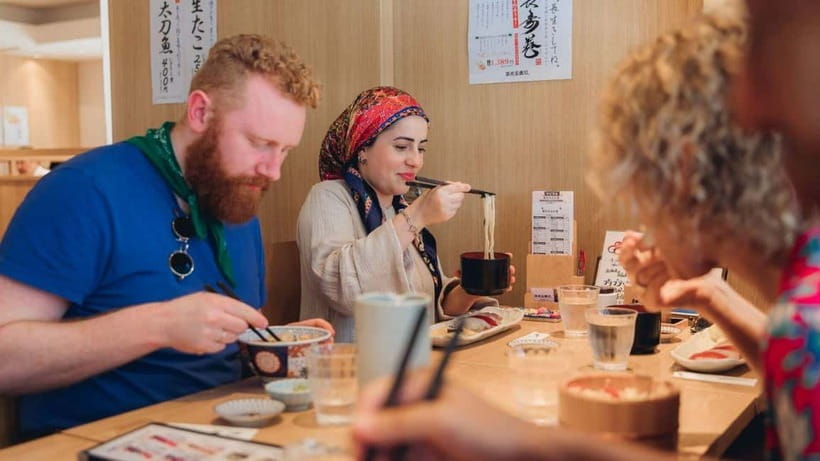
Tokyo tastes better after work. This 210-minute food walk links Ginza, Yurakucho, and Tsukishima through yakitori, monja-yaki, wagashi, and local drinks, giving you a friendly introduction to the city’s evening eating habits. The small group, capped at eight, keeps the outing personal rather than turning it into a moving crowd.
I like the way the tour combines food with context. You are not simply handed a skewer or sweet and sent on your way. Your English-speaking guide explains etiquette, ingredients, cooking methods, and the role these foods play in daily life. I also like the range of stops, from a department-store basement food hall to lantern-lit after-work alleys and a hotplate meal you help cook yourself.
The main drawback is that this is not a good choice for vegetarians, vegans, or anyone needing gluten-free meals. The walk also includes subway travel, stairs, and roughly 9,000 steps according to one past participant, so you should arrive ready to stay on your feet.
In This Review
- Key things to know before booking
- Starting under the Ginza lion
- Yurakucho and the after-work yakitori scene
- Tsukishima Monja Town and the hotplate meal
- Wagashi, seasons, and the sweet finish
- How much food do you actually receive?
- What the guide adds to the evening
- Is $89 a fair price?
- Timing, pace, and what to bring
- Who should book this Tokyo food walk?
- Should you book Tokyo After 5?
- FAQ
- Where does the Tokyo food walk meet?
- Which subway lines serve Ginza Station?
- Where does the tour finish?
- How long does the experience last?
- How many people can join the group?
- What food tastings are included?
- Are drinks included?
- Can people under 20 drink alcohol on the tour?
- Are subway tickets included?
- Can the tour accommodate vegetarian, vegan, or gluten-free diets?
- What language is the tour conducted in?
- What is the cancellation policy?
Key things to know before booking
- Small group of eight: The limited size makes it easier to ask questions, speak with your guide, and fit into compact local eateries.
- Three signature tastings: The food centers on yakitori, monja-yaki, and wagashi, with other tastes possible depending on the stops.
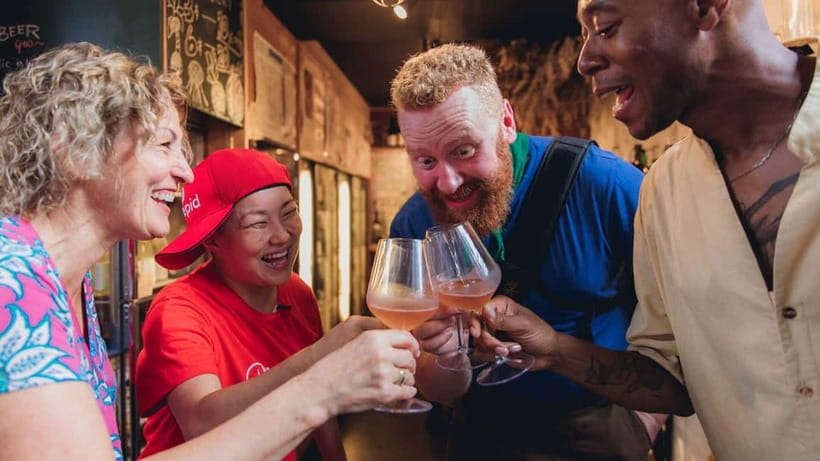
- Two included drinks: You receive two local drinks, such as sake, beer, or a soft drink. Anyone under 20 receives non-alcoholic drinks.
- Three Tokyo districts in one evening: The route connects Ginza, Yurakucho, and Tsukishima, with subway tickets included for two rides.
- Hands-on cooking: At Monja Town, you watch monja-yaki being prepared and try cooking it on the table hotplate.
- Dietary limits matter: Vegetarian, vegan, and gluten-free options are not available on this tour.
Starting under the Ginza lion
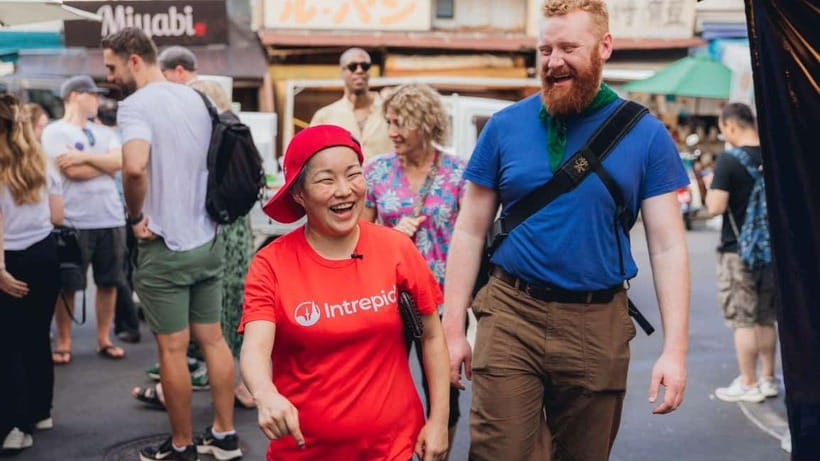
The meeting point is the life-size sitting Lion statue outside Mitsukoshi Ginza department store. It is directly by the A7 exit of Ginza Station, which is served by the Ginza, Hibiya, and Marunouchi subway lines.
This is a sensible place to begin. Ginza is easy to reach, and the lion is a clear landmark in a district where large department stores and busy streets can otherwise make meeting points confusing. Still, arrive with the tour company name and guide details in hand. One past participant had trouble identifying the guide after booking through a third party, even though the statue itself was easy to find.
The evening starts in Ginza, often with a walk through a depachika. This Japanese word refers to a department-store basement food hall. These spaces are much more than ordinary supermarket aisles. You might find carefully arranged boxed meals, sweets, grilled foods, pickles, and seasonal treats presented with the care of small works of art.
Your guide helps you make sense of what you are seeing. That is useful because a depachika can feel like a wall of unfamiliar choices. You learn about presentation, food etiquette, seasonal ingredients, and the way Tokyo residents buy prepared food for home, work, gifts, and special occasions.
The food hall is also a good first stop because it lets you look before you eat. You can compare colors, shapes, packaging, and portion sizes while your guide explains what matters. For many first-time visitors, this is a more useful introduction to Japanese food than simply sitting down at a restaurant.
More Walking Tours in Tokyo
- Tokyo Tsukiji Fish Market Food and Culture Walking Tour
★ 5.0 · 3,184 reviews - Tokyo: Imperial Palace and Shogun Historical Walking Tour
★ 5.0 · 2,251 reviews - Tokyo: Shinjuku Local Bar and Izakaya Guided Walking Tour
★ 4.9 · 1,794 reviews
Yurakucho and the after-work yakitori scene
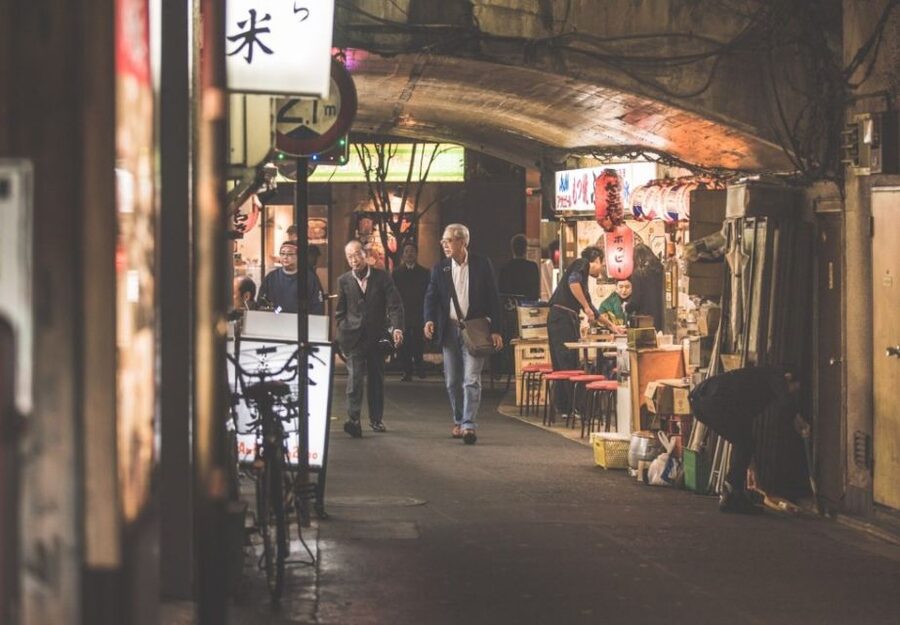
The route continues to Yurakucho, where narrow backstreets and lantern-lit eating spots offer a sharp contrast with polished Ginza. This is the Tokyo of office workers stopping for a drink, a few skewers, and conversation before heading home.
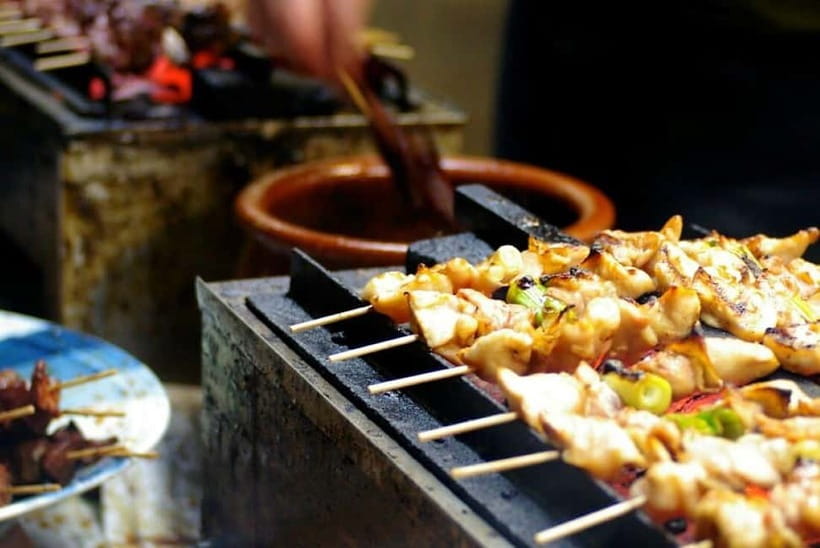
Yakitori is the main taste here. These grilled chicken skewers are cooked over heat, often with a smoky finish, and served in small portions that make it easy to try several kinds. The experience includes a yakitori tasting and a hands-on element, with the guide explaining how the skewers are prepared and why these modest eateries matter in Tokyo’s workday culture.
I like this part of the tour because it puts food in its social setting. Yakitori is not presented as an exotic dish in isolation. It is part of a familiar evening routine, especially in the narrow food alleys around major stations. You get a sense of how people use food to mark the end of the workday.
Two drinks are included during the tour. Depending on the arrangement, these may be sake, beer, or a soft drink. If you are under 20, you will receive non-alcoholic drinks, since Japan’s legal drinking age is 20.
The food selection is designed to be approachable. One past participant described the dishes as a good fit if you are not especially adventurous with food. That makes this a useful first-night activity for someone who wants to try Japanese specialties without being pushed too far outside familiar flavors.
Tsukishima Monja Town and the hotplate meal
Tsukishima brings a different kind of eating experience. The area is known for Monja Street, a collection of restaurants associated with monja-yaki, a Tokyo specialty cooked on a tabletop hotplate.
Monja-yaki is a loose savory batter mixed with ingredients and cooked on the grill in front of you. It is softer and less structured than okonomiyaki, another Japanese hotplate dish that may also appear during the meal. The texture can surprise first-time eaters, but the cooking process is part of the fun.
You sit around the hotplate, watch the meal being prepared, and then try your hand at cooking it. This is where a guide earns the tour fee. The technique is not always obvious at first, and the small group gives you a better chance to receive help instead of simply watching someone else do everything.
The meal also gives you a reason to visit Tsukishima, an area that can easily be missed on a short Tokyo trip. It is not one of the city’s standard first stops, so the subway ride adds some useful local geography to the evening.
There is a practical point here: subway connections and restaurant access involve stairs. The tour includes two subway tickets, but you should not mistake that for a short, flat stroll between nearby restaurants. One past participant had to leave early because the walking and stairs proved too much for an older companion. If you have limited mobility, ask the operator for current route details before booking.
Wagashi, seasons, and the sweet finish
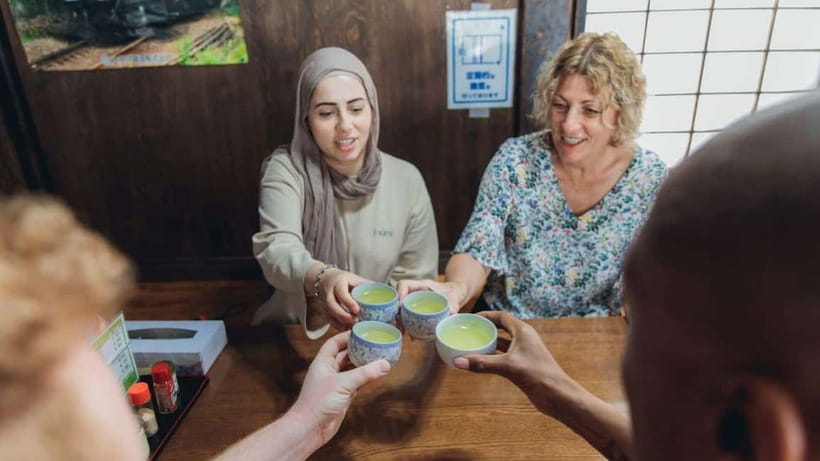
The sweet course focuses on wagashi, traditional Japanese confectionery. These treats often use ingredients such as red bean paste and mochi, and their shape and colors can reflect the season.
This stop adds an important cultural layer. Wagashi is not simply dessert. The appearance, texture, and seasonal design can carry meaning, especially when the sweets are served with tea or offered as gifts. Your guide explains how Japanese ideas about nature and the passing seasons show up in these small creations.
Wagashi is not guaranteed to appeal to every palate. One past participant enjoyed the variety of the tour but did not care for the red bean and mochi combination. If you prefer crisp pastries, chocolate, or very sweet desserts, the soft texture and bean-based filling may take some getting used to.
The tour has also included other sweets on some outings, such as melon bread or a chocolate-filled crepe. Treat those as possible additions rather than promises. The stated food focus is yakitori, monja-yaki, and wagashi, while extra food and drinks can be purchased at your own cost.
A completely different kind of day out in Tokyo:
- Mt Fuji and Hakone 1-Day Bus Tour Return by Bullet Train
★ 5.0 · 26,383 reviews - 1-Day Tokyo Bus Tour
★ 5.0 · 14,250 reviews - Tokyo: TOKYO SKYTREE® Admission ticket
★ 4.5 · 11,192 reviews - Tokyo: teamLab Planets TOKYO Digital Art Museum Entry Ticket
★ 4.6 · 9,779 reviews
How much food do you actually receive?
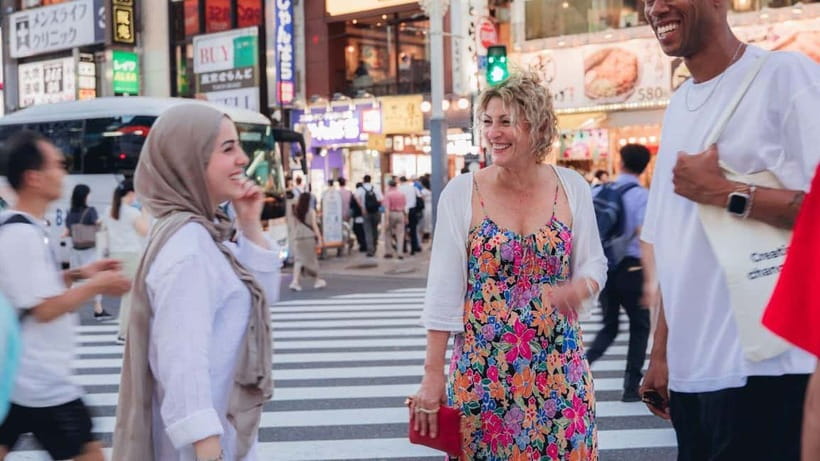
The included tastings are meant to build an evening, not replace a full day of meals. You receive three local food tastings and two drinks, with food stops spread across the route. One past participant described the amount as just enough food, which is a useful way to think about it.
You should not arrive after skipping food all day and expect a large dinner. At the same time, the combination of grilled skewers, hotplate food, sweets, and drinks should give you a solid introduction to Tokyo’s evening food scene.
Additional food and drinks are not included, but they are available for purchase. That gives you some control. If you want to keep the evening light, stick to the included tastings. If one stop leaves you wanting more, you can order extra items directly.
Because the tour visits establishments that cannot meet all dietary requirements, food restrictions are a serious booking issue. Vegetarian, vegan, and gluten-free options are not available. The safest approach is to contact the operator before reserving if you have any allergy or dietary concern.
What the guide adds to the evening
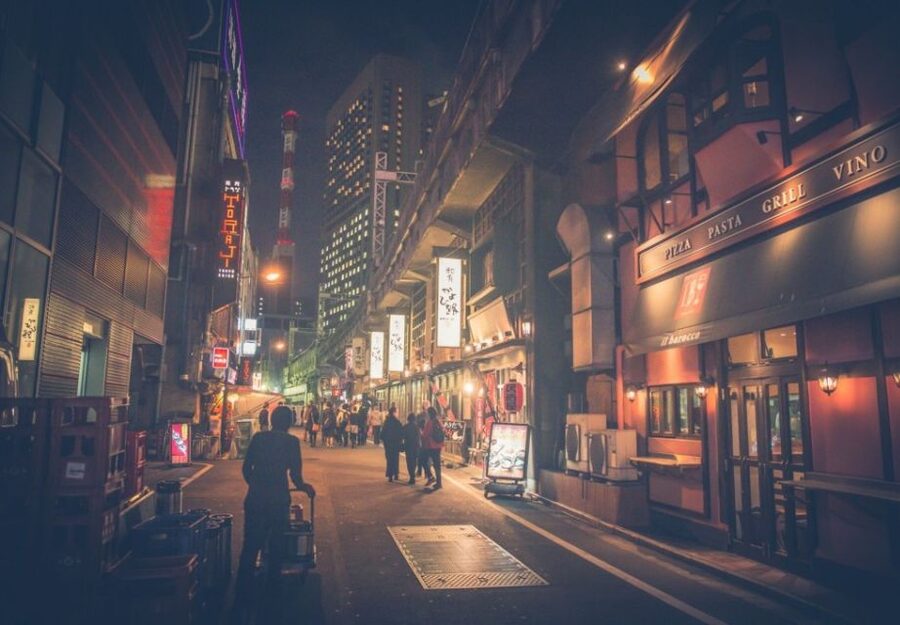
The guide is central to the experience. The tour is operated by Intrepid Urban Adventures Japan and runs in English. A good guide helps you understand not only what is on the plate, but also how to behave in small restaurants and what locals are doing around you.
Past participants have praised guides including Tsunematsu Hidenori, Yuki, Kirir, Meg, and Yoshi. Tsunematsu Hidenori was singled out for taking the group to places that would have been difficult to find alone and for making the evening enjoyable as well as informative. Other guides were praised for patience, friendliness, and answering questions.
The comments also point to an important difference between guides. One participant wanted more explanation of how the food was prepared and what each dish meant. That is a fair consideration. The quality of the evening depends partly on how much detail your particular guide provides and how actively you ask questions.
I would ask about ingredients, ordering customs, cooking methods, and the reason each neighborhood is known for its food. The tour has plenty of material for conversation, and a small group makes it easier to speak up.
Is $89 a fair price?
At $89 per person, this is not the cheapest way to eat in Tokyo. You could certainly buy yakitori, monja-yaki, sweets, and drinks independently for less, especially if you are comfortable reading menus, navigating the subway, and choosing restaurants without help.
The value comes from the structure. The price includes a local English-speaking guide, three tastings, two drinks, hands-on cooking, two subway tickets, and access to small neighborhood establishments. You are also paying for the time saved in finding suitable places and working out restaurant etiquette.
For a first evening in Tokyo, that can be worthwhile. You get an easy introduction to several districts and food customs without having to plan every stop. The group size of eight is another point in its favor. A larger food tour can feel like a procession, while eight people can usually sit together and hold a real conversation.
The current overall rating of 3.8 from 40 ratings suggests a generally positive but not flawless experience. The strongest praise centers on the guides, the local restaurant choices, the variety of food, and the chance to see places many people would not reach on their own. The main concerns are walking distance, stairs, occasional restaurant atmosphere, and uneven depth in food explanations.
Timing, pace, and what to bring
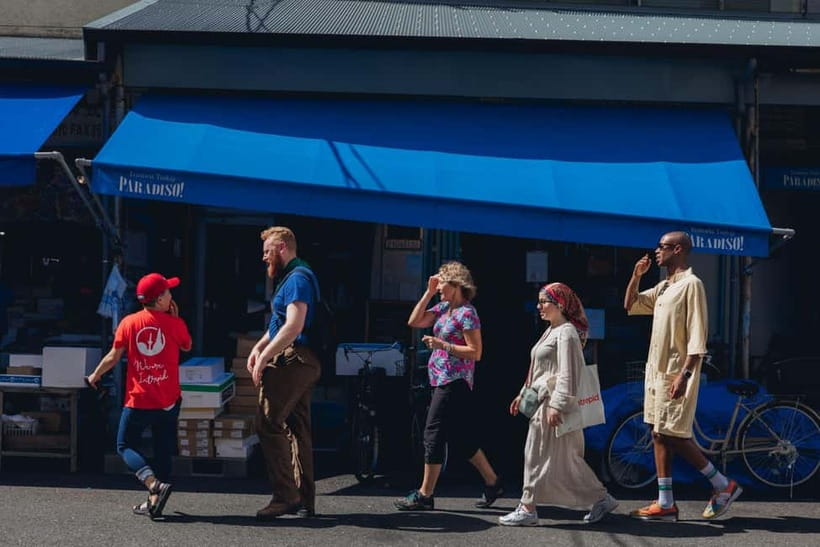
The activity lasts 210 minutes, or three and a half hours. Starting times vary, so check the available evening slot when you book. Since the tour is built around after-work dining, the timing is part of its character rather than a minor detail.
Wear comfortable shoes. The route covers several neighborhoods and includes subway travel. You may walk around 9,000 steps, and station stairs can add effort even when the distance between stops does not look great on a map.
Bring a little patience for compact restaurants. Tokyo’s local eateries may have limited space, and the group needs to fit around tables or hotplates. One past participant described a noisy child at a small restaurant and felt the owner did not handle the situation well. That was not blamed on the guide, but it is a reminder that local dining can be less controlled than a formal restaurant meal.
The tour is carbon neutral and operated by a B Corp certified company. That will not change the food on your plate, but it may matter if you prefer booking with a company that has stated environmental and social goals.
Who should book this Tokyo food walk?
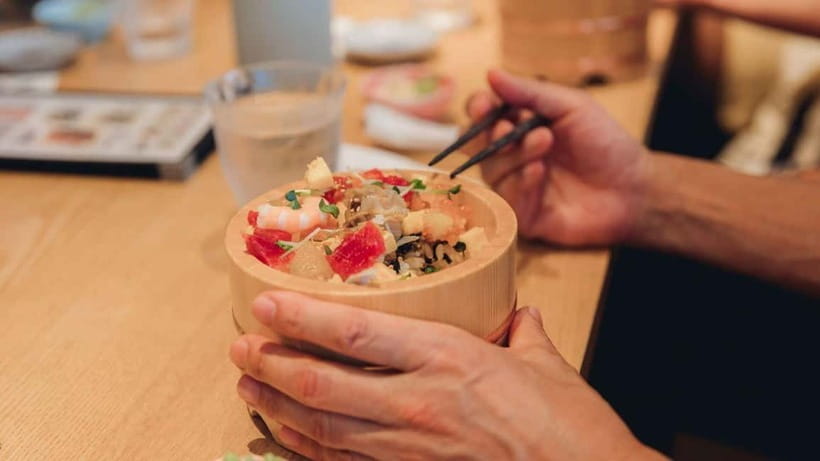
I would recommend it most strongly to first-time visitors who want a guided start to Japanese food culture. It works well if you enjoy trying several small portions, asking questions, walking through different districts, and meeting other people who are interested in food.
It is also a good fit if you feel unsure about restaurant etiquette or do not want to decode every menu on your first evening. The guide handles the transitions, introduces you to local dishes, and explains what you are eating.
I would be more cautious if you need a low-walking activity, have trouble with stairs, or want a large dinner. I would also skip it if you are vegetarian, vegan, gluten-free, or unwilling to eat meat, red bean, mochi, and hotplate dishes.
Book with realistic expectations. This is not a luxury tasting menu and not a fixed guarantee of every extra dish mentioned by past participants. It is a social neighborhood walk with three main food themes, two drinks, and a guide who can make Tokyo’s evening customs easier to understand.
Should you book Tokyo After 5?
Book it if you want a practical first look at Tokyo’s food culture and value a guide more than the lowest possible meal price. The best parts are the small group, the contrast between Ginza’s depachika, Yurakucho’s yakitori alleys, and Tsukishima’s Monja Street, plus the chance to cook your own monja-yaki.
Skip it if mobility, dietary restrictions, or a need for a quiet, polished restaurant experience are major concerns. For everyone else, this is a well-shaped way to start an evening in Tokyo, especially if you want local context along with your dinner.
FAQ
Where does the Tokyo food walk meet?
The meeting point is outside Mitsukoshi Ginza department store, in front of the life-size sitting Lion statue. It is near the A7 exit of Ginza Station at 4-6-16 Ginza, Chuo-ku, Tokyo.
Which subway lines serve Ginza Station?
Ginza Station is served by the Tokyo Metro Ginza Line, Hibiya Line, and Marunouchi Line.
Where does the tour finish?
The tour finishes in Ginza.
How long does the experience last?
The activity lasts 210 minutes, or three and a half hours.
How many people can join the group?
The group is limited to a maximum of eight participants.
What food tastings are included?
The included tastings are yakitori, monja-yaki, and wagashi.
Are drinks included?
Two local drinks are included. These may be sake, beer, or a soft drink.
Can people under 20 drink alcohol on the tour?
No. The legal drinking age in Japan is 20. Participants under 20 receive non-alcoholic drinks.
Are subway tickets included?
Yes. Two public transportation subway tickets are included.
Can the tour accommodate vegetarian, vegan, or gluten-free diets?
No. The tour does not offer vegetarian, vegan, or gluten-free options.
What language is the tour conducted in?
The live tour guide speaks English.
What is the cancellation policy?
You can cancel up to 24 hours in advance for a full refund. Reserve now and pay later is also available.
Just added around Tokyo
- Tokyo 6hr Instagram Highlights Private Tour with Licensed Guide★ 5.0 · 38 reviews
- Tokyo Small Group Tour with Guide★ 4.5 · 38 reviews
- Tokyo Sumo Experience with Live Show & Audience Challenge★ 5.0 · 38 reviews
- Very popular in Harajuku♡Animal petting zoo★ 4.6 · 39 reviews
- Japanese Food Cooking Class in Asakusa, Tokyo★ 5.0 · 39 reviews
- Ramen Making from Scratch with Tokyo Mom(Vegan Option Available)★ 5.0 · 39 reviews
- Tokyo: Kimono Rental inside Shinjuku Gyoen National Garden★ 4.9 · 39 reviews
- Tokyo JDM Night: 600hp C63s AMG Edition 1 (Private)★ 4.9 · 39 reviews
Walking Tours, compared.
Kyoto Geisha Walking Tour: Gion District & Hidden Gems
Read our review →
Tokyo Tsukiji Fish Market Food and Culture Walking Tour
Read our review →
Gion Magical Night Walking Tour with Geisha Trivia
Read our review →
Imperial Palace and Shogun Historical Walking Tour
Read our review →
Gion Geisha District Walking Tour – Stories of Geisha
Read our review →
Shinjuku Local Bar and Izakaya Guided Walking Tour
Read our review →
Browse the lists this tour appears in