
Reviewed · WALKING TOURS
Tokyo: Asakusa Walking Tour with Japanese Comedian
Asakusa rewards slow feet. This 90-minute walking tour with comedian guide Ryo links the district’s grand temple gates, quiet Buddhist corners, Shinto shrines, and shopping streets in a compact route. I like the mix of solid cultural context and easy conversation, plus the chance to spot details you could walk past alone. The main consideration is pace: twelve stops in about an hour and a half means some visits are brief.
I also like the small-group format, which makes it easier to ask questions and adjust the conversation to your interests. Ryo’s background as a former rickshaw driver in Asakusa adds useful local perspective, and his humor keeps the tour from feeling like a string of dates and religious terms. Go early if you can, since the area grows much busier and hotter later in the morning.
In This Review
- Key points about this Asakusa walk
- Why Ryo’s style changes the walk
- Starting above Asakusa at the Tourist Information Center
- Kaminarimon and Nakamise Shopping Street
- Bentendo and the Bell of Time
- The quiet statues at Senso-ji
- Nitenmon Gate and Asakusa Shrine
- Yogodo and Awashimado
- Nishi-sando and the melon-pan suggestion
- Hozomon and the final visit to Senso-ji
- Timing, heat, crowds, and walking pace
- What $37.99 gets you
- Who should book this Asakusa tour?
- Booking and cancellation details
- Should you book the comedian-led Asakusa walk?
- FAQ
- How long is the Asakusa walking tour?
- Where does the tour start?
- Where does the tour finish?
- Who leads the tour?
- How many people can join?
- Are admission tickets included?
- Can I start the tour early?
- Is the tour suitable for most people?
- What is the cancellation policy?
Key points about this Asakusa walk
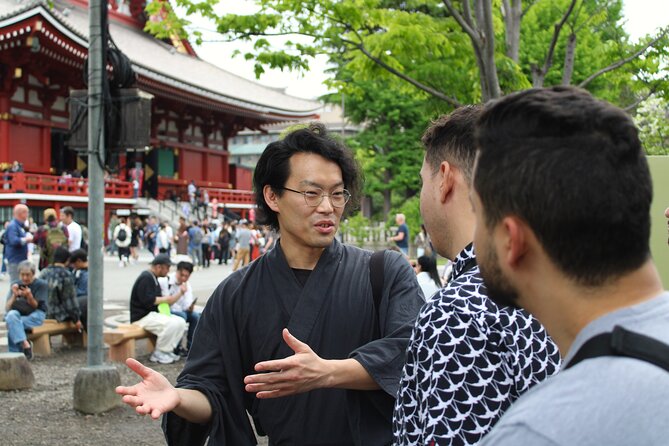
- Ryo mixes comedy with cultural explanation, making temples, shrines, gates, and rituals easier to understand.
- The route covers 12 sights, including Kaminarimon, Asakusa Shrine, Nitenmon Gate, Hozomon, and Senso-ji Temple.
- The 8th-floor view from the Asakusa Culture Tourist Information Center gives you a fast orientation before walking.
- Early starts can be a smart choice, with an 8 a.m. option mentioned as a way to avoid crowds and heat.
- A melon-pan stop may be included, giving you a chance to try one of Asakusa’s popular Japanese sweets.
- The $37.99 price is strong value if you want cultural background and local recommendations without committing to a long city tour.
Why Ryo’s style changes the walk
Asakusa can look simple at first: one famous gate, one broad shopping street, and one enormous temple. The details are easy to miss. A guide can explain why a gate matters, how Buddhist and Shinto sites fit beside each other, and where small memorials or statues sit outside the main flow.
Ryo’s approach is not just a lecture. He explains Japanese history and culture, answers questions, and adds jokes and everyday conversation. The repeated praise for his humor matters because religious sites can become tiring when every stop is delivered in the same solemn tone. Here, the comedy gives the walk a lighter rhythm without replacing the substance.
His English is described as very good, and several people valued being able to ask questions throughout the route. That makes this a good introduction if you are visiting Japan for the first time and want help understanding customs, symbols, and the difference between a Buddhist temple and a Shinto shrine.
The tour is listed as a small-group experience capped at six, while the additional booking information gives a maximum of eight people. Either way, this is far smaller than a bus tour. You should have a better chance of hearing the guide and getting an answer tailored to your interests.
More Walking Tours in Tokyo
- Tokyo Tsukiji Fish Market Food and Culture Walking Tour
★ 5.0 · 3,184 reviews - Tokyo: Imperial Palace and Shogun Historical Walking Tour
★ 5.0 · 2,251 reviews - Tokyo: Shinjuku Local Bar and Izakaya Guided Walking Tour
★ 4.9 · 1,794 reviews
Starting above Asakusa at the Tourist Information Center
The meeting point is Tokyo Cruise Asakusa Pier, at 1-chōme-1-1 Hanakawado in Taito City. The first stop is the Asakusa Culture Tourist Information Center, where the group goes to the eighth floor for a view.
This is a sensible opening. Before you enter the temple district, you can see how the area fits together from above. The elevated view helps you get your bearings, especially if this is your first visit to Asakusa. It also gives Ryo a natural moment to explain what you will see on foot.
The stop lasts about 10 minutes and has no admission charge. Do not expect a long sightseeing session here. Its value is orientation, not a major attraction in itself.
Kaminarimon and Nakamise Shopping Street
The route then enters Asakusa through Kaminarimon, the Thunder Gate and one of the district’s most recognizable symbols. From there, you walk along Nakamise Shopping Street toward Senso-ji.
This is where the scale of Asakusa becomes clear. The gate creates a dramatic entrance, while Nakamise leads directly toward the temple grounds. Ryo can help separate the visual spectacle from the cultural meaning, so you are not simply taking photographs and moving on.
The planned time here is about 10 minutes. That is enough for an introduction, but not enough for a relaxed shopping trip. If you want souvenirs or snacks, plan to return after the tour. One useful timing detail comes from the guide’s advice: the shops and markets open around 10 a.m., while an early walk can feel much quieter before then.
Bentendo and the Bell of Time
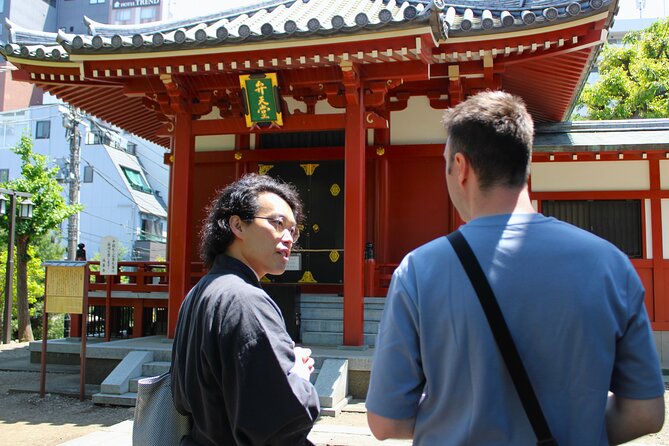
After Nakamise, the route turns toward Bentendo, a smaller temple associated with art and prosperity. The stop is short, around five minutes, but it introduces a different scale from the main Senso-ji complex.
This is one reason a walking guide adds value. The major temple hall is easy to find. Smaller sites such as Bentendo can disappear into the background unless someone points them out and explains their place in the religious setting.
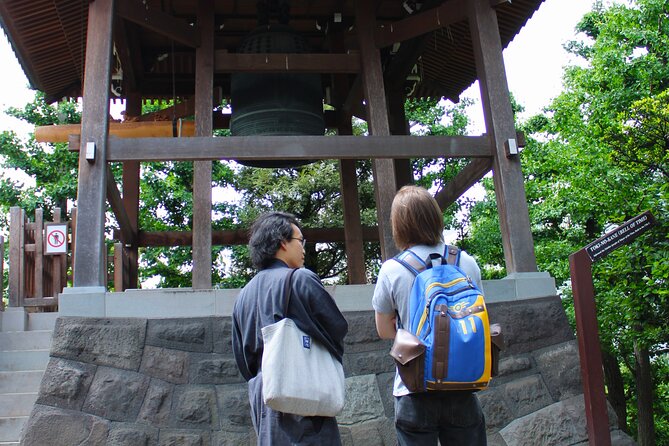
Nearby is the Bell of Time. During the Edo period, the bell was regularly rung by a Senso-ji monk to tell people the time. Again, the visit lasts about five minutes, so you are getting a concise explanation rather than an extended stop.
I would treat these two locations as small pieces of a larger story. They are not separate headline attractions, but together they show how Asakusa’s religious grounds contain layers of daily life, devotion, art, and public timekeeping.
A completely different kind of day out in Tokyo:
- Mt Fuji and Hakone 1-Day Bus Tour Return by Bullet Train
★ 5.0 · 26,383 reviews - 1-Day Tokyo Bus Tour
★ 5.0 · 14,250 reviews - Tokyo: TOKYO SKYTREE® Admission ticket
★ 4.5 · 11,192 reviews - Tokyo: teamLab Planets TOKYO Digital Art Museum Entry Ticket
★ 4.6 · 9,779 reviews
The quiet statues at Senso-ji
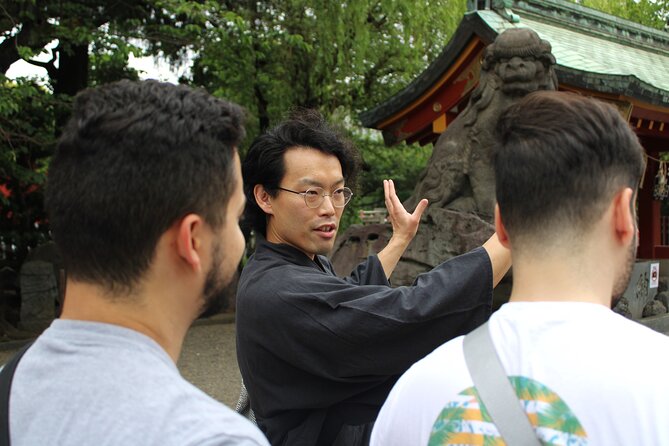
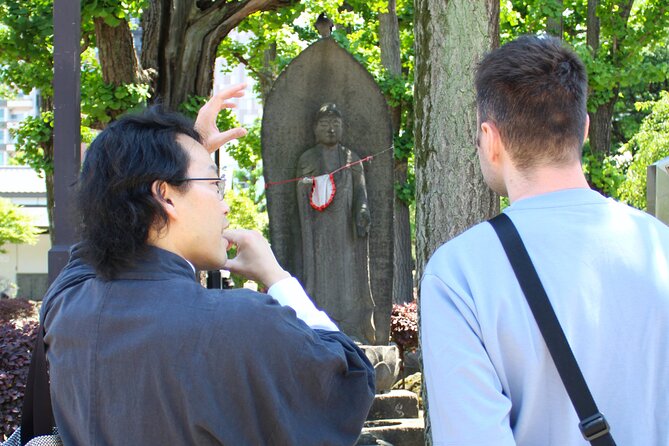
The walk continues to Senso-ji’s Nisombutsu area, a calmer spot with two bronze statues and four stone statues of Buddhist deities dating from the seventeenth century. The stop is listed at about five minutes.
This is the sort of place you might overlook if you only follow the busiest path to the main hall. The statues offer a chance to pause and ask what the figures represent and how they fit into the temple grounds. The quiet setting also provides a useful break from the activity around the main approach.
The tour’s strength here is interpretation. Ryo’s explanations focus not only on names and dates, but also on symbolism and the way Japanese religious traditions appear in ordinary public spaces. If you enjoy learning what you are looking at, this part should be more rewarding than simply moving from gate to gate.
Nitenmon Gate and Asakusa Shrine
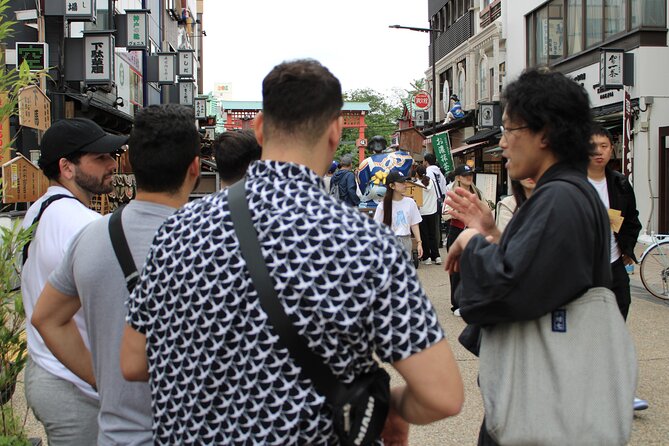
Nitenmon Gate is one of the more important architectural stops. It is recognized as a National Cultural Property in Japan and was used as the shogun’s gate, with access historically limited to the general.
The planned visit lasts about 10 minutes. That gives Ryo room to explain the gate’s role and point out details in the structure. It also gives you time for photographs without turning the stop into a rushed glance.
Next comes Asakusa Shrine, a Shinto shrine linked to the origin of Senso-ji. It honors three deities closely connected with the temple’s beginnings. The grounds also include a garage for three large portable shrines used in local processions.
This pairing is especially useful for first-time visitors. You see a Buddhist temple complex and a Shinto shrine in the same neighborhood, then receive context for how they relate to one another. The walk does not treat the two traditions as isolated museum exhibits. Instead, you see how they share the same historic district.
Asakusa Shrine receives about 10 minutes on the route. That is enough for a clear introduction, though you may want extra time later if you prefer quiet observation or photography.
Yogodo and Awashimado
The itinerary includes two shorter temple stops, Yogodo and Awashimado. Yogodo receives about five minutes, while Awashimado receives about 10.
The supplied details do not describe every feature at these two locations, so you should think of them as part of the broader Senso-ji temple area rather than expect a separate major attraction at each. Their inclusion helps the walk move beyond the obvious gates and main hall.
This is also where the value of a personal guide becomes clearest. A map can show you where these buildings are. A guide can tell you why they matter, what to notice, and how they fit into the larger religious complex. The short timing means the quality of the explanation matters more than the length of the stop.
Nishi-sando and the melon-pan suggestion
At Asakusa Nishisando, Ryo may offer a chance to try melon-pan at Kagetsu-do on Nishi-sando Shopping Street. The stop is about five minutes, and the food is not listed as included in the price, so you should expect to buy your own snack if you choose to try it.
This is a welcome change of rhythm. You have been looking at gates, statues, and temples, and now you get a taste of everyday Asakusa. Melon-pan is a sweet Japanese bread with a crisp, cookie-like top, and the recommendation was singled out as one of the most enjoyable food moments on the walk.
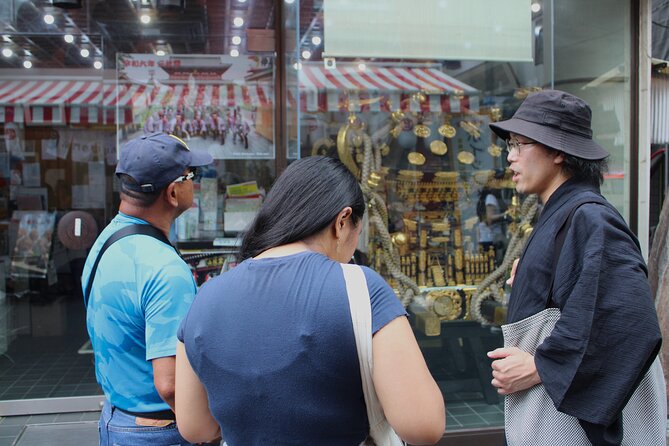
The short stop will not satisfy anyone hoping for a full food tour. It works better as a quick local suggestion and a chance to sample something between sights. Ryo also gives shop and souvenir recommendations, including advice on local stores for Japanese sandals and other purchases. Ask questions here if you want to make the rest of your Asakusa visit more useful.
Hozomon and the final visit to Senso-ji
Hozomon is another grand temple gate, this one marked by a pair of guardian statues. The planned stop is about five minutes.
If you are keeping count, the route has already shown you several gates with different roles and histories. That repetition is helpful rather than dull because it lets you compare them. Ryo can explain what each gate marks and why the guardians matter within the temple setting.
The tour ends in front of the main hall of Senso-ji, listed as the oldest temple in Tokyo with 1,400 years of history. The final stop lasts about 10 minutes. Here, Ryo explains the temple and Kannon Bodhisattva, the Buddhist deity associated with Senso-ji.
Ending at the main hall is practical. You finish at the district’s central sight, rather than being dropped somewhere unrelated. You can continue exploring from there, return to Nakamise, or use the guide’s recommendations to plan the rest of your time in Asakusa.
The wording of the route makes clear that the tour ends outside the main hall. It does not promise a private interior visit or a special entry arrangement. If you want to spend time praying, looking around, or taking photographs, allow yourself extra time after the walk.
Timing, heat, crowds, and walking pace
The advertised duration is about one hour and 30 minutes, although one description of the experience refers to a two-hour walk. I would plan for roughly 90 minutes and avoid scheduling an immediate appointment afterward. The tour visits many stops, and conversation or questions may affect the exact finish time.
Early morning is the most useful practical tip. An 8 a.m. start has been arranged, and that timing was praised for avoiding the crowds and heat. The usual earliest time slot is described as 9 a.m., but Ryo may be able to begin earlier when it suits the group.
If you want the shopping street at full operating hours, start later. The markets open around 10 a.m., bringing more activity and more chances to buy snacks and souvenirs. The tradeoff is clear: early morning offers cooler, calmer streets, while later morning offers more open shops and street life.
You will be walking between all stops. The route includes temple grounds, shopping streets, gates, and open public areas. Most people can participate, and service animals are allowed. Still, the experience is not designed as a seated sightseeing tour, so comfortable shoes and a sensible pace will make the visit easier.
What $37.99 gets you
At $37.99 per person, this tour is priced as an accessible introduction rather than a luxury private guide. Admission to the listed sights is free, so the cost is paying for Ryo’s time, route planning, explanations, jokes, and local advice.
That is good value if you want more than a quick photo at Kaminarimon. In 90 minutes, you cover a large section of the district and learn how the temple, shrine, gates, statues, shopping streets, and local traditions connect. Several people also valued the ability to ask questions and receive recommendations that would be difficult to get from a guidebook.
The value is strongest for couples, families, and small groups who want a personal conversation. One family found the tour especially useful because Ryo handled questions from younger people patiently. Another person returned with a friend, which suggests the route can work well even if you already know the main sights.
The price is less compelling if you want a slow photographic walk, extended shopping time, or a full food tour. The route is efficient, and the twelve stops leave limited time at each one. You are paying for interpretation and coverage, not a leisurely half-day experience.
Group discounts are available, and the booking information describes a maximum of eight people, while the tour highlights a six-person cap. Check the current group size when booking if a very small party matters to you.
Who should book this Asakusa tour?
I would recommend it to you if you are visiting Asakusa for the first time and want a clear introduction to the area. It is also a good fit if Japanese religious sites feel confusing, since Ryo explains both Buddhist and Shinto locations in plain language.
Families may appreciate the humor and the chance to ask questions without holding up a large group. The tour also suits people who enjoy local conversation, cultural background, and small details more than a long list of famous photo stops.
It may not be right for you if you dislike comedy in a tour setting. The humor is part of the experience, not an occasional extra. Nor is it ideal if you need lots of free time at each attraction. The route moves from stop to stop and gives you a short introduction to many places.
Ryo’s background as a comedian and former rickshaw driver gives the tour a distinctive character. One person also noted that, if you are lucky, you might see Ryo perform comedy after the tour, but that is not presented as a guaranteed part of the booking.
Booking and cancellation details
Confirmation is provided at booking, and the meeting point is near public transportation at Tokyo Cruise Asakusa Pier. The walk ends at Senso-ji, 2-chōme-3-1 Asakusa, in front of the main hall.
Free cancellation is available if you cancel at least 24 hours before the local start time. Cancellations or changes made within 24 hours are not refunded or accepted. Keep that deadline in mind if your Tokyo plans may shift because of weather.
Should you book the comedian-led Asakusa walk?
Book it if you want history, culture, humor, and practical local advice in a short format. At $37.99, the tour offers strong value for a guided introduction, especially with a group of six or fewer and an early start.
Skip it if your main goal is shopping, eating, or spending long periods inside Senso-ji. For most first visits, though, Ryo’s route gives you a sharper understanding of Asakusa than wandering the main approach alone. Choose the earliest practical time, ask plenty of questions, and save extra time afterward for snacks, shops, and the temple grounds.
FAQ
How long is the Asakusa walking tour?
The advertised duration is approximately one hour and 30 minutes. One description also refers to a two-hour walking tour, so it is sensible to allow a little extra time.
Where does the tour start?
The meeting point is Tokyo Cruise Asakusa Pier, at 1-chōme-1-1 Hanakawado, Taito City, Tokyo 111-0033, Japan.
Where does the tour finish?
The tour finishes in front of the main hall of Senso-ji Temple at 2-chōme-3-1 Asakusa, Taito City, Tokyo 111-0032, Japan.
Who leads the tour?
The guide is Ryo, a Japanese comedian who also has experience as a former rickshaw driver in Asakusa.
How many people can join?
The experience is described as a small-group tour capped at six people. The additional booking information gives a maximum of eight participants, so confirm the current group limit when booking.
Are admission tickets included?
The listed stops show free admission. The experience price covers the guided walk, while optional purchases such as melon-pan are separate.
Can I start the tour early?
An 8 a.m. start has been arranged, and the guide states that he may be able to begin earlier when convenient. The usual earliest time slot is described as 9 a.m.
Is the tour suitable for most people?
Most people can participate, and service animals are allowed. The experience takes place on foot and includes multiple stops around Asakusa.
What is the cancellation policy?
You can receive a full refund if you cancel at least 24 hours before the local start time. Cancellations or changes within 24 hours are not accepted and are not refunded.
Just added around Tokyo
- Tokyo 6hr Instagram Highlights Private Tour with Licensed Guide★ 5.0 · 38 reviews
- Tokyo Small Group Tour with Guide★ 4.5 · 38 reviews
- Tokyo Sumo Experience with Live Show & Audience Challenge★ 5.0 · 38 reviews
- Japanese Food Cooking Class in Asakusa, Tokyo★ 5.0 · 39 reviews
- Very popular in Harajuku♡Animal petting zoo★ 4.6 · 39 reviews
- Ramen Making from Scratch with Tokyo Mom(Vegan Option Available)★ 5.0 · 39 reviews
- Tokyo JDM Night: 600hp C63s AMG Edition 1 (Private)★ 4.9 · 39 reviews
- Tokyo: Kimono Rental inside Shinjuku Gyoen National Garden★ 4.9 · 39 reviews
Walking Tours, compared.
Kyoto Geisha Walking Tour: Gion District & Hidden Gems
Read our review →
Tokyo Tsukiji Fish Market Food and Culture Walking Tour
Read our review →
Gion Magical Night Walking Tour with Geisha Trivia
Read our review →
Imperial Palace and Shogun Historical Walking Tour
Read our review →
Gion Geisha District Walking Tour – Stories of Geisha
Read our review →
Shinjuku Local Bar and Izakaya Guided Walking Tour
Read our review →
Browse the lists this tour appears in