
Reviewed · WALKING TOURS
Tokyo: Private Custom Walking Tour with Local Guide
Tokyo gets easier with company. This private tour lets you build the day around your interests, from Senso-ji and the Imperial Palace to food spots, shopping streets, or quieter corners. I especially like the one-to-one format and the practical help with Tokyo’s train system. The main consideration is that tickets, meals, and drinks cost extra, and a long day can mean serious walking.
The tour lasts two to eight hours, so you can book a short introduction or spend a full day crossing several parts of the city. Guides such as Francine, Karl, Enrique, Albert, Cristiano, Himena, and Shaban have been praised for friendly service, clear explanations, and flexible planning. Just remember that the exact route depends on your guide, timing, and requests.
In This Review
- Key points to know before booking
- Why a private Tokyo tour can be worth it
- Start with a clear plan, then leave room to wander
- Asakusa and Senso-ji for a traditional first look
- Imperial Palace Gardens and Marunouchi
- Shibuya and Shinjuku for modern Tokyo
- Akihabara, Odaiba, and other special-interest stops
- The real lesson is using Tokyo’s trains
- Guide quality and the private-group advantage
- Timing, pickup, and what the price covers
- Who should book this Tokyo experience?
- Should you book the private custom walking tour?
- FAQ
- How long does the private Tokyo walking tour last?
- Is hotel pickup included?
- Can I choose the places I want to visit?
- Are museum and attraction tickets included?
- Is public transport included?
- Which languages are available?
Key points to know before booking
- Choose your Tokyo: Request famous sights, local neighborhoods, food stops, shopping, temples, gardens, or a mix.
- Learn the trains while sightseeing: Public transport is part of the experience, and guides can help with routes, tickets, and Suica cards.
- Private means flexible: You can slow down for children, adjust the route, or change plans during the day.
- Great first-day choice: Hotel pickup and local orientation can make Tokyo feel far less confusing after a long flight.
- Plan for extra costs: Attraction tickets, meals, and drinks are not included.
- Expect plenty of walking: One eight-hour outing reached about 23,000 steps, so comfortable shoes matter.
Why a private Tokyo tour can be worth it
Tokyo is not hard because it lacks signs. It is hard because it has too many choices. You can spend half a morning deciding between Asakusa, Shibuya, Shinjuku, Akihabara, Odaiba, or the Imperial Palace area, then lose more time finding the correct station exit.
A local guide cuts through that first-day fog. You still see Tokyo for yourself, but you have someone beside you who can explain what you are looking at and show you how to get there. That second part matters. Tokyo’s rail network is excellent, yet major stations can feel like underground cities.
I see the tour as part sightseeing and part orientation. You can ask how to use the trains, where to find a Suica card, how to enter a shrine respectfully, or which districts suit your evening plans. Guides have also helped with restaurant orders, attraction bookings, train tickets, bathrooms, and practical questions about daily life.
The private format makes the experience more personal than a fixed group walk. You do not have to wait for strangers or follow a route that does not interest you. If your family needs regular breaks, if you want more time at a temple, or if you suddenly spot a shop you cannot resist, the day can bend around you.
The tradeoff is price. At $53 per person, the tour can be good value if you use the guide for transport advice and city planning, not just for a few photographs. For a solo visitor, the per-person cost is higher than for a family or couple sharing a private guide. A two-hour booking is also a different product from an eight-hour day, so compare the time you need with the amount you want to cover.
More Walking Tours in Tokyo
- Tokyo Tsukiji Fish Market Food and Culture Walking Tour
★ 5.0 · 3,184 reviews - Tokyo: Imperial Palace and Shogun Historical Walking Tour
★ 5.0 · 2,251 reviews - Tokyo: Shinjuku Local Bar and Izakaya Guided Walking Tour
★ 4.9 · 1,794 reviews
Start with a clear plan, then leave room to wander
Before the tour, your guide contacts you to discuss your interests. This is the moment to be specific. Saying you want to see Tokyo is too broad. Saying you want traditional streets, a temple, a good city view, and help using the metro gives the guide something useful to build around.
You can request major sights, local areas, museums, food, shopping, architecture, or everyday Tokyo. If you want to enter a museum or another paid attraction, tell the company in advance. The guide can adjust the route and help with ticket arrangements, but admission is not included.
I would send a short priority list:
- Two or three places you most want to see
- Areas you want to understand
- Foods or shops that interest you
- Any mobility needs or required breaks
- Whether you want to practice public transport
- The pace you prefer
The best days appear to be those with a firm starting point and a flexible middle. Guides have changed routes during the day to suit interests, lingered at places that mattered, and added stops that fit the group. That flexibility is useful, but it works best when you tell your guide what you care about before meeting.
Asakusa and Senso-ji for a traditional first look
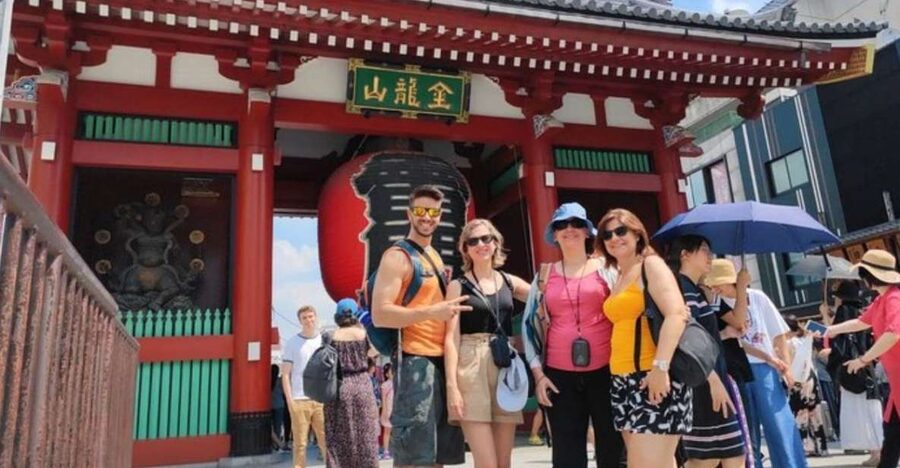
Asakusa is one of the strongest choices for a first Tokyo outing. The area gives you temples, traditional streets, food treats, and a clear sense of old and modern Tokyo sharing the same neighborhood.
Senso-ji is the main draw. Your guide can explain how to approach the temple and how to behave respectfully at shrines and temples. That small lesson can make the visit feel more meaningful than simply walking through the gate, taking a picture, and moving on.
The surrounding streets offer easy chances to try sweets and small snacks. One family group enjoyed the food stops in Asakusa, while another praised a guide for taking them to a viewing platform above the temple. These details show what the private format does well: you can combine the famous sight with the kind of small local stop that a standard sightseeing route may skip.
Asakusa also pairs well with Tokyo Skytree. The two areas are close enough to combine, depending on your time and ticket plans. A four-hour route included Skytree, Senso-ji, and Asakusa, giving one visitor both a major modern landmark and a traditional district.
The catch is time. Asakusa can fill a morning by itself, especially if you browse shops or stop for food. If you add Skytree, allow your guide to set realistic priorities. Seeing fewer places well is better than racing across the city to collect names.
Imperial Palace Gardens and Marunouchi
The Imperial Palace area offers a different side of Tokyo. Instead of tight shopping lanes and giant station districts, you get formal gardens, broad streets, office towers, and a sense of the city’s political center.
A highlights route included the Imperial Palace Gardens and Marunouchi, along with Asakusa. That combination works because the areas feel so different. You move from temple streets and traditional snacks to polished business avenues and carefully maintained public space.
The gardens are especially appealing if you want a break from crowded commercial areas. In winter, the scenery can feel spare and elegant. In spring, seasonal plants may change the mood, though the tour does not guarantee any particular seasonal display.
Marunouchi is useful for understanding modern Tokyo. Your guide can point out how the area functions as a business district and help connect the city’s past with its present. It is not the best choice if you want nonstop shopping or entertainment, but it gives the day variety.
A completely different kind of day out in Tokyo:
- Mt Fuji and Hakone 1-Day Bus Tour Return by Bullet Train
★ 5.0 · 26,383 reviews - 1-Day Tokyo Bus Tour
★ 5.0 · 14,250 reviews - Tokyo: TOKYO SKYTREE® Admission ticket
★ 4.5 · 11,192 reviews - Tokyo: teamLab Planets TOKYO Digital Art Museum Entry Ticket
★ 4.6 · 9,779 reviews
Shibuya and Shinjuku for modern Tokyo
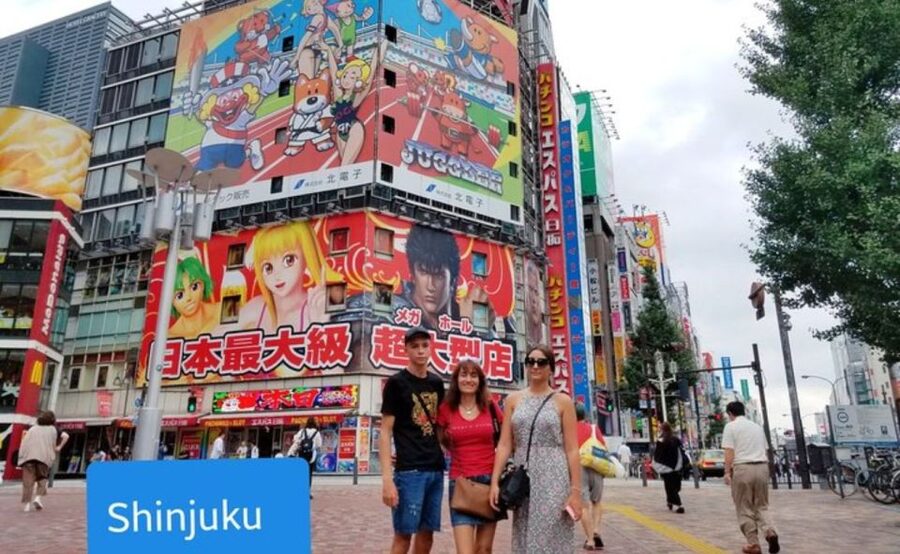
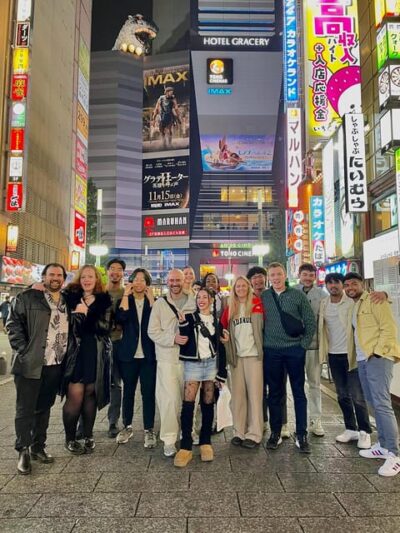
If your picture of Tokyo includes giant crossings, neon, department stores, elevated views, bars, and karaoke, ask for Shibuya and Shinjuku. These districts show the city at its most energetic, but they are large enough to confuse a first-time visitor.
One guide took a group through diverse parts of Shinjuku and Shibuya, mixing temples, iconic buildings, well-known sites, and quieter streets. That is the right approach. You get the famous images, then move a few streets away to see how people actually use the neighborhood.
The guide can also suggest bars, restaurants, and karaoke venues for later. This advice may be more useful than trying to fit an evening meal into the tour itself. Food and drinks are not included, so treat the tour as a chance to learn where you want to return.
Shibuya and Shinjuku are not ideal for a slow, quiet walk at every point. Large stations and busy crossings can be tiring, especially for children or anyone with mobility limits. Tell your guide if you need frequent seats, shorter stretches, or fewer station changes.
Akihabara, Odaiba, and other special-interest stops
Tokyo rewards a personal route. Akihabara is a natural request if you care about games, anime, electronics, or Japanese pop culture. One solo visitor used the tour to see Akihabara and Asakusa while also learning cultural rules and first-day basics.
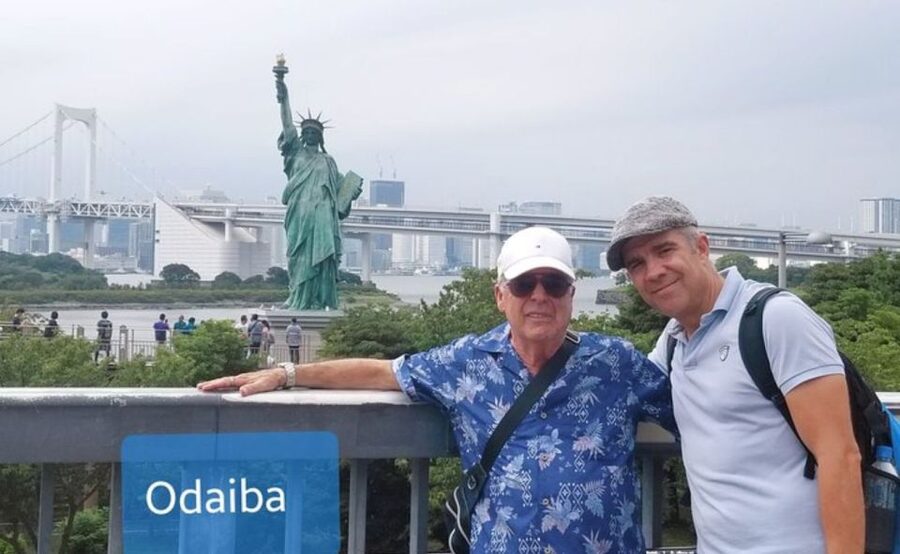
Odaiba gives you another change of pace. A visit to the marina was described as a peaceful discovery of a different Tokyo. It is a good request if you want open waterfront views and a quieter setting rather than another dense station district.
Families can shape the route around different ages. A group with teenagers combined a fish market visit, a viewing platform above Senso-ji, and a Pokémon Mega Center. The guide also helped locate suitable food for a visitor with celiac disease. That does not mean every guide can solve every dietary need, but it shows why you should state restrictions before the day begins.
You can also ask for shopping or special-interest locations. One route covered three wards, combining history, shopping, and personal interests. That kind of geographic spread is possible, but it depends on tour length and public transport. A short booking should focus on one or two connected areas.
The real lesson is using Tokyo’s trains
For many people, the most valuable part of the day is not a monument. It is learning how to move around afterward.
Guides have helped visitors collect JR rail passes, understand subway routes, acquire Suica cards, buy train tickets, locate bathrooms, and gain confidence with station changes. One visitor estimated that collecting rail passes and learning the system took less time with a guide than it would have alone.
That is a strong reason to book the tour early in your stay. You can use the rest of your trip more freely once you know how to read the signs, choose a route, and find the correct exit. Hotel pickup makes this especially practical on your first day, when jet lag and unfamiliar stations can make simple tasks feel harder.
Public transport is included as part of the walking tour, except where a separate option has been selected. You should still expect your own fares and attraction costs to be separate unless your booking details say otherwise. The supplied information specifically excludes attraction tickets, food, and drinks.
The walking and rail combination also means the tour does not feel like a bus circuit. You see the connections between neighborhoods and get a better sense of Tokyo’s scale. On the other hand, a full day can be physically demanding. One eight-hour outing reached 23,000 steps, so ask for a sensible pace if you prefer relaxed sightseeing.
Guide quality and the private-group advantage
The strongest praise centers on guide attitude. Francine was singled out for preparing an itinerary, answering questions, and adjusting plans. Karl was praised for helping with the metro and for explaining modern Tokyo life. Enrique received especially strong marks for station navigation and local knowledge.
Other guides brought different strengths. Albert helped families with breaks and detours. Cristiano assisted visitors with mobility concerns and kept the route moving despite poor weather. Himena mixed major sights with places the group would not have found alone. Shaban helped with transport, attraction bookings, restaurant orders, and photographs during a long cruise-terminal pickup day.
You cannot assume you will receive a particular guide, and individual styles will differ. Still, the pattern is clear: the guide is most useful when you treat the day as a conversation rather than a lecture. Ask questions. Explain what feels confusing. Say when you want to stop.
The private group also suits families, couples, and solo visitors for different reasons. Families can manage snacks and rest breaks. Couples can follow shared interests instead of splitting up. Solo visitors get company without joining a large group, plus a local person to ask about customs and evening plans.
The tour is listed as wheelchair accessible, but Tokyo routes vary greatly in station layout, walking distance, and crowd levels. If you use a wheelchair or have limited mobility, describe your needs before the tour so the route can be planned carefully.
Timing, pickup, and what the price covers
You can choose anything from two to eight hours, subject to available starting times. A two-hour tour is best for a focused introduction, such as Asakusa and Senso-ji, or a short lesson in using the metro. Three or four hours gives you room to connect a few nearby highlights.
Book six to eight hours if you want several districts, substantial transport practice, food stops, and time for questions. Do not expect to cover every major Tokyo district in one day without spending much of it in stations.
Pickup is included from your hotel if it is located in Tokyo. If the hotel is outside the city center, the company selects a convenient central meeting point. The tour may finish somewhere different from where it began, so request a return to the starting point in advance if that matters to you.
At $53 per person, the cost is reasonable for a private introduction, especially if two or more people share the experience. The value rises if your guide helps you plan later days, use the trains, and avoid costly navigation mistakes. It is less compelling if you already know Tokyo well and only want a basic walk past famous buildings.
You pay separately for attraction tickets, food, and drinks. Museums can be included in the plan if arranged ahead, but entrance is not part of the listed price.
Who should book this Tokyo experience?
I would choose this tour for a first visit, a short stay, or a first morning after arriving in Japan. It is also a smart option if you feel uneasy about Tokyo’s rail network or want a local explanation of customs before exploring alone.
Families should appreciate the ability to change pace. Solo visitors can use the guide as both a cultural interpreter and a practical city coach. Couples can build a day around food, neighborhoods, gardens, shopping, or architecture rather than ticking through a fixed list.
You may want another type of tour if you prefer a formal historical lecture, guaranteed entrance to several attractions, or a fixed schedule with every ticket included. This experience is about access to a person and a flexible route, not a packaged sightseeing program.
Should you book the private custom walking tour?
Book it if you want Tokyo to make sense quickly. The best use of the tour is not simply seeing Senso-ji or Shibuya. It is learning how those places connect, how to ride the trains, which areas fit your interests, and what to do after your guide leaves.
Send a focused wish list, mention food or mobility needs early, and choose enough hours for the districts you want. If you do that, $53 per person can buy a very useful first step into a huge city. If your budget is tight and you are comfortable navigating alone, choose two hours and use it as an orientation session rather than paying for a full day.
With a 4.8 rating from 533 bookings, the experience has a strong record. I would book it for a flexible, practical start to Tokyo, while keeping expectations clear: the route is personal, the guide matters, and the extra costs belong in your budget.
FAQ
How long does the private Tokyo walking tour last?
You can book a tour lasting from two to eight hours, depending on availability and the starting times offered for your date.
Is hotel pickup included?
Yes. Pickup is included from accommodation located in Tokyo. If your hotel is outside the city center, you will meet at a convenient central location chosen by the company.
Can I choose the places I want to visit?
Yes. The tour is customizable, and your guide contacts you beforehand to discuss your preferences. The route can include requested sights, neighborhoods, venues, and interests.
Are museum and attraction tickets included?
No. Attraction tickets, food, and drinks are not included. If you want to visit a museum, tell the company in advance so the itinerary can be adjusted and ticket-booking help can be provided.
Is public transport included?
The walking tour includes public transport, except if you select an option that states otherwise. Your guide can also help you understand Tokyo’s rail system and acquire transport cards or tickets.
Which languages are available?
Live guiding is available in English, French, Italian, Japanese, Spanish, and Portuguese.
Just added around Tokyo
- Tokyo 6hr Instagram Highlights Private Tour with Licensed Guide★ 5.0 · 38 reviews
- Tokyo Small Group Tour with Guide★ 4.5 · 38 reviews
- Tokyo Sumo Experience with Live Show & Audience Challenge★ 5.0 · 38 reviews
- Japanese Food Cooking Class in Asakusa, Tokyo★ 5.0 · 39 reviews
- Very popular in Harajuku♡Animal petting zoo★ 4.6 · 39 reviews
- Ramen Making from Scratch with Tokyo Mom(Vegan Option Available)★ 5.0 · 39 reviews
- Tokyo JDM Night: 600hp C63s AMG Edition 1 (Private)★ 4.9 · 39 reviews
- Tokyo: Kimono Rental inside Shinjuku Gyoen National Garden★ 4.9 · 39 reviews
Walking Tours, compared.
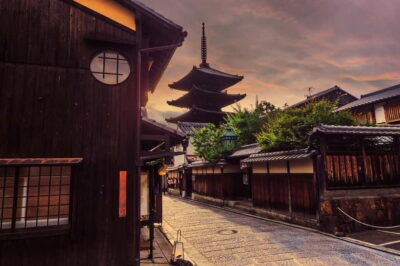
Kyoto Geisha Walking Tour: Gion District & Hidden Gems
Read our review →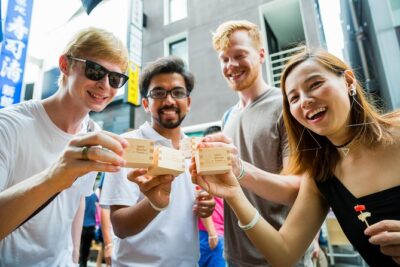
Tokyo Tsukiji Fish Market Food and Culture Walking Tour
Read our review →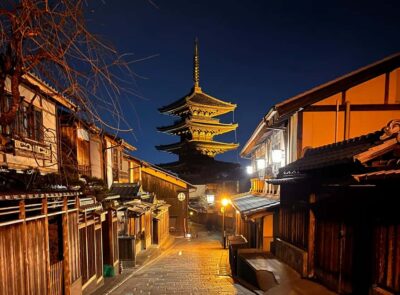
Gion Magical Night Walking Tour with Geisha Trivia
Read our review →
Imperial Palace and Shogun Historical Walking Tour
Read our review →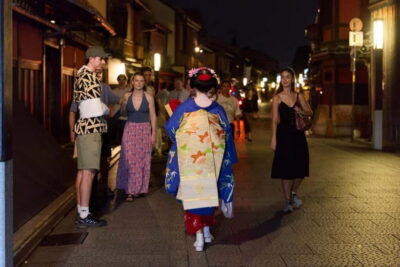
Gion Geisha District Walking Tour – Stories of Geisha
Read our review →
Shinjuku Local Bar and Izakaya Guided Walking Tour
Read our review →
Browse the lists this tour appears in