
Reviewed · WALKING TOURS
Tokyo: Shibuya Crossing & Hidden Streets Walking Tour
Shibuya is more than one famous crossing. This two-hour walk brings the district into focus, from Taro Okamoto’s powerful Myth of Tomorrow mural to old drinking alleys, rooftop parks, youth culture, and the Hachiko Statue. I like the mix of major sights and lesser-seen streets, and I like the practical help guides offer with photos, food, shopping, and getting around. The one catch is the meeting point inside Mark City, which can be confusing on your first day in Tokyo.
At $22 per person, this is a modest price for a live English guide and a useful first look at Shibuya. The pace can be adjusted, but you should still expect steady walking, city noise, crowds, and short visits rather than long stops at each place.
In This Review
- Why this Shibuya walk is worth your time
- Meeting at Mark City without losing your morning
- Nonbei Yokocho: a small lane with an older face
- Myth of Tomorrow gives Shibuya a thoughtful pause
- Shibuya Crossing: more than a photo
- Miyashita Park shifts the mood
- Center Gai brings you into youthful Shibuya
- Maruyama-cho reveals another side of nightlife
- Hachiko makes a fitting final stop
- What the guides do best
- Price, pace, and who should book
- Should you book this Shibuya tour?
- FAQ
- How long does the Shibuya walking tour last?
- How much does the tour cost?
- Where does the tour start?
- Where does the tour finish?
- What language is the tour offered in?
- What is included in the price?
- Can I cancel the tour for a full refund?
Why this Shibuya walk is worth your time
- A serious beginning: Taro Okamoto’s Myth of Tomorrow adds history and thought to a district often reduced to neon signs and shopping.
- Old and new Tokyo together: Nonbei Yokocho’s narrow lanes lead into Miyashita Park’s sleek urban design.
- A proper crossing introduction: Your guide helps you understand how to approach Shibuya Crossing and can take photos, useful if you are traveling alone.
- Useful local advice: Guides such as Loc, Rio, Ryo, Kumi, Grey, Daichi, and Zach have helped visitors with restaurants, vegan food, shopping, and later plans.
- A compact route: In two hours, you see several sides of Shibuya without giving up an entire morning or evening.
- A flexible social experience: Past groups have included solo visitors, families with teenagers, and very small groups.
Meeting at Mark City without losing your morning
The tour begins at SABON Shibuya Mark City, inside Mark City on the third floor. This is not a street-level meeting spot, and the directions warn that it can be hard to find if you have just arrived in Tokyo.
Give yourself extra time. Mark City is tied to the large Shibuya Station complex, where several railway and subway lines, department stores, signs, and pedestrian flows meet. The guide will hold a sign, but that help matters only after you reach the correct floor. The meeting coordinates are 35.6586643, 139.6999525.
Do not cut this close. The tour asks you not to be late, and the route is built around a moving group rather than a private appointment. The ability to reserve now and pay later is useful if you are still arranging a packed Tokyo schedule. Cancellation is free up to 24 hours before the start time, which gives you some room to adjust plans.
The tour is offered in English with a live guide. Guide quality is a major part of the experience, and the names attached to the feedback include Loc, Kumi, Rio, Ryo, Grey, Daichi, Zach, and others. The praise is remarkably consistent: friendly explanations, clear English, cultural context, and a willingness to answer questions.
More Walking Tours in Tokyo
- Tokyo Tsukiji Fish Market Food and Culture Walking Tour
★ 5.0 · 3,184 reviews - Tokyo: Imperial Palace and Shogun Historical Walking Tour
★ 5.0 · 2,251 reviews - Tokyo: Shinjuku Local Bar and Izakaya Guided Walking Tour
★ 4.9 · 1,794 reviews
Nonbei Yokocho: a small lane with an older face
After meeting, the walk visits Shibuya Nonbei Yokocho, also called Drunkard’s Alley. The name hints at its character: a tight cluster of small drinking spots tucked beside the station, a sharp contrast to Shibuya’s giant screens and commercial towers.
You do not come here for a long meal on this tour. The stop is listed at about 10 minutes, so think of it as a guided introduction and photo opportunity. Your guide can explain how this narrow corner fits into the older side of the district, then point out details you might pass without noticing.
This is one of the route’s best choices because it changes your sense of scale. Shibuya can feel huge and impersonal when you first arrive. Nonbei Yokocho brings the focus down to lanes, doorways, and local nightlife. It is also a working area, so keep your voice low, avoid blocking entrances, and follow your guide’s lead about photography.
The short stop has a limit. If you want to sit down for drinks or explore every doorway, you will need to return later. That is not a fault in a two-hour orientation, but it is worth understanding before you book.
Myth of Tomorrow gives Shibuya a thoughtful pause
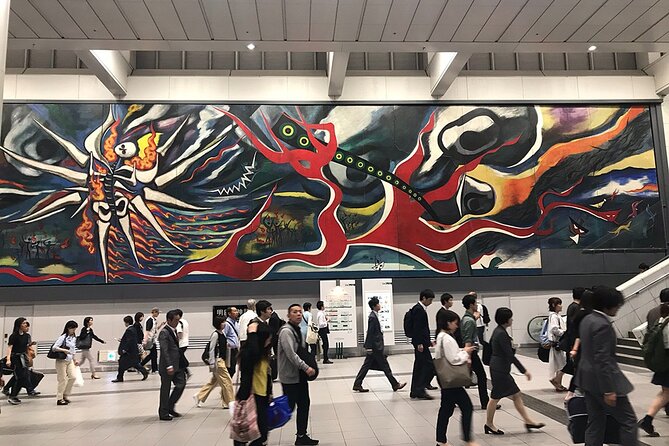
The route then reaches Myth of Tomorrow, a large mural by Taro Okamoto. Its subject is the impact of nuclear destruction, but its message also points toward hope. Set within the station area, it gives you a powerful reminder that Tokyo’s story is not only about fashion, screens, and crowded sidewalks.
The guide spends around 10 minutes here, including a visit and time for photographs. That may sound brief, but a clear explanation can make the mural far more meaningful than a quick look on your own.
I especially like this stop because it breaks the expected Shibuya script. Many short city tours hurry from one famous photo spot to the next. Here, you get a piece of public art with serious historical weight before returning to the district’s constant motion.
You should not expect a museum-style lecture or a long art lesson. The value comes from the setting and the context. Your guide helps you read the work, understand its subject, and connect it with a wider idea of Tokyo after wartime destruction.
Shibuya Crossing: more than a photo
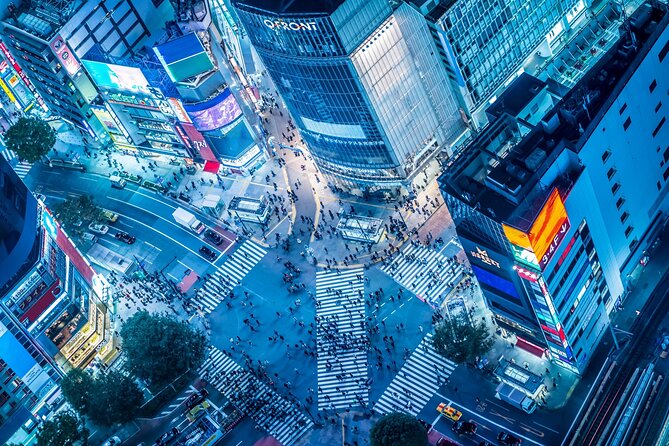
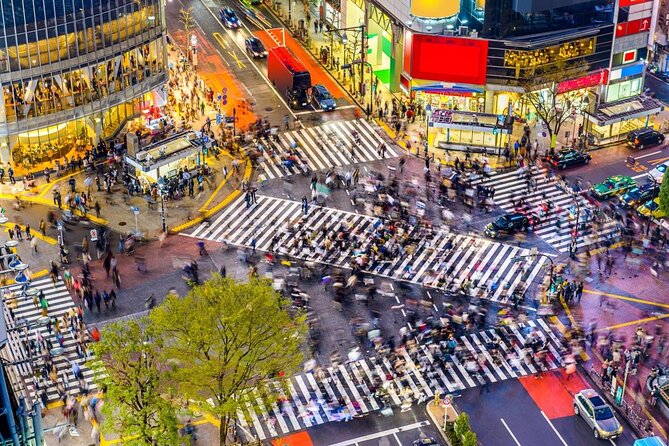
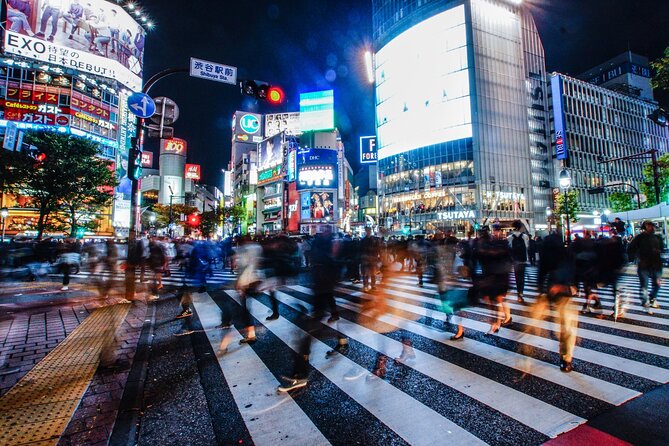
Next comes the district’s most famous scene, Shibuya Crossing. When the signals change, people move across the intersection from several directions, surrounded by huge advertisements and the walls of Shibuya’s commercial center.
The stop lasts about 10 minutes. Your guide can explain how to approach the crossing, where to pause, and how to get photographs without losing the group. This is particularly helpful for solo visitors. One solo participant praised Loc for taking excellent photos at the crossing, a small service that can make a big difference when you have no companion to hold the camera.
Do not expect an empty crossing or a calm photo session. The point is the motion, noise, and scale. You will be sharing the space with many other people, and the best shot depends on timing, patience, and a little luck.
The guide’s role is not just to point and say there it is. A good explanation helps you understand why this intersection became such a strong symbol of modern Tokyo. The tour also keeps the stop from taking over your whole day. You see the icon, get oriented, and move on to parts of Shibuya that are easier to miss.
A completely different kind of day out in Tokyo:
- Mt Fuji and Hakone 1-Day Bus Tour Return by Bullet Train
★ 5.0 · 26,383 reviews - 1-Day Tokyo Bus Tour
★ 5.0 · 14,250 reviews - Tokyo: TOKYO SKYTREE® Admission ticket
★ 4.5 · 11,192 reviews - Tokyo: teamLab Planets TOKYO Digital Art Museum Entry Ticket
★ 4.6 · 9,779 reviews
Miyashita Park shifts the mood
The walk continues to Miyashita Park, with about 20 minutes here, the longest stop on the route. This multi-level urban park offers a change from station crowds and narrow streets. Its design combines public space with the modern commercial side of Shibuya.
The park is useful as a breather. You can listen to the guide, take in the surrounding architecture, and see how Tokyo turns limited urban space into a place for walking and relaxing. The contrast with Nonbei Yokocho is the point: one stop feels compact and old-fashioned, while the other shows a polished, contemporary city.
This is also where the route’s range becomes clear. You are not simply touring famous signs. You are seeing how Shibuya has changed and how different generations of city life sit close together.
Twenty minutes is enough for an explanation and a look around, but not enough for a full shopping visit or a leisurely afternoon. If Miyashita Park appeals to you, mark it for a return visit. The guide may also help you decide where to eat or shop afterward. Several people valued this kind of practical advice, including recommendations for vegan food and useful shopping areas.
Center Gai brings you into youthful Shibuya
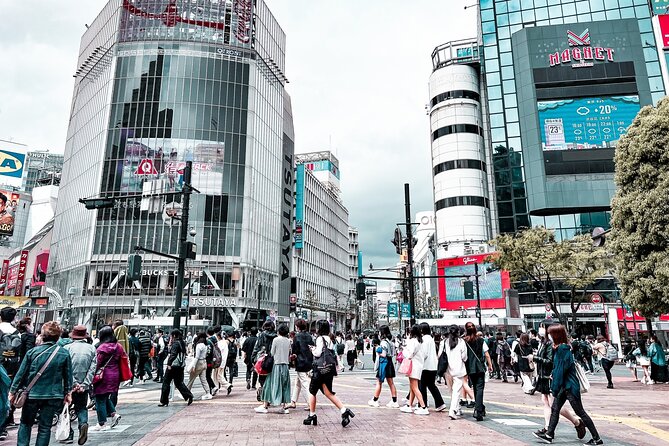
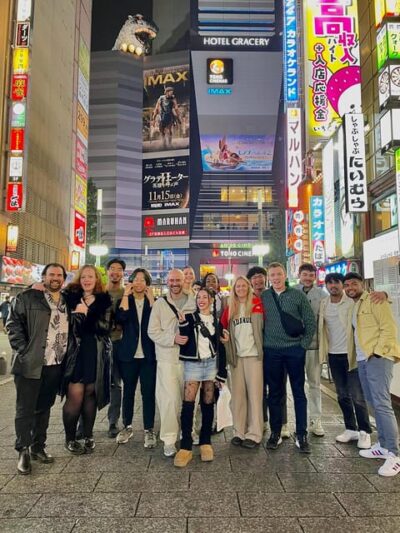
From the park, the tour visits Center Gai, one of Shibuya’s key streets for youth culture, shops, nightlife, and constant movement. The guide spends around 10 minutes here, giving you a quick sense of the district’s social energy.
This is the place where Shibuya’s modern identity is easiest to feel. You might notice how quickly the scene changes from one block to the next, with bright storefronts, narrow lanes, and people moving between shops and restaurants.
The stop is better for orientation than detailed shopping. Ten minutes will not allow you to compare stores or settle into a café. Instead, use your guide’s suggestions to decide what deserves a second look later.
Families can benefit from the short format. One guide adjusted the content and pace for teenagers, helping them stay interested during an early-evening walk. That flexibility matters because Shibuya can either fascinate young people or overwhelm them, depending on how the guide presents it.
Maruyama-cho reveals another side of nightlife
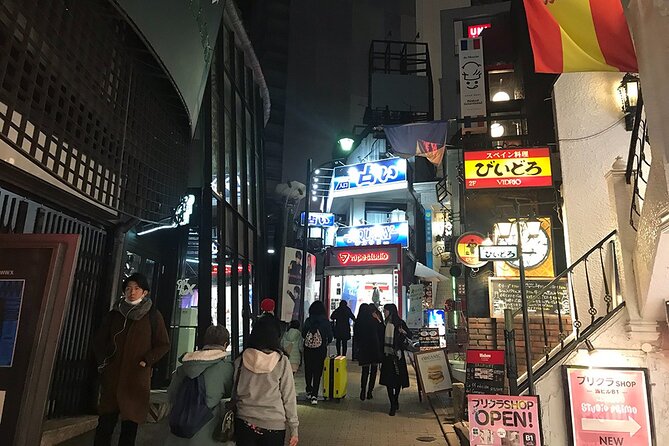
The route then heads to Maruyama-cho, a historic part of Shibuya that has become associated with modern nightlife. The streets offer another change of scene, moving away from the station’s broad public spaces and into an area with a more intimate, after-dark character.
Again, the visit lasts about 10 minutes. Your guide can explain the area’s past and its current role without asking you to spend the evening there. This is a useful stop if you want to understand Shibuya as a district with layers, not simply a commercial center.
The nightlife setting also means the character of the area may shift depending on your tour time. An early walk and an evening walk will not feel identical. The route is still the same, but lights, crowds, and open businesses can change the atmosphere.
That is one reason the guides’ local advice is valuable. Past visitors have used the tour to get a feel for where to eat and drink later. You receive a map in your head, not a long restaurant crawl.
Hachiko makes a fitting final stop
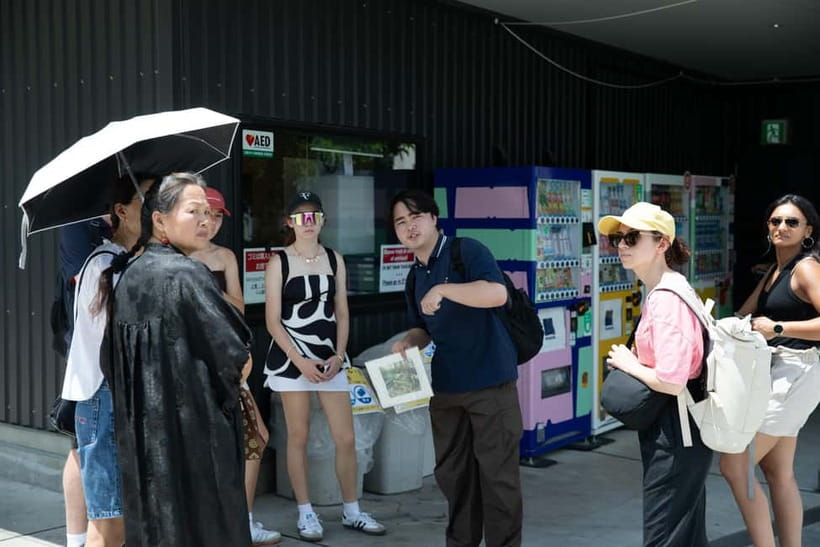
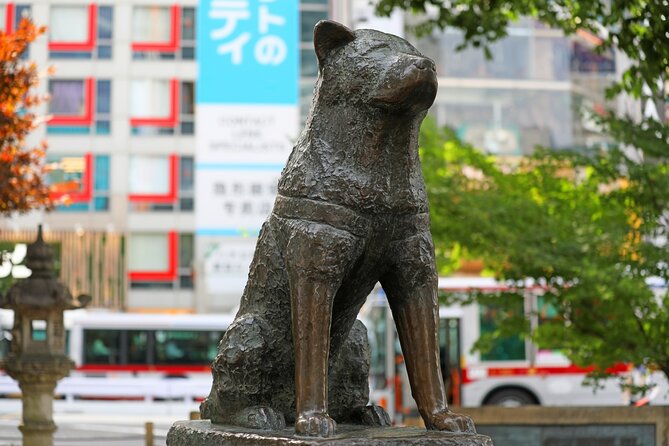
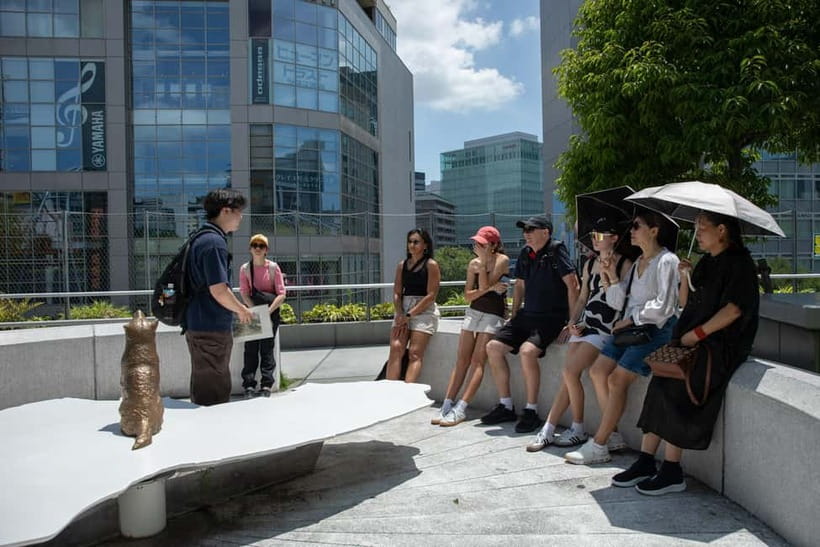
The tour ends at the Hachiko Memorial Statue, beside Shibuya Station. Hachiko is remembered as a symbol of loyalty, and the statue has become one of Tokyo’s best-known meeting points.
Ending here makes practical sense. You finish near a major station, with the rest of Shibuya within easy reach. It is also a natural place to pause, take a final photograph, and decide what you want to revisit.
The statue itself is small compared with the surrounding station and buildings. Its importance comes from the story and from the way people use the spot as a rendezvous. Your guide can give you the cultural context, then leave you in a central location for your next plan.
If you are meeting someone afterward, this is a convenient endpoint. If you are exploring alone, it is also a clear place from which to continue, provided you already know where you want to go.
What the guides do best
The strongest part of this experience is the human explanation. Loc is repeatedly praised for warmth, clear communication, factual background, and practical suggestions. Kumi is described as engaging and well informed, while Rio and Ryo receive praise for friendly delivery, strong English, and answers to detailed questions.
Grey has helped visitors find local spots and offered vegan food and shopping ideas. Daichi adjusted the walking speed to suit his group and answered questions with patience. Zach was praised for broad knowledge of Japan as well as Shibuya.
These details matter more than a list of stops. Shibuya is easy to visit on your own, but it is also easy to see only the obvious parts. A good guide helps you understand what you are looking at, then gives you ideas for the rest of your stay.
The small groups described in the feedback also sound appealing. Some tours had only one participant or three people, while another included a family of four. Group size is not stated as a fixed feature, so you should not book expecting a private tour. Still, the experience appears capable of feeling personal when numbers are low.
Price, pace, and who should book
At $22 per person, this is good value if you are new to Tokyo or short on time. You are paying mainly for orientation and interpretation, not admission tickets, food, or a long attraction visit. The route covers several distinct parts of Shibuya in two hours, and the guide can save you time by explaining where to return for meals, shopping, and nightlife.
I would especially recommend it for:
- First-time visitors who want a clear introduction to Shibuya
- Solo visitors who would like help with photos at the crossing
- Families with teenagers who may enjoy a guided urban walk
- Anyone interested in both contemporary Tokyo and older local streets
- Visitors with only a morning or evening available
- People who want food and shopping suggestions from an English-speaking local guide
I would hesitate if you dislike city crowds, short stops, or walking from place to place. This is not a slow food tour, a museum visit, or a seated cultural talk. One person noted that sitting while listening would have been preferable, but that is difficult on a walking route.
Wear comfortable shoes and arrive early enough to find the third-floor meeting point. Also keep your expectations realistic: the tour gives you a strong first map of Shibuya, but you will need to return on your own if you want time inside shops, restaurants, or Nonbei Yokocho bars.
Should you book this Shibuya tour?
I would book this tour for a first visit, especially early in your Tokyo stay. It gives you the famous crossing, but it also shows Nonbei Yokocho, Miyashita Park, Center Gai, and Maruyama-cho, so you finish with a much broader feel for the district.
The best reason to choose it is the guide. Loc, Rio, Ryo, Kumi, Grey, Daichi, and Zach are praised for warmth, local suggestions, good explanations, and flexibility. If you want a fast, friendly introduction that helps you make better plans afterward, $22 is a fair price.
Skip it only if you already know Shibuya well or prefer exploring without a schedule. For most first-time visitors, this is a practical way to get your bearings before wandering off on your own.
FAQ
How long does the Shibuya walking tour last?
The tour lasts two hours.
How much does the tour cost?
The listed price is $22 per person.
Where does the tour start?
It starts at SABON Shibuya Mark City, inside Mark City on the third floor.
Where does the tour finish?
The tour finishes at the Hachiko Memorial Statue.
What language is the tour offered in?
The live guided tour is offered in English.
What is included in the price?
The local guide fee is included.
Can I cancel the tour for a full refund?
Yes. You can cancel up to 24 hours in advance for a full refund.
Just added around Tokyo
- Tokyo 6hr Instagram Highlights Private Tour with Licensed Guide★ 5.0 · 38 reviews
- Tokyo Small Group Tour with Guide★ 4.5 · 38 reviews
- Tokyo Sumo Experience with Live Show & Audience Challenge★ 5.0 · 38 reviews
- Japanese Food Cooking Class in Asakusa, Tokyo★ 5.0 · 39 reviews
- Very popular in Harajuku♡Animal petting zoo★ 4.6 · 39 reviews
- Ramen Making from Scratch with Tokyo Mom(Vegan Option Available)★ 5.0 · 39 reviews
- Tokyo JDM Night: 600hp C63s AMG Edition 1 (Private)★ 4.9 · 39 reviews
- Tokyo: Kimono Rental inside Shinjuku Gyoen National Garden★ 4.9 · 39 reviews
Walking Tours, compared.
Kyoto Geisha Walking Tour: Gion District & Hidden Gems
Read our review →
Tokyo Tsukiji Fish Market Food and Culture Walking Tour
Read our review →
Gion Magical Night Walking Tour with Geisha Trivia
Read our review →
Imperial Palace and Shogun Historical Walking Tour
Read our review →
Gion Geisha District Walking Tour – Stories of Geisha
Read our review →
Shinjuku Local Bar and Izakaya Guided Walking Tour
Read our review →
Browse the lists this tour appears in