
Reviewed · WALKING TOURS
Tokyo: Shibuya Highlights Walking Tour & Secret View Spot
Shibuya is best understood on foot. This 90-minute walk brings you from the Hachiko statue and the world-famous crossing to rooftop views, local food alleys, Miyashita Park, and the neon streets that give the district its edge. At $23 per person, I like the way it combines major sights with places you could easily miss alone. I also like the friendly, personal guiding style reported by guests, with guides such as Mao, Sakura, Ayaka, Noa, Sota, and Yuki offering restaurant tips, photo help, and advice on using Tokyo’s trains.
The main consideration is pace. You cover several parts of Shibuya in only an hour and a half, so this is an orientation walk rather than a slow, detailed tour of every stop. The meeting point can also be confusing in the station area, so arrive early and look for the guide holding a Local Guide Stars sign.
In This Review
- Key points to know before you book
- Starting beside Hachiko at Shibuya Station
- Crossing the world-famous Shibuya Scramble
- Shibuya Scramble Square and the secret view
- Nonbei Yokocho and Shibuya’s smaller scale
- Miyashita Park, a welcome urban pause
- Center-Gai and the heart of youth culture
- Shibuya Mark City and a final look at the district
- What the guides add for your money
- Timing, weather, and physical comfort
- Who should book this Shibuya walk?
- Should you book the Shibuya Highlights Walking Tour?
- FAQ
- How long does the Shibuya walking tour last?
- What is the price of the tour?
- Where does the tour begin?
- How do I find the guide?
- Which languages are available?
- Is food included?
- Does the tour run in bad weather?
Key points to know before you book
- The tour begins beside Hachiko and the JR Shibuya Station Hachiko Gate, making it easy to connect with the district’s best-known meeting place.
- You cross Shibuya Scramble and see it from above, a useful bonus if you want photographs without waiting for a formal observation ticket.
- Miyashita Park provides a break from the traffic and neon, with a different side of Shibuya popular with younger locals.
- Nonbei Yokocho brings you into narrow restaurant and bar lanes, though food and drinks are not included.
- Local guides add the most value, especially with suggestions for ramen, monja, shopping, customs, and nearby sights.
- The route runs in rain or shine, and the listed tour languages are English and Japanese.
Starting beside Hachiko at Shibuya Station
Your meeting point is in front of SHIBU HACHI BOX, at 2-1-1 Dogenzaka, Shibuya-ku, Tokyo 150-0043. It is near the JR Shibuya Station Hachiko Gate and Tokyo Metro Exit A8, with the guide waiting under a Local Guide Stars sign.
That sounds simple until you see Shibuya Station. This is one of Tokyo’s biggest transport hubs, with several levels, exits, and streams of people moving in different directions. I would not cut your arrival close. Give yourself extra time to find the Hachiko Gate area, then look for the sign rather than relying only on your phone map.
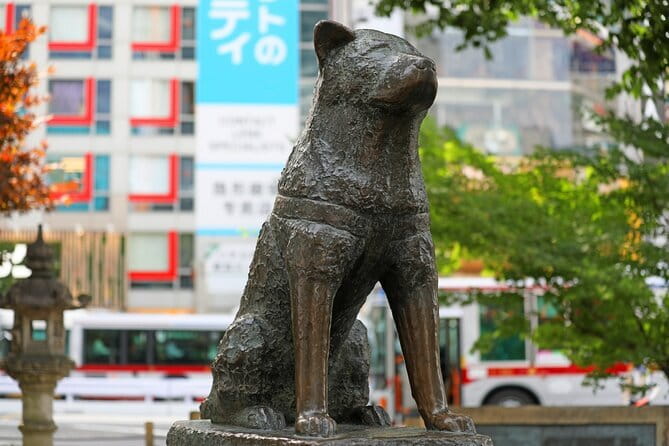
Beginning at Hachiko makes good sense. The bronze dog statue is one of Tokyo’s most famous meeting places, but the story behind it gives the guide an opening to explain how Shibuya grew from a station district into a symbol of modern Tokyo. You get context before walking into the crowds, which helps the rest of the route make more sense.
This is also a practical place to start if you have just arrived in Tokyo. Several guides have helped people with train directions and basic city orientation, and that advice can save you time later in your trip.
More Walking Tours in Tokyo
- Tokyo Tsukiji Fish Market Food and Culture Walking Tour
★ 5.0 · 3,184 reviews - Tokyo: Imperial Palace and Shogun Historical Walking Tour
★ 5.0 · 2,251 reviews - Tokyo: Shinjuku Local Bar and Izakaya Guided Walking Tour
★ 4.9 · 1,794 reviews
Crossing the world-famous Shibuya Scramble
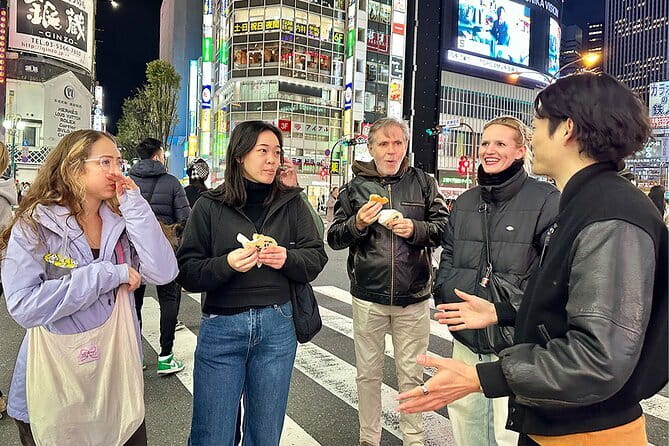
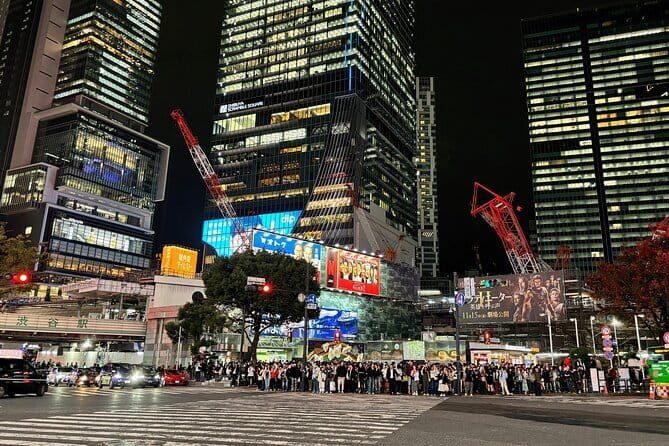
The ten-minute stop at Shibuya Crossing is short, but the crossing itself does not need much extra time. When the signals change, pedestrians move in every direction across the broad intersection while traffic pauses around them. It is organized chaos, and seeing it in person feels different from watching a video.
Your guide can point out the best places to understand the crossing and help with photographs. One useful feature of this tour is the chance to see the intersection from above without waiting in line. The exact viewing point can vary, but the walk includes Shibuya Scramble Square and Shibuya Mark City, both useful for getting a higher view of the action below.
I like this part because it does more than provide a famous photo. The guide can show you how the crossing fits into daily life in the district, where commuters, shoppers, students, and night-time crowds all pass through. Still, do not expect a long photography session. Ten minutes moves quickly, especially when the area is crowded.
Shibuya Scramble Square and the secret view
Shibuya Scramble Square is one of the district’s major newer buildings and an important point for seeing Tokyo from above. From a higher position, the crossing becomes a pattern of moving people, while the surrounding towers show how quickly Shibuya has changed.
The tour’s secret view spot is a strong reason to consider booking rather than simply wandering around. Several guides have taken people to a place where they can see the crossing from above without joining a long line. That is especially useful if you have limited time or do not want to pay separately for every observation platform.
The view is not the same as a dedicated observatory visit. This walk is about orientation and atmosphere, not spending an hour at a scenic deck. You may get a better sense of the district’s shape, while a formal observation attraction may offer a longer look. For $23, though, the added viewpoint is a sensible part of a guided introduction.
Nonbei Yokocho and Shibuya’s smaller scale
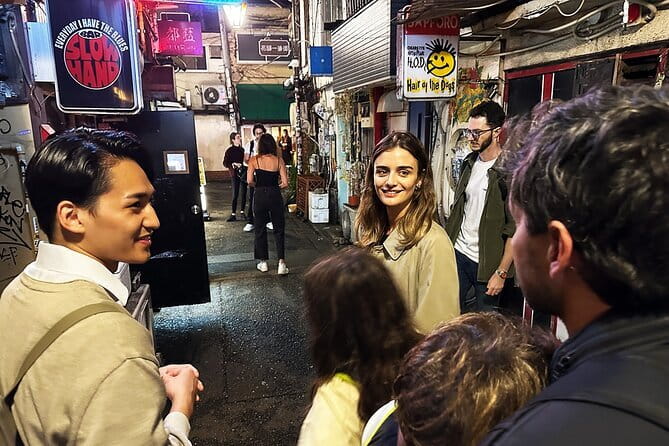
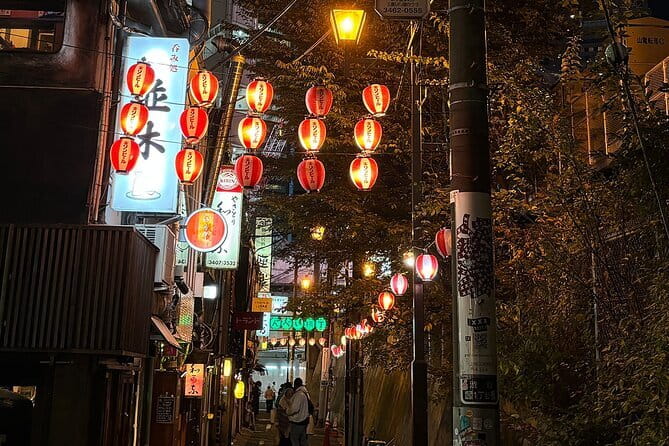
The ten-minute stop at Nonbei Yokocho changes the mood. This narrow area is known for small local eateries and bars, tucked close to the enormous station complex. Its compact lanes offer a useful contrast with the billboards, department stores, and giant buildings nearby.
I would pay close attention here. The point is not simply to take a quick photograph, but to see a more intimate side of the district. Your guide may explain how the restaurant lanes fit into Shibuya’s food culture and suggest places to eat after the tour.
Food and drinks are not included, so plan to return later if a particular place catches your eye. The stop is also brief, and small lanes can feel tight when busy. If you are hoping for a full tasting experience, this is not the right tour. If you want a local pointer before choosing dinner, it can be very useful.
A completely different kind of day out in Tokyo:
- Mt Fuji and Hakone 1-Day Bus Tour Return by Bullet Train
★ 5.0 · 26,383 reviews - 1-Day Tokyo Bus Tour
★ 5.0 · 14,250 reviews - Tokyo: TOKYO SKYTREE® Admission ticket
★ 4.5 · 11,192 reviews - Tokyo: teamLab Planets TOKYO Digital Art Museum Entry Ticket
★ 4.6 · 9,779 reviews
Miyashita Park, a welcome urban pause
The itinerary gives Miyashita Park 20 minutes, the longest single stop so far. This is where the route steps away from the most intense station crowds and shows a different kind of Shibuya.
The park is an urban oasis popular with young people. It offers open space, shops, and a break from the constant movement of the main streets. The guide can explain why the park matters to local life and how it fits into the district’s changing identity.
This stop also helps the pace of the walk. Shibuya can be tiring, particularly in summer, when heat and crowds make every block feel longer. One guest appreciated moving in and out of air-conditioned places during a hot day, and that is a good reminder to dress for conditions. Bring water, wear comfortable shoes, and do not assume a short tour means very little walking.
Miyashita Park is not a traditional Japanese garden or a quiet historic park. Its appeal is modern and urban. You come here to see how Tokyo makes room for recreation in a dense commercial district.
Center-Gai and the heart of youth culture
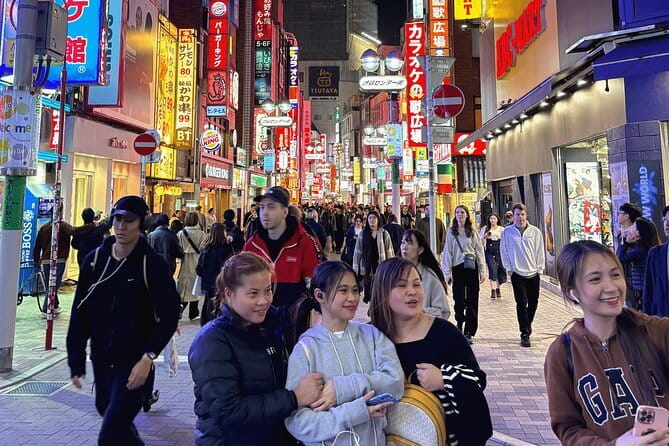
The 20-minute visit to Shibuya Center-Gai brings you back into the district’s busiest commercial zone. This is the side of Shibuya most associated with youth fashion, shopping, music, colorful signs, restaurants, and nightlife.
A local guide is particularly helpful here. Center-Gai can feel like a maze of similar-looking streets, and it is easy to walk past something interesting without knowing why it matters. Guides have shared advice on shopping, food, local customs, and places that are not obvious from the main route.
This is also a good section for questions. You might ask what younger people in Tokyo do in the area, how the district has changed, or where to eat after the tour. Guides such as Sota, who grew up near Shibuya, have added useful personal context about the neighborhood rather than giving only memorized facts.
The drawback is noise and crowding. If you dislike packed streets, neon, and a fast-moving city center, Center-Gai may be overwhelming. That is also the reason many people book this tour: you have someone beside you who can explain what you are seeing and keep the walk moving.
Shibuya Mark City and a final look at the district
The final 20-minute stop at Shibuya Mark City gives the tour another chance to frame the district from above or from a useful vantage point. It also brings you toward the station, so you finish where you can continue sightseeing, catch a train, or return to your hotel.
The route back to SHIBU HACHI BOX makes the tour easy to combine with the rest of your day. You are not left in an unfamiliar neighborhood with a long transfer still ahead. Guides have also helped people find restaurants and navigate the station after the official walk ends.
Mark City is useful as a final orientation point because Shibuya can be hard to read from street level. You begin to understand the relationship between the station, the crossing, Center-Gai, Miyashita Park, and the surrounding shopping areas. The tour does not cover every corner of Shibuya, but it gives you a workable map in your head.
What the guides add for your money

At $23, the tour is priced below many longer Tokyo experiences, but its real value comes from the guide rather than admission tickets. The walk includes no food, drinks, transport, or hotel pickup, so you are paying for local explanation, route planning, and help seeing the district efficiently.
That can be worthwhile on your first day in Tokyo. A guide can tell you where to eat ramen, what to order, where to shop, how to handle local customs, and how to navigate the train system. One guide even helped with directions after the tour, while others took photographs for participants at the crossing and other photo spots.
The guides named in the feedback include Sakura, Hannah, Mao, Ayaka, Noa, Sota, Yuki, Tomo, Naito, Akira, and Chichiro. The tone is consistently friendly and relaxed. Several people describe the guides as funny, patient, accommodating, and easy to talk to. That matters because a walking tour of Shibuya works best as a conversation, not a lecture.
English and Japanese are available. English ability may vary slightly by guide, but the individual accounts repeatedly praise clear communication, with Sota and Noa receiving specific praise for excellent English. If a personal guide connection matters to you, remember that you may not be able to choose a particular guide when booking.
Timing, weather, and physical comfort
The advertised duration is 90 minutes, and the route uses six main stops after the meeting point. The schedule allows about 10 minutes at Shibuya Crossing, 10 minutes at Scramble Square, 10 minutes at Nonbei Yokocho, and 20 minutes each at Miyashita Park, Center-Gai, and Mark City.
That structure gives you breadth. You see famous sights, local lanes, a park, shopping streets, and elevated viewpoints in one compact walk. The tradeoff is that each stop receives only a short introduction, and you will want to return later if you find a place worth more time.
The tour runs rain or shine. Bring an umbrella or raincoat if rain is forecast, and choose shoes that can handle a sustained city walk. The experience is listed as wheelchair accessible, which is helpful, though anyone with specific mobility needs should confirm the current route and meeting arrangements before booking.
Free cancellation is available up to 24 hours before the start time, and you can reserve now while paying later. Those policies are useful if your Tokyo schedule is still moving around.
Who should book this Shibuya walk?
I would recommend it most strongly to first-time visitors, families, solo visitors, and anyone who wants an easy introduction to one of Tokyo’s most confusing districts. You get the essential sights without spending hours planning a route through the station area.
It also suits people who enjoy food and shopping advice more than formal museum-style commentary. The guides can point you toward ramen, monja, restaurants, bars, and shops, then explain how to reach them later.
Photography fans should also consider it. You get the crossing, elevated views, colorful streets, and guides willing to take pictures. The tour is not built around professional photography, but it offers several good chances to leave with useful images.
You may want another experience if you prefer a quiet, slow walk, a long historical lecture, or included tastings. You should also avoid squeezing it into a day when you need to remain perfectly dry, since the walk continues in poor weather.
Should you book the Shibuya Highlights Walking Tour?
I think this is a strong-value introduction to Shibuya. For $23, you get a local guide, a clear route through the district, views of the crossing from street level and above, a look at Nonbei Yokocho, time in Miyashita Park, and practical advice you can use for the rest of your Tokyo stay.
Book it early in your trip if you want help getting your bearings. Save the guide’s restaurant and train tips, then return to the places that deserve more time. If you already know Shibuya well, the 90-minute route may feel basic, but the less obvious viewpoints and local lanes can still add something new.
The best reason to book is simple: Shibuya is easy to visit and surprisingly easy to misunderstand. A good local guide turns the noise into a neighborhood.
FAQ
How long does the Shibuya walking tour last?
The tour lasts 90 minutes.
What is the price of the tour?
The price is $23 per person.
Where does the tour begin?
It begins in front of SHIBU HACHI BOX near the JR Shibuya Station Hachiko Gate and Tokyo Metro Exit A8. The address is 2-1-1 Dogenzaka, Shibuya-ku, Tokyo 150-0043, Japan.
How do I find the guide?
Look for a guide holding a Local Guide Stars sign at the meeting point.
Which languages are available?
The tour is offered in English and Japanese.
Is food included?
No. Food and drinks are not included in the tour price.
Does the tour run in bad weather?
Yes. The tour runs rain or shine, so bring an umbrella or raincoat when needed.
Just added around Tokyo
- Tokyo 6hr Instagram Highlights Private Tour with Licensed Guide★ 5.0 · 38 reviews
- Tokyo Small Group Tour with Guide★ 4.5 · 38 reviews
- Tokyo Sumo Experience with Live Show & Audience Challenge★ 5.0 · 38 reviews
- Japanese Food Cooking Class in Asakusa, Tokyo★ 5.0 · 39 reviews
- Very popular in Harajuku♡Animal petting zoo★ 4.6 · 39 reviews
- Ramen Making from Scratch with Tokyo Mom(Vegan Option Available)★ 5.0 · 39 reviews
- Tokyo JDM Night: 600hp C63s AMG Edition 1 (Private)★ 4.9 · 39 reviews
- Tokyo: Kimono Rental inside Shinjuku Gyoen National Garden★ 4.9 · 39 reviews
Walking Tours, compared.
Kyoto Geisha Walking Tour: Gion District & Hidden Gems
Read our review →
Tokyo Tsukiji Fish Market Food and Culture Walking Tour
Read our review →
Gion Magical Night Walking Tour with Geisha Trivia
Read our review →
Imperial Palace and Shogun Historical Walking Tour
Read our review →
Gion Geisha District Walking Tour – Stories of Geisha
Read our review →

Shinjuku Local Bar and Izakaya Guided Walking Tour
Read our review →
Browse the lists this tour appears in