
Reviewed · FISH MARKET TOURS
Tokyo: Tsukiji Market and Hama-rikyu Gardens Guided Tour
Tokyo serves its best lessons on foot. This tour links Tsukiji Market with the calm paths of Hama-rikyu Gardens, giving you food culture, temple architecture, and an Edo-era garden in one outing. I like the chance to sample market foods such as grilled scallops, tamagoyaki, sushi, wagyu skewers, and matcha sweets. I also like that the guide explains what you are seeing instead of leaving you to sort out the narrow market lanes alone. The main drawback is the amount of walking, plus the fact that food purchases and tastings cost extra.
At $31 per person, the tour offers good value if you want structure and local context without paying for transportation between stops. Hama-rikyu admission is included, and the visit ends at the gardens, so you can continue sightseeing from there. You should allow anywhere from 150 minutes to three hours, depending on the pace, market shopping, and optional matcha and wagashi tasting.
In This Review
- Key points at a glance
- Why this short Tokyo tour works
- Starting at Tsukiji Hongwanji Temple
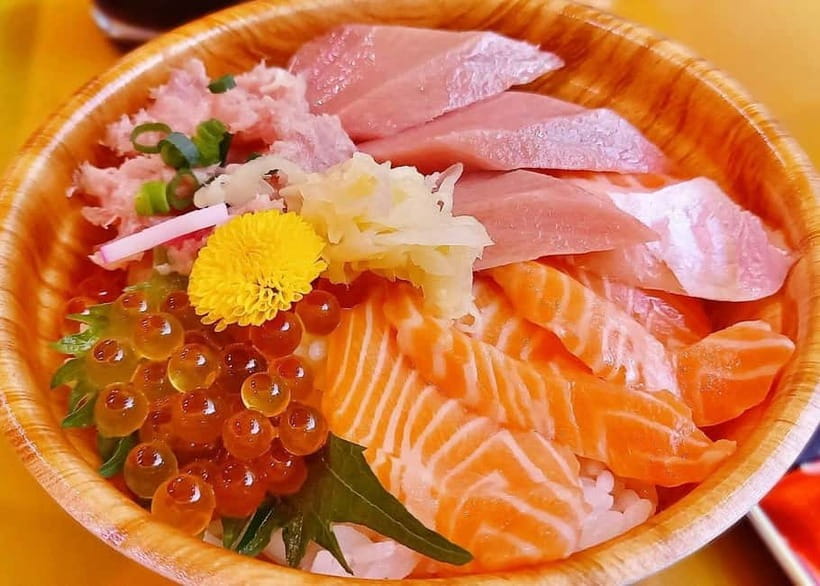
- Eating your way through Tsukiji Outer Market
- The walk to Hama-rikyu Gardens
- Finding calm in Hama-rikyu Gardens
- The optional tea and wagashi stop
- How much walking and time should you expect?
- Languages, group comfort, and accessibility
- What to bring and how to behave
- Who will enjoy this experience most?
- Is $31 good value?
- Should you book this Tsukiji and Hama-rikyu tour?
- FAQ
- Where does the tour begin?
- Where does the tour finish?
- How long does the experience last?
- Is transportation included?
- Is admission to Hama-rikyu Gardens included?
- Are food and market snacks included?
- How much does the matcha and wagashi tasting cost?
- Which languages are available?
- What should I bring?
- Is the tour suitable for wheelchair users?
Key points at a glance
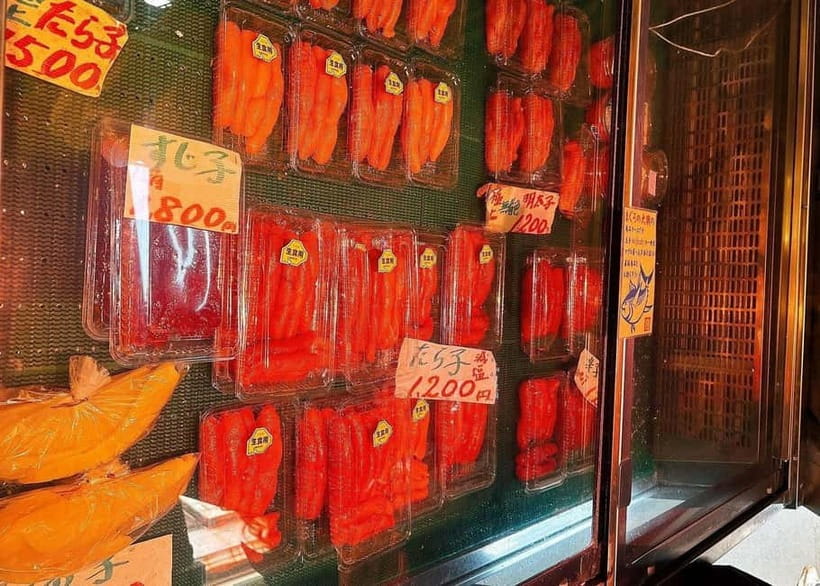
- Tsukiji still rewards curious eaters: Explore narrow lanes lined with seafood, produce, cooked foods, sweets, and small specialty shops.
- The market’s scale is striking: The area handles about 480 types of seafood and 270 types of produce.
- Tsukiji Hongwanji sets a quiet tone: Spend about 15 minutes at this distinctive temple before entering the food market.
- Hama-rikyu changes the mood completely: After the market, you walk about 15 minutes to an Edo-period garden with ponds, flowers, and city views.
- Matcha is optional: A garden tasting with wagashi costs about 1,000 yen and is paid on site.
- This is a walking tour: Comfortable shoes and water matter more here than fancy clothing or elaborate planning.
Why this short Tokyo tour works

Tokyo can feel like a city of disconnected districts. One minute you are beside a temple, the next you are squeezing through a food market, and soon after you are looking across a quiet pond toward office towers. This tour makes those changes easy to understand.
The route is also a sensible length for a morning or afternoon. You get three distinct settings without spending the whole day on public transport. The guide meets you outside Starbucks Coffee Tsukiji Station Front, then leads you to Tsukiji Hongwanji Temple, Tsukiji Outer Market, and Hama-rikyu Gardens.
The price is modest for a guided experience in central Tokyo. You pay for the guide and garden admission, while food remains your choice. That arrangement suits you if you want to control your spending. You can snack freely, buy nothing, or select one or two items that look especially good.
The timing is less rigid than a museum tour. The stated duration ranges from 150 minutes to three hours. The published route includes 15 minutes at the temple, 45 minutes at the market, a 15-minute walk, and about an hour in the gardens. Market queues, browsing, and the optional tea service can stretch the outing.
More Market Tours in Tokyo
- Tokyo Tsukiji Fish Market Food and Culture Walking Tour
★ 5.0 · 3,184 reviews - Tokyo: Tsukiji Fish Market Food and Walking tour
★ 5.0 · 1,724 reviews - Tokyo: Tsukiji Fish Market Guided Walking Tour
★ 4.9 · 1,397 reviews
Starting at Tsukiji Hongwanji Temple
The first stop is Tsukiji Hongwanji Temple, reached from the meeting point at Starbucks near Tsukiji Station. You spend about 15 minutes here with the guide.
This is a useful opening stop because it gives you a quiet place to get your bearings before entering the market. The temple is known for its unusual architecture and peaceful atmosphere. It does not feel like a standard introduction to Tokyo, and that is part of its appeal.
Your guide can also explain the connection between the temple and the surrounding district. The stop is short, so you should not expect an extended religious tour or a long architectural lecture. Instead, think of it as a calm pause, a chance for a few photographs, and an introduction to the area’s past.
Please behave respectfully. Keep your voice low, follow any posted rules, and avoid treating the site like a film set. The tour includes a guided visit, but it remains a functioning place of worship.
Eating your way through Tsukiji Outer Market
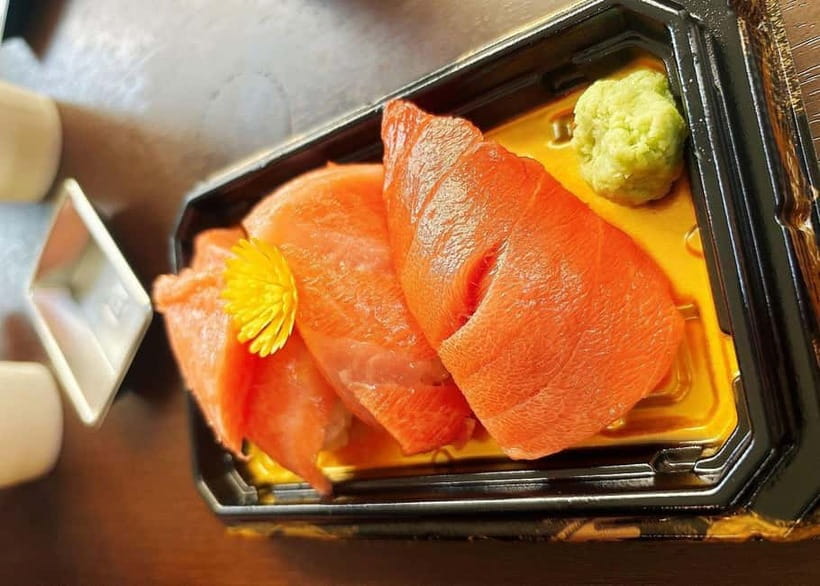
The market portion lasts about 45 minutes, followed by free time for shopping. This is the most active part of the route, and it is where the tour earns its keep for many people.
Tsukiji has an 83-year history as one of Tokyo’s central wholesale markets. The food range is enormous, with approximately 480 kinds of seafood and 270 kinds of produce handled in the market area. You will not inspect every category in 45 minutes, of course. The point is to see how much variety is packed into a small network of lanes.
The guide helps you read the scene. That matters in Tsukiji, where signs, shop displays, food names, and unwritten habits can be confusing at first. You can ask what something is, how it is usually eaten, and which foods make sense for a quick snack.
Possible bites include:
- Grilled scallops
- Tamagoyaki, a sweet Japanese omelette
- Sushi
- Wagyu skewers
- Matcha sweets
Food is not included, so bring some yen if you want to sample several items. You are not required to eat, and the tour works for casual snackers as well as people eager to try unfamiliar foods. Still, the market is best enjoyed with an appetite. A large breakfast would leave you admiring the food rather than tasting it.
The narrow lanes are part of the experience, but they also create the chief practical challenge. You need to stay close to the guide, watch your step, and avoid blocking shop entrances. Keep your bag compact and your camera ready, but do not stop in the middle of a busy passage for a long photo session.
The 45-minute guided portion gives you a useful introduction. The following free time lets you return to a stall, shop for food, or take a closer look at something that caught your eye. Since the exact amount of free time can vary, keep your purchases manageable and remain aware of the meeting instructions.
The walk to Hama-rikyu Gardens
After the market, the group walks for about 15 minutes to Hama-rikyu Gardens. There is no included vehicle transfer, and transportation to or from the attractions is not part of the tour.
This short walk helps the itinerary make sense. You leave the tight market lanes and move into a more open part of Tokyo. The change is not just physical. It shifts you from everyday food commerce to a former Edo-period garden.
You should wear comfortable shoes from the beginning. The tour includes the temple, market lanes, city pavement, and garden paths, so this is not a good outing for stiff new shoes. Bring water, especially in warm weather, and carry only what you need.
More fish market tours in Tokyo:
- Tokyo Sushi Making Class in Tsukiji with Professional Chef
★ 5.0 · 1,177 reviews - Tsukiji Fish Market Guided Tour and Sushi Making with Pro Chef
★ 5.0 · 775 reviews - Tokyo: Tsukiji Fish Market Food and Culture Walking Tour
★ 4.7 · 757 reviews - Tsukiji Fish Market: Street Food & Culture Walking Tour
★ 5.0 · 669 reviews
Finding calm in Hama-rikyu Gardens
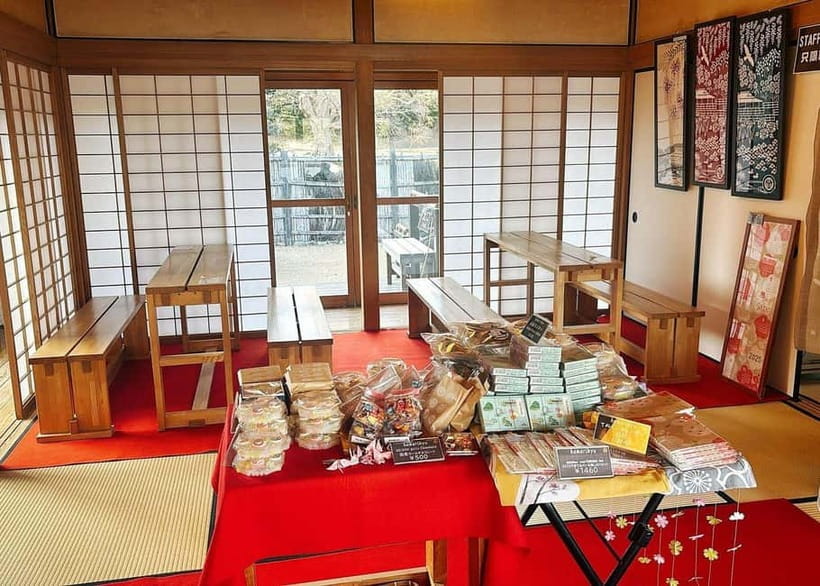
Hama-rikyu Gardens was created during the Edo period more than 370 years ago. You spend about an hour here with a mix of guided explanation and free time.
The garden provides a welcome contrast to Tsukiji. Instead of shop signs and food counters, you get carefully arranged paths, open views, seasonal flowers, and a quieter pace. Tokyo’s skyline remains visible, which gives the garden its particular character. You are not escaping the city completely. You are seeing how old and new Tokyo occupy the same frame.
The flowers vary with the season, so the exact display cannot be promised. If you visit during a strong blooming period, the colors may become a major part of the stop. At another time of year, the garden’s ponds, paths, trees, and skyline views may matter more than flowers.
The guide’s role is helpful here because Japanese gardens often use design choices that are easy to miss. You may learn why certain views are framed in a particular way, how the garden fits the Edo period, or how to behave in a traditional setting. The hour also leaves space to walk quietly and take photographs without constant commentary.
For an additional fee of about 1,000 yen, you can join a matcha and wagashi tasting in the gardens. This is optional and paid on site. It can be a good choice if you want a slower cultural moment after the market, but it is not necessary to enjoy the tour. If your main goal is garden time, you may prefer to use that portion for your own walk.
The optional tea and wagashi stop
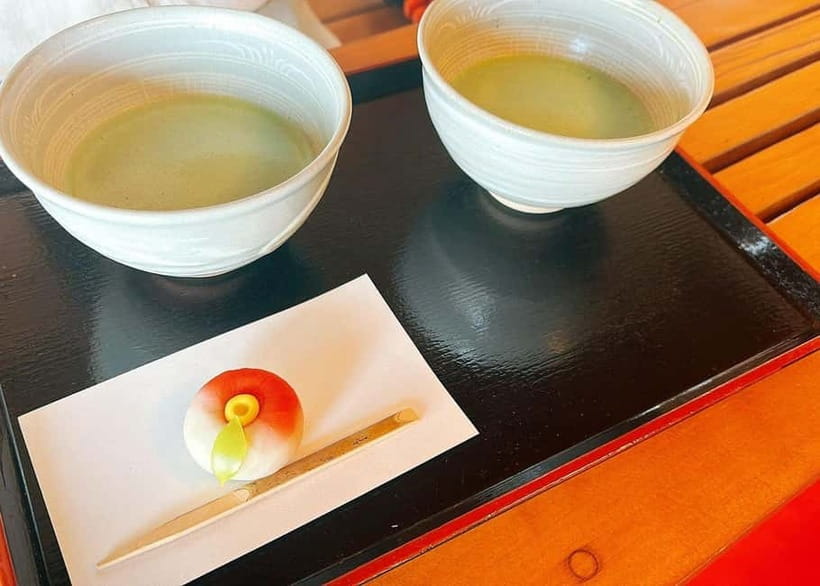
Matcha and wagashi offer a different kind of food experience from Tsukiji. At the market, you are likely to eat while standing or moving between stalls. In the garden, the tea service gives you a chance to pause and learn about Japanese etiquette.
The extra cost is reasonable at about 1,000 yen, but you should treat it as an add-on rather than part of the $31 tour price. Bring enough yen if you think you will want it. The provided details do not specify the exact wagashi selection or tasting format, so ask your guide what is available that day.
This stop suits you if you enjoy small cultural details and do not mind spending a few extra minutes seated. If you are focused on shopping, photography, or a quick finish, skip it and enjoy the garden at your own pace.
How much walking and time should you expect?
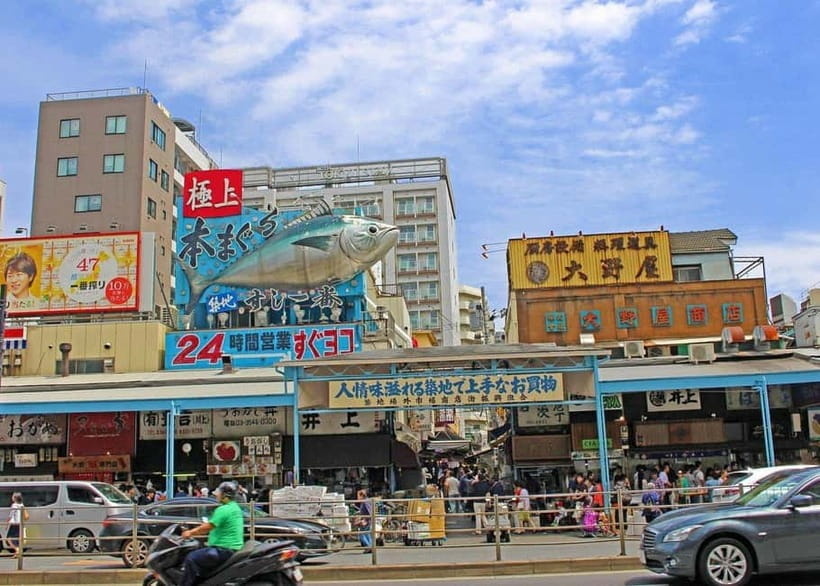
The route includes a 15-minute temple visit, 45 minutes at Tsukiji, a 15-minute walk, and one hour at Hama-rikyu. That totals roughly two hours and 15 minutes before allowing for extra market browsing or tea.
The advertised duration is 150 minutes to three hours. This broad range is worth noting. You should not book a tight restaurant reservation immediately after the tour unless you have plenty of spare time. Market food, group pace, and the optional tasting can all affect the finish.
There is no transportation included between the attractions. You meet at the specified Starbucks and finish at Hama-rikyu Gardens. That ending is useful because you can continue exploring the garden, leave for another part of Tokyo, or simply slow down after the guided portion.
Languages, group comfort, and accessibility
Live guiding is offered in Chinese, English, French, Korean, and Spanish. If you need a language other than English, select it carefully when booking and confirm availability for your chosen time.
The experience is described as wheelchair accessible in one part of the information, but it is also marked as unsuitable for wheelchair users and people with mobility impairments elsewhere. That is a clear inconsistency. Because the route includes narrow market lanes and considerable walking, you should contact the provider before booking if you use a wheelchair or have limited mobility.
The tour is also listed as unsuitable for pregnant women. You should take that restriction seriously and choose a gentler outing if needed.
No group size is provided, so you should not assume a private or small-group format. Ask before booking if the size of the group is important to you.
What to bring and how to behave
Comfortable shoes are the key item. Add water, a camera, and money for optional food and the tea service.
Smoking is not allowed during the activity. At the market, use care around food displays, shop entrances, and other people carrying hot dishes. Ask before photographing close-up portraits, and let the guide handle questions about stalls and local customs.
I would also avoid carrying a large suitcase. The market’s narrow passages will be easier to manage with a small day bag.
Who will enjoy this experience most?
I would recommend this tour if you want a compact introduction to three sides of Tokyo:
- Food culture at Tsukiji
- Religious and architectural interest at Tsukiji Hongwanji
- Edo-period garden design at Hama-rikyu
It is especially good for first-time visitors who want help interpreting the market. You get enough guidance to understand what you are seeing, but free time remains for independent browsing.
Food lovers should come hungry. The range of seafood and produce makes the market more interesting than a simple row of snack stalls. You can also choose familiar foods such as omelette or sweets if you are not ready for raw seafood.
The tour is less suitable if you dislike crowds, do not want to walk, or prefer a slow, private garden visit. The market is the busiest and most demanding section, while the garden provides the quietest hour.
Is $31 good value?
At $31 per person, the tour is fairly priced for a guided walking route that includes Hama-rikyu admission. The guide is the main value. Without help, you can visit the market and garden independently, but you may miss useful context and spend more time working out where to go.
Food is extra, and that can affect your final cost. A few snacks may be inexpensive, while several tastings and shopping purchases can quickly add up. The tour itself does not bundle meals, so you remain in control of your budget.
The best value comes from using the guide for orientation, then using your free time selectively. You do not need to buy every appealing food item. Choose one or two specialties, listen carefully, and save room for the garden.
Should you book this Tsukiji and Hama-rikyu tour?
Book it if you want a guided introduction to Tsukiji and prefer an organized route over figuring out the area alone. The combination of temple, market, and garden gives you a fuller picture of Tokyo than a food-only visit, and the included garden admission helps support the price.
Skip it if you want a long, unhurried market visit or need a fully accessible route. Also check the mobility details directly because the supplied information gives conflicting accessibility guidance.
For most able-bodied visitors with comfortable shoes, a flexible schedule, and interest in Japanese food, this is a useful half-day choice. Arrive ready to walk, bring some yen, and leave enough time afterward to continue exploring Hama-rikyu at your own pace.
FAQ
Where does the tour begin?
The meeting point is in front of Starbucks Coffee Tsukiji Station Front.
Where does the tour finish?
The tour finishes at Hama-rikyu Gardens.
How long does the experience last?
The stated duration is between 150 minutes and three hours. The route includes guided visits, market free time, walking, and garden time.
Is transportation included?
No. This is a walking tour, and transportation to and from the attractions is not included.
Is admission to Hama-rikyu Gardens included?
Yes. The garden admission fee is included.
Are food and market snacks included?
No. Food at the market is optional and must be paid for separately at the stalls.
How much does the matcha and wagashi tasting cost?
The optional tasting costs about 1,000 yen and is paid on site.
Which languages are available?
Live guides are available in Chinese, English, French, Korean, and Spanish.
What should I bring?
Bring comfortable shoes, water, and a camera. You should also bring money if you want market food or the optional tea tasting.
Is the tour suitable for wheelchair users?
The information is inconsistent. It is described as wheelchair accessible in one place but also marked unsuitable for wheelchair users and people with mobility impairments. Contact the provider before booking to confirm the current route.
More Shopping Tours in Tokyo
- Tsukiji Fish Market Small-Group Food Walking Tour
★ 5.0 · 621 reviews - Tokyo: Tsukiji Fish Market Sushi Making Class with Pro Chef
★ 4.9 · 506 reviews - Tokyo Food Tour Taste Fresh Delights at Tsukiji Market
★ 5.0 · 429 reviews - Tokyo Tsukiji Fish Market Tour and Sushi Making Lesson
★ 5.0 · 390 reviews
Just added around Tokyo
- Tokyo 6hr Instagram Highlights Private Tour with Licensed Guide★ 5.0 · 38 reviews
- Tokyo Small Group Tour with Guide★ 4.5 · 38 reviews
- Tokyo Sumo Experience with Live Show & Audience Challenge★ 5.0 · 38 reviews
- Very popular in Harajuku♡Animal petting zoo★ 4.6 · 39 reviews
- Japanese Food Cooking Class in Asakusa, Tokyo★ 5.0 · 39 reviews
- Ramen Making from Scratch with Tokyo Mom(Vegan Option Available)★ 5.0 · 39 reviews
- Tokyo: Kimono Rental inside Shinjuku Gyoen National Garden★ 4.9 · 39 reviews
- Tokyo JDM Night: 600hp C63s AMG Edition 1 (Private)★ 4.9 · 39 reviews
Fish Market Tours, compared.
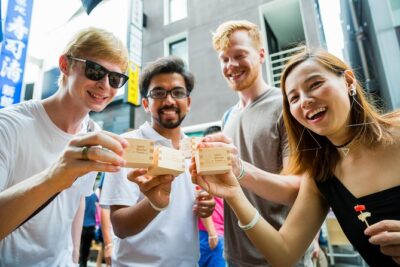
Tokyo Tsukiji Fish Market Food and Culture Walking Tour
Read our review →


Tokyo Sushi Making Class in Tsukiji with Professional Chef
Read our review →
Tsukiji Fish Market Guided Tour and Sushi Making with Pro Chef
Read our review →Tsukiji Fish Market Food and Culture Walking Tour
Read our review →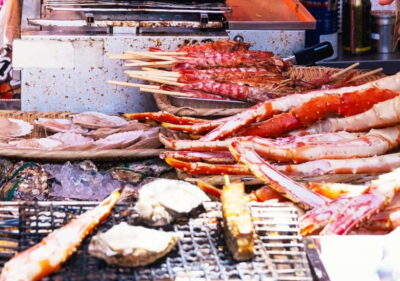
Tsukiji Fish Market: Street Food & Culture Walking Tour
Read our review →
Tsukiji Fish Market Small-Group Food Walking Tour
Read our review →Browse the lists this tour appears in