
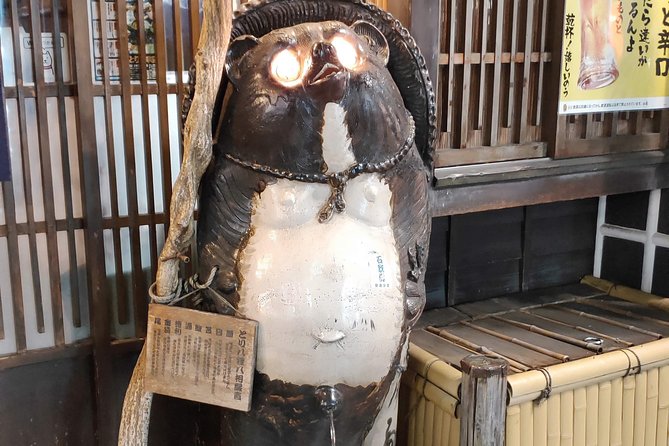
Reviewed · FOOD & DRINK
All-inclusive Hiroshima Nighttime Food and Cultural Immersion
Hiroshima tastes better after dark. This three-hour evening tour takes you through Hon Dori Shotengai and into three small standing bars or local restaurants, with three foods and three alcoholic or non-alcoholic drinks included. I like the guide-led choice of venues, especially for first-time visitors who would have trouble finding these places alone, and I like that the food comes with conversation about Hiroshima and everyday customs.
The main thing to consider is the format: at least some stops may involve standing while you eat. The tour is also a better fit for people who enjoy drinks and small local eateries than for anyone seeking a formal dinner or a careful tasting menu. At $119 per person, the value depends on how much you appreciate guidance, variety, and access to places you might otherwise pass by.
In This Review
- Key points to know before booking
- Starting at Tiffany’s at 6:30 pm
- Walking through Hiroshima’s Hon Dori Shotengai
- Three local stops, three different moods
- Why the standing bars are worth trying
- The guides make or break the evening
- The food: generous, varied, and not fully predictable
- Dietary needs and group dynamics
- Cultural context beyond the plate
- Is $119 a fair price?
- Who should book this Hiroshima night tour?
- Should you book it?
- FAQ
- How long does the Hiroshima nighttime food tour last?
- What time does the tour start?
- Where does the tour meet?
- Where does the tour end?
- How much food and drink is included?
- Can non-alcoholic drinks be chosen?
- What is the minimum age to participate?
- Is this a private tour?
Key points to know before booking
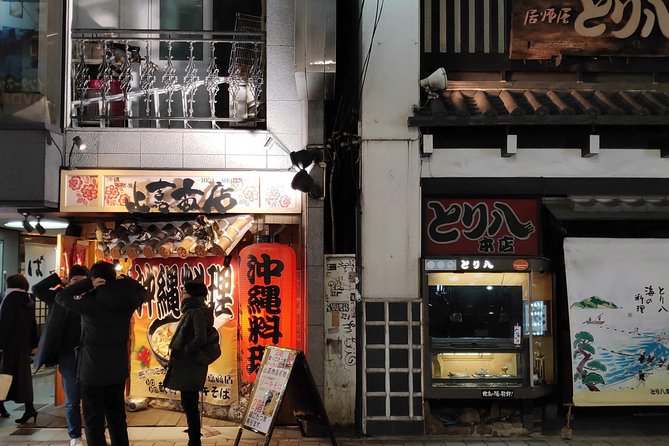
- Three stops in Hon Dori Shotengai: You visit three different standing bars or small local restaurants during one evening.
- Three foods and three drinks included: You can choose alcoholic or non-alcoholic drinks, and the meal is intended to provide a full dinner.
- Guides open doors for you: Ken, Kensuke, Alex, Trevor, and Kevin are praised for selecting unfamiliar places, explaining customs, and helping with orders.
- Local food rather than polished sightseeing: Expect casual venues, friendly conversations, and dishes such as okonomiyaki, sushi, fried foods, soup, egg, squid, gansu, and red eyes.
- Dietary needs can be accommodated: Tell the guide in advance so food choices can be adjusted.
- Simple evening logistics: Meet at 6:30 pm in front of Tiffany’s at 5-3 Shintenchi, then return to the same meeting point after about three hours.
Starting at Tiffany’s at 6:30 pm
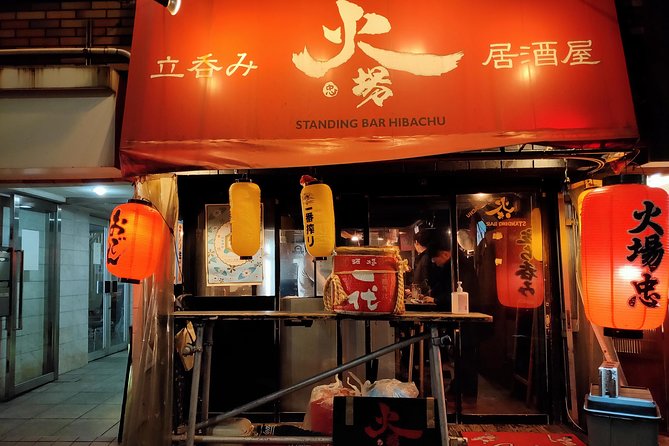
The meeting point is in front of Tiffany’s at 5-3 Shintenchi, in Hiroshima’s Naka Ward. This is useful because you do not need to track down a particular restaurant entrance in an unfamiliar nighttime neighborhood. You meet the guide first, then let that person handle the route.
The activity begins at 6:30 pm and ends back at the meeting point. Plan on roughly three hours, though the evening can feel longer if conversations continue over drinks. The route is near public transportation, so it should be practical to connect with the rest of your evening plans, although I would avoid scheduling anything that requires you to leave at an exact minute.
This is a private activity, meaning only your own group participates. That can make a real difference inside small neighborhood bars. A couple might get a more personal evening, while a family or group of friends can settle into its own rhythm without being mixed with strangers. Group discounts may also be available, so larger parties should check the current booking terms.
More Food Tours in Hiroshima
- Hiroshima Izakaya Food and Drink Night Tour
★ 5.0 · 297 reviews - Hiroshima: Food and Culture Guided Walking Tour with Dinner
★ 4.9 · 212 reviews - Hiroshima Saijo Sake Tasting Tour with visit to 7 Breweries
★ 5.0 · 104 reviews
Walking through Hiroshima’s Hon Dori Shotengai
Hon Dori Shotengai serves as the main setting for the evening. You do not simply walk from one restaurant to another. The guide uses the shopping district to explain how local people spend time at night and to point out places that are not strictly about food.
That wider view matters. A food tour can become a checklist of dishes, but this one aims to show the social side of an evening in Hiroshima. You get a look at the small bars and casual eateries that are easy to ignore when you are focused on major sights.
The route also helps with a common problem in Japan: a restaurant can look inviting from the outside but still feel hard to enter when you cannot read the menu or explain what you want. Your guide handles much of that uncertainty. Several guides, including Alex, Trevor, and Ken, are praised for taking people to places they would not have chosen from a guidebook or website.
Three local stops, three different moods
The central promise is three food and drink stops. Each includes one of the three drinks and a portion of the included food, so you spread the evening across several places instead of eating one large meal in a single restaurant.
The exact venues and dishes are chosen by the guide, which is part of the fun and also part of the uncertainty. You are not booking a fixed menu with named restaurants. You are trusting the guide to choose places that suit the group and reflect what is available that night.
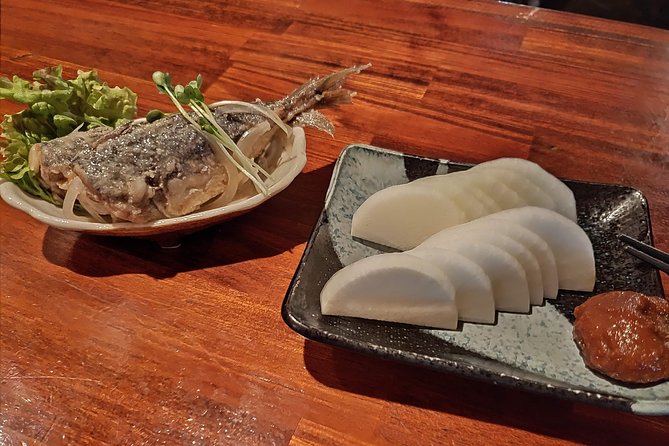
Past food choices have included sushi, fried dishes, soup, egg, squid prepared in two ways, gansu, red eyes, and Hiroshima-style okonomiyaki. That range gives you more than one narrow taste of Japanese food. You might encounter familiar items alongside dishes that would be difficult to identify or order without help.
The drinks can be alcoholic or non-alcoholic. Sake has been part of some evenings, and one particularly enthusiastic evening lasted longer because the group enjoyed it so much. If you drink alcohol, remember that Japan’s minimum drinking age is 20. Participants must be at least 13 years old, so younger members of a family can join, but the drinking option is restricted by age.
Why the standing bars are worth trying
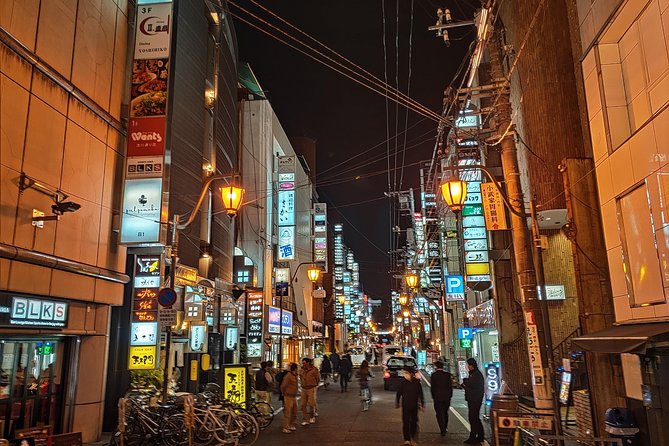
The phrase food stalls can sound like outdoor counters or quick street snacks. In practice, the experience includes standing bar restaurants, sometimes called tachinomiya. You should be prepared to stand and eat at some stops, although the operator says there is generally seating at at least one venue.
This is the most important practical detail to understand before paying. One person found the food good and the evening enjoyable but felt the description did not make the standing format clear enough. I would book this only if you are comfortable with a casual setup and limited space.
The reward is access. Small standing bars can be places where locals stop for a quick drink, a plate of food, and conversation. They are not designed around international visitors, and that is exactly why a guide can be useful. Trevor, in particular, has helped bridge conversations between English-speaking groups and local people by translating.
You may meet curious and friendly people at a bar, but the social contact is not something that can be guaranteed. It depends on the night, the venue, and the mood of the people there. Still, the structure of the tour gives you a much better chance of seeing this side of Hiroshima than an evening spent only in large restaurants near the main sightseeing routes.
A completely different kind of day out in Hiroshima:
- Peaceful Hiroshima & Miyajima UNESCO 1 Day Bus Tour
★ 5.0 · 5,309 reviews - Hiroshima: Hiroshima and Miyajima UNESCO Sites 1-Day Tour
★ 4.9 · 2,330 reviews - Hiroshima / Miyajima Full-day Private Tour with Government Licensed Guide
★ 5.0 · 1,298 reviews - Hiroshima Historical Walking Tour – Why A-Bomb was Dropped
★ 4.8 · 893 reviews
The guides make or break the evening
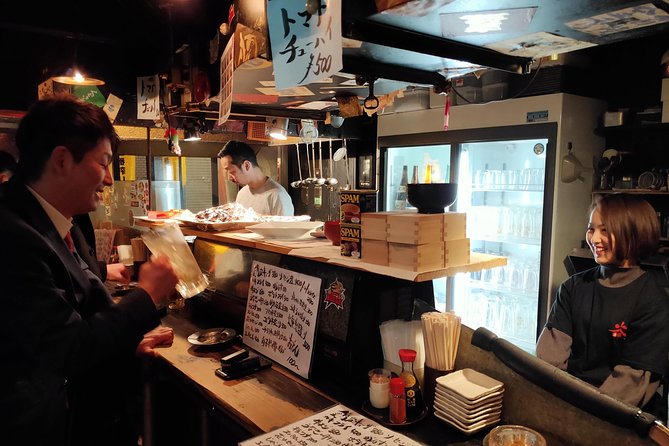
The guide is the heart of this experience. The strongest praise goes to guides who are personable, attentive, and willing to explain what you are eating rather than simply lead you through the door.
Ken is repeatedly described as relaxed, friendly, and good at putting groups at ease. He has taken couples and multigenerational families through unfamiliar restaurants, asking questions and keeping everyone involved. Kensuke has received special praise for handling an allergy without taking away from the food experience.
Alex is noted for selecting local bars, chatting with each member of the group, and making an effort to keep the night enjoyable. Trevor is praised for his explanations of food and customs, as well as his ability to translate conversations with local people. Kevin is described as easygoing and entertaining, with a strong feel for Hiroshima’s izakaya culture.
Guide assignments can vary, so you may not get a particular person. The recurring pattern is encouraging: the guides are not there only to point out restaurants. They help you order, explain the setting, and make a small room feel less intimidating.
The food: generous, varied, and not fully predictable
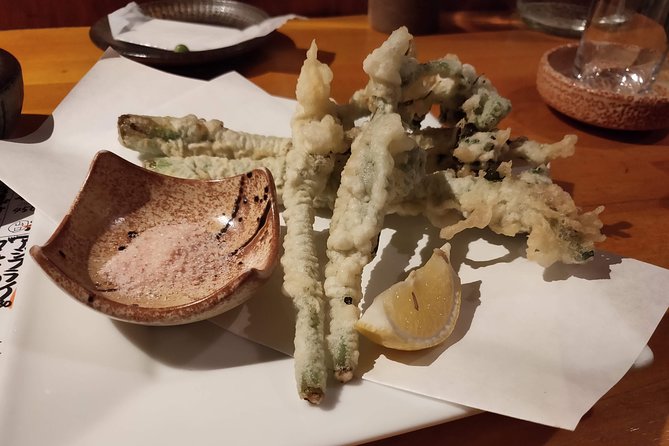
You receive three foods and three drinks, which is meant to add up to a complete dinner. Several people finished feeling very full, with one person comparing the amount to three meals sampled in one sitting. The food is served across three places, so you get variety without needing to commit to a full portion of one unfamiliar dish.
That arrangement suits curious eaters. You can try local items in small portions, then move on before one dish becomes the entire evening. Okonomiyaki has been a highlight for some groups, while others enjoyed the less expected items, including gansu and different squid preparations.
The tradeoff is consistency. Since the guide selects the venues and dishes, quality may not be even at every stop. One strongly negative account described the evening as too focused on alcohol and found two of the three food stops disappointing. That is a useful warning. The tour is not a guarantee of three excellent restaurant meals, and the relaxed bar setting is more important to the design than fine dining.
I would also avoid arriving after a large meal. You need room for three rounds of food, and eating too much beforehand would waste much of what you are paying for. At the same time, do not expect a highly structured tasting menu with precise portions or a printed explanation of every ingredient.
Dietary needs and group dynamics
Dietary requirements can be accommodated if you tell the guide. This is a real strength, but you should communicate the need clearly at booking or before the evening rather than waiting until the first restaurant.
One person with an allergy found that Kensuke adjusted the meal without sacrificing the overall experience. That suggests the guide is actively involved in food selection instead of leaving you to solve every menu problem on your own.
Small groups also make food choices easier. A group of four found it simpler to agree on dishes without the usual conflict between different diets. Because the activity is private, your party can discuss preferences directly with the guide.
Still, accommodation does not mean every dish will be available in every venue. If your diet is strict, ask what can be supported before booking. The supplied information confirms that dietary requirements can be handled, but it does not promise a dedicated vegetarian, vegan, gluten-free, or allergy-free menu.
Cultural context beyond the plate
The cultural side works best when you treat the evening as a walk through ordinary nightlife rather than a lecture. Your guide can explain local food, drinking habits, restaurant etiquette, and the role of small bars in Hiroshima’s social life.
You also get the chance to see how locals use the city at night. The guide points out places not connected directly with food, but still useful for understanding how people spend their evenings. That adds texture to a short visit, especially if you have already seen Hiroshima’s memorial sites and want another side of the city.
Conversation is a major part of the value. Guides ask questions, share stories, and help you talk with people at the bars. You should not expect a formal history tour or a detailed survey of every Hiroshima landmark. The information is tied to food, neighborhoods, customs, and daily life.
That focus is a good match for someone who wants practical cultural contact. If you want a serious historical walking tour, choose a separate experience and use this evening for eating and socializing.
Is $119 a fair price?
At $119 per person, this is not the cheapest way to have dinner in Hiroshima. If your only goal is to eat three foods and have three drinks, you could likely spend less by choosing restaurants yourself.
The price makes more sense when you count the service around the meal. You get a guide, navigation through the nighttime streets, help finding three places, assistance with ordering, cultural explanation, and translation when conversations with local people begin. You also avoid the risk of walking into a tiny bar, misunderstanding the menu, and leaving without discovering what makes it special.
The private format adds value for couples, families, and friends who want their own group. It is also useful during a short stay, when you do not have time to test several restaurants on separate nights.
The value drops if you dislike alcohol, standing meals, casual food, or guide-selected venues. Non-alcoholic drinks are available, so drinking is not required, but the evening still has a bar-centered feel. One negative experience also raises a fair concern about food quality. I would think of the fee as payment for access and guidance first, and dinner second.
The tour has a 4.6 rating from 60 reviews and a 92 percent recommendation rate, which points to a strong overall record while leaving room for uneven nights. That balance fits the product: it is a flexible local evening, not a controlled restaurant package.
Who should book this Hiroshima night tour?
I would recommend it to you if you:
- Want to try small local restaurants that are difficult to find alone
- Enjoy casual food and drinks more than formal dining
- Like learning through conversation
- Are curious about Hiroshima nightlife beyond major attractions
- Want a guide to help with menus, customs, and local interaction
- Have only a short time in Hiroshima and want dinner plus orientation
It is especially suited to couples, families with participants aged 13 or older, and private groups that enjoy trying several foods. It can also work well as a first evening in the city, since the guide gives you an introduction to local eating habits and may point out places worth returning to later.
I would skip it if you need guaranteed seating, a fixed menu, upscale restaurants, or exact control over every dish. It is also a poor match for someone who sees food as secondary to sightseeing. The evening centers on eating, drinking, walking, and talking.
Book at least 24 hours before the 6:30 pm start if you want the option of a full refund. Cancellations or changes made less than 24 hours before the start time are not accepted for a refund. The operator is Pinpoint Traveler, Inc.
Should you book it?
Book this tour if you want Hiroshima to feel less like a set of sights and more like a city where people eat, drink, and chat after work. The best parts are the three-stop format, the unusual local venues, and guides such as Ken, Kensuke, Alex, Trevor, and Kevin who help you cross the gap between looking at a restaurant and actually joining in.
Go in with the right expectations. You may stand, the food quality can vary, and the guide chooses the venues. For an open-minded eater who values access and local company, $119 can be a fair price for an evening you would have difficulty arranging alone.
FAQ
How long does the Hiroshima nighttime food tour last?
The experience lasts approximately three hours.
What time does the tour start?
It starts at 6:30 pm.
Where does the tour meet?
Meet in front of Tiffany’s at 5-3 Shintenchi, Naka Ward, Hiroshima, 730-0034, Japan.
Where does the tour end?
The activity ends back at the meeting point.
How much food and drink is included?
Three different foods and three alcoholic or non-alcoholic drinks are included.
Can non-alcoholic drinks be chosen?
Yes. You can choose alcoholic or non-alcoholic drinks.
What is the minimum age to participate?
All participants must be at least 13 years old. The minimum drinking age in Japan is 20.
Is this a private tour?
Yes. Only your group participates in the activity.
Just added around Hiroshima
- Hiroshima & Miyajima: Private Full-Day Tour with a Local Guide★ 5.0 · 39 reviews
- Hiroshima and Miyajima 1 Day Walking Tour★ 5.0 · 43 reviews
- Hiroshima History Tour : A-Bomb Dome, Peace Memorial & City★ 5.0 · 43 reviews
- The Journey of Hiroshima from Tragedy to Peace★ 4.8 · 44 reviews
- Cultural Activities :Kimono, tea ceremony, Calligraphy and Amulet★ 5.0 · 44 reviews
- Miyajima: Private Rickshaw Tour to Itsukushima Shrine★ 4.9 · 45 reviews
- Hiroshima Private Tour: Best Highlights in a Day★ 5.0 · 49 reviews
- Hiroshima & Miyajima All-Inclusive Tour w/Licensed guide Pancho★ 5.0 · 54 reviews
Food & Drink, compared.
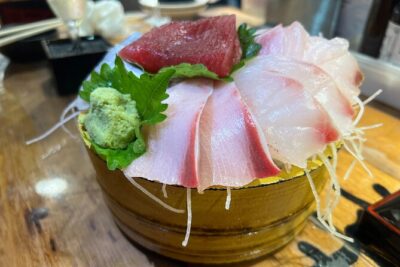
Shinjuku Food Tour (13 Dishes at 4 Local Eateries)
Read our review →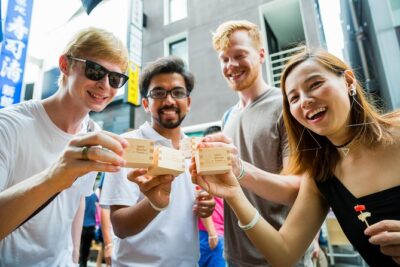
Tokyo Tsukiji Fish Market Food and Culture Walking Tour
Read our review →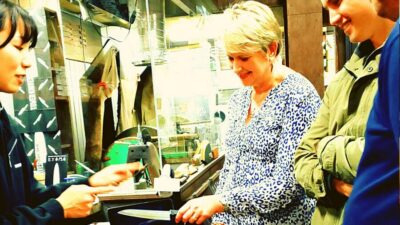
Shinsekai Food Tour with 13-15 Dishes at 5 Eateries
Read our review →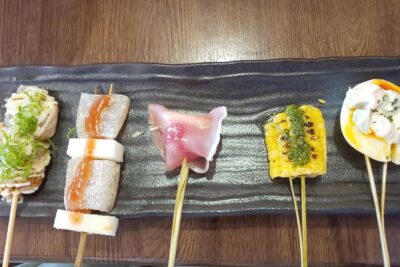
Osaka Food Tour: 13 Dishes at 5 Local Eateries
Read our review →
Shinjuku Food Tour (15 Dishes and 4 Eateries)
Read our review →
Best of Shinjuku: Izakaya Food Tour (4 Stops, 14+ Tastings)
Read our review →
Kyoto Night Foodie Tour in Gion (9+ dishes + 6 Sake tastings)
Read our review →
Hungry Osaka Street Food Tour:15 Tastings & 3 Drinks with a Local
Read our review →Browse the lists this tour appears in