
Reviewed · RAMEN & NOODLE TOURS
Experience Big soba knife Soba Making Class in Tokyo Kappabashi
Soba gets serious in Kappabashi. This compact class turns flour, water, and a wonderfully oversized knife into handmade Japanese noodles, then lets you eat the results. I like the hands-on four-step method and the fact that aprons, gloves, and several soba flavors keep the activity easy for first-timers. The main drawback is its short length: the noodle-making itself takes about 30 minutes, so this is a focused introduction rather than a full cooking workshop.
I also like the friendly, playful teaching style. One instructor managed to explain the process with humor despite not speaking English, and the staff take photos and video that can be sent to you. The class is limited to 15 people, but the restaurant can hold up to 30, so the setting should feel less cramped than the giant knife might suggest.
In This Review
- Key points to know before booking
- Making soba on Tokyo’s kitchen street
- Four steps from flour to noodles
- Adding water
- Kneading the dough
- Stretching the dough
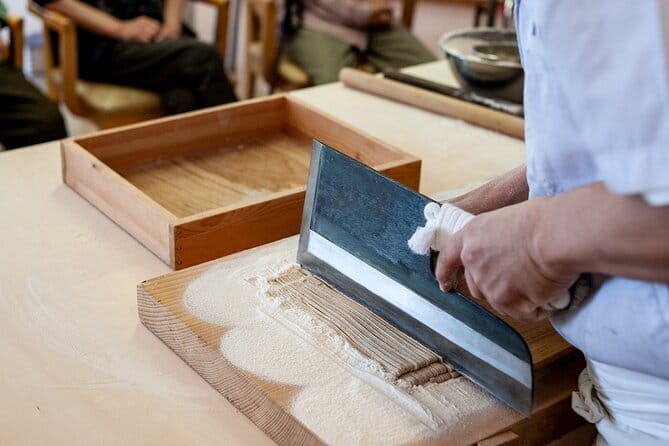
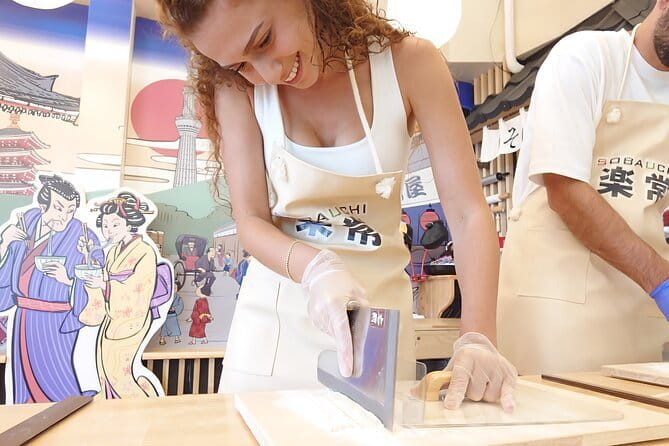
- Cutting with the big knife
- Eating the soba you just cut
- What the $51.33 price gives you
- Fitting the class into an Asakusa day
- How the teaching style affects the experience
- Who should book, and who should think twice
- Booking, cancellation, and small practical details
- Should you book this soba class?
- FAQ
- How long does the soba-making class last?
- Where does the class take place?
- How far is the studio from Sensoji Temple?
- Is food included in the price?
- Are aprons and gloves provided?
- Can people with buckwheat allergies take part?
- How many people can join the class?
- Can I cancel for a full refund?
Key points to know before booking
- You make soba from Nagano buckwheat flour: The class covers adding water, kneading, stretching, and cutting.
- The big soba knife is part of the fun: You use a traditional-style knife designed to cut long, thin noodles.
- You eat what you make: Your noodles are cooked for you and served as a snack or meal, with takeout also available.
- Kappabashi adds useful Tokyo flavor: The class sits on the famous kitchen-equipment street, about 25 minutes from Sensoji Temple.
- The class is short and tightly organized: Expect about 50 minutes overall, with roughly 30 minutes devoted to making the noodles.
- Buckwheat allergies are a firm restriction: Anyone with a buckwheat allergy cannot enter the restaurant.
Making soba on Tokyo’s kitchen street
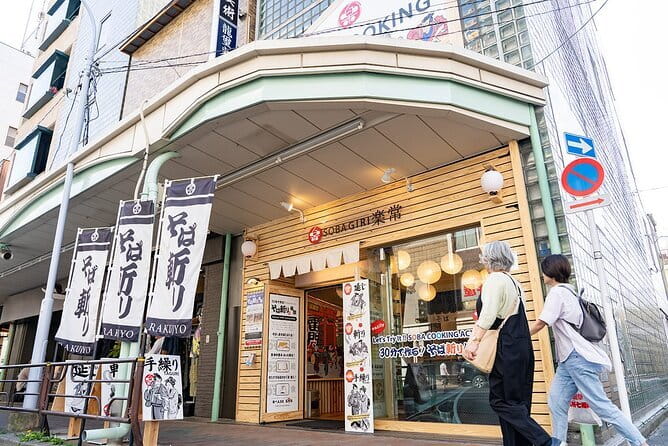
Kappabashi, also called Kappabashi Dogugai, is one of Tokyo’s best areas for food lovers who want more than a standard sightseeing stop. The street is known for professional cooking tools and restaurant supplies, so you are surrounded by the working side of Japanese food culture before you even pick up the knife.
The class takes place at Open Kitchen Studio in Matsugaya, in the Asakusa area. The address is 3-chome 1-12 Matsugaya Center Building, Tokyo 111-0036. It is about 25 minutes from Sensoji Temple, making it easy to pair with a visit to Asakusa.
That location matters. You are not simply entering a generic cooking school in an isolated room. You are making a traditional Japanese food in a neighborhood where chefs shop for knives, pans, dishes, and other professional equipment. I would plan this class alongside a walk through Kappabashi rather than treating it as a stand-alone destination.
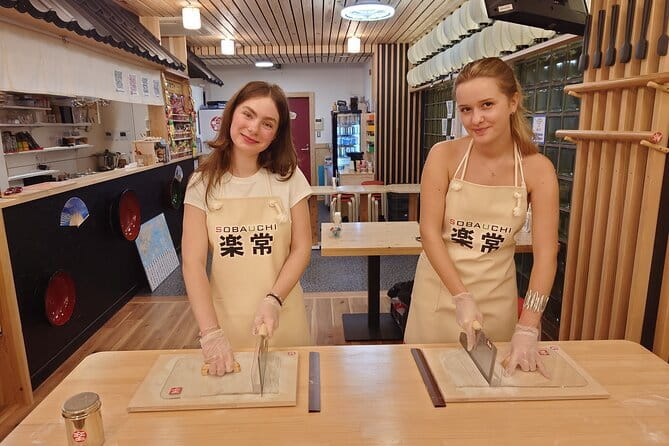
The ground-floor restaurant is described as spacious and open. It can accommodate up to 30 people, though this booking is limited to 15 participants. That smaller limit is useful because soba making involves close attention to the instructor, flour on the work surface, and a large cutting tool. You should have a better chance of following the demonstration than you would in a packed class.
More Ramen Tours in Tokyo
- Eat and Drink Like a Local: Tokyo Ueno Food Tour-Taverns&Ramen
★ 5.0 · 957 reviews - Ramen & Gyoza Cooking Class in Tokyo with Local Supermarket Visit
★ 5.0 · 823 reviews - Tokyo: Ramen Tasting Tour with 6 Mini Bowls of Ramen
★ 4.9 · 432 reviews
Four steps from flour to noodles
The method is simple to describe, but each stage gives you a different feel for how soba is made. The class uses buckwheat flour produced in Nagano Prefecture and teaches the process in four steps.
Adding water
The first stage is adding water to the buckwheat flour. Since the class focuses on soba without wheat flour, this is not quite the same as handling ordinary bread dough. The balance matters, and the instructor guides you through the process using the studio’s own teaching method.
This is a good place to pay attention rather than rush. A short class needs clear instructions, and the organized format helps keep the group moving. If you are cooking with children, this stage is also easy to understand because it begins with basic ingredients and visible changes in texture.
Kneading the dough
Next comes kneading. You get to work the dough yourself rather than watching a chef do everything. That makes the class more useful than a demonstration, especially if you want to remember the process after returning home.
The class is built for practical participation. The instructor explains the technique, then gives you time to try it. One especially useful detail from the teaching style is that the explanation can still work for English-speaking participants even when the instructor does not speak English. The humor, visual demonstration, and hands-on format help carry the lesson.
Still, you should not expect a long language lesson about soba history or regional varieties. The strength here is learning by doing. If your priority is making noodles with your own hands, the format works well. If you want a long culinary lecture, this is too brief.
A completely different kind of day out in Tokyo:
- Mt Fuji and Hakone 1-Day Bus Tour Return by Bullet Train
★ 5.0 · 26,383 reviews - 1-Day Tokyo Bus Tour
★ 5.0 · 14,250 reviews - Tokyo: TOKYO SKYTREE® Admission ticket
★ 4.5 · 11,192 reviews - Tokyo: teamLab Planets TOKYO Digital Art Museum Entry Ticket
★ 4.6 · 9,779 reviews
Stretching the dough
After kneading, you stretch the dough. This stage helps you see why handmade soba requires care. The dough must become broad and thin enough to cut into noodles, but it also needs to remain manageable.
The instructor’s role is important here. You are not left to guess what comes next, and the class is arranged around a clear sequence. That makes the activity approachable for beginners who may have never handled buckwheat dough.
The process also gives the class its cultural value. You are not merely assembling a meal from prepared ingredients. You are following a traditional food-making routine with simple materials and manual tools. The provider describes the activity as using no electricity, which gives it a hands-on, low-tech character.
Cutting with the big knife
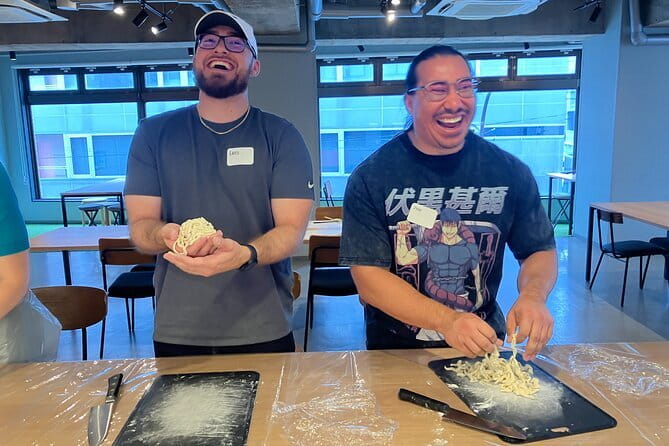
The final stage is the one most people will remember. You use a large knife made specifically for cutting soba into long, thin strands. It is an unusual tool, and the scale of it adds a little theater to a fairly modest cooking task.
The knife requires concentration. You want even noodles, but this is not a professional exam. The point is to try the technique, enjoy the process, and see the difference between handmade noodles and a packaged product.
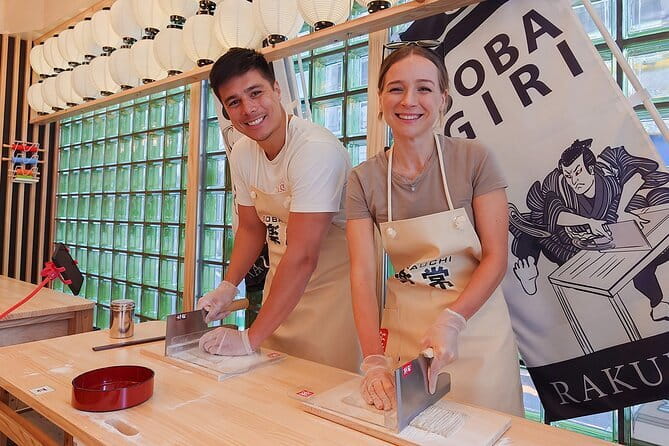
This part may be less comfortable for very young children or anyone who does not want to handle a large kitchen knife. The supplied information does not state a minimum age or give detailed safety rules, so families should confirm those points before booking. Aprons and gloves are available in various sizes, which makes the class easier to manage, but protective clothing does not replace careful supervision.
Eating the soba you just cut
The best payoff comes at the end. Your noodles are cooked by the chef, so you do not have to worry about turning your freshly cut strands into a finished meal. You can taste the soba you made as a snack or meal, and you can also take the noodles out with you.
That cooking service makes the price easier to justify. You are paying for instruction, equipment, ingredients, protective clothing, and a chance to eat the result. If the noodles were simply placed in a bag at the end, the class would feel more like a craft activity. Serving them gives you a proper finish.
The available food choices also add some flexibility. The class description says you can try the noodles in a variety of flavors. A vegan or no-pork flavor option costs an additional 500 yen. This surcharge is worth noting if you have dietary preferences, since it is not included in the advertised price.
The class also offers matcha soba as an option for 700 yen. In this version, matcha green tea is mixed into the soba flour. Three types of sake are available for an additional 1,500 yen, selected by the owner for comparison.
These extras are optional, not part of the basic price. I would treat matcha soba as a fun add-on if you want to compare flavors, while the sake option suits adults who want to turn the short class into more of a tasting experience. The core booking already includes a soba tasting, so you do not need to add anything to get the main reward.
What the $51.33 price gives you
At $51.33 per person, this is not the cheapest meal in Tokyo. It is also not priced like a simple bowl of soba. You are paying for a guided activity in central Tokyo, ingredients, use of special tools, aprons and gloves, preparation by the kitchen, and the chance to eat what you made.
I see the value most clearly for couples, families, and small groups of friends. The studio lists couples as its most common users, followed by families with children and groups of four or more friends. That makes sense: the class gives you a shared task and a small story to carry into the rest of your day.
For a solo visitor, the value depends on your interest in Japanese food. If you already plan to eat soba several times in Tokyo, making your own noodles can add context to a familiar dish. If you only want a quick lunch, a restaurant bowl will cost less and take less time.
The 50-minute duration is another part of the value calculation. About 30 minutes is devoted to the four-step making process, with the remaining time used for cooking and tasting. This is convenient if your Tokyo schedule is full, but it limits how much technique you can master.
I would not book this expecting to leave as a skilled soba maker. I would book it to gain a clear, memorable introduction and enjoy a meal with a personal connection.
Fitting the class into an Asakusa day
The activity begins and ends at the same meeting point in Matsugaya. Its listed route moves through Asakusa, Kappabashi Street, and back to Asakusa, but the main activity remains at the Open Kitchen Studio.
Sensoji Temple is about 25 minutes away, so you can place the class before or after temple sightseeing. Kappabashi itself deserves time. The specialty shops are part of the appeal, particularly if you like kitchen knives, dishes, food models, or professional cooking equipment.
I would avoid scheduling the class too tightly against a major reservation. The experience is advertised as approximately 50 minutes, and food activities can take a little attention at the end. You also want time to walk through Kappabashi instead of racing straight to the next sight.
The mobile ticket is convenient, especially during a busy Tokyo day. Public transportation is nearby, though the information provided does not name a specific station or line. Check the exact route to the Matsugaya address before leaving your hotel.
How the teaching style affects the experience
The strongest part of this class is its combination of structure and personality. The steps are organized, the instructions are straightforward, and the instructor uses humor to keep the mood light. That matters because handling dough and a large knife could otherwise feel stiff or intimidating.
You may not receive a detailed English explanation from the instructor. One teaching account specifically describes an instructor who did not speak English but still communicated the process clearly and humorously. I would expect demonstrations and gestures to do much of the work.
Photos and video may also be taken and sent to you. This is a nice extra because the cutting stage is hard to photograph while you are holding the knife. It gives you a record of the activity without asking you to stop and manage your phone.
The class also has an appealing environmental angle. The noodles are made from flour and water with manual tools, and the activity is described as electricity-free. That does not change the taste, but it adds meaning to an experience centered on traditional technique rather than modern machinery.
Who should book, and who should think twice
I would recommend this class if you:
- Want a short, active introduction to Japanese food
- Enjoy making something with your hands
- Are visiting Asakusa or Kappabashi
- Are traveling as a couple, family, or small friend group
- Like the idea of eating and possibly taking home your own noodles
- Want a class that remains manageable within a busy Tokyo itinerary
You may want to skip it if you have a buckwheat allergy. The restaurant does not permit people with buckwheat allergies to enter, so this is a firm restriction rather than a minor menu issue.
I would also think twice if you want a long lesson, extensive English commentary, or a full meal with many courses. The format is quick and focused. Its charm comes from trying the process, not from spending half a day in a culinary school.
The class may work well for families, but the available information does not specify age limits or detailed knife-safety arrangements. If you are booking for very young children, confirm those details first. Aprons and gloves come in various sizes, which is helpful, but the large knife still calls for care.
Booking, cancellation, and small practical details
Confirmation is provided at booking, and the mobile ticket makes entry simple. The activity ends back at the meeting point, so you do not need to arrange a separate return transfer.
Cancellation is free up to 24 hours before the start time for a full refund. Cancellations or changes made less than 24 hours before the start time are not accepted for a refund, and the cut-off follows Tokyo local time.
The class allows service animals and is near public transportation. If you need a special dietary option, remember that vegan or no-pork flavors add 500 yen. The matcha soba and sake tasting also cost extra.
Should you book this soba class?
I would book it if you want a practical, good-humored food activity that fits neatly into an Asakusa day. The chance to cut noodles with a giant soba knife, eat them afterward, and explore Kappabashi gives the class more character than a standard cooking demonstration.
At $51.33, the value depends on your priorities. It is fair for a short guided activity with food, equipment, protective clothing, and a personal result. It is less attractive if your only goal is to find an inexpensive lunch.
For most first-time visitors who enjoy Japanese cuisine, this is a smart pick. Just allow for the short lesson, check the dietary rules, and remember that the goal is a memorable taste of soba making, not professional certification.
FAQ
How long does the soba-making class last?
The experience lasts approximately 50 minutes. The noodle-making process itself takes about 30 minutes and covers adding water, kneading, stretching, and cutting.
Where does the class take place?
It takes place at Open Kitchen Studio in Kappabashi, Asakusa, at 3-chome 1-12 Matsugaya Center Building, Tokyo 111-0036.
How far is the studio from Sensoji Temple?
The studio is about 25 minutes from Sensoji Temple in Asakusa.
Is food included in the price?
Yes. You can taste the soba you cut yourself, served as a snack or meal. You may also be able to take the noodles out with you.
Are aprons and gloves provided?
Yes. Aprons and gloves are available in various sizes.
Can people with buckwheat allergies take part?
No. People with buckwheat allergies are not permitted to enter the restaurant.
How many people can join the class?
The activity has a maximum of 15 participants. The ground-floor restaurant itself can accommodate up to 30 people.
Can I cancel for a full refund?
Yes, if you cancel at least 24 hours before the experience start time. Cancellations or changes made less than 24 hours before the start time are not accepted for a refund.
Just added around Tokyo
- Tokyo 6hr Instagram Highlights Private Tour with Licensed Guide★ 5.0 · 38 reviews
- Tokyo Small Group Tour with Guide★ 4.5 · 38 reviews
- Tokyo Sumo Experience with Live Show & Audience Challenge★ 5.0 · 38 reviews
- Japanese Food Cooking Class in Asakusa, Tokyo★ 5.0 · 39 reviews
- Very popular in Harajuku♡Animal petting zoo★ 4.6 · 39 reviews
- Ramen Making from Scratch with Tokyo Mom(Vegan Option Available)★ 5.0 · 39 reviews
- Tokyo: Kimono Rental inside Shinjuku Gyoen National Garden★ 4.9 · 39 reviews
- Tokyo JDM Night: 600hp C63s AMG Edition 1 (Private)★ 4.9 · 39 reviews
Ramen & Noodle Tours, compared.
Ramen Cooking Class at Ramen Factory in Kyoto
Read our review →
Eat and Drink Like a Local: Tokyo Ueno Food Tour-Taverns&Ramen
Read our review →
Ramen & Gyoza Cooking Class in Tokyo with Local Supermarket Visit
Read our review →
Ramen Cooking Class at a Ramen Factory with Souvenir
Read our review →
Five Must-See Highlights Walking Tour & Ramen Lunch
Read our review →
Browse the lists this tour appears in