Reviewed · GUIDED
Freely set up plans Guided Private Tours in Tokyo
Tokyo is easier with a local at your side. I like the freedom to choose four to ten hours and shape the day around your interests, and I like having an English-speaking guide lead you through Tokyo’s famously busy train system. The main catch is that this is an active day on foot, with admission fees extra and some reports of rushed walking or communication problems.
This private tour works best as a first-day orientation or a one-day city sampler. Guides such as Kono, Yumi, Yoshio, Yumiko, and Yoshi have helped visitors reach far-flung sights, stop for sushi, learn local customs, and adjust plans as the day unfolds. At $132.14 per person, the value depends heavily on your group size and how much help you need with Tokyo’s trains.
In This Review
- Key points to know before booking
- A flexible way to meet Tokyo
- Tsukiji Jogai Market and a proper Tokyo breakfast
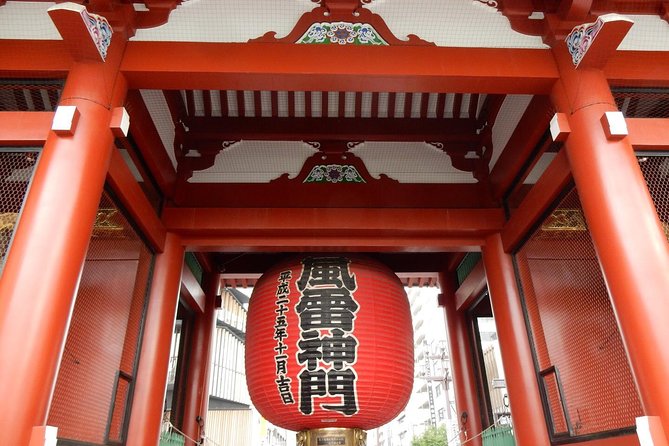
- Senso-ji and the old streets of Asakusa
- Skytree or Tokyo Tower for the big view
- Shibuya Crossing and Meiji Jingu
- Gardens and the Imperial Palace grounds
- Ueno Zoo and unusual animal cafes
- What the guides add to the day
- Pace, rain, stairs, and group size
- What $132.14 per person really buys
- How to plan your custom route
- Should you book this Tokyo tour?
- FAQ
- Where does the tour take place?
- How long does the tour last?
- Is the tour private?
- Is hotel pickup offered?
- Is an English-speaking guide included?
- Does the tour use public transportation?
- Are admission fees included?
- What sights can I visit?
- Can I choose the sights?
- Is the tour suitable for people with mobility issues?
- What is the cancellation policy?
Key points to know before booking
- You choose the shape of the day: Select the length and sights that matter most instead of following a fixed route.
- Public transit is part of the experience: Your guide leads the way between districts and teaches you how Tokyo’s train system works.
- Tsukiji and Senso-ji make a strong opening: Food, temple customs, and old Tokyo come together in an easy cultural introduction.
- The tour can cover a lot: Longer days may include Shibuya, Meiji Jingu, Tokyo Skytree, Tokyo Tower, gardens, Ueno Zoo, or the Imperial Palace grounds.
- Walking can be demanding: One visitor recorded about 22,000 steps, while another found the stairs and long walks difficult in the rain.
- Guide quality matters: Many guides earn praise for patience and local insight, but a small number of experiences involved weak English, fast walking, or serious booking problems.
A flexible way to meet Tokyo
Tokyo is too large for a tidy sightseeing loop. Tsukiji sits near Ginza and the bay. Senso-ji is in Asakusa, far to the northeast. Shibuya and Meiji Jingu are on the western side, while Tokyo Skytree rises across the river from old Asakusa.
That spread is exactly why a private guide can help. You discuss what you want to see, then the guide builds a workable route using trains and walking connections. A six-hour day might focus on four sights. A longer day can string together several districts, though you should not expect to linger everywhere.
You meet in the lobby of a hotel within Tokyo’s 23 wards. Several start times are offered, so you can fit the tour around a flight, cruise stop, or your first full morning in the city. The experience is private, meaning only your party takes part. That makes it easier to stop for lunch, adjust the pace, or skip something that does not interest you.
The most useful part may be the basic Tokyo lesson. A guide can show you how to read station signs, transfer between lines, and move through the city without spending your day staring at a transit map. One visitor specifically valued learning how to use the trains and which markets to visit for the rest of the trip.
A few more Tokyo experiences worth weighing up
- Mt Fuji and Hakone 1-Day Bus Tour Return by Bullet Train
★ 5.0 · 26,383 reviews - 1-Day Tokyo Bus Tour
★ 5.0 · 14,250 reviews - Tokyo: TOKYO SKYTREE® Admission ticket
★ 4.5 · 11,192 reviews
Tsukiji Jogai Market and a proper Tokyo breakfast
Tsukiji Jogai Market is a natural first stop. The outer market remains a place for Japanese food shops, small restaurants, and stalls selling traditional ingredients. It is not simply a quick photo stop. Give yourself time to look at the seafood, snacks, kitchen goods, and changing food trends.
The scheduled visit lasts about an hour and has no admission fee. Your guide can explain what you are seeing and help you make sense of the market’s many choices. Several successful days included sushi here or nearby, with fresh tuna singled out as a memorable part of the meal.
Food is not listed as included, so plan to pay for your own lunch or market purchases. If you have a strong interest in sushi, tell the guide before the tour. This is one of the clearest ways to turn a general sightseeing day into a personal one.
The market can be crowded, and browsing takes energy. I would avoid trying to combine every major sight with a long food stop unless you book close to the ten-hour maximum.
Senso-ji and the old streets of Asakusa
From Tsukiji, the tour can move to Asakusa and Senso-ji Temple. This is one of Tokyo’s best places for a first look at Buddhist temple customs and older city traditions.
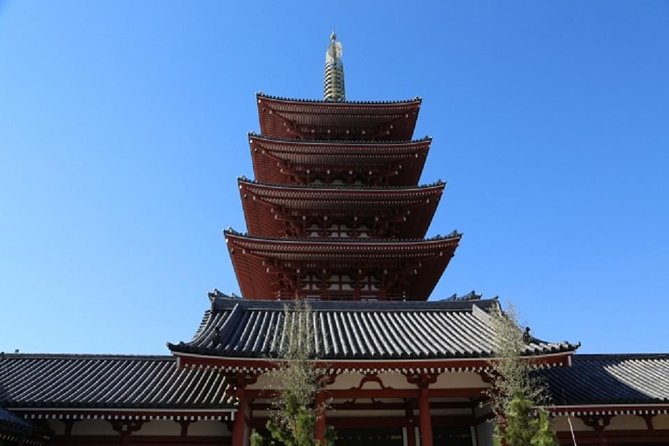
The grounds include the five-story pagoda and the Hozo-mon Gate, also called the Treasure-House Gate. Your guide can give context to the buildings and explain what you are seeing instead of leaving you with a few photographs and no sense of place.
The planned stop is about an hour, with no admission fee. That is enough for the main temple area, though the surrounding streets invite extra browsing. If you like small shops, snacks, and the atmosphere around a major temple, you may want to protect some unscheduled time here.
Senso-ji is also a good choice for families and first-time visitors because it offers strong visual interest without requiring an expensive ticket. Pairing it with Tsukiji gives the morning a useful contrast: market life first, temple traditions next.
Skytree or Tokyo Tower for the big view
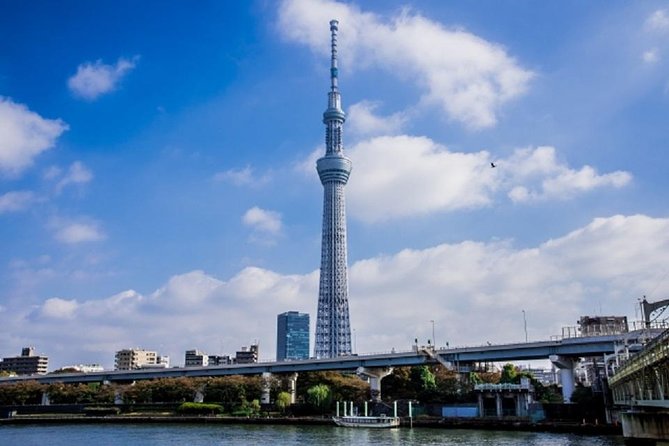
Tokyo Skytree reaches 634 meters and has observation levels at about 340 and 450 meters. It gives you a high view over the enormous city, but admission is not included for either you or your guide.
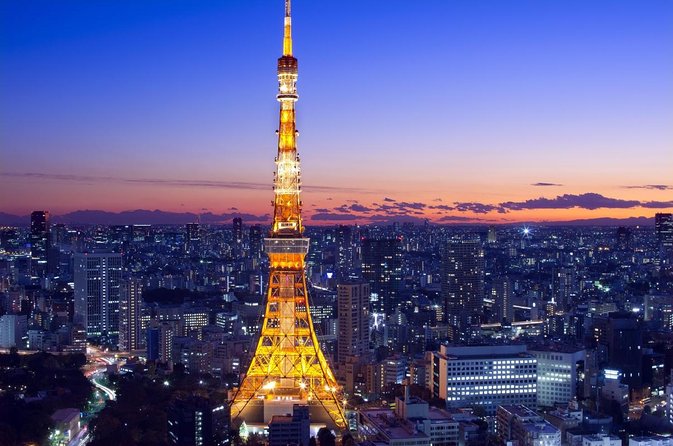
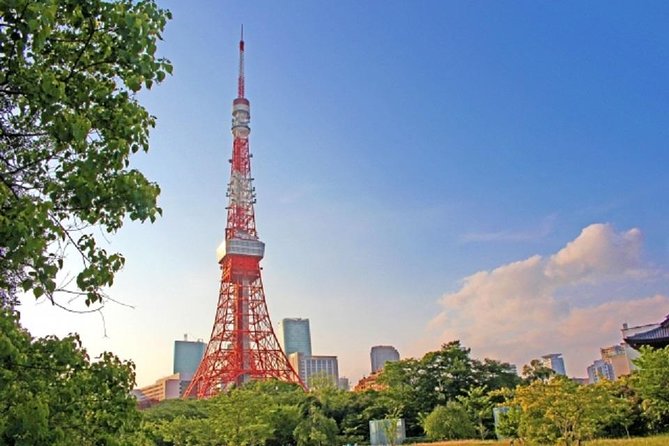
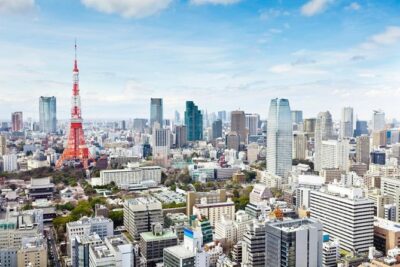
Tokyo Tower, at 333 meters, offers a different kind of Tokyo icon. Built in 1958, it has observation areas, a view cafe, and a shrine connected with the tower. Its lighting changes between Landmark Light and Diamond Veil styles, so the experience can feel different after dark.
You probably do not need both towers in one short tour. Pick Skytree if the high observation decks are your main goal. Pick Tokyo Tower if you prefer a classic symbol of the city and a central location near other stops.
Because tickets cost extra, decide in advance if the view is worth adding to your budget. A guide can get you to the tower, but the attraction ticket remains your responsibility. A one-hour time slot is listed for each, which may allow the main visit but not a leisurely meal or long wait.
A completely different kind of day out in Tokyo:
- Tokyo: teamLab Planets TOKYO Digital Art Museum Entry Ticket
★ 4.6 · 9,779 reviews - Mt Fuji & Hakone Cruise, Drum Show Bullet Train 1 Day from Tokyo
★ 4.0 · 7,413 reviews - Tokyo: Sumo Show Experience with Chicken Hot Pot and a Photo
★ 4.8 · 6,678 reviews - Tokyo: Shinjuku Food Tour (13 Dishes at 4 Local Eateries)
★ 5.0 · 6,603 reviews
Shibuya Crossing and Meiji Jingu
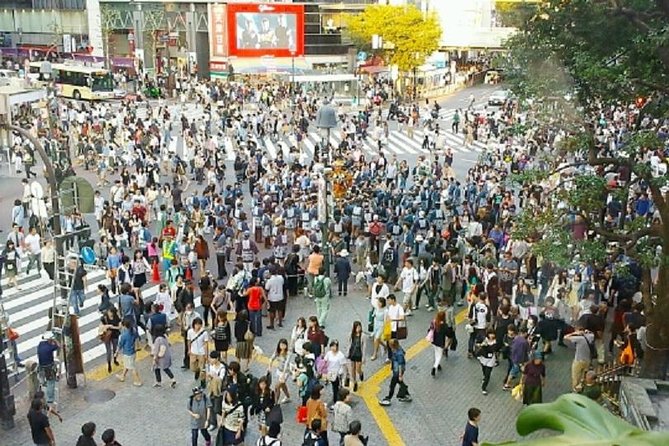
Shibuya Crossing gives you Tokyo at full speed. The intersection can handle about 500,000 users in a day, with as many as 3,000 people crossing during one green light. The listed stop is only 30 minutes, which is enough to watch the crossing and take photographs, not enough to explore the entire district.
This stop works well for first-time visitors who want a recognizable image of modern Tokyo. It is less useful if you hope to shop, visit several cafes, or spend time in the surrounding streets. Tell your guide if you want more than a quick look.
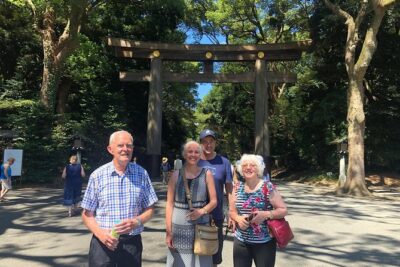
Meiji Jingu provides a sharp change of mood. Built in 1920, the shrine honors Emperor Meiji and Empress Shoken. It draws worshippers and international visitors throughout the year, and the setting gives you room to think about Shinto practice away from the traffic and signs of Shibuya.
The visit lasts about an hour and has no admission charge. You should expect walking between the transport stop and the shrine grounds. If your knees or feet are an issue, say so early. Tokyo’s station stairs and long approaches can add up quickly.
Gardens and the Imperial Palace grounds
The tour offers several green and historic choices, each with a different feel.
Shinjuku Gyoen National Garden combines a formal garden, a more open designed garden, and a Japanese garden. It was created as an imperial garden in 1906 and represents the Meiji period. The scheduled visit lasts an hour, but an admission fee applies.
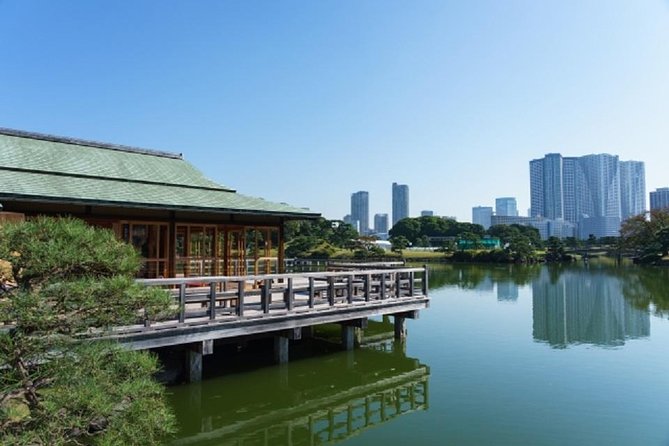
Hamarikyu Gardens covers about 250,165 square meters around Shioiri Pond. A seawater moat connected to Tokyo Bay surrounds the park, giving the garden an unusual relationship with the city and the water. It opened to the public in 1946, and admission is extra.
The East Gardens of the Imperial Palace occupy part of the former Edo Castle grounds. The Imperial Palace itself is in Chiyoda, and the wider grounds include the imperial residences and offices. The East Gardens stop also lasts about an hour and has an admission fee listed as not included.
You should choose one garden or palace visit on a shorter day. Trying to fit all three into four or six hours would leave little time for the market, temple, and train connections. These parks are especially good choices if you want a pause from crowded streets.
Ueno Zoo and unusual animal cafes
Ueno Zoo opened in 1882 as Japan’s first zoo. Today it houses about 400 species, including the Sumatran tiger. The planned stop is two and a half hours, making it one of the largest blocks in the sample itinerary. Admission is extra.
That time commitment matters. Ueno Zoo is a sensible choice for families or anyone who genuinely enjoys animals, but it is not a quick add-on to a highlights tour. If you also want Skytree, Shibuya, and Tokyo Tower, the day will become very tight.
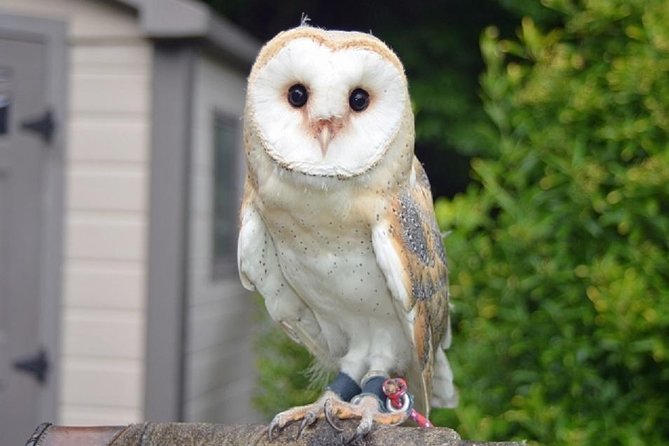
The tour can also include Akiba Fukurou, an owl cafe, or Chiku Chiku Cafe, where you interact with hedgehogs. Each is listed as about one hour, and each requires a separate admission fee. The hedgehog cafe serves drinks only, not lunch or dinner.
Animal cafes are a personal choice. They offer an unusual encounter, but they may not suit every visitor. If you choose one, ask the guide about the day’s opening status before building the entire route around it. One visitor found a cafe closed, and another enjoyed the owl cafe as a memorable part of the day.
What the guides add to the day
The strongest part of this experience is usually the person leading it. Kono appears repeatedly in the feedback, guiding visitors through Tsukiji, Senso-ji, sushi restaurants, animal cafes, and Asakusa. Yumi is praised for patience with a family of five and for making time for customs, questions, and practical advice for the rest of the trip.
Yumiko led a six-hour day focused on four sights and explained each place clearly. Yoshio helped a couple navigate the trains, answered questions about Japanese history and current life, and kept going despite rain. Another guide, Yoshi, helped a group decide what could realistically fit into six hours and took photographs along the way.
These details show what you are paying for. The guide is not just delivering facts. You are buying help with timing, transfers, station exits, lunch decisions, photographs, and last-minute changes.
Still, the experience is not perfectly consistent. One person had difficulty understanding a guide’s English and felt the guide walked too far ahead. Two serious complaints describe a guide arriving on the wrong day or the company overbooking the tour and canceling after arrival. Those incidents are rare within the supplied feedback, but they are important enough to consider before you pay.
Pace, rain, stairs, and group size
Tokyo sightseeing by train is not passive. You will walk through large stations, use stairs, cross busy streets, and stand during some transfers. One especially active day reached about 22,000 steps.
Rain makes the problem worse. A visitor felt too much time went into walking between stations and attractions during heavy rain, while another still had a good day because the guide adapted. If the forecast is poor, shorten the route and favor sights with less outdoor walking.
The tour is private, and groups of eight have used it successfully. A good guide checks that everyone stays together and waits during photo stops. Still, larger groups move more slowly, especially in stations. If your party includes children, older adults, or anyone with mobility concerns, choose fewer stops and discuss the pace at the start.
The available information says most people can participate, but it also makes clear that Tokyo transit is not always easy for people with disabilities. Ask about stairs, station transfers, and walking distances before finalizing a demanding itinerary.
What $132.14 per person really buys
The listed price is $132.14 per person. The guide, hotel-lobby meeting within Tokyo’s 23 wards, and public transportation associated with the guide are included. Attraction admission fees are not included for you or the guide.
The value improves when you share the cost with a family or group because you receive private attention rather than joining strangers. It also improves if you are new to Tokyo, have only one day, or feel uneasy using the trains. A guide may save time and prevent costly wrong turns, even if the tour itself does not include every ticket or meal.
The value drops if you already know Tokyo’s transit system and want to spend long periods in only one neighborhood. In that case, you may prefer independent sightseeing and pay only for the sights you select.
For a first day, I think the strongest plan is Tsukiji, Senso-ji, one modern Tokyo stop, and one shrine or garden. Add a tower only if the view matters to you. Avoid treating the full list as a promise that every location will fit into one day.
How to plan your custom route
Start with three priorities, not twelve. Tell the guide what you most want to eat, see, and understand. Then ask the guide to place nearby sights together and protect time for lunch and breaks.
Here are sensible combinations:
- Classic first day: Tsukiji, Senso-ji, Meiji Jingu, and Shibuya Crossing.
- Views and modern Tokyo: Senso-ji, Tokyo Skytree, Shibuya Crossing, and Tokyo Tower.
- Gardens and old Tokyo: Tsukiji, Hamarikyu Gardens, the Imperial Palace East Gardens, and Senso-ji.
- Family day: Senso-ji, Ueno Zoo, and one animal cafe, with fewer additional stops.
- Food-focused day: Tsukiji, Asakusa, a sushi lunch, and a flexible neighborhood stop.
Allow extra time for cherry blossom season. One guide successfully helped a group handle crowded sites during blossom season, but busy periods can slow station transfers and popular attractions.
Free cancellation is available up to 24 hours before the start time for a full refund. Changes or cancellations inside that window are not accepted for a refund, so check your plans carefully.
Should you book this Tokyo tour?
Book it if you want a private introduction to Tokyo, especially if you have one free day, are arriving from a cruise, or want help using the trains. It is also a good fit for families and small groups that need a flexible pace and a guide who can explain customs as you go.
I would book it with a short priority list and a clear conversation about walking, stairs, language, lunch, and admission costs. I would not book it expecting to visit all twelve listed places in a single day.
The guide can make this experience excellent. Kono, Yumi, Yumiko, Yoshio, and Yoshi receive particularly strong praise for patience, planning, and local insight. But the booking errors and uneven communication reported in a few cases mean you should confirm the meeting details before your tour date. For most first-time visitors, the practical help with Tokyo’s trains is the main reason to consider it.
FAQ
Where does the tour take place?
The tour takes place in Tokyo, Japan, with meeting available in the lobby of a hotel within Tokyo’s 23 wards.
How long does the tour last?
You can choose a tour lasting approximately four to ten hours.
Is the tour private?
Yes. Only your group participates in the private tour.
Is hotel pickup offered?
Pickup is offered from a hotel lobby within Tokyo’s 23 wards.
Is an English-speaking guide included?
Yes. An English-speaking professional guide is included.
Does the tour use public transportation?
Yes. The guide takes you between locations using Tokyo’s public transportation system.
Are admission fees included?
No. Admission fees for customers and guides are not included.
What sights can I visit?
Possible stops include Tsukiji Jogai Market, Senso-ji Temple, Tokyo Skytree, Ueno Zoo, Shibuya Crossing, Meiji Jingu Shrine, Tokyo Tower, Shinjuku Gyoen National Garden, two animal cafes, Hamarikyu Gardens, and the East Gardens of the Imperial Palace.
Can I choose the sights?
Yes. The experience is designed around the sights and interests you select, with the guide creating the route.
Is the tour suitable for people with mobility issues?
Most people can participate, but Tokyo’s public transportation system includes stairs and substantial walking. The tour may be difficult for people with mobility concerns unless the route and pace are adjusted.
What is the cancellation policy?
You can cancel at least 24 hours before the start time for a full refund. Cancellations or changes made less than 24 hours before the start time are not accepted for a refund.
Just added around Tokyo
- Tokyo 6hr Instagram Highlights Private Tour with Licensed Guide★ 5.0 · 38 reviews
- Tokyo Small Group Tour with Guide★ 4.5 · 38 reviews
- Tokyo Sumo Experience with Live Show & Audience Challenge★ 5.0 · 38 reviews
- Very popular in Harajuku♡Animal petting zoo★ 4.6 · 39 reviews
- Japanese Food Cooking Class in Asakusa, Tokyo★ 5.0 · 39 reviews
- Ramen Making from Scratch with Tokyo Mom(Vegan Option Available)★ 5.0 · 39 reviews
- Tokyo: Kimono Rental inside Shinjuku Gyoen National Garden★ 4.9 · 39 reviews
- Tokyo JDM Night: 600hp C63s AMG Edition 1 (Private)★ 4.9 · 39 reviews
Guided, compared.
Tokyo 6hr Private Tour with Government-Licensed Guide
Read our review →
Shinjuku Local Bar and Izakaya Guided Walking Tour
Read our review →
Private City Highlights Tour with Local Guide
Read our review →
Kyoto Early Morning Tour with English-Speaking Guide
Read our review →
Tokyo 4hr Private Tour with Government-Licensed Guide
Read our review →
Kyoto 6hr Private Tour with Government-Licensed Guide
Read our review →