
Reviewed · HIROSHIMA TOURS
Hiroshima/Guided Virtual Tour of Peace Park/PEACE PARK TOUR VR
History becomes personal here. This short Hiroshima tour combines a guided walk with VR scenes that recreate the city before the atomic bombing, the destruction of August 6, and the long road to recovery. I like the small group of six or fewer, and I like how the route uses real places rather than keeping you inside a museum. The guide connects each VR scene to the ground beneath your feet.
The short distance is another plus. You get about 1 hour 20 minutes, with five stops around Peace Memorial Park, so this works well if you want a focused experience without spending half a day on your feet. English-speaking guide Kazuko has earned particular praise for answering questions and making the subject easier to grasp. The main drawback is value: at $33.03 per person, the VR content may feel brief, especially if you already visited the Peace Memorial Museum and expect polished, game-quality graphics.
In This Review
- Key points to know before you book
- Why this short Hiroshima experience works
- Starting at the Rest House at 10:30
- Peace Clock Tower and the destroyed Atomic Bomb Dome
- Aioi Bridge two months after the bombing
- Motoyasu Bridge and the road to recovery
- Returning to the Rest House for a quiet finish
- The VR quality and what $33.03 really buys
- Who will get the most from the tour
- Booking, cancellation, and practical details
- Should you book Peace Park Tour VR?
- FAQ
- Where does the Hiroshima Peace Park Tour VR begin?
- What time does the tour start?
- How long does the experience last?
- Where does the tour end?
- Is an English-speaking guide included?
- Are VR goggles included?
- How many people can join the tour?
- Is transportation to the meeting point included?
- Are food and drinks included?
- Can I cancel for a full refund?
Key points to know before you book
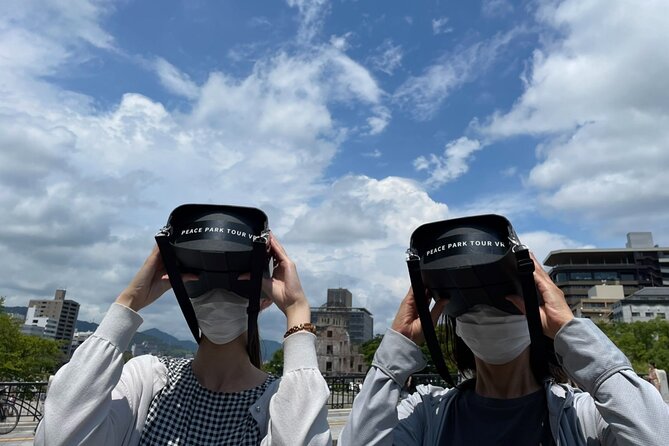
- VR at the actual historic sites: You use goggles at the Rest House, Peace Clock Tower, Aioi Bridge, and Motoyasu Bridge, linking reconstructed scenes to the places around you.
- A compact 80-minute route: The tour covers a short distance and suits anyone who wants a serious Hiroshima experience without a long walking program.
- A maximum of six people: The small group leaves more room for questions and personal discussion with the English-speaking guide.
- Eizo Nomura’s story: The opening stop uses the basement of the Rest House to present the life of the only survivor of the fuel building.
- A full arc through time: The program moves from prewar Hiroshima to the atomic bombing, then to recovery and the present.
- A reflective ending: You finish back at the Rest House by writing a peace message and expressing condolences.
Why this short Hiroshima experience works
Peace Memorial Park can be difficult to process on your own. The monuments are quiet, the river is calm, and the city has been rebuilt around them. That peaceful setting can make the events of 1945 feel distant.
This tour closes that gap with VR reenactments based on historical photographs and testimonies from A-bomb survivors. You are not simply looking at a headset screen in a room. You are using it at places tied to the story, then looking up at the same surroundings in the present day.
That contrast is the heart of the experience. A normal walking tour may explain what happened, while this program gives you a visual sense of how the streets looked before and after the bombing. The graphics are not necessarily the reason to book it. One critical assessment found the videos less polished than other modern VR productions. The value comes from the setting, the guide, and the connection between past and present.
I would think of this as a supplement to Hiroshima’s larger historical sites, not a replacement for them. If you want long explanations, extensive museum displays, or a technically advanced VR production, you may find the tour too light. If you want an accessible introduction with time for reflection, its compact format makes sense.
A few more Hiroshima experiences worth weighing up
- Peaceful Hiroshima & Miyajima UNESCO 1 Day Bus Tour
★ 5.0 · 5,309 reviews - Hiroshima: Hiroshima and Miyajima UNESCO Sites 1-Day Tour
★ 4.9 · 2,330 reviews - Hiroshima / Miyajima Full-day Private Tour with Government Licensed Guide
★ 5.0 · 1,298 reviews
Starting at the Rest House at 10:30
The tour begins at 10:30 am at the Hiroshima Peace Park Rest House, at 1 Nakajimacho, Naka Ward. Your guide meets you at reception and explains how to use the VR goggles before the group goes down to the basement.
This first stop lasts about 20 minutes. The basement setting matters. The tour presents the life of Eizo Nomura, described as the only survivor of the fuel building. That personal account gives the opening a human scale before the program expands to the wider destruction of Hiroshima.
The Rest House itself is also useful as a starting point because you return there at the end. You do not need to figure out a second meeting point or arrange transport between activities. The experience includes the VR goggles and an English-speaking guide, but you must make your own way to the Rest House and bring your own food and drinks.
I would arrive with enough time to find the building without rushing. The meeting point is inside Peace Memorial Park, and the tour starts promptly at 10:30. Since confirmation can take up to 48 hours and availability is limited, booking ahead is sensible. This experience is booked, on average, 37 days in advance.
Peace Clock Tower and the destroyed Atomic Bomb Dome
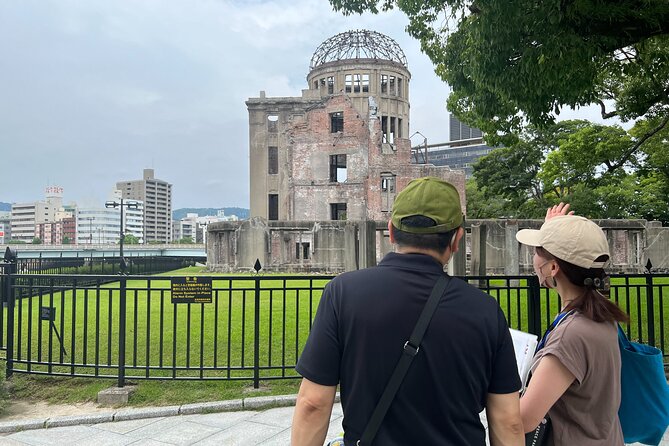
The second stop is the Peace Clock Tower, with about 15 minutes devoted to the scene. Here the VR shows the moment before and after the bombing, helping you understand how the Atomic Bomb Dome was damaged.
This is one of the tour’s strongest ideas. The Atomic Bomb Dome is easy to recognize today, but it can be hard to picture the building before the blast or understand the scale of the destruction by looking at the preserved shell alone. The headset fills in that missing visual context.
The tour also explains how the dome became the structure you see today. It is the only building in the world to retain visible traces of the atomic bombing, and it was registered as a World Heritage site in 1996. Those facts are important, but the VR element gives them a physical setting.
The stop is brief, so do not expect a long architectural lecture. Its purpose is to make one landmark clearer, not to cover every detail of the bombing or preservation debate. If you already know the dome well, the value will depend on how much the reconstructed before-and-after scenes add for you.
Aioi Bridge two months after the bombing
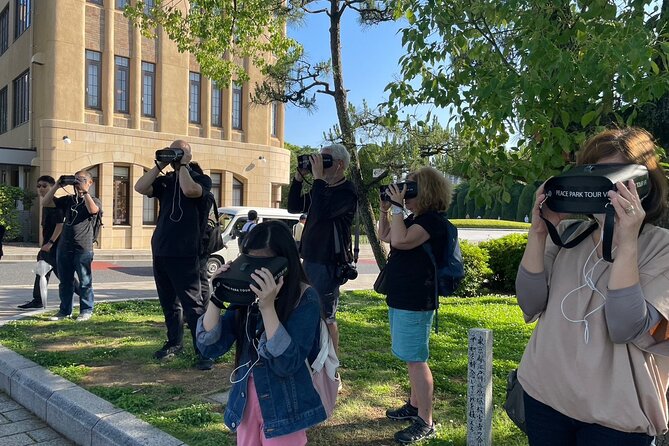
At Aioi Bridge, the program shifts to the city two months after the atomic bombing. You see a townscape that had become a sea of fire, accompanied by A-bomb survivor testimonies.
This part moves beyond the instant of destruction. Hiroshima was not frozen at the moment of the blast. People had to live through the aftermath, deal with the ruined city, and begin rebuilding amid grief and confusion. The timing, two months later, helps you consider what the city looked like after the first shock had passed.
The bridge is also a meaningful place for this section because the story is presented outdoors, beside the modern city. You can compare the current view with the VR reconstruction rather than treating the past as an abstract lesson.
The stop lasts about 15 minutes. That keeps the pace moving, but it also means the guide cannot explore every survivor account in depth. I would pay close attention to the guide’s explanation here and save your most important questions for the discussion. With no more than six people, you should have a reasonable chance to ask about points that need clarification.
A completely different kind of day out in Hiroshima:
- Hiroshima Historical Walking Tour – Why A-Bomb was Dropped
★ 4.8 · 893 reviews - Hiroshima Peace (Heiwa) Walking Tour at World Heritage Sites
★ 5.0 · 872 reviews - Hiroshima in a Nutshell: Morning Bike Adventure
★ 5.0 · 524 reviews - Hiroshima City 4hr Private Walking Tour with Licensed Guide
★ 5.0 · 437 reviews
Motoyasu Bridge and the road to recovery
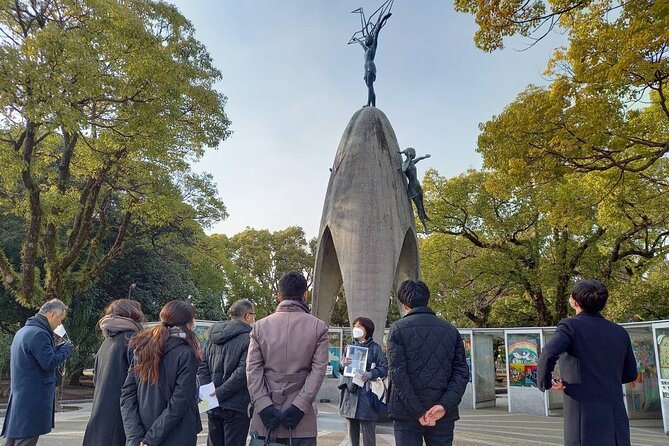
The fourth stop is Motoyasu Bridge, also lasting about 15 minutes. The focus changes again, this time covering the first year after the bombing through to the present day.
This is a useful choice for a Hiroshima tour. A program devoted only to destruction can leave you with a narrow picture of the city. Here, the guide discusses how people rose from the chaos and took steps toward recovery. The point is not to soften what happened, but to show that Hiroshima’s story includes rebuilding and a continuing appeal for peace.
The movement from the first year after the bombing to today gives the tour its broadest time span. You begin with life before the attack, see the city destroyed, then follow its path forward. That structure makes the 80-minute experience feel more complete than a short collection of unrelated VR clips.
Still, the program cannot provide a full account of Hiroshima’s postwar development in 15 minutes. I would treat this stop as a thoughtful overview. For more detail, pair the tour with time at the Peace Memorial Museum or other memorial sites. The VR walk gives you orientation and emotional context, while the museum can provide a larger body of documents and objects.
Returning to the Rest House for a quiet finish
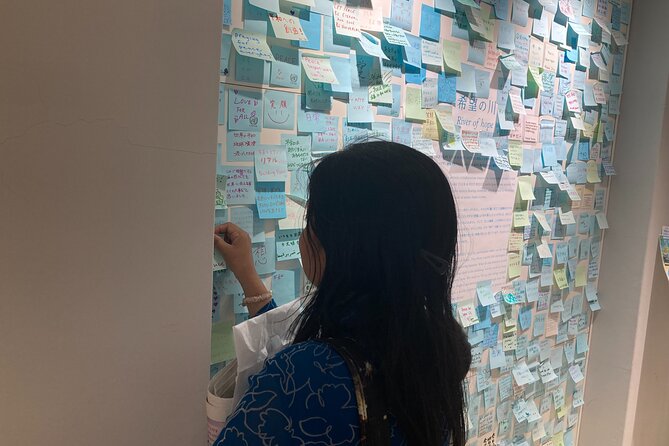
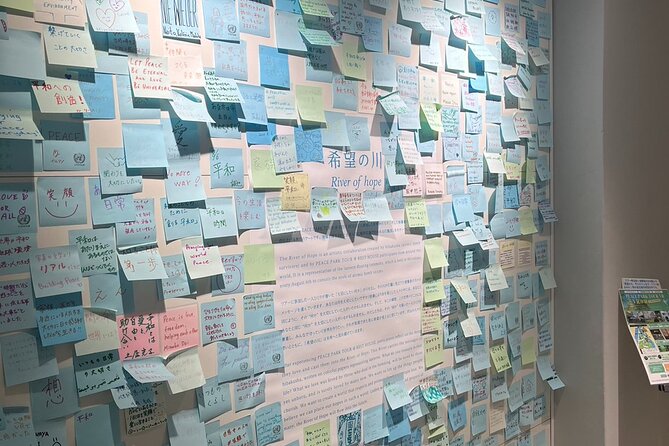
The final 15 minutes bring you back to the Rest House. The guide invites you to share what you felt during the tour, then write a comment on the wall of the River of Hope, where people express wishes for peace.
You also have a chance to offer condolences. That ending gives the experience a pause instead of sending you straight into the rest of your sightseeing day. Hiroshima’s memorial sites are not ordinary photo stops, and a few quiet minutes can help you absorb what you have just seen.
I appreciate that the final activity asks for a personal response without turning the experience into a performance. You do not need specialist knowledge to take part. You simply reflect on the places, stories, and images you encountered.
The return to the starting point is practical too. The activity ends where it began, so you can continue through Peace Memorial Park, visit the museum, or make your way to another part of Hiroshima without collecting belongings from a separate location.
The VR quality and what $33.03 really buys
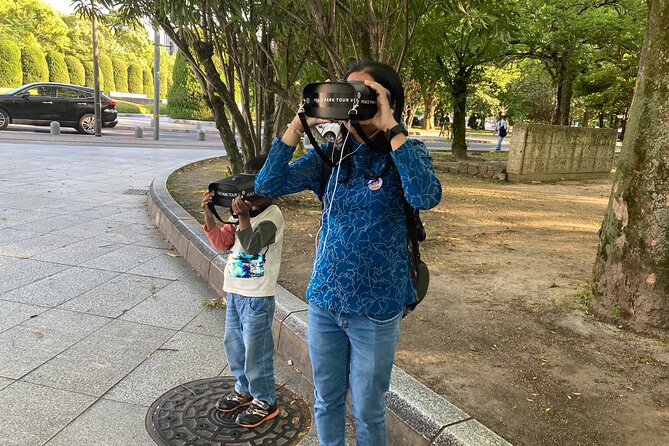
The price is $33.03 per person. That is not a bargain for an 80-minute activity if you judge it only by screen time. The VR videos are short, and one assessment found their production quality below that of other VR games and videos.
But you are paying for more than the goggles. The fee includes an English-speaking guide, a small group, instruction on using the equipment, and a route through several important places in Peace Memorial Park. The guide’s role is central. Kazuko, in particular, has been praised for her professionalism, clear answers, and ability to bring the experience to life.
I think the price makes the most sense in three situations:
- You are visiting Hiroshima for the first time and want a clear introduction.
- You prefer a short guided activity rather than a long walking tour.
- You learn better when visual material is tied to real locations.
The value is weaker if you already spent substantial time at the museum and understand the main landmarks. In that case, the tour may repeat some information while offering only a few VR scenes. You should book it for the location-based guidance and personal discussion, not because you expect a cutting-edge digital attraction.
The 99 percent recommendation rate and 4.9 rating from 158 reviews indicate strong overall satisfaction, but the lower assessment is useful too. It points to the key question: do you want a polished VR show, or do you want a guided way to connect Hiroshima’s memorial sites with survivor testimony and historic images? This experience is much better suited to the second purpose.
Who will get the most from the tour
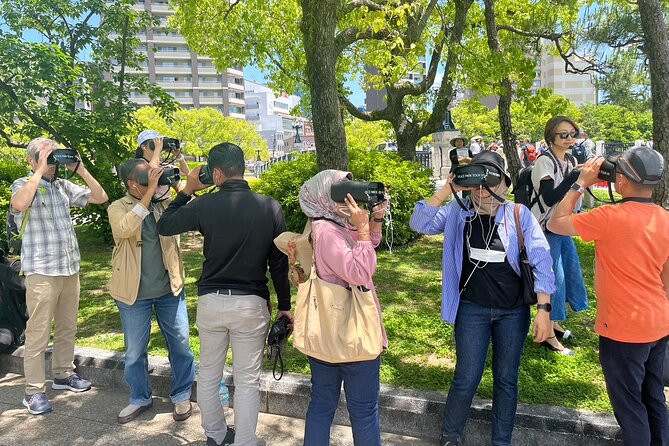
I would recommend this program to you if you want a manageable introduction to Hiroshima’s Peace Park. The short distance helps if you do not want an extended walk, and the total length fits neatly into a morning schedule.
It also suits families and mixed-age groups better than a long lecture may, although the subject remains serious and some younger participants may need help processing it. The visual reenactments can make the timeline easier to follow, while the guide can answer questions as they arise.
English speakers will benefit from the included guide. The program is limited to a maximum of six people, which should create a more personal setting than a large group tour. Most people can participate, according to the supplied activity information.
I would be more cautious if you are mainly interested in high-end VR technology. The content is designed to support a historical tour, not to function like a modern VR game. You should also consider whether you have enough time and budget for an additional activity after visiting the museum.
The tour is not designed around food or transport. Neither is included, and the activity starts and ends at the Rest House. Plan your own route to the meeting point and bring anything you need for the morning.
Booking, cancellation, and practical details
The activity uses a mobile ticket, and confirmation is sent within 48 hours of booking, subject to availability. Because the group is capped at six and the average booking lead time is 37 days, I would reserve it before your Hiroshima plans become fixed.
Free cancellation is available up to 24 hours before the local start time. If you cancel less than 24 hours before the tour, you do not receive a refund, and changes made inside that period are not accepted.
The tour lasts approximately 1 hour 20 minutes. Each of the five parts is timed at about 15 to 20 minutes, so the schedule is fairly structured. That is good for planning, but it leaves limited space for a long personal conversation at every stop.
For the best experience, I would visit with an open mind and leave some quiet time afterward. The tour ends with reflection at the River of Hope, and rushing immediately into a busy schedule may undercut that final moment.
Should you book Peace Park Tour VR?
Book it if you want a short, serious, location-based introduction to Hiroshima, especially if this is your first visit. The small group, English-speaking guide, survivor-based material, and use of real Peace Park sites give the $33.03 price a reasonable purpose.
Skip it if you already know the park and museum well, or if you are paying mainly for advanced VR effects. The videos are limited, and their quality may not match modern commercial VR productions.
My practical choice would be to use this tour early in your Hiroshima visit, then visit the Peace Memorial Museum afterward. The VR scenes can help you recognize the places and follow the timeline, while the museum gives you more time for documents, artifacts, and detail. That pairing offers a fuller understanding than either activity alone.
FAQ
Where does the Hiroshima Peace Park Tour VR begin?
It begins at the reception of the Hiroshima Peace Park Rest House at 1 Nakajimacho, Naka Ward, Hiroshima, 730-0811.
What time does the tour start?
The scheduled start time is 10:30 am.
How long does the experience last?
The experience lasts approximately 1 hour 20 minutes.
Where does the tour end?
The activity ends back at the Hiroshima Peace Park Rest House, the meeting point.
Is an English-speaking guide included?
Yes. An English-speaking guide is included in the experience.
Are VR goggles included?
Yes. The rental fee for the VR goggles is included.
How many people can join the tour?
The activity has a maximum group size of six people.
Is transportation to the meeting point included?
No. You are responsible for your own transportation to the Rest House.
Are food and drinks included?
No. Food and drinks are not included.
Can I cancel for a full refund?
Yes, if you cancel at least 24 hours before the local start time. Cancellations made less than 24 hours before the start are not refunded.
Just added around Hiroshima
- Hiroshima & Miyajima: Private Full-Day Tour with a Local Guide★ 5.0 · 39 reviews
- Hiroshima and Miyajima 1 Day Walking Tour★ 5.0 · 43 reviews
- Hiroshima History Tour : A-Bomb Dome, Peace Memorial & City★ 5.0 · 43 reviews
- The Journey of Hiroshima from Tragedy to Peace★ 4.8 · 44 reviews
- Cultural Activities :Kimono, tea ceremony, Calligraphy and Amulet★ 5.0 · 44 reviews
- Miyajima: Private Rickshaw Tour to Itsukushima Shrine★ 4.9 · 45 reviews
- Hiroshima Private Tour: Best Highlights in a Day★ 5.0 · 49 reviews
- Hiroshima & Miyajima All-Inclusive Tour w/Licensed guide Pancho★ 5.0 · 54 reviews
Hiroshima Tours, compared.
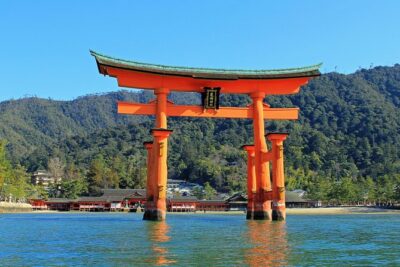
Peaceful Hiroshima & Miyajima UNESCO 1 Day Bus Tour
Read our review →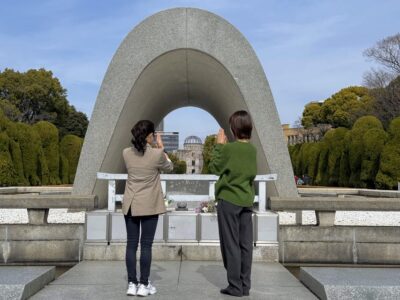
Hiroshima and Miyajima UNESCO Sites 1-Day Tour
Read our review →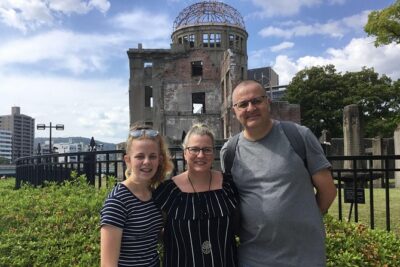
Hiroshima / Miyajima Full-day Private Tour with Government Licensed Guide
Read our review →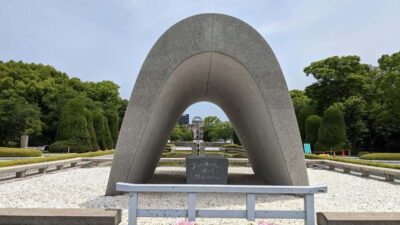
Hiroshima Historical Walking Tour – Why A-Bomb was Dropped
Read our review →
Hiroshima Peace (Heiwa) Walking Tour at World Heritage Sites
Read our review →
Hiroshima in a Nutshell: Morning Bike Adventure
Read our review →
Hiroshima City 4hr Private Walking Tour with Licensed Guide
Read our review →
Browse the lists this tour appears in