
Reviewed · MIYAJIMA ISLAND TOURS
Hiroshima & Miyajima 6.5h Guided Tour – Dome, Park & Shrine
Hiroshima tells two powerful stories. This small-group tour links Miyajima’s sacred island setting with Hiroshima’s sober peace sites, and I like that it covers both by train and ferry rather than keeping you inside a tour bus. I also like the local human touch: guides such as Shion, Bo, Rie, and Hayato have earned praise for clear English, useful advice, and thoughtful storytelling.
The main drawback is time. You get a strong introduction to both places, but the Peace Memorial Museum receives only about an hour, and crowded conditions or a long line at Itsukushima Shrine can cut into your visiting time. You should also be ready for extended walking and bring yen for transport and food.
In This Review
- Six things to know before you book
- Meeting at Hiroshima Station without the usual confusion
- Train and ferry to Miyajima
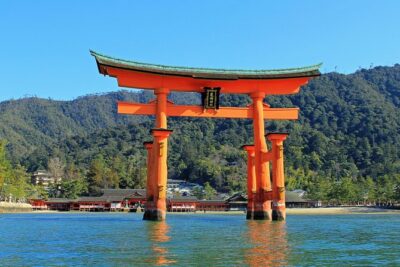
- Itsukushima Shrine and the changing torii gate
- Forty-five minutes on Omotesando Street
- Returning to Hiroshima’s difficult history
- Forty minutes through Peace Memorial Park
- One hour inside the Peace Memorial Museum
- What the $96 price really covers
- Who will get the most from this tour
- Should you book Hiroshima and Miyajima in 6.5 hours?
- FAQ
- How long does the Hiroshima and Miyajima tour last?
- Where do I meet the guide?
- How can I identify the guide?
- What languages are available?
- How large is the group?
- Does the tour include train and ferry fares?
- Are meals included?
- What happens if it rains?
- Will the torii gate always appear to float on the water?
- Is the Peace Memorial Museum always included?
- Is the tour suitable for wheelchair users?
Six things to know before you book
- Two UNESCO World Heritage Sites in one day: You visit Itsukushima Shrine and the Atomic Bomb Dome, two places with very different moods and meanings.
- Public transport is part of the experience: The route uses a train and two ferry rides, with transport fares not included in the $96 price.
- The group is limited to 10 people: That makes it easier to ask questions and keep track of the group at busy sites.
- Miyajima includes more than the torii gate: You have time for Omotesando Street, island food, shopping, and the shrine area.
- Local guides can add real depth: Shion’s family connection to Hiroshima gave some groups a particularly personal account of the bombing and its aftermath.
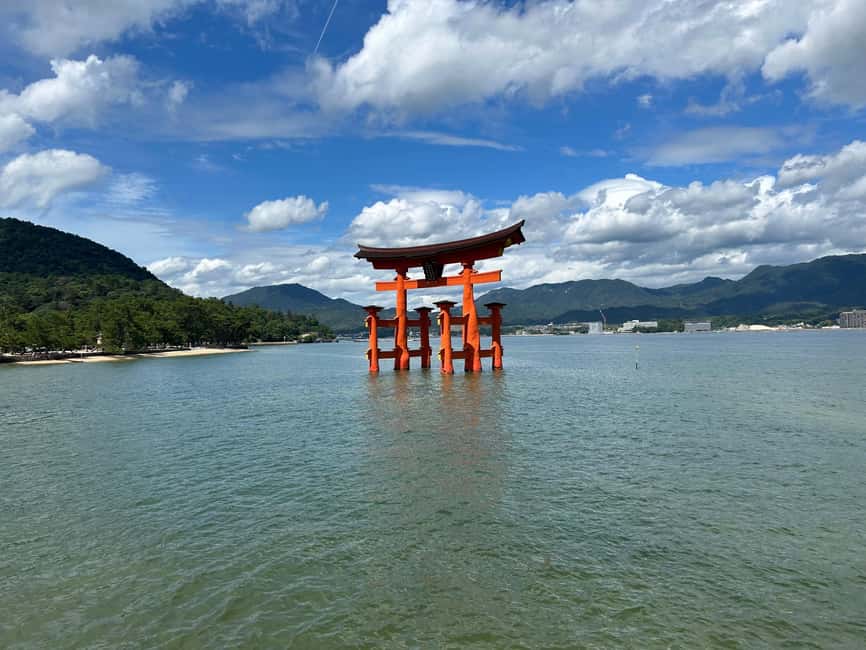
- Tide and crowds affect the day: The torii gate may appear in the water or on exposed ground, while queues at the shrine and museum can be long.
Meeting at Hiroshima Station without the usual confusion
The day begins at Hiroshima Station’s North Exit, on the second floor at the Shinkansen Exit. This detail matters because Hiroshima Station has separate north and south sides, and the south side serves the tram and bus areas.
Find the benches between the Midori no Madoguchi JR Green Ticket Office and the Starbucks opposite it. Midori no Madoguchi is where JR tickets and seat reservations are sold. Your guide carries a bright fluorescent green band on their bag, which gives you a simple visual marker in a busy station.
I like this meeting point because it uses clear landmarks rather than a vague station corner. Still, give yourself enough time to find the North Exit, especially if you arrive by Shinkansen and are carrying luggage. Large bags and oversize luggage are not allowed on the tour, so this is best treated as a day outing from a hotel or station locker, not as a transfer with all your belongings.
The tour lasts 390 minutes, or six and a half hours. It finishes at the Peace Memorial Museum, not back at Hiroshima Station. Keep that in mind when planning dinner, a train departure, or a return trip to Kyoto or Osaka. One guide, Shion, was praised for helping a participant reach a train back to Kyoto on time, but you should not build a tight onward connection around the published schedule.
More Temple & Shrine Tours in Hiroshima
- Hiroshima and Miyajima Day Trip with Itsukushima Shrine & Ferry
★ 5.0 · 378 reviews - Miyajima: Cultural Experience in Zen Temple
★ 5.0 · 258 reviews - Day Trip to Hiroshima & Miyajima with Itsukushima Shrine
★ 4.6 · 124 reviews
Train and ferry to Miyajima
From Hiroshima Station, you take a train for about 25 minutes, followed by a 15-minute ferry ride to Miyajima. The transport is not just a way to get from point A to point B. It gives you a look at how Hiroshima’s city center connects with the inland sea and prepares you for the change from urban memorial sites to an island associated with Shinto worship.
You pay your own train and ferry fares, so carry Japanese yen in cash. Meals are also separate. The total cost is modest compared with many guided day outings, but these extra expenses mean the $96 is not the complete cost of the day.
The group size, limited to 10, is especially useful during the transit portions. You can ask where to stand, confirm the next stop, and get help with the public transport system without being lost in a large crowd. The tradeoff is that you need to stay alert and move when the group moves. This is not a private car tour with a driver waiting at every stop.
Itsukushima Shrine and the changing torii gate
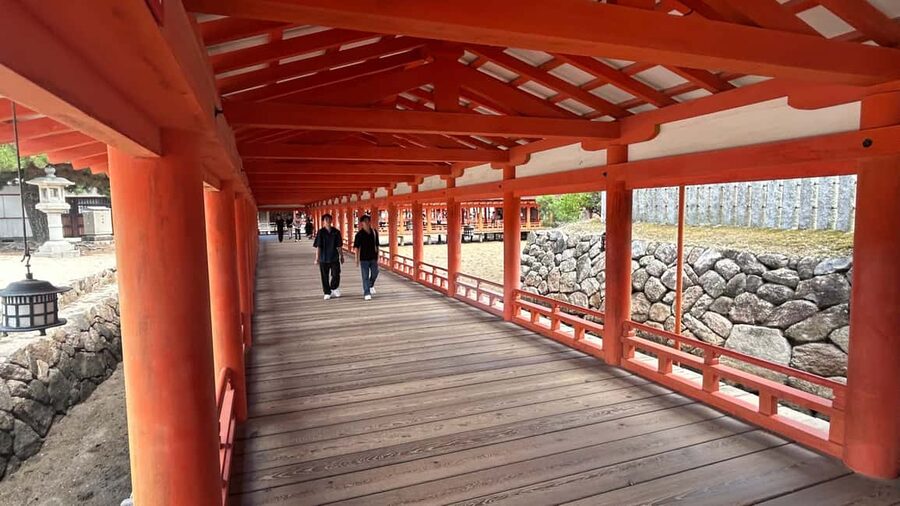
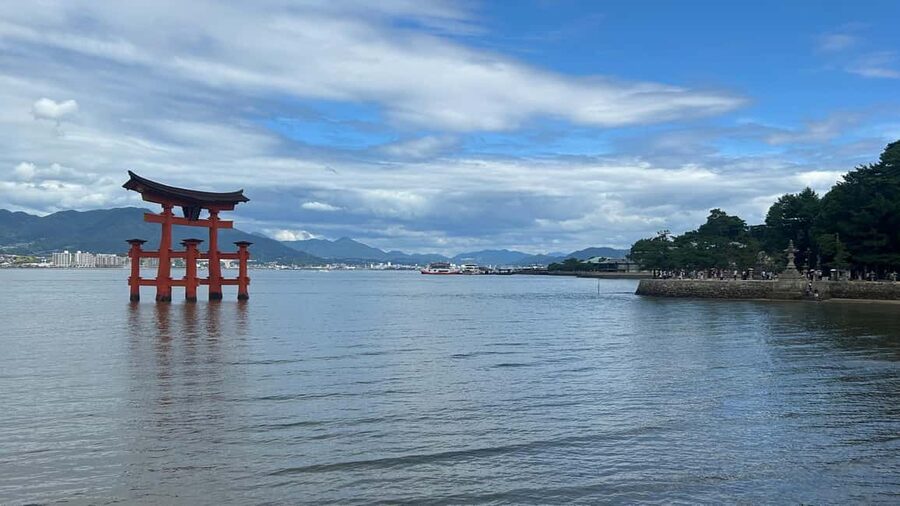
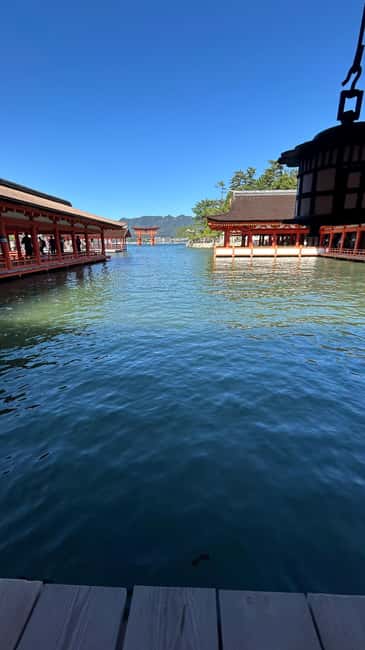
The first major stop is Itsukushima Shrine, with about 80 minutes for a guided visit, sightseeing, and photographs. The shrine is famous for its large red torii gate, which appears to float offshore when the tide is high. Tide levels change the view, so the same tour can offer two very different scenes on different days.
Your guide can give the shrine context that a quick photograph cannot. This is a sacred place, not simply a scenic backdrop. The combination of wooden shrine buildings, water, and island setting creates a peaceful opening to a day that later turns solemn.
The 80-minute period is useful, but it is not unlimited. If the shrine has a long line, you may need to choose between entering, taking photographs, and listening to the guide. One group decided not to wait in a very long queue and instead saw other sights with their guide. That is a sensible option if the line is eating up the island visit, though anyone set on entering the shrine should be prepared to spend much of the allotted time there.
Crowds are the biggest concern on Miyajima. The island can be beautiful and busy at the same time, particularly around the shrine and main shopping street. Go in expecting shared viewpoints rather than solitude. The small group helps because you can ask questions and receive more direct attention, but it cannot remove the crowds.
Forty-five minutes on Omotesando Street
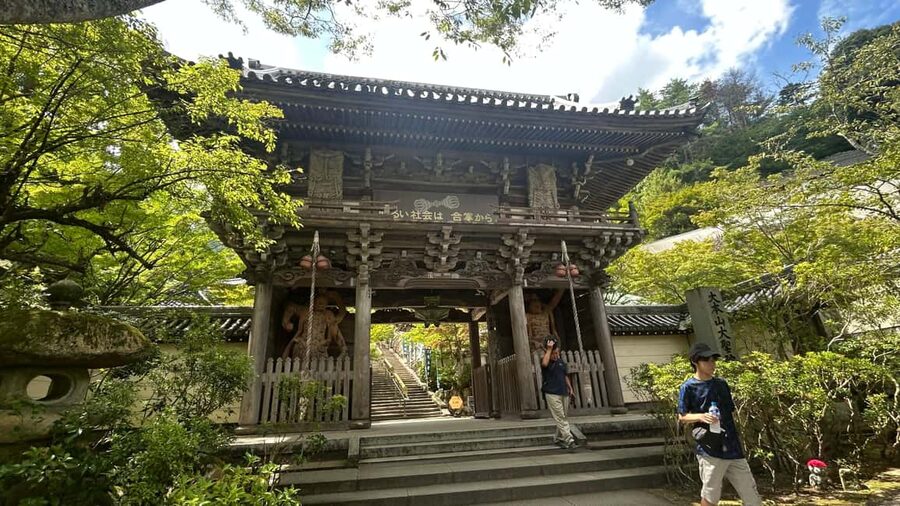
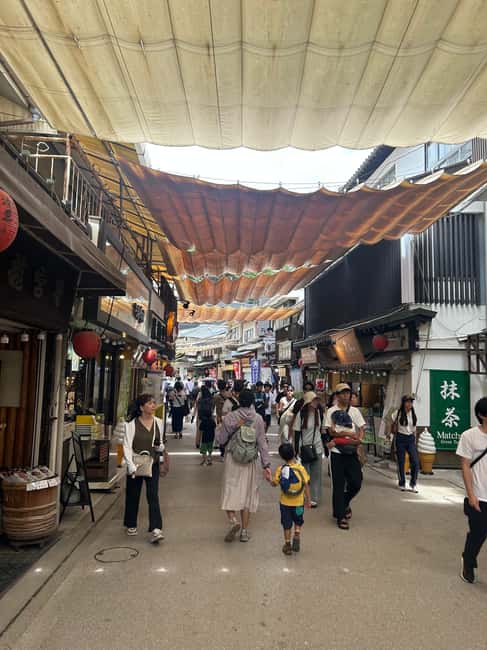
After the shrine, the tour allows about 45 minutes around Miyajima Omotesando Shopping Street. This is your chance to experience the island at street level, with food stalls, souvenir shops, and a lively flow of people moving between the ferry and shrine.
Look for local specialties such as oysters and momiji manju, a maple-leaf-shaped sweet associated with Miyajima. Since meals are not included, this break works well as a chance to buy a snack, though 45 minutes is too short for a long sit-down meal if the group must keep moving.
I like this part because it adds ordinary island life to the famous sight. You are not only looking at a shrine and a gate. You are also seeing what people eat, buy, and enjoy on the island. The limitation is choice. You cannot treat this as a full Miyajima day, and you will not have time here for a slow, unplanned wander far from the main route.
Wear comfortable shoes. The day includes station walks, trains, ferries, shrine grounds, shopping streets, and Hiroshima’s memorial area. Rain does not automatically cancel the tour, so bring suitable clothing and rain gear when the forecast calls for it.
More Miyajima island trips:
- Peaceful Hiroshima & Miyajima UNESCO 1 Day Bus Tour
★ 5.0 · 5,309 reviews - Hiroshima: Hiroshima and Miyajima UNESCO Sites 1-Day Tour
★ 4.9 · 2,330 reviews - Hiroshima / Miyajima Full-day Private Tour with Government Licensed Guide
★ 5.0 · 1,298 reviews - From Hiroshima: Hiroshima & Miyajima 1 Day Tour with Lunch
★ 4.7 · 395 reviews
Returning to Hiroshima’s difficult history
After another 15-minute ferry ride, you take a train for about 45 minutes back toward Hiroshima city. The longer return journey creates a natural pause between Miyajima and the afternoon’s memorial sites.
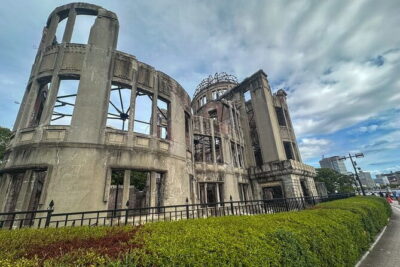
The mood changes sharply at the Atomic Bomb Dome. The tour gives you about 30 minutes here for a guided visit, photographs, and sightseeing. The preserved structure is one of Hiroshima’s most recognizable landmarks, but its importance is not limited to its appearance. It connects the physical city you are walking through with the atomic bombing of August 6, 1945.
A guide helps place the building and surrounding area in context without asking you to interpret everything alone. Guides named Shion and Bo were especially praised for explaining the bombing with care and strong English. Shion’s family connection to Hiroshima added a personal layer for some groups, including stories of relatives who survived and relatives who died.
That kind of account can make the site more personal, but guides vary. Some participants found one guide’s English less smooth, while still describing the day as useful and well paced. The tour is conducted in English, and most feedback points to strong communication, but you should allow for differences in accent, speed, and presentation.
Forty minutes through Peace Memorial Park
From the Dome, you continue through Peace Memorial Park for roughly 40 minutes. This is not filler between attractions. The park brings together monuments and spaces dedicated to those affected by the bombing, giving you time to process what you have just seen.
A guided walk is helpful here because the meaning of each monument is not always obvious from its shape or inscription. You can also ask questions as you move, rather than waiting until the end of a museum visit.
The park is open and reflective, but the schedule keeps you moving. Some people may want more time to pause, read, or sit quietly. One strong suggestion from the day’s feedback was to allow more time at the Peace Memorial sites and less on Miyajima. That is the central scheduling choice in this tour: you gain breadth, but you give up the slow pace that each location deserves.
One hour inside the Peace Memorial Museum
The final major stop is the Hiroshima Peace Memorial Museum, with about one hour scheduled for the visit. This is likely to be the most emotionally demanding part of the day. The exhibits provide direct insight into Hiroshima’s past, and the museum is a place where a guide’s framing can help you understand what you are seeing.
One hour gives you an introduction, but it may not satisfy you if you want to read every display carefully. The museum can also be very busy, and queues may reduce your time inside. Several people found the museum the highlight of the day while wishing the schedule allowed longer.
That does not make the museum portion weak. It means you should decide how to use the hour. I would listen closely to the guide at the start, focus on the exhibits that speak most strongly to you, and accept that a later return visit may be worthwhile if you have another day in Hiroshima.
The tour ends at the museum. This is practical if you want to continue exploring Peace Memorial Park or return to exhibits at your own pace. It is less convenient if you need to collect luggage at Hiroshima Station immediately afterward.
The museum closes from February 16 through February 21. During those dates, the tour continues with the Dome, park, and other planned stops, but the museum visit is skipped.
What the $96 price really covers
At $96 per person, the tour offers a guide, admission fees, and a carefully connected route between Miyajima and central Hiroshima. The value is strongest if this is your first time in the city, you have only one day, or you prefer not to work out the train and ferry sequence yourself.
Transport and meals are not included. Add your train and ferry fares, plus money for oysters, momiji manju, or another meal, and compare the full cost with exploring independently. The tour is not necessarily the cheapest way to see these places. Its value comes from saving planning time, keeping the day moving, and giving you a person to explain difficult subjects and answer questions.
The small group also matters. A limit of 10 is a good middle ground: more social than a private tour, but far more manageable than a large coach group. It gives the guide a chance to respond to individual questions, which was one of the most repeated strengths of the experience.
You can cancel up to 24 hours before departure for a full refund, and reserve now while paying later. Starting times depend on availability, so check the schedule before building the rest of your Hiroshima plans.
Who will get the most from this tour
I would recommend this tour to you if you want the essential Hiroshima and Miyajima sights in one organized day. It suits first-time visitors, solo participants who want company, and anyone who feels unsure about using Japanese trains and ferries.
It is also a good match if you want history explained by an English-speaking local guide. Shion, Bo, Rie, Lena, Hayato, Kana, Angel, and Shion’s fellow guides received praise for warmth, clear explanations, helpful recommendations, and personal attention. Do not assume you will receive a particular guide, but the range of positive comments suggests that the guiding team is a major part of the experience.
You should think twice if you dislike fixed schedules, need a wheelchair, have a mobility impairment, or want extensive free time. Children under six cannot join, electric wheelchairs are not accepted, and large bags are not allowed. The day operates in rain or shine, and walking is a major part of it.
Should you book Hiroshima and Miyajima in 6.5 hours?
Book it if you want a well-organized first look at both sides of Hiroshima: Miyajima’s shrine, food street, and ferry views, followed by the Atomic Bomb Dome, Peace Memorial Park, and museum.
I would book it with realistic expectations. You are buying structure and explanation, not a slow island day or a full museum study session. Bring cash, wear good shoes, leave large luggage behind, and avoid scheduling a tight train departure after the museum.
If your priority is the Peace Memorial Museum, choose a separate visit or plan to return after the tour. If your priority is seeing the city’s main sights efficiently, the $96 price is reasonable, especially with a small group and a guide who can make the day feel personal rather than mechanical.
FAQ
How long does the Hiroshima and Miyajima tour last?
The tour lasts 390 minutes, which is six and a half hours.
Where do I meet the guide?
Meet at Hiroshima Station’s North Exit, also called the Shinkansen Exit, on the second floor. Wait on the benches between the Midori no Madoguchi JR Green Ticket Office and the Starbucks opposite it.
How can I identify the guide?
The guide will have a bright fluorescent green band attached to their bag.
What languages are available?
The tour is conducted in English with a live English-speaking guide.
How large is the group?
The tour is limited to 10 participants.
Does the tour include train and ferry fares?
No. Transportation is not included, so bring Japanese yen in cash for the train and ferry.
Are meals included?
No. Meals are not included, but you have free time on Omotesando Shopping Street where you can buy food such as oysters or momiji manju.
What happens if it rains?
The tour operates rain or shine. Bring suitable clothing and rain gear if needed.
Will the torii gate always appear to float on the water?
No. Tide levels affect how the torii gate appears. Depending on the tide, it may be surrounded by water or more exposed.
Is the Peace Memorial Museum always included?
The museum is closed from February 16 through February 21. During those dates, the museum visit is skipped while the rest of the tour continues.
Is the tour suitable for wheelchair users?
No. The tour is not suitable for wheelchair users, people with mobility impairments, or electric wheelchairs. It is also not suitable for children under six.
Just added around Hiroshima
- Hiroshima & Miyajima: Private Full-Day Tour with a Local Guide★ 5.0 · 39 reviews
- Hiroshima and Miyajima 1 Day Walking Tour★ 5.0 · 43 reviews
- Hiroshima History Tour : A-Bomb Dome, Peace Memorial & City★ 5.0 · 43 reviews
- The Journey of Hiroshima from Tragedy to Peace★ 4.8 · 44 reviews
- Cultural Activities :Kimono, tea ceremony, Calligraphy and Amulet★ 5.0 · 44 reviews
- Miyajima: Private Rickshaw Tour to Itsukushima Shrine★ 4.9 · 45 reviews
- Hiroshima Private Tour: Best Highlights in a Day★ 5.0 · 49 reviews
- Hiroshima & Miyajima All-Inclusive Tour w/Licensed guide Pancho★ 5.0 · 54 reviews
Miyajima Island Tours, compared.
Peaceful Hiroshima & Miyajima UNESCO 1 Day Bus Tour
Read our review →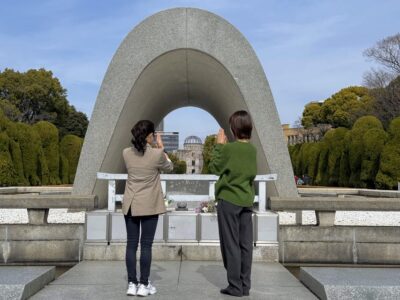
Hiroshima and Miyajima UNESCO Sites 1-Day Tour
Read our review →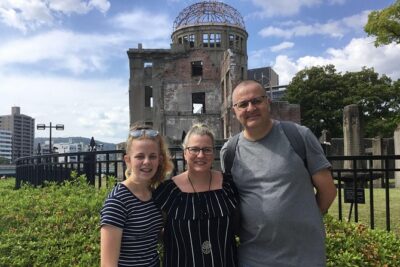
Hiroshima / Miyajima Full-day Private Tour with Government Licensed Guide
Read our review →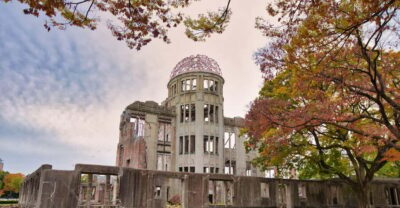
Osaka/Kyoto: Hiroshima Miyajima Bus Tour & Shinkansen Ticket
Read our review →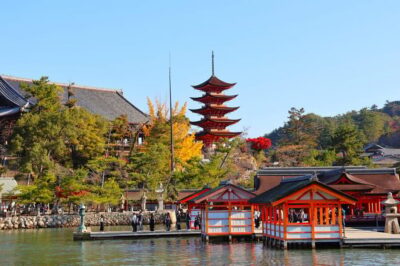
Hiroshima and Miyajima Day Trip with Itsukushima Shrine & Ferry
Read our review →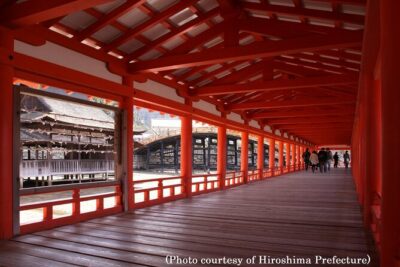
Full Day Hiroshima and Miyajima Bus Tour from Hiroshima
Read our review →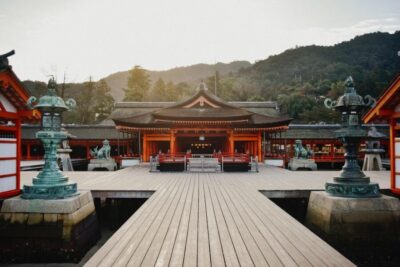
Miyajima Peace Memorial Icons of Peace and Beauty
Read our review →Browse the lists this tour appears in