
Reviewed · HIROSHIMA TOURS
Hiroshima: Peace Memorial Park and Atomic Bomb Dome Tour
Hiroshima asks you to slow down. This $23 walking tour makes the city’s memorials easier to understand, and I like its personal stories and clear attention to why each monument matters. I also like the chance to hear how Hiroshima rebuilt itself and lives as a peace city today. The main drawback is the amount of walking, plus a few reports of tours ending closer to 90 minutes than two hours.
Guides such as Syed, Hussain, Shah, Khan, and Aaze bring different personalities, but the strongest pattern is warm, careful teaching. Syed is praised for his pace, English, local restaurant suggestions, and ability to keep difficult material human. You should also know that the tour runs in rain and heat, has no food, and is not suitable for wheelchair users or people with mobility limits.
In This Review
- Key points before you book
- Why a guide helps in Hiroshima Peace Memorial Park
- Meeting at the Gates of Peace
- The Prayer Fountain and the human cost of thirst
- Forty minutes through Hiroshima Peace Memorial Park
- The Flame of Peace and the meaning of a promise
- Sadako Sasaki at the Children’s Peace Monument
- The Korean Atomic Bomb Victims Cenotaph
- Ringing the Bell of Peace
- Aioi Bridge and the route toward the Dome
- The Atomic Bomb Dome, a difficult but essential sight
- Finishing at the atomic bomb hypocenter
- What the $23 price really gives you
- Timing, weather, and comfort
- Who should book this Hiroshima walking tour?
- Should you book it?
- FAQ
- How long does the Hiroshima Peace Memorial Park tour last?
- How much does the tour cost?
- Where does the tour meet?
- Where does the tour finish?
- What languages are available?
- Is food included?
- Is hotel pickup or drop-off provided?
- What should I bring?
- Can wheelchair users join the tour?
Key points before you book
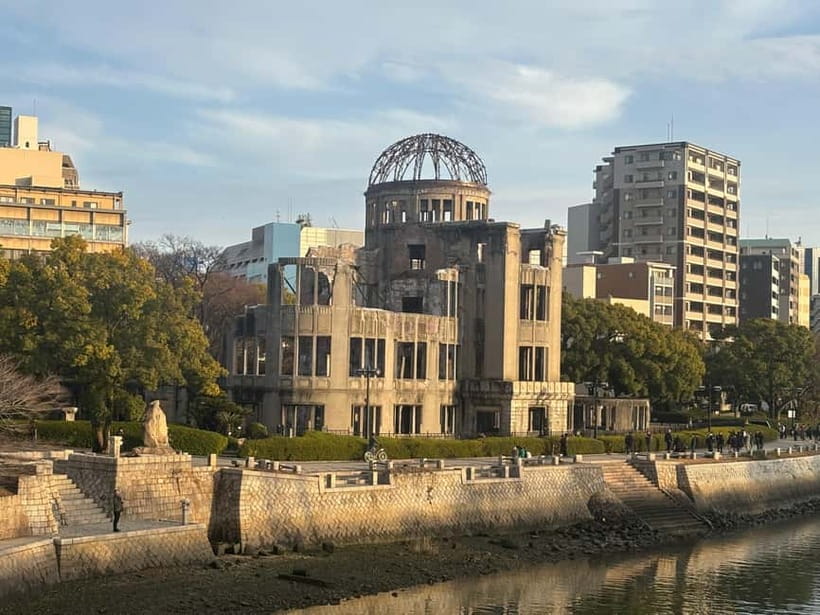
- The Atomic Bomb Dome comes at the end: You reach Hiroshima’s most famous ruin after building context through the park’s memorials.
- Personal stories give the tour its weight: Sadako Sasaki, atomic bomb survivors, and the man known to have survived the blast at the epicenter help move the subject beyond dates and statistics.
- The guide explains the reasons behind the target: You hear about the wartime setting and why Hiroshima was selected, subjects that can be harder to grasp from monuments alone.
- The price is unusually modest: At $23, you get a live two-hour guide across the main memorial area, with no admission fee or meal included.
- Evening can be a smart choice: One guest found the park easier to appreciate after the crowds had thinned.
- Wear real walking shoes: The tour covers several memorials, bridges, and open paths, and it operates in all weather.
Why a guide helps in Hiroshima Peace Memorial Park
Hiroshima Peace Memorial Park is not difficult to reach or walk through. The challenge is understanding what you are seeing. A cenotaph, fountain, bell, flame, and monument can blur together when you encounter them one after another without context.
A good guide slows the pace and connects the sites. You learn what each memorial represents, who it honors, and how it fits into Hiroshima’s larger story. The most praised guides, especially Syed, are described as friendly, engaged, and careful with questions.
That tone matters here. This is not a cheerful sightseeing stroll, and it should not feel like one. The subject includes mass death, personal loss, radiation, and the hard work of rebuilding. Guides are expected to present the material with respect, while still speaking naturally and allowing time for questions.
The tour also tries to look beyond August 1945. You hear about the city’s postwar recovery, its modernization, local customs, food, and present-day life. That wider view keeps Hiroshima from being treated only as a historical tragedy. It is a living Japanese city whose peace message developed through experience, memory, and renewal.
A few more Hiroshima experiences worth weighing up
- Peaceful Hiroshima & Miyajima UNESCO 1 Day Bus Tour
★ 5.0 · 5,309 reviews - Hiroshima: Hiroshima and Miyajima UNESCO Sites 1-Day Tour
★ 4.9 · 2,330 reviews - Hiroshima / Miyajima Full-day Private Tour with Government Licensed Guide
★ 5.0 · 1,298 reviews
Meeting at the Gates of Peace
The tour begins at the Gates of Peace, on the front side of the Italian restaurant Mario. This is a useful meeting point because it places you directly at the edge of the memorial grounds rather than wasting time on a long transfer.
The opening guided talk lasts about 20 minutes. Expect an introduction to Hiroshima, the park, and the purpose of the memorial area. This beginning helps set the right mood before you reach the best-known sites.
You are likely to hear why Hiroshima became the primary target and how the wartime situation shaped that decision. The information is valuable because it supplies political and military context that may not be explained in the same way by every museum display.
The Gates of Peace also introduce the tour’s central idea: remembrance should point toward peace rather than end with mourning. That theme returns at nearly every stop.
The Prayer Fountain and the human cost of thirst
The Prayer Fountain receives about 10 minutes. It is a quiet stop, but it carries one of the most physical reminders of the bombing’s effects.
The memorial’s meaning is tied to people who suffered severe burns and desperately needed water. Your guide can explain why a fountain appears in a place devoted to memory, and how ordinary needs such as drinking became urgent after the blast.
This is a good example of what a guided visit adds. You may notice the water immediately, but the explanation helps you connect the design with individual suffering rather than viewing it as another decorative feature.
The area is also a useful pause before the longer walk through the park. Hiroshima’s memorial spaces often ask you to look closely and then think quietly.
Forty minutes through Hiroshima Peace Memorial Park
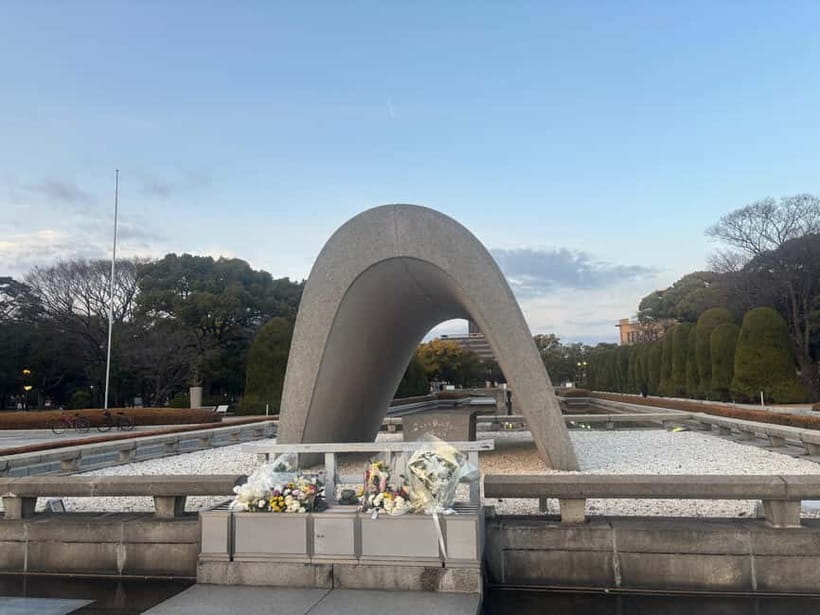
The central portion of the walk takes about 40 minutes in Hiroshima Peace Memorial Park. This is the tour’s main teaching stretch, with time to discuss the layout, memorial design, the bombing, and the city’s recovery.
The park is spacious, and the open setting can make the scale of the event difficult to picture. A guide gives you fixed points. Instead of walking past a monument and taking a quick photograph, you learn why it was placed there and how it relates to the surrounding sites.
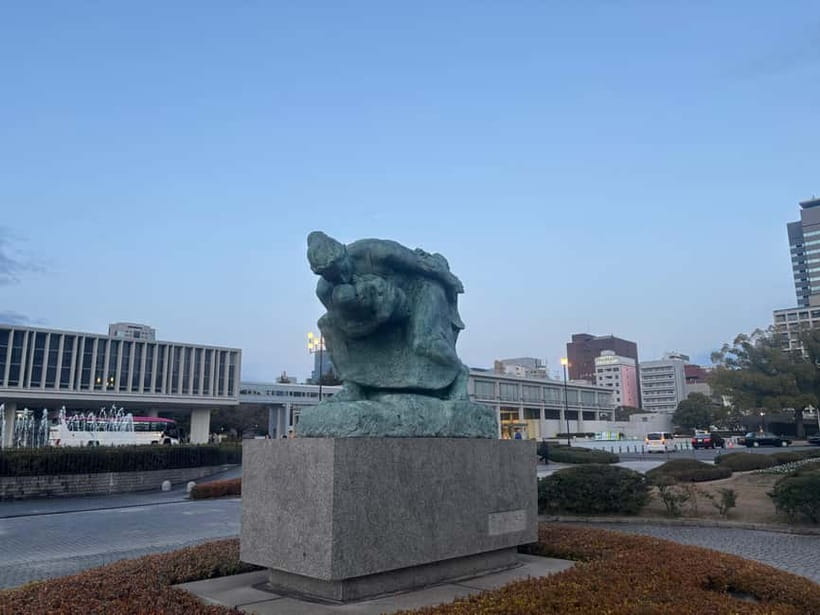
The Cenotaph for the A-bomb Victims is one of the key stops. This is where you pay tribute to those who died in 1945. The guide can explain the symbolism and the role of the cenotaph in Hiroshima’s ongoing remembrance.
The tour also includes the Hiroshima National Peace Memorial Hall. The supplied route does not list a separate timed stop there, so it may be discussed along the way rather than visited as a full interior experience. Do not assume the $23 price includes museum admission or a long indoor visit.
You may also hear about the Dr. Marcel Junod Memorial and the Norman Cousins Memorial. These introduce people connected with medical relief, peace work, and Hiroshima’s later public memory. They are easy to miss when you explore alone, which is one reason this walking tour can improve your first visit.
A completely different kind of day out in Hiroshima:
- Hiroshima Historical Walking Tour – Why A-Bomb was Dropped
★ 4.8 · 893 reviews - Hiroshima Peace (Heiwa) Walking Tour at World Heritage Sites
★ 5.0 · 872 reviews - Hiroshima in a Nutshell: Morning Bike Adventure
★ 5.0 · 524 reviews - Hiroshima City 4hr Private Walking Tour with Licensed Guide
★ 5.0 · 437 reviews
The Flame of Peace and the meaning of a promise
The Flame of Peace receives around 20 minutes, making it one of the longer stops. It is a simple but powerful symbol, linked to the wish that nuclear weapons will no longer threaten human life.
Your guide can explain how the flame functions as a continuing promise rather than a one-day memorial. The park is filled with such symbols, but the difference here is the sense of duration. The flame has remained part of Hiroshima’s public message for decades.
This section may feel more reflective than factual. You are not just collecting information about the bombing. You are considering how a city chooses to remember, what it wants the world to learn, and how peace becomes part of civic identity.
Sadako Sasaki at the Children’s Peace Monument
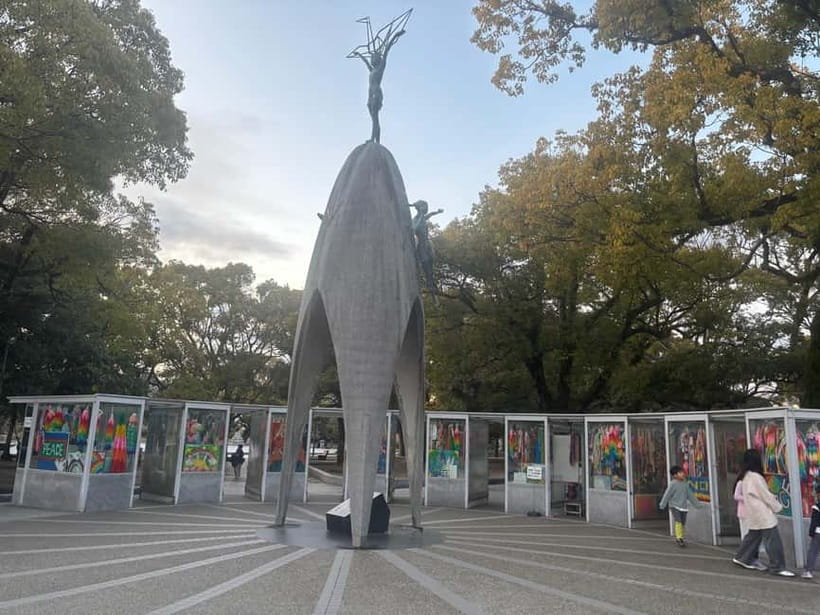
The Children’s Peace Monument has a 10-minute stop. This is where you learn about Sadako Sasaki and the thousand paper cranes.
Sadako’s story gives younger visitors an accessible way into Hiroshima’s history, but it is not only for children. It connects the atomic bombing to illness, hope, family, and the long aftereffects that cannot be measured by the moment of impact alone.
The paper cranes also show how personal acts can become part of public memory. If you have seen cranes in Japanese culture, the guide’s explanation helps you understand why they appear here in such large numbers.
This is one of the places where the guide’s storytelling style matters most. A dry explanation would miss the emotional force. The strongest feedback about Syed and the other guides points to their ability to tell personal stories without turning a serious memorial into a performance.
The Korean Atomic Bomb Victims Cenotaph
The Korean Atomic Bomb Victims Cenotaph takes about 10 minutes. This stop broadens the story beyond Hiroshima’s Japanese population and points to the Korean people who were also in the city when the bomb fell.
It is an important inclusion. Visitors who walk only to the Dome and the main cenotaph can leave with an incomplete picture of who suffered. The guide gives you a chance to consider the wider wartime history and the different communities affected by the bombing.
This is also a reminder that memorial spaces contain layers of memory. Hiroshima’s story is local, national, and international at the same time.
Ringing the Bell of Peace
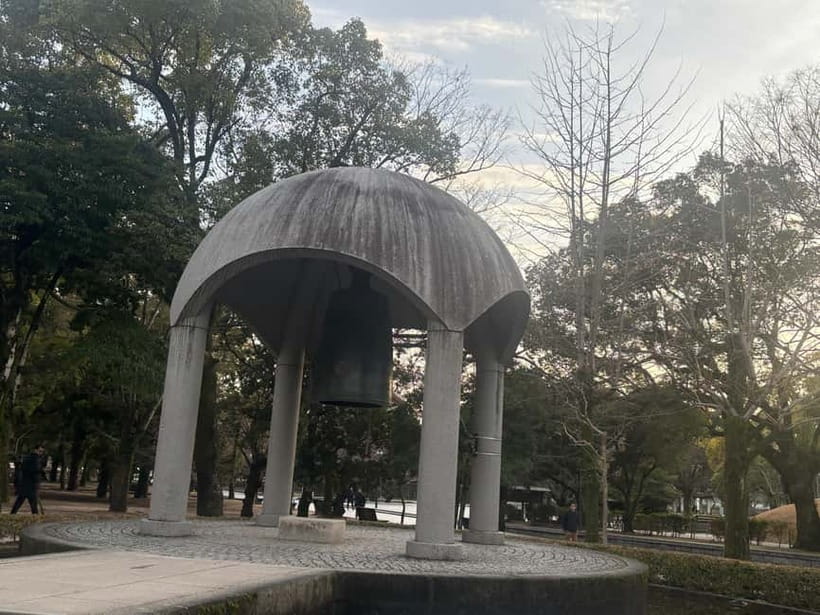
The Bell of Peace is another 10-minute stop. You are invited to ring it as a sign of hope and world peace.
The action is brief, but it gives you something to do rather than simply observe. On a tour filled with solemn information, that small act can help you participate in the park’s message.
Use good judgment when photographing or ringing the bell. Photography is allowed, but memorial areas call for a respectful approach. The tour does not ban cameras, yet this is not the place for loud posing or a rushed photo session.
Aioi Bridge and the route toward the Dome
The walk continues to Aioi Bridge for roughly 10 minutes. The bridge is important because of its connection to the bombing’s targeting and the geography of central Hiroshima.
Here the guide can help you understand the city’s layout and the reason this location mattered. That kind of explanation is particularly useful because the modern city has been rebuilt, making it hard to picture the prewar streetscape without assistance.
The bridge also prepares you for the Atomic Bomb Dome. You move from broader discussion into a physical view of the structure that has become Hiroshima’s most recognizable symbol.
The Atomic Bomb Dome, a difficult but essential sight
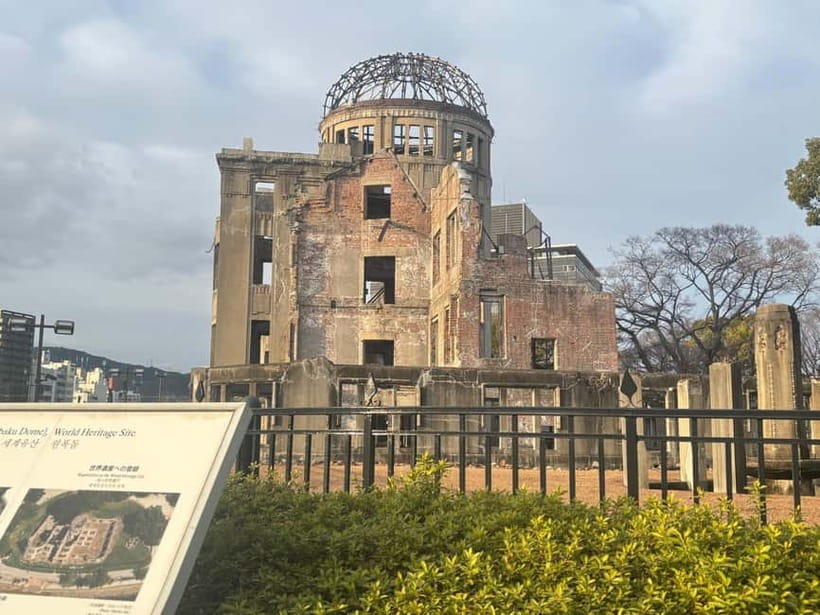
The Atomic Bomb Dome receives about 10 minutes, though the walk’s timing can vary. The building is the UNESCO World Heritage Site at the heart of most Hiroshima visits.
Its damaged frame has been preserved rather than restored to its former appearance. You can see why it has such force: it is a surviving piece of the city before the bombing, left in a form that records the blast without needing a long caption.
A guide adds the story of the building, the decision to preserve it, and its place in Hiroshima’s peace message. You should not expect to enter the structure. The value is in viewing it from the surrounding area and understanding why this particular ruin remains.
The Dome can feel visually stark, especially against the rebuilt city around it. That contrast is part of the lesson. Hiroshima did not remain frozen in 1945. It rebuilt, modernized, and continued living, while keeping this one damaged building as a reminder.
Finishing at the atomic bomb hypocenter
The tour ends at the Hiroshima Atomic Bomb Hypocenter Monument. This gives the route a strong final point because you finish close to the place identified as the blast’s center.
Your guide may discuss the effects at the epicenter and the story of the one person known to have survived the blast there, a detail that several participants found especially striking. The point is not to turn survival into spectacle, but to show how individual accounts can make an enormous event easier to grasp.
The final stop also leaves you well placed to continue on your own. You can spend more time at the park, visit the museum if it fits your schedule, or ask your guide for a meal suggestion. Syed is repeatedly praised for recommending okonomiyaki and other local food, so ask before parting if you want help choosing dinner.
What the $23 price really gives you
At $23 per person, this is a strong-value introduction to Hiroshima’s memorial district. You are paying for a live English, Urdu, or Hindi guide who leads you between the main sites and explains details that are easy to miss.
The value is not in admission tickets, food, or transportation. None of those are included. There is no hotel pickup or drop-off, and no meal is served. You are buying interpretation and direction, which is exactly where a modest walking tour can earn its price.
I would compare it with the cost of spending two hours wandering without context. The park itself is free to walk through, but missing the meaning of the Korean cenotaph, the Prayer Fountain, the Flame of Peace, or the various memorials can make that free visit less useful.
The tour is also flexible financially. You can reserve now and pay later, and cancellation is free up to 24 hours before the start. Check the available start times when booking, especially if you prefer an evening walk.
Timing, weather, and comfort
Bring comfortable shoes, water, sunscreen, and a hat. You should expect a significant amount of walking across open paths, and the tour operates in all weather.
Summer conditions can make the pace feel harder, while rain can affect your comfort even though the guide continues. Carrying a small umbrella or rain layer is sensible, though only the supplied information specifically requires weather-appropriate clothing.
One unusual point is the timing. The advertised duration is two hours, but one group reported a 90-minute tour and felt the ending was abrupt. Another guest noted a start-time misunderstanding that the guide handled well. I would confirm the meeting time carefully and leave a little flexibility after the tour.
Evening tours may suit you if you prefer a quieter park. One participant felt that the monuments were easier to appreciate after the crowds had gone. Daytime may be better if you want to continue directly into museum visits or see the park in full light.
Who should book this Hiroshima walking tour?
I would recommend it to first-time visitors who want a clear introduction before exploring the Peace Memorial Museum and wider city. It also suits you if you prefer asking questions instead of reading every plaque alone.
Families with older children and teenagers may appreciate the mix of monuments, personal stories, and movement. The route gives young people something concrete to follow, especially at the Children’s Peace Monument and Peace Bell.
The tour is less suitable if you want a long, quiet meditation at each site. The schedule is active, and the guide has several stops to cover in about two hours. You may need to return later for more time at the places that affect you most.
It is also not suitable for wheelchair users or people with mobility impairments, according to the activity information. Since the route operates in all weather and includes substantial walking, you should consider your comfort before booking.
Should you book it?
Book this tour if you want meaning, context, and personal stories for a low price. The strongest guides, especially Syed, are praised for clear explanations, a gentle manner, good pacing, and useful food advice.
Do not book it expecting a meal, hotel transport, museum admission, or a perfectly fixed two-hour schedule. Treat it as a guided introduction, then leave time to explore the museum and memorial grounds at your own pace.
For most first visits, I think the $23 is money well spent. Hiroshima is easy to walk through but harder to understand. A thoughtful guide helps you see the city not only as the place where the bomb fell, but as a community that remembers, rebuilds, and asks the world to choose peace.
FAQ
How long does the Hiroshima Peace Memorial Park tour last?
The advertised duration is two hours. One reported experience lasted about 90 minutes, so you should allow some flexibility in your plans.
How much does the tour cost?
The price is $23 per person.
Where does the tour meet?
Meet at the Gates of Peace, on the front side of the Italian restaurant Mario.
Where does the tour finish?
The tour finishes at the Hiroshima Atomic Bomb Hypocenter Monument.
What languages are available?
Live guiding is available in English, Urdu, and Hindi.
Is food included?
No. Food is not served, and personal expenses are not included.
Is hotel pickup or drop-off provided?
No. Hotel pickup and drop-off are not included.
What should I bring?
Bring comfortable walking shoes, water, sunscreen, a hat, and a camera. Dress for the weather because the tour operates in all conditions.
Can wheelchair users join the tour?
The experience is not suitable for wheelchair users or people with mobility impairments.
Just added around Hiroshima
- Hiroshima & Miyajima: Private Full-Day Tour with a Local Guide★ 5.0 · 39 reviews
- Hiroshima and Miyajima 1 Day Walking Tour★ 5.0 · 43 reviews
- Hiroshima History Tour : A-Bomb Dome, Peace Memorial & City★ 5.0 · 43 reviews
- The Journey of Hiroshima from Tragedy to Peace★ 4.8 · 44 reviews
- Cultural Activities :Kimono, tea ceremony, Calligraphy and Amulet★ 5.0 · 44 reviews
- Miyajima: Private Rickshaw Tour to Itsukushima Shrine★ 4.9 · 45 reviews
- Hiroshima Private Tour: Best Highlights in a Day★ 5.0 · 49 reviews
- Hiroshima & Miyajima All-Inclusive Tour w/Licensed guide Pancho★ 5.0 · 54 reviews
Hiroshima Tours, compared.
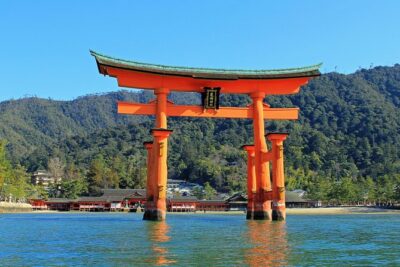
Peaceful Hiroshima & Miyajima UNESCO 1 Day Bus Tour
Read our review →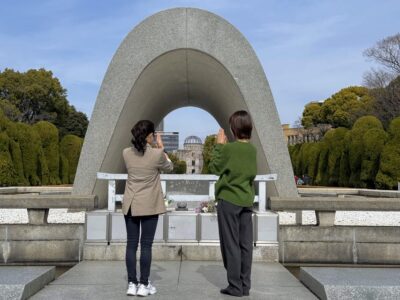
Hiroshima and Miyajima UNESCO Sites 1-Day Tour
Read our review →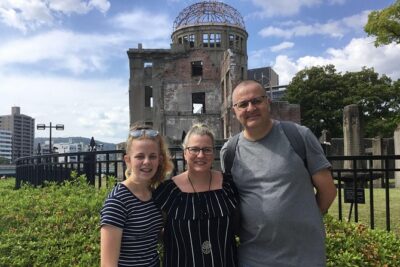
Hiroshima / Miyajima Full-day Private Tour with Government Licensed Guide
Read our review →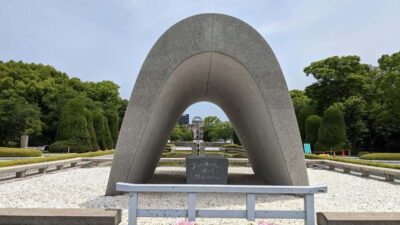
Hiroshima Historical Walking Tour – Why A-Bomb was Dropped
Read our review →
Hiroshima Peace (Heiwa) Walking Tour at World Heritage Sites
Read our review →
Hiroshima in a Nutshell: Morning Bike Adventure
Read our review →
Hiroshima City 4hr Private Walking Tour with Licensed Guide
Read our review →
Browse the lists this tour appears in