
Reviewed · WALKING TOURS
Kamakura 8 hr Private Walking Tour with Licensed Guide from Tokyo
Japan’s old capital makes a fine escape. This private Kamakura day trip gives you a local English-speaking guide, a flexible choice of four to six sights, and help with the trains and buses between Tokyo and the coast. I especially like the chance to shape the day around your interests, and I like that guides such as Taka, Shinji, Andy, and Makoto have adjusted plans, found suitable lunch spots, and helped families move at a comfortable pace.
The main drawback is time. Eight hours sounds generous, but public transportation from Tokyo is included within those hours, and Kamakura has far more temples, shrines, gardens, and coastal views than one day can hold. You will need to choose carefully, and admission fees, fares, lunch, and personal expenses are extra.
In This Review
- Key points to know before booking
- Why Kamakura works as a Tokyo day trip
- Tsurugaoka Hachimangu sets the historical tone
- The Great Buddha remains Kamakura’s must-see sight
- Hasedera adds ocean views and Buddhist art
- Komachi Street is best used for lunch and small discoveries
- Hokoku-ji is the small bamboo stop
- Enoshima adds the sea, but costs precious hours
- The five great Zen temples suit a history-minded day
- Engaku-ji
- Kencho-ji
- Jochi-ji
- Tokei-ji
- Jufuku-ji
- Jomyo-ji
- Smaller temples give you a quieter side of town
- Hiking trails are possible, but do not overpack the schedule
- What the $201.51 price really buys
- Who should book this private Kamakura day
- Final verdict: a strong guided introduction with one warning
- FAQ
- How long does the Kamakura private walking tour last?
- Is transportation included in the tour price?
- Does the tour provide a private vehicle?
- How many Kamakura sights can I choose?
- Are entrance fees included?
- Is pickup available from my Tokyo hotel?
Key points to know before booking
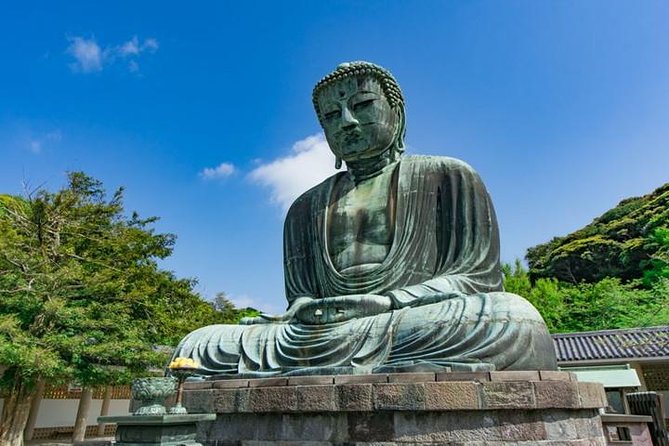
- Your guide helps you choose the day: Pick from major sights such as the Great Buddha, Hasedera, Tsurugaoka Hachimangu, bamboo groves, Zen temples, hiking trails, and Enoshima.
- Public transportation is part of the experience: You travel by train, bus, and local lines, with the guide handling the route and transfers.
- The Great Buddha is the headline sight: The bronze Amida Buddha at Kotoku-in is 11.4 meters tall and one of Kamakura’s essential stops.
- The tour works well for food and mobility requests: Guides have helped with gluten-free meals, lunch preferences, shopping choices, and slower pacing for older family members.
- You pay extra for many highlights: Transportation, lunch, personal purchases, and temple or shrine entry fees are not included.
- The day is private: Only your group participates, so you can spend more time on temples, coastal scenery, food, or shopping instead of following a fixed bus schedule.
Why Kamakura works as a Tokyo day trip
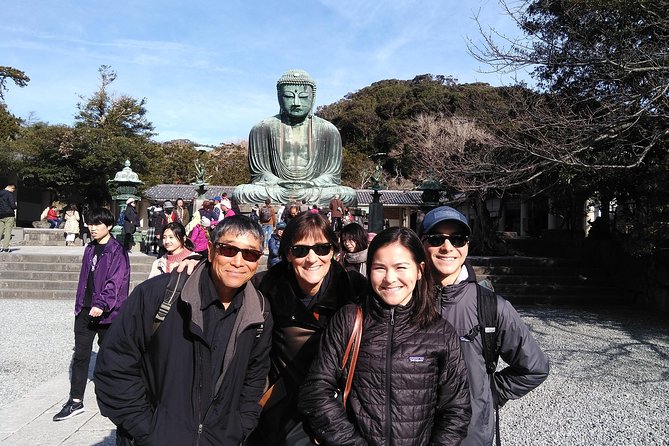
Kamakura sits south of Tokyo, where the city gives way to wooded hills and the Pacific coast. It was the seat of Japan’s first military government in the late twelfth century, and its temples and shrines reflect the town’s long connection with samurai rule, Zen Buddhism, and devotional traditions.
You can reach Kamakura independently, but the route can involve transfers and several different train lines. One family found the journey from Shinjuku tricky, with three transfers. That is where a private guide earns much of the fee. You are not simply paying for facts at a temple. You are also paying for someone to get you there, keep the day moving, and explain what you are seeing.
The experience begins with an on-foot meeting in a designated area of Tokyo. This is not a private car tour, and no vehicle is supplied. Your guide accompanies you on public transportation, with travel time counted within the eight-hour tour.
That detail matters. If you want a relaxed morning, a long lunch, and several distant temples, the schedule may feel tight. If you want an efficient first look at Kamakura without learning the rail system on the fly, the arrangement makes good sense.
More Licensed Guide Tours in Tokyo
- Tokyo 6hr Private Tour with Government-Licensed Guide
★ 5.0 · 3,902 reviews - Tokyo 4hr Private Tour with Government-Licensed Guide
★ 5.0 · 1,394 reviews - Tsukiji Food and Toyosu Market with Government-Licensed Guide
★ 5.0 · 158 reviews
Tsurugaoka Hachimangu sets the historical tone
Many days begin at Tsurugaoka Hachimangu, Kamakura’s central Shinto shrine. It is dedicated to Hachiman, a deity associated with the Minamoto family and samurai tradition.
The shrine gives you a useful introduction to Kamakura because it is both religious site and civic landmark. Its broad approach leads through the heart of town, making it easy to combine with Komachi Street afterward. The listed visit time is only about 15 minutes, but you may want longer if you wish to look around carefully.
Ask your guide to explain the difference between a Shinto shrine and a Buddhist temple. That simple question can make the rest of the day easier to understand. You will see both traditions repeatedly, but they serve different roles and have different visual details.
Tsurugaoka Hachimangu is also a practical first stop. It helps you get your bearings before the day moves toward the western temples and coast.
The Great Buddha remains Kamakura’s must-see sight
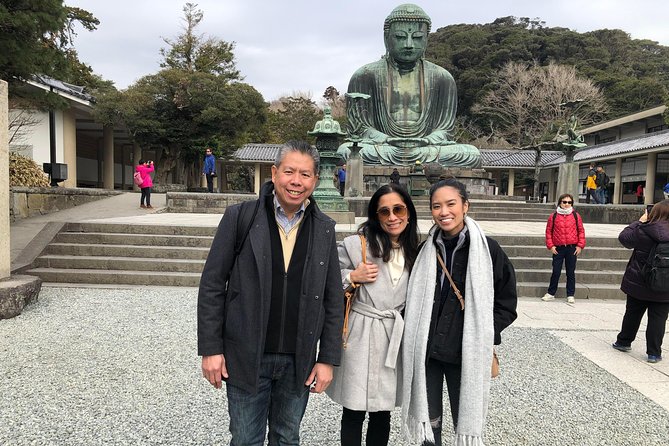
At Kotoku-in, you come face to face with Kamakura’s famous bronze Great Buddha. The Amida Buddha is 11.4 meters tall, and its scale is most impressive when you stand close to the base and look up.
The statue is outdoors on temple grounds, a fact that gives the visit a different feel from seeing a giant image inside a dark hall. The surrounding space is relatively straightforward, so the value comes from the statue itself and your guide’s explanation of its place in Kamakura’s Buddhist tradition.
The advertised stop is about 15 minutes, and that can be enough for a quick look and photographs. If this is one of your main reasons for coming, tell your guide in advance. You may want time to study the details, enter the statue if that option is available at the time, and avoid being hurried by a packed schedule.
Admission to Kotoku-in is not included. Budget separately for entry fees at this and other paid temples.
Hasedera adds ocean views and Buddhist art
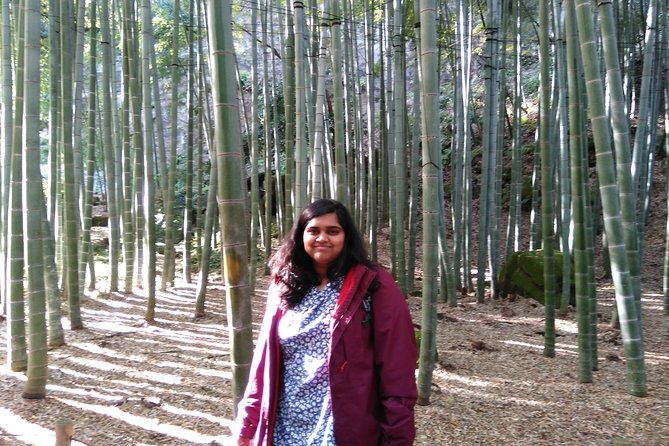
Hasedera is known for its eleven-headed Kannon, a gilded wooden statue associated with mercy. The statue is 9.18 meters tall, but the temple grounds offer more than an indoor religious image.
A higher section of the temple provides views toward the ocean. That combination of Buddhist art, hillside paths, and coastal scenery makes Hasedera one of the strongest choices for a first visit to Kamakura.
The listed stop lasts about 15 minutes, although that is a brisk visit. If you want to pause at the viewpoints or take your time around the temple grounds, Hasedera can easily claim more of the day. It is a good place to tell your guide what matters most to you: religious art, gardens, views, photographs, or a slower walk.
Entry is extra. Like Kotoku-in, Hasedera is one of the paid stops most people will want to prioritize.
More Walking Tours in Tokyo
- Tokyo Tsukiji Fish Market Food and Culture Walking Tour
★ 5.0 · 3,184 reviews - Tokyo: Imperial Palace and Shogun Historical Walking Tour
★ 5.0 · 2,251 reviews - Tokyo: Shinjuku Local Bar and Izakaya Guided Walking Tour
★ 4.9 · 1,794 reviews - Tokyo: Tsukiji Fish Market Food and Walking tour
★ 5.0 · 1,724 reviews
Komachi Street is best used for lunch and small discoveries
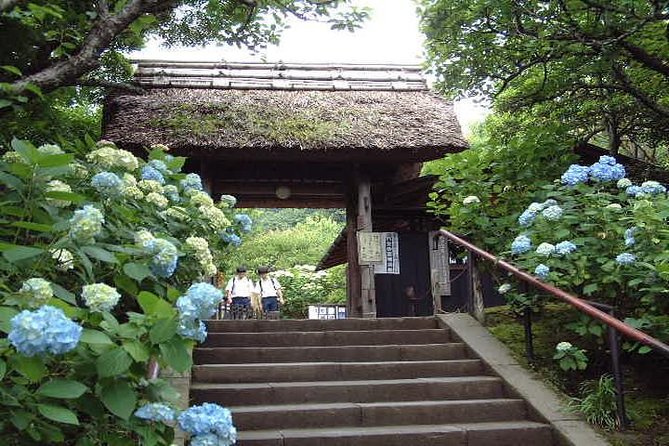
Komachi Street runs near Tsurugaoka Hachimangu and is Kamakura’s main shopping lane. You can browse food stalls, sweets, souvenirs, and local products, including the famous dove-shaped Hato Sabure biscuits.
The biscuits are a charming Kamakura specialty and an easy edible souvenir. The shopping area is aimed at visitors, so do not expect a quiet old lane untouched by tourism. Still, it is useful for lunch, snacks, gift shopping, and a break between temples.
Several guides have helped with restaurant choices and ordering. One guide found a gluten-free dish for a traveler’s mother, while another helped a family order tempura. A different guide recommended a lunch that became one of the best meals of the trip. Tell your guide about dietary needs or a particular food interest early in the day.
I would not give Komachi Street more time than it deserves if your priority is temples and scenery. A short browse and a well-chosen meal may be enough.
Hokoku-ji is the small bamboo stop
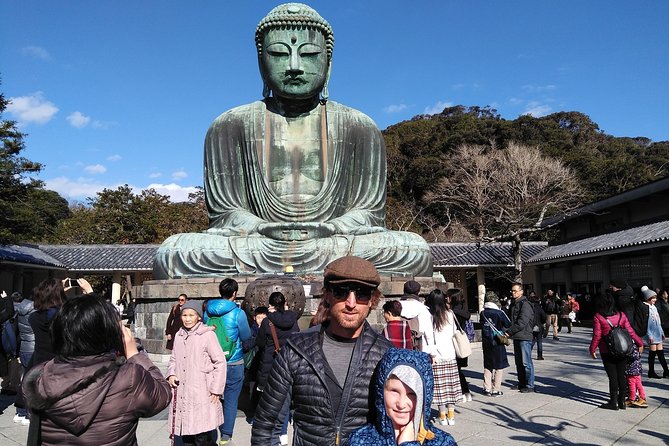
Hokoku-ji Temple is known for a compact grove of more than 2,000 bamboo stalks behind the main hall. Narrow paths lead through the dark green grove, creating one of the day’s most distinct changes of mood.
The listed visit lasts 30 minutes. That is realistic for a short walk through the bamboo and a look around the temple, though it leaves little room for lingering. The grove is not a huge forest, so keep expectations sensible. Its appeal comes from atmosphere and scale, not from hours of hiking.
This is a particularly good pick if you want something beyond major temple halls. It also pairs well with the Great Buddha and Hasedera, giving you three very different experiences in one day.
Admission is extra. Since the tour allows only a selection of sites, ask your guide how Hokoku-ji fits with your other choices and the available transit time.
Enoshima adds the sea, but costs precious hours
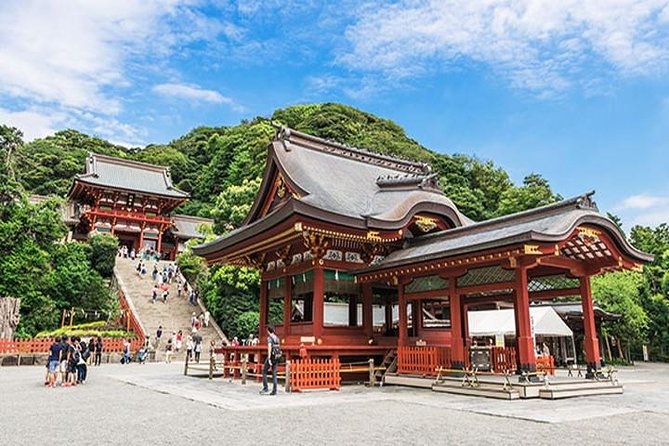
Enoshima is an island just west of Kamakura, connected to the mainland by bridge and reached by a short train ride from the city. It has a shrine and other attractions, with a more recreational feel than Kamakura’s temple districts.
The listed visit is about 30 minutes, which is enough for a taste but not a full exploration. If you want the island’s shrines, paths, shops, and coastal views, you will need to give it more time and accept fewer Kamakura temples.
Some private groups have ended their day at Enoshima after visiting the Great Buddha, Hasedera, and Tsurugaoka Hachimangu. Others have preferred historic temples instead. I would choose Enoshima if ocean scenery and a change of pace matter more to you than seeing another Zen temple.
On a clear day, coastal viewpoints may offer excellent views, and one guide added a stop at Inamuragasaki for a view of Mount Fuji. That was an extra adjustment, not a guaranteed feature, so mention coastal scenery when you plan your day.
The five great Zen temples suit a history-minded day
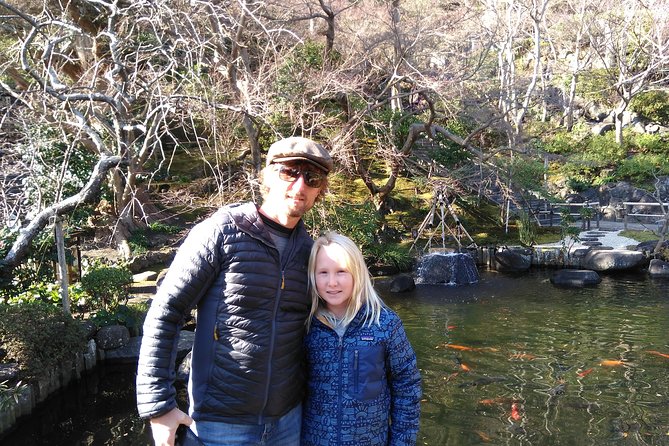
Kamakura’s northern and eastern districts contain several major Zen temples. You cannot see all of them properly in eight hours, especially with the Tokyo journey, so use your guide to select one or two.
Engaku-ji
Engaku-ji is one of eastern Japan’s leading Zen temples and ranks second among Kamakura’s five great Zen temples. The suggested visit lasts 30 minutes.
It is a sensible choice near Kita-Kamakura Station, especially if you want to begin in the quieter northern part of town. Its status gives the site historical weight, but the real pleasure is walking through a working temple setting surrounded by hills.
Kencho-ji
Kencho-ji ranks first among Kamakura’s five great Zen temples and is described as the oldest Zen temple in Kamakura. Allow about 30 minutes for the listed visit.
Choose it if Zen architecture and temple history are central to your interests. It is less useful to squeeze in just for a photograph. A guide can explain why its rank and founding date matter, which makes the visit more rewarding.
Jochi-ji
Jochi-ji ranks fourth among the five great Zen temples and belongs to the Rinzai tradition. The stop is listed at 30 minutes.
It can work well with Engaku-ji because both are in the Kita-Kamakura area. Seeing nearby temples reduces backtracking, an important advantage when travel time is included in the tour.
Tokei-ji
Tokei-ji is a smaller Rinzai temple near Engaku-ji, with a suggested visit of 15 minutes. Its shorter stop makes it easier to add when you want a sample of several temple settings.
Jufuku-ji
Jufuku-ji ranks third among the five great Zen temples and is linked with the Kencho-ji school. The listed visit is 15 minutes.
It is a useful short stop near other central Kamakura sights. Do not expect a long guided visit here, but it can add another layer to a day focused on Zen temples.
Jomyo-ji
Jomyo-ji ranks fifth among the five great Zen temples and lies in the eastern hills. It is associated with the Ashikaga family and has a 30-minute suggested visit.
Its location makes route planning important. It may be an excellent choice if you prefer a less central temple area, but adding it alongside western Kamakura and Enoshima could make the day feel rushed.
Smaller temples give you a quieter side of town
The optional list includes several sites that are better suited to repeat visitors, temple enthusiasts, or people who want a less obvious route.
Zeniarai Benten Shrine is known for washing money in its spring. The name itself refers to this practice, and the shrine offers a memorable custom that is easy to understand even on a short visit. The suggested stop is 30 minutes, and admission is free.
Meigetsu-in is called the Hydrangea Temple because hydrangeas bloom there in abundance. It belongs to the Rinzai Zen tradition and is listed for only 10 minutes, making it a seasonal choice rather than a major anchor for the day.
Zuisen-ji sits at the far eastern end of Kamakura in a narrow valley surrounded by wooded hills. It is a branch temple of Engaku-ji and receives a suggested 30-minute visit. The distance means you should choose it because you genuinely want this type of setting, not because you hope to add it casually between central stops.
Ankokuron-ji and Myohonji are Nichiren temples among the southeastern hills. Each is listed for about 30 minutes. They can help you see a different branch of Japanese Buddhism, but their locations require more careful planning.
Eisho-ji, near Tsurugaoka Hachimangu, is described as Kamakura’s only surviving nunnery. Its connection to a woman linked with the Tokugawa family gives it a distinct story, and the suggested visit is 15 minutes.
These smaller temples are where the private format has real value. You can tell your guide that you prefer unusual religious sites to the standard highlights, then build the day around that choice.
Hiking trails are possible, but do not overpack the schedule
Kamakura is bordered by the ocean to the south and wooded hills in the other directions. Hiking trails connect some temples and offer a more active way to move through town.
The suggested trail time is one hour, with no admission fee. That is enough for a walk, not a full hiking day. Ask about the trail’s demands before committing, especially if your group includes older family members or anyone who does not want uneven paths.
The private format helps here. Guides have adjusted walking speed and helped a 70-year-old parent enjoy the day. At the same time, one guide was described as a fast walker, which worked well for one fit solo visitor but would not suit every group. Tell the agency and guide your preferred pace.
What the $201.51 price really buys
At $201.51 per person, this is not a budget excursion. The price covers a private licensed local English-speaking guide, a customized day, and support from Tokyo through Kamakura and back within the tour period.
You still pay for train and bus fares, entrance fees, lunch, and personal purchases. There is no private vehicle. If you are traveling alone or as a couple, the per-person cost is substantial. For a family or small group, the private rate may offer better value because everyone shares the guide’s time and the schedule is not built around strangers.
The strongest value comes from reducing friction. Your guide can explain transfers, help you choose realistic stops, find food that meets your needs, and change the plan when you decide you want temples instead of shopping. Many guides have also helped with photos, restaurant ordering, and cultural questions.
The tour is often booked about 56 days ahead, so early planning is sensible if your Tokyo dates are fixed. Free cancellation is available until 24 hours before the start time. Changes or cancellations inside that window are not accepted for a refund.
Who should book this private Kamakura day
I would choose this tour if you want to see Kamakura from Tokyo but do not want to manage several train and bus connections. It is especially useful for families, solo visitors, older relatives, first-time visitors to Japan, and anyone with a short Tokyo stay.
It also suits you if you have clear priorities. Tell the guide you want the Great Buddha, bamboo, ocean views, or particular temples, and the day can be built around those goals. Guides named in the feedback include Taka, Shinji, Kenji, Makoto, Andy, Fumio, Eiko, Nobu, Hiroyuki, and others, but you cannot assume a particular person will be assigned unless confirmed.
I would skip it if you prefer slow independent exploration or want to spend two or three days in Kamakura. The town deserves that extra time, and a fixed eight-hour window can turn a pleasant day into a fast march if you choose too many distant sites.
Final verdict: a strong guided introduction with one warning
This is a well-rated private day trip, with a 4.8 rating from 80 reviews and a 95 percent recommendation rate. The praise focuses on the guides’ patience, route planning, flexibility, food help, and ability to make visitors feel comfortable on unfamiliar public transportation.
The key is to keep your wish list short. Choose the Great Buddha, Hasedera, and Tsurugaoka Hachimangu for a classic first day. Add Hokoku-ji for bamboo, Enoshima for the coast, or one northern Zen temple if you want a more personal mix.
Book it for efficient, flexible sightseeing with human help. Do not book it expecting every temple on the list, a private car, or a leisurely pace at every stop. With realistic planning, it gives you a strong first taste of Kamakura without the usual transport headaches.
FAQ
How long does the Kamakura private walking tour last?
The experience lasts approximately eight hours. Travel time by public transportation is included within those eight hours.
Is transportation included in the tour price?
No. The guide accompanies you on public transportation, but train, bus, and other transportation fees are not included in the tour price.
Does the tour provide a private vehicle?
No. This is a walking and public transportation tour. A private vehicle is not included.
How many Kamakura sights can I choose?
The tour allows a customizable selection of four to six sites from the available list. Your guide helps shape the route around your interests and the time available.
Are entrance fees included?
Entrance fees are not generally included. The tour information states that guide entry fees are covered only for sights listed under the What to Expect section. You should budget separately for your own temple and attraction admissions.
Is pickup available from my Tokyo hotel?
The guide meets you on foot within a designated area of Tokyo. This is not vehicle pickup, and the exact meeting arrangement is provided with the booking confirmation.
Just added around Tokyo
- Tokyo 6hr Instagram Highlights Private Tour with Licensed Guide★ 5.0 · 38 reviews
- Tokyo Small Group Tour with Guide★ 4.5 · 38 reviews
- Tokyo Sumo Experience with Live Show & Audience Challenge★ 5.0 · 38 reviews
- Japanese Food Cooking Class in Asakusa, Tokyo★ 5.0 · 39 reviews
- Very popular in Harajuku♡Animal petting zoo★ 4.6 · 39 reviews
- Ramen Making from Scratch with Tokyo Mom(Vegan Option Available)★ 5.0 · 39 reviews
- Tokyo: Kimono Rental inside Shinjuku Gyoen National Garden★ 4.9 · 39 reviews
- Tokyo JDM Night: 600hp C63s AMG Edition 1 (Private)★ 4.9 · 39 reviews
Walking Tours, compared.
Kyoto Geisha Walking Tour: Gion District & Hidden Gems
Read our review →
Tokyo Tsukiji Fish Market Food and Culture Walking Tour
Read our review →
Gion Magical Night Walking Tour with Geisha Trivia
Read our review →
Imperial Palace and Shogun Historical Walking Tour
Read our review →
Gion Geisha District Walking Tour – Stories of Geisha
Read our review →
Shinjuku Local Bar and Izakaya Guided Walking Tour
Read our review →
Browse the lists this tour appears in