
Reviewed · FULL-DAY
Kyoto and Nara UNESCO Highlights Full-day Tour From Osaka
One day, three major sights, plenty of walking. This Kyoto and Nara day tour from Osaka packs Kiyomizu-dera, Fushimi Inari Shrine, and Nara Park into about nine hours and twenty minutes. I like the efficient route, especially if you want to see several famous places without working out Japan’s rail connections. I also like the free time at each stop, which lets you set your own pace instead of following a guide every minute.
The price is attractive at $62.75 per person, including a shared air-conditioned bus and multilingual guide. The catch is a tight schedule, extra temple fees, no included lunch, and a possible hot ride if the bus cannot keep its engine running while parked. This is a sightseeing sampler, not a slow, lingering day in Kyoto and Nara.
In This Review
- Key Points Before You Book
- What This $62.75 Day Really Buys You
- Meeting in Osaka or Kyoto
- Kiyomizu-dera and the Old Kyoto Lanes
- Fushimi Inari’s Thousand Torii Gates
- Nara Park, Deer, and Todaiji
- A Shared Bus With a Multilingual Guide
- The Pace, Walking, and Food Plan
- Who Will Like This Tour Most
- Should You Book It?
- FAQ
- How long does the tour last?
- Where does the tour start in Osaka?
- Can I join the tour in Kyoto?
- Where does the tour end?
- Is transportation included?
- Are entrance fees included?
- Is lunch included?
- What languages does the guide speak?
- What happens if I arrive late?
Key Points Before You Book
- Kiyomizu-dera gets the longest visit: You have about two and a half hours for the temple, hillside streets, and traditional lanes.
- Fushimi Inari is a short but memorable stop: The famous red torii gates are free, but seventy minutes is not enough for a long climb.
- Nara Park combines deer and Todaiji: Plan on about ninety minutes, including time for the giant bronze Buddha.
- The bus saves major planning time: You avoid changing trains between Osaka, Kyoto, and Nara, though the group may include up to 40 people.
- The final drop-off is Osaka only: You may board in Osaka or Kyoto, but the return point is in Osaka.
- Budget for add-ons: Kiyomizu-dera costs $5 and Todaiji costs $7, while lunch is on your own.
What This $62.75 Day Really Buys You
At first glance, the fare is a good deal. You are paying for transportation between three cities and major sights, a guide who speaks English, Mandarin, and Japanese, and a full day that would take more planning by yourself. The bus also removes the need to find the right train platform, transfer at the right station, and keep checking the clock.
The basic tour price does not cover everything. Add $5 for Kiyomizu-dera and $7 for Todaiji, bringing the known cost to $74.75 per person before lunch. Fushimi Inari and Nara Park do not require an admission charge for the portions described here.
I see the value most clearly if your time in Japan is short. You can cover Kyoto’s old lanes, Fushimi Inari’s torii, Nara’s deer, and Todaiji in one day. If you have several days in the Kansai region, you may prefer visiting each area separately. That would give you more time for meals, shopping, side streets, and less crowded corners.
The tour received a 4.7 rating from 50 reviews, with 92 percent recommending it. That points to a strong overall experience, but the lower ratings explain the tradeoff: this is mostly organized transport and timed free exploration rather than a deeply guided walking tour.
A few more Osaka experiences worth weighing up
- Osaka: Minoh, Katsuoji Temple, & Minoh Falls Full-day Tour
★ 4.9 · 172 reviews - Osaka’s Best and Brightest: Private Full-Day Tour by Vehicle
★ 5.0 · 147 reviews - Full Day Tour of Kyoto with Private Transportation
★ 5.0 · 130 reviews
Meeting in Osaka or Kyoto
The main Osaka meeting point is at 1-chōme-3-6 Nipponbashi, Chuo Ward, near Nipponbashi Exit 2. The stated Osaka pickup time is 8:40 a.m. A second pickup is available at the Kyoto-Hachijoguchi Bus Loading Area at 9:50 a.m.
Arrive at least 15 minutes early. The guide carries a yellow flag with the Gogoday logo, and you join by giving the name on your booking. Late arrivals and no-shows do not receive a refund, so this is not the morning for a last-minute coffee run.
The Kyoto pickup can be useful if you are already staying there, but remember the important return rule: the only drop-off is in Osaka. You can board in Kyoto, but you cannot finish there. That detail matters if you have an evening reservation, train departure, or hotel in Kyoto.
The provider asks for your email address after booking because the booking platform may not pass it along. It is worth doing this promptly so the operator can contact you if needed.
Kiyomizu-dera and the Old Kyoto Lanes
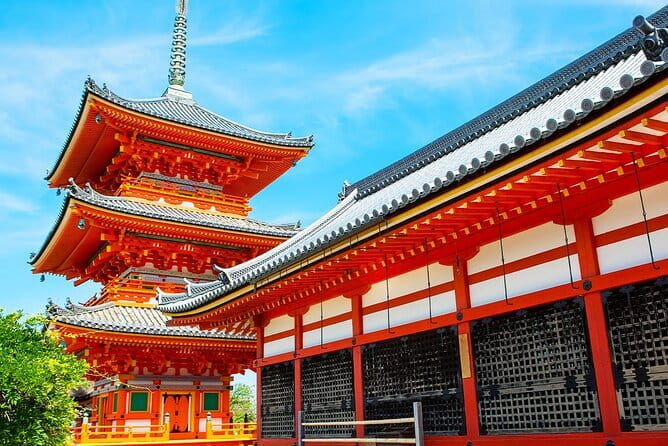
The first sightseeing stop begins around 10 a.m. and lasts about two and a half hours. That is the most generous block of the day, and it needs to be. Kiyomizu-dera sits on a hillside, with paths that rise through a busy temple district before opening to broad views.
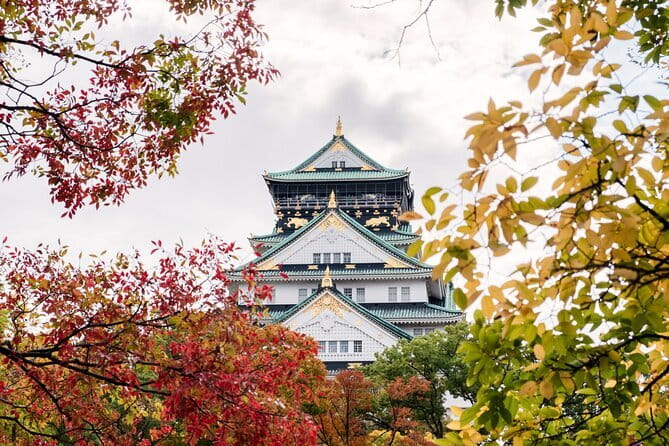
The temple is especially appealing in autumn, when the surrounding trees turn color. The setting gives you a classic Kyoto scene: wooden architecture, steep lanes, and hillside views gathered into one stop. Kiyomizu-dera admission is not included, so keep $5 available.
The real pleasure here is not only the temple itself. You also have time to walk Ninenzaka, Sannenzaka, and Ishibe Alley, where traditional wooden houses line narrow stone streets. These lanes offer a feel for old Kyoto that a quick temple visit would miss. You can pause for photographs, look into small shops, and enjoy the change from modern Osaka.
There is a physical price for this charm. The approach includes uphill walking, stairs, and uneven streets. One visitor specifically advised preparing for a lot of uphill walking, and that is useful guidance for anyone with limited stamina. The bus parking area is not right beside the sights, so expect additional walking before the visit even begins.
Your time sounds generous, but Kyoto’s famous lanes can absorb it quickly. I would not spend the entire block taking photos at the first temple gate. Get the main temple views early, then use the remaining time for Ninenzaka, Sannenzaka, and Ishibe Alley.
The guide may give historical explanations before you explore on your own. Guides such as Rick, Leo, Lu, Jason, Yujun, and Ms. Zhao were praised for clear information, humor, helpful directions, and practical suggestions. The exact guide can vary, but the format is usually a briefing followed by free time.
Fushimi Inari’s Thousand Torii Gates
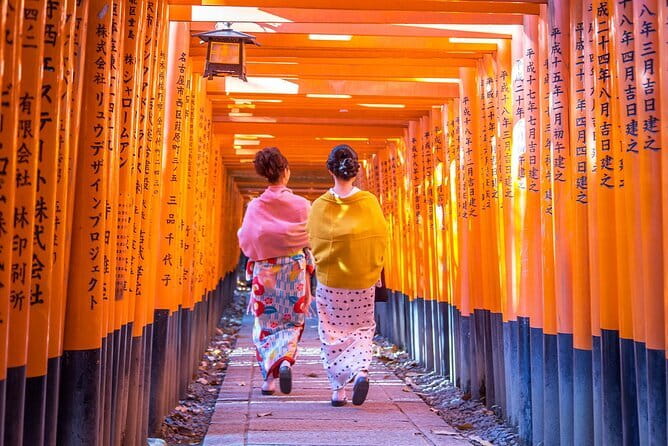
Around 1:30 p.m., the bus continues to Fushimi Inari-taisha Shrine for about 70 minutes. Admission is free. The shrine is famous for its long lines of red-orange torii gates, known as the Senbon Torii, or Thousand Torii Gates.
This is the most photograph-friendly stop of the day, but the short visit requires a plan. You can walk through the first stretch of gates, take pictures, and get a taste of the route. A full climb up the mountain would require far more time, so do not set out assuming you can reach every section and return comfortably.
I suggest using the first few minutes to get beyond the entrance area, where the gate path feels more enclosed and distinctive. Keep an eye on the meeting time. A missed bus here could ruin the rest of the day.
Fushimi Inari is also a good example of how this tour works. You receive context from the guide, then manage your own visit. That suits you if you like freedom and a simple time target. It may disappoint you if you want someone walking beside you and explaining each shrine feature in detail.
The stop comes after the long Kiyomizu-dera visit, so your legs may already be tired. Wear shoes you can use on slopes and steps. Bring water, particularly in warm weather.
A completely different kind of day out in Osaka:
- Osaka Go Karting Tour with Funny Costume
★ 5.0 · 2,658 reviews - Osaka Castle: Museum and Tower Entry Ticket
★ 4.5 · 2,380 reviews - Osaka: Shinsekai Food Tour with 13-15 Dishes at 5 Eateries
★ 4.8 · 2,204 reviews - Osaka Food Tour: 13 Dishes at 5 Local Eateries
★ 5.0 · 2,149 reviews
Nara Park, Deer, and Todaiji
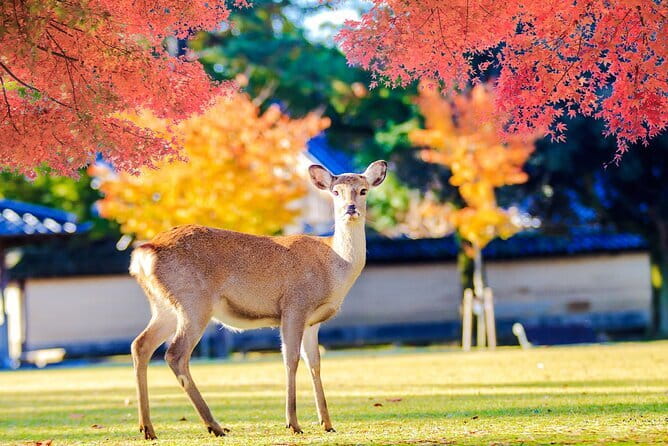
The final major stop begins around 4 p.m. at Nara Park and lasts about an hour and a half. The park sits at the foot of Mount Wakakusa and includes famous sites such as Todaiji Temple and Kasuga Taisha Shrine.
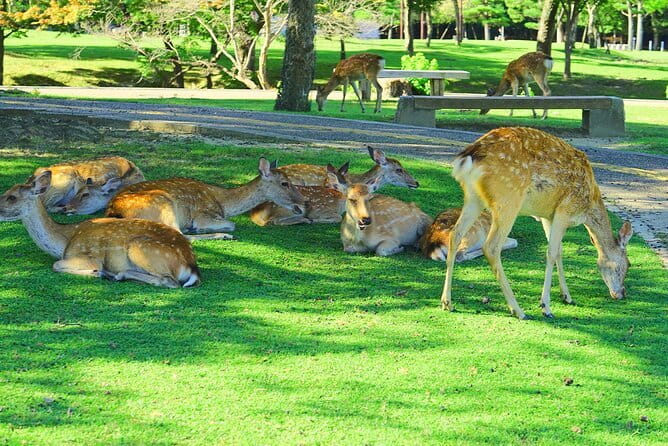
The deer are the immediate attraction. They move through the park and create a memorable contrast with the formal temple setting. Feeding them can be a highlight, but you should still follow local directions and keep your belongings secure. The supplied information confirms the chance to interact with the deer, but it does not promise a specific feeding session or provide a ticket price for deer crackers.
Todaiji is the main cultural stop. The temple houses the world’s largest bronze Buddha, an impressive work even for visitors who have seen many Japanese temples. Admission costs $7 and is separate from the tour price.
Timing is the main weakness here. The tour reaches Nara late in the afternoon, and the amount of daylight can vary by season. One person found there was only about an hour for Todaiji before closing, with darkness arriving quickly. If Todaiji matters most to you, go there early in your Nara block, then return to the deer and park paths.
The ninety minutes can feel short because Nara offers more than one major sight. You are not really visiting Nara in depth. You are getting a well-chosen introduction, with time for the park and the Buddha hall, but not much room for a relaxed meal or a long visit to Kasuga Taisha.
A Shared Bus With a Multilingual Guide
The tour uses an air-conditioned bus and can include up to 40 people from different countries. That is a reasonable group size for a low-cost day trip, but it affects the pace. Every departure depends on people returning on time, and the guide must explain key points in several languages.
English, Mandarin, and Japanese are offered. Several guides received praise for being punctual, friendly, funny, and clear. Lu was noted for explaining the day in English and Chinese, while Jason gave directions and suggestions in English and Japanese. Yujun was praised for detailed explanations, and Ms. Zhao for her friendly care and historical context.
Do not expect a private guide beside you at every stop. The structure is closer to a guided transfer with site briefings and independent sightseeing. That can be a plus. You can choose your own route, stop for photos, or focus on the parts that interest you most.
The bus is advertised as air-conditioned, but hot-weather conditions have caused problems. At one residential parking area, the driver could not keep the bus idling, and the interior became uncomfortable. Another account described the bus as very hot during a day with a feel-like temperature near 97 degrees. This is an operational issue rather than a normal feature, but it is worth considering if you are visiting during Japan’s hottest months.
The bus parking areas may also be some distance from the sights. You need to walk from the vehicle to the temple districts and park areas, then walk again during the visits. This is not a good match for anyone expecting door-to-door transport.
The Pace, Walking, and Food Plan
The day runs from an early morning meeting to an evening return in Osaka. The schedule is efficient, but it is not gentle. You will walk uphill in Kyoto, manage temple approaches, pass through torii gates, and cover open paths in Nara.
Wear supportive shoes. Bring water and cash because some places may not accept credit cards. The tour does not include lunch, and no fixed lunch stop is listed. You should expect to buy food on your own during the available free time, likely around the transition between Kyoto sights or before Nara, depending on the guide’s instructions and traffic.
Weather can also change the day. Traffic, rain, heat, or other unexpected conditions may shorten sightseeing time or cancel a stop. Because the operator warns that timing can shift, avoid booking another fixed activity immediately after the tour.
The free-cancellation rule is simple: cancel at least 24 hours before the start time for a full refund. Changes made within 24 hours are not accepted, and late arrival or a no-show does not qualify for a refund.
Who Will Like This Tour Most
I would choose this tour if you are based in Osaka and want a broad first look at Kyoto and Nara without building the route yourself. It is especially useful for a first visit, a short stay, families who prefer a single vehicle, and anyone who wants a simple way to reach several major sights.
It also suits you if you enjoy independent exploring after a short orientation. You get transportation, a timetable, and cultural background, then decide how to use your time.
I would think twice if your priority is a slow Kyoto experience. Two and a half hours at Kiyomizu-dera may sound long, but the temple district alone can fill it. Fushimi Inari needs more time for the mountain path, and Nara deserves more than ninety minutes if you want several temples.
People sensitive to heat should also consider the season. The bus may be uncomfortable when it cannot run its air-conditioning while parked. Anyone with mobility concerns should note the uphill routes, stairs, uneven streets, and walking distance from the bus parking areas.
Should You Book It?
Book it if you want maximum sightseeing with minimum route planning. For about $75 before lunch, including the two stated temple fees, you can see three of the Kansai region’s most famous cultural stops in one organized day.
Skip it if you have plenty of time and prefer to linger. The tour gives you access and structure, but it asks you to accept group timing, possible traffic delays, and a brisk final stop in Nara. For a first taste of Kyoto and Nara from Osaka, I think the value is strong. Just arrive early, wear good shoes, carry cash and water, and keep your evening schedule flexible.
FAQ
How long does the tour last?
The experience lasts approximately 9 hours and 20 minutes.
Where does the tour start in Osaka?
The Osaka meeting point is 1-chōme-3-6 Nipponbashi, Chuo Ward, Osaka, near Nipponbashi Exit 2.
Can I join the tour in Kyoto?
Yes. A second pickup point is listed at the Kyoto-Hachijoguchi Bus Loading Area at 9:50 a.m.
Where does the tour end?
The only drop-off location is in Osaka, at the Nipponbashi meeting point.
Is transportation included?
Yes. The tour includes shared air-conditioned bus transportation between the designated pickup points and sightseeing stops.
Are entrance fees included?
No. Kiyomizu-dera costs $5 per person, and Todaiji costs $7 per person. Fushimi Inari Shrine and Nara Park are listed as free-entry stops.
Is lunch included?
No. Lunch is not included in the tour price.
What languages does the guide speak?
Guiding is offered in English, Mandarin, and Japanese. This is a shared group tour with participants from different countries.
What happens if I arrive late?
The operator asks you to arrive 15 minutes early. There are no refunds for late arrivals or no-shows. The guide carries a yellow flag with the Gogoday logo, and you should provide the name shown on your booking.
Just added around Osaka
- Osaka Food Tour with 10 Classic Japanese Tastings & Drinks★ 5.0 · 38 reviews
- Osaka: Highlights & Hidden Gems Private Walking Tour★ 4.7 · 38 reviews
- Kyoto private tour (Shore excursion available from Osaka or Kobe port)★ 5.0 · 39 reviews
- Osaka Private Day Trip – Enjoy Your First-Time Visit to Osaka!★ 5.0 · 39 reviews
- Kyoto & Nara & Uji: Full Day Sightseeing Tour from Osaka or Kyoto★ 4.5 · 39 reviews
- Authentic SUSHI Course Cooking Class★ 5.0 · 39 reviews
- Osaka: Mind & Spirit Balance Temple Reiki Healing★ 5.0 · 41 reviews
- Osaka: Gluten-Free Ramen and Gyoza Cooking Class★ 5.0 · 42 reviews
Full-Day, compared.
Mount Fuji Full-Day Private Tour from Tokyo (Customizable)
Read our review →
Hiroshima / Miyajima Full-day Private Tour with Government Licensed Guide
Read our review →

5 Top Highlights of Kyoto Full Day Bike Tour (E-bike option)
Read our review →
Full Day Biking Tour Exploring the Best of Kyoto
Read our review →
Mt. Fuji, Hakone Full-Day Private Tour with English Driver Guide
Read our review →Browse the lists this tour appears in