
Reviewed · ARASHIYAMA & BAMBOO GROVE TOURS
Kyoto Arashiyama & Sagano Bamboo Private Tour with Government-Licensed Guide
Bamboo, temples, and Kyoto’s quieter corners await. This six-hour private outing makes Arashiyama and Sagano easier to understand, with a licensed English-speaking guide handling the route and explaining Japanese culture along the way. I especially like the freedom to shape the day around three or four sights, and the chance to ask questions without a group crowding the guide.
The tour also reaches peaceful temple paths beyond the famous bamboo grove, including Jojakkoji, Gioji, and Otagi Nenbutsuji. The main caution is practical: entrance fees, transport, lunch, and guide transportation are extra, and the many listed sights are a menu of choices, not a promise that you will visit them all.
In This Review
- Key points to know before booking
- Why a private Arashiyama tour can work well
- The six-hour route needs careful planning
- Starting with Arashiyama and Togetsukyo Bridge
- Walking the Bamboo Forest Street
- Tenryuji and Okochi Sanso Garden
- Jojakkoji, Nisonin, and Gioji for quieter Kyoto
- Sagano’s stone statues and preserved lanes
- The distant choices: villas, mountains, and Kibune
- What the guides add to the day
- Walking, weather, and extra costs
- Who should book this experience?
- Should you book the Arashiyama and Sagano private tour?
- FAQ
- How long does the tour last?
- Is this a private tour?
- Is an English-speaking guide included?
- How many sights can be visited?
- Is hotel pickup included?
- Is a private vehicle included?
- Are entrance fees included?
- Are transportation costs included?
- Is lunch included?
- Can I cancel for a full refund?
Key points to know before booking
- Choose three or four sights: The six-hour schedule is customizable, but it cannot sensibly cover every location listed.
- Best for personal attention: Your group has a private licensed guide, useful for questions, pacing, and last-minute adjustments.
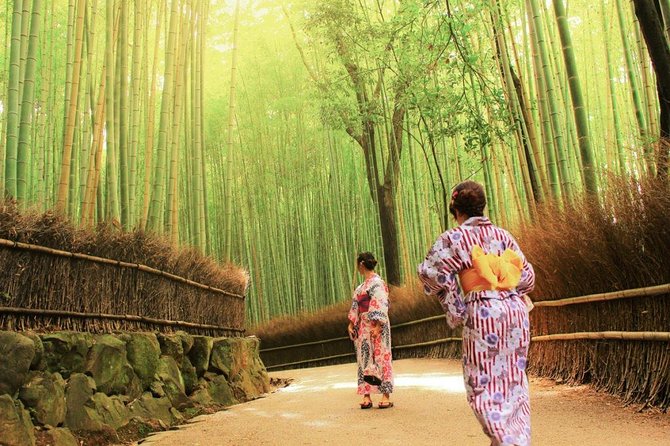
- The bamboo grove is only one part: Temples such as Gioji and Jojakkoji offer a quieter side of western Kyoto.
- Expect a lot of walking: Hills, steps, and slippery paths can make this tiring in rain or peak autumn.
- Budget for extras: Admission tickets, meals, trains, buses, and guide transportation are not included.
- Guides make the difference: Guides such as Kazuo, Kazz, Tomo, Satoko, Ken, and Shoji have been praised for flexibility, local tips, and thoughtful pacing.
Why a private Arashiyama tour can work well
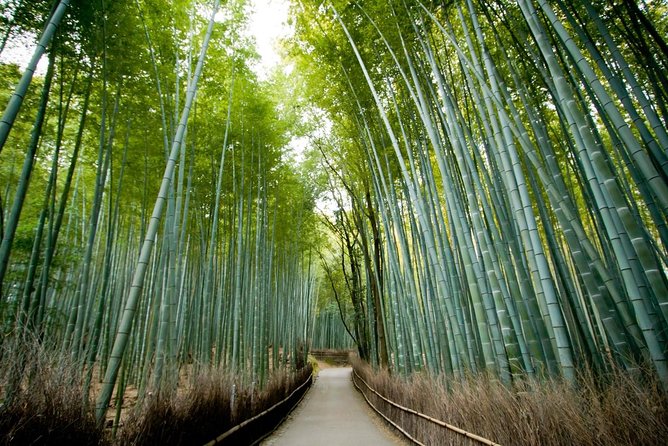
Arashiyama is easy to reach, but it is not always easy to read. The bamboo grove, Togetsukyo Bridge, Tenryuji Temple, river, shops, and side streets form a large sightseeing area. A first-time visitor can spend an hour taking bamboo photos and miss the temple gardens and old lanes that give the district its character.
That is where a private guide earns the fee. You can ask why a temple matters, how a garden is meant to be viewed, or which path avoids the thickest crowds. Guides have also helped with food suggestions, local shopping, and itinerary changes. One guide even helped a visitor find a local artist they had been trying to locate.
I also like the pace this format allows. If you are traveling with children, you can spend more time at a favorite stop. If someone in your group walks slowly, the guide can adjust the day, as Kazuo did for a guest recovering from earlier injuries. That sort of attention is hard to get on a large bus tour.
The tradeoff is price. At $157.82 per person, this is not a cheap way to see a bamboo grove. It becomes better value when several people share the private guide, when you want cultural explanation rather than photos alone, or when you need help building a sensible route. Since group discounts are offered, check the final rate for your party.
More Licensed Guide Tours in Kyoto
- Kyoto 6hr Private Tour with Government-Licensed Guide
★ 5.0 · 1,369 reviews - Kyoto 4hr Private Tour with Government-Licensed Guide
★ 5.0 · 629 reviews - Kyoto: Private Tour with Local Licensed Guide
★ 4.8 · 463 reviews
The six-hour route needs careful planning
The most important booking detail is easy to miss: the tour includes a customizable walking itinerary of three or four sites from a much longer list. The listed stops include places scattered across western and northern Kyoto, and several would not fit comfortably into one walking day.
Before the tour, discuss your priorities with the guide. A focused Arashiyama day might combine Togetsukyo Bridge, the bamboo grove, Tenryuji, and one or two smaller temples. If you prefer gardens, you could give more time to Tenryuji and Okochi Sanso. If you want quiet paths, Jojakkoji, Gioji, and Nisonin make more sense.
Do not assume the guide will take you to every location in the description. Shugakuin Imperial Villa, Katsura Imperial Villa, Kurama-dera, Yoshimine-dera, and Kibune are separate choices and may require transport. The tour does not provide a private vehicle, and transportation costs for you and your guide are extra.
Pickup and drop-off are on foot. You meet the guide in Kyoto, then move between places by walking and, when needed, public transportation at your own expense. That arrangement keeps the tour personal, but you should arrive ready for a full day on your feet.
Starting with Arashiyama and Togetsukyo Bridge
Arashiyama has attracted Kyoto residents and imperial nobles since the Heian Period, from 794 to 1185. Its appeal remains simple: forested hills, the Katsura River, old temples, and a change of pace from central Kyoto.
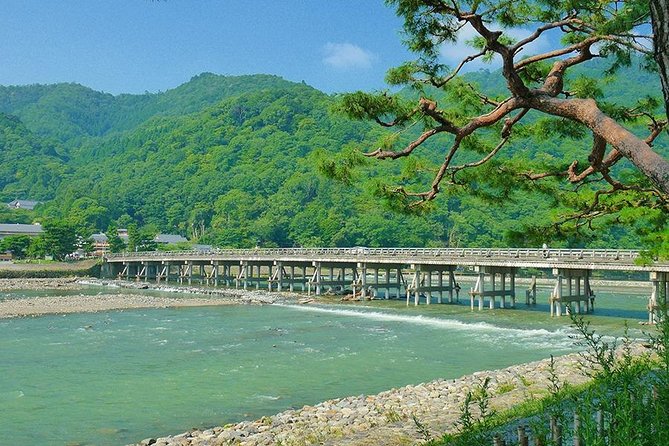
Togetsukyo Bridge is the natural starting point. Its name means Moon Crossing Bridge, and it has served as Arashiyama’s landmark for centuries. The current bridge dates from the 1930s, while the wooded hills behind it provide the classic view.
The bridge itself is free to see, and the nearby riverside park has cherry trees. Shops, restaurants, boat rentals, and temple entrances are close by. This area can be very crowded, especially during cherry blossom season and peak autumn color, so a guide’s timing and route advice can help.
Do not expect the bridge to be a quiet photo stop at all hours. It is the center of the district, and that popularity is part of the experience. If you want calm, ask to move quickly from the bridge toward the temple lanes and Sagano.
Walking the Bamboo Forest Street
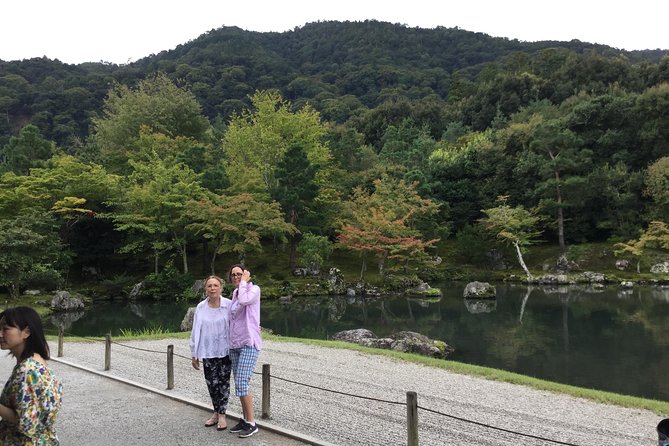
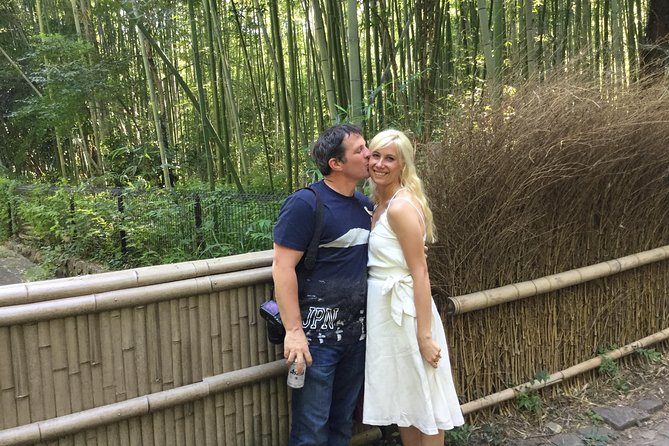
The bamboo paths are the tour’s headline attraction. Tall stalks rise on both sides of the walkway, and a light breeze can make them sway and creak overhead. The grove is attractive, but it is not a wilderness experience. The path is short enough to see on your own, and crowds can reduce the quiet mood.
A guide adds value here by explaining how bamboo has been used in local workshops for baskets, cups, boxes, and mats. That small detail connects the photo stop to everyday Japanese craft. It also gives you something to notice beyond the familiar upward-looking photograph.
The most useful advice is to keep expectations realistic. The forest itself may take only about an hour, and one lower-rated experience found little reason to pay for a guide if bamboo was the only goal. This tour makes more sense when the grove is one piece of a larger day that includes temples, gardens, history, and local food advice.
One family particularly enjoyed adding the monkey park, while another group combined the grove with the Sagano Romantic Scenic Train and a ride along the Hozu River Valley. Those additions are not guaranteed parts of this tour, so ask the guide about them before counting on them.
More Arashiyama and bamboo grove walks:
- Kyoto: Fushimi Inari, Kinkakuji, Bamboo Grove 1 Day Bus Tour
★ 4.8 · 4,316 reviews - Osaka/Kyoto:Kinkakuji,Arashiyama,FushimiInariShrine,NaraPark
★ 4.1 · 1,596 reviews - Kyoto/Osaka: Nara, Fushimi Inari Taisha, Arashiyama Bus Tour
★ 4.7 · 1,275 reviews - Kyoto Arashiyama Walking Tour: Bamboo, Monkeys, Gardens & Secrets
★ 5.0 · 1,216 reviews
Tenryuji and Okochi Sanso Garden
Tenryuji is Arashiyama’s major temple and one of Kyoto’s five great Zen temples. Founded in 1339, it is also a UNESCO World Heritage Site. The temple buildings matter, but the garden is the main reason to slow down, with walking paths and views toward the surrounding hills.
A guide can help you place Tenryuji in the story of Kyoto’s Zen tradition and explain how the garden works as a composed scene rather than a collection of pretty plants. Admission is not included, so add the entrance cost to your budget.
Behind the bamboo grove, Okochi Sanso Garden offers a different mood. It was the former villa of actor Okochi Denjiro, who lived from 1896 to 1962. The grounds include gardens, tea houses, gates, and living quarters, though the buildings can be viewed only from outside.
This is a useful choice if you want a more ordered garden setting after the bamboo path. It also costs extra, so I would ask the guide to compare it with the other temple admissions before deciding.
Jojakkoji, Nisonin, and Gioji for quieter Kyoto
The smaller temples are where this tour can become more than a checklist. Jojakkoji climbs a wooded hillside and has modest buildings, moss, maple trees, and city views. Its atmosphere is quieter than the central Arashiyama sights, though the stairs require care.
Nisonin has a broader approach and somewhat larger buildings. Trees shade the entrance, and the upper grounds look out toward Kyoto. It is a good choice for a group that wants a traditional temple setting without spending the entire day in the most famous locations.
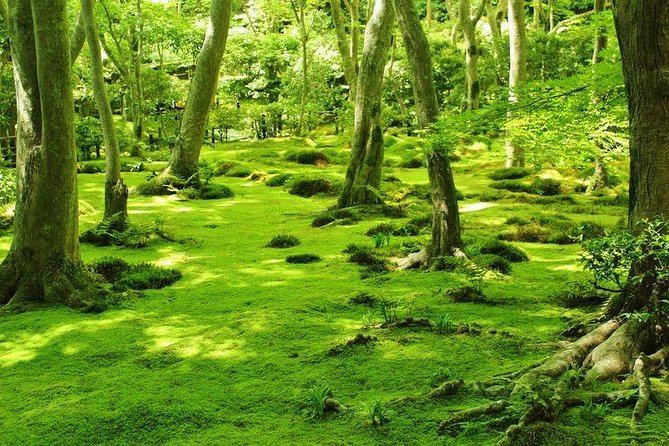
Gioji is especially appealing for garden lovers. Its moss-covered grounds sit under tall maple trees, and the small main hall has a round window looking into the garden. The entrance gate and hall have thatched roofs, details that make this stop feel intimate rather than grand.
These temples are not interchangeable. Jojakkoji gives you hillside views and autumn color. Nisonin offers a broader temple approach. Gioji gives you moss, shade, and quiet. Ask the guide to choose based on the season, weather, and your walking energy.
Rain changes the equation. Hillside paths can become slippery, and the combination of steps and wet leaves is not ideal for anyone unsteady on their feet. The tour requires good weather, but even a day with light rain can make the walking harder.
Sagano’s stone statues and preserved lanes
Adashino Nenbutsuji sits at the end of the Saga-Toriimoto Preserved Street. The temple was founded in the early ninth century, when the monk Kobo Daishi placed stone statues here for the dead. Hundreds of statues now fill the grounds, creating a solemn and unusual sight.
A short bamboo path at the back makes this a strong alternative to the main grove. It is still connected to the bamboo story, but the setting feels less like a famous photo stop and more like a place of remembrance.
About ten minutes farther north, Otagi Nenbutsuji is known for around 1,200 stone rakan statues. Each has a different expression. The figures were created in the 1980s and early 1990s, so this is not an ancient sculpture site, but the setting across a forested mountain slope gives it great visual appeal.
These two temples are best for people who want unusual details and a slower walk. They are less useful if your group mainly wants the bridge, the central grove, and the most famous temple. Because the tour allows only three or four chosen sites, you may need to pick between these and the more central stops.
The distant choices: villas, mountains, and Kibune
Some listed stops are not practical additions to a standard Arashiyama walking route. Shugakuin Imperial Villa lies in northern Kyoto and has Upper, Middle, and Lower Villa areas, with traditional buildings and gardens managed by the Imperial Household Agency. Katsura Imperial Villa is another major garden site, known for its architecture and circular path around a pond.
Both villas require planning. Katsura can be visited only as part of a tour, and palace buildings are viewed from outside. Photography is restricted to designated places, though English-language tours are available. Admission is not included.
Kurama-dera lies in the northern mountains, less than an hour from central Kyoto. Kurama is also known for Kurama Onsen, where day visitors can pay 2,500 yen for all baths or 1,000 yen for the outdoor bath. The tour description lists Kurama-dera, not an included bathing visit, so do not assume the onsen is part of the plan.
Yoshimine-dera sits in Kyoto’s western mountains, along a hillside with views toward the city. Its spacious grounds extend uphill, making it a rewarding but demanding choice.
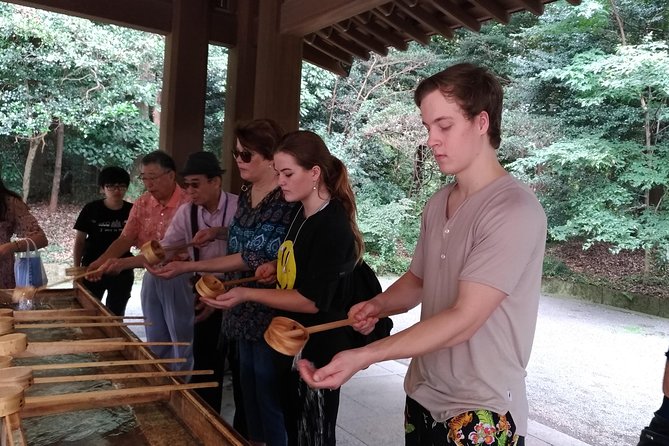
Kibune is a forested valley town built around Kifune Shrine, the shrine of water and rain. At the shrine, water fortune slips reveal their message when dipped into water. Kibune is appealing, but it is clearly a separate northern excursion rather than a natural extension of a compact Arashiyama walk.
These choices show why a pre-tour conversation matters. You can create an excellent day, but only if you choose a geographic area instead of trying to chase every name on the list.
What the guides add to the day
The strongest part of this experience is the human element. Guides named in the feedback include Kazuo Sumi, Kazz, Tomo, Satoko, Ken, Shoji, Bell, and Ted. The individual guide you receive will determine the tone and depth of the day, but the best accounts describe careful planning, clear explanations, and real flexibility.
Kazuo is praised for discussing options before the tour, adjusting plans to personal interests, answering questions, and helping with meal choices. Kazz is described as personable and willing to adapt the route. Tomo helped reduce time in the thickest crowds, while Ken gave a one-page sheet about Kyoto history.
Food advice can also be useful. One guide suggested a beef bento restaurant near Rilakkuma, with a warning to avoid the lunch rush because of long lines. Another guide arranged a local lunch after a rainy walk through the bamboo forest and temple area.
Still, the guide quality may vary. One experience found the guide poorly prepared and unable to answer many questions. That is a fair warning for anyone paying for interpretation. Send your interests and questions in advance, and ask the provider to confirm the focus of your day.
The rating is 4.8 from 49 reviews, with 98 percent recommending the experience. Those figures suggest a strong record, but they do not remove the need to communicate clearly before arrival.
Walking, weather, and extra costs
Six hours is a long time for hills, temple steps, and city walking. Wear shoes with good grip, especially in autumn or wet weather. Summer can be hot and humid, and one family found the day tiring even while enjoying it.
The advertised price is $157.82 per person. Included are the licensed local English-speaking guide and a private, customizable walking tour. You pay separately for lunch, entrance tickets, and transportation for yourself and the guide.
That cost structure can be reasonable for a couple, family, or small group that wants expert help and a private pace. It is less attractive if you only want to see the bamboo grove, since that section is free and easy to reach. Group discounts may improve the value for larger parties.
Free cancellation is available up to 24 hours before the start time. Changes made within 24 hours are not accepted, and late cancellations are not refunded. If poor weather cancels the experience, you are offered another date or a full refund.
Who should book this experience?
I would choose this tour if you want Arashiyama explained rather than simply photographed. It suits families, first-time visitors, people interested in temple design and Japanese culture, and anyone who values a flexible private route.
It is also a good fit if you have a specific wish list. You can ask for quiet temples, gardens, local food advice, or a slower pace. A private guide is especially useful when your group includes children or someone who needs extra time.
I would skip it if you are comfortable planning your own route, want only the bamboo forest, or dislike paying extra for admissions and transport. Independent visitors can see several of the free sights without a guide.
Should you book the Arashiyama and Sagano private tour?
Book it for the guide, not just the bamboo. The best day combines the famous sights with two or three quieter places, such as Tenryuji, Gioji, Jojakkoji, or Otagi Nenbutsuji. Confirm the route, expected walking, transport costs, and entrance fees before you go.
At $157.82 per person, the tour is a splurge. But for a small group that wants thoughtful explanations, crowd-avoidance advice, and an itinerary shaped around its interests, it can turn a scattered sightseeing district into a rewarding Kyoto day.
FAQ
How long does the tour last?
The experience lasts approximately six hours.
Is this a private tour?
Yes. Only your group participates in the private activity.
Is an English-speaking guide included?
Yes. The tour includes a licensed local English-speaking guide.
How many sights can be visited?
The walking tour is customizable around three or four sites from the available choices.
Is hotel pickup included?
Pickup and drop-off are offered on foot, with the guide meeting you in Kyoto.
Is a private vehicle included?
No. The tour does not include a private vehicle.
Are entrance fees included?
No. Entrance fees are paid separately. The guide’s entry fees are covered only for sights specified under the tour’s included arrangements.
Are transportation costs included?
No. Transportation costs for you and your guide are extra.
Is lunch included?
No. Lunch is not included, and you pay for your own meal.
Can I cancel for a full refund?
Yes, if you cancel at least 24 hours before the experience start time. Poor-weather cancellations offer another date or a full refund.
Just added around Kyoto
- Kyoto: Private Customizable Day Trip by Car★ 5.0 · 38 reviews
- Kyoto: Gion Night Walking Tour with Geisha Insight★ 5.0 · 39 reviews
- Kyoto: Full Day Bike Tour★ 4.9 · 39 reviews
- Private Japanese Calligraphy in Kyoto – Learn Shodō with a Master★ 5.0 · 39 reviews
- Experience a tea ceremony in an authentic tearoom, in Kyoto!★ 4.5 · 41 reviews
- Kyoto: Gion Evening Walk with Hidden Gems, Geisha & Sake★ 5.0 · 41 reviews
- Kyoto Private Photo Shoot & Tour by SnapKyoto★ 5.0 · 41 reviews
- The Way of Tea: Kyoto Crafts, Hidden Temples & Wabi-Sabi Walk★ 5.0 · 41 reviews
Arashiyama & Bamboo Grove Tours, compared.
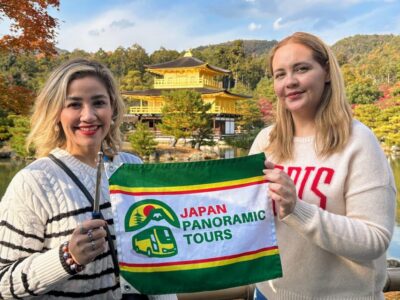
Fushimi Inari, Kinkakuji, Bamboo Grove 1 Day Bus Tour
Read our review →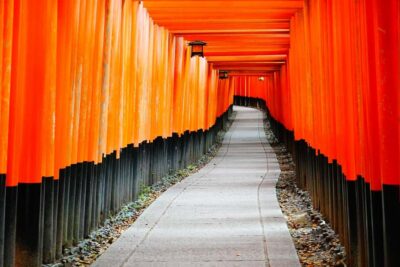
Osaka/Kyoto:Kinkakuji,Arashiyama,FushimiInariShrine,NaraPark
Read our review →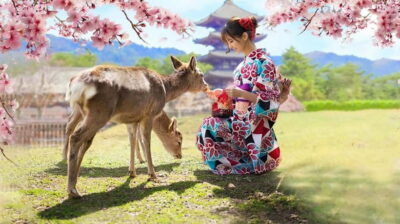
Kyoto/Osaka: Nara, Fushimi Inari Taisha, Arashiyama Bus Tour
Read our review →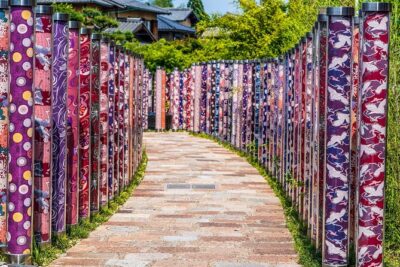
Kyoto Arashiyama Walking Tour: Bamboo, Monkeys, Gardens & Secrets
Read our review →
Arashiyama Bamboo, Temple, Monkeys, or Secret Sake Brewery
Read our review →
Arashiyama Bamboo Forest, Monkeys, Matcha & Temple Tour
Read our review →
Osaka/Kyoto: Arashiyama, Nara & Fushimi Inari Shrine w/Lunch
Read our review →
Nijo, Kinkaku-ji, Arashiyama, Kiyomizu & Fushimi Inari
Read our review →Browse the lists this tour appears in