
Reviewed · FOOD & DRINK
Kyoto Food Tour of 10 Tastings with Wagyu, Mochi & More Surprises
Good food makes Kyoto easier to understand. This three-and-a-half-hour walking tour links Karasuma, Nishiki Market, the Kamo River, Pontocho, and Gion while serving ten Japanese tastings along the way. I like the mix of familiar dishes, such as katsudon and okonomiyaki, with Kyoto specialties including yuba tofu, local sake, matcha, and seasonal fruit mochi. The small maximum of ten people is another strong point, since it should feel more personal than a large food group.
I also like the route itself. You are not simply driven from restaurant to restaurant. You walk through central Kyoto and finish near Yasaka Shrine, with food stops woven into the sightseeing. The main caution is the guide communication: some published feedback praised guides such as Yuma and Tomoro for being friendly, while other comments described a guide as too quiet and limited in food explanation. That matters if you want a detailed culinary lecture rather than a relaxed tasting walk.
In This Review
- Key Things To Know Before You Book
- Starting Near Karasuma Oike Station
- First Stop: Katsudon With a Kyoto Twist
- Nishiki Market Takes Up the Middle Hour
- Yuba Tofu and a Short Food Demonstration
- Fishcakes With Different Flavors
- Sake and the Market Pace
- Walking Through Pontocho and Along the Kamo River
- Okonomiyaki Served the Kyoto Way
- Wagyu Sushi, Mochi and the Sweet Finish
- A Matcha Stop Before Gion
- What $142 Really Buys You
- Guide Quality Can Shape the Whole Experience
- Who Will Enjoy This Kyoto Food Walk?
- Practical Details That Matter
- Should You Book This Tour?
- FAQ
- Where does the Kyoto food tour start?
- Where does the tour finish?
- How long does the experience last?
- How many people can join the tour?
- What foods and drinks are included?
- Is hotel transportation included?
- Can dietary requirements be accommodated?
- What is the cancellation policy?
Key Things To Know Before You Book
- Ten tastings cover both Kyoto specialties and familiar Japanese comfort food, including yuba tofu, Wagyu sushi, katsudon, okonomiyaki, fishcakes, daifuku mochi, sake, beer, and tea.
- The route runs from Karasuma to Gion, with time at Nishiki Market and views around Pontocho and the Kamo River.
- The group is capped at ten people, which suits anyone who prefers a quieter outing and easier access to the guide.
- The tour costs $142 per person, so the value comes from the guide, drink tastings, and organized route, not simply the retail price of each bite.
- Comfortable shoes are essential, since the tour involves a fair amount of walking over about three and a half hours.
- Dietary needs should be sent in advance, as the menu and locations can change with availability, weather, and other conditions.
Starting Near Karasuma Oike Station
The meeting point is in front of the Starbucks across from Exit 5 of Subway Karasuma Oike Station. This is a useful starting place for a food walk because it is easy to locate, close to public transportation, and not buried inside a confusing restaurant district.
The guide is scheduled to carry an orange umbrella, a simple detail that can save time when several people are waiting near the station. The opening introduction takes about ten minutes and sets out the shape of the tour before the first tasting.
You should arrive ready to walk. The tour begins in Karasuma and ends in southern Gion, so this is not a loop back to the starting point. That is convenient if you are planning to continue sightseeing around Yasaka Shrine afterward, but less convenient if you have left luggage or need to return to your hotel before dinner.
More Food Tours in Kyoto
- Kyoto Night Foodie Tour in Gion (9+ dishes + 6 Sake tastings)
★ 5.0 · 1,762 reviews - 3-Hour Kyoto Insider Sake Brewery Tour with Tastings & Pairings
★ 5.0 · 917 reviews - Arashiyama Bamboo, Temple, Monkeys, or Secret Sake Brewery
★ 4.8 · 886 reviews
First Stop: Katsudon With a Kyoto Twist
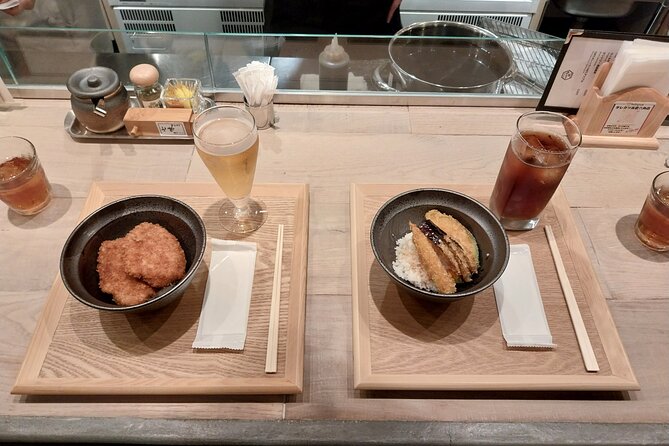
The first food stop is Kyoto Tonkatsu Katsuda Shijo Kawaramachi, where you try a traditional Japanese dish with a regional flavor. The included item is katsudon with a sweet local twist.
Katsudon is a practical first bite for this tour. It is hearty, familiar, and filling enough to give you a base before the market tastings begin. The tonkatsu element also introduces the tour’s tendency toward comfort food and fried dishes.
That point deserves attention. The menu includes fried or substantial foods, such as pork cutlet, fishcakes, and okonomiyaki. One dissatisfied customer felt there was too much fried food and not enough fresh food. If you prefer raw seafood, vegetables, or lighter dishes, you may find the balance less appealing than someone who enjoys Japanese street food and warm savory plates.
The first stop takes around thirty minutes. It is not just a quick sample on the sidewalk, which gives you some time to settle in and learn how the food is being served.
Nishiki Market Takes Up the Middle Hour
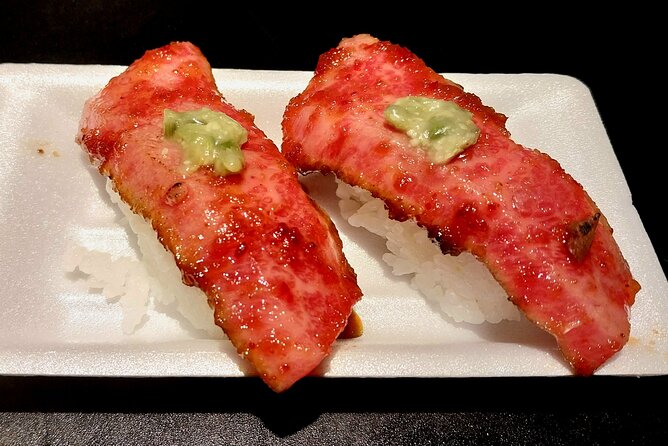
Nishiki Market is the longest part of the tour, with about ninety minutes set aside for walking and tasting. The market street runs roughly 400 meters and is known for small food sellers, specialty shops, and local trades. Here, the guide explains the work of local artisans while taking you to several Kyoto-focused bites.
This is where the tour’s route becomes most useful. Nishiki Market can be easy to visit on your own, but it can also feel like a long line of tempting counters with little context. A guide can help you understand why yuba, fishcakes, sake, and other foods matter in Kyoto instead of leaving you to choose at random.
Yuba Tofu and a Short Food Demonstration
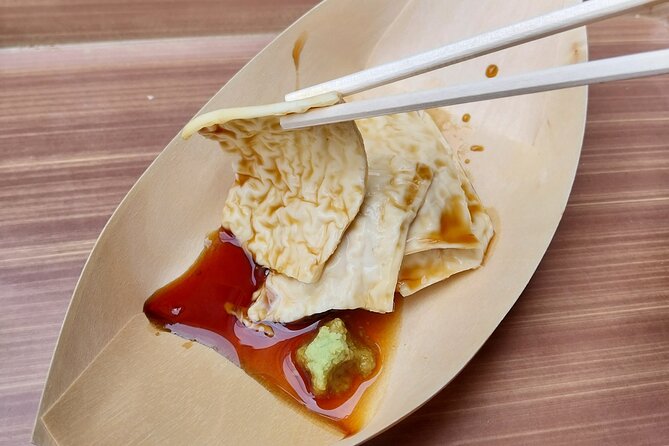
Yuba tofu is one of Kyoto’s best-known preparations and a central tasting on this walk. Yuba is made from the delicate skin that forms on the surface of heated soy milk. Its soft texture and mild flavor are quite different from the heavier fried foods served earlier.
The experience includes a yuba tofu presentation, so you get more than a finished sample. This is one of the more distinctive parts of the food program, especially if you have already eaten standard tofu elsewhere in Japan.
A completely different kind of day out in Kyoto:
- PERFECT KYOTO 1-Day Bus Tour
★ 5.0 · 13,518 reviews - Kyoto: Fushimi Inari, Kinkakuji, Bamboo Grove 1 Day Bus Tour
★ 4.8 · 4,316 reviews - Kyoto: Tea Ceremony in a Traditional Tea House in Kiyomizu
★ 4.9 · 3,519 reviews - Kyoto Geisha Walking Tour: Gion District & Hidden Gems
★ 4.7 · 3,273 reviews
Fishcakes With Different Flavors
Freshly made fishcakes add another local snack to the market section. They are described as handmade and offered in different flavors, giving you a chance to compare textures and seasonings rather than receiving one identical bite.
This is also one reason to keep an open mind about the menu. Fishcakes are not a grand meal, but they show how Japanese food culture makes careful use of simple ingredients. If you want a tour built around famous restaurant dishes only, this stop may feel modest. If you enjoy seeing how everyday foods are prepared and sold, it fits the route well.
Sake and the Market Pace
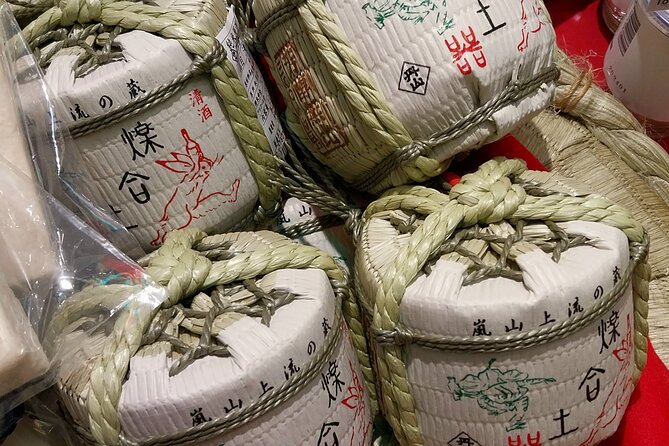
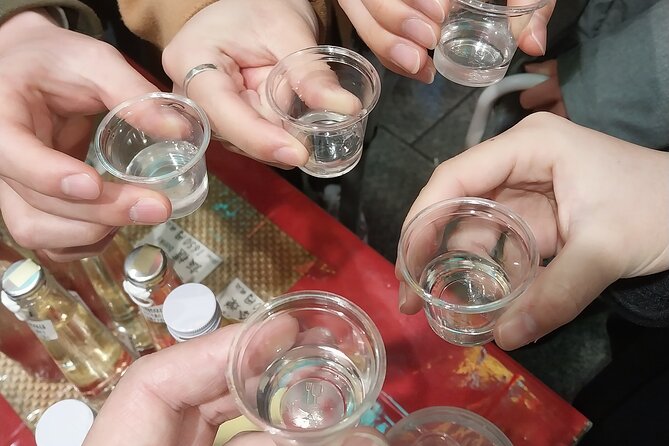
A tasting of various Kyoto sakes is included, along with a glass of draft beer during the tour. The exact sake selection is not fixed, and the itinerary can change, but the drinks help break up the food stops.
Nishiki Market is not a place to rush through. The ninety-minute allocation gives the guide room to explain products, move the group between stops, and let you look at the stalls. Still, the market portion may feel crowded or busy depending on the day and weather. The tour is best approached as a guided stroll with small tastings, not as a long sit-down meal.
Walking Through Pontocho and Along the Kamo River
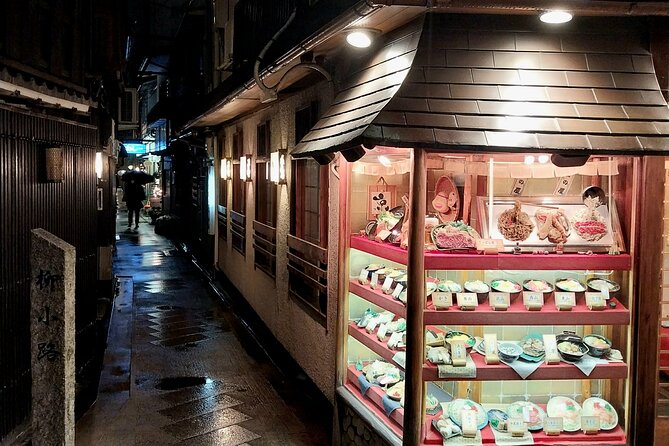
After Nishiki Market, the route continues on foot toward Gion. You pass through the Pontocho area and walk near the Kamo River before reaching the Gion district.
This stretch is important because it connects the food to Kyoto’s setting. You get a break from eating, see some of the city between stops, and move through districts that many first-time visitors already want to visit. It also helps the meal feel like part of a day in Kyoto rather than a series of disconnected restaurant visits.
The walk takes about thirty minutes. That sounds manageable, but the total outing includes market walking and several food stops, so you should wear comfortable shoes. There is no hotel pickup or drop-off, and you are responsible for reaching the meeting point and continuing from Gion afterward.
Okonomiyaki Served the Kyoto Way
In Gion, the group takes a well-earned rest for okonomiyaki. This savory pancake is prepared in a Kyoto style and served in a small, quaint restaurant. The timing is sensible: by this point, the earlier samples and walking have built up an appetite for something warm and substantial.
Okonomiyaki is often associated with Osaka and Hiroshima, so a Kyoto version gives the tour a useful regional comparison. It also offers a change in texture from tofu, fishcakes, and sushi.
The stop lasts about thirty minutes. That is enough for a proper pause, though you should not expect a long restaurant meal with multiple courses. The tour aims to let you sample many foods, so portions are likely to be tasting-sized rather than full servings. The available details do not specify the exact ingredients or preparation method, and the menu can change.
Wagyu Sushi, Mochi and the Sweet Finish
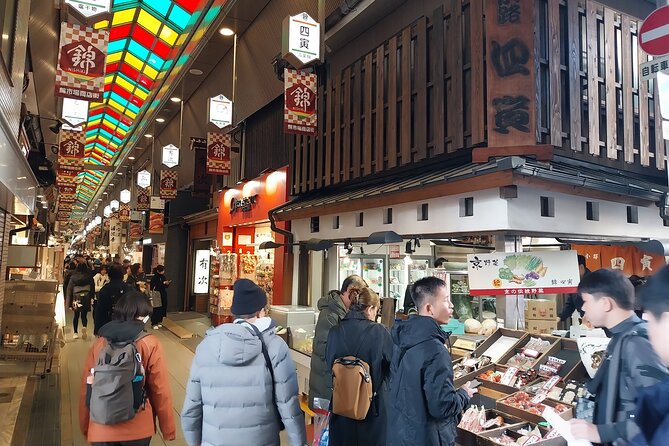
Wagyu sushi is one of the headline tastings. The beef is seared, and the sushi format gives you a small, rich bite after the lighter market foods. For many people, this will be the most memorable item on the menu, though the tour does not provide a fixed serving size.
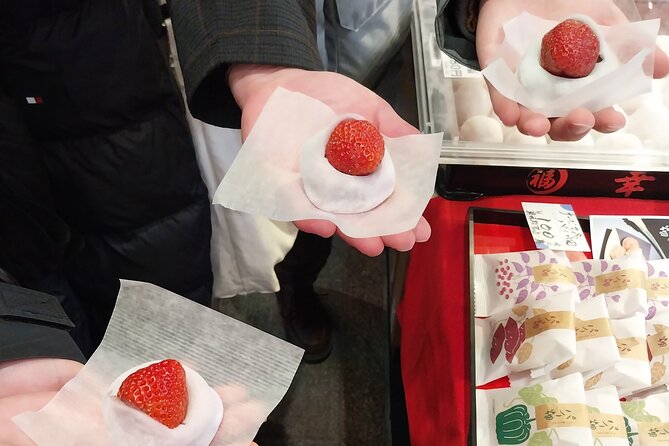
Daifuku mochi with a seasonal fruit filling adds a softer, sweeter contrast. Because the filling changes with the season, the exact fruit is not guaranteed. This is a nice detail for repeat visitors to Kyoto, since the tasting may not be identical at different times of year.
The tour also includes one secret dish. You are not told its identity in advance, so you should see it as a bonus rather than a reason to book if you need a precisely defined menu.
Taken together, the food list moves across several styles:
- Warm comfort food such as katsudon and okonomiyaki
- Kyoto specialties such as yuba tofu
- Savory market snacks such as handmade fishcakes
- Seared Wagyu sushi
- Seasonal daifuku mochi
- Kyoto sake, draft beer, and Japanese tea
That is a broad spread for three and a half hours. It is also why expectations matter. This is a tasting walk, not a luxury dining experience. Some foods are simple market fare, and the quality or portion of a particular item may not impress everyone equally.
A Matcha Stop Before Gion
The final food-and-drink stop focuses on tea. Kyoto is strongly associated with tea ceremony, and the tour visits a well-known matcha venue where you can choose a hot or cold tea, depending on the season and available selection.
This ending gives the tour a calmer finish after the savory dishes. Matcha can be grassy, bitter, and intense, especially if you are used to sweetened tea. Having the choice of hot or cold preparation is useful, though the exact selection depends on the season.
The tea stop lasts about twenty minutes. The tour finishes at the entrance to the Minami Gion district, close to Gion-Shijo Station on the Keihan Line and only a few steps from Yasaka Shrine. That location makes it easy to continue with evening sightseeing, visit the shrine, or use the train for the next part of your day.
What $142 Really Buys You
At $142 per person, this is not a bargain if you judge the tour only by the amount of food on the plate. You could buy individual market snacks for less, and one person who disliked the tour felt the same way.
The price makes more sense if you want the route organized for you, a small group, a guide at Nishiki Market, several restaurant and drink stops, and a planned finish in Gion. You are paying for convenience and structure as much as for the food itself. The included beer, sake tasting, tea, Wagyu sushi, and restaurant stops also make the price easier to justify than a simple street-food stroll.
The group discount may improve the price for a party, though the supplied details do not specify the discount amount. Since the tour is often booked around 44 days ahead, you should not leave it until the last minute if your Kyoto dates are fixed.
Guide Quality Can Shape the Whole Experience
The strongest positive feedback centers on friendly guides and an enjoyable walk through the market. Yuma was praised for being nice and welcoming, and Tomoro received clear approval for both the food and market walk. Those comments point to the best version of this experience: relaxed, social, and easy to follow.
The weaker feedback focuses on soft voices, limited English detail, and guides without a strong food background. This is the most important limitation to consider. A small group does not automatically mean a deeply informed guide, and the experience may depend on who leads your particular departure.
If you want detailed explanations of Japanese cooking methods, food history, and regional ingredients at every stop, you may find the commentary uneven. If you mainly want help finding places, tasting a wide range of items, and moving through Kyoto with a friendly guide, the format should suit you better.
It is worth staying close to the guide during explanations, especially in the market. A quiet voice can be hard to hear amid other shoppers and shop sounds.
Who Will Enjoy This Kyoto Food Walk?
I would recommend this tour to first-time visitors who want food and sightseeing in one outing. The Karasuma to Gion route gives you a useful introduction to central Kyoto, and the included tastings help you identify dishes you may want to order again later.
It also suits small groups, couples, and solo visitors who prefer not to plan several food stops themselves. The maximum of ten people is a real advantage for anyone who dislikes large organized tours.
You may want to choose another experience if you need a vegetarian, vegan, gluten-free, or otherwise restricted menu without advance planning. Dietary requirements must be sent ahead so the operator can try to accommodate them. Since the menu and locations can change, no particular replacement should be assumed.
This is also not ideal for anyone who dislikes walking, fried foods, market snacks, or small portions. The route is active, and the food program leans toward popular Japanese dishes rather than a formal, carefully paced dinner.
Weather can affect the outing. If poor weather causes cancellation, you are offered another date or a full refund. The tour also needs a minimum number of participants, so a cancellation for that reason brings the same choice of another date or a refund.
Practical Details That Matter
The tour lasts approximately three hours and thirty minutes. Wear shoes you can walk in comfortably, and avoid scheduling a tight appointment immediately afterward.
The starting address is Starbucks Coffee at the Kyoto Sanjo Karasuma Building, near Exit 5 of Karasuma Oike Station. The finish is in Gion, near Gion-Shijo Station and Yasaka Shrine. Hotel pickup and drop-off are not included.
Mobile tickets make the booking simple, and confirmation is sent within 48 hours, subject to availability. Free cancellation is available up to 24 hours before the start time. Cancellations or changes made inside that window are not refunded or accepted.
The tour is recommended for most people who can manage the walking, but it is not presented as a private or fully customized food program. Keep your expectations at the level of a small-group introduction to Kyoto eating.
Should You Book This Tour?
Book it if you want a broad first taste of Kyoto food, a walk through Nishiki Market, and a convenient finish in Gion. The route is well chosen, the food list has good variety, and the small group limit gives the outing a friendly feel. Yuma and Tomoro show how much a warm, engaged guide can add.
Think twice if you are paying $142 mainly for premium food or expert culinary instruction. The menu includes plenty of fried and casual items, and guide communication may be too quiet or basic for some people. For an easy introduction with Wagyu sushi, yuba tofu, mochi, sake, beer, and matcha, it is a reasonable choice. For a serious food education or a refined tasting menu, spend the money elsewhere.
FAQ
Where does the Kyoto food tour start?
It starts in front of the Starbucks across from Exit 5 of Subway Karasuma Oike Station, at the Kyoto Sanjo Karasuma Building in Nakagyo Ward.
Where does the tour finish?
The tour ends at the entrance to the Minami Gion district in Gion, close to Gion-Shijo Station on the Keihan Line and near Yasaka Shrine.
How long does the experience last?
The tour lasts approximately three hours and thirty minutes.
How many people can join the tour?
The group has a maximum of ten travelers.
What foods and drinks are included?
Included tastings are yuba tofu, katsudon, Kyoto-style okonomiyaki, Wagyu sushi, handmade fishcakes, daifuku mochi with seasonal fruit, one secret dish, Kyoto sake, draft beer, and Japanese tea.
Is hotel transportation included?
No. Hotel pickup and drop-off are not included.
Can dietary requirements be accommodated?
You should contact the operator in advance with your dietary requirements so they can try to accommodate them. The menu may change based on availability and other conditions.
What is the cancellation policy?
You can cancel at least 24 hours before the start time for a full refund. Cancellations or changes made less than 24 hours before the start time are not refunded or accepted.
Just added around Kyoto
- Kyoto: Gion Night Walking Tour with Geisha Insight★ 5.0 · 39 reviews
- Kyoto: Private Customizable Day Trip by Car★ 5.0 · 38 reviews
- Kyoto: Full Day Bike Tour★ 4.9 · 39 reviews
- Private Japanese Calligraphy in Kyoto – Learn Shodō with a Master★ 5.0 · 39 reviews
- Experience a tea ceremony in an authentic tearoom, in Kyoto!★ 4.5 · 41 reviews
- Kyoto: Gion Evening Walk with Hidden Gems, Geisha & Sake★ 5.0 · 41 reviews
- Kyoto Private Photo Shoot & Tour by SnapKyoto★ 5.0 · 41 reviews
- The Way of Tea: Kyoto Crafts, Hidden Temples & Wabi-Sabi Walk★ 5.0 · 41 reviews
Food & Drink, compared.
Shinjuku Food Tour (13 Dishes at 4 Local Eateries)
Read our review →
Tokyo Tsukiji Fish Market Food and Culture Walking Tour
Read our review →
Shinsekai Food Tour with 13-15 Dishes at 5 Eateries
Read our review →
Osaka Food Tour: 13 Dishes at 5 Local Eateries
Read our review →
Shinjuku Food Tour (15 Dishes and 4 Eateries)
Read our review →
Best of Shinjuku: Izakaya Food Tour (4 Stops, 14+ Tastings)
Read our review →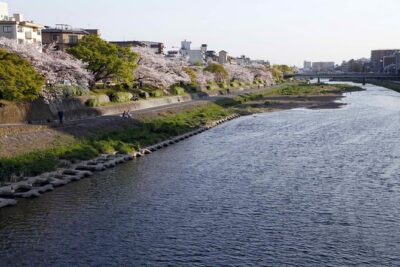
Kyoto Night Foodie Tour in Gion (9+ dishes + 6 Sake tastings)
Read our review →
Hungry Osaka Street Food Tour:15 Tastings & 3 Drinks with a Local
Read our review →Browse the lists this tour appears in