
Reviewed · CYCLING TOURS
Kyoto: Full-Day City Highlights Bike Tour with Light Lunch
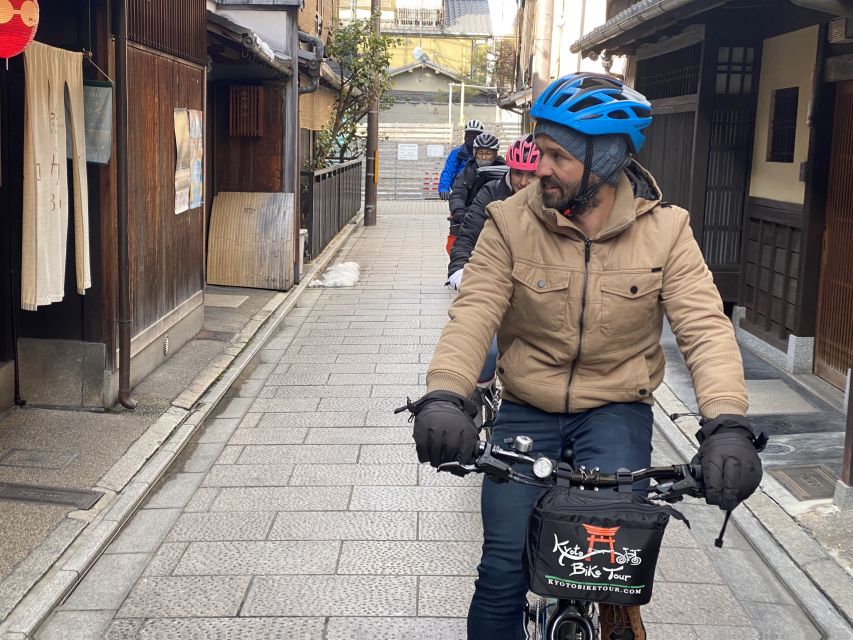
Kyoto is best seen at street level. This eight-hour bike tour links the city’s biggest sights with quiet lanes, shrine paths, neighborhood streets, and a light lunch, giving you far more range than a walking tour without confining you to a bus. I especially like the small groups of up to eight and the chance to see both famous landmarks and less-traveled corners. The main caution is simple: 44 kilometers, or about 27 miles, is a serious day in the saddle, even at a relaxed pace.
I also like that the route covers the five places most first-time visitors want to see: Arashiyama, Fushimi Inari, Kiyomizu-dera, Gion, and Kinkaku-ji. Guides such as Rob, Cass, Peter, and Ray have been praised for clear explanations, safe riding, good humor, and thoughtful pacing. Still, you should arrive fit enough for a full day of cycling, and an e-bike is a smart upgrade if you are not used to long rides.
In This Review
- Key points at a glance
- Why a bicycle works so well in Kyoto
- Starting in Arashiyama and entering the bamboo
- Fushimi Inari’s orange gate trails
- Lunch and a chance to reset
- Gion by back street and wooden bridge
- Kiyomizu-dera and Kyoto’s eastern hills
- Kinkaku-ji in the changing light
- The guides make the difference
- Is the $167 price fair?
- Who should book this Kyoto ride?
- Final verdict: a strong choice for active first-time visitors
- FAQ
- Where does the Kyoto bike tour start and finish?
- How long does the tour last?
- How far will I cycle?
- Which sights are included?
- Is lunch included?
- Is an e-bike included?
- What does the tour price include?
- Is the tour suitable for children?
- What should I wear and bring?
Key points at a glance
- About 44 km of riding: This is a full-day cycling trip, not a short sightseeing spin.
- Five major Kyoto sights: Arashiyama Bamboo Grove, Fushimi Inari, Kiyomizu-dera, Gion, and Kinkaku-ji all fit into one day.
- Quiet routes between landmarks: The ride uses back streets and lanes that large tour buses cannot reach.
- E-bike advice: Pedal-assist bikes cost extra, but they can make heat, hills, and distance much easier.
- Small English-speaking group: The group is limited to eight, with a bilingual guide, helmet, water, lunch, and entry fees included.
- Best for active adults: Children under 14, people who cannot ride, and those with low fitness or mobility problems should choose another tour.
Why a bicycle works so well in Kyoto
Kyoto’s headline sights are spread across a wide area. Arashiyama is in the west, Fushimi Inari is in the south, Gion and Kiyomizu-dera sit toward the eastern hills, and Kinkaku-ji is in the northwest. Public transport can connect these places, but each transfer costs time, and crowded buses are not always pleasant.
A bicycle gives you a better sense of how the city fits together. You pass ordinary homes, small shrines, gardens, working neighborhoods, and narrow lanes between the major stops. The route also lets you avoid some of the limitations of a bus tour. You are not simply getting off, taking a few photographs, and climbing back aboard.
The tradeoff is effort. The tour lasts eight hours and covers roughly 27 miles. That distance includes sightseeing stops, but it remains a substantial ride. Several people particularly liked the route because it showed a quieter side of Kyoto, yet they also stressed that stamina matters.
The operator provides bicycles, helmets, bottled water, entry fees, and a light lunch. The meeting point is outside JR Saga-Arashiyama Station, where you look for a guide wearing a bike helmet and a Kyoto Bike Tour shirt. Hotel pickup and drop-off are not included, so plan your way to the station before the start time.
More Bike Tours in Kyoto
- Hidden Kyoto E-Biking tour
★ 5.0 · 1,843 reviews - Bike Tour Exploring North Kyoto plus Lunch
★ 5.0 · 1,087 reviews - Arashiyama Bamboo Forest & Hidden Gems Bike Tour (Early Bird)
★ 5.0 · 613 reviews
Starting in Arashiyama and entering the bamboo
The day begins with a safety briefing and bike fitting. This is more important than it may sound. You will spend many hours on the bicycle, so take a moment to make sure the seat and controls feel right before leaving the station.
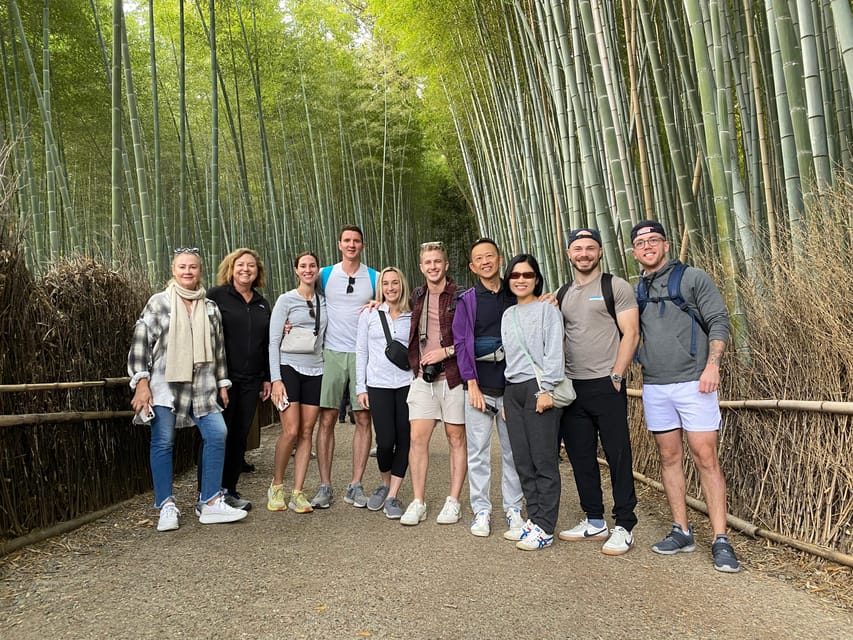
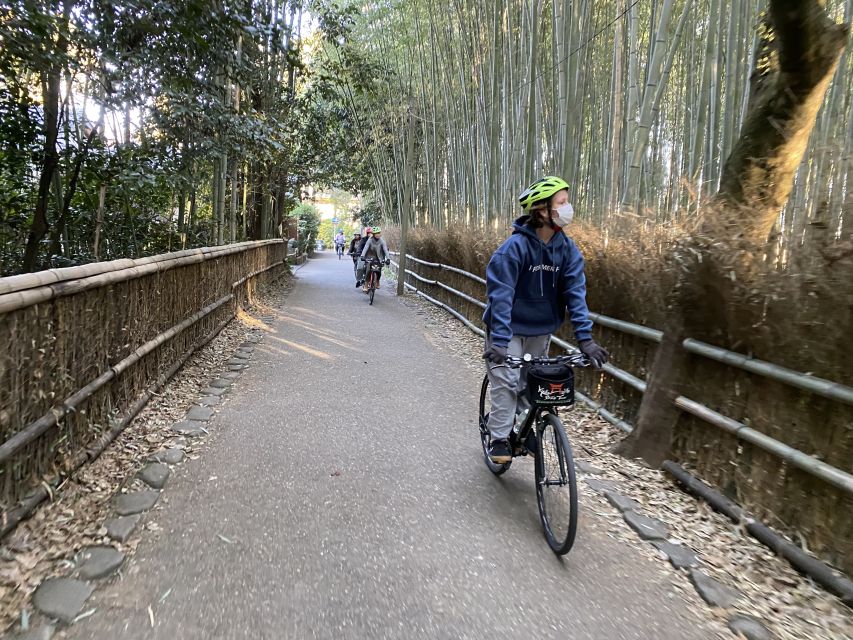
Arashiyama Bamboo Grove is an atmospheric first stop. Tall stalks rise on both sides of the path, filtering the light and creating the cool green setting that appears in so many Kyoto photographs. The guided portion here lasts about 30 minutes, enough to walk among the bamboo and hear about the area without turning the stop into a long lecture.
The grove can be busy, so expectations matter. This is not a private forest ride, and you should not expect complete quiet. The advantage of arriving with a guide is that you can get oriented quickly, enjoy the setting, and then continue into the wider Arashiyama area by bicycle.
The tour returns to Arashiyama at the end of the day. That makes the starting point convenient if you are staying nearby or arriving by train, but it also means you complete a large loop rather than ending in central Kyoto.
Fushimi Inari’s orange gate trails
From Arashiyama, the route heads toward Fushimi Inari Taisha Shrine. The shrine is famous for its long corridors of vermilion torii gates, which climb into the wooded hills behind the main buildings.
You get time to stroll through the Senbontorii area and look for the shrine’s fox statues. Foxes are associated with Inari, the Shinto deity connected with rice, agriculture, and business. The statues appear in different forms, often holding symbolic objects, so this stop offers more than a quick photograph at the first gate.
The 30-minute sightseeing period is useful for seeing the lower shrine area, but it is not enough to walk the entire mountain route. That is not a fault so much as a matter of scale. Fushimi Inari’s full trail network takes much longer, while this tour has four more major stops to reach.
Your bicycle is especially useful on the connecting route. Instead of spending the morning working through train changes, you move across the city with a guide who handles the route and traffic decisions. Ray was praised for safe riding and patient organization, while other guides have been valued for explaining Japanese customs without turning every stop into a formal class.
Lunch and a chance to reset
After the first major sights, the group stops for a light lunch. The exact menu is not fixed in the supplied details, though one outing included flavorful curry udon, and another small group chose a local restaurant.
Treat lunch as a welcome pause, not a large meal. You will still have several hours of riding ahead, so light food makes sense. Bottled water is included, but you should bring your own water as well if you tend to drink often, especially in warm weather.
Summer can be demanding. A July ride was described as hot, and pedal-assist bikes made a major difference. In winter, from December through February, the stops are shortened so the tour can finish before sunset. That means the experience changes with the season, even though the main route remains the same.
A completely different kind of day out in Kyoto:
- PERFECT KYOTO 1-Day Bus Tour
★ 5.0 · 13,518 reviews - Kyoto: Fushimi Inari, Kinkakuji, Bamboo Grove 1 Day Bus Tour
★ 4.8 · 4,316 reviews - Kyoto: Tea Ceremony in a Traditional Tea House in Kiyomizu
★ 4.9 · 3,519 reviews - Kyoto Geisha Walking Tour: Gion District & Hidden Gems
★ 4.7 · 3,273 reviews
Gion by back street and wooden bridge
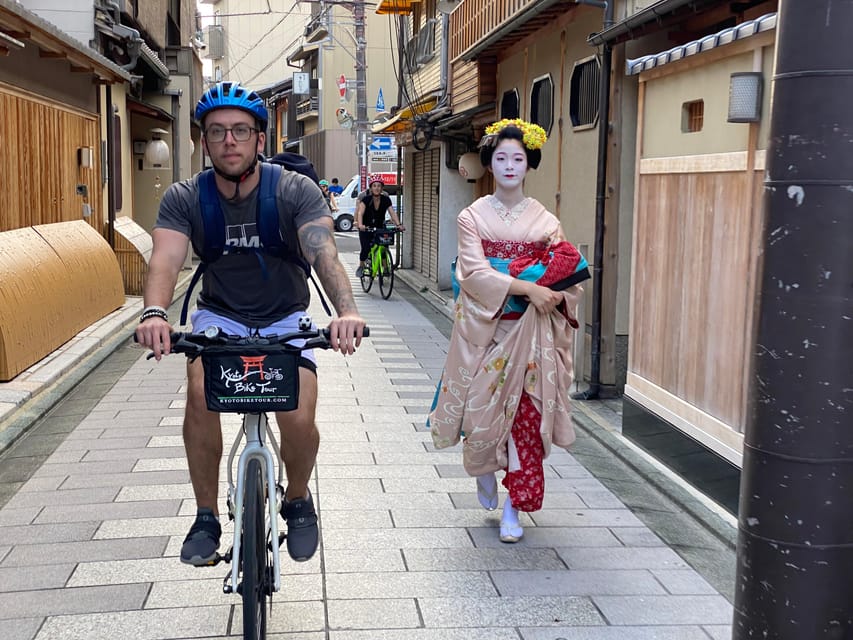
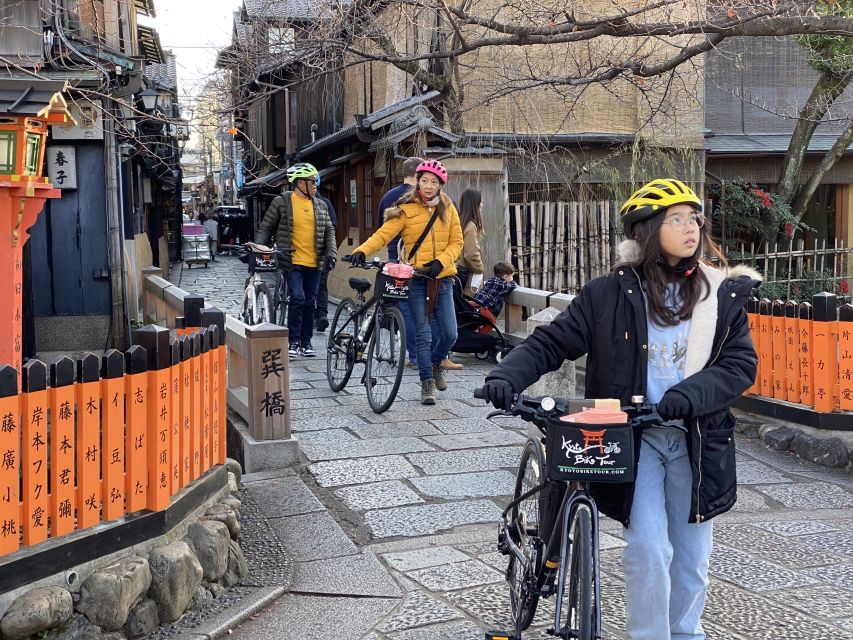
Gion offers a different view of Kyoto. This is the city’s traditional entertainment district, known for wooden buildings, restaurants, teahouses, boutiques, and streets where you may catch sight of maiko and geisha.
The route includes Tatsumi Bridge and Hanamikoji Street. At Tatsumi Bridge, you might see women in colorful kimono, while Hanamikoji gives you a look at the refined wooden architecture and dining culture associated with the district.
This is a place where good manners matter. Do not block narrow lanes, enter private spaces, or treat people in traditional dress as props. A guide can help you understand the setting and move through it respectfully.
The bicycle is useful around Gion because you can approach by smaller streets instead of arriving with a large group. You will still walk at the main sights, since cycling through crowded pedestrian areas is not appropriate. The Gion stop lasts about 30 minutes, so think of it as a focused introduction rather than a full evening in the district.
Kiyomizu-dera and Kyoto’s eastern hills
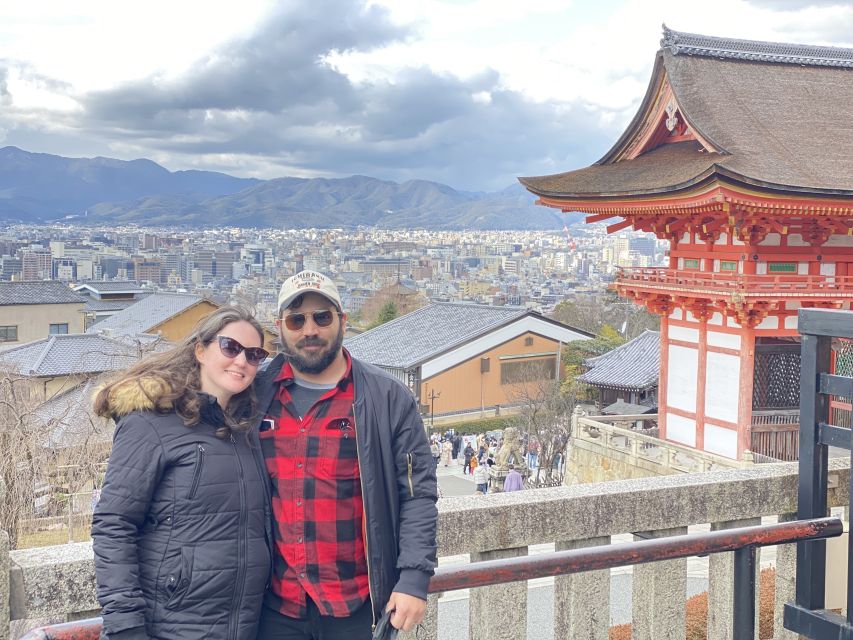
The route then climbs toward Kiyomizu-dera, one of Kyoto’s best-known Buddhist temples and a UNESCO World Heritage Site. The temple is associated with the Otowa Spring, whose waters are described as medicinal and pure.
The eastern hills add some physical challenge. Even if the overall pace is leisurely, this part of the route helps explain why e-bikes are worth considering. Several riders in good shape still recommended pedal assist because the distance and hills accumulate over the day.
Kiyomizu-dera is a powerful stop because it combines religious tradition, broad city views, and a busy approach lined with shops. The tour allows about 30 minutes for guided sightseeing. That is enough to understand the main setting and see the temple, but not enough for an unhurried exploration of every building and side path.
If Kiyomizu-dera is your top priority, you may want to return separately on another day. On this tour, its value is the larger picture: you see the temple as one part of Kyoto’s eastern religious quarter, connected by bicycle to the rest of the city.
Kinkaku-ji in the changing light
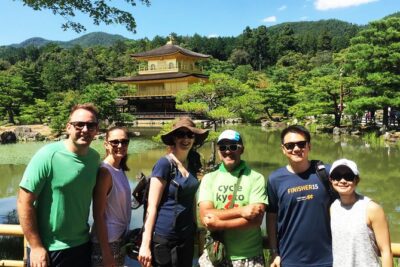
Kinkaku-ji, the Golden Pavilion, is the final major sight before the ride back to Arashiyama. Its gold-covered upper stories reflect in the pond, creating the bright, almost unreal scene that has made the temple one of Japan’s most recognizable images.
Timing can make a real difference here. One outing reached the pavilion during the golden hour, when the light made the building look especially striking. The guide controls the day’s pace, but exact light and crowd conditions will vary.
Kinkaku-ji is a visual stop more than a place for a long interior visit. You follow the established viewing route around the pond and grounds, take in the pavilion from several angles, and listen to the guide’s explanation. The 30-minute sightseeing period keeps the day moving, though some people may wish for more time.
By saving Kinkaku-ji for later, the tour gives you a strong final landmark before returning to Saga-Arashiyama Station. The ride back also provides a chance to process a very full day, though tired legs may make the final stretch feel longer than the morning ride.
The guides make the difference

The strongest part of this experience is not only the route. It is the guide leading a small group through busy streets and historic districts.
Rob has been praised for clear explanations, interesting anecdotes, good photographs, and a talent for making solo participants feel included. Cass has been described as friendly and organized, giving enough detail without overwhelming the group. Peter has received praise for patience, kindness, flexibility, and careful support when conditions were difficult.
Ray’s attention to safety and respect for Japanese culture also received special approval. That matters on a route passing through crowded streets, shrine grounds, tourist districts, and residential lanes.
Because the group is capped at eight, the guide can answer questions and adjust small details of the day. You also have a better chance of getting help with photographs at the major sights. The guide may share photographs afterward, as happened on some outings, but you should not treat that as a guaranteed part of the service unless confirmed at booking.
Is the $167 price fair?
At $167 per person, this is not a cheap way to rent a bicycle for the day. You are paying for a full-day guided route, the bicycle and helmet, bottled water, entry fees, lunch, and the ability to connect distant parts of Kyoto without planning every transfer yourself.
The value improves if you want a single active day covering the city’s major landmarks. A private taxi or several separate transport rides could cost more, while arranging the same route alone would require careful navigation and advance planning. The small group also gives the tour a more personal feel than a large coach excursion.
The price is harder to justify if you prefer slow visits, long meals, or extended time at one temple. The itinerary gives each main stop about 30 minutes, and the broad coverage comes at the expense of depth.
An e-bike may cost extra. Based on the distance, heat, and eastern hill sections, I would seriously consider it unless you regularly cycle long distances. You still pedal, but the assist can preserve your energy for sightseeing.
Who should book this Kyoto ride?
You should consider this tour if you:
- Want to see five major Kyoto sights in one day
- Enjoy active sightseeing and can ride for several hours
- Prefer small groups to large bus tours
- Like seeing ordinary streets and quieter lanes between landmarks
- Want an English-speaking guide to explain culture and history
- Are comfortable with a brisk schedule and limited time at each stop
You should probably skip it if you have back problems, mobility limitations, low fitness, or no cycling ability. Children under 14 are not accepted. Sandals, flip-flops, boots, high heels, and loose clothing are not suitable, so wear secure shoes and comfortable clothes suited to the forecast.
The tour runs in weather conditions that can range from cold to very hot. One winter outing went ahead on a cold day, while summer riders relied heavily on water and e-bikes. Dress for the season and expect the weather to affect your comfort.
Final verdict: a strong choice for active first-time visitors
I would book this tour if I wanted one energetic day to understand Kyoto’s layout and see the main sights without relying on crowded public transport. The route is ambitious, but that ambition is the point. You get bamboo, torii gates, temple grounds, traditional streets, and the Golden Pavilion in one sweep.
The main question is not the sightseeing. It is your comfort with 44 kilometers of cycling. If that distance sounds manageable, choose the small group and strongly consider a pedal-assist bike. If it sounds exhausting, split the sights across several days instead.
For fit adults who want context, variety, and a taste of Kyoto beyond the standard photo stops, this is a memorable and well-organized day. Just take the word full-day seriously.
FAQ
Where does the Kyoto bike tour start and finish?
The tour starts outside JR Saga-Arashiyama Train Station and returns to the same station at the end of the day.
How long does the tour last?
The tour lasts eight hours, including cycling, sightseeing stops, lunch, and the return ride.
How far will I cycle?
You will ride approximately 44 kilometers, or 27 miles, during the day.
Which sights are included?
The route visits Arashiyama Bamboo Grove, Fushimi Inari Taisha Shrine, Kiyomizu-dera, Gion, and Kinkaku-ji, also called the Golden Pavilion.
Is lunch included?
Yes. A light lunch is included. A curry udon meal was served on one outing, but the exact food can vary.
Is an e-bike included?
The tour includes a bicycle, but an e-bike may require an additional charge. Pedal assist is recommended for people who are not regular long-distance cyclists.
What does the tour price include?
The $167 price includes a bilingual English-speaking guide, bicycle, helmet, bottled water, entry fees, and a light lunch. Hotel pickup and drop-off are not included.
Is the tour suitable for children?
Children under 14 are not suitable for this experience.
What should I wear and bring?
Wear comfortable shoes and clothes suited to the weather. Do not wear high heels, sandals, flip-flops, boots, or loose clothing.
More Lunch Experiences
- Osaka/Kyoto: Arashiyama, Nara & Fushimi Inari Shrine w/Lunch
★ 4.4 · 754 reviews - Kyoto Zen Meditation & Garden Tour at a Zen Temple with Lunch
★ 5.0 · 441 reviews - 4.5-Hour Kyoto Bike Tour with Lunch and UNESCO Zen Temples
★ 5.0 · 122 reviews - From Kyoto: Nara History Guided Half Day Bus Tour with Lunch
★ 4.8 · 114 reviews
Just added around Kyoto
- Kyoto: Gion Night Walking Tour with Geisha Insight★ 5.0 · 39 reviews
- Kyoto: Private Customizable Day Trip by Car★ 5.0 · 38 reviews
- Kyoto: Full Day Bike Tour★ 4.9 · 39 reviews
- Private Japanese Calligraphy in Kyoto – Learn Shodō with a Master★ 5.0 · 39 reviews
- Experience a tea ceremony in an authentic tearoom, in Kyoto!★ 4.5 · 41 reviews
- Kyoto: Gion Evening Walk with Hidden Gems, Geisha & Sake★ 5.0 · 41 reviews
- Kyoto Private Photo Shoot & Tour by SnapKyoto★ 5.0 · 41 reviews
- The Way of Tea: Kyoto Crafts, Hidden Temples & Wabi-Sabi Walk★ 5.0 · 41 reviews
Cycling Tours, compared.
3h Tokyo E-Bike Tour: Hidden Gems, and Local Life with guide
Read our review →
Arashiyama Bamboo Forest & Hidden Gems Bike Tour (Early Bird)
Read our review →
Hiroshima in a Nutshell: Morning Bike Adventure
Read our review →Browse the lists this tour appears in